Is Canva Actually Used in Professional Graphic Design Jobs?


Why Canvas Design for Agencies Is Both a Tool and a Strategic Framework
Canvas design for agencies refers to two distinct but complementary approaches: visual design platforms like Canva that streamline creative production, and strategic frameworks like the Business Model Canvas and Opportunity Canvas that help agencies map client challenges, test assumptions, and differentiate competitive positioning.
Quick Answer: What Canvas Design Means for Agencies
| Canvas Type | Primary Use | Key Benefit |
|---|---|---|
| Design Tools (Canva, Miro) | Visual content creation, team collaboration | Speed, scalability, brand consistency |
| Strategic Frameworks (Business Model Canvas, Strategy Canvas) | Client strategy, competitive analysis, feature validation | Clarity, shared understanding, reduced risk |
| Marketing Automation (Braze Canvas) | Customer journey orchestration | Personalized campaigns at scale |
Most agencies struggle with two related problems: producing visual assets quickly while also helping clients make smarter strategic decisions. Canvas tools address both.
On the production side, platforms like Canva have moved far beyond templates. Over 5,000 employees at Canva now use AI tools like Claude daily, with 65% reporting increased productivity. Meanwhile, subscription-based design services using Canvas methodologies report 24% client retention rates and 20% conversion increases.
On the strategy side, frameworks like the Business Model Canvas and Opportunity Canvas give agencies a structured way to visualize client challenges, expose risky assumptions, and facilitate collaborative workshops. These aren’t just theoretical exercises-they’re practical tools for scoping projects, validating features, and analyzing competition.
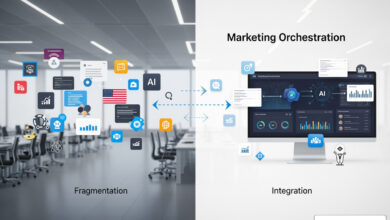
The real power comes from combining both approaches. When agencies use strategic canvases to define the problem, then leverage design tools to prototype solutions, they move faster with less rework.
I’m Clayton Johnson, an SEO and growth strategist who helps agencies build scalable systems around Canvas design for agencies, integrating strategic frameworks with AI-assisted workflows. My work focuses on turning fragmented tools into coherent processes that drive measurable client outcomes.
The Evolution of Canvas Design for Agencies
The landscape of professional design has shifted. We no longer live in a world where “design” is confined to a single Adobe software suite. Today, Canvas design for agencies represents a holistic ecosystem. It encompasses the visual programming of customer journeys, the rapid prototyping of brand assets, and the high-level mapping of business models.
For a modern agency, design is increasingly about Strategic Design. This means moving away from being a “pixel pusher” and toward becoming a strategic partner. We see this evolution in tools like Braze, where the “Canvas” is a unified interface for marketers to craft campaigns with multiple messages, functioning almost like a visual programming tool to build cohesive user journeys.
Professional Canvas Design for Agencies: Tool vs. Strategy
When we talk about Canvas design for agencies, we have to distinguish between the software we use and the strategic frameworks we apply.
- Canva as a Tool: It is no longer just for “non-designers.” Professional agencies use it to create brand templates, manage asset migration, and empower clients to make small edits without breaking the creative direction.
- Strategyzer as a Framework: This is where the Business Model Canvas lives. It allows us to describe, design, and pivot business models for our clients.
- Braze as an Orchestrator: Through the Canvas Braze Learning course, agency teams learn to mix rigor and artistry to create relevant customer experiences across email, push, and in-app messaging.
By mastering both the tools and the strategies, agencies in hubs like Minneapolis can offer more than just a logo-they offer a roadmap for growth.
Strategic Frameworks: Mastering the Business Model and Strategy Canvas
At the heart of any successful client engagement is a clear understanding of how they actually make money and create value. This is where the Business Model Canvas (BMC), popularized by Alexander Osterwalder, becomes indispensable.

The BMC enables us to visualize a simple story of a client’s existing business model or design a new one from scratch. When we Download The Business Model Canvas, we are looking at nine building blocks:
- Customer Segments
- Value Propositions
- Channels
- Customer Relationships
- Revenue Streams
- Key Activities
- Key Resources
- Key Partnerships
- Cost Structure
For agencies, this is a Market Analysis powerhouse. It helps us identify where a client’s revenue streams are leaking or where a new partnership could open up exponential growth.
Using the Strategy Canvas for Competitive Differentiation
While the BMC looks internal, the Strategy Canvas looks external. It is a visual tool used to plot the “value curve” of industry players.
To draw a Strategy Canvas, we identify the key competitive factors in an industry (like price, speed, or quality) and rate the offering levels on a 5-point scale. By connecting these dots, we can see exactly where the industry leaders are bunched up and where a “Blue Ocean” of opportunity exists.
We often combine this with a SWOT Analysis or an assessment of Porter’s Five Forces to ensure our client’s differentiated value proposition isn’t just different—it’s defensible.
Implementing Canvas Design for Agencies to Scale Workflows
Scaling an agency requires moving from “bespoke everything” to “reusable frameworks.” Canvas design for agencies provides the structure needed for rapid prototyping and shared understanding.
| Tool | Best Used For | Agency Benefit |
|---|---|---|
| Miro | Collaborative workshops & brainstorming | Real-time client collaboration |
| Canva | Brand asset production & templates | Design scalability and speed |
| Strategyzer | Business model & value prop design | High-level strategic alignment |
By using these tools, we focus on Conversion Optimization from the start. Instead of guessing what a user wants, we use canvases to map out the journey and identify friction points before a single line of code is written.
Collaborative Workshops and Opportunity Canvas Design for Agencies
One of the most practical steps an agency can take is implementing an Opportunity Canvas. This is a one-pager used to unpack beliefs about a new feature or service idea.
Unlike a traditional business case, which can be bloated and slow, an Opportunity Canvas is lightweight. It focuses on:
- Problems: What customer needs are we solving?
- Solution Idea: How do we address those needs?
- Business Challenges: What prevents us from succeeding?
- Metrics: How will we measure success?
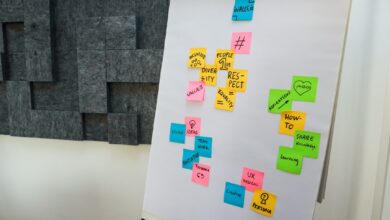
In a collaborative workshop using Miro or Mural, we use sticky notes to fill these out in 15–30 minutes. We then use assumption mapping to find the riskiest beliefs. This ties directly into a broader Customer Strategy and can be visualized further using an Opportunity solution tree.
AI and Subscription Models in Modern Design
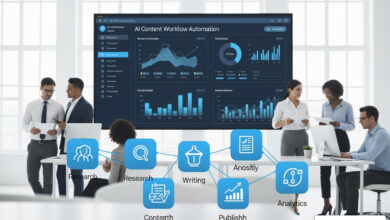
The integration of AI is the biggest “force multiplier” in Canvas design for agencies today. At Canva, for example, over 5,000 employees are empowered with tools like Claude for prototyping and agency-like workflows.
65% of Canva team members use AI tools like Claude everyday or often to increase productivity. For agencies, this means:
- Design Prototyping: Simulating user testing by populating templates with AI-generated content.
- Component Building: Creating interactive elements without waiting for a developer.
- Product Visualization: Using AI to visually explain complex concepts to engineers.
This shift allows us to move from “AI everywhere” to “AI impact,” where Analytics & Data prove the time saved and the quality gained.
Subscription-Based Canvas Design for Agencies
A new breed of agency is emerging: the subscription-based design service. Companies like Designjoy or Design Pickle incorporate Canvas methodologies to handle unlimited client requests for a flat monthly fee.
The results for subscription-based design models speak for themselves:
- 24% client retention rate achieved through consistent, predictable delivery.
- 20% increase in website conversion rate for clients who have constant access to design updates.
- Significant increase in brand awareness through dedicated, high-volume design output.
These services often integrate with Paid Advertising workflows, ensuring that ad creative is always fresh and optimized based on performance data.
Frequently Asked Questions about Canvas Design
What is the Canva Agency Partner Program?
The Canva Agency Partners program is designed to help agencies fast-track the learning curve. Partners are experts in onboarding, training, and setting up brand templates. They help businesses with folder auditing to ensure assets stay organized and secure. If you’re an agency in Minneapolis looking to scale your creative output, becoming a partner or working with one can significantly reduce your internal overhead.
How does an Opportunity Canvas differ from a Business Model Canvas?
While the Business Model Canvas is great for understanding a whole business, it’s often too broad for a single feature. The Opportunity Canvas is a “lightweight business case.” It’s used when you’re adding a new capability to an existing product. It forces you to identify “risky assumptions”—things that must be true for the feature to succeed. You can find an Opportunity Canvas template on Miro to start validating feature ideas in minutes rather than weeks.
Can agencies use AI like Claude for design prototyping?
Absolutely. We use Claude for everything from writing copy with the correct tone to engineering code snippets for interactive components. It helps us build Buyer Personas and then simulate how those personas might interact with a design. This “user testing simulation” allows us to catch obvious UX flaws early in the design process.
Conclusion
Canvas design for agencies is more than just a trend; it’s a fundamental shift in how we work. By combining visual design tools with strategic frameworks, we move faster, reduce risk, and deliver better results for our clients. Whether you are using a Strategy Canvas to find a competitive edge or leveraging AI to prototype a new app, the goal remains the same: growth.
At Clayton Johnson, we specialize in building these AI-assisted workflows and growth strategies. We help marketing leaders diagnose their biggest problems and execute with measurable results. If you’re ready to modernize your agency’s approach, you can find more info about social media marketing services and our strategic frameworks on our site. Let’s turn your design process into a strategic engine.