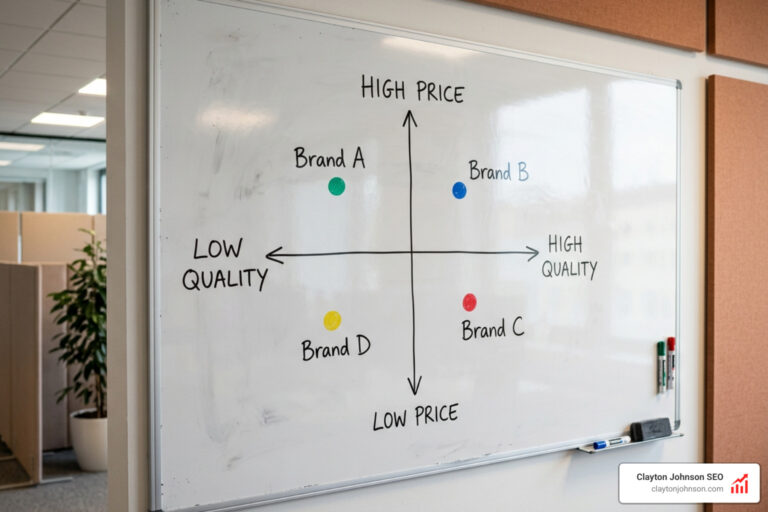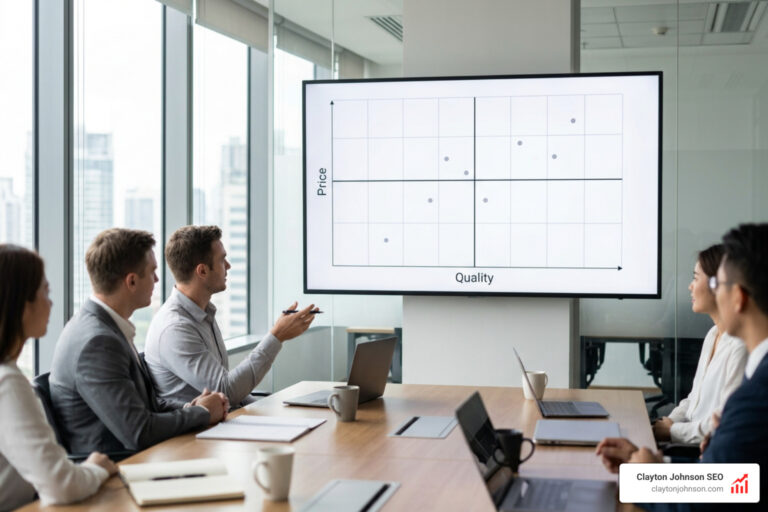
Why Business Model Frameworks Matter for Strategic Growth
Business Model Frameworks are structured methodologies that help organizations systematically define, analyze, and innovate how they create and capture value. At their core, they answer fundamental questions: Who is your customer? What value do you offer? How do you deliver it? And how do you make money doing so?
The most widely-used frameworks include:
- Business Model Canvas – A visual 9-block template covering customer segments, value propositions, channels, revenue streams, and cost structure
- Lean Canvas – A startup-focused adaptation emphasizing problem-solution fit and rapid validation
- Value Proposition Canvas – A deep dive into customer jobs, pains, and gains matched against your offerings
- Morris’s Entrepreneurial Framework – A two-level model distinguishing foundation decisions from proprietary innovations
- Blue Ocean Strategy – A framework for creating uncontested market space through value innovation
Why they matter: Business models aren’t just abstract theory. They’re practical tools that condense years of business strategy into actionable blueprints. As Joan Magretta noted in her 2002 research, business models are “stories that explain how enterprises work” – they connect what customers value with the economic logic of delivering that value profitably.
The stakes are high. Over 90% of business model innovations are recombinations of existing patterns, yet companies that systematically rethink their models consistently outperform those waiting for disruption to force change. Southwest Airlines has achieved profitability every year since 1972 using a distinctive business model, while most airlines cycled through losses.
The challenge: Most organizations lack structured methods for business model innovation. They operate on inherited assumptions without testing alternatives. Frameworks solve this by providing shared language, visual tools, and systematic processes for exploring business model options.
I’m Clayton Johnson, an SEO and growth strategist who helps founders and marketing leaders build scalable systems through structured frameworks. I’ve spent years mapping how Business Model Frameworks translate strategic intent into executable growth systems, combining technical SEO depth with strategic architecture.
The Core Components of Business Model Frameworks
Before we dive into specific canvases and charts, we need to understand the structural “DNA” of a business model. While different scholars define these components with slight variations, most agree on a core set of pillars that bridge the gap between a high-level Market Analysis and daily operations.
Value Proposition and Customer Segments
Everything starts with the “Who” and the “What.” A value proposition isn’t just a product description; it’s the bundle of products and services that create value for a specific customer segment. Research shows that successful models are built as “stories” explaining how you solve a customer’s problem better than anyone else.
Revenue Streams and Cost Structure
This is the economic logic of your business. How do you make money? Is it through subscriptions, one-time sales, or freemium models? On the flip side, what are your biggest expenses? Understanding your cost structure—whether you are cost-driven (like a low-cost airline) or value-driven (like a luxury brand)—is vital.
Key Activities and Resource Allocation
What are the most important things your company must do to make its business model work? For a software firm, this might be development; for a consultant, it’s problem-solving. These activities require specific resources—physical, intellectual, human, or financial. Effective Strategic Design ensures that your resources are allocated to the activities that drive the most competitive advantage.
Distribution Channels and Customer Relationships
How do you reach your customers? Channels serve several functions: raising awareness, helping customers evaluate your value proposition, and providing post-purchase support. Furthermore, you must define the type of relationship you want: is it personal assistance, automated service, or a co-creation community?
Managing Competitive Pressure
Finally, a business model must account for the outside world. How to Think About Competitive Pressure involves understanding that your model doesn’t exist in a vacuum. It must be resilient against rivals and shifting market forces.
Top 5 Frameworks for Business Innovation
Choosing the right framework is like choosing the right tool for a home renovation. You wouldn’t use a sledgehammer for a delicate paint job. Here are the five most effective Business Model Frameworks used by leaders today.
The Business Model Canvas: A Standard for Business Model Frameworks
Business Model Canvas Developed by Alexander Osterwalder and Yves Pigneur, the BMC is the undisputed heavyweight champion of the world. It has been adopted by millions of practitioners and major corporations because it condenses complex strategy into a single page.
The canvas consists of 9 building blocks:
- Customer Segments
- Value Propositions
- Channels
- Customer Relationships
- Revenue Streams
- Key Resources
- Key Activities
- Key Partnerships
- Cost Structure
By using the Strategyzer approach, teams can visually map out their infrastructure and customer interface to ensure financial viability. It’s essentially a “truth serum” for your business plan, revealing where your logic might be fuzzy.
Lean Canvas for Startups and Agile Teams
Created by Ash Maurya as an evolution of the Lean Startup methodology, the Lean Canvas is designed specifically for entrepreneurs dealing with high uncertainty. It replaces blocks like “Key Partnerships” with “Problem” and “Unfair Advantage.”
The focus here is on problem-solution fit. Instead of mapping out a full ecosystem, the Lean Canvas forces you to identify the top three problems your customers face and the key metrics you’ll use to measure success. This encourages rapid prototyping and validated learning, ensuring you don’t build something nobody wants.
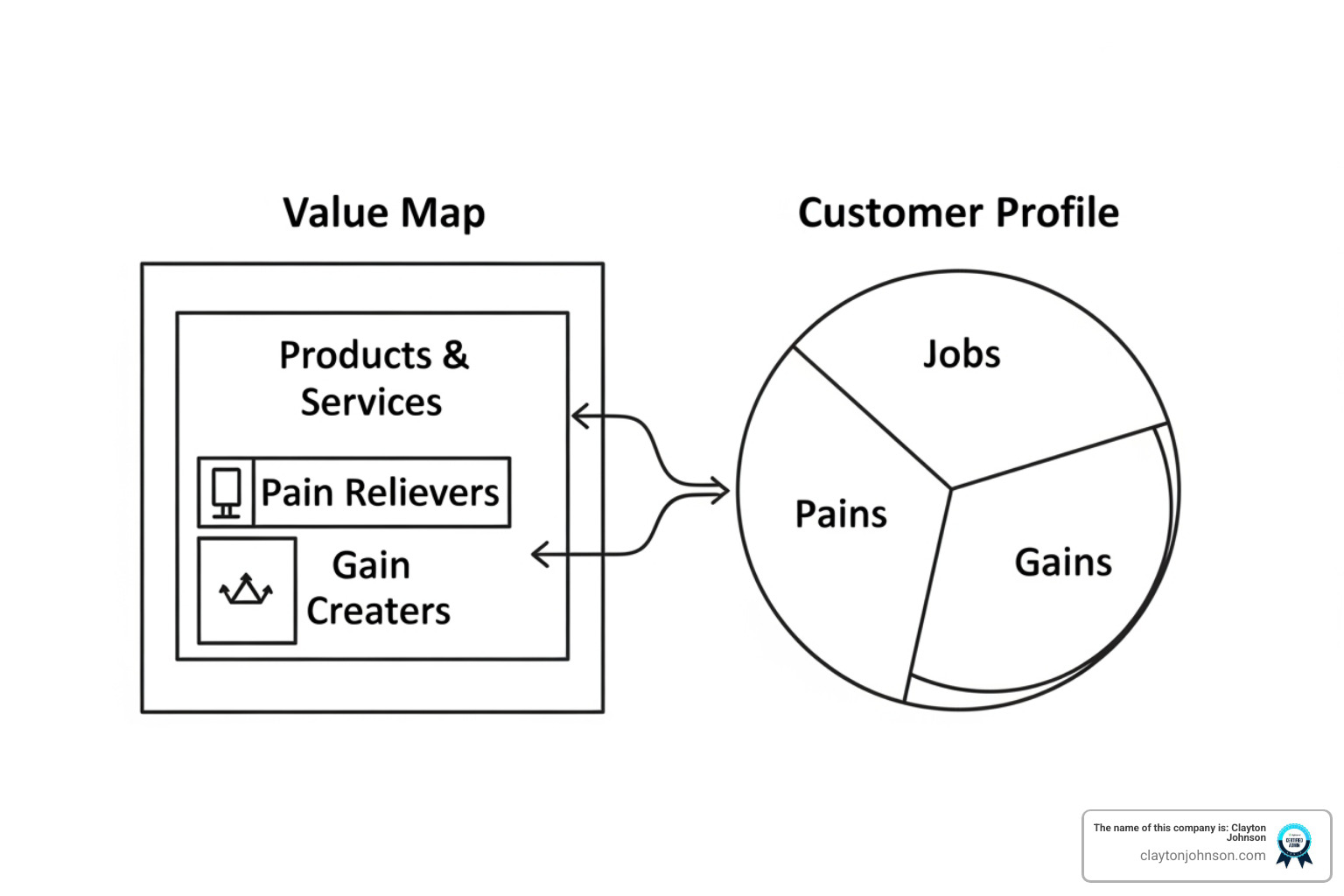
The Value Proposition Canvas
While the BMC gives you the “big picture,” the Value Proposition Canvas is a magnifying glass. It focuses on the fit between your product and your customer.
On one side, you map out Customer Jobs (what they are trying to get done), Pains, and Gains. On the other side, you list your Products & Services, Pain Relievers, and Gain Creators. The goal is to achieve “fit”—where your value proposition addresses the most critical pains and gains of your customer segment.
Morris’s Entrepreneurial Framework
Developed by Michael Morris, this framework takes a more academic but deeply practical approach. It suggests that a business model exists at two levels: the Foundation Level (basic decisions like “who is the customer?”) and the Proprietary Level (the unique, innovative way you implement those decisions).
Morris emphasizes internal consistency. For example, if your economic model is based on high volumes and low margins, your customer model can’t be based on high-touch, expensive personal service. This framework aligns well with University of St. Gallen research on innovation, which found that most successful models are clever recombinations of existing patterns.
Blue Ocean Strategy
Blue Ocean Strategy, formulated by W. Chan Kim and Renée Mauborgne, isn’t just about documenting a model; it’s about inventing a new one. It encourages businesses to stop fighting over shrinking profit pools in “red oceans” (crowded markets) and instead create “blue oceans” of uncontested market space.
The core tool here is the Strategy Canvas, which helps you visualize how you can differentiate by eliminating, reducing, raising, or creating specific industry factors. It makes the competition irrelevant by offering a leap in value for both the company and its customers.
Comparing and Implementing Business Model Frameworks
Not all frameworks are created equal. Depending on your goals—whether you’re a startup in a garage or a large Enterprise—you’ll need to Compare these tools to see which fits your current stage of growth.
Comparison Table: BMC vs. Lean Canvas vs. Morris Framework
| Feature | Business Model Canvas | Lean Canvas | Morris Framework |
|---|---|---|---|
| Primary Focus | Strategic mapping & optimization | Problem-solution validation | Internal consistency & advantage |
| Best For | Established businesses & scale-ups | Early-stage startups | Strategic planning & differentiation |
| Key Strength | Holistic ecosystem view | Speed and focus on “Problem” | Distinguishes basic vs. unique decisions |
| Complexity | Moderate | Low | High |
Comparing Business Model Frameworks for Different Industries
Your industry dictates which levers you can pull. A B2B manufacturing firm in Minneapolis might focus heavily on the “Key Partnerships” and “Cost Structure” blocks of the BMC to survive thin margins. Conversely, a B2C software company might live inside the Value Proposition Canvas to ensure their user experience beats the competition.
Conducting a Market, Industry, and Competitive Analysis is the first step in deciding which framework to apply. You must consider the regulatory context—especially in sectors like healthcare or finance—where your “Channels” and “Customer Relationships” might be restricted by law.
Steps to Analyze and Build Your Model
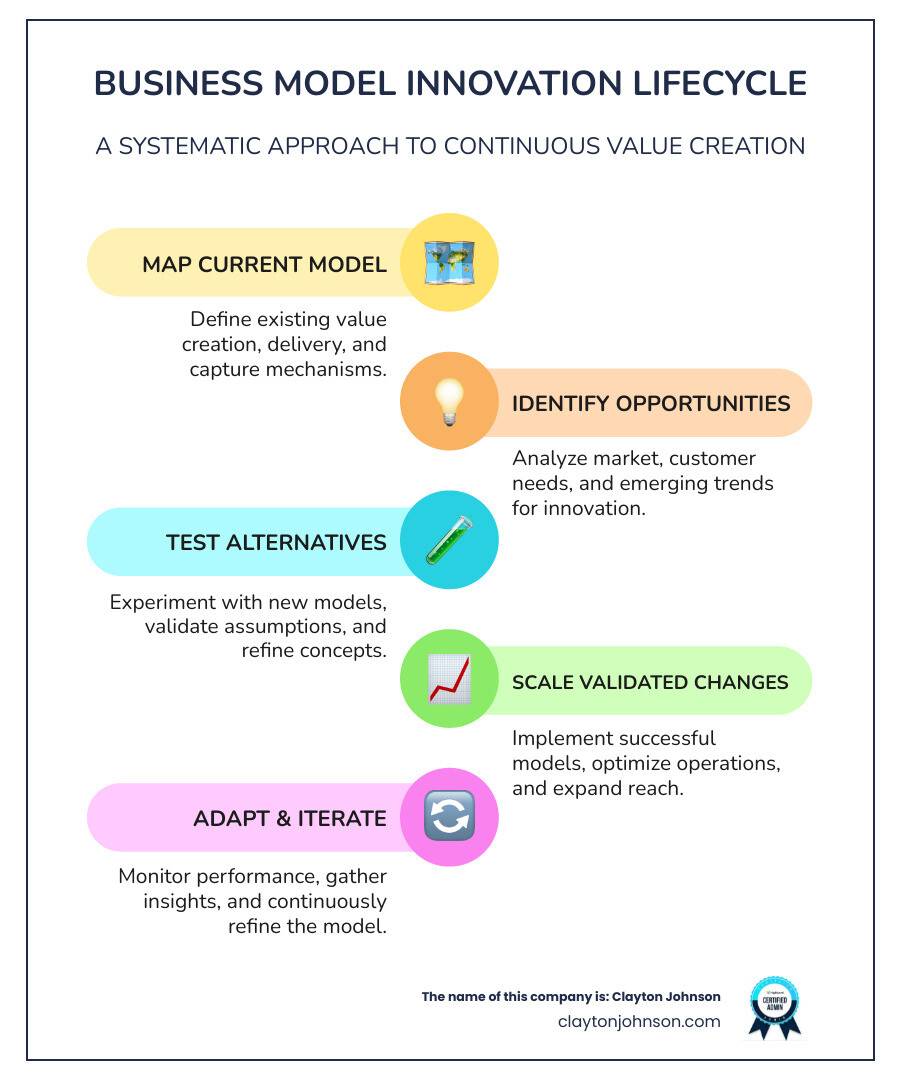
Innovation doesn’t happen by accident. It’s a process. Here is how we recommend you use these Business Model Frameworks to drive results:
- Audit the Present: Use a SWOT Analysis and PESTLE Analysis to understand your current strengths and external threats.
- Map the Current Model: Fill out a Business Model Canvas for your existing business. Be honest. This is your “truth serum.”
- Identify Patterns: Remember the University of St. Gallen statistic: 90% of innovations are recombinations. Look at models like “Subscription,” “Freemium,” or “Razor and Blade” and see if they can be applied to your industry.
- Prototype Alternatives: Don’t just settle on one idea. Sketch out three different versions of your model.
- Test and Iterate: Use the Lean Canvas to test your riskiest assumptions. If you’re changing your Sales Strategy, test it with a small cohort of customers before rolling it out company-wide.
Real-World Example: Southwest Airlines
Southwest Airlines is a masterclass in business model consistency. While other airlines used a “hub-and-spoke” model, Southwest chose “point-to-point.” They standardized their fleet (only Boeing 737s) to keep maintenance costs low and focused on secondary, uncongested airports. This wasn’t just a “marketing plan”; it was a fundamental business model innovation that led to decades of profitability.
Real-World Example: Netflix
Netflix has pivoted its business model multiple times. They started with a DVD-by-mail model (disrupting Blockbuster), moved to a streaming subscription model, and then pivoted again to become a content producer. Each shift required a complete rewrite of their “Key Activities” and “Cost Structure” blocks on the canvas.
Frequently Asked Questions about Business Model Frameworks
What is the difference between a business model and a business plan?
A business model is a conceptual blueprint of how a company creates, delivers, and captures value. It’s the “logic” of the business. A business plan is a much more detailed document that includes financial projections, marketing tactics, and operational milestones. Think of the business model as the architectural drawing and the business plan as the construction schedule.
How do business model patterns drive innovation?
Patterns act as templates. For example, the “Long Tail” pattern (selling low volumes of many niche items, like Amazon) or the “Multi-sided Platform” (connecting two distinct groups, like Uber) can be applied to many different industries. By studying these patterns, you can find creative ways to rearrange your own components without having to “invent” a new concept from scratch.
What are the main limitations of using a business model canvas?
The BMC is a static snapshot. It doesn’t inherently capture the dimension of time or the external environment (like competitors or economic shifts). It also doesn’t show the intensity of the links between blocks. To overcome this, we recommend pairing the canvas with a PESTLE Analysis and regular “stress tests” of your assumptions.
Conclusion
At the end of the day, Business Model Frameworks are not just academic exercises; they are the difference between a business that struggles to keep up and one that defines its industry. Whether you’re using the Business Model Canvas to optimize an enterprise or the Lean Canvas to launch a new venture, these tools provide the structure needed for strategic change.
At Clayton Johnson, we focus on helping founders and marketing leaders in Minneapolis and beyond move from “guessing” to “executing.” By combining these strategic frameworks with measurable SEO and growth systems, we help you build a business that doesn’t just survive but scales.
If you’re ready to stop operating on assumptions and start building a model that works, explore our Social Media Marketing Services and strategic growth tools. Let’s design a framework that delivers measurable results.