🎯 The Best Social Marketing Hubs at a Glance
A social marketing hub is a centralized platform that lets you manage, schedule, monitor, and analyze all your social media activity in one place — instead of juggling five different tools.
Here are the top options most businesses evaluate:
| Platform | Best For | Key Strength |
|---|---|---|
| HubSpot | CRM-integrated social management | ROI attribution + lead tracking |
| Hootsuite | Multi-platform scheduling + analytics | AI tools + largest integrations library |
| Semrush Social | SEO-aligned social strategy | Competitor analysis + content AI |
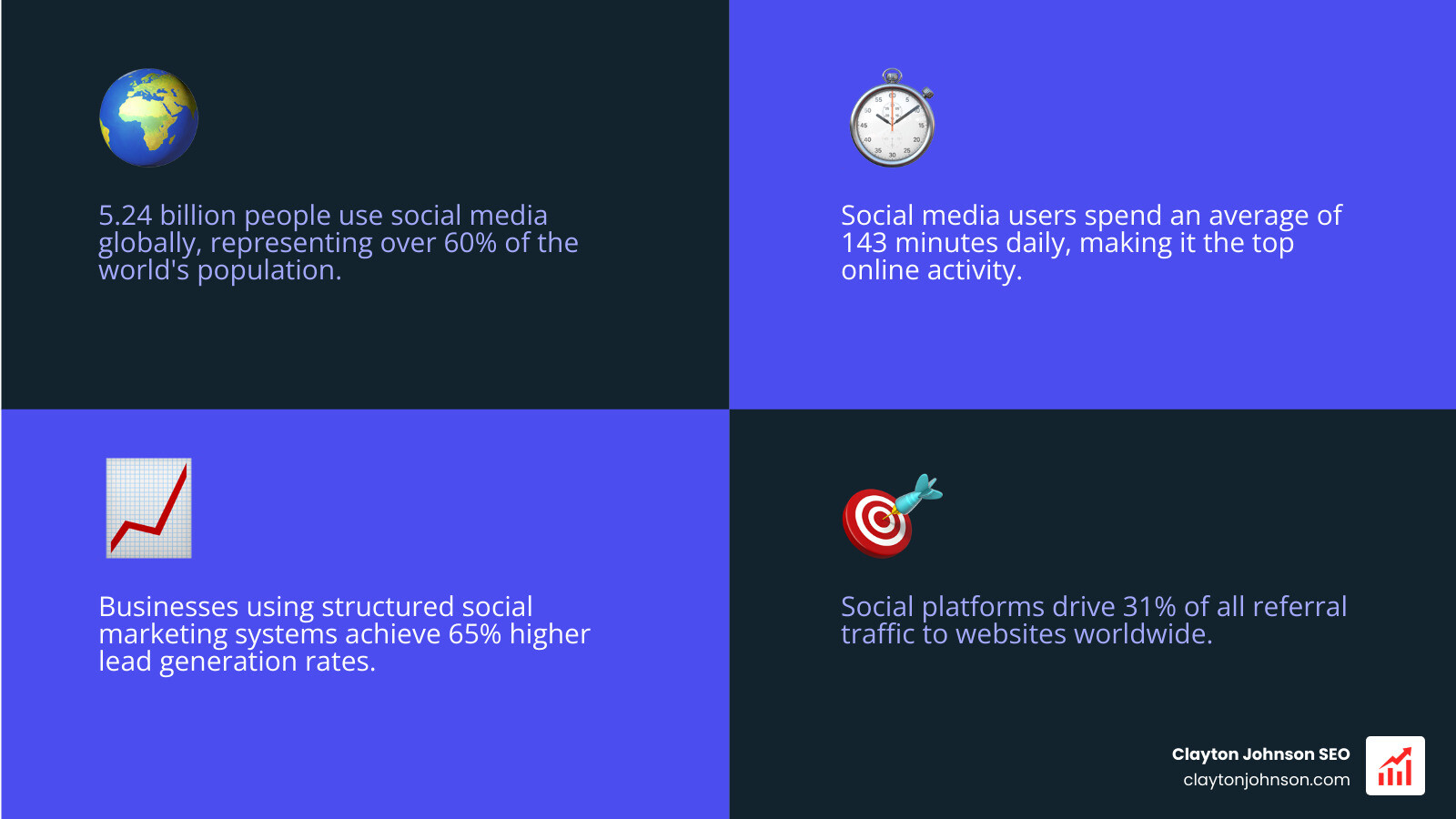
Right now, over 5.24 billion people use social media — that’s more than 63% of the world’s population. The average person spends 143 minutes on social platforms every day.
For founders and marketing leaders, that’s not a trend. That’s a distribution channel you can’t afford to get wrong.
But here’s the problem most growing businesses run into: they’re managing Instagram in one tab, LinkedIn in another, Twitter in a third — and pulling analytics from somewhere else entirely. There’s no single source of truth. No unified workflow. Just noise.
That’s exactly what a social marketing hub is designed to fix.
The numbers back it up:
- 83% of marketers increased brand exposure through social media
- 73% drove more traffic
- 65% generated more leads
- 52% increased sales
But those results don’t happen by accident. They happen when your social strategy runs through a system — not a collection of disconnected tools.
I’m Clayton Johnson, an SEO strategist and growth operator who has helped founders build structured, scalable marketing systems that turn fragmented efforts into compounding demand engines — including identifying and deploying the right social marketing hub for their specific stage and goals. In this guide, I’ll break down exactly what to look for, which platforms lead the pack, and how to choose the right one for your business.
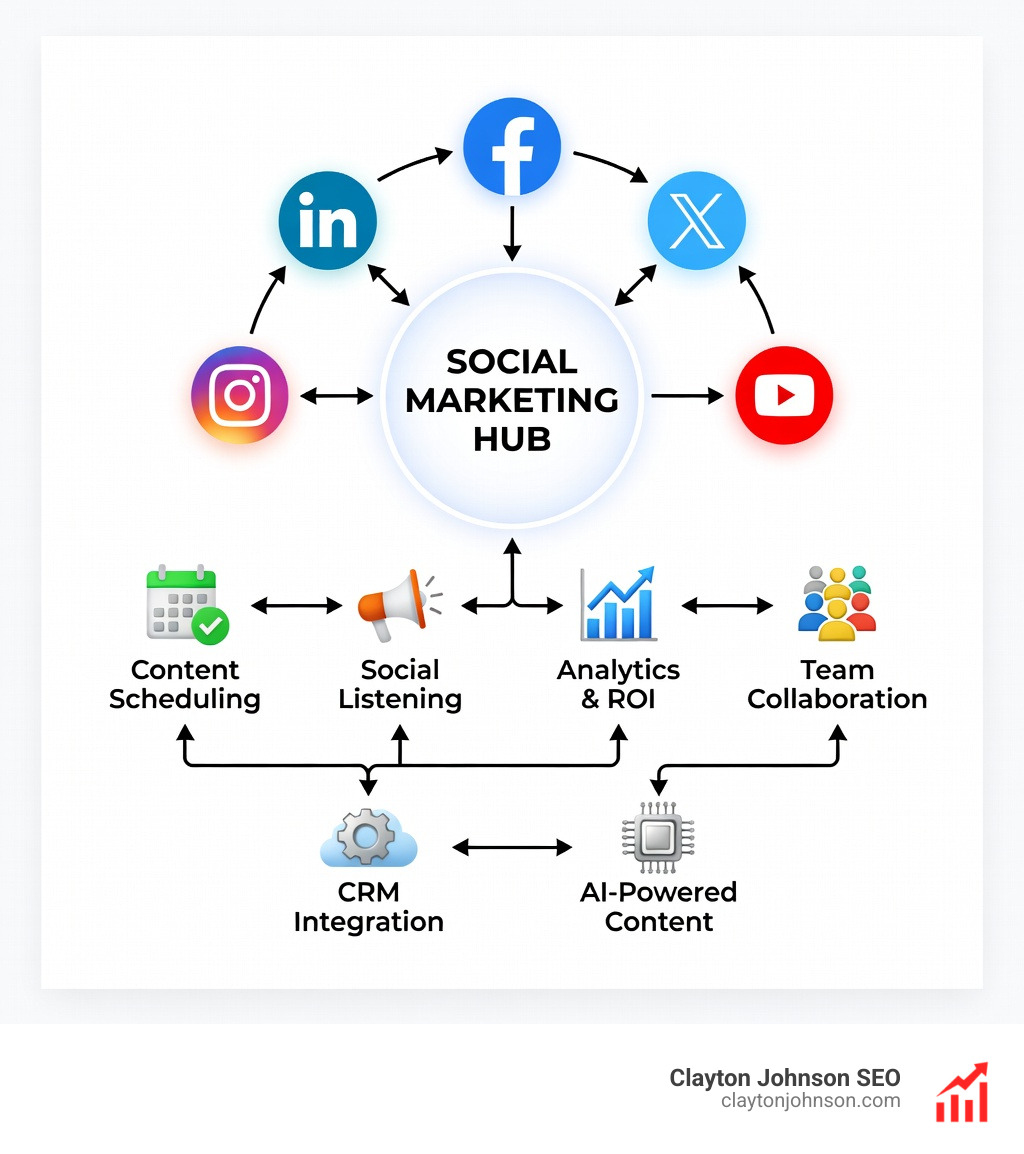
Social marketing hub terms to learn:
What is a Social Marketing Hub?
At its core, a social marketing hub is the “mission control” for your digital presence. It centralizes management so that your team isn’t wasting hours logging in and out of different accounts. Instead of treating Facebook, LinkedIn, and TikTok as isolated islands, a hub integrates them into a single workflow.
This multi-platform integration is the secret to workflow efficiency. When you can see your entire content calendar in one view, you stop posting “random acts of social media” and start executing a cohesive strategy.
Core Features of a Modern Social Marketing Hub
If you are shopping for a tool to anchor your social strategy, there are five non-negotiables you should look for:
- Scheduling & Publishing: The ability to draft, approve, and schedule posts across all networks simultaneously. Top hubs even suggest “optimal times” based on when your specific audience is most active.
- Advanced Analytics: You need more than just “likes.” A true hub provides deep dives into reach, engagement rates, and—most importantly—how those social touches contribute to your bottom line.
- Social Listening: This allows you to monitor mentions of your brand, your competitors, and specific industry keywords. It’s like having a digital ear to the ground to catch trends before they explode.
- Unified Inbox: This gathers every DM, comment, and @mention into one place. No more missed customer service opportunities or ignored leads.
- AI-Powered Tools: From generating captions to analyzing the sentiment of your mentions, AI is now baked into the best platforms to help you scale without adding headcount.
Why Your Business Needs a Centralized Social Marketing Hub
The primary benefit is time savings. Research shows that using advanced chatbot capabilities and centralized dashboards can reduce team workloads by up to 80%. But the real value lies in ROI tracking.
Without a hub, it is nearly impossible to tell if a LinkedIn post actually led to a sale. A centralized system links social interactions directly to your CRM, allowing you to attribute business value to every tweet and reel. Finally, it ensures brand consistency. When one team manages everything from a single dashboard, the “voice” of your brand remains steady across every channel.
Key Considerations When Choosing a Social Marketing Hub
Choosing the right social marketing hub isn’t just about the flashiest features; it’s about finding the “growth architecture” that fits your business model. You need to consider which platforms are supported (does it handle the long-form SEO value of YouTube as well as the short-form viral nature of TikTok?) and how the pricing models scale as your team grows.
CRM Integration and ROI Tracking Capabilities
This is where the “good” tools separate from the “great” ones. A top-tier social marketing hub like HubSpot connects directly to your customer database. This allows for:
- ROI Attribution: Seeing exactly which social campaigns closed deals.
- Lead Tracking: Identifying when a high-value prospect interacts with your content.
- Customer Journey Mapping: Understanding how social media fits into the larger path from stranger to loyal customer.
Many of these hubs now include an AI post generator that can take a single blog post and turn it into ten different social snippets, saving your team hours of manual copywriting.
Advanced Social Listening and Analytics
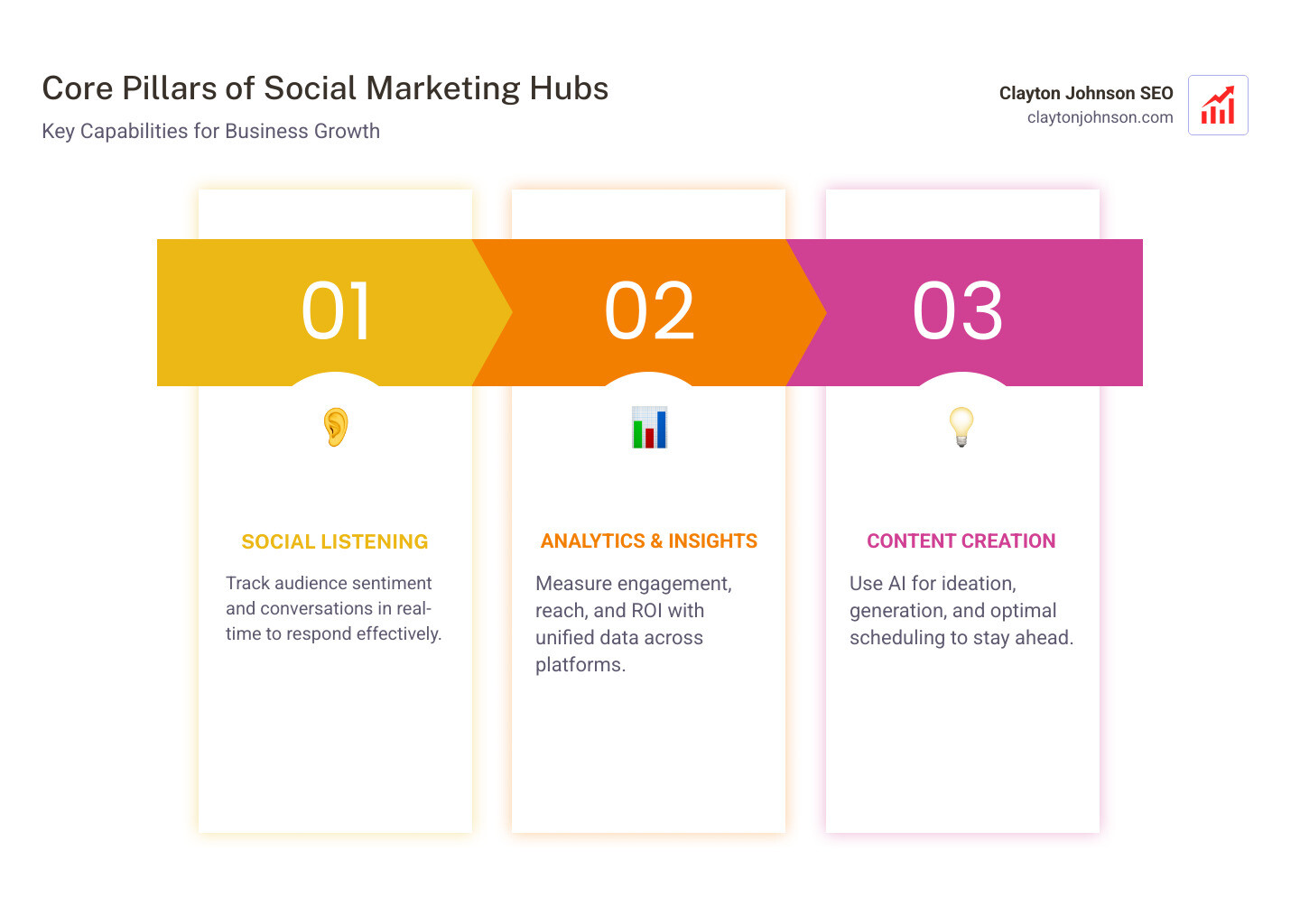
Social media is a two-way street. You shouldn’t just be talking; you should be listening. Advanced social listening tools allow you to track sentiment analysis—are people happy or frustrated with your latest launch?
Platforms like Hootsuite also emphasize employee advocacy. Research shows that audiences trust people more than they trust ads. A hub that makes it easy for your team to share company news can increase your reach by 500% or more.
AI-Driven Content and Competitive Insights
The best hubs provide a “window” into what your competitors are doing. Through competitor analysis and media monitoring, you can see which of their posts are gaining traction and where they are failing. Tools like Semrush Social take this a step further by offering content ideation—using AI to find trending topics in your niche so you’re always ahead of the curve.
Leveraging AI and Emerging Trends in Social Marketing
AI isn’t just a buzzword in social marketing; it’s the engine driving modern efficiency. We are seeing a massive shift toward AI-augmented workflows where the human provides the strategy and the AI handles the execution.
AI-Powered Content Creation and Scheduling
Imagine a system that not only writes your captions but also analyzes the sentiment of the replies in real-time. Modern hubs use AI to:
- Predict the optimal posting times for maximum engagement.
- Draft high-converting copy tailored to each specific platform’s “vibe.”
- Proofread and design visual templates instantly.
If you’re looking to scale your output while maintaining high quality, check out our SEO content marketing services to see how we integrate these AI workflows into a broader growth strategy.
Social Commerce and Direct-to-Consumer Trends
Social media is becoming the new storefront. Over 40% of Gen Z and Millennials have bought a product directly on social media in the past few months. Leading hubs now integrate with Instagram Shopping and Facebook Shop, allowing businesses to manage their inventory and customer interactions in the same place they manage their posts. This shift toward social commerce is redefining the digital storefront.
Community building is also a top priority. 85% of marketers say that building an active community is the most important part of their strategy moving forward. A social marketing hub gives you the tools to foster those relationships at scale.
Measuring Success: Metrics and ROI Tracking
You can’t manage what you don’t measure. A social marketing hub provides the data you need to prove that your efforts are working.
Essential KPIs for Your Social Marketing Hub
When you dive into your dashboard, focus on these Key Performance Indicators (KPIs):
- Reach & Impressions: How many people are actually seeing your message?
- Engagement Rate: Are they clicking, liking, and sharing?
- Sentiment Score: Is the conversation surrounding your brand positive?
- Conversion Rate: How many social visitors are turning into leads or customers?
Tracking ROI Across Multiple Channels
The “holy grail” of marketing is a unified overview. By using a hub that features CRM integration, you can move away from “vanity metrics” and toward revenue growth data. This allows you to make data-driven decisions—if LinkedIn is driving 80% of your high-ticket leads while Instagram is driving 0%, you know exactly where to reallocate your budget.
Frequently Asked Questions about Social Marketing Hubs
How do I choose the right hub for my business size?
Choosing a hub depends on your scalability needs.
- Small Businesses: Look for user-friendly interfaces and “all-in-one” free trial options.
- Mid-Market: Prioritize team collaboration features and unified inboxes.
- Enterprise: Focus on advanced security, employee advocacy tools, and deep CRM integrations.
Can a social marketing hub integrate with my CRM?
Yes, and it should. The best platforms offer seamless data syncing. This allows you to see a lead’s social media interactions right alongside their email history in your CRM, providing a complete picture of the customer journey.
What are the benefits of social listening tools?
Social listening is your best defense and your best offense. It helps with:
- Brand Monitoring: Catching negative sentiment before it becomes a crisis.
- Competitor Analysis: Seeing what is working for your rivals.
- Trend Tracking: Identifying new topics your audience cares about.
Conclusion
In an era where search and social are converging, having a social marketing hub is no longer optional—it’s the foundation of strategic growth. Most companies don’t lack tactics; they lack the “growth architecture” to make those tactics work together.
At Clayton Johnson SEO, we build these systems. Through our Demandflow platform, we combine actionable strategic frameworks with AI-augmented workflows to turn your social presence into a compounding asset.
Whether you need to dominate local search in Minneapolis, Minnesota, or scale a national brand, the right hub—integrated with a structured SEO strategy—is how you win.
Ready to stop “doing social” and start building a growth engine? Learn more about our social media marketing services and let’s build your structured growth infrastructure together.