Why Google My Business Hotels Can Make or Break Your Bookings
Google My Business hotels (now called Google Business Profile) is a free tool that lets hotels control how they appear in Google Search and Google Maps — including photos, amenities, rates, and reviews.
Here’s what you need to know at a glance:
- What it is: A free Google profile that puts your hotel in front of travelers searching on Google
- Who it’s for: Any hotel, B&B, hostel, or lodging with on-site staff
- What it does: Displays your rooms, rates, availability, reviews, and a direct booking link
- Why it matters: Hundreds of millions of travelers search for hotels on Google every day
- Cost: Free to set up and manage (paid ads are optional)
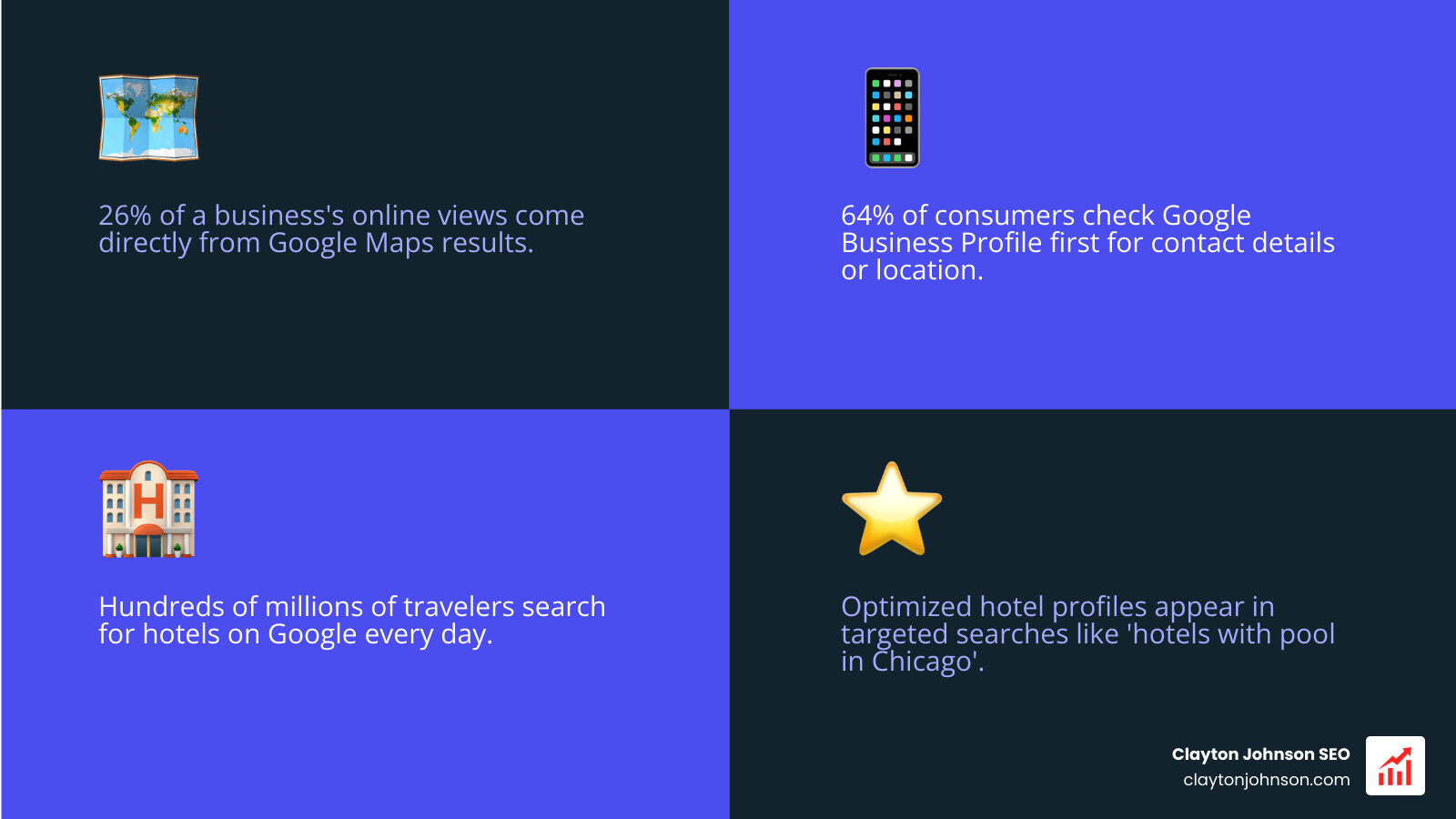
The numbers are hard to ignore. On average, 26% of a business’s online views come directly from Google Maps results. And 64% of consumers turn to a Google Business Profile first when looking for contact details or a location.
For hotels specifically, the stakes are even higher. Travelers aren’t just searching for “hotels near me” — they’re searching for “hotels with a pool in Chicago” or “pet-friendly hotels downtown.” If your profile isn’t optimized, you’re invisible for those searches.
And here’s the thing: most hotels still aren’t using Google Business Profile properly. That means a well-optimized profile is a real competitive advantage — not just a nice-to-have.
This guide walks you through everything: setup, optimization, booking links, Hotel Ads, local SEO, and ongoing management.
Mastering Google My Business Hotels: Setup and Optimization
When we talk about Google My Business hotels, we are essentially discussing the digital storefront of your property. In the hospitality world, location is everything — but if travelers can’t find that location on their smartphone, you might as well be invisible.
The first step to building a scalable growth engine is ensuring you actually own your digital space. Whether you are opening a brand-new boutique hotel or managing an established resort, you must follow these steps to correctly configure your Google Business Profile.
Profile Creation and Claiming
If your hotel already appears on Google Maps but you don’t have control over it, you need to “claim” the listing. This often involves a standard verification process to confirm ownership. Verification usually happens via a postcard sent to the physical address, a phone call, or email.
The Importance of NAP Consistency
In our framework, NAP consistency (Name, Address, and Phone number) is a foundational element of technical SEO. Google is a stickler for consistency. If your hotel is listed as “The Grand Plaza” on your website but “Grand Plaza Hotel & Suites” on Google, the algorithm gets confused. Google takes informational inconsistencies into account when ranking your business. Inconsistent data signals a lack of credibility, which can push you down the search results.
Standard Profile vs. Hotel-Specific Profile
It’s important to understand that a hotel profile is not the same as a profile for a dry cleaner or a restaurant. Google has built a custom “lodging” interface specifically for the hospitality industry.
| Feature | Standard Business Profile | Hotel Business Profile |
|---|---|---|
| Opening Hours | Customizable | Fixed at 24/7 (cannot be edited) |
| Google Posts | Primary visibility | Limited visibility/Specific formatting |
| Booking Engine | Optional “Book” button | Real-time rates & direct booking links |
| Attributes | General (Wi-Fi, Wheelchair access) | Lodging-specific (Pool, Spa, Room Service) |
| Class Ratings | Not available | Official 1-5 star ratings (Google-assigned) |
Essential Features of Google My Business Hotels
Once your profile is live, you need to fill in the “Hotel Details.” This section is where you tell Google — and your guests — exactly what you offer. Unlike other businesses that can simply type in their services, hotels select from a pre-defined list of attributes.
Hotel Attributes and Amenities
Do you have a fitness center? Is there a shuttle to the airport? These aren’t just details; they are search filters. When a traveler searches for “hotels with free breakfast,” Google looks directly at these attributes to decide who to show.
For those looking to attract the growing demographic of eco-conscious travelers, you should follow this guide for adding sustainability practices to your Google Business Profile. This allows you to highlight energy efficiency, water conservation, and waste reduction efforts.
Class Ratings
One unique aspect of Google My Business hotels is the class rating. This is the 1-5 star rating that appears next to your hotel name. This is not your customer review rating (e.g., 4.2 stars from guests). This is the official star rating assigned by Google based on the level of facilities and services. If you find your star rating is incorrect, you can contact Google support to provide the necessary documentation for an update.
For a deeper dive into how these elements fit into a broader marketing strategy, check out our guide on seo-101.
Driving Direct Bookings via Google My Business Hotels
One of the biggest benefits of a well-managed profile is the ability to bypass high OTA (Online Travel Agency) commissions by driving direct bookings.
Free Booking Links
Google now allows hotels to display a direct link to their booking engine for free. This is a game-changer. Hotels using these links have seen significant revenue increases — some reporting millions in additional revenue and a 25% jump in bookings. To set this up, you’ll need to learn how to manage rates and availability in your Google Business Profile.
Google Hotel Ads
While free links are great, Google Hotel Ads take it a step further. These are paid placements that appear when users are actively comparing hotels. They allow you to create attractive advertising campaigns that drive business by targeting specific audiences and accessing advanced reporting. The beauty of Hotel Ads is that you retain full control over your terms and conditions, unlike when a guest books through a third party.
By combining free links with strategic ads, you can effectively compete with giants like Booking.com or Expedia. Our seo-services can help you balance these channels for maximum ROI.
Maximizing Visibility with Local SEO and Engagement
Local SEO is the art of appearing in the “Local Pack” — that box at the top of Google Search that shows a map and three top business results. For hotels, getting into this pack is the “Holy Grail.”
The Local Pack and Search Intent
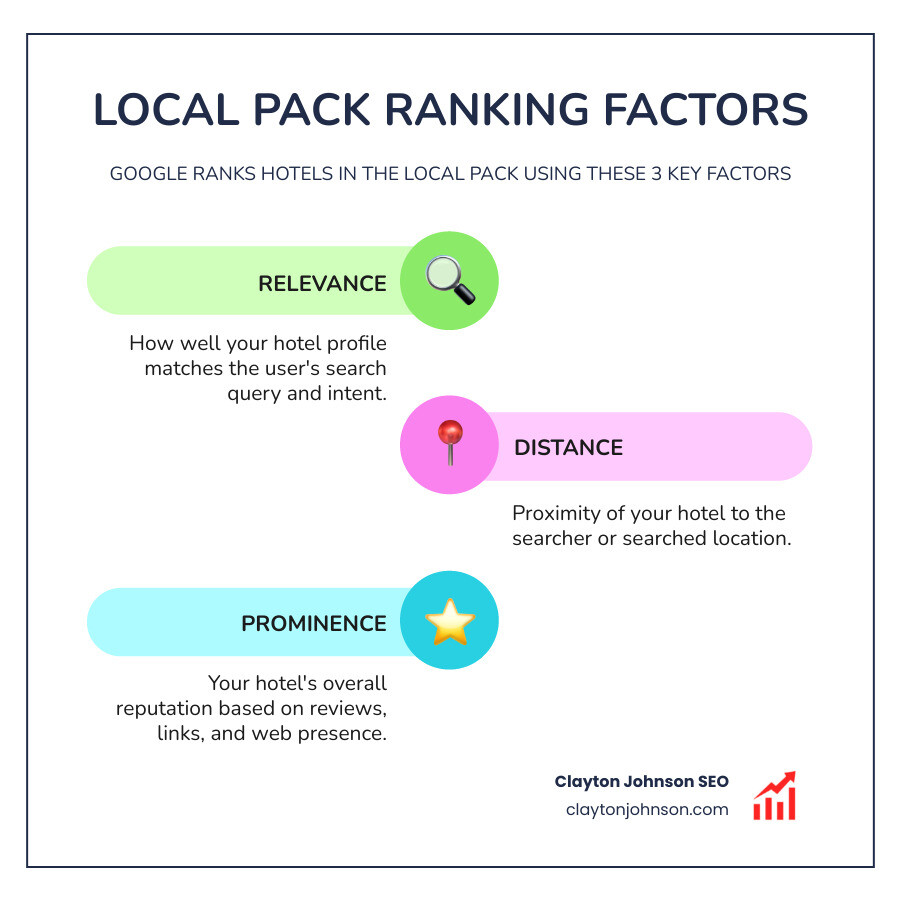
Google determines who makes it into the Local Pack based on three factors:
- Relevance: How well your profile matches the search query.
- Distance: How close you are to the searcher (or the searched location).
- Prominence: How well-known your hotel is (based on reviews, links, and overall web presence).
Review Management
Reviews are the lifeblood of Google My Business hotels. 64% of consumers check your Google profile for a reason — they want to see if they can trust you. High review volume and high ratings can actually make your listing appear larger in the Local Pack. We always recommend responding to every review — good or bad. It shows potential guests that you are attentive and professional.
Google Posts
Think of Google Posts as free micro-ads. While they don’t directly boost your SEO ranking, they appear as thumbnails in search results. You can use them to announce seasonal offers, upcoming events, or new renovations. Posts appear in search results as a visual hook that can entice a click-through to your website.
For those in competitive markets, such as the Twin Cities, our insights on minneapolis-seo provide specific strategies for dominating local search.
Advanced Management and Long-Term Growth Strategy
Managing a hotel profile isn’t a “set it and forget it” task. It requires ongoing attention to data and a willingness to adapt to new features.
API Management and Technical Hurdles
For larger hotel groups, managing profiles manually is impossible. This is where the Google Business Profile API comes in. However, there are technical quirks to be aware of. For instance, according to the Google Business Profile API documentation, you cannot update hotel attributes through spreadsheet uploads; you must use the API or the dashboard directly.
If you are looking to stay ahead of the curve, integrating the-no-nonsense-guide-to-ai-seo into your workflow can help automate review responses and content updates, allowing your staff to focus on guest experience.
Managing Amenities and Sustainability Attributes
Sustainability is no longer a niche interest; it’s a major factor in booking decisions. Google often pulls information from various data sources to assign these attributes automatically. If these details are incorrect, you should contact support to rectify them.
Optimizing Visual Content and Customer Interaction
Photos are often the first thing a guest looks at. Google’s algorithm is smart enough to reject generic stock photos; it wants real, high-quality images of your rooms and your lobby.
- Professional Photography: Aim for 7–12 high-quality shots covering the exterior, lobby, and every room type.
- Video Tours: A short video tour can increase booking confidence significantly.
- Q&A Section: Don’t wait for guests to ask questions. You can post your own “Frequently Asked Questions” (like “What time is check-out?” or “Is there a spa?”) and answer them yourself.
Just as we advise in our beginners-guide-to-medical-practice-seo, the goal is to reduce friction for the user. The more questions you answer on the profile, the more likely they are to hit that “Book” button.
Leveraging Data and Insights for Competitive Advantage
The “Insights” tab in your profile is a goldmine. It tells you exactly what keywords people used to find you. Did they search for “romantic hotels” or “business hotels”? This data should drive your entire marketing strategy.
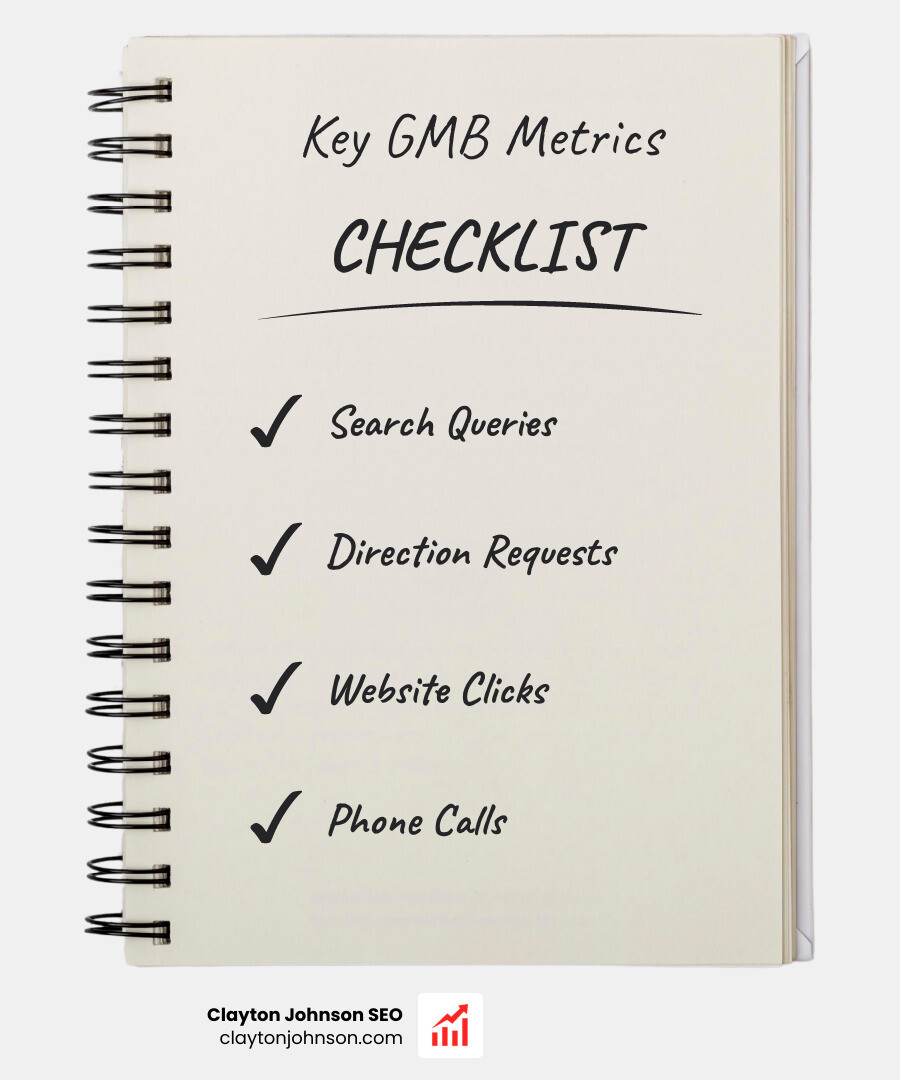
If you see a surge in people searching for “hotels with a gym,” and you haven’t highlighted your fitness center lately, it’s time to update your photos and Google Posts. Tracking these conversion metrics allows you to see the direct impact of your SEO efforts.
For specialized industries, we offer tailored advice, such as our beginners-guide-to-orthodontist-seo, but the core principles of search intent and data-driven growth remain the same across all sectors.
Final Thoughts on Systemic Growth
At Clayton Johnson SEO, we believe in building systems that compound over time. A well-optimized Google My Business hotels profile is a cornerstone of that system. By providing clarity to Google and structure to your online presence, you create leverage that leads to long-term growth.
Ready to turn your hotel into a search engine star? We specialize in building the systems that turn marketing efforts into growth engines. Explore our specialized resources for ai-for-restaurants-hospitality or reach out to us directly through our contact page to start building your custom growth framework today.