Why Email Marketing Guidelines Are the Foundation of Every Successful Campaign
Email marketing guidelines are the rules, best practices, and legal requirements that govern how businesses send commercial emails — from getting consent and staying compliant to writing subject lines that actually get opened.
Here is a quick overview of the core guidelines:
| Category | What It Covers |
|---|---|
| Legal compliance | CAN-SPAM Act, GDPR, opt-out requirements, physical address disclosure |
| List building | Permission-based sign-ups, no purchased lists, double opt-in |
| Content standards | Honest subject lines, clear ad disclosure, working unsubscribe links |
| Deliverability | IP warming, sender reputation, authentication (SPF, DKIM, DMARC) |
| Performance | Segmentation, personalization, A/B testing, tracking key metrics |
Email remains one of the most powerful channels available to businesses today. It can generate a 3,600% return on investment — meaning $36 back for every $1 spent. It is also consumers’ number one preferred communication channel, ahead of SMS and social media. And with hundreds of millions of new email users expected in coming years, the opportunity is only growing.
But here is the catch: most businesses leave that ROI on the table because they skip the fundamentals. They buy lists, ignore compliance, send inconsistent campaigns, and wonder why results are flat.
Getting the guidelines right is not just about avoiding fines. It is what separates campaigns that drive real revenue from ones that land in the spam folder.
I’m Clayton Johnson, an SEO strategist and demand generation expert who has spent nearly two decades helping businesses build data-driven marketing systems — including crafting scalable email marketing guidelines that align with both legal requirements and growth objectives. In the sections below, I’ll walk you through everything you need to build a compliant, high-performing email program from the ground up.
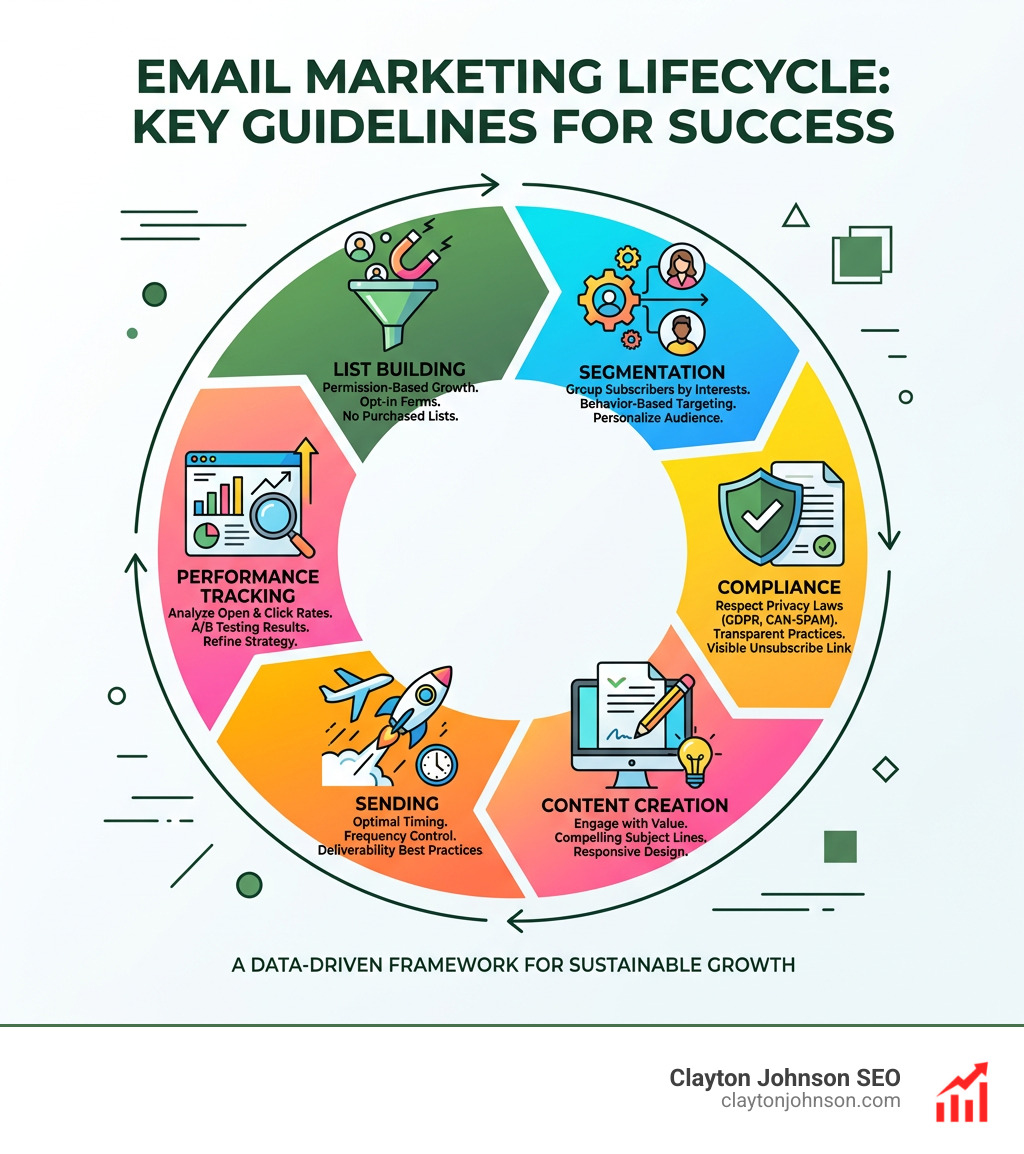
Core Email Marketing Guidelines for Compliance and Growth
To build a high-performing email program, we must first distinguish between the types of messages we send. Not every email is a “marketing” email, and the law treats them differently. Understanding the “primary purpose” of your message is the first step in our email marketing guidelines.
Commercial vs. Transactional Content
The distinction here is critical for legal safety. A commercial message is any email that advertises or promotes a product or service. A transactional (or relationship) message facilitates an already agreed-upon transaction or provides updates about an existing relationship.
| Feature | Commercial Email | Transactional Email |
|---|---|---|
| Primary Purpose | Promotion, sales, and marketing | Facilitating a transaction or providing info |
| Opt-in Required | Yes, explicit permission needed | No, usually based on user action |
| Unsubscribe Link | Must be clear and conspicuous | Not legally required (but good practice) |
| Physical Address | Required by law | Not strictly required |
| Examples | Newsletters, sales alerts, welcome series | Receipts, shipping notices, password resets |
If your email contains both types of content, it is generally viewed as commercial if the subject line leads the recipient to believe it’s an advertisement or if the commercial content isn’t placed at the end of the message.
Navigating Legal Email Marketing Guidelines
In the United States, the CAN-SPAM Act is the primary law you need to follow. It isn’t just for bulk “spam”; it applies to all commercial messages, including B2B emails. The FTC enforces these rules strictly, and each separate email in violation can incur penalties of up to $53,088.
To stay compliant, we follow these non-negotiable steps:
- Don’t use deceptive header info: Your “From,” “To,” and routing information must be accurate.
- Don’t use misleading subject lines: Your subject line must reflect the content of the email.
- Identify the message as an ad: You must disclose clearly that the message is an advertisement.
- Tell recipients where you’re located: You must include a valid physical postal address.
- Tell recipients how to opt out: Your email must include a clear explanation of how the user can opt out of getting emails from you in the future.
- Honor opt-out requests promptly: You must honor an unsubscribe request within 10 business days.
If you have customers in Europe, you also need to consult a GDPR best practice guide. GDPR is even stricter, requiring “affirmative consent,” meaning users must actively check a box to join your list. For those looking to scale safely, our email marketing services can help navigate these complex regulatory waters.
Technical Email Marketing Guidelines for Deliverability
Landing in the inbox is a technical feat, not just a creative one. Your sender reputation is like a credit score for your email address. If you send 100,000 emails suddenly from a new IP, ISPs will likely flag you as a spammer.
To protect your reputation, we recommend:
- IP Warming: If you are warming up a new sending Internet Protocol or IP, start by sending low volumes to your most engaged subscribers and gradually increase.
- Double Opt-In: This requires users to click a link in a confirmation email before being added to your list. It ensures your list is full of real people who actually want to hear from you.
- Authentication: Set up SPF, DKIM, and DMARC. These are technical “passports” that prove to the receiving server that you are who you say you are.
- Consistency: Sending 5 emails one week and zero the next looks suspicious. Maintain a consistent cadence to keep ISPs happy.
For a deeper dive into the technical setup, check out our A-Z guide to email marketing automation.
Strategic List Building and Segmentation
The golden rule of email marketing guidelines: Never buy email lists. Purchased lists are filled with people who didn’t ask to hear from you. Sending to them leads to high bounce rates, spam complaints, and could get your account blacklisted.
Instead, focus on organic growth:
- Lead Magnets: Offer something of high value—like an ebook, a discount code, or a webinar—in exchange for an email address.
- Gated Content: Use your most valuable assets to encourage sign-ups.
- Exit-Intent Pop-ups: Catch visitors before they leave with a compelling offer.
Once you have a list, don’t treat everyone the same. Use segmentation to deliver relevant content. We segment audiences by:
- Demographics: Age, gender, or location.
- Behavior: Past purchases, website visits, or email engagement (openers vs. non-openers).
- Lifecycle Stage: New subscribers vs. loyal long-term customers.
- Business Needs: In B2B, segmenting by industry or job role is essential.
Effective segmentation ensures that a customer who just bought shoes doesn’t get a “buy these shoes” email the next day. This level of precision is part of what we call SEO-driven email campaigns, where search intent and email content work together.
Content Optimization and A/B Testing
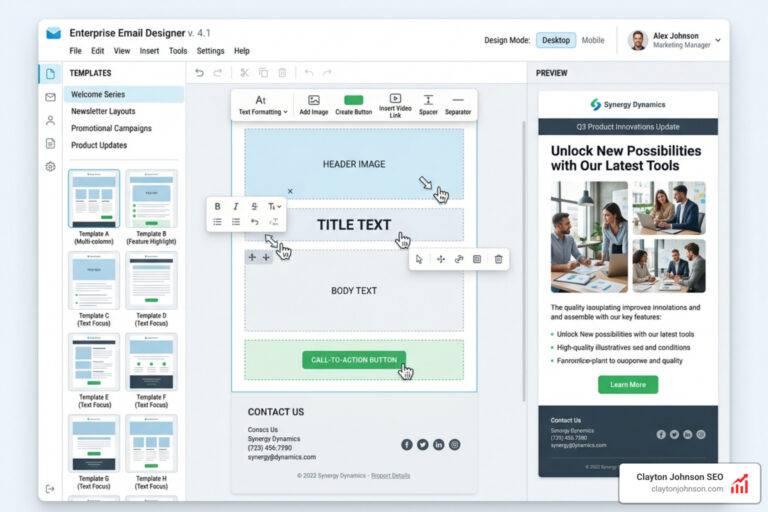
Your email content needs to be “mobile-first.” Since 50-60% of emails are opened on mobile devices, a single-column layout is usually best. Use large fonts (at least 14px) and ensure your Call to Action (CTA) buttons are easy to tap with a thumb.
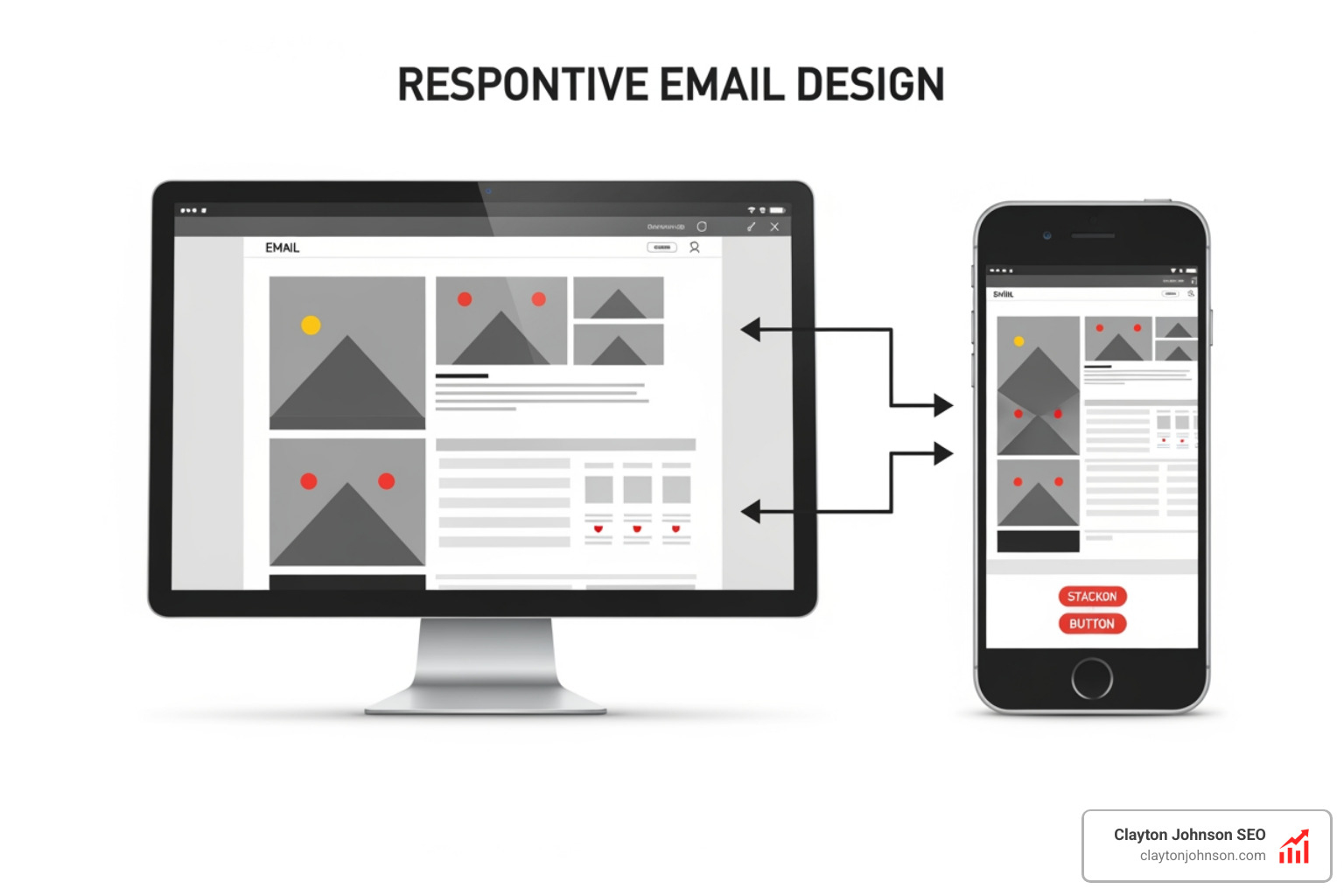
To truly master your content, we use A/B testing. This involves sending two versions of an email to a small portion of your list to see which performs better. We test:
- Subject Lines: Does “20% Off” work better than “A Special Gift for You”?
- Preview Text: This is the snippet of text that appears after the subject line. About 24% of people check this before opening.
- From Names: Sometimes using a personal name (e.g., “Clayton from CJ SEO”) works better than just the company name.
- CTAs: Test different colors, placements, and wording.
We also love using user-generated content (UGC). Sharing photos or reviews from real customers builds trust far faster than branded copy alone. When choosing your tech stack, it’s worth asking which email automation tool lives up to the hype for your specific A/B testing needs.
Implementing Systems for Long-Term Success
Email marketing is not a “set it and forget it” tactic. It is a system that requires constant monitoring and refinement. We use data to turn fragmented efforts into a coherent growth engine.
B2B Best Practices and Multichannel Integration
In the B2B world, the sales cycle is long. You aren’t just selling a product; you are building a relationship. This is where Account-Based Marketing (ABM) comes in. ABM treats a specific company like its own market, with emails tailored specifically to the decision-makers at that firm.
For B2B, we follow these specific email marketing guidelines:
- Educate, Don’t Pitch: Provide “masterclass” style content that solves problems rather than just asking for a meeting.
- Drip Campaigns: Use automated sequences to nurture leads over months, providing value at every step.
- Multichannel Coordination: Email is stronger when paired with other channels. A coordinated strategy involving email, SMS, and social media can drive up to 88.3X more purchases per user.
Check out our Email and SMS Guide to see how to bridge these channels. For niche industries, like home services, we’ve developed specialized frameworks for HVAC email marketing leads that capitalize on these multichannel systems.
Measuring Impact and Refining Strategy
To know if your email marketing guidelines are working, you must track the metrics that matter. While open rates are a good indicator of subject line health, they are “vanity metrics” if they don’t lead to revenue.
We focus on:
- Click-Through Rate (CTR): The percentage of people who clicked a link in your email. This measures how engaging your content is.
- Conversion Rate: The percentage of people who completed the desired action (like making a purchase).
- Bounce Rate: Keep this under 2% to protect your reputation.
- Unsubscribe Rate: A healthy list usually sees around 0.24%. If yours is higher, your content might not be relevant to your audience.
- ROI: The ultimate metric. With a potential 3,600% return on investment, email is the backbone of profitable growth.
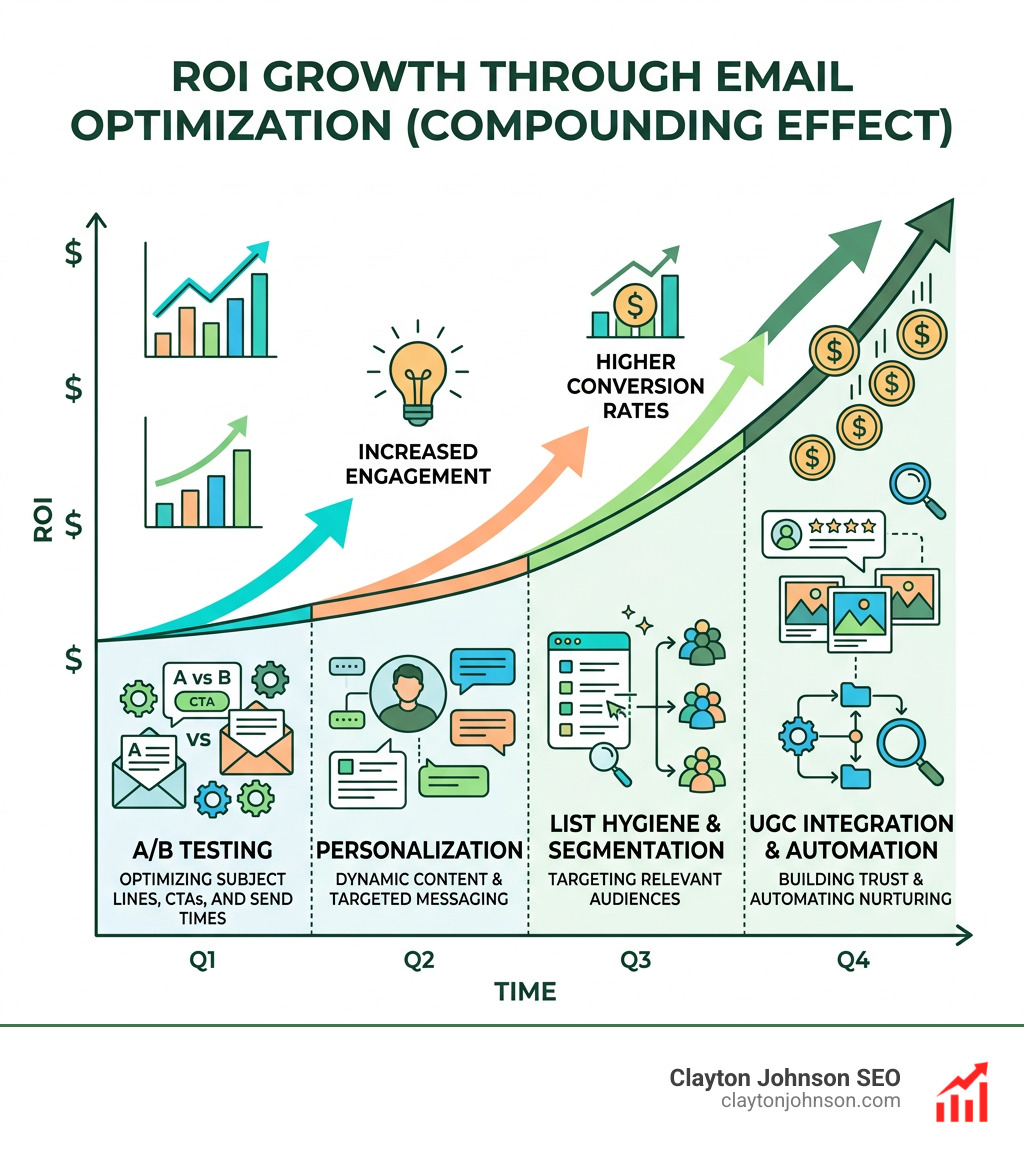
Maintaining List Hygiene
Email lists decay by about 22.5% every year. People change jobs, delete accounts, or simply stop opening your emails. “List hygiene” is the process of cleaning out these inactive addresses.
We recommend a quarterly “scrub”:
- Identify Inactive Subscribers: Those who haven’t opened an email in 6-12 months.
- Run a Reengagement Campaign: Send a “We miss you” email with a special incentive.
- Remove the Rest: If they still don’t engage, delete them. It hurts to see the list size shrink, but your deliverability and open rates will soar.
At Clayton Johnson SEO, we believe in clarity and structure. We don’t just advise on tactics; we build the systems that operationalize these email marketing guidelines into compounding growth. If you’re ready to stop chasing vanity metrics and start building a durable marketing engine, our team of email marketing agencies experts is here to help. And remember, in professional services, you shouldn’t just get retained—you should get paid with better agency email retainers.
Mastering the Inbox
The inbox is a sacred place. It’s one of the few channels where you have a direct, invited line of communication with your customers. By following these email marketing guidelines, you respect that invitation and build the trust necessary for long-term success.
Whether you are a B2B operator looking to scale through ABM or a B2C brand aiming for that 3,600% ROI, the path is the same: permission, personalization, and persistence. Keep your lists clean, your content relevant, and your technical setup authenticated. The results will follow.