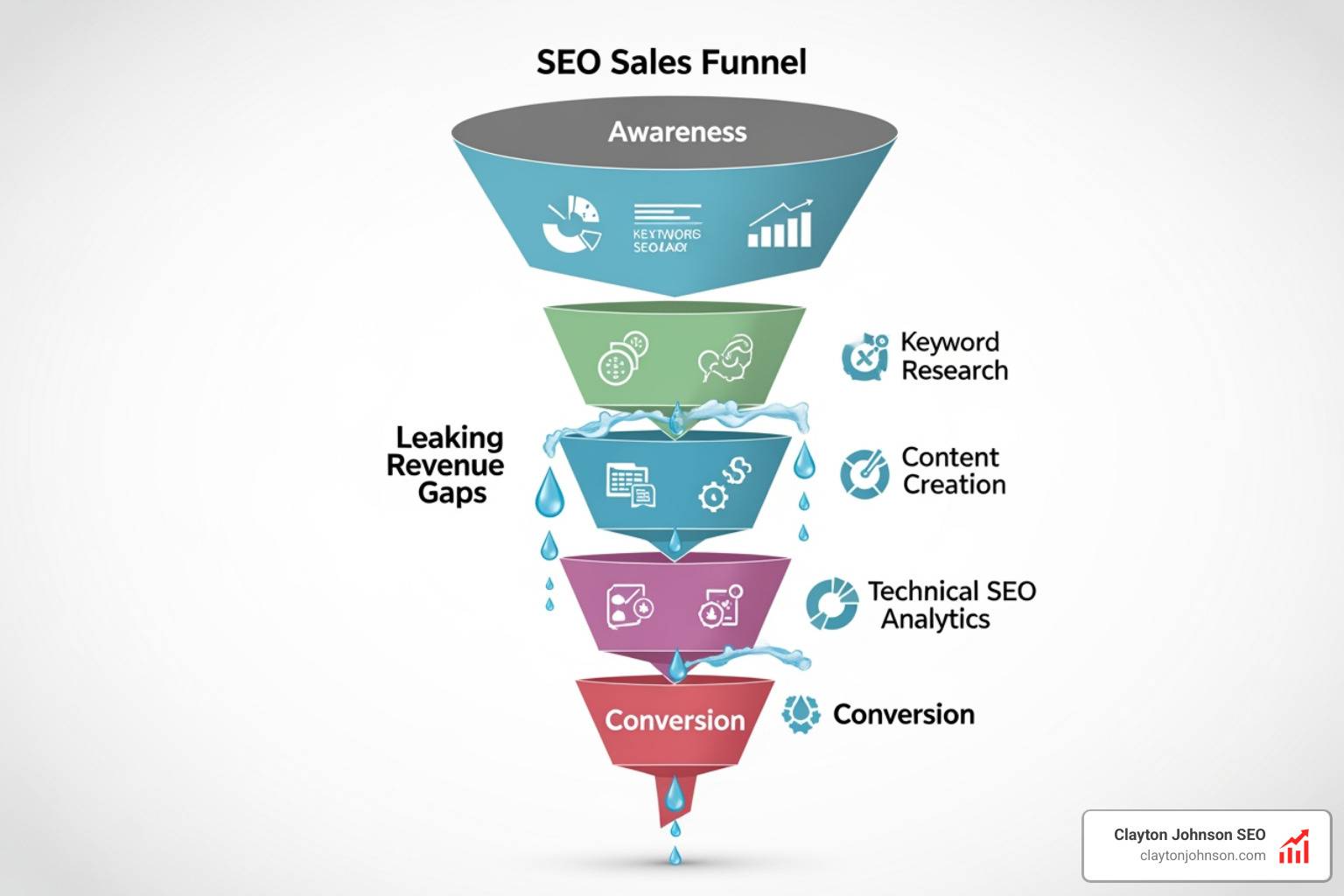
Why Your SEO Funnel Is Leaking Revenue (And How to Stop It)
An enterprise SEO funnel optimization audit is the process of systematically identifying where your organic traffic drops off at each stage of the buyer journey — from first search to closed deal — and fixing the gaps that cost you revenue.
Here is what a complete audit covers:
| Funnel Stage | What to Audit | Key Metric |
|---|---|---|
| Awareness (TOFU) | Keyword coverage, content gaps, crawlability | Impressions, non-branded clicks |
| Interest / Consideration (MOFU) | Content depth, internal linking, intent alignment | Engagement rate, pages per session |
| Conversion (BOFU) | High-intent pages, CTAs, page speed, friction | Conversion rate, assisted conversions |
| Loyalty | Content freshness, UX, authority signals | Return visits, pipeline influence |
Most enterprise sites have a hidden problem. Traffic looks healthy on the surface. But only a fraction of pages drive real pipeline. Research shows that over 96.55% of pages on the internet receive zero organic traffic — and even among large B2B sites, more than 70% of content targets purely informational keywords with little conversion potential.
That means most of your SEO investment is aimed at the wrong part of the funnel.
The cost is real. Pages buried deep in site structure go uncrawled. High-intent buyers land on content that was never built to convert. Technical debt quietly blocks your best pages from ranking. And without a structured audit, these leaks stay invisible.
I’m Clayton Johnson, an SEO strategist with nearly two decades of experience building scalable SEO frameworks, and the enterprise SEO funnel optimization audit process I use has helped companies stop trading vanity traffic for actual revenue. In this guide, I’ll walk you through exactly how to find and fix the leaks.

The Framework for an Enterprise SEO Funnel Optimization Audit
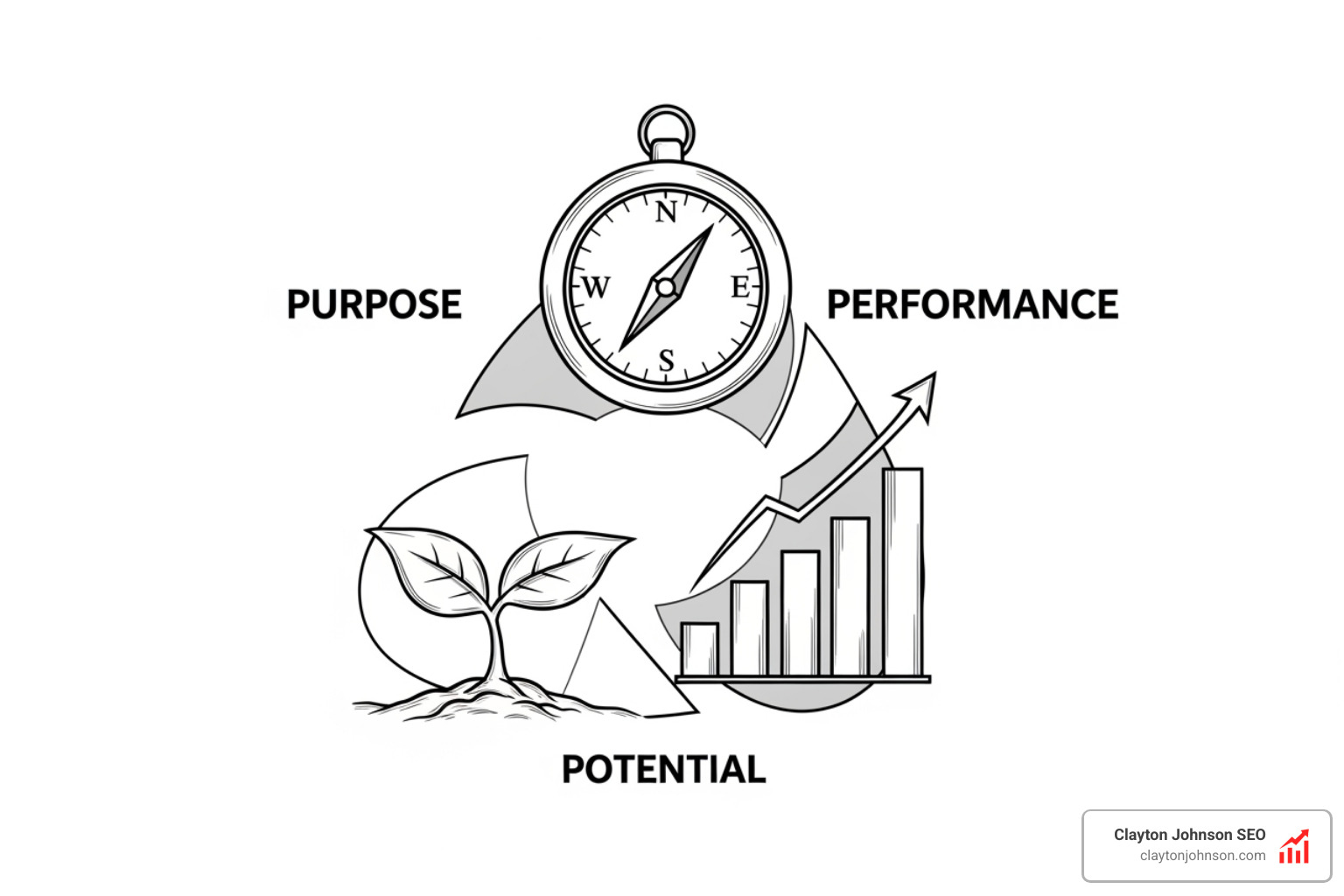
When we look at a massive website with thousands or millions of pages, we can’t just use a basic checklist. We need a system. We use the 3P’s Framework to evaluate every asset on your site: Purpose, Performance, and Potential.
- Purpose: Does this page actually align with a stage in the buyer’s journey? If a page exists just for “traffic” without a clear path to the next funnel stage, it’s a liability, not an asset.
- Performance: Is the page currently driving clicks, engagement, or conversions? We pull data from Google Search Console and GA4 to see if the page is pulling its weight.
- Potential: Can this page rank higher? Does it have the authority to compete for high-intent clusters?
In an enterprise environment, technical debt is the primary “silent killer” of the funnel. Statistics show that 72% of websites have slow-loading pages, which directly impacts crawl budget and user retention. If your site takes more than 3 seconds to load, 53% of mobile users will simply leave. This friction at the Conversion (BOFU) stage is where most revenue leaks occur.
Furthermore, we must address Index Bloat. Large sites often suffer from thousands of low-value URLs (like session IDs or thin tag pages) being indexed. This wastes Google’s crawl budget, meaning your “money pages” might not get crawled or updated frequently enough to maintain their rankings.
Identifying Bottlenecks in the Enterprise SEO Funnel Optimization Audit
The first step in our enterprise seo funnel optimization audit is identifying where the “clogs” are. In large-scale sites, these bottlenecks are usually technical or structural.
- Crawl Budget Waste: If your site has millions of URLs, search bots have a limited “budget” for how much they will crawl. If they are busy crawling 404 errors or duplicate content, they won’t reach your high-value bottom-of-funnel pages.
- JavaScript Rendering: Many modern enterprise sites use heavy JavaScript. If Google can’t render your content efficiently, your funnel is essentially invisible.
- Internal Linking: This is the “circulatory system” of your funnel. We use tools like Screaming Frog to map out internal link equity. If your high-intent BOFU pages are buried four or more clicks away from the homepage, they won’t rank, no matter how good the content is.
For many organizations, the complexity of these issues requires specialized eyes. This is where SEO consultants become vital, as they can navigate the intersection of IT constraints and marketing goals.
Prioritizing High-Intent Content for BOFU Conversions
While Top-of-Funnel (TOFU) content like “What is [Topic]” is great for brand awareness, it often has a low conversion rate. To drive revenue, our enterprise seo funnel optimization audit focuses heavily on Bottom-of-Funnel (BOFU) keywords.
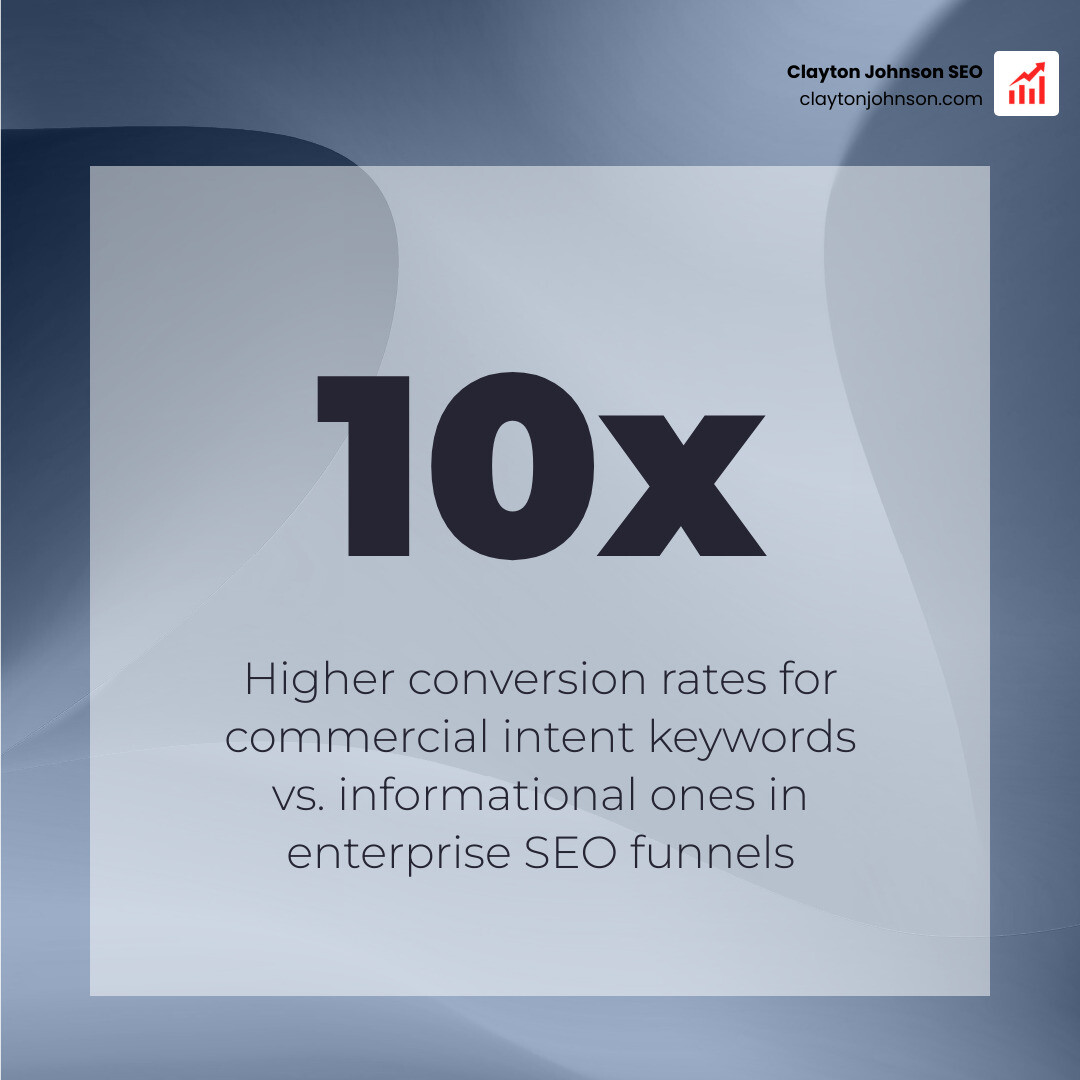
Keywords with commercial intent (like “best enterprise CRM” or “competitor A vs competitor B”) have conversion rates up to 10x higher than informational ones. According to a study by Ahrefs, most pages get no traffic because they lack backlinks and clear intent matching.
To optimize for BOFU, we look for:
- Solution Modifiers: Keywords including “software,” “platform,” or “service.”
- Comparison Terms: “Alternative to,” “vs,” and “reviews.”
- Sales Insights: We interview your sales team to find the exact questions prospects ask right before they buy.
By layering in E-E-A-T (Experience, Expertise, Authoritativeness, and Trustworthiness) signals—such as case studies, original research, and verified testimonials—we transform standard pages into high-converting assets. For more on scaling this, check out our insights on content marketing studios.
Scaling Performance with AI and Programmatic SEO
At the enterprise level, you cannot manually create every page. This is where Programmatic SEO and AI strategy come into play.
We build taxonomy-driven ecosystems. Instead of writing 500 individual blog posts, we build templates that generate high-quality, data-rich pages for specific search queries (e.g., “Industry X Solution for [Region]”). This allows us to scale the funnel without sacrificing quality.
Furthermore, we audit for LLM Visibility. As search evolves into AI-driven answers, your content needs to be structured in a way that Large Language Models can easily parse and cite. This means using clear headers, bulleted lists, and schema markup to ensure your brand remains the “authoritative answer” in the AI era.
Executing the Audit and Measuring Revenue Impact
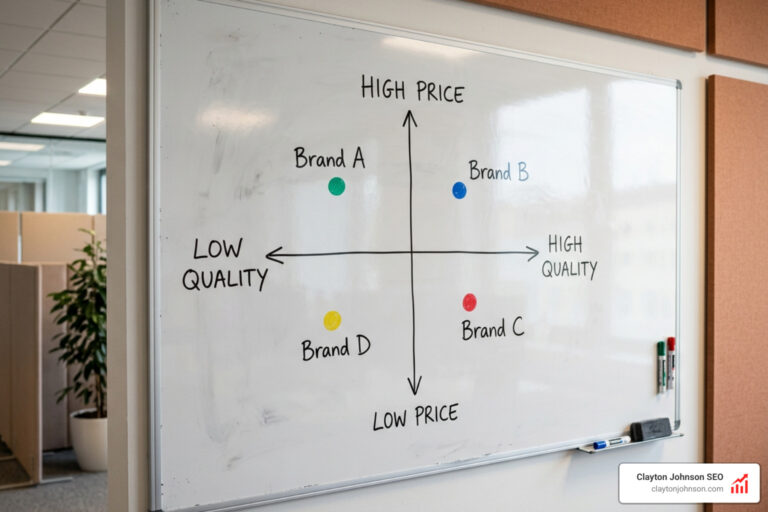
Once the audit is complete, you will likely have a list of hundreds of issues. The biggest mistake enterprise teams make is trying to fix everything at once. This leads to “analysis paralysis.” Instead, we use the Impact vs. Effort Matrix.

Applying the Impact vs. Effort Matrix to Your Enterprise SEO Funnel Optimization Audit
We categorize every finding from the enterprise seo funnel optimization audit into four quadrants:
- Quick Wins (High Impact, Low Effort): Fixing broken internal links to BOFU pages, updating meta titles for high-volume TOFU posts, or compressing images to improve Google’s Core Web Vitals.
- Strategic Pillars (High Impact, High Effort): This might include a site-wide architecture overhaul or launching a programmatic SEO project. These require Lumar for deep crawling and significant developer buy-in.
- Fill-ins (Low Impact, Low Effort): Minor CSS tweaks or updating old dates in blog posts.
- Time Wasters (Low Impact, High Effort): Re-writing perfectly functional legacy content that doesn’t target high-intent keywords.
By focusing on the “Quick Wins” first, we can prove ROI early and secure the budget needed for larger strategic projects.
Tracking Metrics Beyond Rankings to Prove ROI
Standard SEO reports focus on rankings and traffic. But in an enterprise funnel audit, those are just “vanity metrics.” To get the CFO’s attention, we need to track pipeline impact.
We focus on:
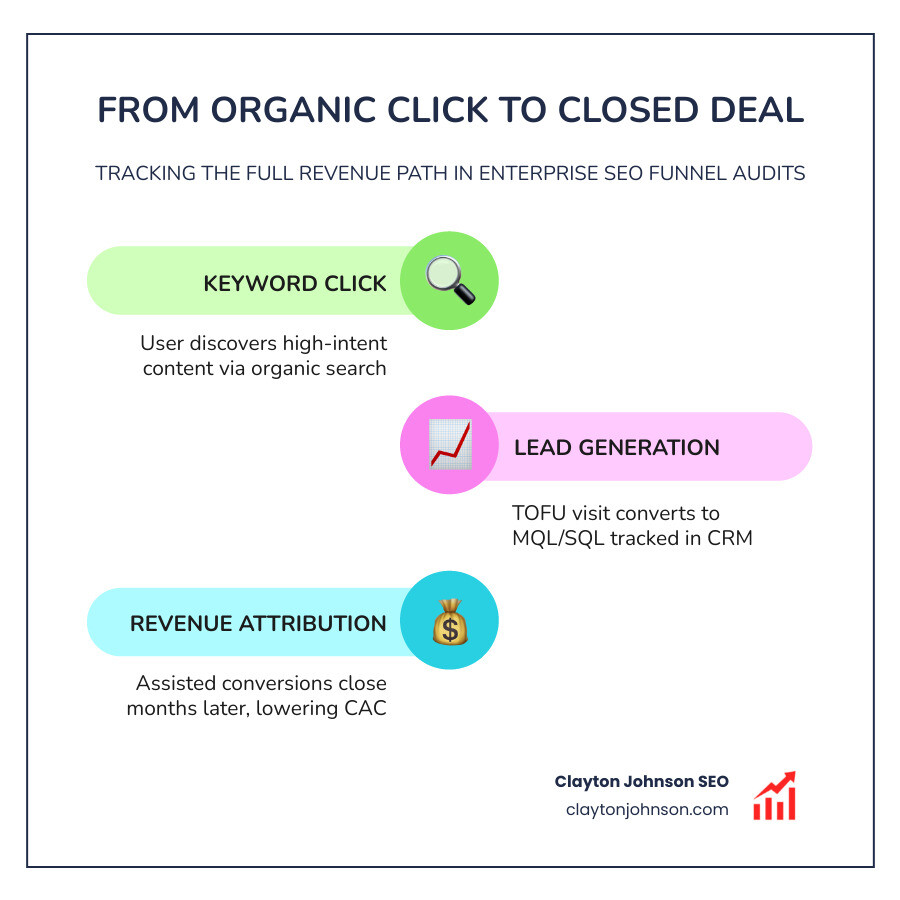
- MQLs and SQLs: How many leads are coming directly from organic search?
- Assisted Conversions: How often does a TOFU blog post serve as the first touchpoint for a deal that closes months later?
- Customer Acquisition Cost (CAC): Is organic search lowering your overall cost to acquire a customer compared to paid ads?
- Pipeline Value: What is the dollar value of the opportunities generated by organic search?
Using Google Search Console integrated with your CRM allows us to see the full path from a keyword click to a closed-won deal. This is the ultimate goal of conversion rate optimization.
Conclusion: Building a Scalable Growth Engine
An enterprise seo funnel optimization audit isn’t a one-time event; it’s the foundation of a durable growth system. By moving away from chasing random keywords and focusing on a structured, intent-driven funnel, you stop the revenue leaks that plague most large-scale websites.
At Clayton Johnson SEO, we believe in Clarity → Structure → Leverage → Compounding Growth. We don’t just provide a list of errors; we build the systems—internal linking structures, taxonomy-driven content, and AI-augmented workflows—that turn your website into a revenue-generating machine.
If your organic traffic isn’t translating into the pipeline you expect, it’s time to look deeper into your keyword strategy. Let’s stop the leak and start building your scalable traffic system today.