Why AI Chatbots for Insurance Are Reshaping Commercial Brokerage
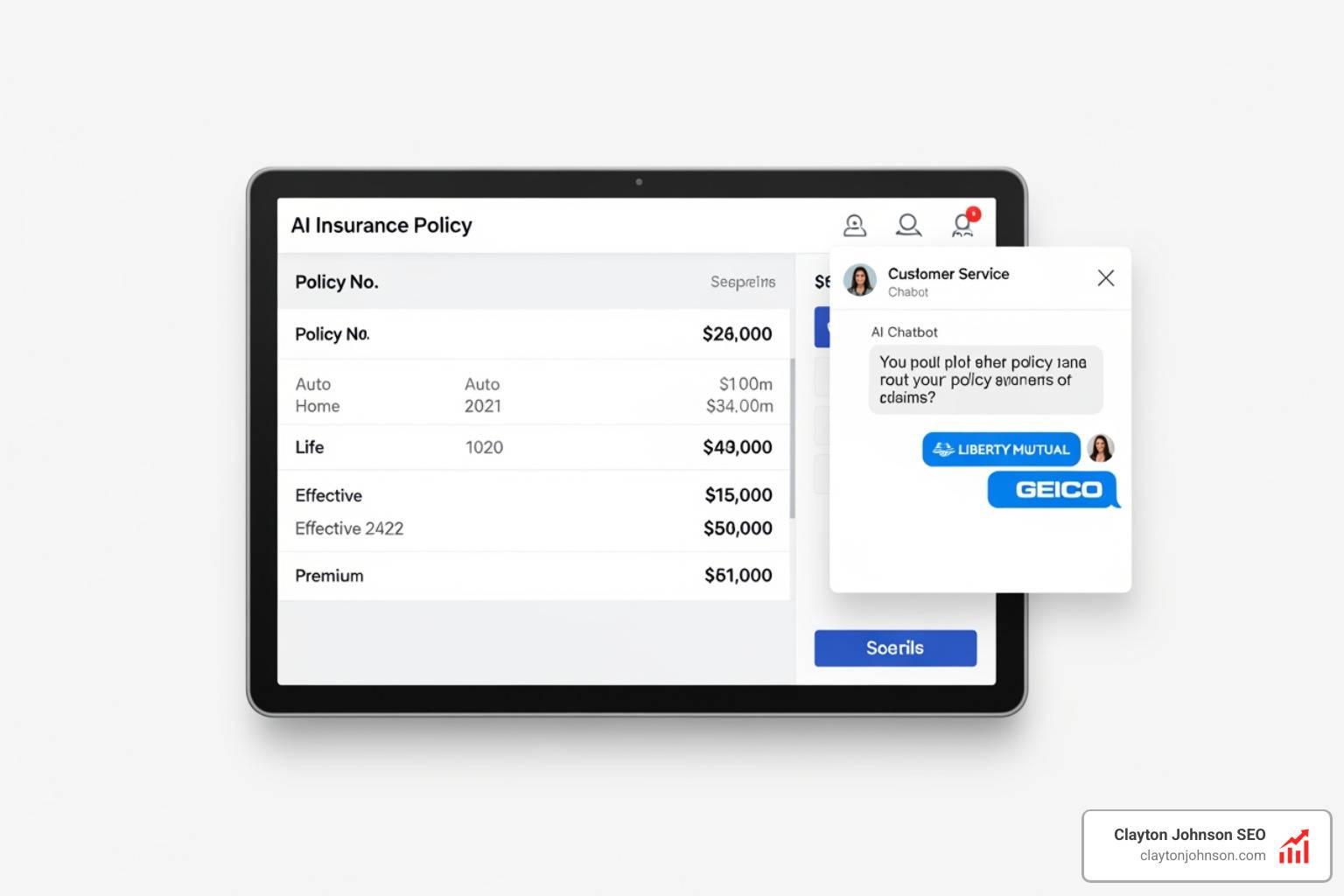
AI chatbots for insurance are software tools that use artificial intelligence to handle customer conversations automatically — across claims, policy questions, lead capture, and more.
Here’s a quick overview of what they do and why they matter:
| What They Do | Why It Matters |
|---|---|
| Answer policy and coverage questions 24/7 | No more missed leads after hours |
| Guide customers through claims filing | Faster settlements, fewer errors |
| Qualify leads and route serious prospects | Agents focus on high-value conversations |
| Support multiple channels (web, WhatsApp, SMS) | 82% of customers expect multi-channel service |
| Detect fraud and verify identity automatically | Reduces losses and handling time |
Filing an insurance claim used to mean long hold times, repeated policy numbers, and callbacks that never came. That experience frustrated customers — and cost brokers business. Today, AI is changing that equation fast.
Insurance is, at its core, about selling reassurance. But when the experience breaks down, customers leave. Consider this: 46% of insurance customers say experience was their top reason for choosing a provider. And with 83% of UK insurers already rolling out AI chatbots or generative AI for claims, the competitive gap between early adopters and everyone else is widening quickly.
For commercial insurance brokers specifically, the opportunity is significant. AI chatbots don’t just answer questions — they qualify prospects, process first notices of loss, and free your team to focus on the work that actually grows revenue.
I’m Clayton Johnson, an SEO strategist and AI marketing specialist who helps businesses build scalable growth systems — and I’ve worked extensively with AI-driven tools, including AI chatbots for insurance, to help brokers attract more qualified leads and convert them efficiently. In the sections ahead, I’ll break down exactly how to put these tools to work for your brokerage.
The Strategic Role of AI Chatbots for Insurance
When most people hear the word “chatbot,” they think of those frustrating little boxes that just loop the same three unhelpful answers. We’ve all been there, and we all know the feeling of typing “AGENT” in all caps just to get a human. But modern AI chatbots for insurance are a different breed entirely.
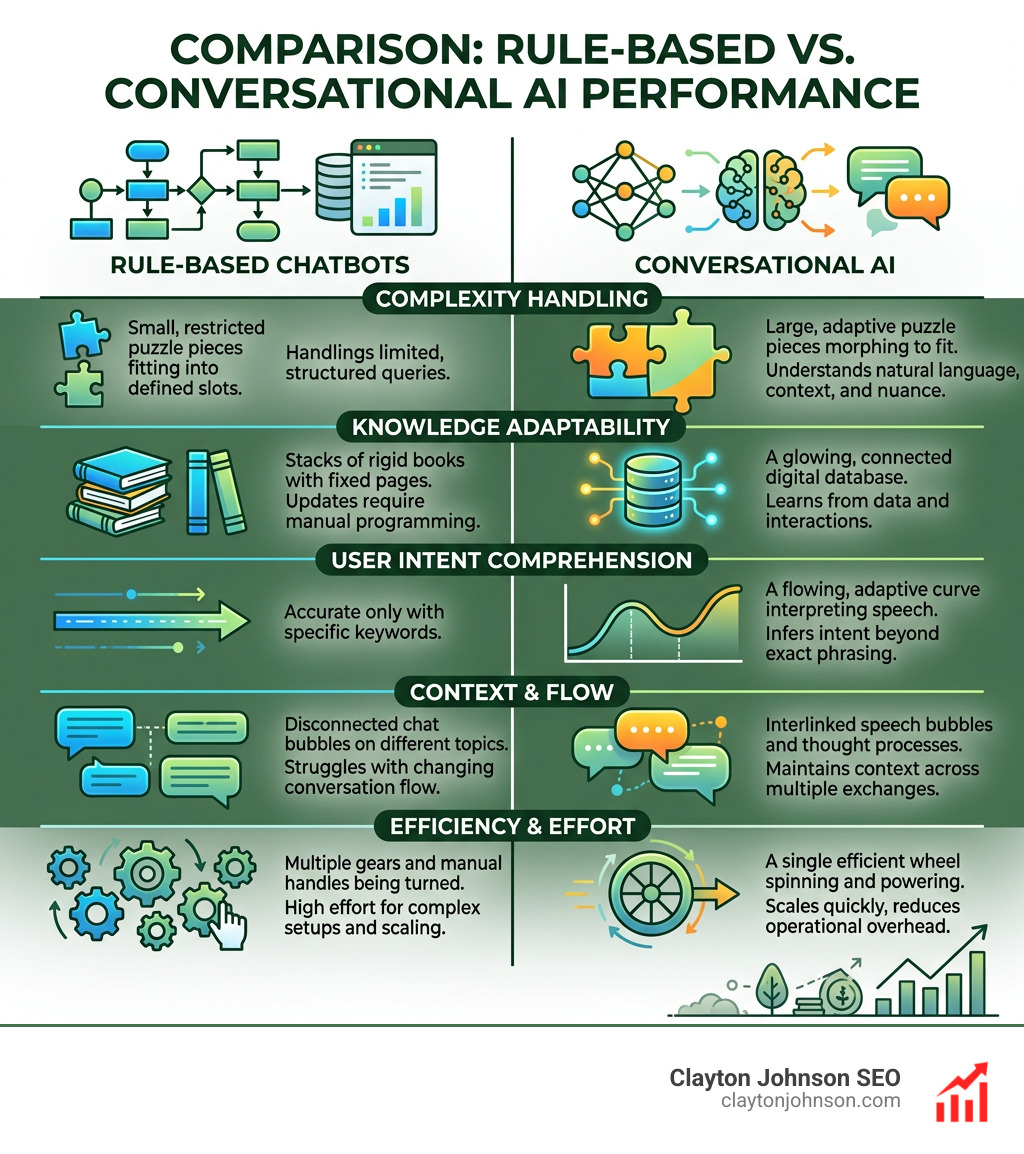
Traditional chatbots are “rule-based.” They follow a rigid script: If the user says A, then do B. If the user says something slightly off-script, the bot breaks. Modern AI chatbots use Artificial Intelligence and Natural Language Processing (NLP) to understand context, tone, and intent. They don’t just look for keywords; they understand what the customer is actually trying to achieve.
This shift is why 83% of UK insurers reported they had either already implemented or were currently implementing AI chatbots or Generative AI to support claims. These aren’t just toys; they are strategic assets that integrate with your backend systems to pull policy data, verify IDs, and even trigger payments.
By using AI for business growth, brokers can ensure that “robots don’t take sick days,” providing a level of reliability that human teams simply can’t match at 3:00 AM on a Sunday.
How AI Chatbots for Insurance Drive Lead Qualification
In commercial insurance, not all leads are created equal. You might get an inquiry for a complex multi-state manufacturing policy, and five minutes later, someone asking if you cover their pet hamster. Your high-value agents shouldn’t be spending their time on the latter.
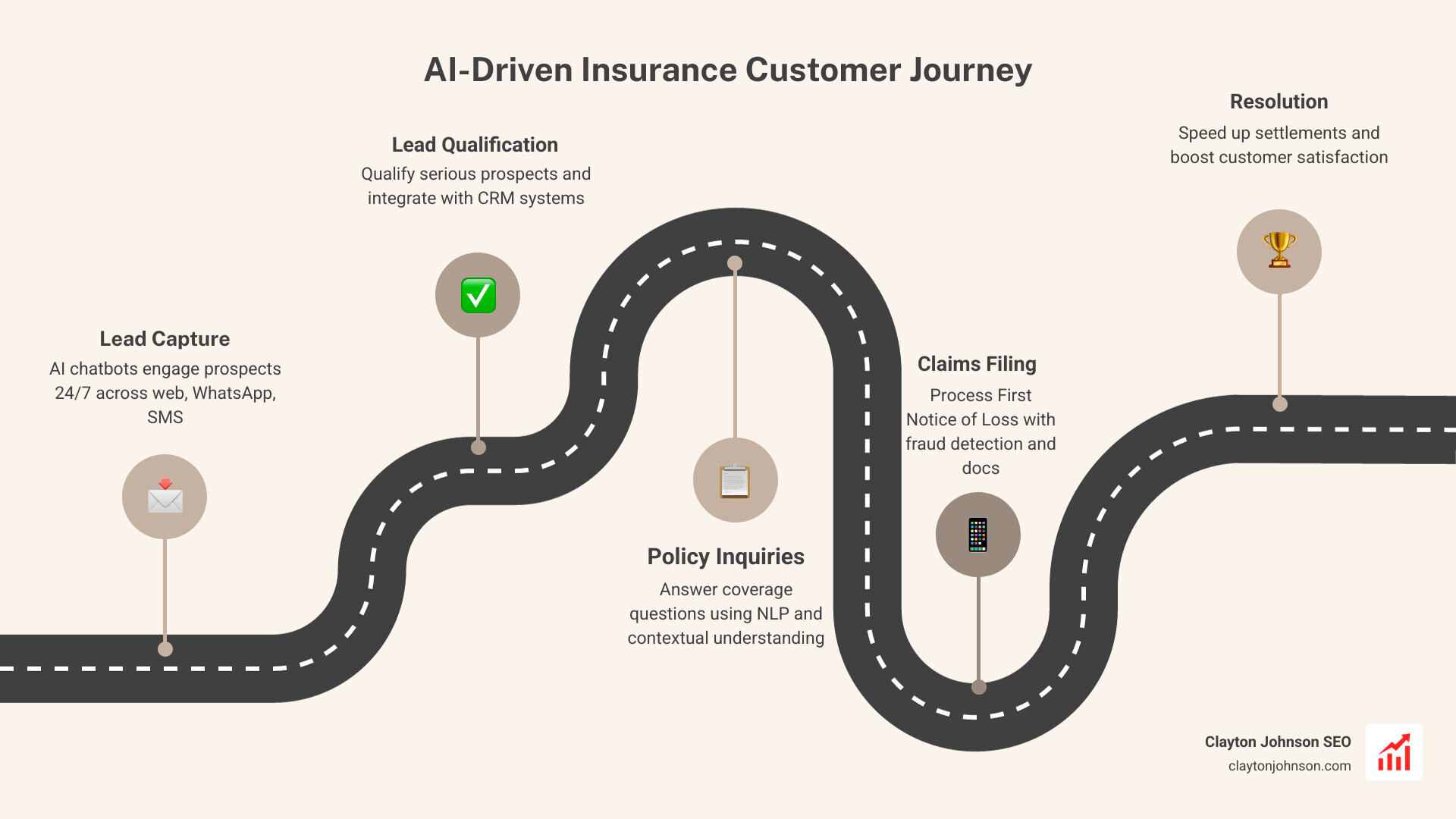
AI chatbots for insurance act as your digital concierge. They can engage website visitors immediately, asking the right qualifying questions to gauge the size of the business, the industry, and their specific needs.
- 24/7 Engagement: While your team is asleep, the bot is capturing the contact info of a CEO who just realized their liability coverage expires tomorrow.
- Multichannel Reach: Whether they find you on your website, WhatsApp, or Facebook Messenger, the bot provides a consistent experience.
- Serious Prospect Routing: Once a lead meets your criteria, the bot can book a meeting directly on an agent’s calendar or push the data into your CRM, like Salesforce or Applied Epic.
This ensures your team only talks to serious prospects who are ready to buy. It’s all about building a structured strategy framework where technology handles the volume so humans can handle the value.
Optimizing Claims with AI Chatbots for Insurance
Claims are where the “rubber meets the road” in insurance. It’s also the most expensive and time-consuming part of the business. AI is stepping in to handle the heavy lifting of First Notice of Loss (FNOL).
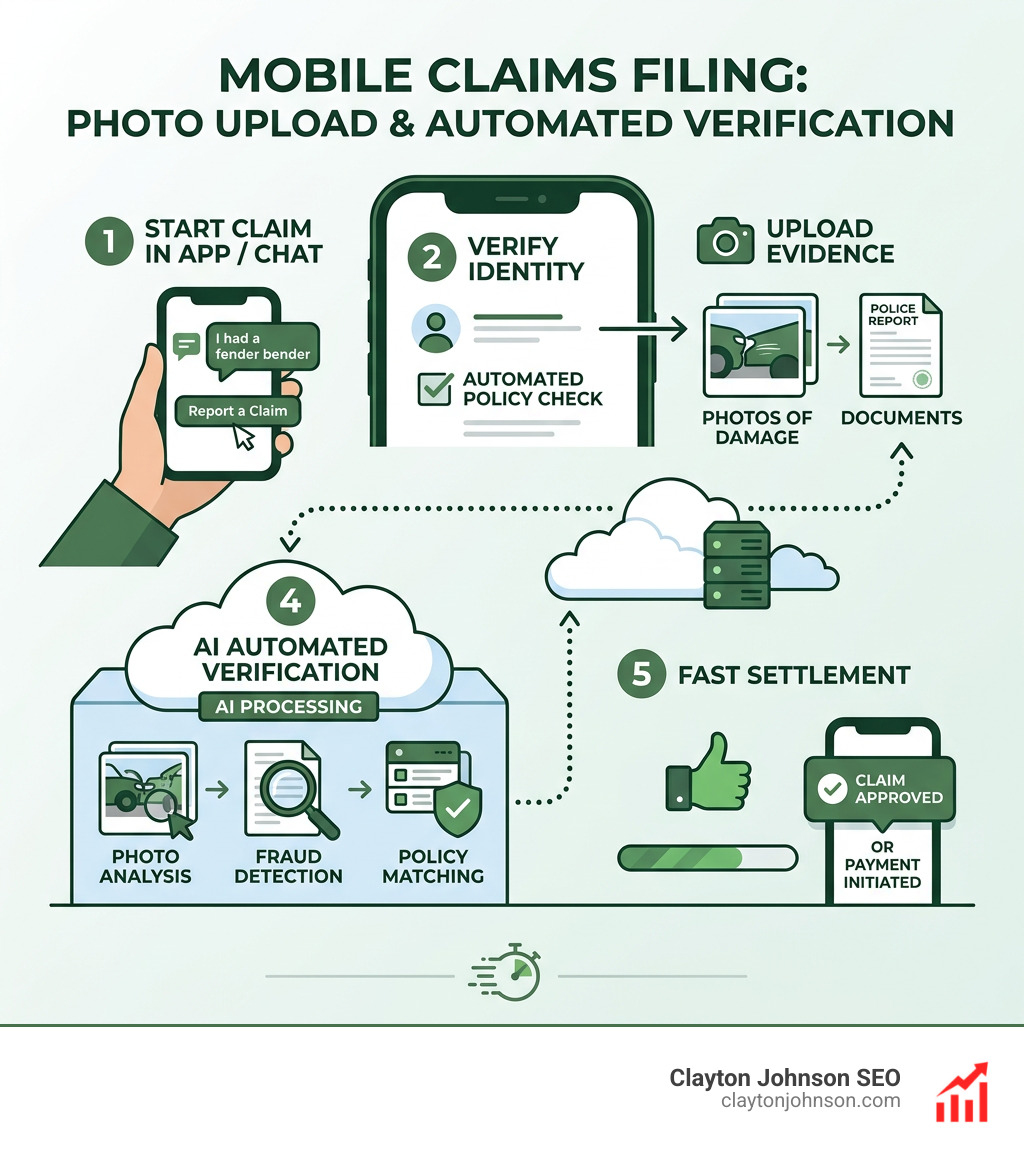
Instead of waiting on hold, a customer can open your app or a chat window and say, “I had a fender bender.” The bot can then:
- Verify Identity: Automatically check policy numbers and IDs.
- Collect Evidence: Prompt the user to upload photos of the damage or a copy of the police report.
- Detect Fraud: Use algorithms to flag suspicious patterns before a human even looks at the file.
- Speed Up Settlements: For simple, routine claims, the bot can process the entire request in minutes.
The demand for this is real: 82% of consumers expect multi-channel interactions from insurance providers. They want to resolve problems through digital channels without the delays of traditional phone calls. One Fortune 100 insurance company even achieved a 95% automation rate for ID&V and reduced Average Handling Time (AHT) by 1.5 minutes using an AI Agent.
Generative AI and the Future of Brokerage Automation
The latest leap in technology involves Generative AI. Unlike standard AI, which chooses from pre-written responses, Generative AI (using Large Language Models like GPT-4 or GPT-5) can craft unique, personalized responses based on your specific knowledge base.
Imagine a chatbot that has read every single one of your policy documents. When a client asks, “Does my policy cover water damage from a burst pipe in the basement?” the bot doesn’t just give a generic “yes/no.” It can look up that specific client’s policy, find the relevant clause, and explain it in plain English.
This technology is projected to boost the economy significantly, yet only a small fraction of financial and insurance organizations are currently using it. By adopting these AI tools now, you aren’t just keeping up; you are gaining a massive head start. It allows for:
- Dynamic Risk Assessment: Evaluating user data in real-time to suggest better coverage.
- Internal Productivity: Helping your own agents find information faster so they can provide better service.
- Multilingual Support: Conversing fluently in dozens of languages to serve a diverse client base without hiring a translation team.
Implementing AI Systems for Long-Term Growth
Implementing AI chatbots for insurance isn’t just about sticking a widget on your homepage. To see real, compounding growth, you need to integrate these tools into your broader AI governance strategy. This means prioritizing data privacy and security from day one.
In a regulated industry like insurance, you can’t afford to play fast and loose with customer data. Any AI solution you deploy must be:
- GDPR and HIPAA Compliant: Ensuring that sensitive medical or personal data is handled according to the law.
- Encrypted: Using enterprise-grade encryption for all interactions.
- Integrated: Connected to your legacy systems so that data flows seamlessly between the bot and your back-office software.
When we build these systems, we focus on creating “coherent growth engines.” This means your chatbot should feed your SEO strategy, and your SEO strategy should drive traffic to your chatbot. It’s a closed loop that builds authority and revenue over time.

Overcoming Implementation Challenges in Commercial Insurance
We won’t sugarcoat it: implementing AI comes with hurdles. The most common pain points include data silos (where your claims data doesn’t talk to your sales data) and the “black box” problem (not knowing why an AI gave a specific answer).
To overcome these, we recommend a “human-in-the-loop” approach. The AI handles the 80% of routine, repetitive tasks, but it knows exactly when to hand off the conversation to a human agent. For example, if a customer starts expressing high levels of frustration or has an extremely complex legal question, the bot should seamlessly transfer the chat—along with the full transcript—to your best agent.
Internal team preparation is also key. Your staff might fear that robots are coming for their jobs. In reality, AI for business growth is about removing the “boring” parts of their jobs—like answering “What’s my policy number?” 50 times a day—so they can focus on high-level advisory work. Using Enterprise AI correctly actually increases employee satisfaction by reducing burnout.
Measuring Success: KPIs for AI-Driven Brokerages
How do you know if your AI chatbots for insurance are actually working? You need to track the right metrics. Moving from a “gut feeling” to a tool-backed decision process is what separates successful brokerages from the rest.
| Metric | What it Measures | Target Benchmark |
|---|---|---|
| Resolution Rate | % of queries resolved without a human | 80% – 90% |
| Deflection Rate | % of calls/emails prevented by the bot | 70% – 85% |
| CSAT (Customer Satisfaction) | How happy customers are with the bot | 85%+ |
| NPS (Net Promoter Score) | Likelihood of customers to recommend you | +40 or higher |
| Lead Conversion Rate | % of bot-captured leads that become sales | Varies by industry |
| Average Handling Time (AHT) | Speed of resolving an inquiry | Under 2 minutes |
By monitoring these KPIs, you can continuously optimize your AI agent. If you notice the resolution rate dropping for a specific topic, you can update the bot’s knowledge base to handle those questions better in the future.
Building Scalable Marketing Systems with Clayton Johnson SEO
At the end of the day, an AI chatbot is only as good as the traffic it receives. This is where our expertise in Technical SEO and content architecture comes in. We don’t just build bots; we build the systems that drive high-intent prospects to them.
Our philosophy is simple: Clarity → Structure → Leverage → Compounding Growth.
We help commercial insurance brokers by:
- Intent Modeling: Identifying exactly what your target clients are searching for (e.g., “workers comp for construction in Texas”) and creating content that captures that intent.
- Taxonomy-Driven Content: Organizing your website so that search engines (and AI bots) can easily understand your expertise.
- AI-Augmented Workflows: Using AI to scale your marketing efforts without increasing your headcount.
If you are ready to stop chasing tactics and start building a durable growth engine, we can help. Whether you need a beginner’s guide to AI for your specific niche or a full-scale enterprise AI implementation, our goal is to turn your marketing into a measurable business impact.
AI chatbots for insurance are no longer a futuristic concept—they are a present-day necessity. Brokers who embrace these tools will find themselves with more time, more leads, and much happier customers. Those who wait may find themselves stuck on hold while their competitors are already closing the deal.
Ready to see how AI and SEO can transform your brokerage? Explore our AI-assisted marketing systems and let’s build something that scales.