Conversational AI Tools That Sound Almost Human
Conversational AI tools are software platforms that let businesses build chatbots, voice assistants, and AI agents capable of understanding and responding to natural human language — across channels like web chat, SMS, voice, and social media.
Top conversational AI tools for building intelligent chatbots:
| Tool | Best For | Key Strength |
|---|---|---|
| Sprinklr | Enterprise CX | 30+ channels, 4.3 G2 rating |
| IBM watsonx Assistant | Control & scale | Reliability, CRM integration |
| Google Cloud Dialogflow | Developers & no-code | 30+ data connectors, 70+ action connectors |
| Yellow.ai | Multilingual reach | 135+ languages, 35+ channels |
| Amazon Lex | AWS-native teams | Deep AWS ecosystem integration |
| Avaamo | Language diversity | 114+ languages and dialects |
| LivePerson | Digital conversations | Omnichannel messaging |
Most businesses still think of “chatbots” as clunky FAQ machines. The kind that makes you want to throw your laptop.
But that’s not what modern conversational AI tools are.
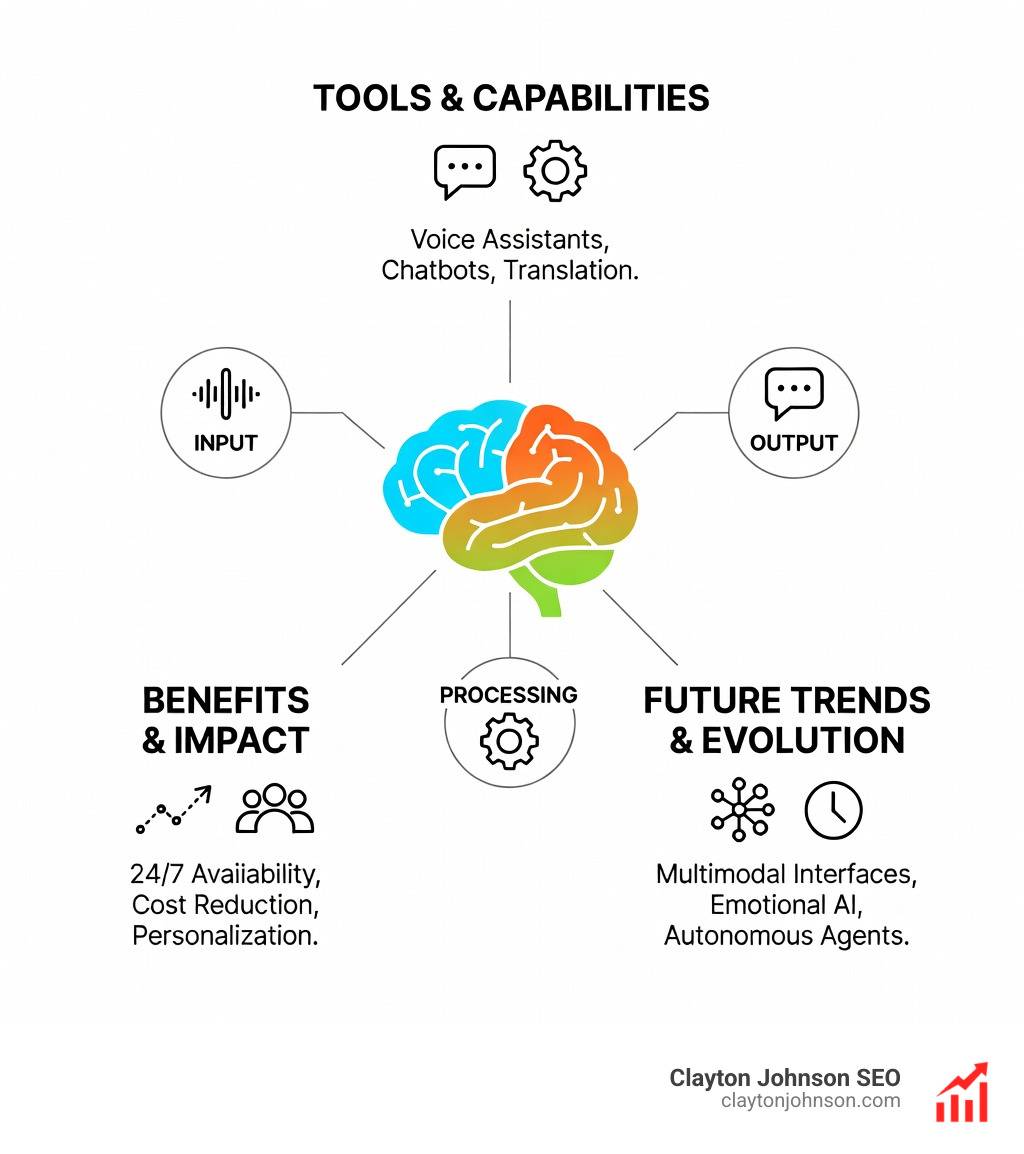
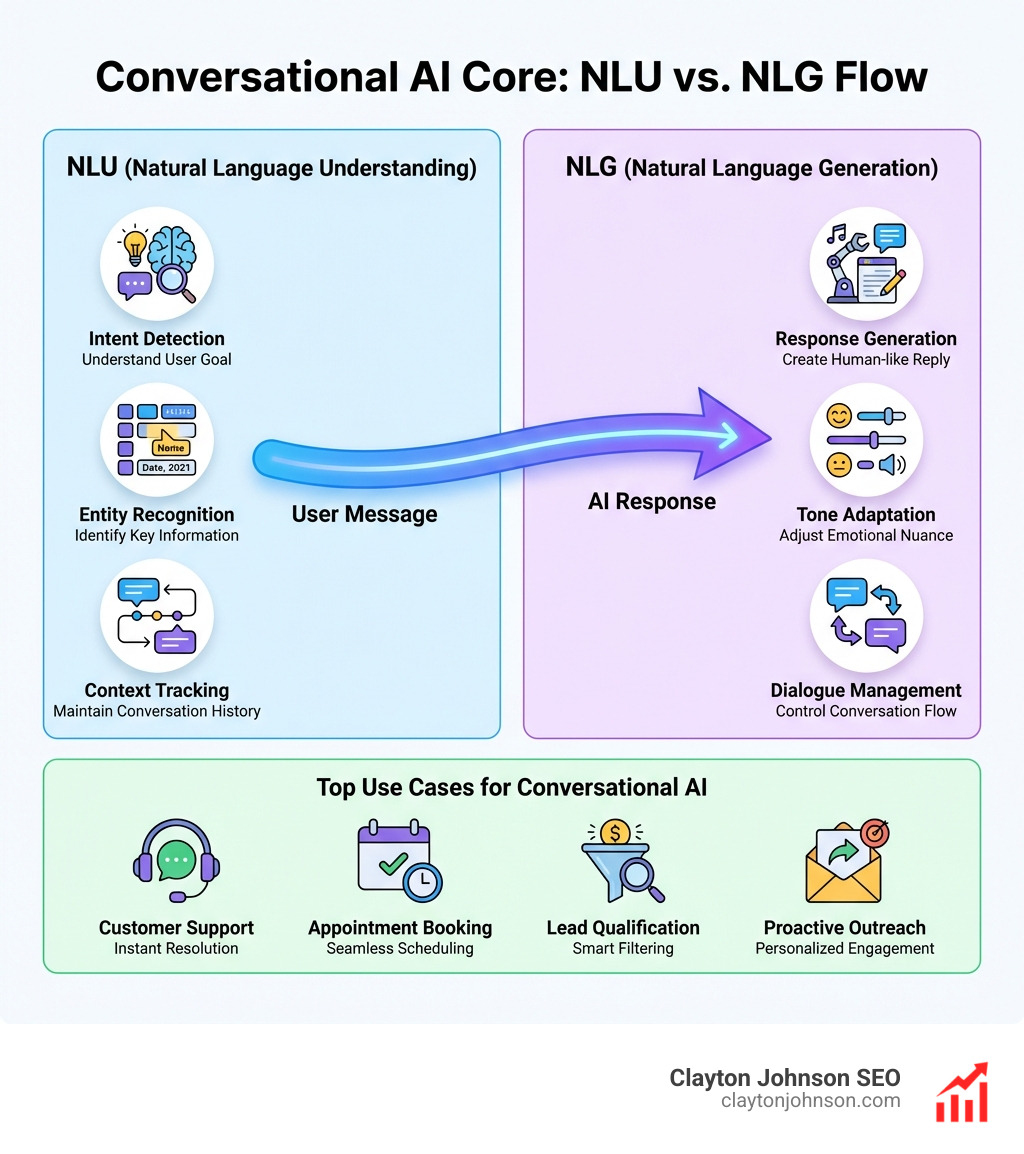
Today’s platforms combine Natural Language Understanding (NLU), Natural Language Generation (NLG), and generative AI to hold context-aware, multi-turn conversations that genuinely feel human. They don’t just answer — they understand, and act.
And the stakes are real. A growing share of internet users already search for products on social media. Customers expect instant, intelligent responses — 24/7, across every channel they use.
The gap between a scripted chatbot and a true conversational AI agent is the gap between losing a customer and keeping one.
I’m Clayton Johnson — an SEO and growth strategist who works at the intersection of AI systems, content architecture, and scalable marketing workflows — and conversational AI tools are central to how I help founders and marketing leaders build intelligent, automated demand engines. In this guide, I’ll break down the top platforms, how they compare, and exactly what to look for before you build.
Simple conversational ai tools word guide:
The Evolution of Conversational AI Tools in Modern Business
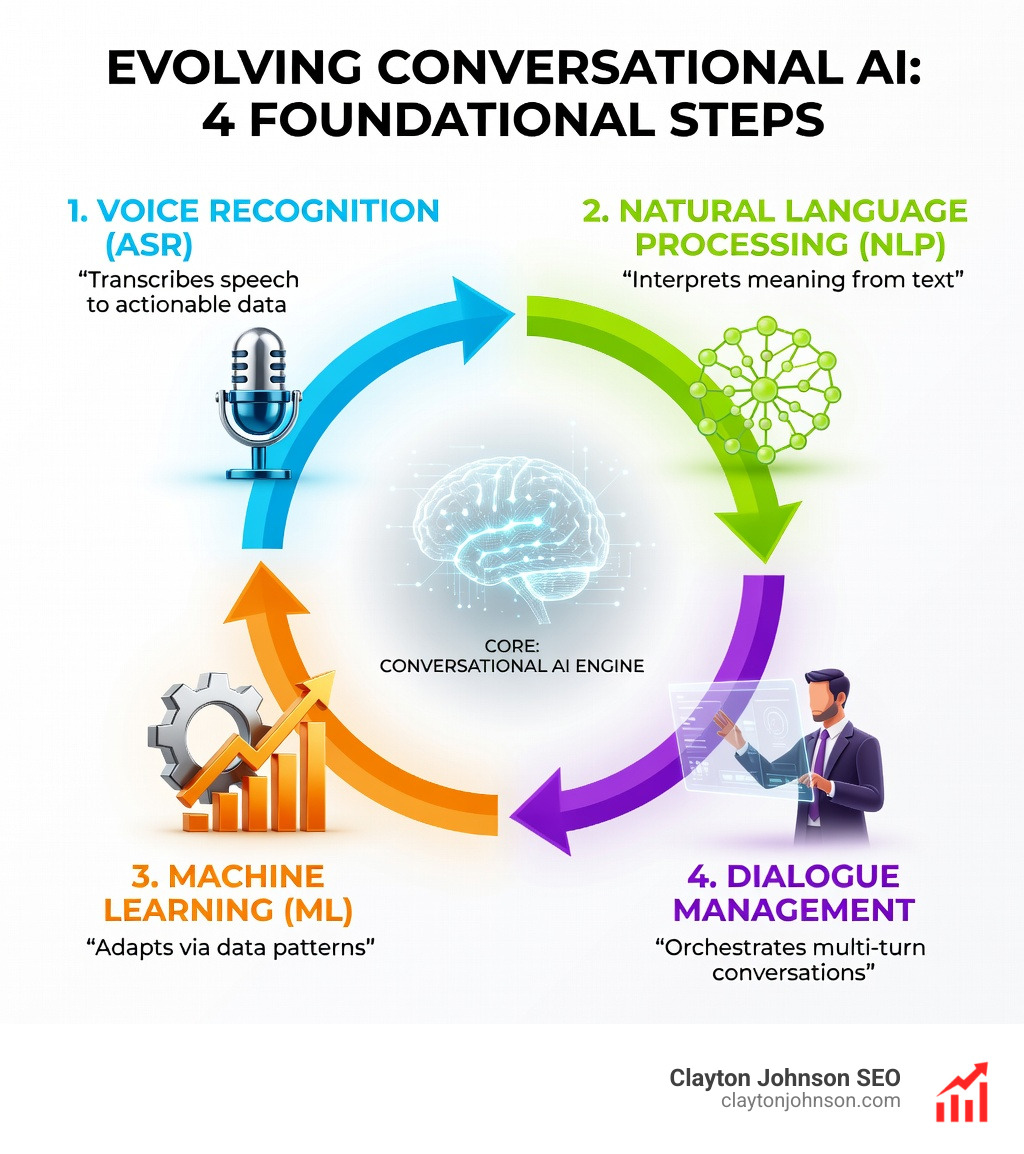
The landscape of how we talk to machines has shifted from rigid, “press 1 for sales” menus to fluid, intelligent dialogue. This shift is driven by Composite AI, which combines various AI techniques like generative models, rule-based logic, and graph technologies to create a more robust system.
At the heart of these conversational AI tools are three critical pillars:
- Natural Language Understanding (NLU): The ability to parse what a human is actually saying, even with typos or slang.
- Dialogue Management: Keeping track of the conversation’s state. If a user says “change that,” the AI needs to know what “that” refers to from three sentences ago.
- Entity Recognition: Identifying specific data points like dates, names, or product IDs within a sentence to trigger the right business process.
For those looking deeper into the engines behind these tools, understanding different AI Models is essential to see how they handle complex reasoning.
Why Conversational AI Tools are Replacing Traditional Chatbots
Traditional chatbots are essentially digital “Choose Your Own Adventure” books. They follow a script. If you step off the path, they break. Conversational AI tools, however, prioritize contextual relevance and nuance.
They don’t just look for keywords; they understand intent. This is why platforms like Sprinklr have earned a G2 rating of 4.3 stars, with users noting that their ability to allow intent-based routing and message-level alerts is allowing enterprises to scale automation effectively. Modern tools can interpret complex queries, maintain a human-like persona, and provide immediate value without the user feeling like they are talking to a brick wall.
Chatbots vs. Virtual Assistants vs. AI Agents
While these terms are often used interchangeably, they represent a spectrum of autonomy and functionality.
| Feature | Chatbot | Virtual Assistant (VA) | AI Agent |
|---|---|---|---|
| Primary Goal | Answer FAQs / Scripted flows | Manage tasks & maintain context | Execute complex workflows autonomously |
| Autonomy | Low (Rule-based) | Medium (Task-oriented) | High (Goal-oriented/Agentic) |
| Complexity | Simple queries | Calendar, email, basic CRM | Orchestrates multiple systems |
| Intelligence | Pattern matching | NLU + Context | Generative AI + Reasoning |
Agentic AI is the new frontier. These aren’t just assistants that help you; they are agents that act on your behalf, coordinating across systems to solve a problem from start to finish.
Core Categories of Conversational AI Use Cases
We can group the majority of business applications into four broad categories. Understanding these helps in selecting the right Enterprise AI strategy for your specific growth architecture.
- Informational: Answering inquiries about product details, weather, or company policies.
- Transactional: Placing orders, booking reservations, or processing payments directly within the chat.
- Data Capture: Collecting feedback post-purchase or gathering user details during onboarding.
- Proactive: This is where the AI initiates the conversation based on triggers — like sending a reminder for an appointment or alerting a customer to a shipping delay.
Practical Examples in Healthcare and Government
In Healthcare, conversational AI tools are automating administrative tasks, answering common health questions, and guiding patients through triage questions to assess urgency. This reduces the burden on human staff while providing patients with 24/7 access to information.
In Government, these tools provide 24/7 automated assistance for citizen services. They can help with appointment bookings at the DMV or route calls to the correct office based on caller intent, significantly reducing bottlenecks and improving overall efficiency.
Impact on Large-Scale Business Operations
Implementing these tools isn’t just about being “high-tech”; it’s about the bottom line.
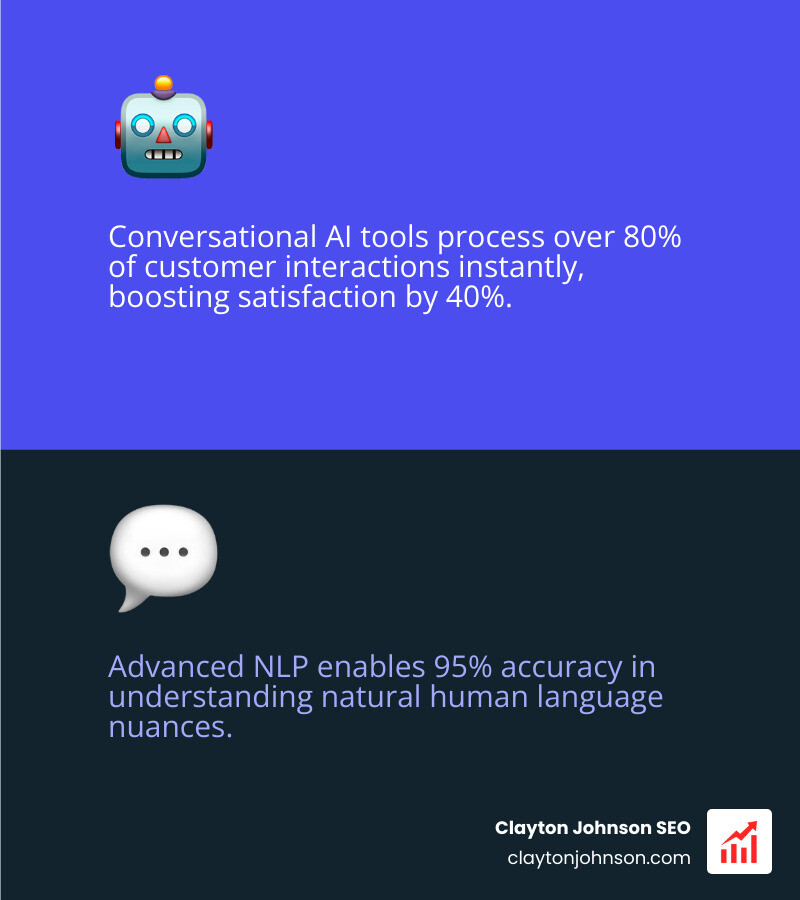
- Self-Serve Rates: Sprinklr’s bots have been shown to increase self-serve rates by 150%.
- Agent Empowerment: According to Salesforce, 77% of agents believe automation tools allow them to finish more complicated tasks.
- Operational Efficiency: A Deloitte report found that 81% of contact center executives are investing in agent-enabling AI to streamline operations.
By automating repetitive asks like password resets or order status checks, businesses can scale without a linear increase in headcount. To see more of what’s available, check out our list of AI Tools.
Top Enterprise Platforms for Building Intelligent Agents
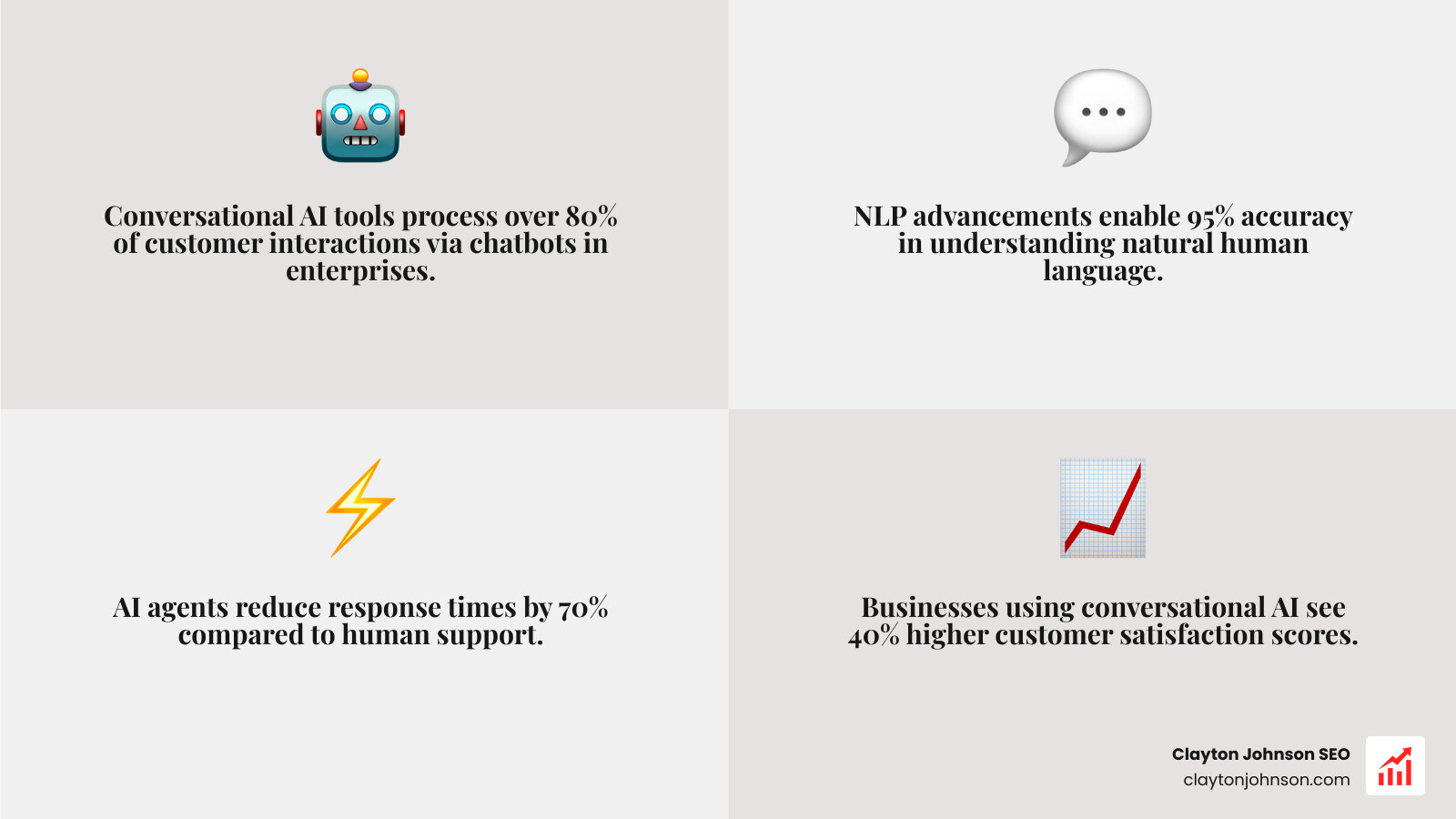
Choosing a platform is a strategic decision. You need a Conversational AI Platform (CAIP) that offers omnichannel support, enterprise-grade security, and flexible development options.
Sprinklr and IBM watsonx Assistant
Sprinklr stands out for its massive reach, uniting over 30 messaging and social channels into one platform. Its 4.3-star G2 rating reflects its ability to handle complex, high-volume enterprise needs.
IBM watsonx Assistant is the go-to for enterprises requiring extreme reliability and control. It allows teams to build assistants without writing code using IBM’s out-of-the-box Granite LLMs or bringing their own. It integrates deeply with existing CRMs, making customer service more responsive and intuitive.
Google Cloud Dialogflow and Amazon Lex
Google Cloud Dialogflow is a powerhouse for building voice and text interfaces. It includes over 30 out-of-the-box connectors for data retrieval and 70+ for action execution. It’s highly scalable and integrates natively with the Google Cloud ecosystem, making it a favorite for developers.
Amazon Lex leverages the same technology that powers Alexa. It is ideal for businesses already invested in the AWS ecosystem. One of its biggest strengths is optimizing legacy IVR (Interactive Voice Response) models into natural language IVR, which significantly enhances the customer experience for phone-based support.
Specialized Conversational AI Tools: Yellow.ai and Avaamo
Yellow.ai offers an impressive Dynamic Automation Platform (DAP) that supports over 135 languages across 35+ channels. Its multi-LLM architecture ensures high accuracy and speed, which is vital for global brands.
Avaamo is built for complex industries like banking and healthcare. It offers multilingual support for over 114 languages and dialects and features a no-code dialog builder. This allows non-engineers to design sophisticated, industry-specific conversations that meet high regulatory standards.
Strategic Factors for Platform Selection

When we evaluate conversational AI tools for our clients at Clayton Johnson SEO, we look beyond the “cool” features. We focus on how these tools fit into a structured growth architecture.
- Intent Recognition: How well does the tool understand what the user wants?
- Multimodal Support: Can it handle text, voice, and visual content (like images or buttons) seamlessly?
- Backend Orchestration: Can the AI actually do something? It needs to trigger workflows in your CRM, ERP, or billing system.
Effective implementation often requires Prompt Engineering to ensure the AI’s responses are aligned with your brand voice and business goals.
Evaluating Conversational AI Tools for Security and Compliance
For any enterprise, security is non-negotiable. You must ensure your chosen platform complies with global standards like GDPR and CCPA. Look for:
- Data Encryption: Both in transit and at rest.
- Role-Based Access Control (RBAC): Limiting who can see sensitive conversation logs.
- Audit Trails: Keeping a record of every change made to the bot’s logic.
- Redaction: Automatically masking PII (Personally Identifiable Information) in chat logs.
Customization and Workflow Complexity
A “one-size-fits-all” bot rarely works for a unique business model. You need a platform that offers low-code flexibility for quick wins, but also robust API capabilities for complex integrations.
The best tools allow for Human-in-the-Loop (HITL) learning. This means the AI can flag conversations it isn’t sure about for a human to review, creating an iterative model that gets smarter every day.
Frequently Asked Questions about Conversational AI Tools
What is the difference between a chatbot and an AI agent?
A chatbot usually follows a predefined path or answers simple FAQs based on keywords. An AI agent has more autonomy; it can break down a goal (like “book a flight and hotel for my meeting in Minneapolis”), trigger the necessary workflows, and coordinate across multiple systems to complete the task.
Are generative AI models safe for customer service?
They can be, provided you use “grounded” models. This involves Retrieval Augmented Generation (RAG), where the AI is forced to pull its answers only from your approved knowledge base rather than its general training data. This drastically reduces “hallucinations” (making things up).
What kind of ROI can businesses expect from conversational AI?
ROI typically comes from three areas: cost savings (reducing the need for human agents on routine tasks), revenue growth (24/7 lead qualification and conversion), and customer satisfaction (faster response times and instant resolution).
Conclusion
Conversational AI tools are no longer a luxury; they are a critical component of a modern business’s structured growth architecture. In an era where search is becoming conversational and AI-driven, being invisible in these interactions means losing ground to competitors.
At Clayton Johnson SEO, we believe that clarity leads to structure, and structure leads to leverage. Through our Demandflow framework, we help businesses build compounding assets that drive demand while you sleep.
If you’re ready to move beyond basic tactics and start building a real growth engine, Explore our AI Tools Guide to see how we can help you integrate these technologies into your business.