How Search Engines Know What You Want Before You Do

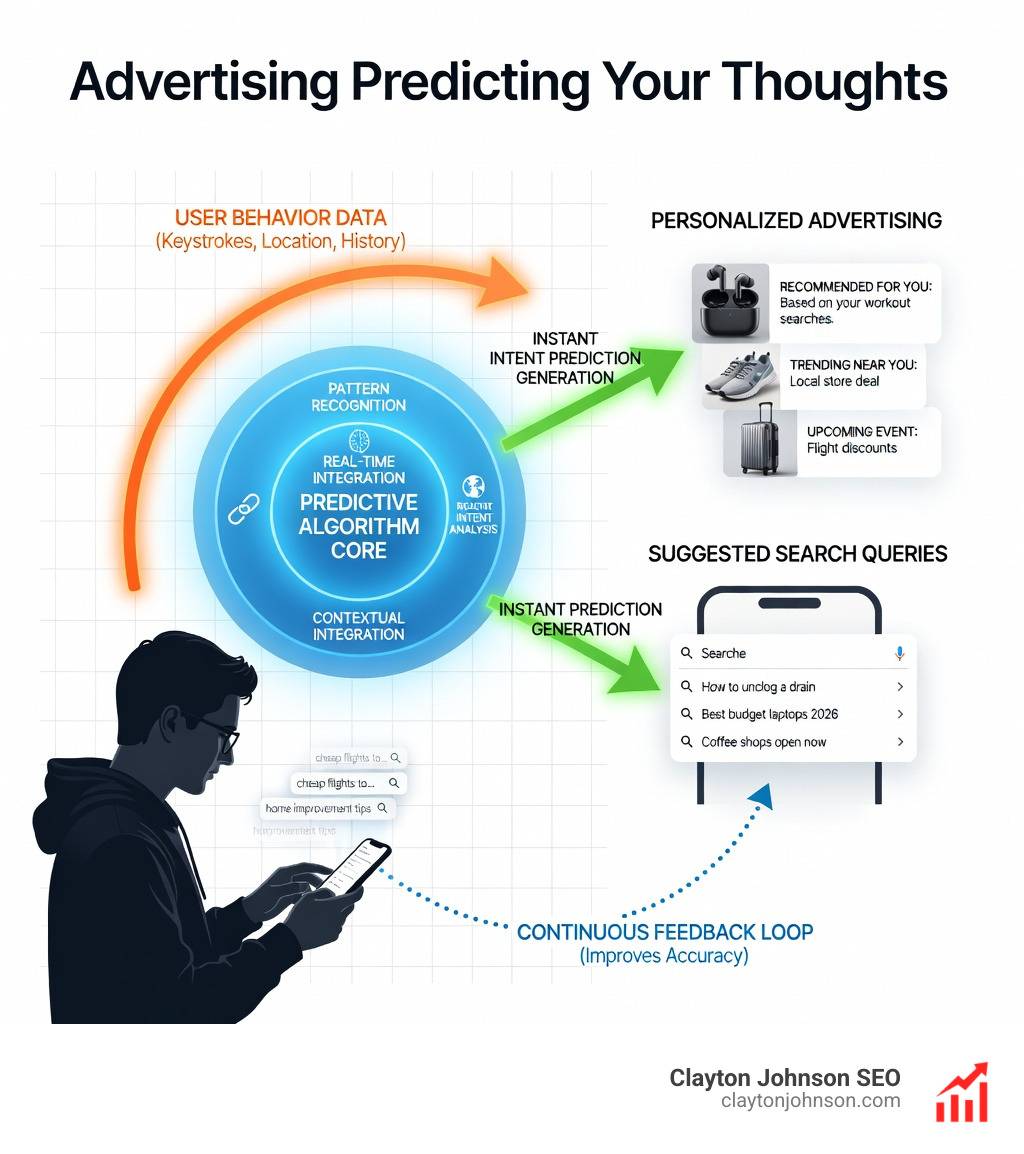
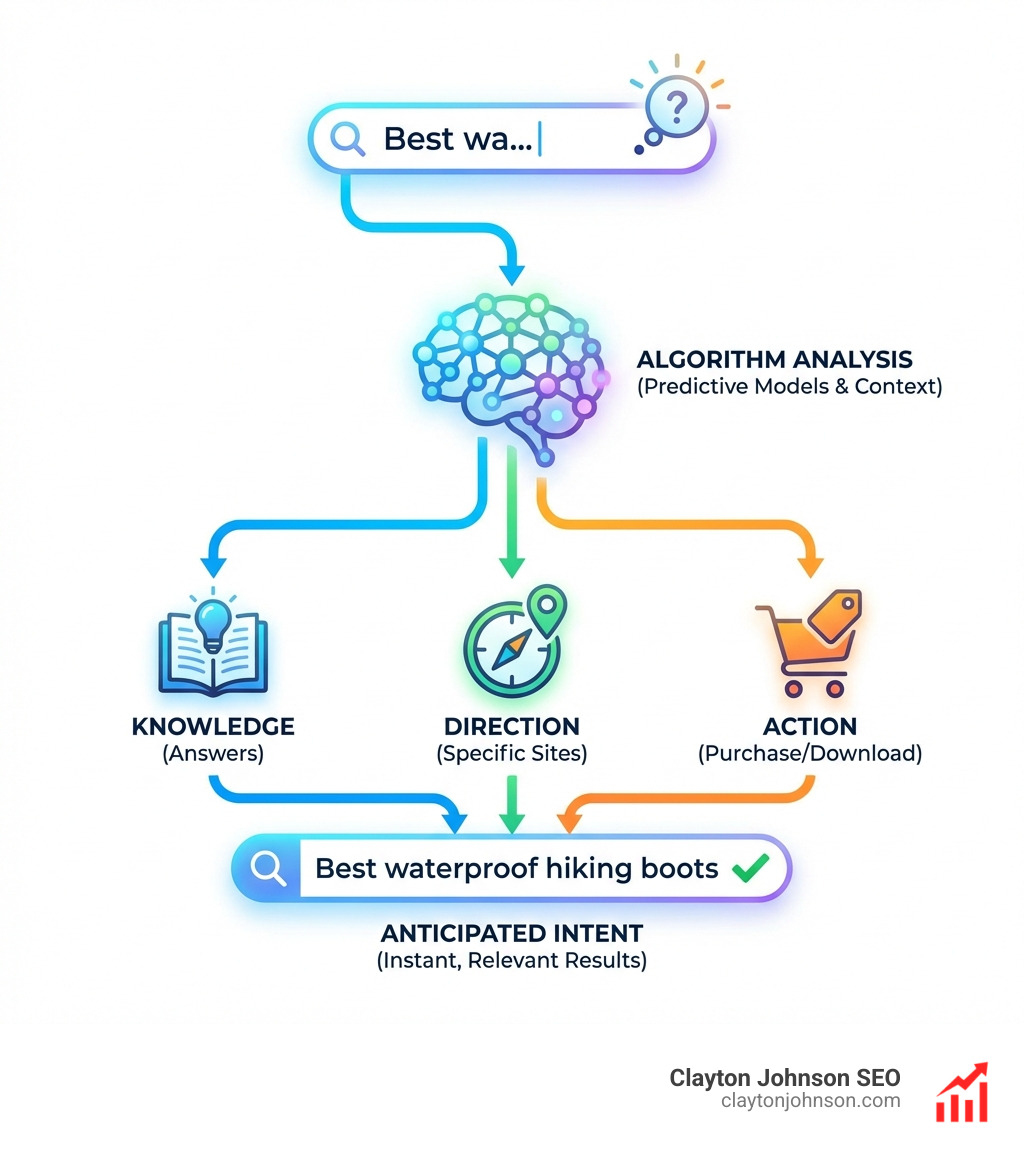
Predictive search intent algorithms are systems that analyze your browsing behavior, past queries, and contextual signals to anticipate what you’ll search for — often before you finish typing.
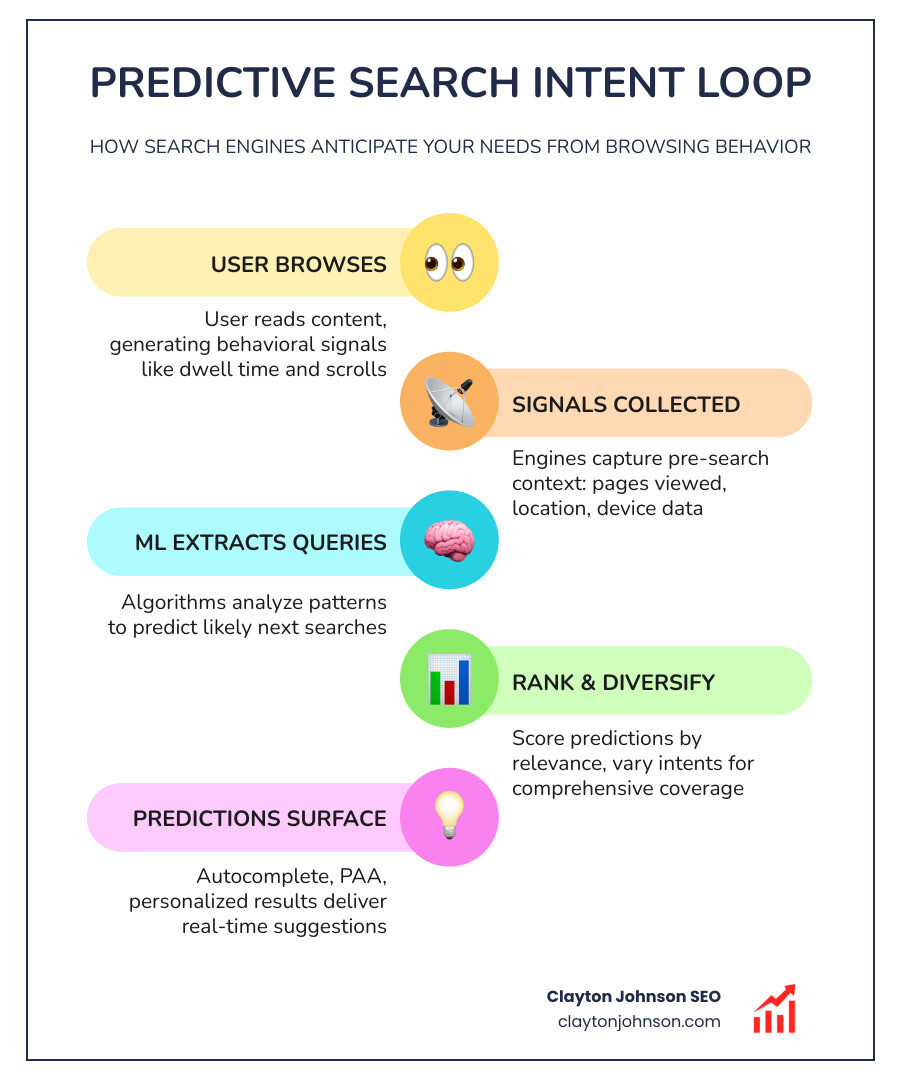
Here’s how they work at a glance:
- Collect signals — Search engines gather data from billions of queries, browsing sessions, location, and device behavior.
- Extract likely queries — Algorithms identify which searches are triggered by what users have just read or browsed.
- Rank by likelihood — Machine learning models score predicted queries based on relevance and behavioral patterns.
- Diversify suggestions — Results are varied to cover different possible intents from the same context.
- Surface predictions — Tools like Google Autocomplete and “People Also Ask” deliver these predictions in real time.
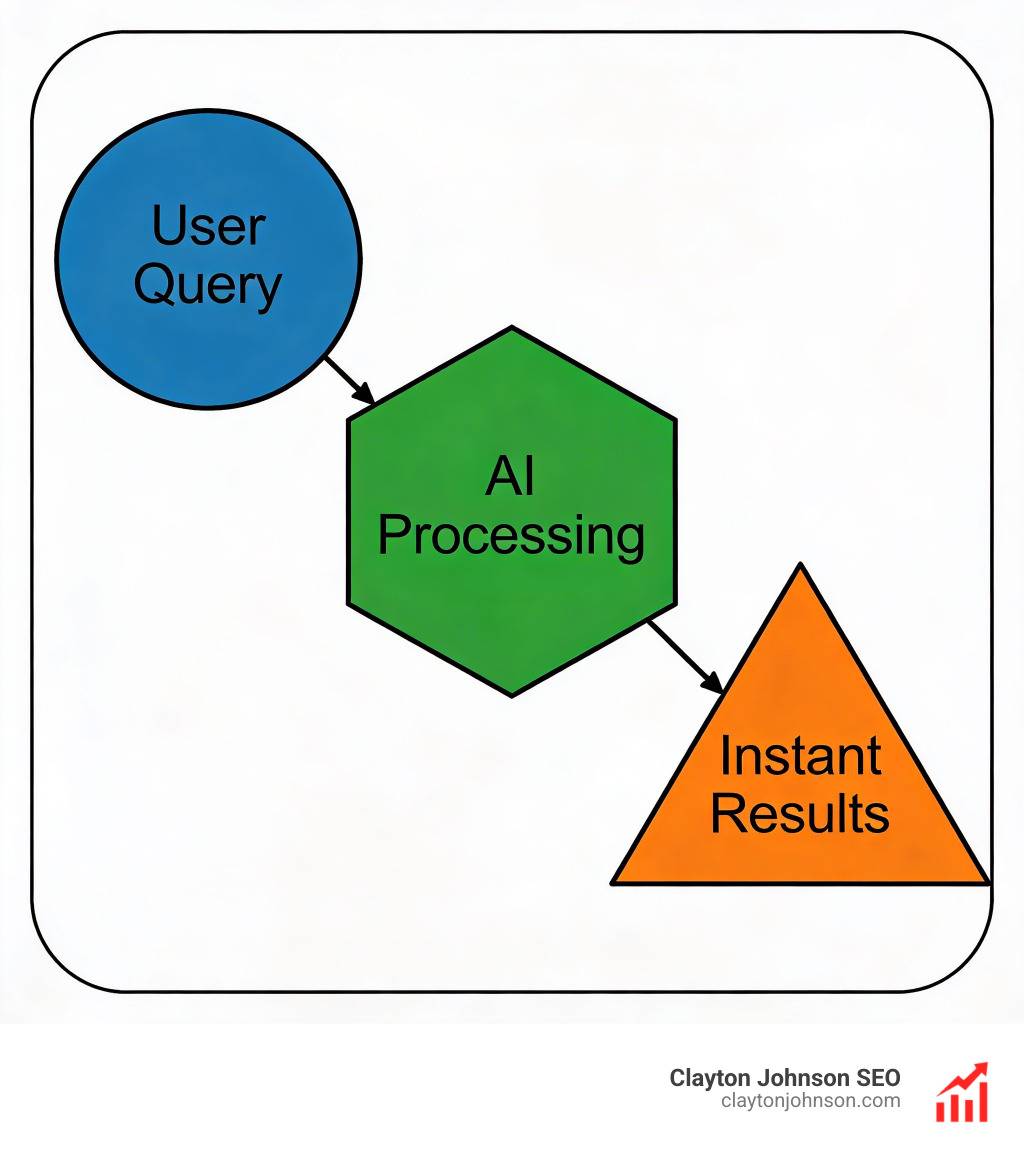
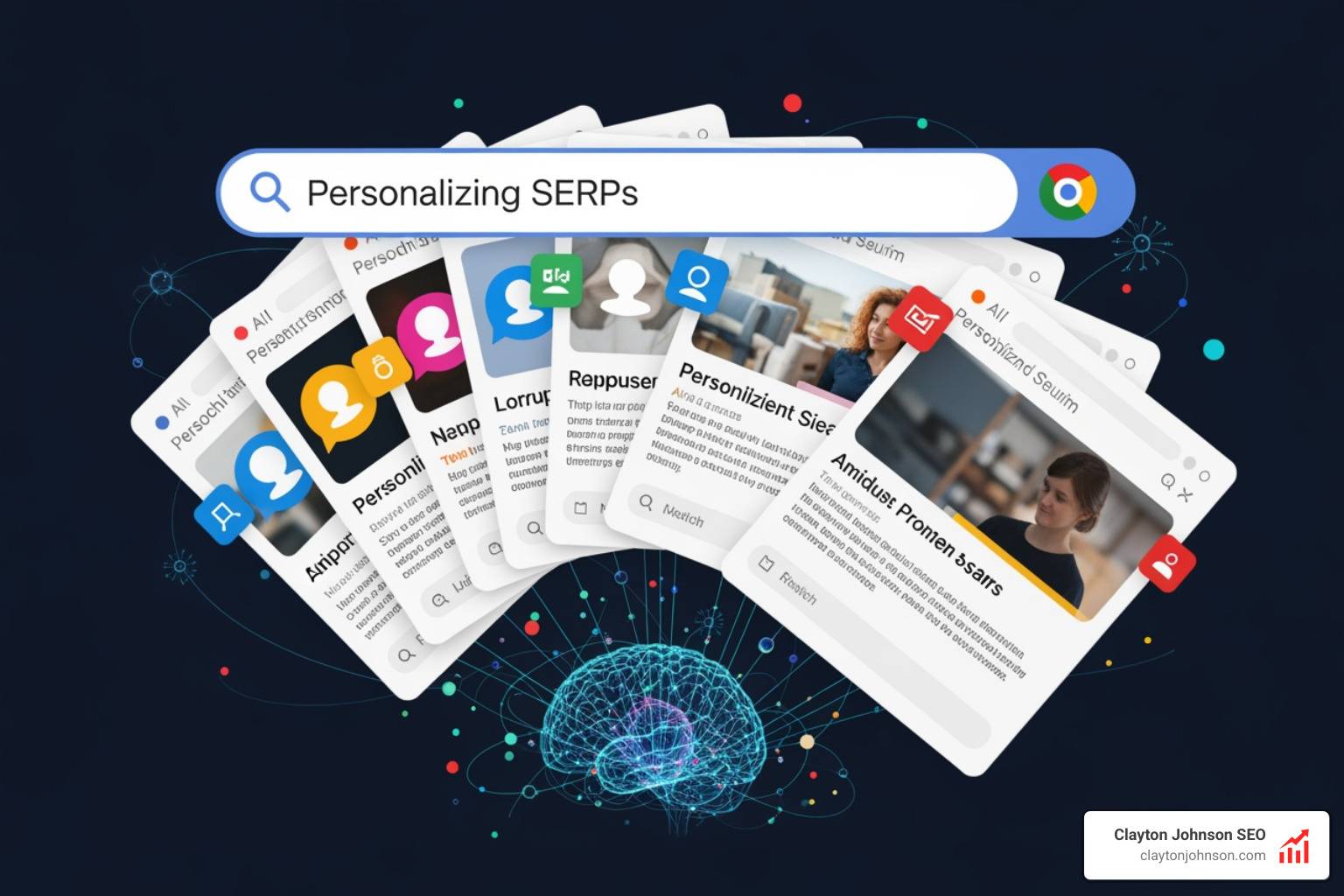
Type a few words into Google and suggestions appear instantly. That’s not magic — it’s the result of systems trained on massive behavioral datasets, natural language processing (NLP), and deep learning models working together.
Search engines update their core algorithms hundreds of times per year, and a significant driver of those updates is improving how well they understand why someone is searching — not just what they typed. The gap between a keyword and actual intent is where most SEO strategies break down.
If your content strategy is built around keywords alone, you’re already behind.
I’m Clayton Johnson — an SEO strategist focused on building structured, AI-augmented growth systems that align content architecture with real user intent. My work with predictive search intent algorithms spans intent mapping, taxonomy design, and scalable content systems that turn search behavior into compounding business growth. In this guide, I’ll break down exactly how these algorithms work and how you can use them to get ahead of demand — not just react to it.
The Evolution of Search: From Reactive to Predictive Search Intent Algorithms
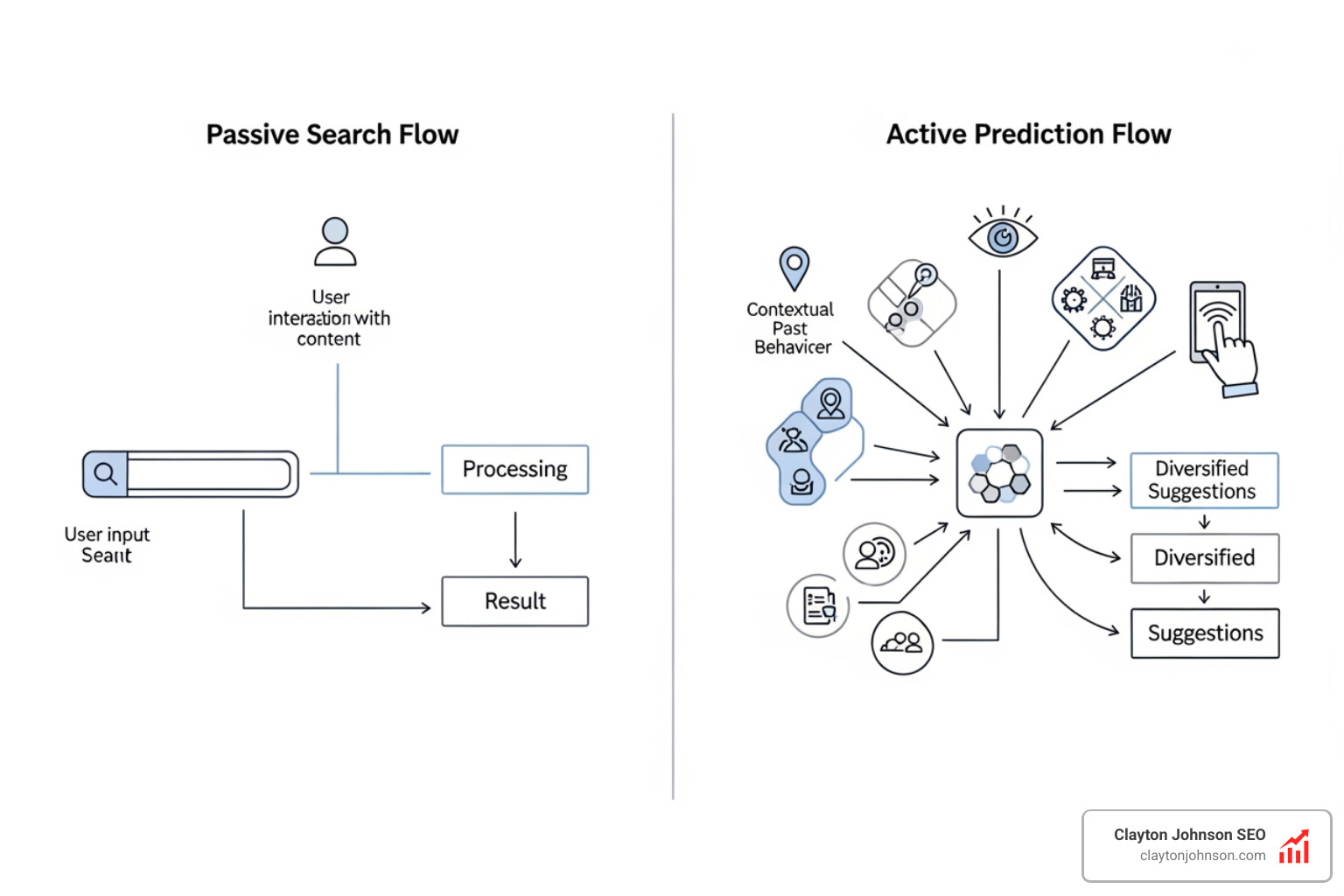
For decades, search was a reactive game. You typed a word, and the engine looked for that word in its index. If you made a typo or didn’t know the exact “industry term,” you were out of luck. We call this passive search—the engine waits for you to act.
Today, we have shifted toward predictive search intent algorithms. These are active. They don’t just wait for your query; they watch the “pre-search context.” This includes the page you are currently reading, your physical location in Minneapolis, and even how long you lingered on a specific paragraph. Research into Interactive Search Intent Prediction with Pre-Search Context shows that by analyzing what a user is looking at before they search, systems can predict their next information need with startling accuracy.
Understanding the Shift to Active Prediction
The core difference lies in query formulation. In the old days, you had to bridge the gap between your “information need” and the “query” yourself. If you were reading about a complex medical topic and didn’t understand a term, you had to highlight it, copy it, and paste it into a search bar.
Active prediction removes that friction. Modern algorithms recognize that many information needs are triggered by what we just browsed. If you are reading an article about “sustainable fashion,” the algorithm anticipates you might want to know about “recycled polyester” or “ethical manufacturing brands.”
| Feature | Reactive Search (Traditional) | Predictive Search (Modern) |
|---|---|---|
| Trigger | Explicit query submission | Browsing behavior and context |
| Timing | After the user acts | Before or during the user’s action |
| Data Source | Keyword matching | Behavioral signals and NLP |
| User Effort | High (must formulate query) | Low (suggestions provided) |
| Goal | Find documents | Resolve information needs |
Core Technologies Powering Intent Prediction
How does a computer “know” what you’re thinking? It isn’t reading your mind; it’s reading your math. To understand predictive search intent algorithms, we have to look at the “big three” of modern search: Natural Language Processing (NLP), Neural Matching, and Multitask Unified Models (MUM).
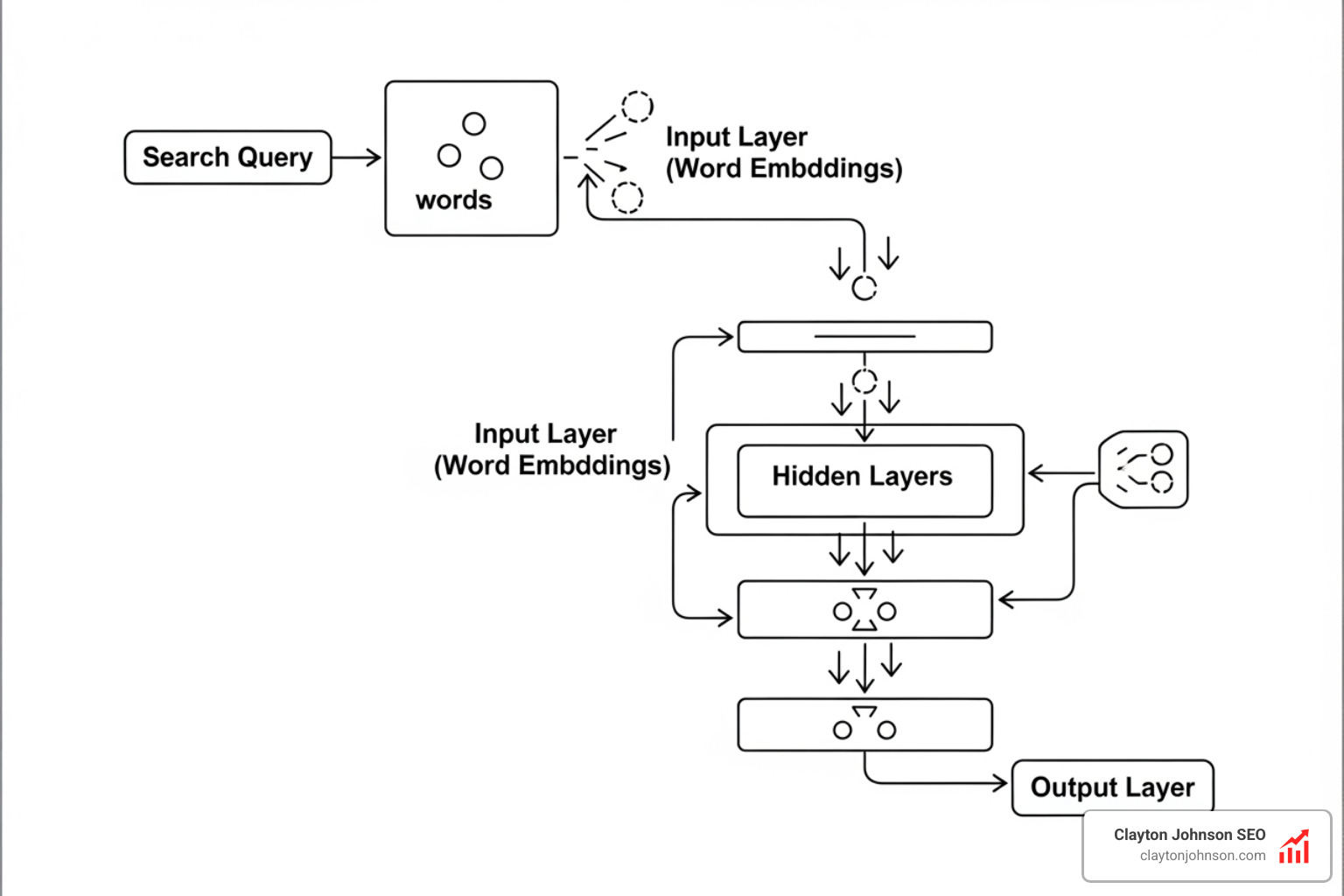
NLP allows machines to interpret human language contextually. It’s the difference between a computer seeing the word “bank” and knowing whether you mean a financial institution or the side of a river. Neural matching takes this further by identifying relationships between concepts. If you search “why is my phone screen dark,” neural matching helps the engine understand you’re looking for “brightness settings,” even if you didn’t type those words.
How Machine Learning Models Classify Predictive Search Intent Algorithms
To scale this across nearly 200 million websites ranked on Google, search engines use specific machine learning architectures:
- RNNs (Recurrent Neural Networks): These are masters of sequential data. Because the order of words matters in a search query, RNNs help the system understand the “flow” of intent. Research shows that RNN models trained with one-hot encoding can achieve up to 79.01% accuracy for single-intent prediction.
- CNNs (Convolutional Neural Networks): While often used for images, CNNs are also used in text classification to identify “latent intent.” For example, a BCE CNN model can achieve a 0.85 recall rate in predicting subjective intents—like knowing that someone searching for “flannel pajamas” might actually be looking for “reading” or “lounging” comfort.
- MUM and Generative AI: These models can process information across different formats (text, images, video) and languages simultaneously to provide a unified answer to complex queries.
For deeper technical insights, researchers often point to Deep Search Query Intent Understanding – ADS which explores how deep learning components scale for online search systems.
Transforming Words into Mathematical Vectors
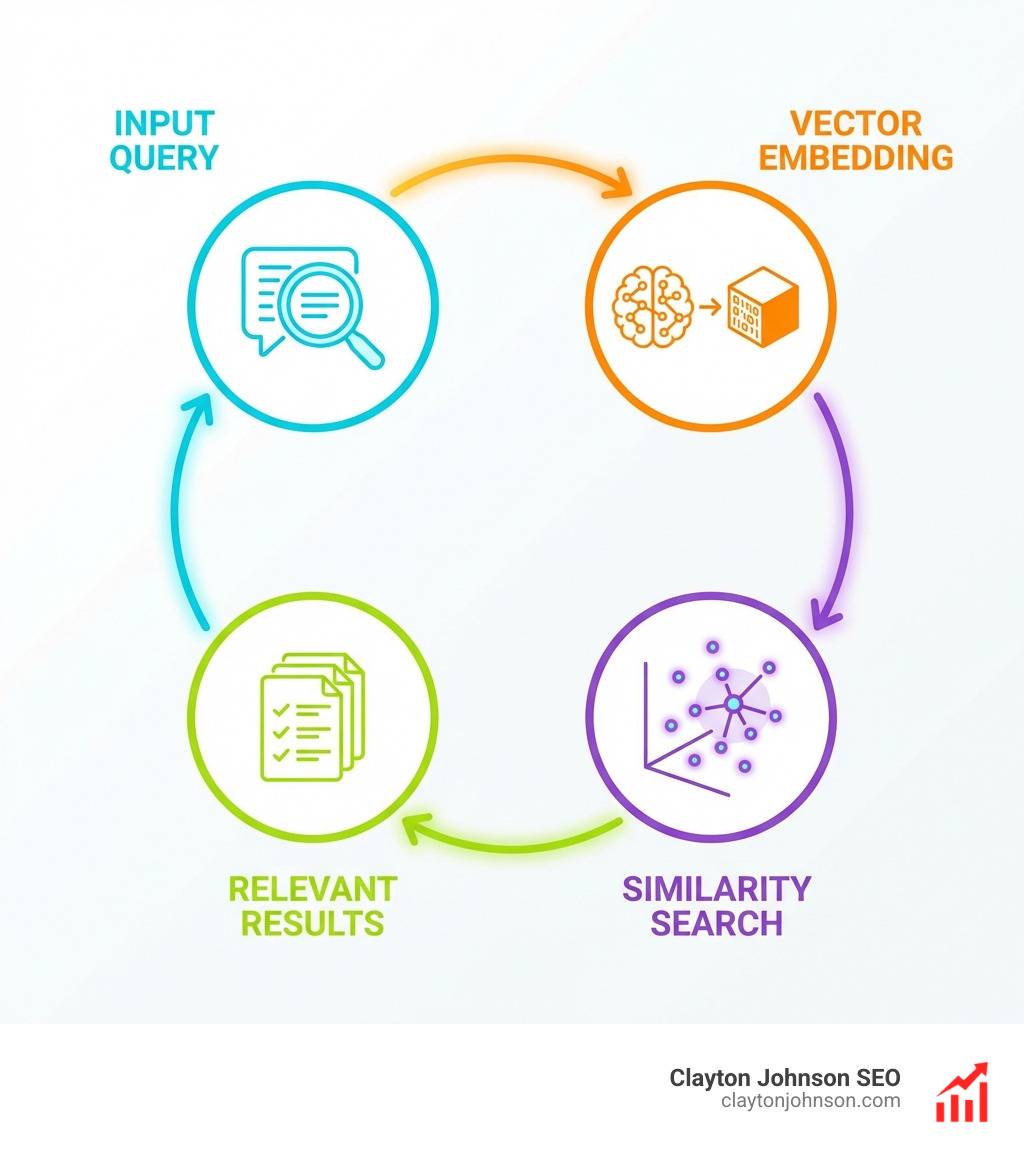
A model can’t “read” words; it sees numbers. This transformation is done through word embeddings. Tools like GloVe (Global Vectors for Word Representation) and FastText convert words into numerical vectors.
In this vector space, words that are related (like “coffee” and “espresso”) are mathematically close to each other. This allows the algorithm to understand that if you are browsing a page about “brewing techniques,” your intent is likely related to “grind size” or “water temperature,” even if those exact words aren’t on the page yet.
A Step-by-Step Guide to How AI Anticipates User Needs
If you’re building a content strategy in Minnesota or anywhere else, understanding the “algorithmic steps” search engines take is vital. Here is the process search engines use to predict your next move.
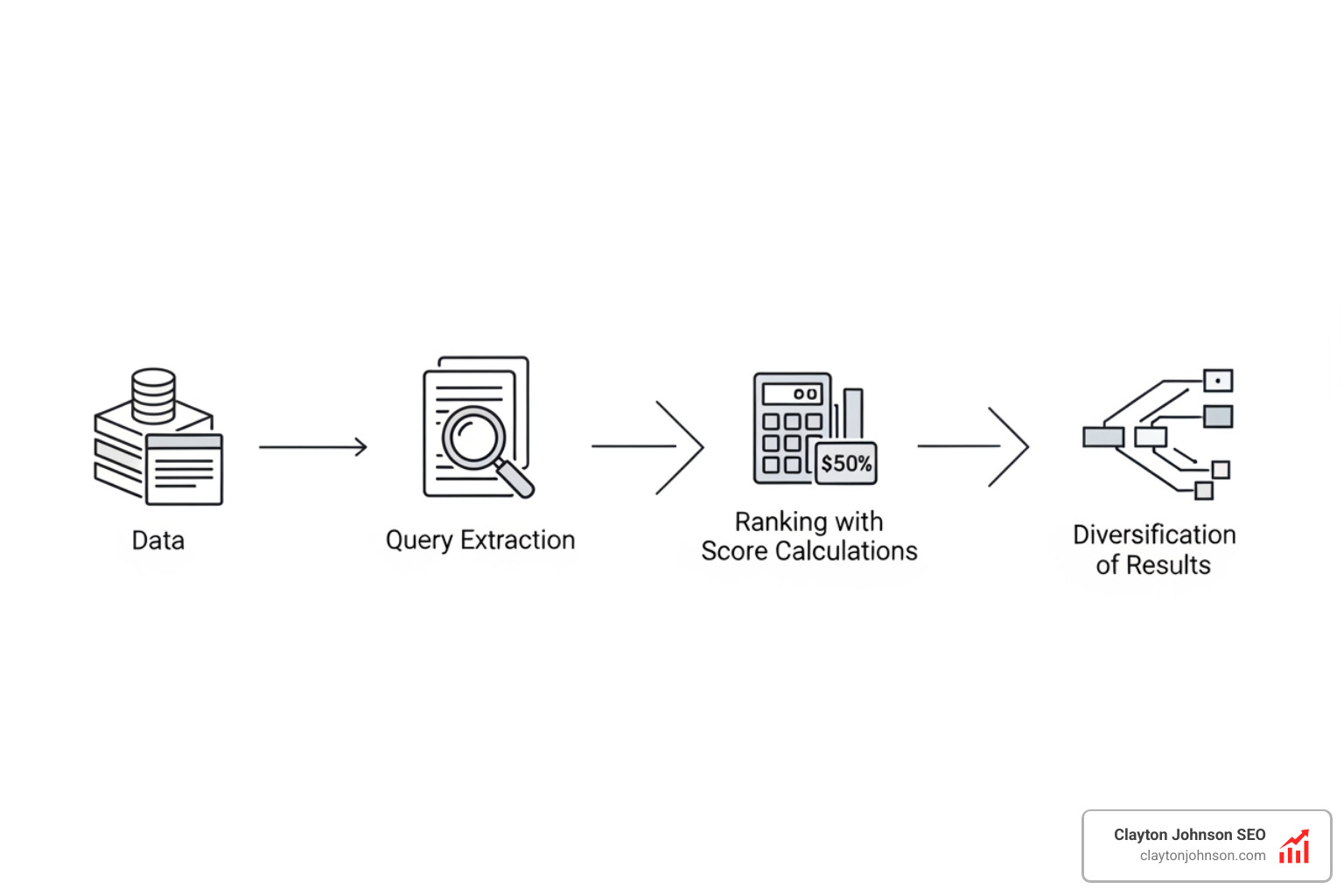
Step 1: Extracting Potential Queries from Browsing Data
The system starts by looking at your “pre-search context.” This includes:
- Entity Extraction: Identifying the people, places, and things mentioned on the page you’re currently viewing.
- Anchor Text: Looking at the links you almost clicked or the words surrounding your cursor.
- User History: If you’ve searched for “best hiking trails” recently, and you’re now reading about “waterproof boots,” the system extracts queries related to “hiking gear.”
Step 2: Ranking and Diversifying Predicted Results
Once the algorithm has a list of potential queries, it doesn’t just show them all. It has to rank them.
- Likelihood Scores: Using models like the Pre-search Context-aware Intent Model (PCIM), the engine calculates which query is most likely to be triggered by the current page.
- Diversification: Humans are fickle. If you’re looking at a “muffin tray,” you might want a recipe (informational) or you might want to buy one (transactional). The algorithm diversifies its suggestions to cover both bases, ensuring you aren’t stuck in a single “intent silo.”
- Behavioral Signals: If users in Minneapolis frequently search for “winter tires” after visiting automotive blogs in November, the algorithm learns this seasonal behavioral pattern and prioritizes it.
Leveraging Predictive SEO for Competitive Advantage
At Clayton Johnson SEO and Demandflow.ai, we don’t just chase keywords; we build structured growth architecture. This means using predictive search intent algorithms to stay ahead of the curve. With roughly 10,500 new websites added every hour, you cannot afford to be reactive.
Integrating Predictive Search Intent Algorithms into Content Strategy
To win, your content must satisfy the intent the algorithm predicts the user will have next.
- Optimize for “People Also Ask” (PAA): Analyze the PAA boxes for your target terms. These are literally the “predicted intents” Google has already identified. Use them as H2 or H3 headers in your articles.
- FAQ Schema: Use structured data to answer the “next” question. If your page is about “how to start a business,” your FAQ should cover “how to get a tax ID” or “best accounting software.”
- Long-Tail Intent: Don’t just target “SEO.” Target “how to scale SEO for SaaS founders.” This aligns with a specific, predictable journey.
Forecasting Trends and Improving ROI
Predictive SEO allows us to forecast where the market is going. By analyzing search intent patterns, businesses can:
- Improve Click-Through Rates (CTR): Customers using intent prediction models have seen up to a 15% increase in CTR from ad campaigns.
- Identify Content Gaps: If the “predicted queries” for your industry aren’t being answered by your site, you have a massive opportunity to build “authority-building ecosystems.”
- Competitive Positioning: See what intents your competitors are missing. If they focus on “transactional” intent but the algorithm is surfacing “informational” needs, you can capture the user earlier in their journey.
Frequently Asked Questions about Predictive Search
What is the difference between search intent and a prompt?
A prompt is the literal text a user types into a box (like in ChatGPT or Google). Search intent is the underlying goal. For example, the prompt might be “camera glasses,” but the intent could be “commercial investigation” (comparing brands) or “transactional” (buying a pair). Modern systems focus on resolving the intent, not just matching the prompt.
How do algorithms handle ambiguous queries with multiple intents?
Algorithms use “diversification.” If you search for “Apple,” you might want the fruit, the tech company, or the record label. The algorithm will provide a mix of results and then “learn” from your next click to narrow down your specific intent.
Can predictive search improve ad campaign performance?
Absolutely. By predicting which users are in a “transactional” mindset based on their browsing behavior, advertisers can serve ads at the exact moment the user is ready to buy. This reduces wasted ad spend and significantly boosts ROI.
Conclusion
The era of “guessing” what your customers want is over. Predictive search intent algorithms have turned SEO into a science of anticipation. By understanding the technologies like RNNs and word embeddings, and by structuring your content to meet predicted needs, you move from being a “tactic-chaser” to a “growth architect.”
At Demandflow.ai, we believe that clarity leads to structure, and structure leads to compounding growth. We don’t just write content; we build the infrastructure that search engines recognize as the “authoritative answer” to a user’s next question.
If you’re ready to stop reacting to the market and start leading it, let’s build something structured. More info about SEO services is available to help you navigate this AI-augmented landscape. Whether you are in Minneapolis or scaling globally, the goal remains the same: know what they want before they do.