How to optimise website for google search


Why Most Websites Stay Invisible on Google (And How to Fix It)
How to optimise website for google search is one of the most valuable skills a business owner can develop — and the good news is that the core steps are straightforward.
Here is a quick answer to get you started:
- Make sure Google can find and index your site — use Google Search Console and submit an XML sitemap
- Do keyword research — find terms your audience actually searches for, then map them to specific pages
- Create helpful, high-quality content — write for people first, and make sure it clearly answers their questions
- Optimise your on-page elements — title tags, meta descriptions, headings, and image alt text
- Build internal links — connect related pages so users and crawlers can navigate your site easily
- Improve technical performance — fast load times, HTTPS, mobile-friendly design, and clean URL structure
- Earn quality backlinks — get other reputable sites to link to your content
- Monitor and iterate — track performance in Google Search Console and refine over time
Getting any one of these right moves the needle. Getting all of them working together is what compounds into real, lasting search visibility.
Most websites struggle with organic traffic not because SEO is mysterious — but because no one has connected the dots between technical health, content strategy, and authority building into a single, coherent system.
As Google itself notes, compelling and useful content influences rankings more than almost any technical tweak. But content alone is not enough either. Both sides have to work.
I’m Clayton Johnson, an SEO strategist with nearly two decades of experience helping businesses build scalable search systems that drive measurable growth — including developing frameworks specifically around how to optimise website for google search for competitive industries. In the sections below, I’ll walk you through every layer of the process, from foundations to advanced strategies.
Core Pillars of How to Optimise Website for Google Search
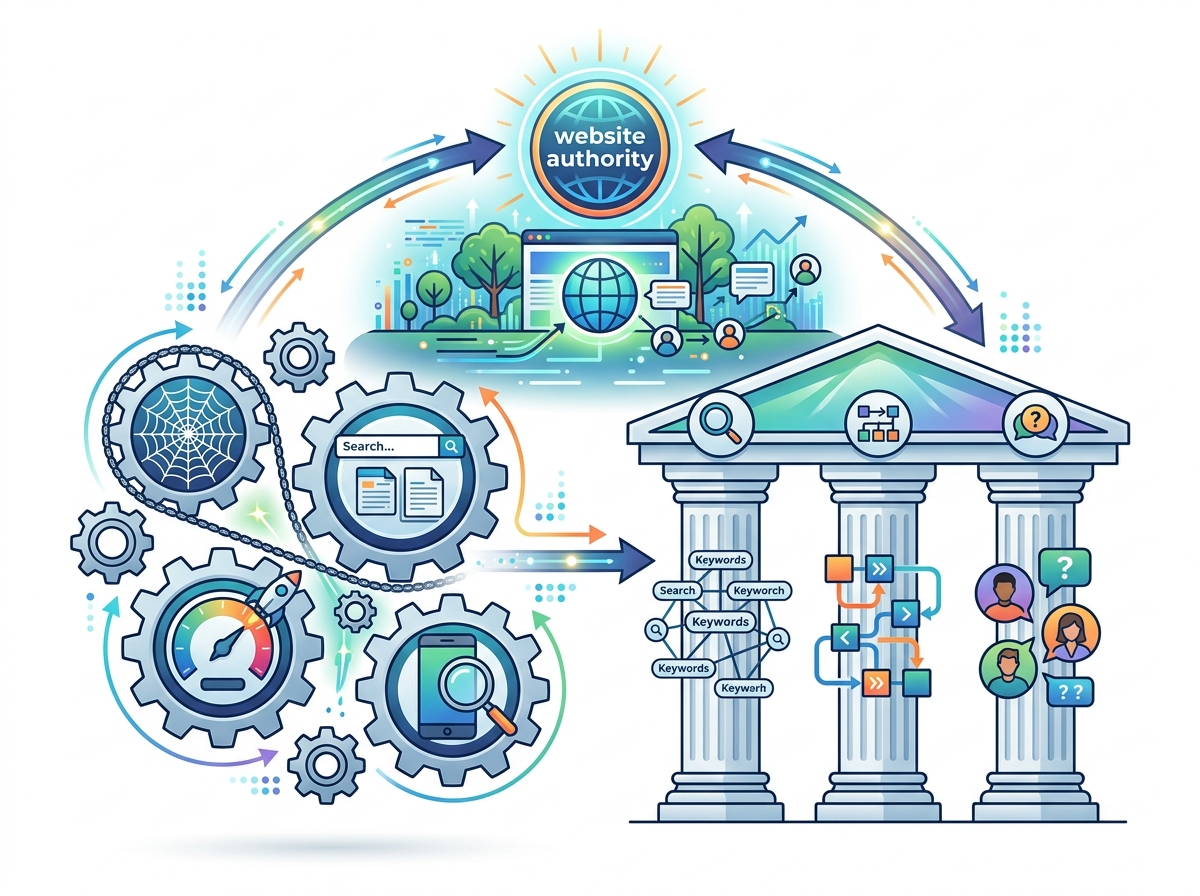
To truly understand how to optimise website for google search, we must view the website as a living ecosystem. Google doesn’t just look at a single page; it evaluates how your entire site functions, how it’s structured, and whether it provides a safe, fast experience for users. We break this down into three primary pillars: Technical SEO, Content Architecture, and Authority.
Technical SEO is the “engine” of your website. If the engine is broken, it doesn’t matter how beautiful the car is—it isn’t going anywhere. This involves ensuring that Google’s “spiders” or “crawlers” can easily navigate your code. Google primarily uses mobile-first indexing now, meaning it looks at the mobile version of your site to decide how to rank you. If your site looks great on a desktop but is a nightmare to use on a phone, your rankings will suffer.
Content Architecture is the “map.” It’s how you organize your information so that both humans and search engines can find what they need without getting lost. A flat, logical hierarchy is always better than a deep, buried one.
For those just starting, Google provides excellent foundational Documentation to Improve SEO | Google Search Central. However, knowing the rules is only half the battle. Implementing them into a growth engine requires a dedicated approach. If you find the technicalities overwhelming, you might want to explore More info about SEO services to help bridge the gap between theory and execution.
Mastering Keyword Strategy and Search Intent
The biggest mistake we see in SEO is chasing “vanity keywords”—terms that have high search volume but zero relevance to your business goals. Effective keyword research is about intent modeling. We need to understand why someone is typing a phrase into that search bar.
Are they looking for information (Informational)? Are they trying to find a specific website (Navigational)? Or are they ready to open their wallet (Transactional)?
| Intent Type | User Goal | Example Keyword |
|---|---|---|
| Informational | Learning or troubleshooting | “how to optimise website for google search” |
| Navigational | Finding a specific brand/page | “Google Search Console login” |
| Transactional | Ready to buy or hire | “B2B SEO services” |
We recommend starting with long-tail keywords. These are longer, more specific phrases that often have lower competition and higher conversion rates. For instance, “SEO” is nearly impossible to rank for, but “SEO strategy for financial consultants” is a goldmine for a niche firm. You can learn more about why these are your secret weapon in our guide on Why Your SEO Strategy Needs These Long-Tail Keyword Tools Right Now.
Once you have your keywords, you must perform a competitive evaluation. Look at who is currently ranking. If the top results are all massive corporations with million-dollar budgets, you may need to pivot to a more specific niche where you can actually win.
Building a High-Performance Content Architecture
Once you have your keywords, you shouldn’t just start writing random blog posts. You need a system. At Clayton Johnson SEO, we utilize Pillar Pages and Topic Clusters.
A Pillar Page is a comprehensive guide on a broad topic (like this guide on how to optimise website for google search). Surrounding that pillar are “cluster” articles that dive deep into specific sub-topics (like image optimization or backlink building). All these cluster articles link back to the pillar, and the pillar links to the clusters.
This tells Google: “We are an authority on this entire subject.”
Internal linking is the “glue” that holds this architecture together. It distributes “link equity” (ranking power) throughout your site. Without a strategic internal linking plan, your best content might stay buried where no one can find it. We’ve developed a framework for this in The Ultimate Guide to Internal Linking Strategy.
For the absolute basics of site organization, Google’s own SEO Starter Guide: The Basics | Google Search Central is a must-read. It emphasizes using descriptive URLs and avoiding duplicate content, which are the hallmarks of a professional site.
Technical Foundations for How to Optimise Website for Google Search
You can have the best content in the world, but if your site takes 10 seconds to load, 53% of mobile users will leave before they even see it. Speed is a non-negotiable ranking factor.
Here is your technical checklist:
- Site Speed: Use tools like PageSpeed Insights to find bottlenecks. Aim for a load time under 2 seconds.
- XML Sitemaps: This is a roadmap for Google. It lists all your important URLs so the crawler doesn’t miss anything.
- Robots.txt: This file tells Google which parts of your site not to crawl (like your admin login page).
- URL Structure: Keep them simple. Use
example.com/seo-tipsinstead ofexample.com/p=123&id=abc. - HTTPS Security: Google gives a slight ranking boost to secure sites. More importantly, users won’t trust a site that says “Not Secure.”
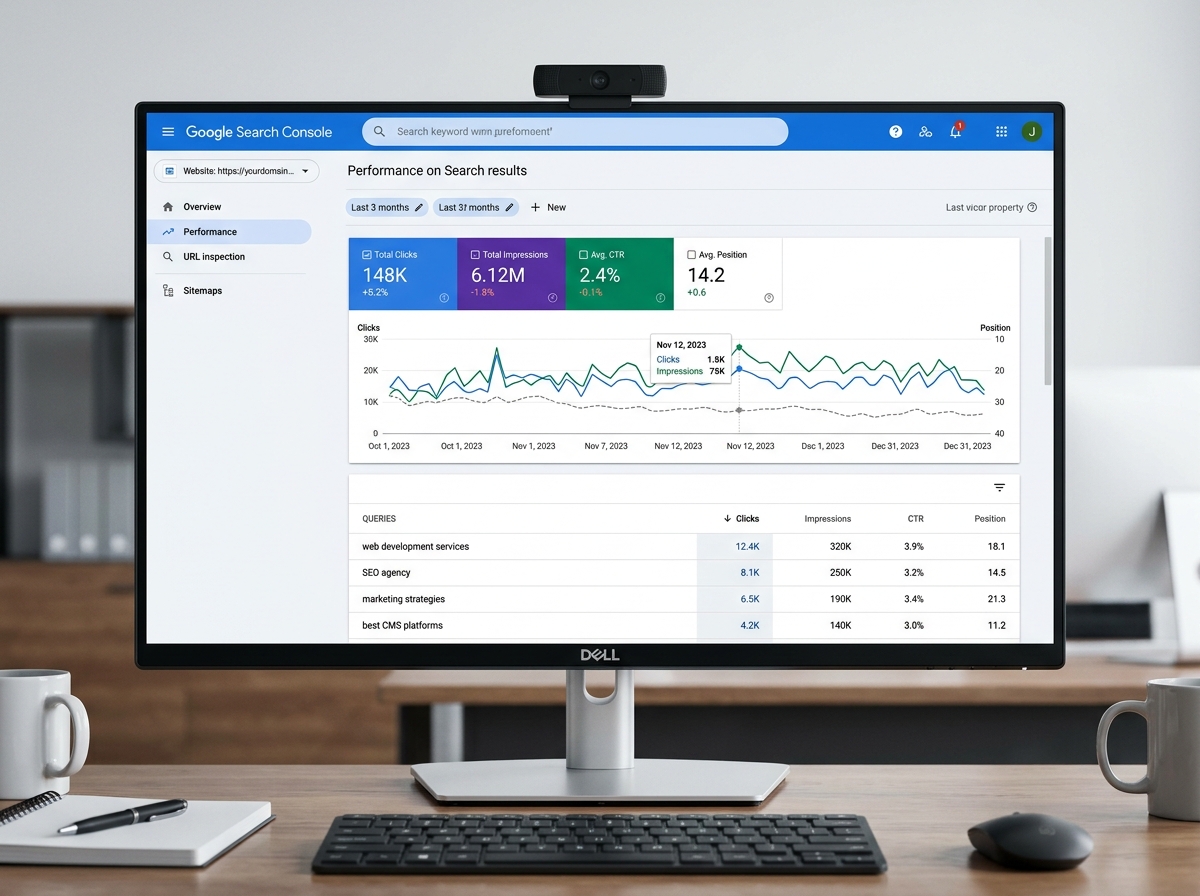
Monitoring these factors is easy with Google Search Console. It’s a free tool that tells you exactly how Google sees your site. If there’s an error, it will alert you. For a deeper dive into technical excellence, check out our insights on Winning at Technical SEO: The Aleyda Solis Way.
Advanced Strategies and Measuring Success
SEO is no longer just about blue links on a page. We are entering the era of Generative Search and AI Overviews. Google is now using AI to summarize answers directly at the top of the search results. While this can lead to “zero-click search” (where the user gets their answer without clicking your site), it also presents a massive opportunity to be the cited source for that AI answer.
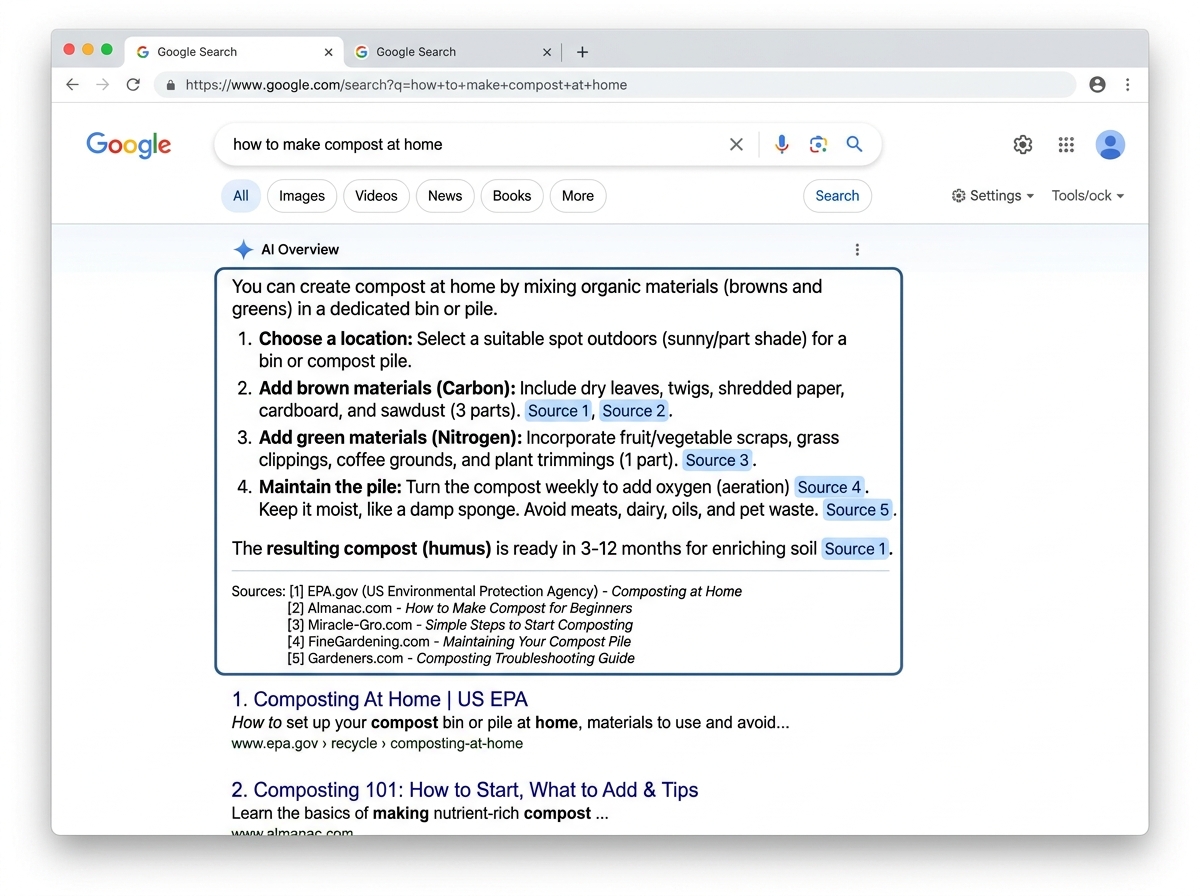
To succeed here, you need to understand What AI SEO Means for Your Website. It’s about being the most authoritative and clear answer to a specific question.
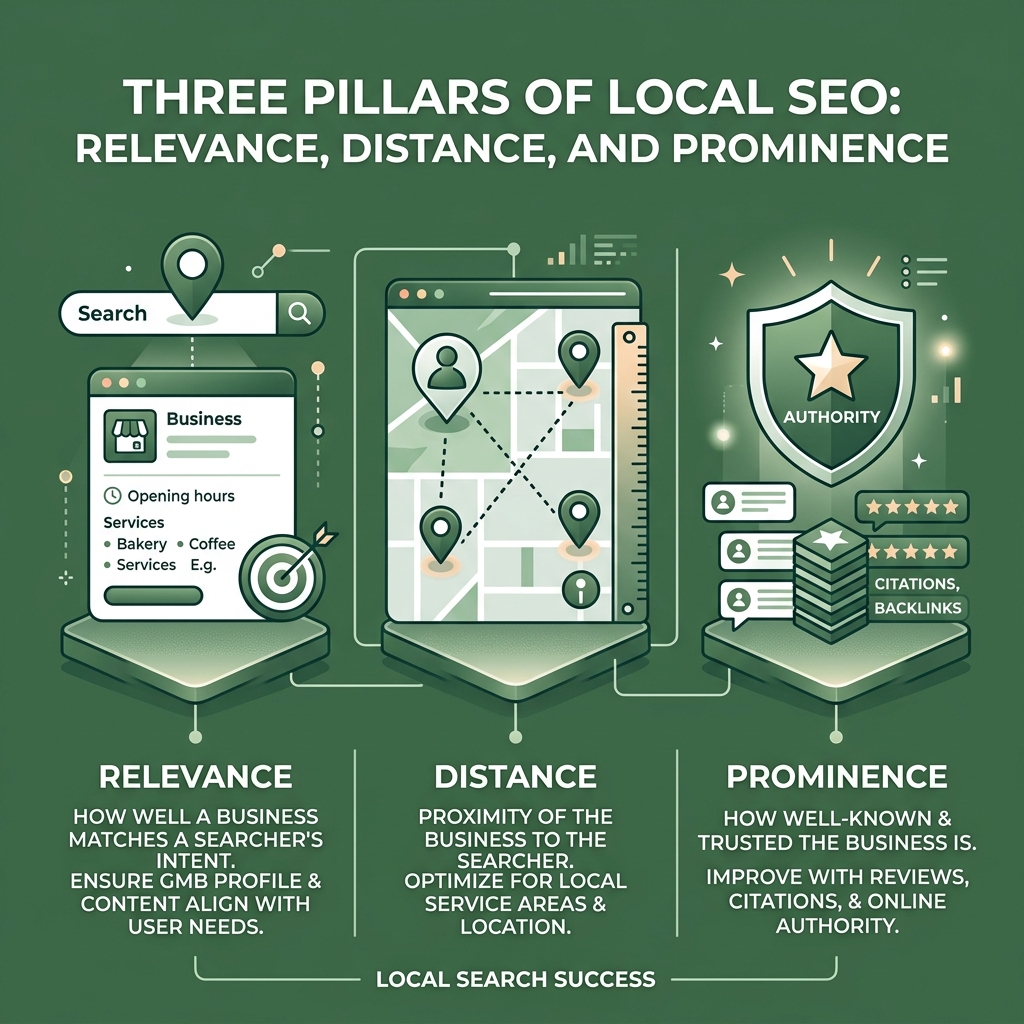
For businesses with a physical location, Local SEO is equally vital. Google uses relevance, distance, and prominence to rank local results. Keeping your Google Business Profile updated with fresh photos and responding to reviews is the fastest way to improve your local prominence. You can find the official rules in the Google Search Essentials.
Optimizing for AI Overviews and Generative Search
To rank in AI Overviews, your content needs high information density. AI models like Claude and Gemini look for clear, structured data that they can easily summarize.
- Structured Data (Schema): Use code to tell Google exactly what your content is (a recipe, a review, a product, etc.).
- Entity Distinctness: Make sure your brand is recognized as a unique “entity” with specific expertise.
- Clear Headings: Use H2 and H3 tags to organize your answers. AI often pulls directly from these headings.
Statistics show that over 80% of AI Overviews trigger for keywords with under 1,000 monthly searches. This means the “niche” is where the AI lives. If you want to stay ahead of the curve, read our Ranking in the AI Overview: A Practical Guide.
Establishing Authority and Local Prominence
Authority is built through links. When another reputable website links to yours, it’s a “vote of confidence” in Google’s eyes. But not all links are created equal. One link from a major news site or a university is worth more than a thousand links from random, low-quality blogs.
We focus on earning editorial links. These are links given naturally because your content is so good that people want to share it. This ties back to E-E-A-T: Experience, Expertise, Authoritativeness, and Trustworthiness.
For local businesses, your prominence is tied to your Google Business Profile.
- Verify your business.
- Keep your hours accurate.
- Respond to every review (yes, even the bad ones).
- Add high-quality photos.
If you’re ready to take your link building to the next level, we recommend The Brian Dean Guide to Next-Level Link Building for strategies that actually work without getting you penalized.
Implementing a Systems-Driven Approach to How to Optimise Website for Google Search
SEO is not a “set it and forget it” task. It is a compounding growth engine. To see results, you need a system-level approach that moves away from chasing fleeting tactics and toward building durable assets.
At Clayton Johnson SEO, we believe in Clarity → Structure → Leverage → Compounding Growth.
This starts with a comprehensive SEO audit. You need to know exactly where you stand before you can move forward. We use AI-augmented workflows to identify invisible technical issues and content gaps that human eyes might miss. Our approach isn’t about vanity metrics like “total keyword count”; it’s about measurable business impact—leads, sales, and ROI.
If you are a founder or operator looking to turn your fragmented marketing into a coherent growth engine, you need a framework. You can explore The Best B2B SEO Audit Framework for Growing Your Pipeline to see how we operationalize strategy into results.
How to optimise website for google search is a journey, not a destination. By focusing on the pillars of technical health, structured content, and authority building, you can stop chasing clicks and start generating sustainable traffic.
Ready to build your growth engine? Let’s get to work.