Why Your Rankings Depend on Getting Keyword Research Right
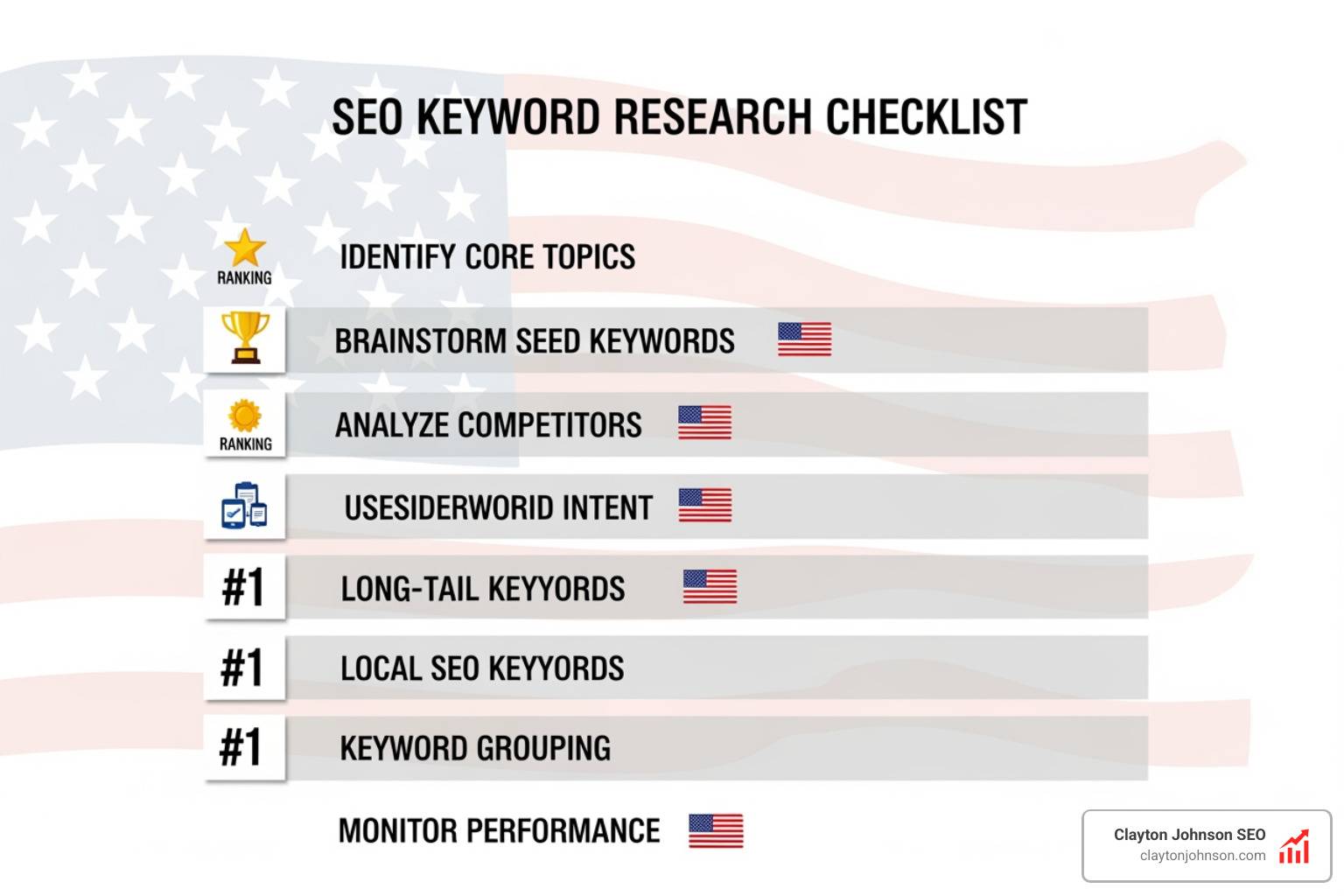
An SEO keyword research checklist is the step-by-step process of finding, analyzing, and organizing the search terms your audience uses — so you can create content that ranks and converts. Here’s the core process at a glance:
SEO Keyword Research Checklist:
- Brainstorm seed keywords — Start with broad terms related to your business, products, or services
- Expand your keyword list — Use tools and search engine features to find related terms
- Find long-tail keywords — Target specific, lower-competition phrases with higher conversion potential
- Analyze competitor keywords — Identify gaps where you can outrank them
- Review key metrics — Check search volume, keyword difficulty (KD), and CPC
- Determine search intent — Match each keyword to what the user actually wants
- Cluster your keywords — Group related terms to build topical authority
- Prioritize by funnel stage — Focus on high-intent keywords first for faster results
- Map keywords to pages — Assign terms to specific URLs to avoid cannibalization
- Track and refine — Monitor rankings and adjust your strategy over time
Most business owners know they need to show up on Google. But how you get there is where things break down.
The problem isn’t effort — it’s direction. Without a structured keyword research process, you’re essentially guessing what your customers are searching for. Some guesses pay off. Most don’t.
Here’s a sobering reality: 94.74% of keywords get 10 or fewer monthly searches. That means the vast majority of terms you could target will bring almost no traffic. But the right keywords — found through a-repeatable, systematic process — can drive consistent, compounding organic growth.
The mistake I made early in my SEO career was focusing too heavily on individual keywords instead of broader search intent. Understanding how topics connect is far more effective than chasing isolated rankings.
I’m Clayton Johnson, founder of Clayton Johnson SEO, and I’ve spent nearly two decades building scalable SEO frameworks — including developing a proven SEO keyword research checklist that I’ve used to help businesses dominate competitive search results. In this guide, I’ll walk you through the exact process, step by step.
The Essential SEO Keyword Research Checklist for Scalable Growth
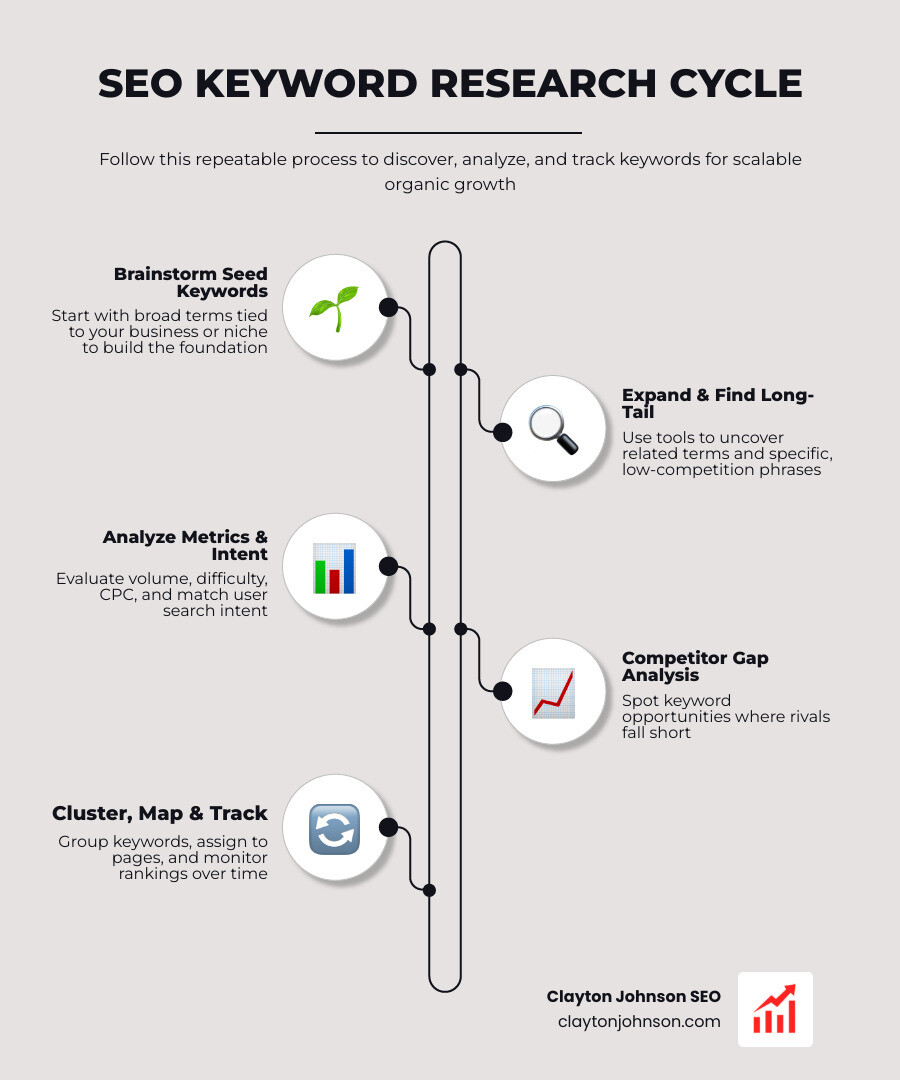
To move from fragmented marketing to a coherent growth engine, we need to stop treating keywords as a random list of words. Instead, we view them as the data points that reveal exactly what our market wants. A robust seo keyword research checklist isn’t just a “to-do” list; it’s a strategic roadmap.
When we begin, we focus on three core pillars:
- Seed Keywords: These are the broad “roots” of your niche.
- Expansion: Growing those roots into a forest of specific opportunities.
- AI Discovery: Using modern tools to find connections humans might miss.
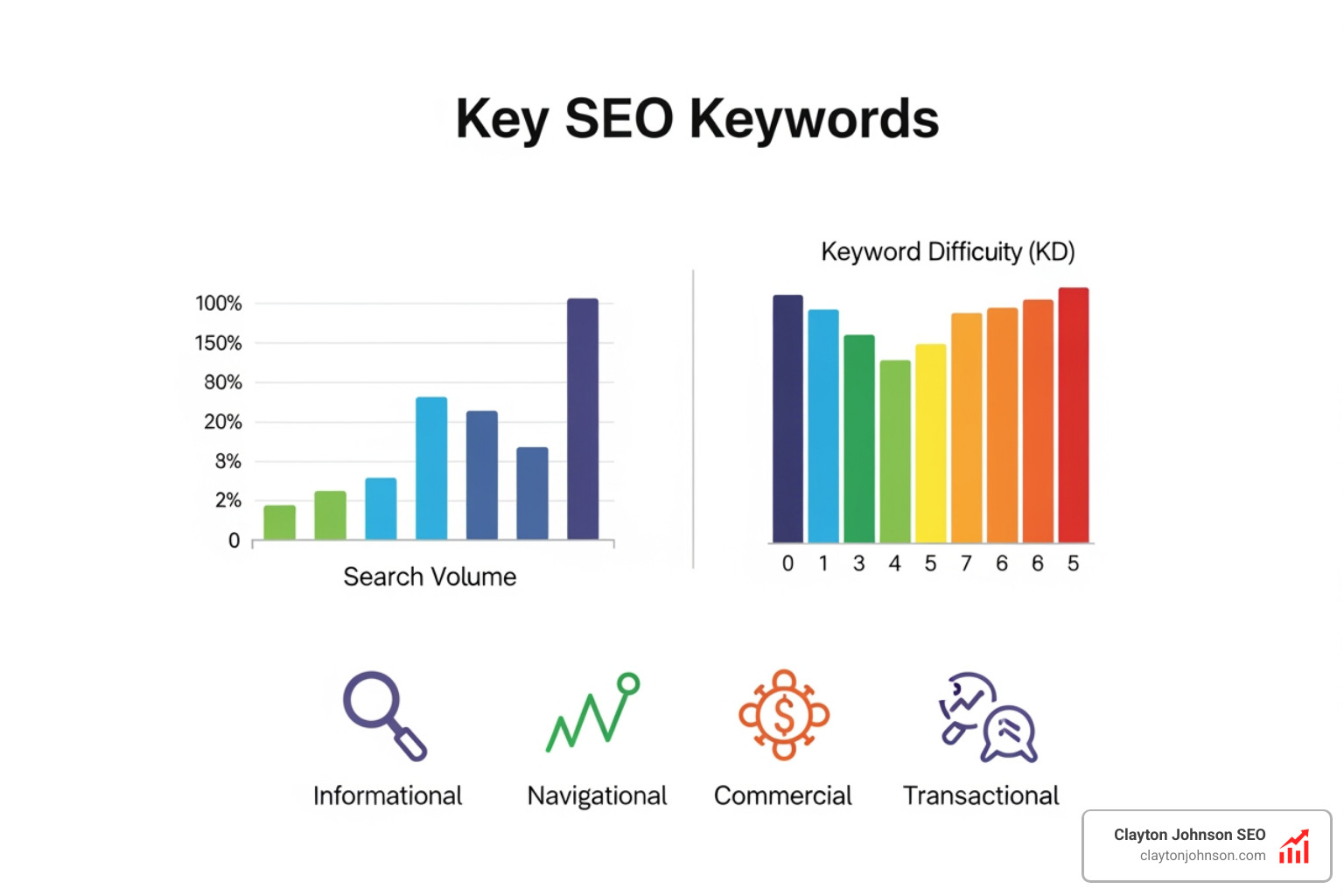
In today’s landscape, finding keywords with AI is easier than you think. We often use ChatGPT as a sophisticated brainstorming partner to uncover semantically related terms. However, we never rely on AI alone for data like search volume—that’s where our specialized tool-driven systems come in.
Phase 1: Discovery and Seed Keyword Generation
Every successful campaign starts with “Seed Keywords.” These are broad terms related to your business, products, or services. If you’re a running shoe brand, your seeds might be “marathon shoes,” “trail running,” or “athletic footwear.”
The goal here isn’t to find high-volume winners yet; it’s to define the boundaries of your universe. We recommend The Ultimate Guide to Keyword Strategy to help you structure this initial phase.
To find these seeds, we look at:
- Customer Questions: What do people ask your sales team?
- Search Behavior: Use Google Autocomplete or “People Also Ask” to see how humans naturally phrase their needs.
- Niche Communities: Scour Reddit or Quora. If people are complaining about a problem, there’s a keyword waiting to be born.
Phase 2: Analyzing Metrics and Search Intent
Once we have a massive list of potential terms, we have to “qualify” them. We don’t want vanity metrics; we want business impact. This requires looking at two specific numbers: Monthly Search Volume (MSV) and Keyword Difficulty (KD).
MSV is the average number of searches per month. While high volume looks attractive, it often comes with high competition. This is why we balance it with KD—a metric that tells us how hard it will be to crack the first page.
| Keyword Type | Avg. Search Volume | Difficulty (KD) | Conversion Potential |
|---|---|---|---|
| Head Terms (e.g., “SEO”) | 100,000+ | Very High (90+) | Low |
| Mid-Tail (e.g., “SEO services”) | 5,000 – 10,000 | High (60-80) | Medium |
| Long-Tail (e.g., “SEO keyword research checklist”) | 100 – 500 | Low/Med (20-40) | High |
Beyond numbers, we must solve for Search Intent. Google doesn’t just rank the “best” content; it ranks the content that best answers the user’s goal. Are they looking for information (Informational), a specific site (Navigational), a product to buy (Transactional), or are they comparing options (Commercial)? Winning the AI Search Era with Intent-Based Keyword Research is about ensuring your content type matches the SERP (Search Engine Results Page) pattern.
Phase 3: Competitor Gap Analysis and Long-Tail Expansion
One of the fastest ways to grow is to identify keyword gaps—the terms your competitors rank for, but you don’t. By analyzing the “Content Competitors” (those who rank where you want to be, even if they aren’t direct business rivals), we can find untapped opportunities.
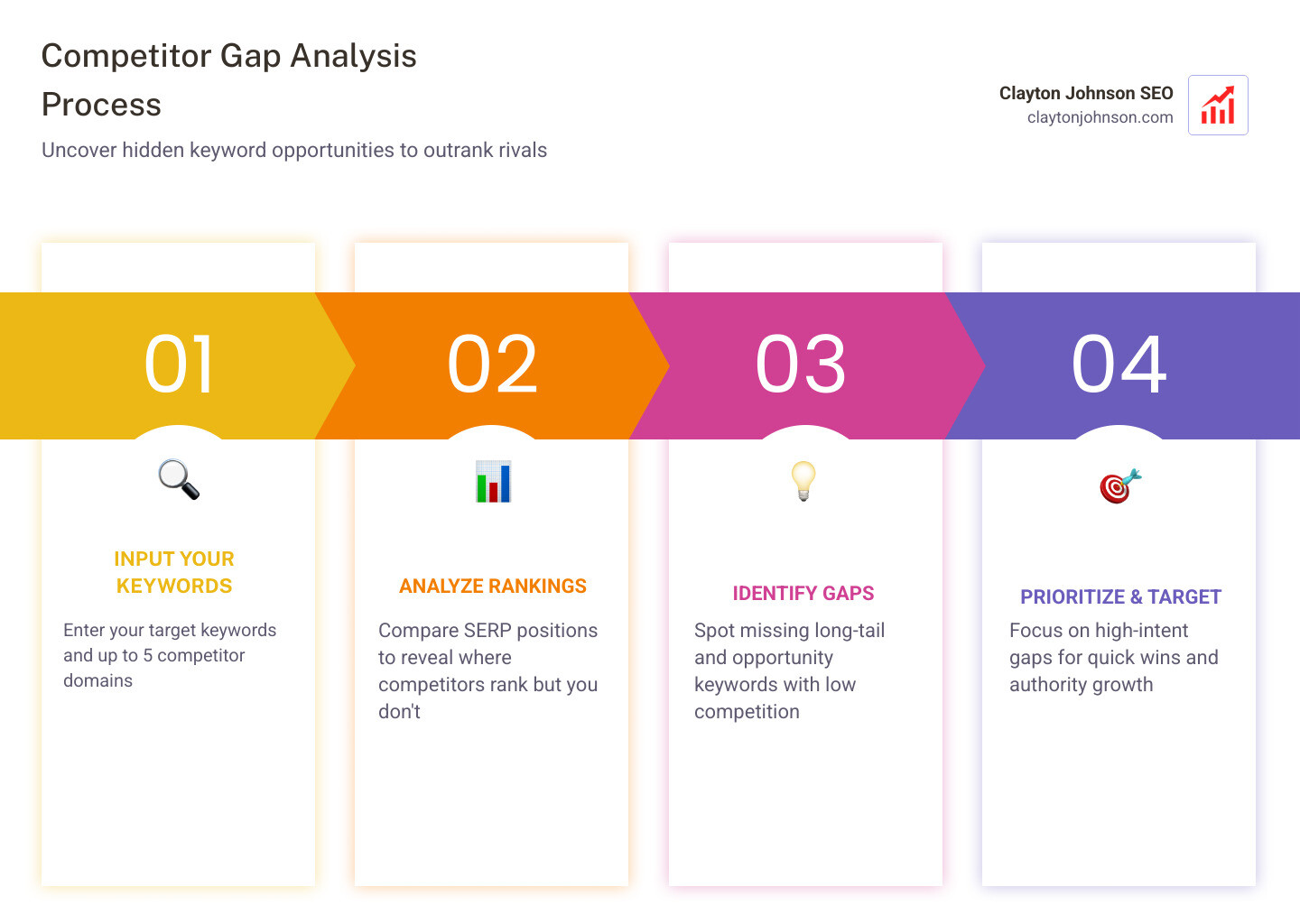
This leads us to our “secret weapon”: Long-tail keywords. Long-tail keywords are specific phrases or questions that usually have lower search volume but significantly higher conversion rates. Think about it: someone searching for “shoes” is browsing; someone searching for “breathable waterproof trail running shoes size 10” is ready to buy.
Why your SEO strategy needs these long-tail keyword tools right now is simple: they allow smaller sites to build authority in niches before tackling massive “head” terms. According to research, long-tail terms average conversion rates of 3.8% to 4.6%, compared to just 1% for broad terms.
Implementing Your Strategy for Long-Term Authority
Finding keywords is only half the battle. The other half is architecture. We don’t just dump keywords into a blog and hope for the best. We build Topical Authority.
This means organizing your site so Google sees you as an expert on an entire subject, not just a single phrase. We do this through Keyword Mapping and Content Silos. Research from HubSpot shows that search engines increasingly favor comprehensive topic coverage over individual keyword optimization.
Building Topical Authority Through Keyword Clustering
The modern way to organize content is through Topic Clusters. This involves a “Pillar Page” (a comprehensive guide on a broad topic) linked to multiple “Cluster Pages” (specific articles on sub-topics).
For example:
- Pillar Page: The Ultimate Guide to SEO.
- Cluster Page 1: How to do technical audits.
- Cluster Page 2: Our seo keyword research checklist.
- Cluster Page 3: Link building strategies.
This structure allows link equity to flow throughout your site and signals to Google that you have deep expertise. If you’re new to this, An Absolute Beginners Guide to Mastering Core SEO can help you visualize this internal linking structure.
Executing the SEO Keyword Research Checklist in Content
Once the strategy is set, it’s time to write. But we must avoid the “dark ages” of SEO—keyword stuffing. Modern search engines use natural language processing. They want “Helpful Content” that follows Google Search Essentials.
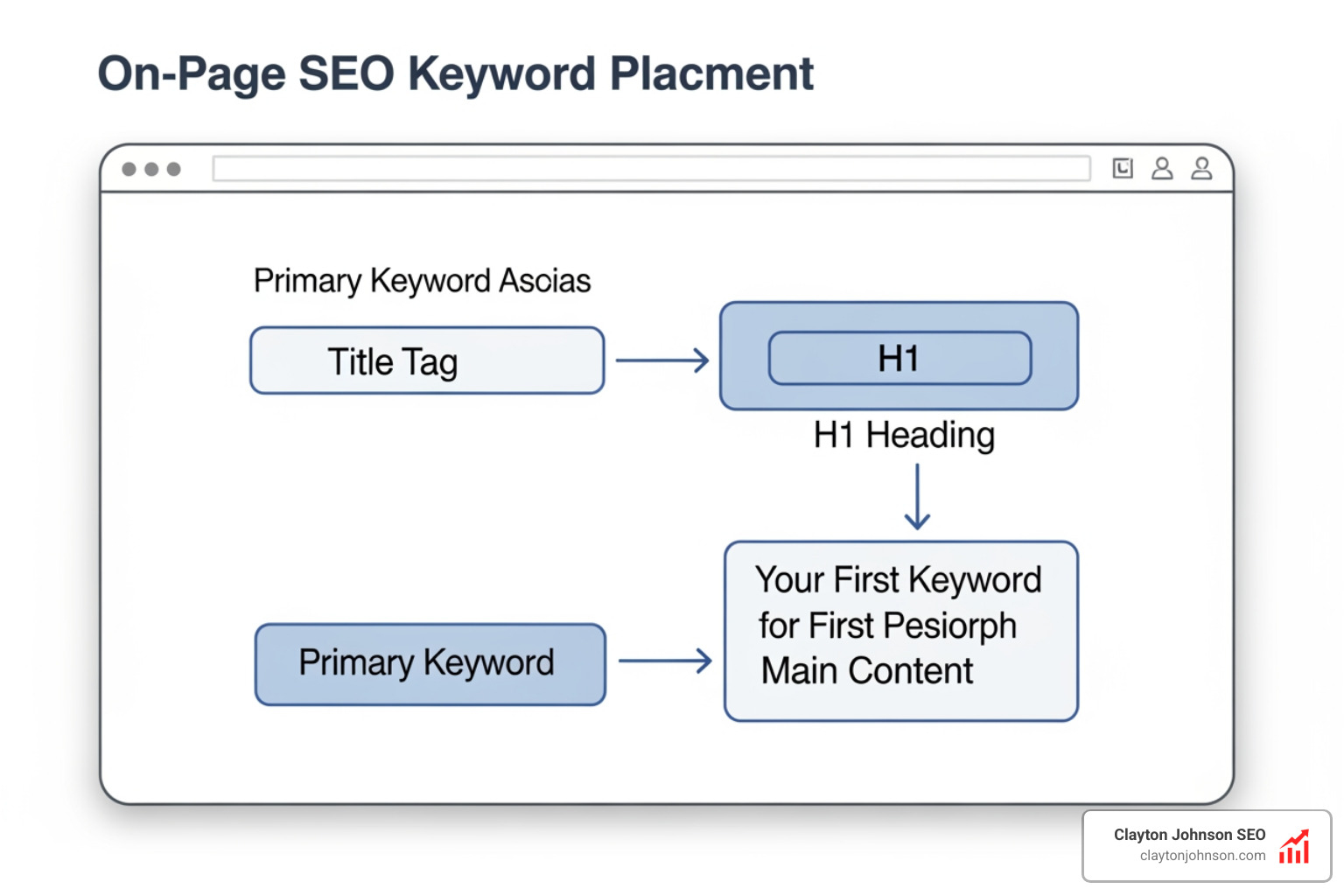
Our content execution rules are simple:
- Primary Keyword: Include it in the Title Tag, H1, and the first 150 words.
- Secondary Keywords: Use variations and synonyms naturally throughout the subheaders (H2s and H3s).
- User Experience: Use short paragraphs, bullet points, and multimedia to keep readers engaged.
- Semantic Depth: Don’t just repeat the keyword; talk about related concepts. If you’re writing about “baking a cake,” you should naturally mention “flour,” “oven temperature,” and “whisking.”
Measuring Success and Refining Your SEO Keyword Research Checklist
SEO is a marathon, not a sprint. We don’t just “set and forget.” We build a performance monitoring system.
We rely heavily on Google Search Console (GSC) to track our actual rankings and click-through rates (CTR). Sign up for GSC if you haven’t already; it is the most accurate source of truth for how Google perceives your site.
We look for:
- Position Tracking: Are we moving from page 3 to page 1?
- Impressions vs. Clicks: If we have high impressions but low clicks, our Title Tag or Meta Description needs work.
- Conversion Alignment: Are these keywords actually driving business outcomes?
At Clayton Johnson SEO, we specialize in turning these fragmented efforts into a coherent growth engine. We don’t just give you a list of words; we build the durable systems — the internal linking structures and taxonomy-driven ecosystems — that ensure your traffic compounds over time.
If you’re ready to stop guessing and start building a measurable search presence, you can find more info about SEO services on our site. We focus on clarity, structure, and leverage to ensure your SEO isn’t just a cost, but a compounding asset.
Frequently Asked Questions
What is the most common keyword research mistake? Focusing solely on search volume. High volume is useless if the keyword difficulty is too high for your current Domain Rating (DR) or if the search intent doesn’t align with your business goals.
How often should I update my keyword research? Keyword research is an ongoing process. We recommend a deep dive every quarter to identify new trends, seasonal shifts, and competitor moves.
Are free keyword tools enough? They are a great starting point. Tools like Google Keyword Planner and Google Trends provide foundational data. However, for competitive analysis and difficulty scoring, professional tools are essential for building a scalable strategy.
What is keyword cannibalization? This happens when multiple pages on your site target the same keyword. It confuses Google, often resulting in neither page ranking as well as a single, consolidated page would. Proper keyword mapping prevents this.
How does AI change keyword research? AI is excellent for semantic expansion and intent prediction. It can uncover 34% more semantically related terms than traditional tools. However, it still requires human oversight to ensure the data aligns with real-world business ROI.