Turning Mundane Businesses into Millions with Codie Sanchez

When we look at the traditional path to entrepreneurship, most people think they need a world-changing idea and a garage. But Codie Sanchez’s background on Wall Street and in private equity taught her a different lesson. After nearly two decades in the high-stakes world of finance at firms like Goldman Sachs and State Street, she realized that the smartest money wasn’t chasing the next “unicorn” startup—it was buying the plumbing company down the street.
The reason is simple: startups have an incredibly high failure rate, with roughly 8 out of 10 failing within their first few years. When you build from scratch, you are fighting for product-market fit, customer acquisition, and cash flow from day one.
Through her platform, Unconventional Acquisitions, Codie teaches a “contrarian” approach. Instead of building, you buy a business that already has:
- A proven customer base
- Existing cash flow
- Trained employees
- Established systems
This is a massive shift in risk mitigation. When you buy a business trading at a 2-3x profit multiple, you are essentially buying a paycheck. It’s about stealing these business models legally by acquiring the assets and infrastructure someone else spent decades building. By shifting your mindset from “innovator” to “owner,” you bypass the “valley of death” that kills most new ventures.
Mastering Codie Sanchez acquisition strategies: The 9-Step Framework
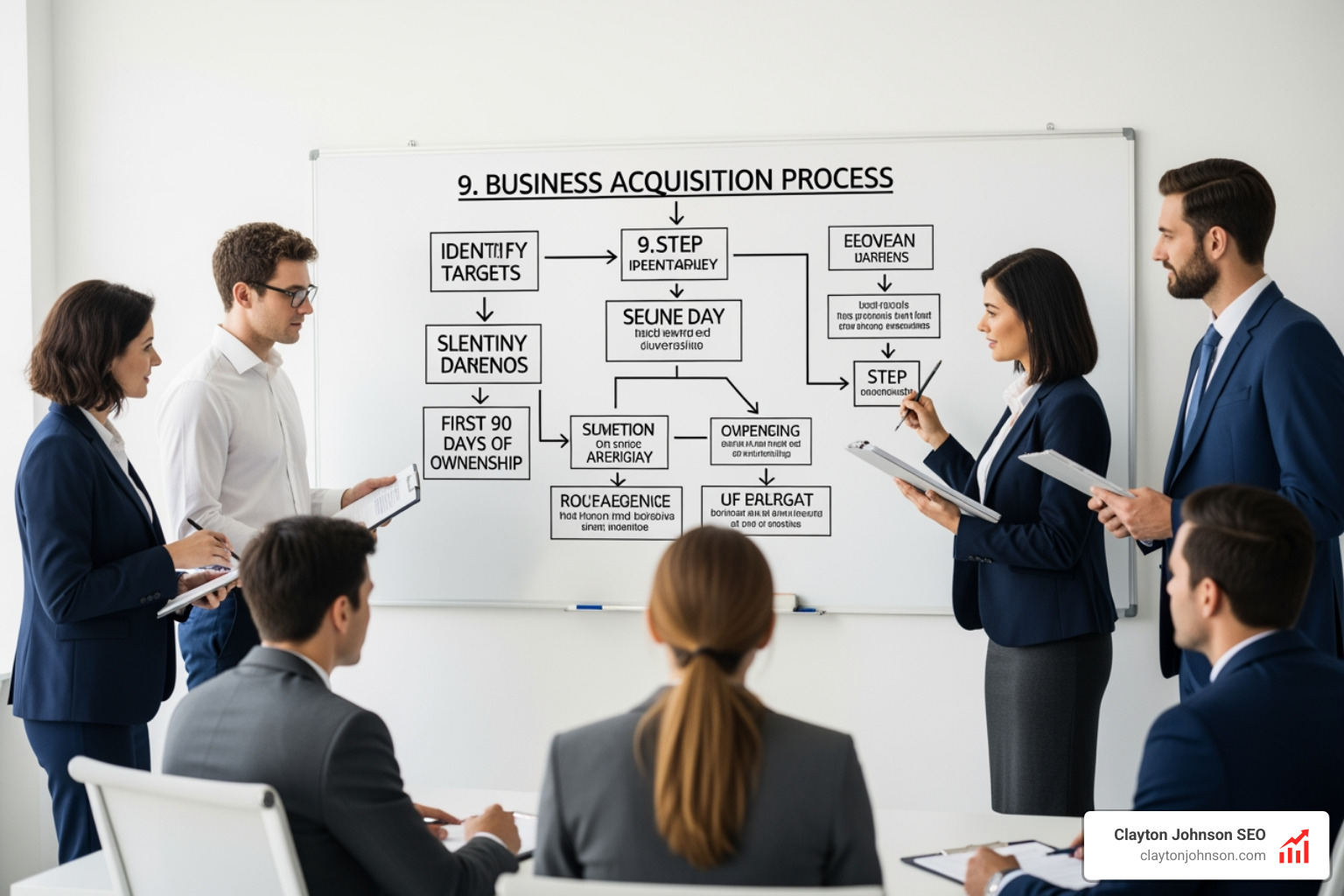
To turn the complex world of M&A (Mergers and Acquisitions) into something accessible for the average person, we follow a structured 9-step framework. This system ensures that you don’t just buy a job, but an asset that contributes to a larger business flywheel.
- Identify Your “Why” and Criteria: Determine if you want a passive or active role and what your profit goals are.
- Select Your Business Type: Focus on “boring” but essential services.
- Deal Origination: Sourcing both on-market and off-market opportunities.
- Selling Yourself to the Owner: Building trust so they want to sell to you.
- Valuation: Calculating the right price based on profit multiples.
- The Term Sheet and Negotiation: Outlining the deal structure.
- Financing: Layering SBA loans, seller financing, and equity.
- Legal and Contracts: Finalizing the purchase with professional oversight.
- The First 90 Days: Implementing a plan to stabilize and grow the asset.
Using the-ultimate-guide-to-the-business-model-canvas can help you visualize how these acquired businesses function before you even sign the closing papers.
Identifying Your Target with Codie Sanchez acquisition strategies
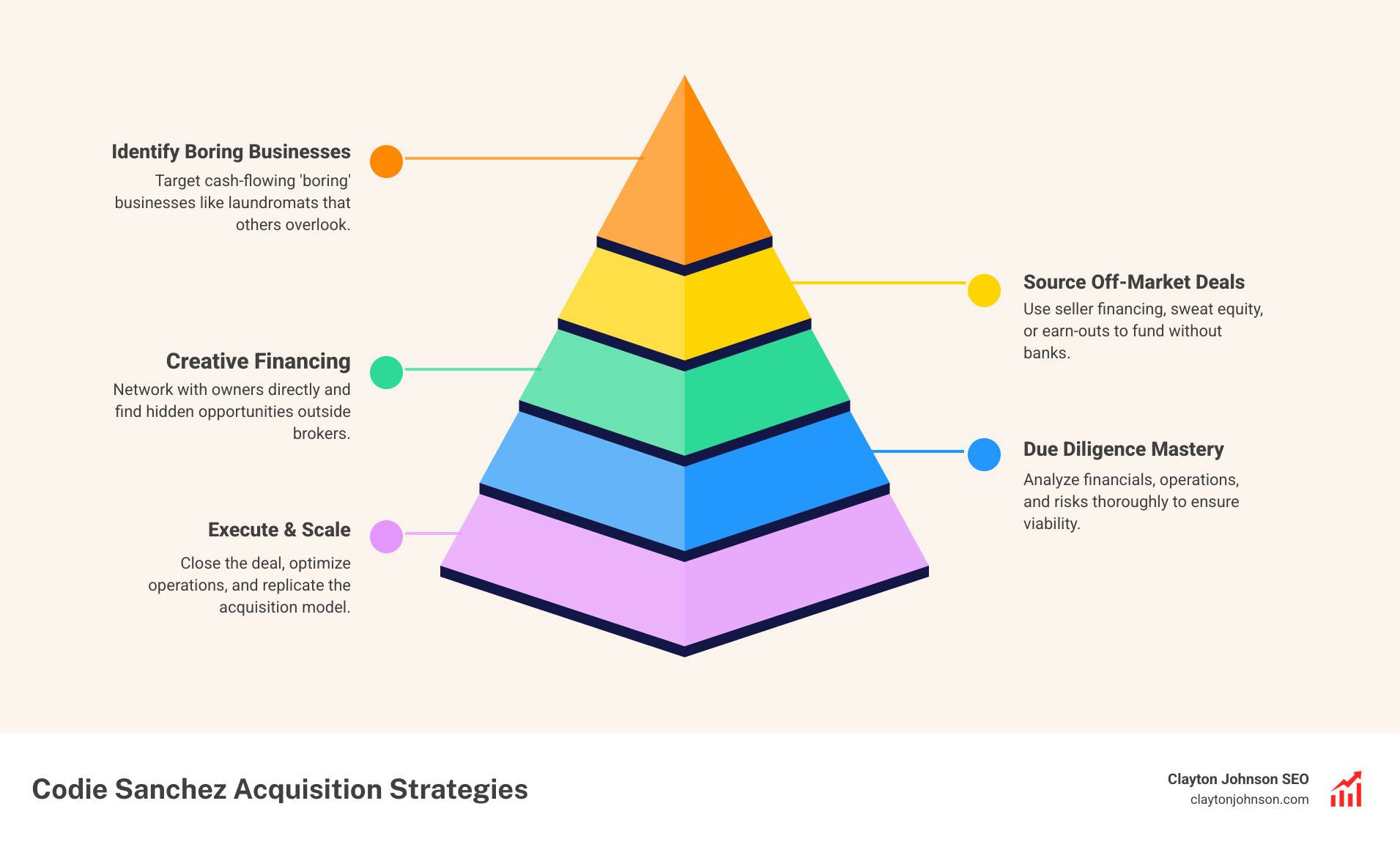
The first hurdle is knowing what to look for. Codie Sanchez acquisition strategies prioritize businesses that are “unsexy” but necessary. We aren’t looking for the next trendy app; we are looking for the dry cleaner that has been on the corner for 20 years.
A prime target typically generates at least $100,000 in annual profit. Why? Because that profit needs to be enough to pay a manager to run the day-to-day operations and still leave you with a distribution. Small businesses with less than $5 million in revenue typically trade at a 2-3x multiple of their profits. This means if a business profits $100,000, you might buy it for $200,000 to $300,000.
You can find these gems at How to buy a small business or via local listings, but the best deals often come from direct outreach to owners who haven’t even listed their business for sale yet.
Financing the Deal: SBA and Seller Financing
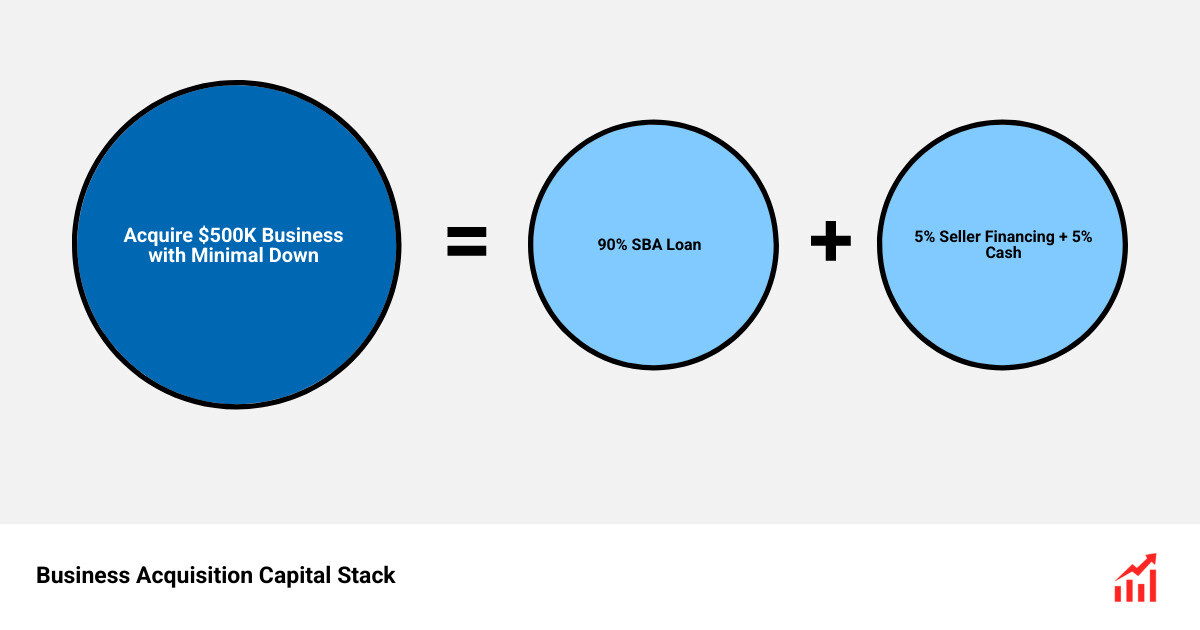
One of the most powerful aspects of Codie Sanchez acquisition strategies is the ability to buy these assets with very little of your own money. We use a “capital stack” to fund the purchase:
- SBA 7(a) Loans: The Small Business Administration can guarantee loans for up to 90% of the purchase price.
- Seller Financing: The seller “loans” you a portion of the purchase price (often 10-20%), which you pay back over time from the business’s own profits.
- Equipment Loans: Using the business’s physical assets as collateral for additional cash.
By layering these, it’s possible to acquire a $500,000 business with only 5-10% down. This leverage allows you to achieve a much higher cash-on-cash return than you would find in real estate or the stock market.
The Laundromat Model: Why Boring is Beautiful
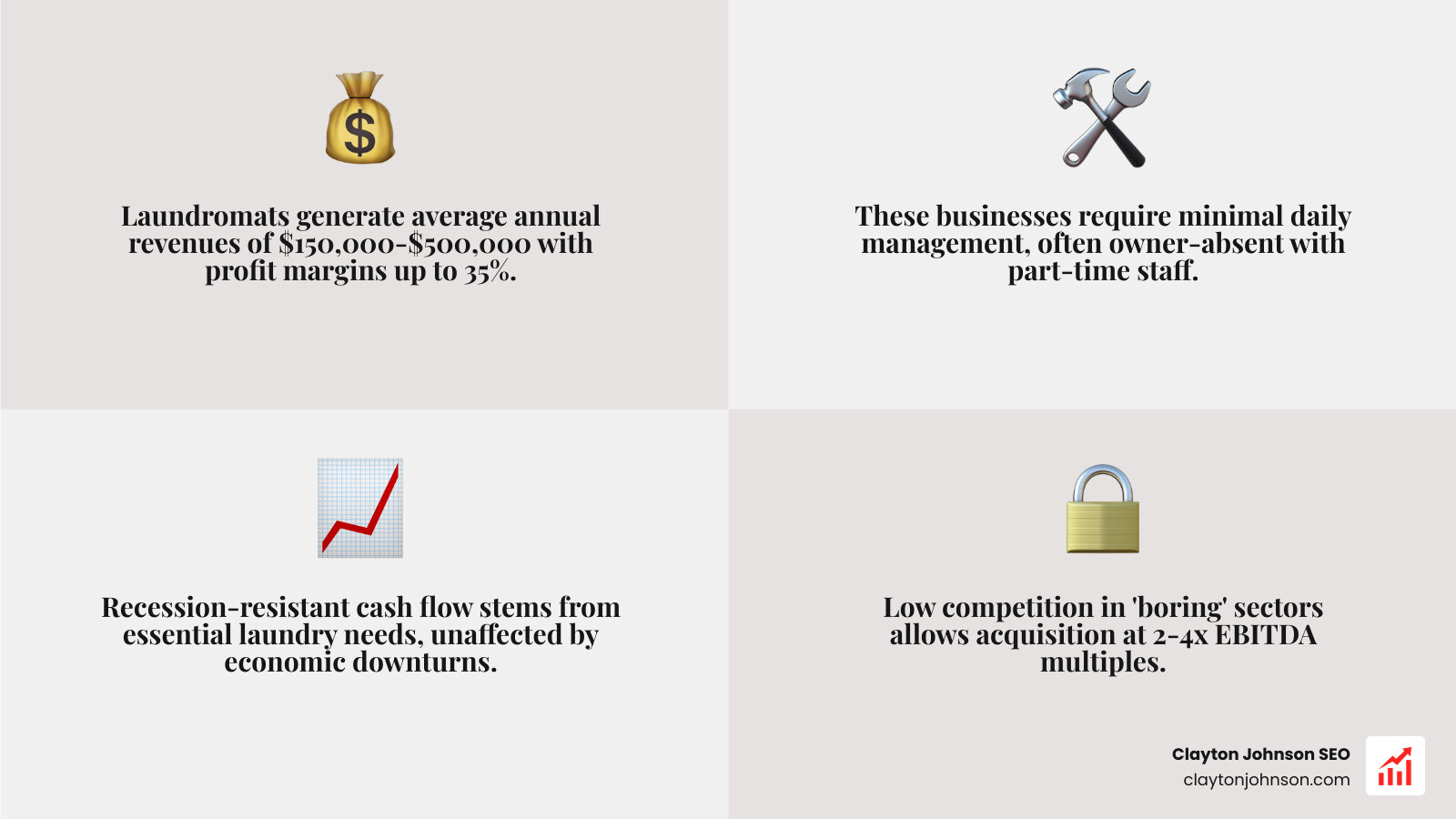
Codie often refers to laundromats as the “gateway drug” of business acquisitions. Why? Because they are simple to understand, have low labor costs, and provide an essential service. This is The Laundromat Model—a blueprint for any business that is recession-proof and highly fragmented.
Other examples include car washes, HVAC companies, waste removal, and landscaping. These businesses have “moats” because they are difficult to automate and people need them regardless of what the economy is doing.
| Business Type | Typical Cost | Annual Revenue | Profit Margin |
|---|---|---|---|
| Laundromat | $300k – $500k | $200k+ | 15% – 35% |
| Car Wash | $500k – $1M+ | $300k+ | 30% – 40% |
| Landscaping | $150k – $400k | $500k+ | 10% – 20% |
| HVAC Service | $200k – $600k | $1M+ | 15% – 25% |
These “boring” businesses often have high margins and are located in fragmented markets where you can buy several small competitors and “roll them up” into one larger, more efficient company.
Creative Deal-Making and Off-Market Sourcing
While websites like BizBuySell are great starting points, the most profitable deals are often found “off-market.” This is where the “Silver Tsunami” comes into play. With 10,000 Baby Boomers retiring every day, many are tired and looking for an exit.
We use market-analysis/market-industry-and-competitive-analysis to identify these tired owners. Creative deal-making might involve a “revenue share” for a business that has recently closed its doors. For example, a gym owner could acquire the customer list of a defunct competitor in exchange for a percentage of the revenue generated from those customers over the next year—requiring $0 down.
Tools like Bizscout can help automate this outreach, allowing you to find owners in specific zip codes and industries who might be ready to pass the torch.
Scaling Your Portfolio with Codie Sanchez acquisition strategies
Once you have acquired your first business, the goal is to “stairstep.” You use the cash flow from the first acquisition to fund the down payment for the second. This is how you build a holding company.
We can scale through:
- Roll-ups: Buying multiple businesses in the same industry (like five car washes) to save on back-office costs.
- Additive Ecosystems: If you own a landscaping company, buy a nursery. If you own a marketing agency, buy a software tool your clients use.
- Ancillary Expenditures: Look at your own Venmo or PayPal history. What services are you paying for? Could you buy the company that provides them?
By keeping your friends close and your competitors closer, you can identify which rivals are struggling and offer them a graceful exit that builds your empire.
Mindset and Persistence: The Deal-Maker’s Edge
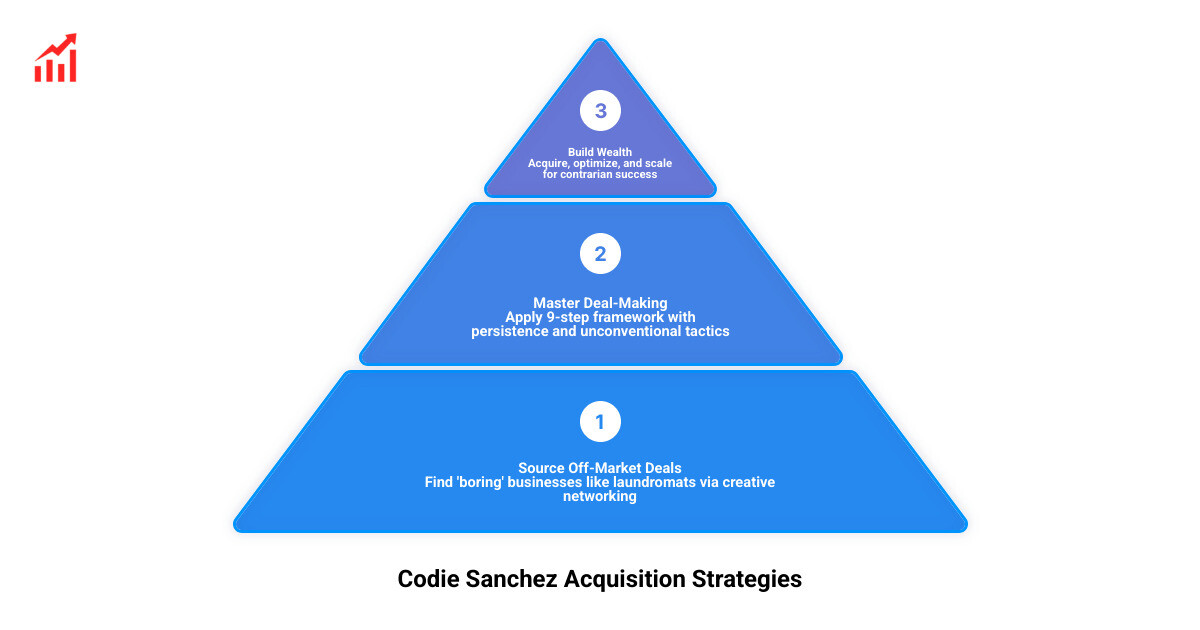
The most important tool in your arsenal isn’t a spreadsheet; it’s what Codie calls “deal-maker glasses.” Once you put them on, you stop seeing a “closed” sign on a building and start seeing an opportunity for a revenue-share deal.
Acquiring a business requires massive persistence. Statistics show that the average small business stays on the market for over a year, and 1 in 11 never sells. Most deals fall apart halfway through due to “deal fatigue.” The winners are those who have the grit to stay at the table.
Having “skin in the game” through ownership is the only way to truly take back your financial power. By joining a community of like-minded “Owner Nation” members, you can leverage shared knowledge to navigate the complexities of the business model canvas and ensure your first 90 days are a success.
Frequently Asked Questions about Business Acquisitions
Why is now a great time to buy a small business?
We are currently witnessing the largest wealth transfer in history. With 10,000 Baby Boomers retiring daily, many are motivated sellers who care more about their legacy and their employees than squeezing every last dollar out of a sale. This creates a buyer’s market for those who know how to look.
How much money do I need to buy a business?
While it varies, you don’t need millions. Using an SBA 7(a) loan, you typically need 10% of the purchase price. However, if you negotiate a “seller carry” (where the seller finances part of that 10%), you could potentially close a deal with as little as 5% or even less in some creative “no-money-down” structures.
What are the best ‘boring’ businesses to acquire?
The best businesses are those with “reccuring” or “re-occurring” revenue. Laundromats and car washes are great because they are simple. However, service businesses like HVAC, plumbing, and waste removal are also excellent because they are essential services with high barriers to entry.
Conclusion
At Clayton Johnson SEO, we believe in the power of structured growth. Whether you are building an authority-building ecosystem or acquiring a portfolio of “boring” businesses, the principles remain the same: Clarity, Structure, and Leverage.
By applying Codie Sanchez acquisition strategies, you aren’t just buying a business; you are implementing a growth operating system that leads to compounding wealth. If you are ready to stop being a cog in the machine and start owning the machine itself, the path is clear. Use these frameworks to find your first deal, secure your financing, and begin your journey toward financial independence.