Why AI Has Changed Market Research Forever
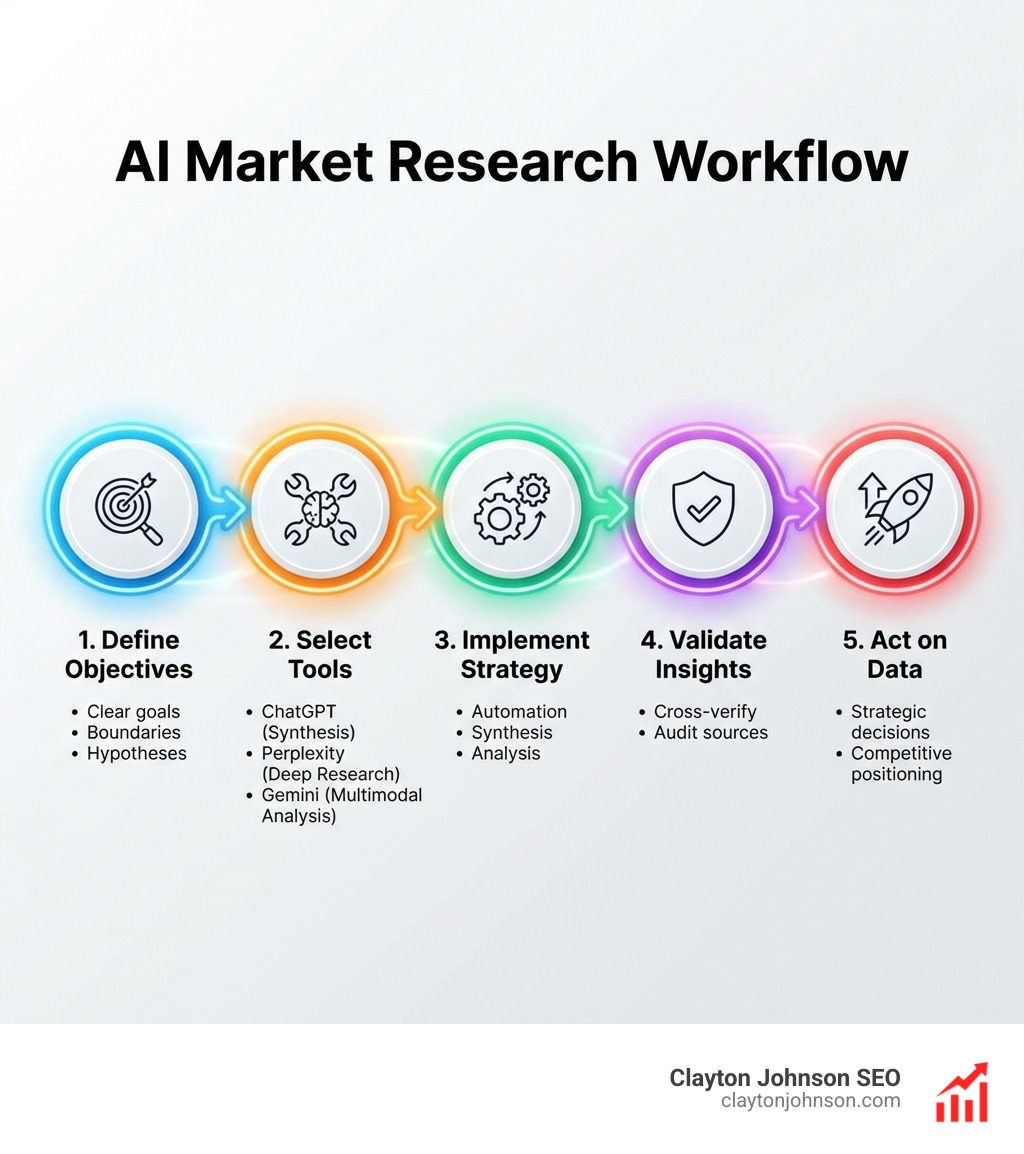
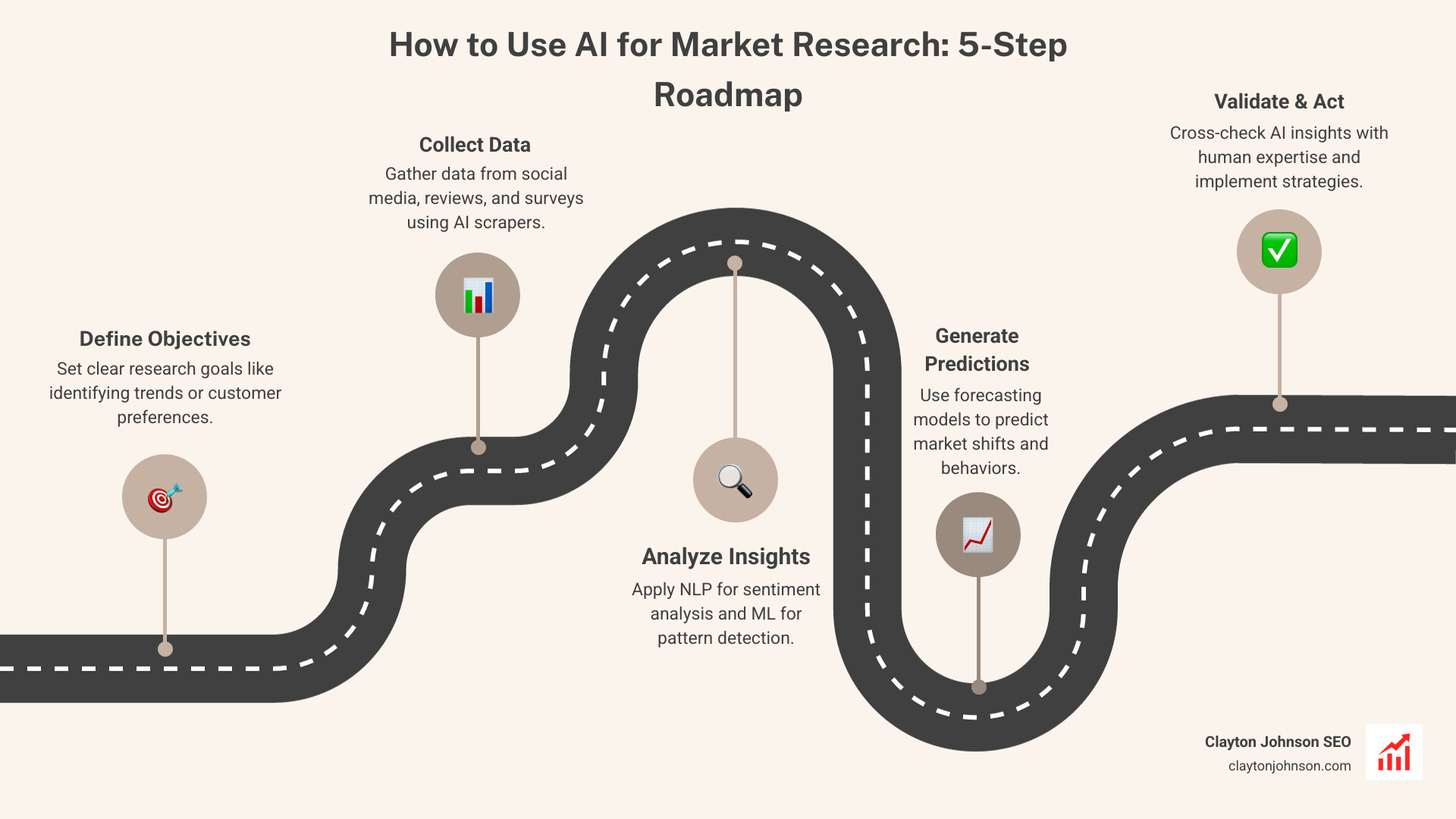
How to use AI for market research starts with understanding its core applications:
- Define your research objectives — Set clear goals, boundaries, and hypotheses before querying AI tools
- Select appropriate AI platforms — Choose tools like ChatGPT for synthesis, Perplexity for deep research, or Gemini for multimodal analysis
- Implement AI strategically — Use AI for desk research, sentiment analysis, and pattern recognition while maintaining human oversight
- Validate all outputs — Cross-verify AI insights with primary data and diverse sources to mitigate hallucinations and bias
- Embed AI into workflows — Automate repetitive tasks like survey generation, competitor tracking, and data clustering
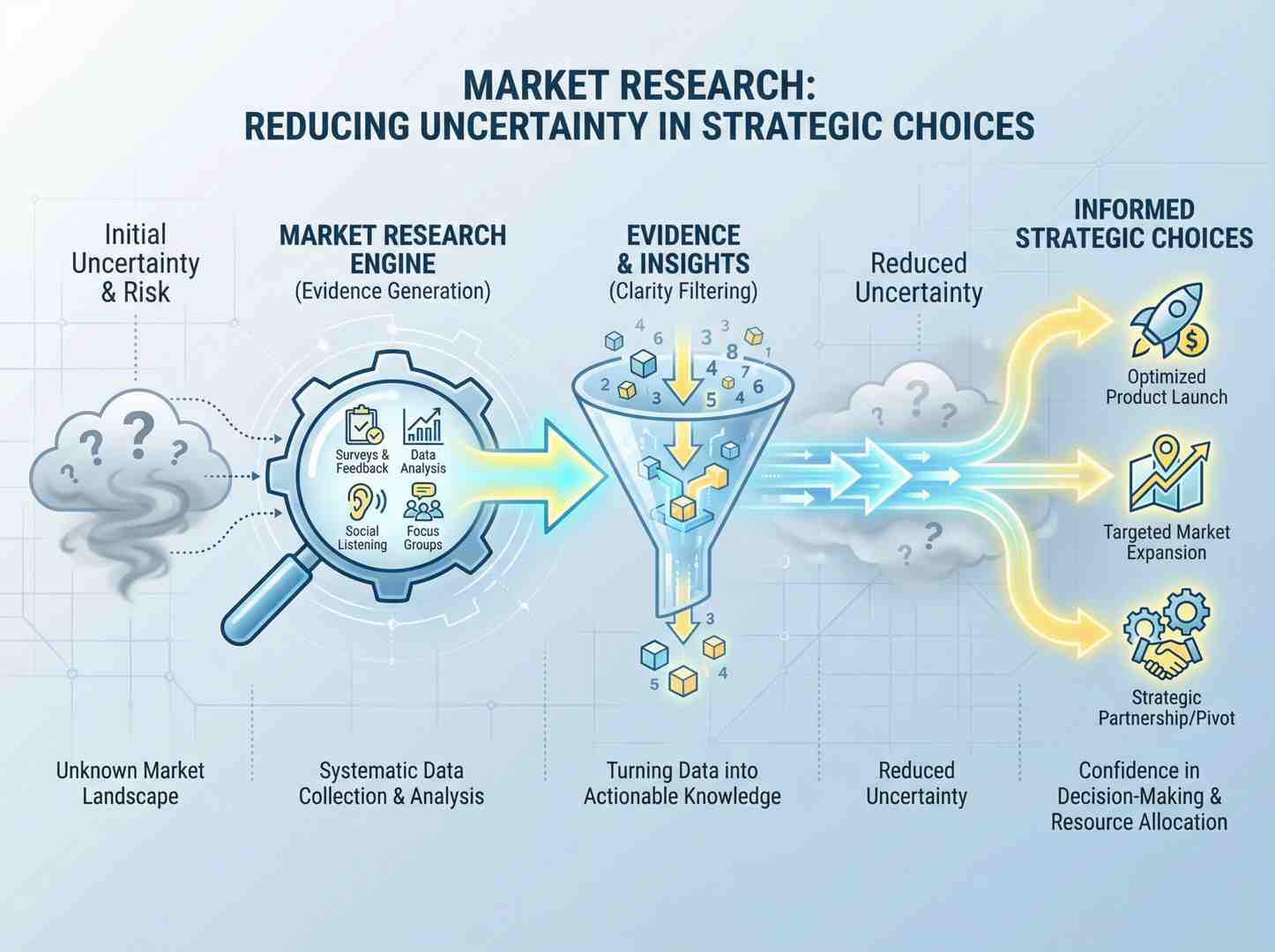
The $140 billion global market research industry is undergoing its most significant transformation in decades. Custom market research has always been notoriously slow and costly, often requiring many months and significant investments. Gen AI is now transforming the collection, creation, and analysis of consumer and market insights — reducing research time from weeks to days or even minutes while maintaining accuracy. According to research, AI analyses data in real-time, and 90% of businesses plan to increase their AI investment across 2025 and beyond.
The shift is fundamental: AI enables speed, scalability, and depth that were previously impossible. Traditional methods relied on manual data collection, spreadsheet analysis, and weeks of interpretation. AI-powered tools now automate survey design, analyze billions of conversations for predictive modeling, and uncover patterns in unstructured data using natural language processing. The result is faster decisions, lower costs, and more actionable insights — but only when implemented with strategic clarity and human validation.
I’m Clayton Johnson, and I’ve spent years building SEO and growth systems that integrate AI-assisted workflows for strategic decision-making. My work in how to use AI for market research focuses on helping founders and marketing leaders move from fragmented insights to structured, AI-augmented intelligence systems that compound over time.
How to Use AI for Market Research: A Strategic Framework
To truly master how to use AI for market research, we have to stop looking at AI as a magic “answer button” and start seeing it as a high-speed research partner. In the past, marketers often made strategic decisions without the benefit of timely external insights because the data took too long to get. As noted by Andreesen Horowitz on the transformation of market research, custom research has historically been slow and costly.
We believe that the secret to success isn’t just the tool you use; it’s the structured growth architecture you build around it. At Demandflow, we focus on moving away from random tactics toward a system where clarity leads to structure, and structure leads to leverage. When you apply this to market research, you aren’t just “asking a chatbot questions”—you are building a proprietary intelligence engine.
If you are looking to scale your organic presence alongside your research, check out our SEO content marketing services to see how we turn insights into authority-building ecosystems.
Defining Objectives for AI-Augmented Projects
Before you open a single browser tab, you need a plan. AI is incredibly good at following directions, but if your directions are vague, your results will be “hallucinated” or irrelevant.
- State the Primary Goal: Are you looking for a new market entry strategy, or are you trying to understand why customers are churning?
- Identify Hypotheses: Give the AI something to test. For example: “We believe urban millennials in Minneapolis prefer eco-friendly packaging over lower prices.”
- Set Boundaries: Specify geographical limits (like focusing on our local Minneapolis market), temporal limits, and specific competitor sets.
- Stakeholder Validation: Ensure your product and leadership teams are aligned on what “success” looks like for this research project.
Selecting the Right Tools for Your Research Needs
Not all AI is created equal. Using the wrong tool for the job is like trying to eat soup with a fork—it’s technically possible, but you’re going to have a bad time.
- Generative LLMs (ChatGPT, Claude): Best for synthesis, brainstorming personas, and drafting survey questions.
- Search-Centric AI (Perplexity): Best for real-time market data, finding specific industry reports, and citation-backed competitive intelligence.
- Specialized Platforms: Tools like Qualtrics on AI market research tools offer built-in AI for analyzing billions of customer conversations and predictive modeling.
- Multimodal AI (Gemini): Excellent for analyzing visual data, such as competitor ad creatives or retail shelf layouts.
Core Applications: From Sentiment to Prediction
The beauty of AI lies in its ability to process “unstructured data”—the messy stuff like social media comments, video transcripts, and open-ended survey responses.
| Feature | Traditional Research | AI-Powered Research |
|---|---|---|
| Speed | Weeks to Months | Minutes to Days |
| Cost | High ($10k – $50k+) | Low to Moderate |
| Data Volume | Limited Samples | Billions of Data Points |
| Analysis | Manual Coding | NLP & Pattern Recognition |
| Updates | Static / One-time | Real-time / Continuous |
By leveraging Natural Language Processing (NLP), we can now perform sentiment analysis across thousands of reviews in seconds. This allows us to move from “I think people like our brand” to “68% of customers in the Midwest mention our ‘durability’ as the primary reason for purchase.” Tools like Brandwatch for social listening allow us to trawl social media and search engines to deliver these trends instantly.
How to Use AI for Market Research Surveys and Focus Groups
Surveys used to be boring, static forms. Now, they can be dynamic conversations.
- Survey Automation: Use AI to generate 10-12 question surveys divided into logical sections like Demographics, Brand Perception, and Product Feedback.
- Conversational AI: Platforms like Typeform conversational AI use AI to make surveys more engaging, which can significantly increase response rates.
- Virtual Focus Groups: Some brands are now using AI to simulate focus groups, testing product names or ad copy against “synthetic personas” before spending a dime on human testing.
- LOI Prediction: AI can predict the “Length of Interview” to ensure you aren’t fatiguing your respondents, leading to higher quality data.
How to Use AI for Market Research and Competitive Intelligence
Competitive intelligence is no longer about checking a rival’s website once a month. It’s about real-time monitoring.
Using AI, we can automate:
- Competitor Tracking: Use tools like Crayon for competitor activity to track pricing changes, marketing shifts, and product launches.
- SWOT & Porter’s Five Forces: AI can draft a preliminary SWOT analysis for any competitor by reviewing their public filings, customer reviews, and news mentions.
- Market Sizing: Query AI for market size information for specific segments. While you should always verify the sources, tools like ChatGPT and Perplexity are becoming increasingly accurate at finding and citing these figures.
Advanced Techniques: Deep Research and Synthetic Data
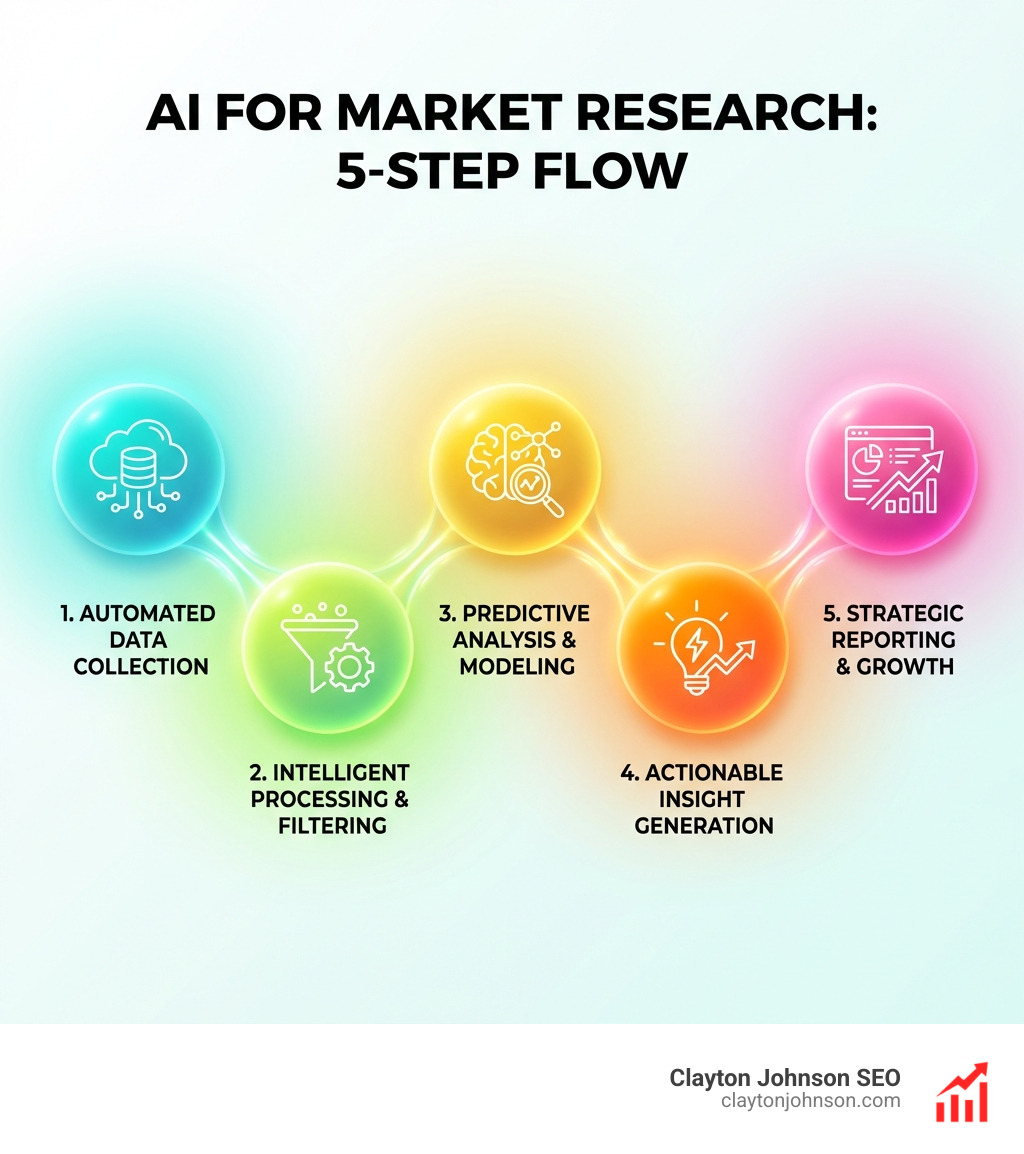
The year 2025 has brought us “Deep Research” modes. Unlike a standard chat, these agents don’t just give you the first answer they find. They perform multiple searches, follow links, verify facts, and synthesize a comprehensive report. This is a game-changer for identifying opportunities that aren’t obvious on the surface. As Foundation Capital argues, AI agents are redefining research by acting as autonomous partners.
Leveraging Deep Research Agents
When we use deep research agents, we aren’t just looking for data; we’re looking for patterns.
- Automated Synthesis: AI can take 50 different industry articles and turn them into a 5-page executive summary.
- Citation Verification: Modern tools provide direct links to the data sources, allowing us to perform “source auditing” to ensure the info isn’t just made up.
- Scenario Planning: We can ask AI to generate “Optimistic, Neutral, and Cautious” market forecasts based on current economic trends.
- Multimodal Analytics: Using OpenAI’s GPT models, we can upload images of competitor billboards or screenshots of their checkout flows to identify friction points.
The Role of Synthetic Consumers and Simulation
One of the most mind-blowing developments is the use of Large Language Models (LLMs) as synthetic survey respondents.
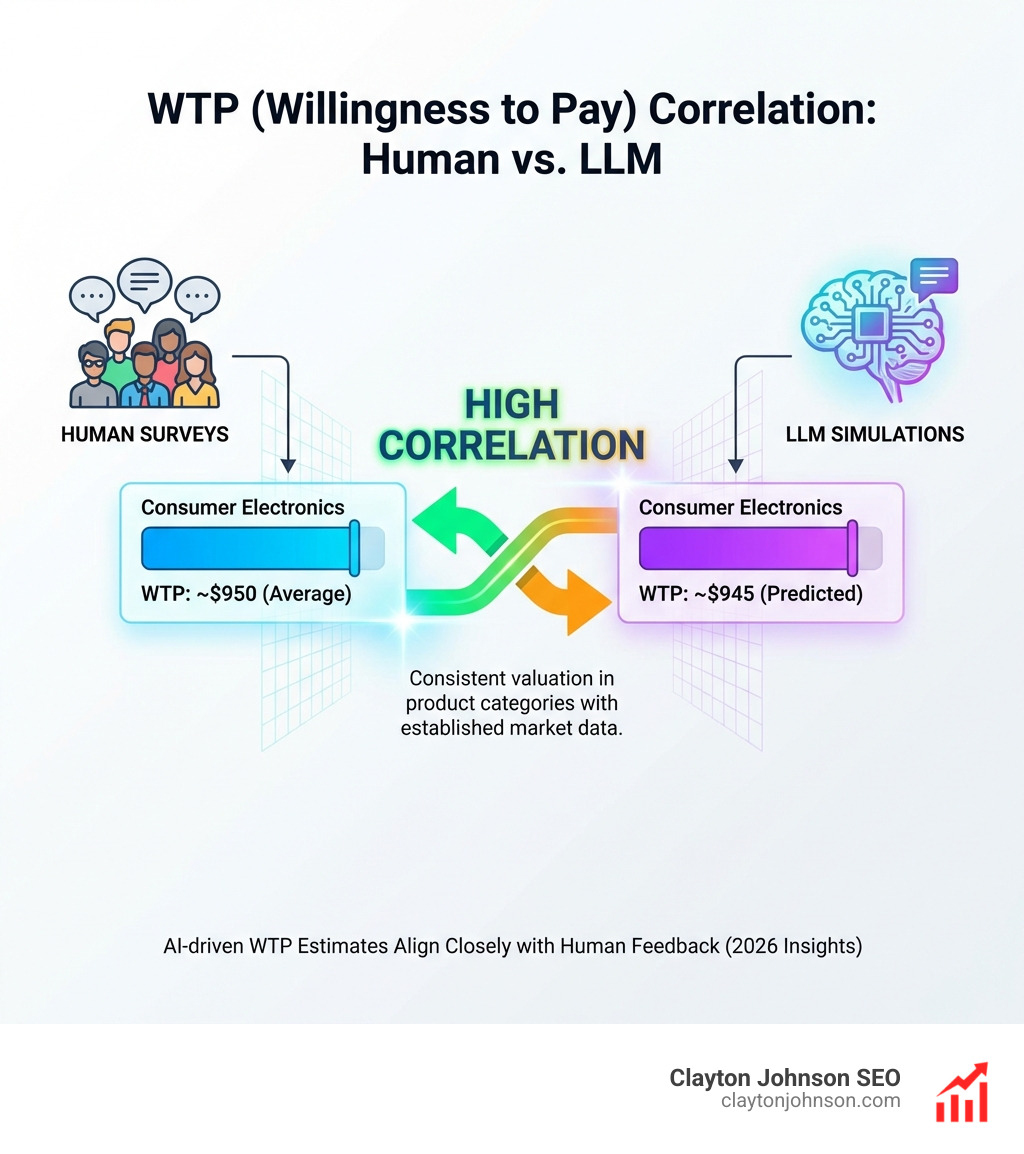
Recent Research on LLMs for market research from Harvard Business School suggests that AI can replicate human “Willingness to Pay” (WTP) with surprising accuracy. By using “conjoint analysis”—where the AI chooses between different product attributes and prices—we can estimate how a real market might react to a new feature.
Teams have reported a 3x improvement in analysis quality and a 50% reduction in research time within the first month of using these advanced simulation techniques.
Navigating Challenges and Validating Insights
AI is a powerful assistant, but it is a terrible master. If you follow it blindly, you’ll eventually walk off a cliff. The most common issues are hallucinations (where the AI confidently states a lie) and algorithmic bias (where the AI reflects the prejudices of its training data).
Privacy is also a major concern. As Stanford HAI notes regarding privacy in the AI era, collecting and analyzing consumer data raises massive questions about consent and security.
Mitigating Bias and Hallucinations
To keep our research accurate, we follow a strict validation protocol:
- Cross-Verification: Never trust a single AI output. Run the same prompt through ChatGPT, Claude, and Perplexity to see where they agree and disagree.
- The 10% Rule: Manually review at least 10% of the raw data (like survey responses) to ensure the AI’s summary matches reality.
- Temperature Settings: In technical research, we often set the “temperature” to 0 or use “Creative” vs “Precise” modes to limit the AI’s tendency to wander into fiction.
- Source Auditing: If an AI gives you a statistic, click the link. If there is no link, assume the stat is a placeholder until proven otherwise.
Ethical Implementation Roadmaps
For businesses in Minneapolis and beyond, staying compliant with regulations like GDPR or CCPA is non-negotiable.
- Anonymization: Always strip personal identifiable information (PII) before feeding data into a public AI model.
- Transparency: Be honest with your customers if you are using AI to analyze their feedback.
- Human-in-the-Loop: Ensure a human expert always makes the final strategic call. AI provides the “what,” but humans provide the “why” and “so what.”
- Regulatory Confidence: Follow established guides like the one provided by Navigating AI at UMN to ensure your use of technology aligns with institutional and legal standards.
Frequently Asked Questions about AI in Market Research
Can AI replace human market researchers?
No. While AI can handle the “grunt work” of data collection and clustering, it lacks emotional intelligence and cultural context. A human researcher is needed to understand the nuance of why a customer feels a certain way and to turn data into a story that moves a business forward.
How does AI reduce market research costs and time?
AI reduces costs by automating manual tasks like survey coding, transcription, and secondary research. What used to take a team of analysts three weeks can now be done by one person with the right AI tools in three days—or even three hours.
Is AI-generated market data accurate enough for strategic decisions?
It is a fantastic “jumping-off point.” While AI’s accuracy has improved significantly in 2025, it should always be validated against primary sources. Use AI to find the patterns, but use human expertise to verify the facts before betting your company’s budget on them.
Conclusion
The era of “guessing” is over. By learning how to use AI for market research, you are giving your business a structured growth architecture that thrives on data rather than intuition. At Demandflow, we believe that clarity leads to structure, and structure leads to leverage. AI is the ultimate leverage.
Whether you’re looking to redefine your competitive positioning or build a taxonomy-driven SEO system, the goal is the same: compounding growth. If you’re ready to stop doing “random acts of marketing” and start building a structured growth engine, I’d love to help.
Work with me to transform your market research from a slow, costly chore into a strategic competitive advantage.