Why Most Organizations Are Sitting on Untapped Data Gold 📊
Analytics & Data Strategy is the structured plan that defines how your organization collects, manages, and turns data into business decisions — at scale.
Here’s a fast breakdown if you need it now:
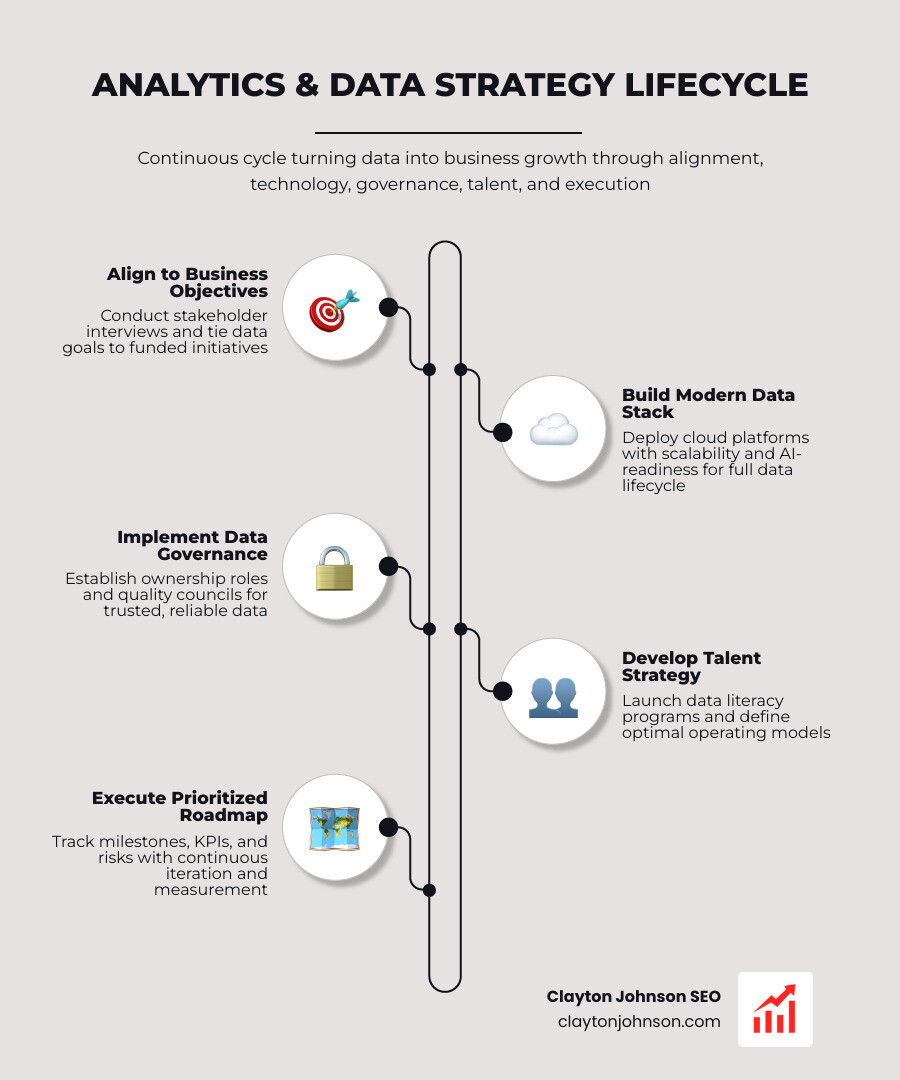
| Element | What It Means |
|---|---|
| Business Alignment | Data goals tied directly to funded business priorities |
| Modern Data Stack | Cloud-ready tools that cover the full data lifecycle |
| Data Governance | Rules, roles, and accountability for trusted data |
| Talent Strategy | Data literacy, team structure, and operating model |
| Roadmap | Prioritized plan with milestones, risks, and KPIs |
Here’s the uncomfortable truth: 94% of business leaders believe their organization should be extracting more value from its data. Yet 78% of analytics and IT leaders say they still struggle to drive business priorities with data.
That gap isn’t a technology problem. It’s a strategy problem.
Most teams have more data than ever. They have dashboards, cloud tools, and analytics platforms. But without a clear roadmap connecting data to decisions, those tools become expensive noise.
The result? Siloed teams. Duplicated tools. Executives who don’t trust the numbers. And AI initiatives that stall before they start because the data foundation isn’t ready.
A modern data and analytics strategy changes that. It creates alignment across people, processes, and technology — turning fragmented data efforts into a compounding growth engine.
I’m Clayton Johnson, an SEO and growth strategist who works at the intersection of structured systems, AI workflows, and measurable business outcomes — including Analytics & Data Strategy architecture for founder-led and enterprise growth teams. This guide gives you the exact roadmap to build yours.
Defining a Modern Analytics & Data Strategy
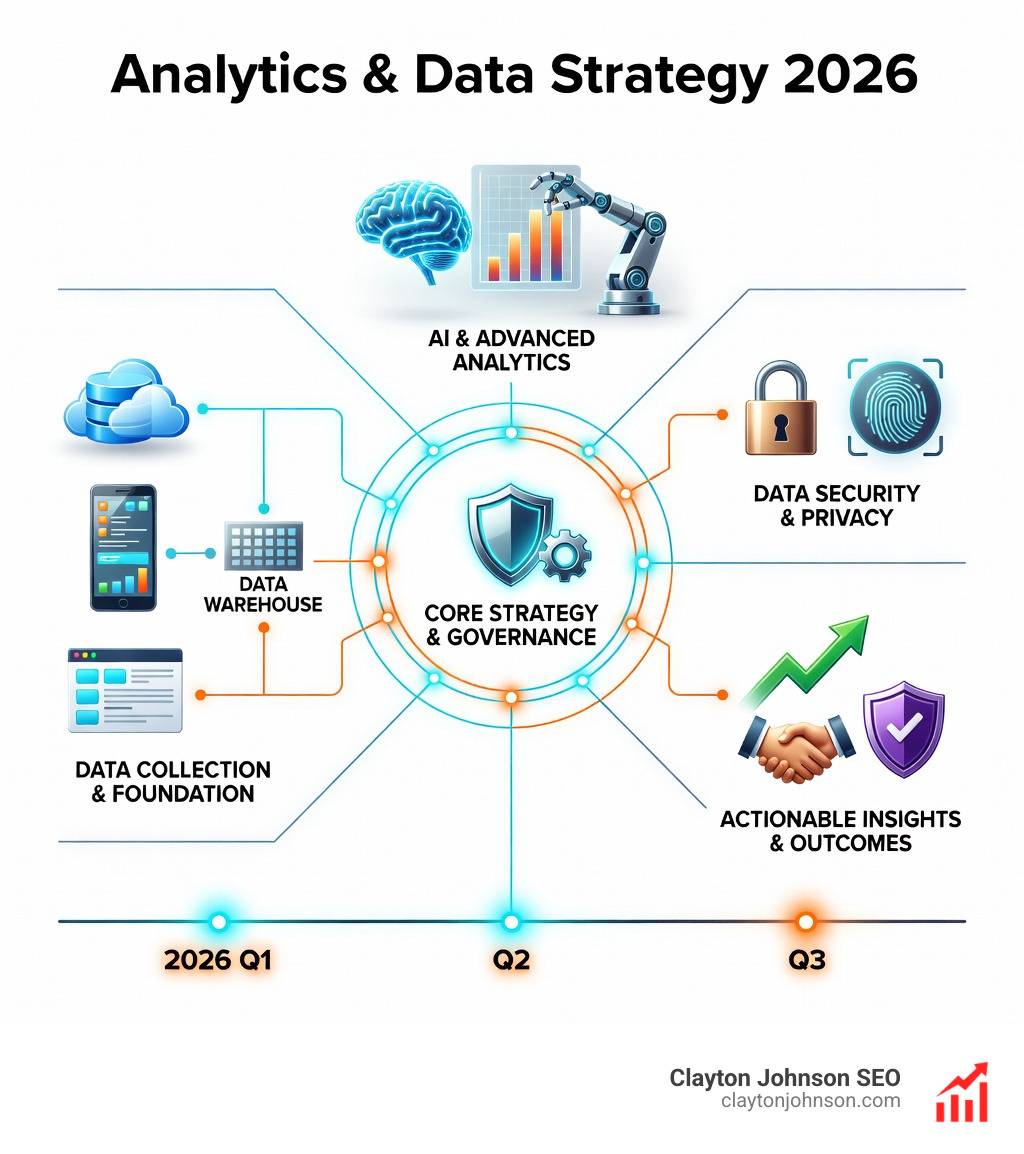
When we talk about a modern Analytics & Data Strategy, we aren’t just talking about a list of software we want to buy. We are talking about a comprehensive, long-term plan that outlines how your organization will collect, manage, govern, and derive value from its most valuable asset: information.
Think of it as the “architectural blueprint” for a skyscraper. You wouldn’t start pouring concrete without knowing how many floors the building has or where the plumbing goes. Yet, many businesses in Minneapolis and beyond try to “do data” by jumping straight into tools like PowerBI or Tableau without a plan.
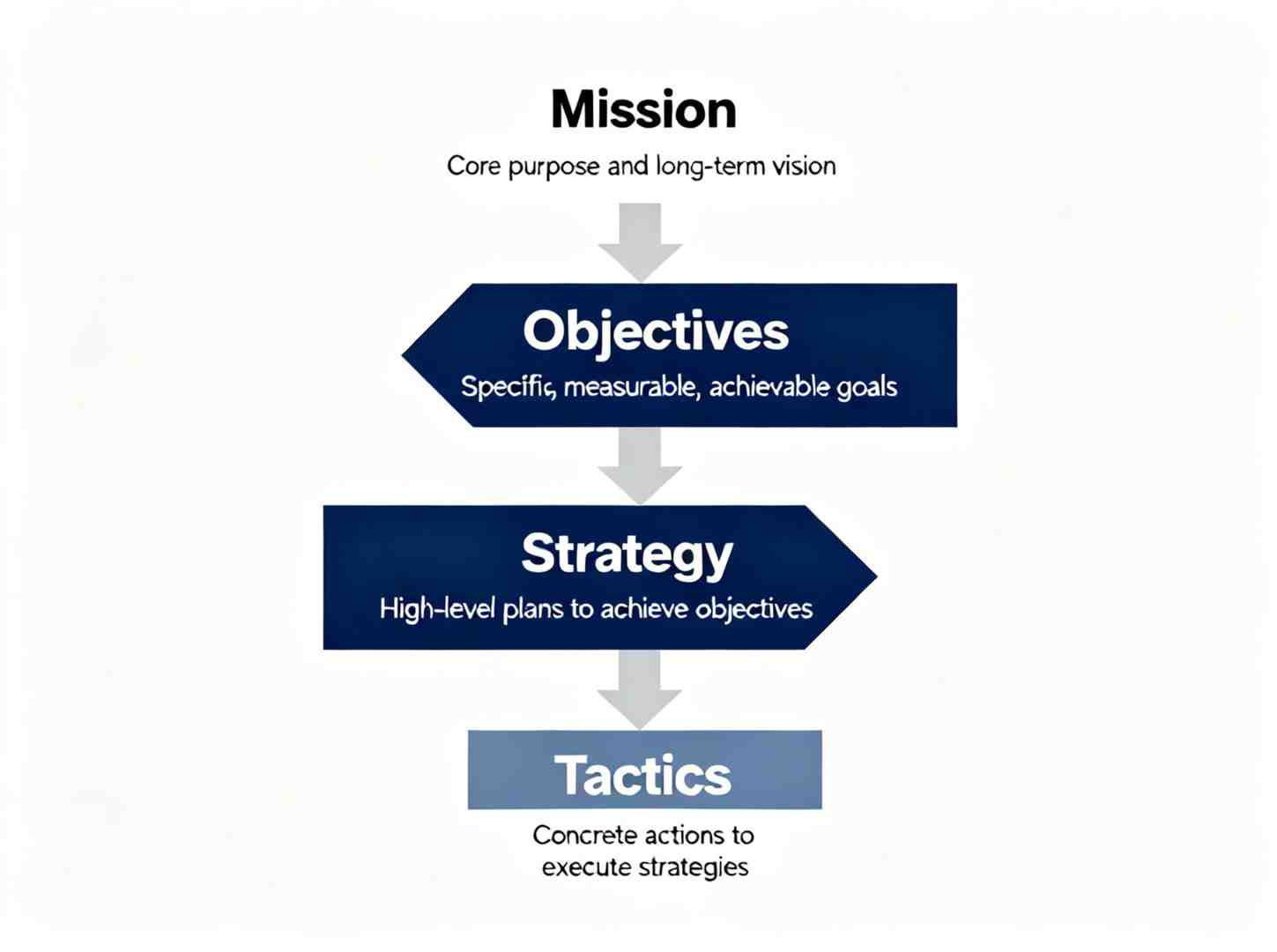
A successful strategy unifies three core pillars:
- People Resources: Who owns the data? Who analyzes it? How do we train the rest of the team to use it?
- Processes: How does data move from a customer click to a board-room report? What are the rules for keeping it clean?
- Technology Infrastructure: The “Modern Data Stack” that allows for speed, security, and AI-readiness.
If you’re looking for hands-on help building these systems, check out our analytics and data services to see how we bridge the gap between technical architecture and growth.
The Difference Between Strategy, Management, and Governance
It’s easy to get these terms mixed up, but they serve very different purposes:
- Data Strategy: This is your high-level roadmap. It answers the “Why” and “What.” It aligns your data activities with your overall business objectives (like increasing customer retention by 20%).
- Data Management: This is the “How.” It involves the operational processes of collecting, storing, and sharing data. It’s the plumbing that keeps the water flowing.
- Data Governance: This is the “Rulebook.” It’s a policy framework that ensures data reliability, security, and compliance. Without governance, you have “data swamps” instead of “data lakes.”
Why Modern Organizations Fail Without a Unified Plan
Why do so many data projects fail? Research shows that most organizations allocate only 14% of their AI and analytics budgets to strategy itself. We spend all our money on the “engines” (AI and tools) but almost nothing on the “map” (strategy).
This leads to several common “growth killers”:
- Siloed Data: Marketing has one set of numbers, Sales has another, and Finance is confused by both.
- Tool Sprawl: Paying for five different tools that all do the same thing because no one talked to each other before hitting “subscribe.”
- Untrustworthy Data: If 92% of leaders agree there’s never been a greater need for trustworthy data, it’s because “garbage in, garbage out” is a real threat. The importance of data quality for AI cannot be overstated—AI outputs are only as good as the data feeding them.
The Core Elements of a Demand-Driven Data Strategy
We believe in a “demand-driven” approach. This means we don’t build data systems just because we can; we build them because the business demands specific insights to grow.

To build a strategy that actually moves the needle, you need to balance your operating model. Here is how different structures stack up:
| Model | Pros | Cons | Best For |
|---|---|---|---|
| Centralized | High consistency, easy governance, clear standards. | Can be slow to respond to specific department needs. | Early-stage data teams or highly regulated industries. |
| Decentralized | Fast, agile, departments “own” their own magic. | Massive risk of silos and inconsistent “versions of the truth.” | Very small startups or highly specialized tech firms. |
| Hybrid | Balances central standards with departmental autonomy. | Requires strong communication and clear “rules of the road.” | Most scaling organizations. |
Aligning Analytics & Data Strategy with Business Objectives
The biggest mistake we see? Starting with the data. Instead, you should use Amazon’s working backwards methodology.
Start with a funded business initiative—for example, “We need to reduce customer churn by 15% this year.” Then, ask:
- What data do we need to see why people are leaving?
- What capabilities (predictive modeling, real-time dashboards) do we need to support this?
- Which financial value metrics will prove this project paid for itself?
Securing stakeholder buy-in is much easier when you can show that the data strategy is a direct servant to the company’s bottom line.
Building a Modern Data Stack for Analytics & Data Strategy
The “Modern Data Stack” isn’t just a buzzword; it’s a requirement for AI-readiness. A decade ago, data lived in “on-prem” servers. Today, it lives in the cloud, allowing for infinite scalability.
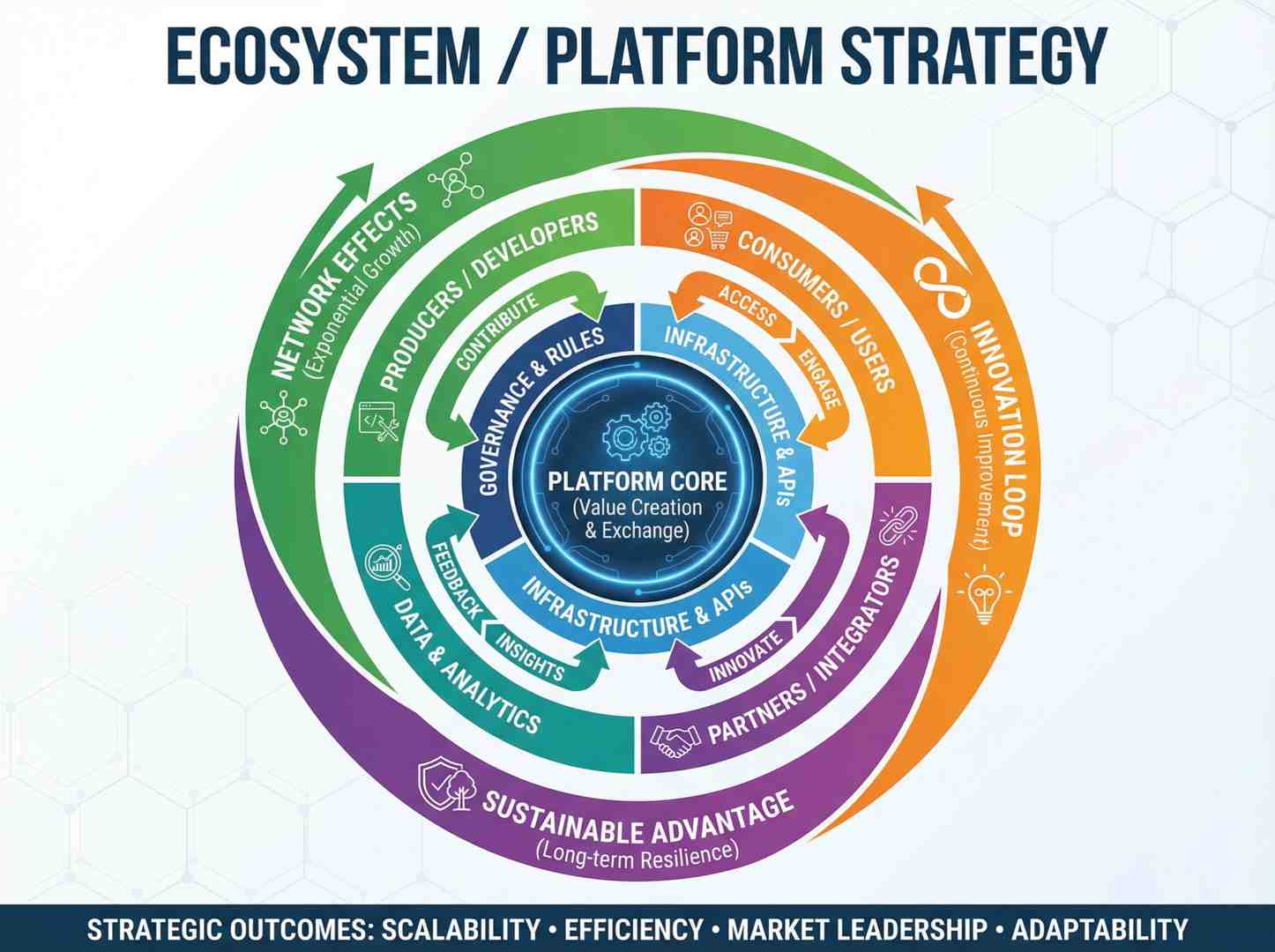
A modern stack must cover the full data lifecycle:
- Ingestion: Getting data from your 1,000+ apps into one place.
- Storage: Using cloud warehouses (like Snowflake or BigQuery) that scale as you grow.
- Transformation: Cleaning the “messy” data into a usable format.
- Analytics/AI: Turning that clean data into insights or feeding it into Large Language Models (LLMs).
Implementing Practical Governance and Scalable Talent
You can have the best tools in the world, but if your team doesn’t know how to use them, they are worthless. This is where Analytics & Data Strategy meets human behavior.
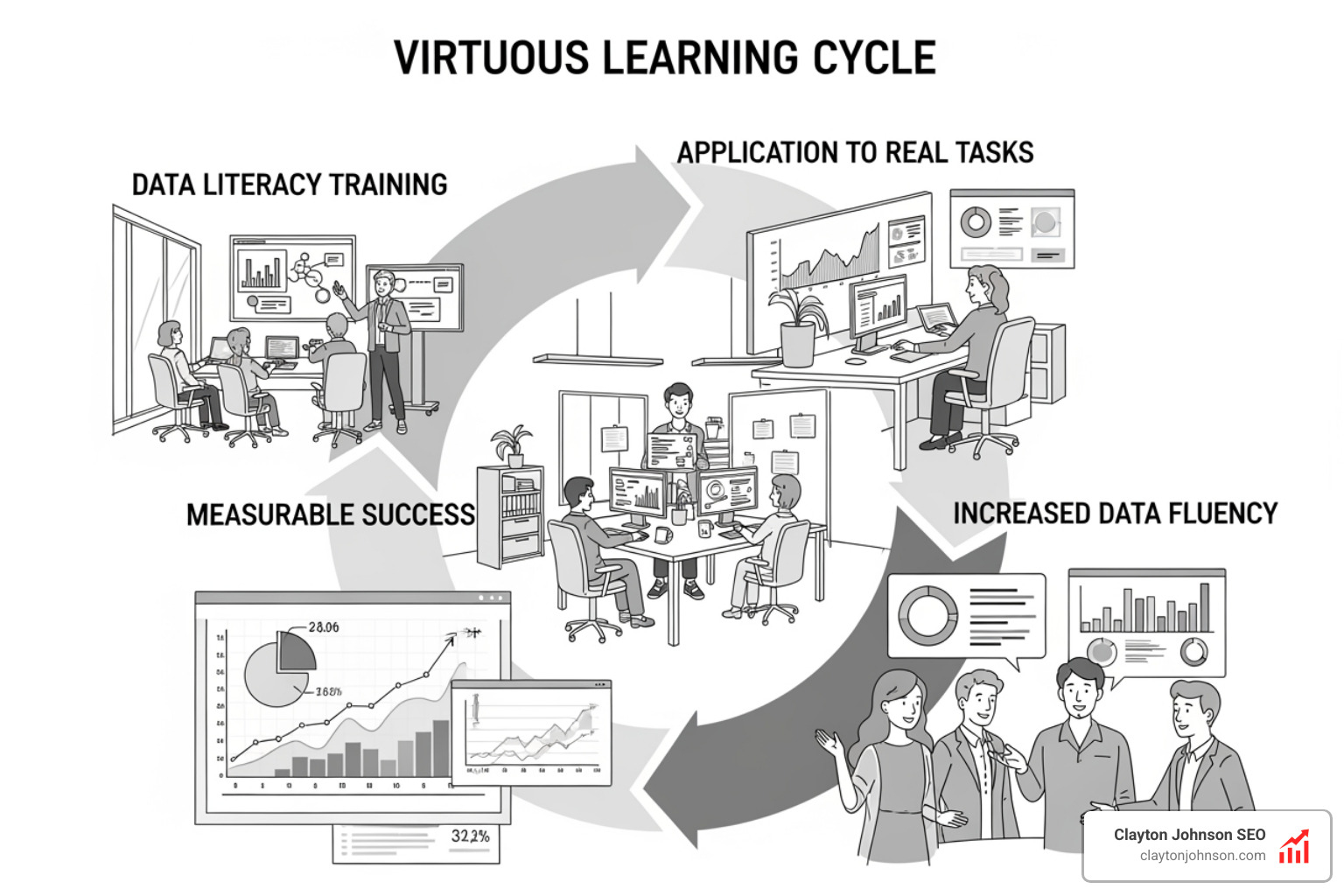
Turning Data Literacy into Organizational Behavior
Data literacy is the ability to read, work with, analyze, and argue with data. It’s about creating a “shared language.”
- Onboarding: New hires should be trained on your data definitions from day one.
- Upskilling: Don’t just give people a dashboard; teach them how to ask the right questions.
- Data Fluency: This is the ultimate goal—where using data becomes a reflex, not a chore. When your marketing team can look at a lean canvas and immediately identify which metrics are “breaking” the model, you have achieved fluency.
Right-Sizing Governance for Adoption
Governance shouldn’t be a “policing” function that stops people from getting work done. It should be a value accelerator.
We recommend a “people-centric” approach:
- Data Stewards: Identify people in each department who already love data. Formalize their role. They are the bridge between IT and the business.
- Quality Councils: Cross-functional teams that meet to resolve data conflicts (e.g., “How do we define a ‘Lead’?”).
- Fit-for-Purpose Data: Don’t try to make every piece of data 100% perfect. Focus your energy on the data that drives high-value decisions.
- Compliance: Ensure you meet GDPR and compliance standards or HIPAA if you are in the healthcare space. This mitigates risk while building trust.
Creating a Prioritized Roadmap for AI and Growth
A roadmap isn’t just a timeline; it’s a prioritization matrix. You can’t do everything at once.
Integrating AI/ML and Generative AI Initiatives
AI is the “shiny object” right now, but it’s essentially a high-performance engine that requires high-octane fuel (data).
- Feature Stores: These are essential for ML models to ensure they are using consistent data.
- Ethical Considerations: As you build, you must address bias and transparency.
- LLM Inputs: 86% of leaders agree AI is only as good as its data. If you want to measure your AI visibility, you first need a strategy that ensures your data is accessible to those models.
Measuring Success with KPIs and Maturity Assessments
How do you know if your Analytics & Data Strategy is working? You measure it.
- Production Time: How much faster are we getting insights to market? (Strong data cultures see a 41% improvement here).
- Retention: Are our data-driven marketing efforts actually keeping customers? (Targeting an 89% improvement).
- Employee Retention: Believe it or not, people are 45% more likely to stay at a company with a strong data culture because they feel empowered to do their jobs.
- Maturity Scoring: Use a process improvement scoring model to move from “Reactive” (fixing fires) to “Prescriptive” (predicting the future).
Frequently Asked Questions about Data Strategy
What is the first step in creating a data strategy?
The first step is alignment. Don’t look at your databases; look at your business goals. Identify the top 3-5 funded business initiatives for the year and work backward to determine what data capabilities are needed to make those initiatives successful.
How does data strategy differ from data management?
Strategy is the “why” and “what” (the roadmap), while management is the “how” (the daily operations like storage and cleaning). Strategy ensures that your management efforts are actually creating business value rather than just moving bits and bytes around.
What metrics prove the ROI of a data strategy?
Focus on business outcomes: reduction in customer acquisition cost (CAC), increase in customer lifetime value (LTV), faster “time to insight” for executives, and cost savings from retiring redundant tools. You can also track financial value metrics like EVA (Economic Value Added) to show the strategy’s impact on the bottom line.
Conclusion
Building a scalable Analytics & Data Strategy is not a one-time project; it is the foundation of a modern, “demand-driven” organization. In the era of AI and self-service analytics, those who fail to plan are essentially planning to be left behind by more agile, data-fluent competitors.
At Clayton Johnson SEO and Demandflow.ai, we believe that clarity leads to structure, and structure leads to leverage. We don’t just provide tactics; we help you build the structured growth architecture that allows your data to compound in value over time.
Whether you are based in Minneapolis or operating globally, the roadmap is the same: Align with the business, build a modern stack, empower your people, and iterate relentlessly.
Start building your scalable analytics and data strategy today and turn your data into a compounding growth engine.