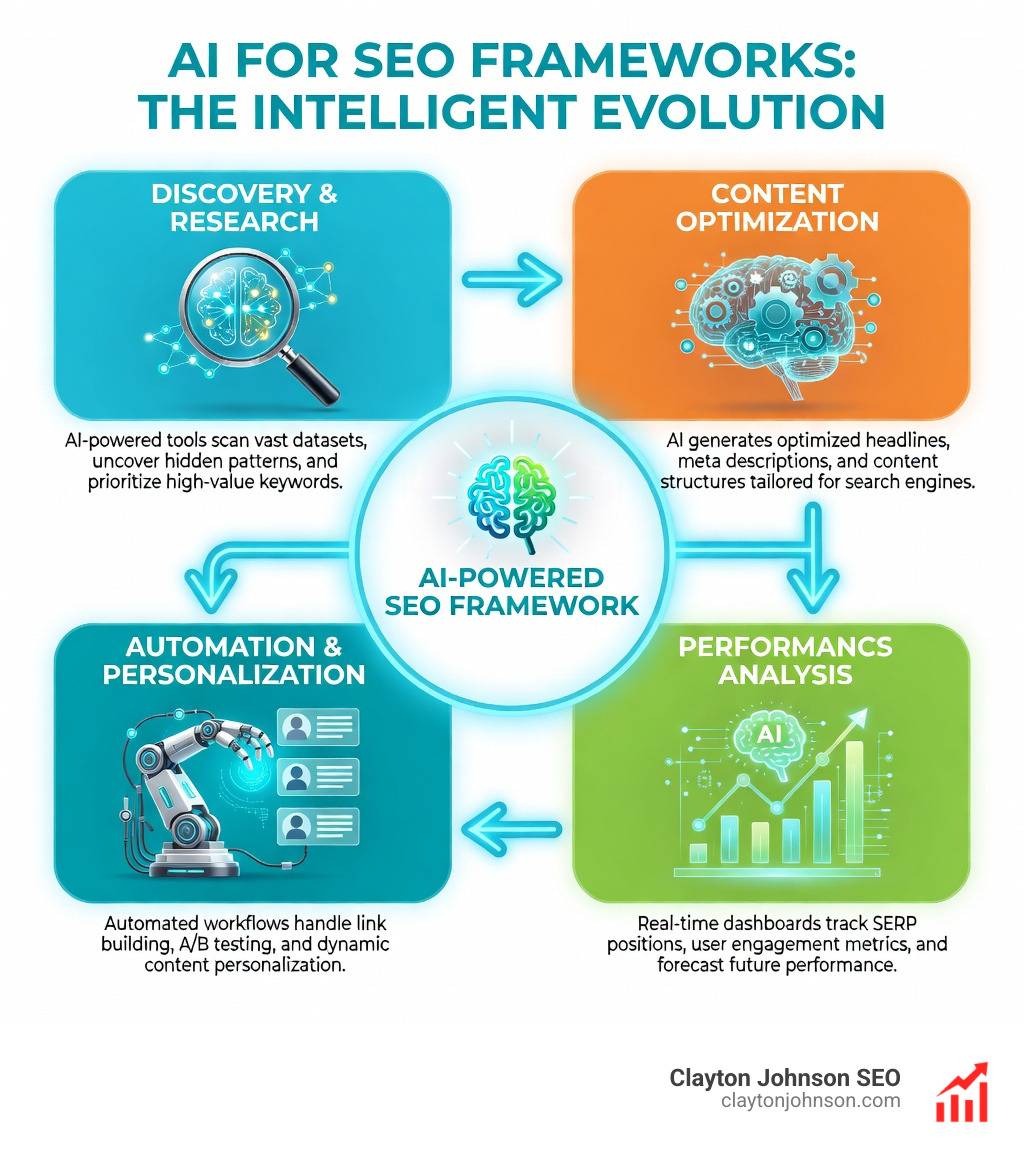
AI for SEO frameworks are structured systems that integrate artificial intelligence into every layer of your search strategy – from keyword research and content creation to technical optimization and AI answer engine visibility.
Here is what a modern AI SEO framework covers:
- Keyword intelligence – semantic clustering, intent classification, topic gap analysis
- Content optimization – AI-assisted briefs, EEAT signals, answer-first structure
- Technical SEO – schema markup, crawlability, structured data for AI retrieval
- Authority building – co-citation networks, review platforms, entity optimization
- AI answer visibility – GEO (Generative Engine Optimization), AEO (Answer Engine Optimization), AI Overview inclusion
- Measurement – AI visibility share of voice, referral traffic from AI engines, conversion lift
Search has fundamentally shifted. Google impressions are rising significantly – but click-through rates are shifting as users get answers directly from AI Overviews. Meanwhile, referral traffic from AI platforms like ChatGPT has grown exponentially.
The implication is clear: ranking on page one is no longer enough.
Your content now needs to be found, understood, and cited by AI systems – not just indexed by Google.
Most SEO strategies were not built for this. They were built for blue links. Businesses still running keyword-stuffed blog posts and manual audits are losing ground to competitors who have restructured around AI-native systems.
The good news? A structured AI SEO framework closes that gap systematically – not through random tool adoption, but through deliberate architecture.
I’m Clayton Johnson, an SEO strategist and growth operator who specializes in building scalable, AI-augmented search systems for founders and marketing leaders navigating exactly this shift. My work developing and deploying AI for SEO frameworks across dozens of business models is what informs every section of this guide.
Important AI for SEO frameworks terms:
- AI SEO strategy framework
- AI driven SEO tactics
- what is AI SEO
Defining the Modern AI for SEO Frameworks
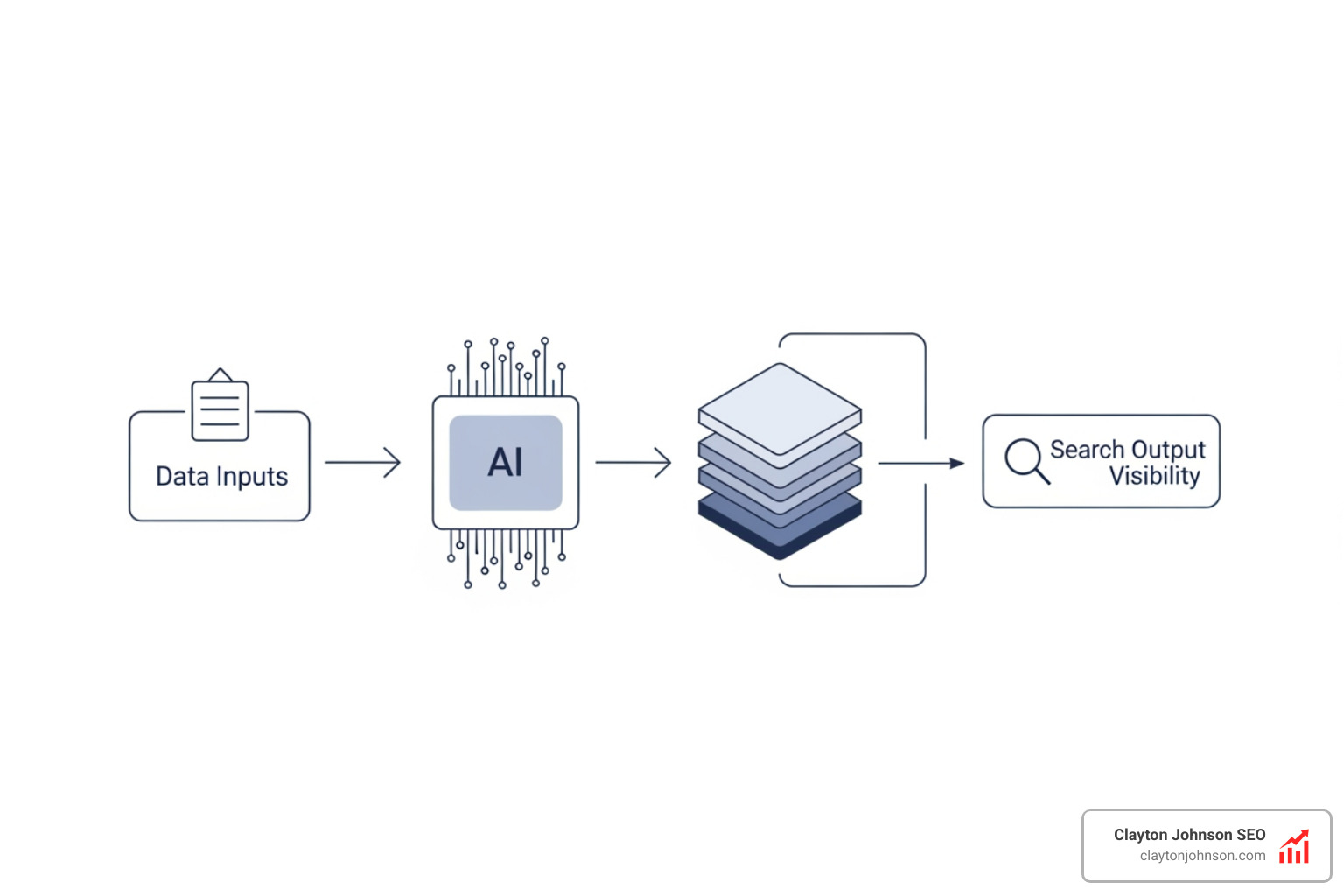
In the current landscape, an AI for SEO framework isn’t just a list of tools; it is a “growth operating system.” At Clayton Johnson SEO, we view this as structured growth architecture. It moves beyond traditional SEO by incorporating three emerging disciplines:
- Generative Engine Optimization (GEO): Optimizing content specifically so Large Language Models (LLMs) like GPT-4, Claude, or Gemini can “lift” your text to use in their generated responses.
- Answer Engine Optimization (AEO): Focusing on earning citations in AI-powered answers (like Perplexity or Google AI Overviews) to ensure your brand is the primary source of truth.
- Retrieval-Augmented Generation (RAG) Optimization: Structuring your site so that when an AI “retrieves” information to generate an answer, your data is the most accessible and relevant “chunk” available.
To rank in AI search, we must move from “page-level” thinking to “passage-level” and “entity-level” thinking. AI engines don’t just look at your whole page; they look for machine-liftable content blocks – concise, factual, and authoritative segments that answer specific intents.
By building a unified entity graph – where AI sees your brand, products, experts, and locations as a single, connected web of information – you ensure that your business isn’t just a “result,” but a recognized authority.
Integrating AI for SEO Frameworks into Content Creation
Content creation is where most teams start with AI, but it’s also where they often fail by producing “generic fluff.” A professional AI for SEO frameworks approach requires a “Content Fusion” model. This means using AI for the heavy lifting – data analysis, initial drafting, and gap analysis – while maintaining strict human oversight for author voice and factual control.
When we implement these frameworks, we focus on:
- Topic Authority: Covering a subject from every conceivable angle to prove to AI models that you are the definitive source.
- Intent Alignment: Locking constraints before writing. Is this a how-to guide, a comparison, or a research article? AI needs to know the intent upfront to structure the response correctly.
- Testing Frameworks: We don’t just use one tool. We test multiple AI writing tools across SEO-heavy projects, judging them not just on speed, but on “publishability” – how much human editing is required to make it rank?
For those looking to scale their production without losing quality, our SEO content marketing services provide the taxonomy-driven systems needed to maintain high E-E-A-T (Experience, Expertise, Authoritativeness, Trustworthiness) standards at scale.
Building Authority with AI for SEO Frameworks
Authority in the AI era is about more than just backlinks; it’s about co-citation networks. If AI sees your brand mentioned alongside other industry leaders on third-party sites, review platforms, and community discussions, your “entity” grows stronger.
| Feature | Traditional SEO | GEO (Generative Engine Optimization) | AEO (Answer Engine Optimization) |
|---|---|---|---|
| Primary Goal | Rank #1 in blue links | Be the input for AI answers | Be the cited source in answers |
| Content Focus | Keywords & Backlinks | Semantic “liftable” chunks | Direct Q&A & Facts |
| Success Metric | Organic Traffic | Brand Mentions in AI | Citation Frequency |
| Key Signal | Domain Authority | Entity Relationships | Third-party Corroboration |
We use sentiment analysis to track how AI platforms perceive your brand. Are the mentions positive? Does the AI cite your transparent pricing or your original research? Building authority now requires a “Seen and Trusted” approach – getting mentioned is the sentiment battle; getting cited is the authority game.
The Core Pillars of an AI SEO Strategy
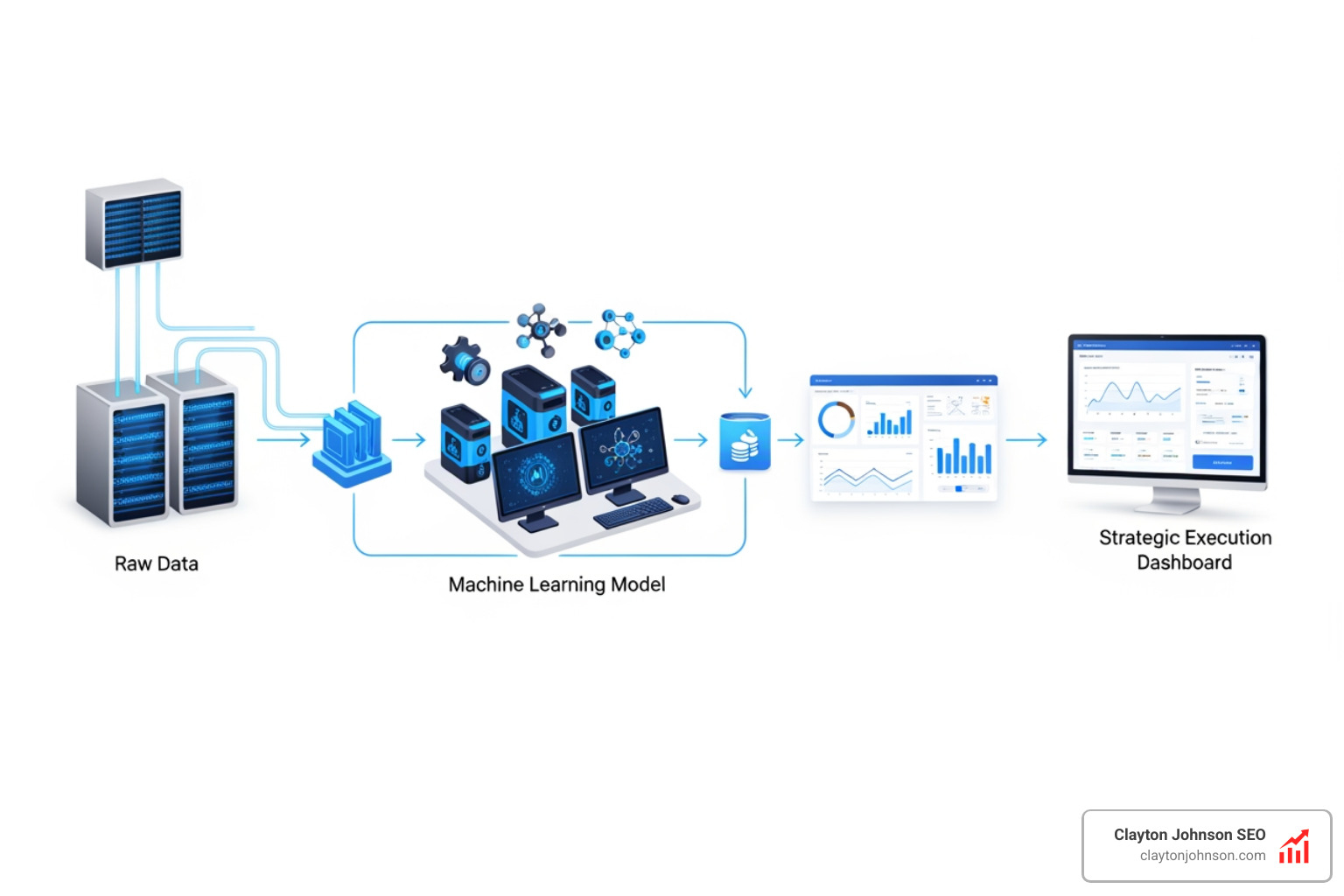
A successful AI for SEO frameworks implementation rests on four core pillars. Without these, you are just “doing tactics” rather than building infrastructure.
- Google’s E-E-A-T Framework: AI search engines are increasingly sensitive to the “Human-in-the-loop.” They look for author credentials, real-world experience, and verifiable expertise.
- Predictive Analytics: Instead of reacting to last month’s data, we use AI to predict which content clusters will drive the most ROI before we even write a word.
- Automated Monitoring: Our systems use AI agents to monitor site health and rankings in real-time. If an AI Overview drops your citation, an agent should be the first to know and diagnose why.
- Competitive Intelligence: AI allows us to analyze thousands of competitor pages simultaneously, identifying their content gaps and “stealing” their share of voice in generative summaries.
If you need a roadmap to navigate these pillars, our SEO consulting helps founders transition from manual, sporadic projects to a continuous, data-driven growth engine.
Technical Adjustments for AI Visibility
Technical SEO is the “language” AI crawlers speak. If your technical foundation is shaky, AI models will struggle to index or cite your content.
- Schema Markup: This is non-negotiable. We use Schema.org vocabularies for Organization, Person, and Product schemas to define your entities. We also use Deeprank-style selection criteria to tell AI when an entity should be selected for a specific user intent.
- RAG Chunking: We structure content into 150-300 word segments. These “chunks” are perfectly sized for AI retrieval systems to grab and cite without unnecessary fluff.
- IndexNow & Crawlability: When information changes fast, you need instant indexing. We deploy IndexNow to ensure AI crawlers like GPTBot and ClaudeBot see your updates the moment they happen.
- Server-Side Rendering: AI crawlers can be lazy with JavaScript. Ensuring your site is server-rendered makes it “machine-liftable” and easy to parse.
The Seen and Trusted Framework for Answer Engines
To win in AI search, you must be both Seen (mentioned) and Trusted (cited). Research shows that 99% of AI Overviews cite at least one source from the top 10 organic results. This means traditional SEO is still the foundation, but you need an “acceleration layer.”
- The Sentiment Battle (Getting Seen): AI pulls signals from review sites (like G2 or Yelp), Reddit, and community forums. We help brands engineer social proof and participate in community discussions authentically. If Reddit users love you, ChatGPT likely will too.
- The Authority Game (Getting Trusted): This involves maintaining your Knowledge Graph accuracy, publishing original research that AI wants to cite, and providing transparent documentation. AI engines prefer citing primary documents over speculative forum posts.
Only a small fraction of companies appear in AI answers as both seen and trusted. Our framework helps you audit your current AI visibility and build parallel campaigns to capture both.
Measuring Success and ROI in the AI Era
Traditional metrics like “keyword rank” are becoming less precise because AI answers are volatile – only about 9.2% of URLs remain consistent across repeated searches in Google’s AI Mode. Therefore, we measure AI for SEO frameworks success through:
- AI Visibility & Share of Voice: How often is your brand mentioned in AI responses compared to competitors?
- Referral Traffic from LLMs: Tracking the “educated click” – users who have already been briefed by an AI and arrive at your site ready to convert. One B2B SaaS client improved their conversion rate by 23% using this approach.
- Implementation Efficiency: How much time are you saving? One enterprise client reduced time spent on technical SEO by 68% after implementing our automated monitoring systems.
- Decision Quality: Using AI to score the “ranking potential” of a page before publication, ensuring resources are only spent on high-probability wins.
Frequently Asked Questions about AI SEO
How does AI change traditional keyword research?
Traditional SEO research looks at volume and difficulty. AI-driven research uses semantic clustering and vector embeddings to group keywords by meaning and intent. It identifies “topic gaps” where competitors are weak and classifies keywords by where they sit in the conversational customer journey.
Can AI-generated content rank on Google?
Yes, but with a caveat: Google rewards helpful content, not just “content.” Pure AI output often lacks E-E-A-T. Our framework uses AI for drafting but requires human oversight to add proprietary insights, fact-check claims, and ensure the content provides genuine value to the reader.
What is the difference between SEO and GEO?
SEO focuses on ranking in the “blue links” of search engines like Google and Bing. GEO (Generative Engine Optimization) focuses on being the source material for AI-generated summaries. While SEO optimizes for the user, GEO optimizes for the LLM to understand and cite your content.
Conclusion
The shift to AI search isn’t a threat; it’s an opportunity for those with the right architecture. By moving from a tactics-first approach to a structured growth system, you can turn search into a compounding asset that works across both traditional and generative ecosystems.
At Clayton Johnson SEO, we build this infrastructure through Demandflow.ai—a growth operating system designed to give founders clarity, structure, and leverage. Whether it’s taxonomy-driven SEO systems or AI-augmented marketing workflows, our goal is to help you achieve durable market dominance.
Ready to future-proof your visibility? Start your AI search strategy with us today and move from being a “result” to being the “authority.”