Why Real Estate SEO & Marketing Determines Who Gets the Lead
Real Estate SEO & Marketing is the practice of optimizing your online presence so that buyers, sellers, and investors find you on Google — before they find your competitors.
Here’s the quick version of what it involves:
- Keyword research — finding what your ideal clients actually type into Google
- On-page optimization — making each page of your site clear and relevant to those searches
- Local SEO — showing up in Google Maps and neighborhood-level searches
- Content creation — building trust through neighborhood guides, blog posts, and video
- Technical SEO — ensuring your site loads fast, works on mobile, and gets indexed properly
- Link building — earning credibility signals that push your site up the rankings
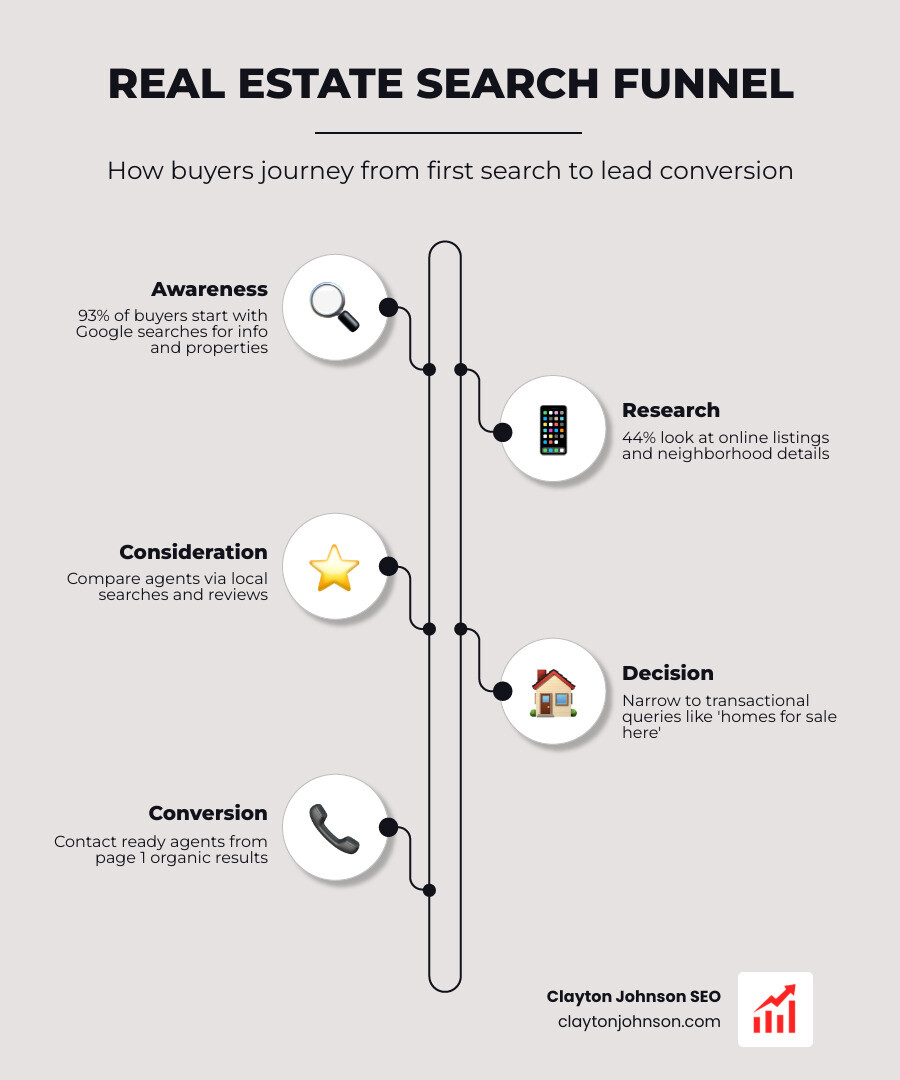
The stakes are high. 93% of home buyers use Google as their primary information source during the buying process. And 75% of searchers never click past the first page of results. If you’re not on page one, you’re essentially invisible.
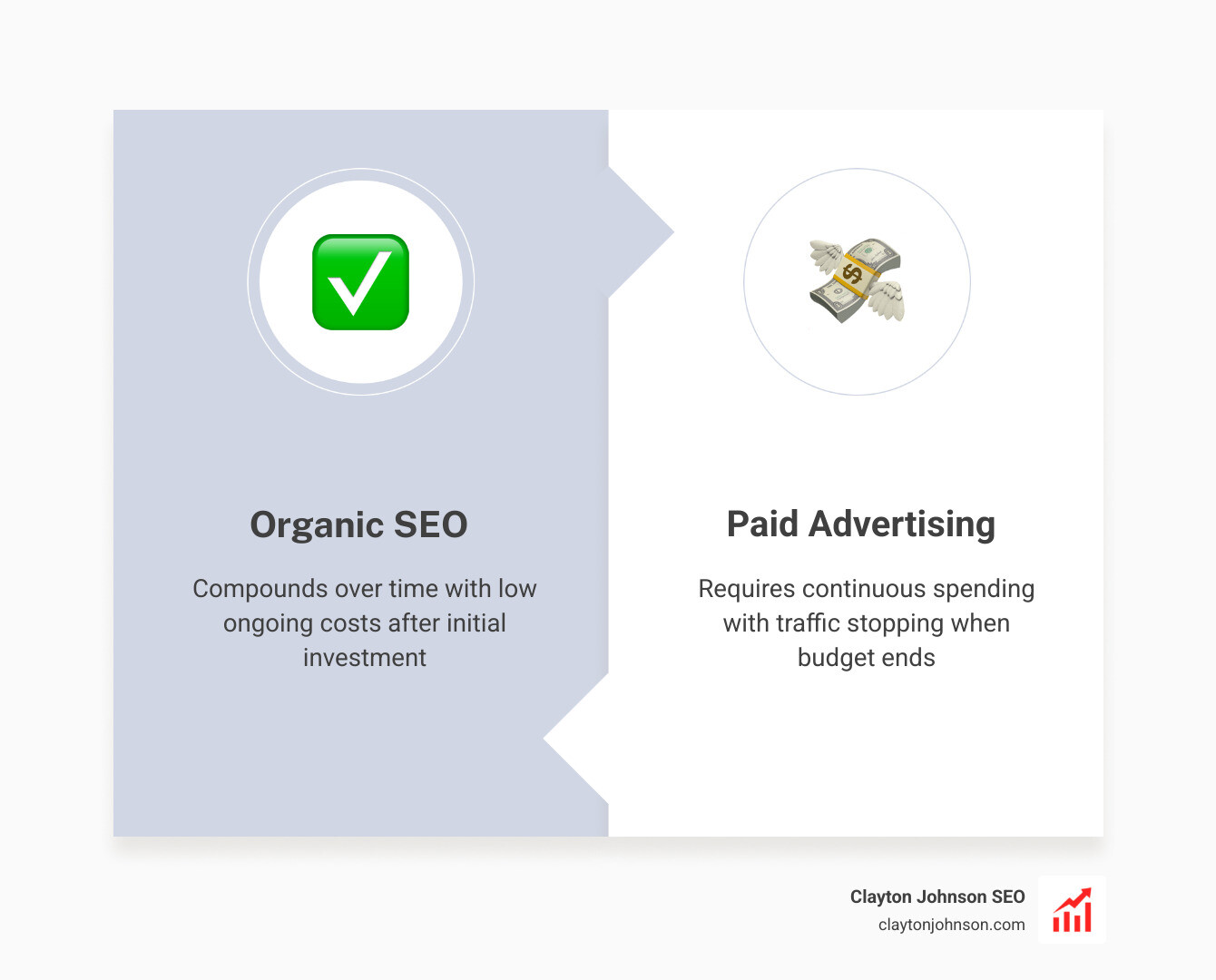
The difference between organic SEO and paid ads matters too. Paid ads stop the moment you stop paying. SEO builds compounding visibility over time — and research consistently shows organic search drives 300% more traffic than social media and delivers the highest ROI of any digital marketing channel.
For real estate professionals trying to attract high-value clients and scale without throwing money at ads indefinitely, SEO isn’t optional. It’s the foundation.
The Fundamentals of Real Estate SEO & Marketing
To master Real Estate SEO & Marketing, we have to look at how people actually search. According to the National Association of REALTORS, 44% of home buyers begin their journey by looking at properties online. By the time they reach out to an agent, they’ve already done hours of digital “window shopping.”
The core of our strategy relies on understanding search intent. Not all traffic is created equal. A user searching for “how to buy a house” is at the top of the funnel (informational intent), while someone searching for “realtors in my area” or “homes for sale in [Specific Neighborhood]” is much closer to making a transaction (transactional intent).
We focus on long-tail keywords—phrases that are 4-5 words long. While “real estate” is nearly impossible to rank for, “luxury condos for sale in downtown Minneapolis” is a winnable battle. These specific terms often have lower competition but significantly higher conversion rates because they match the user’s exact needs. By aligning your site with these SEO services, we ensure you aren’t just getting clicks; you’re getting the right clicks.
Local SEO and Google Business Profile Optimization
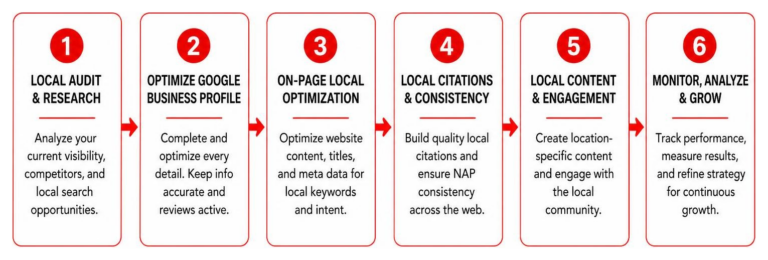
For real estate professionals, “local” isn’t just a category—it’s the entire business. If you aren’t dominating location-based searches, you’re leaving money on the table. This is where Local SEO and the Google Business Profile (GBP) become your most powerful weapons.
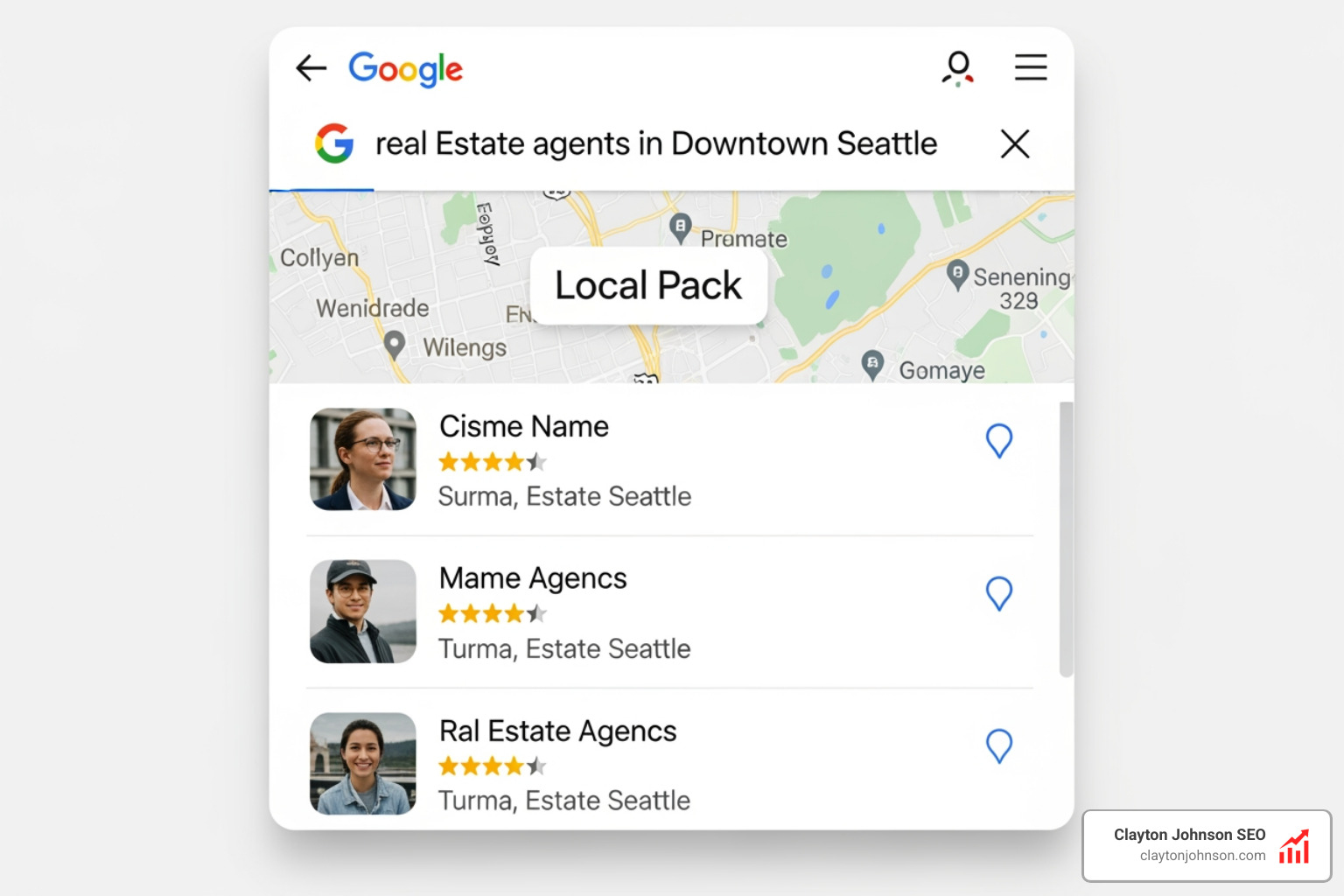
The “Local Pack”—the map that appears at the top of Google search results—is where 15-25 calls per month are won or lost. To get there, we prioritize:
- NAP Consistency: Your Name, Address, and Phone number must be identical across every corner of the internet. Even a small discrepancy (like “Street” vs. “St.”) can confuse Google’s algorithm.
- Reviews: 72% of buyers trust online reviews as much as personal recommendations. We recommend aiming for 2-4 new reviews monthly to maintain momentum.
- Local Citations: Getting listed in reputable directories like Yelp, Zillow, and local Chamber of Commerce sites builds “digital authority.”
By building digital authority, you signal to Google that you are a legitimate, trusted fixture in your community.
Content Architecture and Neighborhood Guides
One of the biggest mistakes we see agents make is focusing solely on property listings. The problem? Listings are temporary. They disappear when the house sells. To build a “forever” traffic engine, you need topical authority.
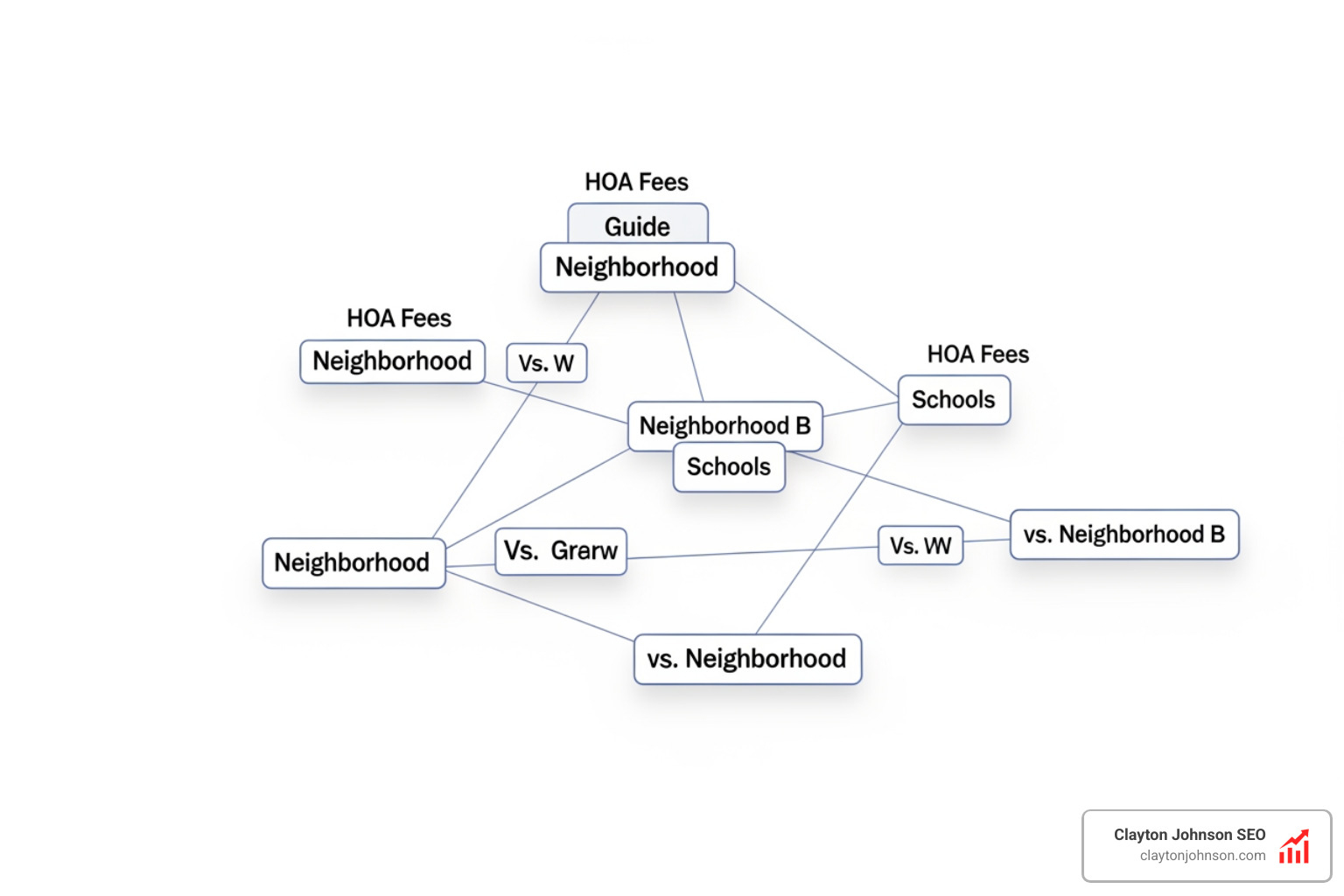
We build this through Neighborhood Guides. Instead of competing with Zillow on “homes for sale,” we compete on “what it’s actually like to live here.” This includes:
- HOA Fee Breakdowns: Details that directories often get wrong.
- School Zone Insights: Deep dives into local education.
- Comparison Posts: “Neighborhood A vs. Neighborhood B.”
This SEO content marketing approach uses a “hub and spoke” model. Your main neighborhood page acts as the hub, with blog posts about local parks, restaurants, and market updates acting as the spokes. This internal linking structure tells Google you are the definitive expert on that specific area.
Furthermore, Video SEO is your “unfair advantage.” Listings with video generate 403% more inquiries. By embedding YouTube tours into your guides, you increase “dwell time” (how long people stay on your site), which is a massive ranking signal.
Technical SEO and Schema Markup for Listings
You can have the best content in the world, but if your site takes ten seconds to load on a smartphone, nobody will ever see it. Over 60% of Google searches are now mobile, and for real estate, that number is often higher as buyers search while driving through neighborhoods.

We prioritize three technical pillars:
- Site Speed: Utilizing tools like PageSpeed Insights to ensure your site is lightning fast.
- Mobile Optimization: Ensuring the mobile-friendly experience is seamless.
- Schema Markup: This is “code for search engines.” By implementing RealEstateAgent schema, we tell Google exactly who you are and what you do. We also use RealEstateListing schema to help your properties show up as “Rich Results” with prices and photos directly in the search results.
You can validate your technical setup using the Rich Results Test and the Schema Validator.
Building a High-Performance Real Estate SEO & Marketing System
At Clayton Johnson SEO, we don’t believe in chasing “hacks.” We build real estate growth systems that compound over time. This involves a rigorous process of keyword research using tools like Semrush and Ahrefs, followed by deep competitor analysis.
We look for “keyword cannibalization”—a common issue where multiple pages on your site compete for the same term, effectively canceling each other out. By cleaning up your site architecture and focusing on Conversion Rate Optimization (CRO), we turn that organic traffic into actual leads.
Advanced Real Estate SEO & Marketing Strategies with AI
The landscape of search is changing with AI-generated snapshots and the Search Generative Experience (SGE). To stay ahead, we use AI-driven SEO strategies to augment our workflows.
AI is fantastic for brainstorming neighborhood guide outlines or summarizing market data, but it requires a “human-in-the-loop” approach. Google’s E-E-A-T principle (Experience, Expertise, Authoritativeness, and Trustworthiness) is more important than ever. AI can write a generic guide, but it can’t tell your readers about the hidden coffee shop on 5th Street that only locals know about. We use AI to handle the heavy lifting of automated reporting and data analysis so we can focus on the high-level strategy that builds your brand.
Scaling Authority and Measuring Success
Building authority isn’t a one-time event; it’s a lifestyle. To truly scale, you need a robust backlink strategy. While on-page SEO is the foundation, off-page factors like backlinks and reviews carry up to 50% of the ranking weight.
We focus on earning links from:
- Local news outlets and neighborhood blogs.
- Real estate industry publications.
- Local business partnerships.
This not only boosts your rankings but also provides brand protection. When someone searches your name, you want to own the entire first page—your website, your LinkedIn, your Google Business Profile—so that no third-party site can control your narrative.
Measuring ROI and Long-Term Growth
How do you know if your Real Estate SEO & Marketing efforts are working? We move past “vanity metrics” like raw traffic and look at what actually pays the bills: conversions.
Using Google Analytics 4, we track “Key Events” such as:
- Contact form submissions.
- Phone call clicks.
- Newsletter sign-ups.
- PDF downloads (e.g., “The Ultimate Buyer’s Guide”).
| Metric | SEO (Organic) | PPC (Paid Ads) |
|---|---|---|
| Initial Cost | Moderate/High | High |
| Time to Results | 6-12 Months | Immediate |
| Sustainability | High (Compounding) | Low (Stops with Budget) |
| Traffic Quality | Very High (Intent-based) | High |
| Typical ROI | 49% of Marketers report highest ROI | Variable |
While SEO takes longer to spin up—usually 6 to 12 months for significant results—the cost per lead is often 71% lower than industry benchmarks once the system is established.
We specialize in turning fragmented marketing efforts into coherent growth engines. If you’re ready to stop renting your traffic from Zillow and start owning your market, contact us for a strategy audit. We’ll help you build a system where clarity leads to structure, and structure leads to compounding growth.