Why a Content Cluster Strategy Is the Foundation of Modern SEO
A content cluster strategy guide gives you a clear system for organizing your website content around core topics, so search engines recognize your site as a genuine authority — and rank it accordingly.
Here’s how a content cluster strategy works, at a glance:
- Choose a pillar topic — a broad subject central to your business
- Create a pillar page — a comprehensive overview of that topic
- Build cluster pages — focused articles covering each subtopic in depth
- Link everything together — internal links connect cluster pages to the pillar and to each other
- Repeat — build multiple clusters over time to establish site-wide topical authority
This structure signals to Google that your site doesn’t just mention a topic — it owns it.
Here’s the reality most business owners face: you publish blog posts, maybe even good ones, but rankings stay flat and leads stay low. The problem usually isn’t the quality of individual articles. It’s the architecture. Scattered content gives search engines no clear signal about what your site truly specializes in.
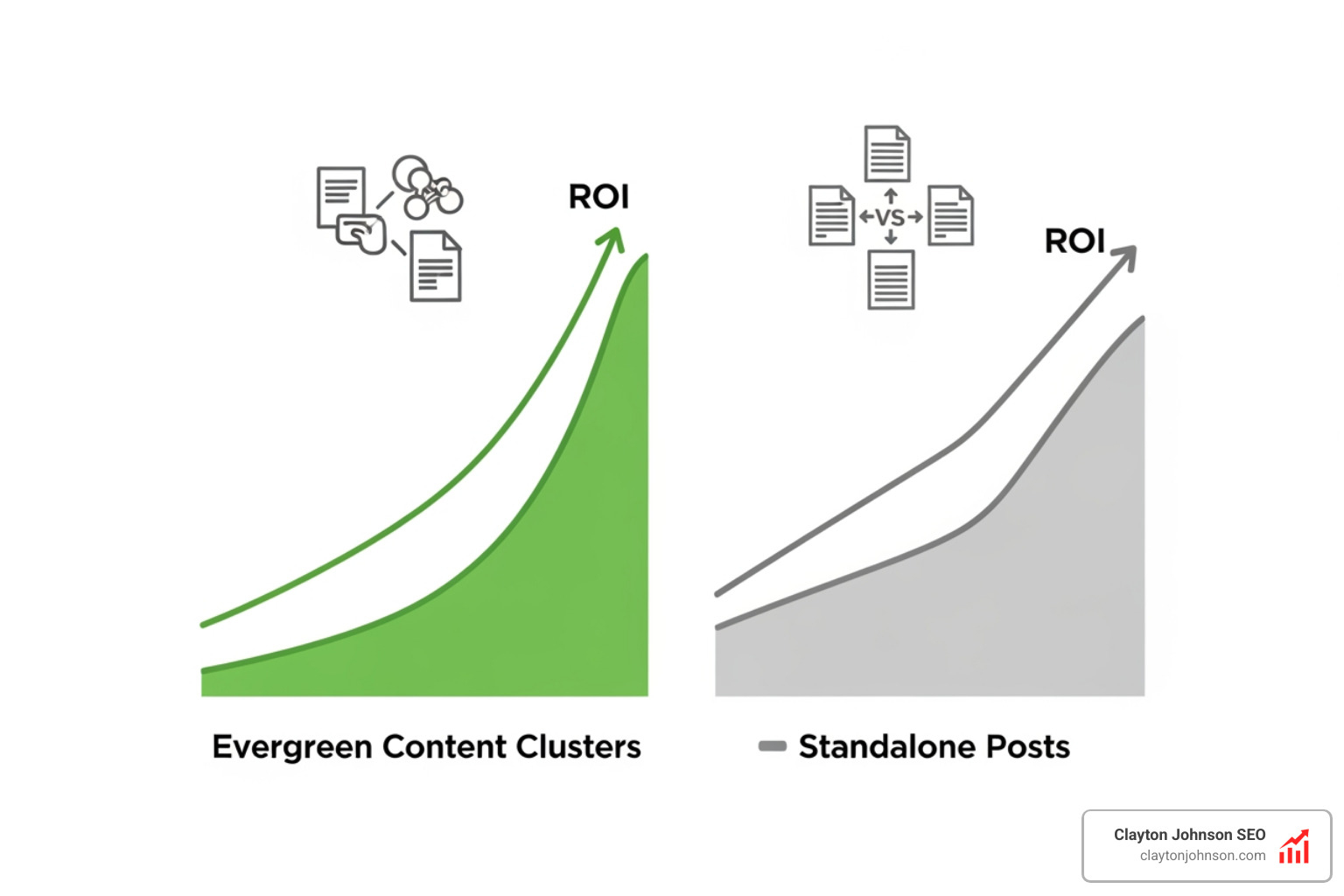
Google’s own quality guidelines emphasize E-E-A-T — Experience, Expertise, Authoritativeness, and Trustworthiness. A content cluster strategy is one of the most direct ways to demonstrate all four. Research consistently shows that clustered content drives roughly 30% more organic traffic and holds rankings 2.5x longer than standalone posts.
And with AI-powered search results now appearing on roughly one in five searches, comprehensive topic coverage matters more than ever. AI systems favor sources that cover subjects thoroughly and consistently — exactly what a well-built cluster delivers.
I’m Clayton Johnson, an SEO strategist with nearly two decades of experience building scalable content frameworks, and I’ve used this exact content cluster strategy guide approach to help businesses move from page-two obscurity to top-three rankings. The principles below reflect what I’ve seen work repeatedly across competitive industries.
The Definitive Content Cluster Strategy Guide for Topical Authority
When we talk about topical authority, we aren’t just talking about ranking for a single keyword. We are talking about becoming the “go-to” resource in your niche. In the past, SEO was often a game of “one page, one keyword.” You’d write a post about “best running shoes,” cross your fingers, and hope for the best.
Today, search engines are much smarter. They look at the context of your entire website. If you have one great article about running shoes but nothing else about fitness, marathon training, or foot health, Google might doubt if you’re truly an expert. It’s like a store window displaying a single beautiful sweater but having empty shelves inside—you wouldn’t go in to do your winter shopping there.
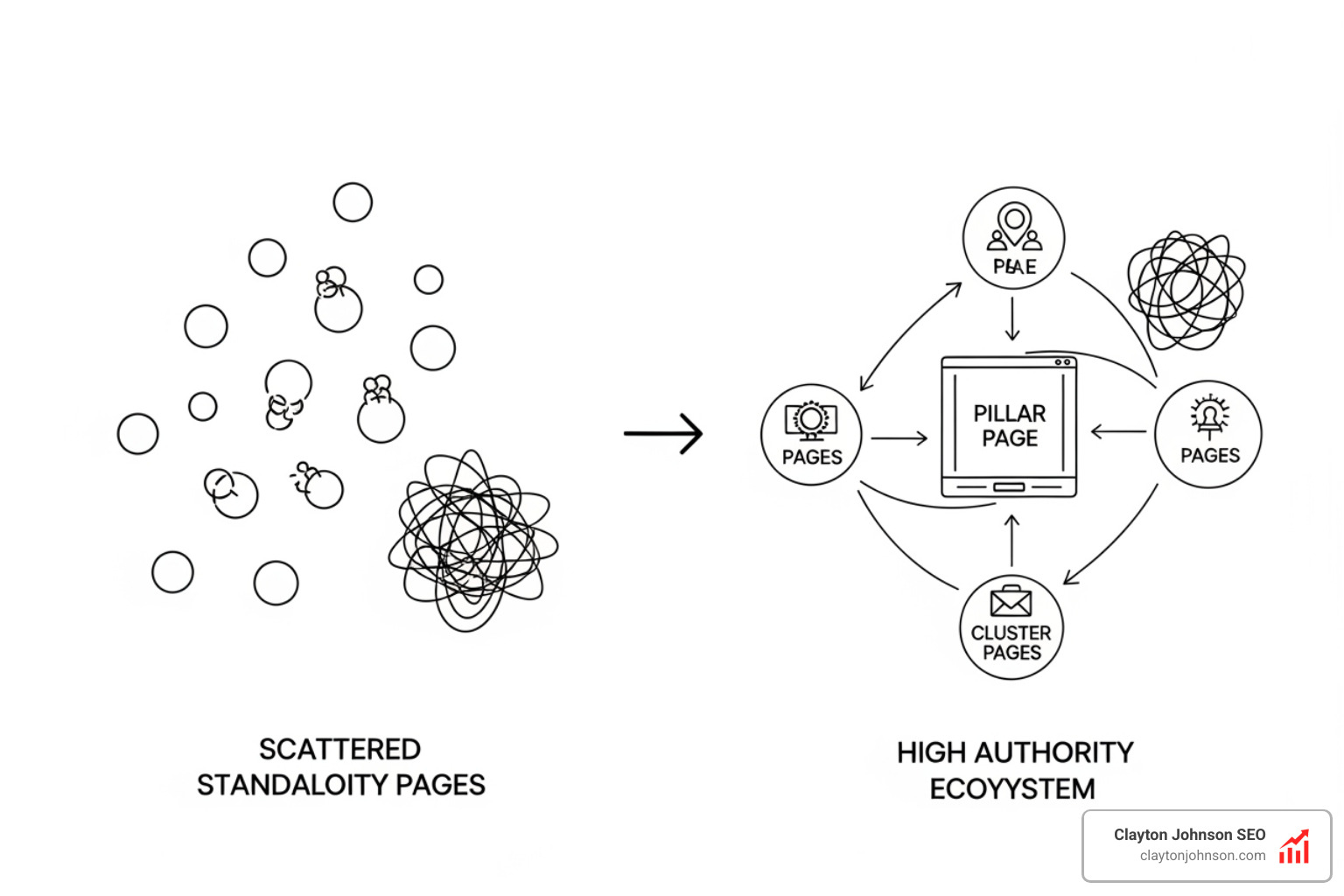
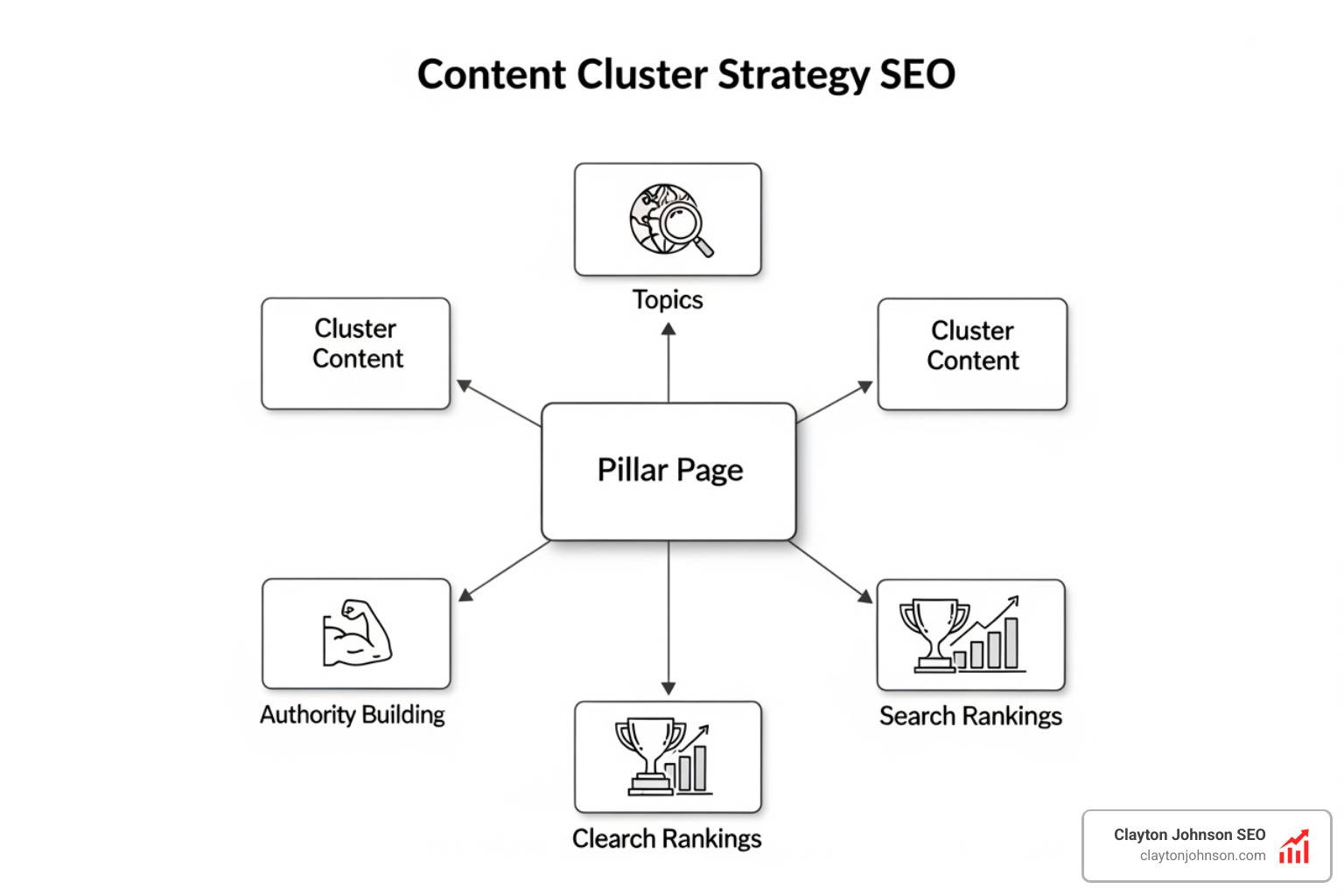
A content cluster strategy guide fixes this by creating a content ecosystem. This ecosystem is built on three pillars:
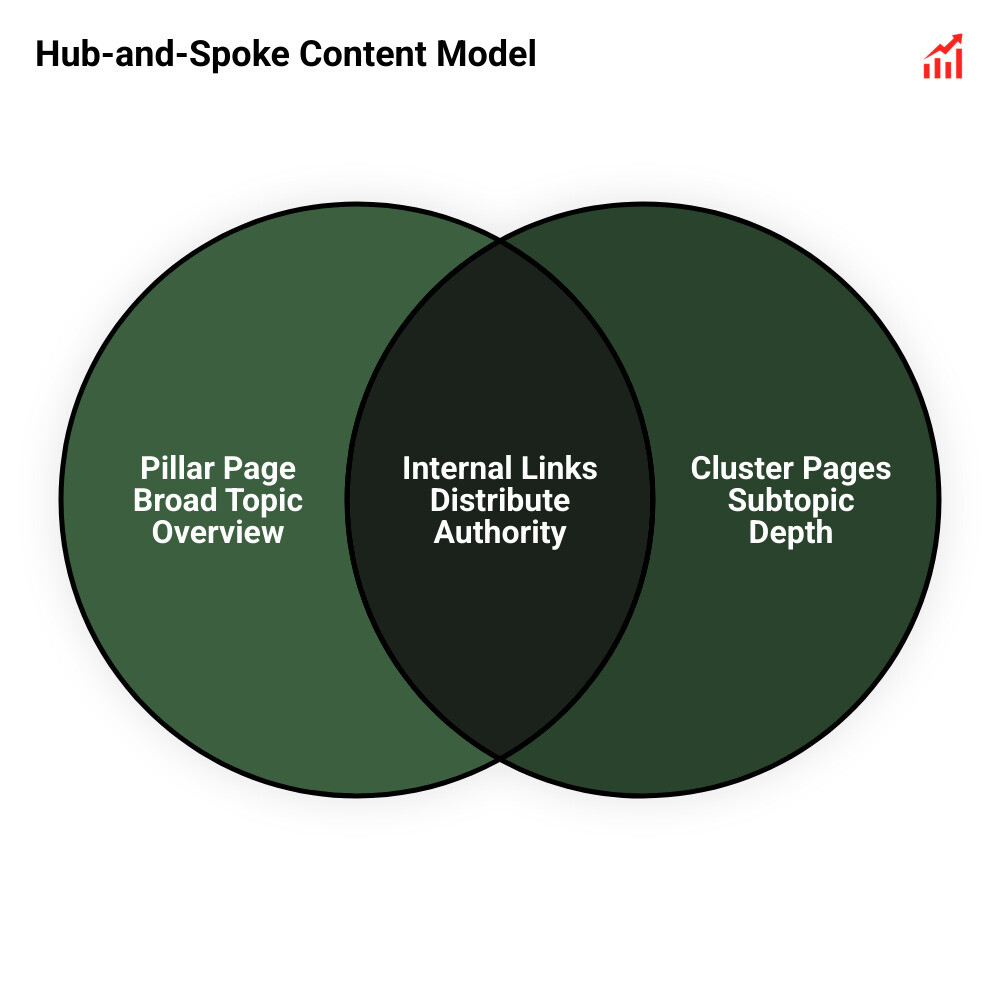
- The Pillar Page: This is your broad, high-level resource. It covers a large topic comprehensively but leaves room for more detail in sub-articles. Think of it as the “Ultimate Guide” or the “Everything You Need to Know” page.
- Cluster Content (Spokes): These are the deep dives. Each cluster page focuses on a specific long-tail keyword or a niche question related to the pillar.
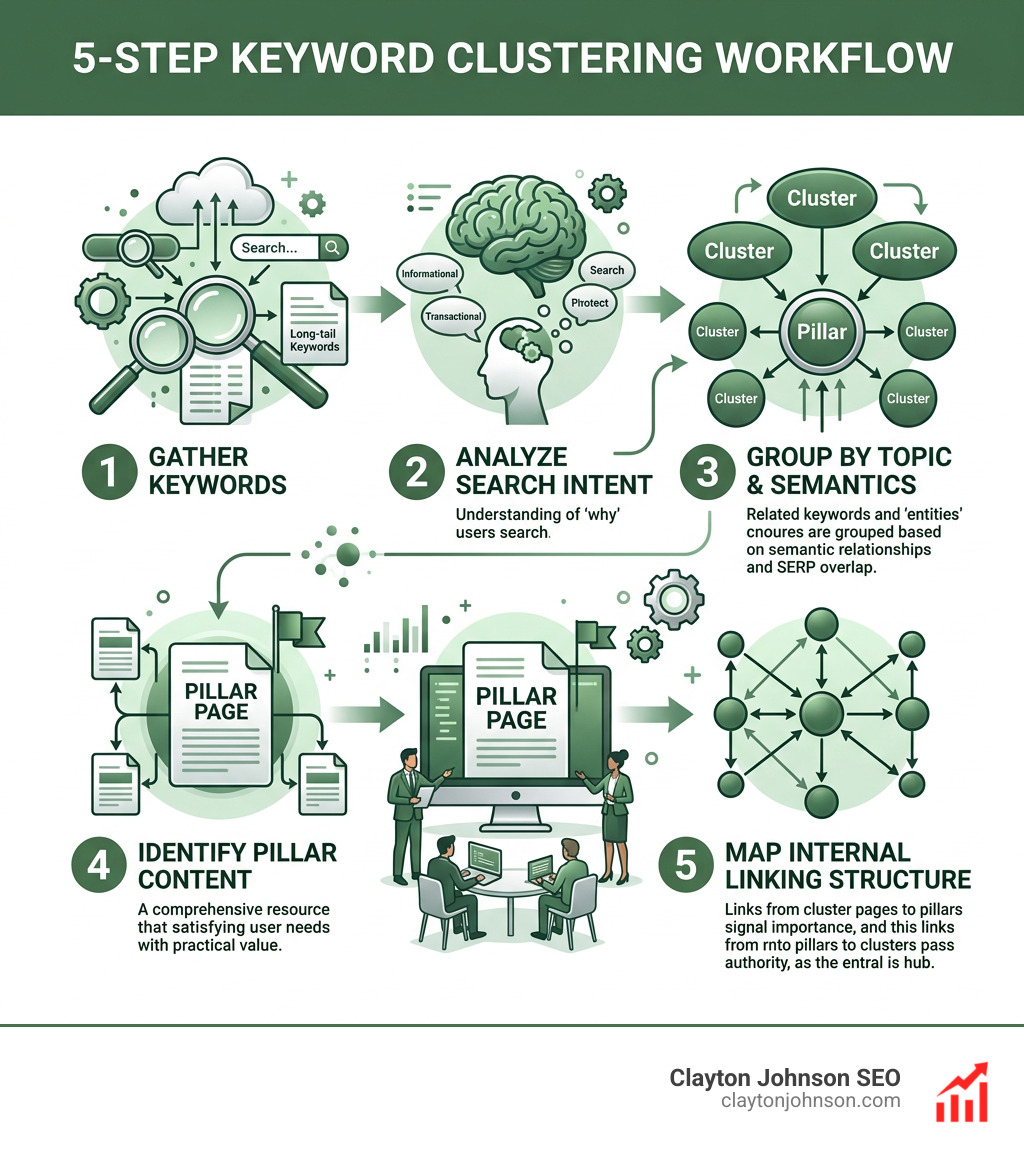
- Internal Linking: This is the glue. Every cluster page links back to the pillar, and the pillar links out to each cluster page. This creates a “hub-and-spoke” model that search engines love.
Why Topic Clusters are Essential for E-E-A-T and AI Search
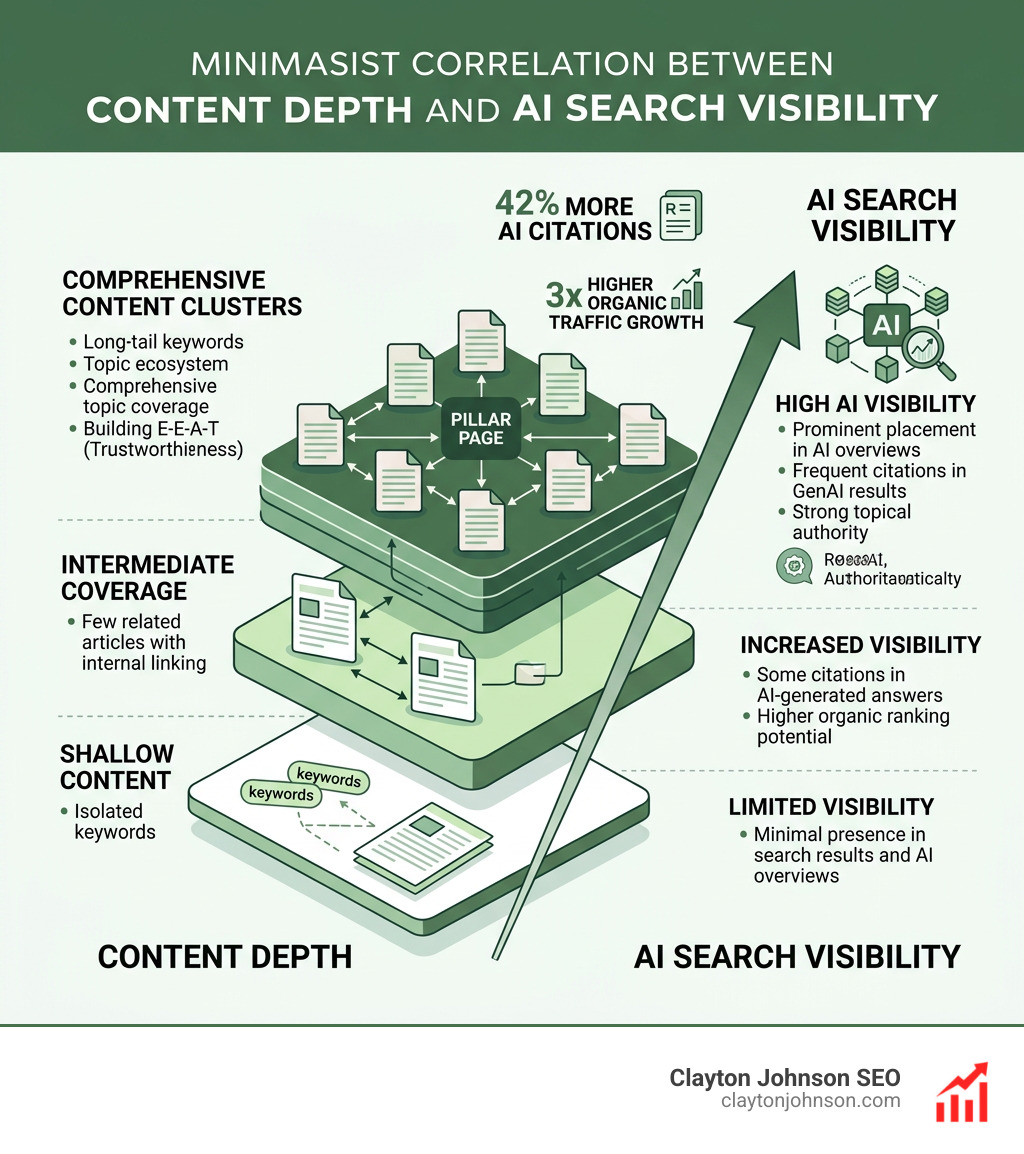
The search landscape is shifting rapidly with the rise of Generative AI (GenAI). You may have noticed AI Overviews appear on roughly 20% of searches, providing instant answers at the top of the page. Some marketers fear this will kill SEO, but we see it differently. AI search actually makes topic clusters more important.
AI models are trained to find the most comprehensive and trustworthy answers. When your site is structured into clusters, you provide a clear semantic map for AI to follow. Our data shows that sites implementing this architecture see 3x higher organic traffic growth than those using old-school keyword targeting. Even more impressively, topic clusters receive 42% more AI citations than scattered content.
By covering a topic from every angle, you fulfill the criteria of the search rater guidelines. Google uses E-E-A-T to determine if a page is worth showing. When you have a cluster of 15-20 articles all supporting a central theme, you aren’t just “mentioning” a keyword—you are proving your expertise and authoritativeness.
| Feature | Pillar Page | Cluster Content (Spokes) |
|---|---|---|
| Topic Breadth | Broad (e.g., “Digital Marketing”) | Narrow (e.g., “How to set up LinkedIn Ads”) |
| Keyword Type | High-volume, short-tail | Specific, long-tail |
| Word Count | Usually 2,000 to 5,000+ words | 1,000 to 2,500 words |
| Primary Goal | Educational overview & navigation | Answering specific questions & conversion |
| Internal Linking | Links to all cluster pages | Links back to the pillar page |
Core Components of a Successful Content Cluster Strategy Guide
Building a cluster isn’t just about writing a lot of words; it’s about strategic architecture. Every piece of content must have a purpose and a place within the hierarchy.
The Pillar Page: The North Star
A successful pillar page needs depth. While there is no “magic” number, many successful pillar pages are around 2,000 words or more. It should be broad enough to touch on 10–20 subtopics but concise enough that the reader doesn’t get overwhelmed. Examples like the ultimate guide to remote work by Zapier show how a pillar can act as a central hub that organizes an entire library of resources.
The Cluster Spokes: The Deep Dives
Your cluster pages are where you get into the nitty-gritty. If your pillar is about “Remote Work,” your cluster pages might be:
- The Best Ergonomic Chairs for Home Offices
- How to Manage a Distributed Team Across Time Zones
- A Review of the Top 10 Video Conferencing Tools
Each of these should be a high-quality, standalone resource. Don’t fall into the trap of creating “thin” content just to fill a cluster. Google’s core updates favor content that fully satisfies user needs with practical value.
Internal Linking and PageRank Distribution
Internal linking is the “secret sauce” of this strategy. When you link from a high-authority pillar to a new cluster page, you pass on “link equity” (or PageRank), helping that new page rank faster. Conversely, links from the cluster pages to the pillar pages signal to search engines that the pillar is the most important page in the group.
At Clayton Johnson SEO, we focus on building these durable systems to ensure your traffic compounds over time. You can learn more about our specific SEO services and how we architect these ecosystems for our clients.
Identifying Pillar Topics and Mapping Search Intent
The biggest mistake we see? Choosing a pillar topic that is too narrow (nothing to link to) or too broad (impossible to rank for). We use the “Goldilocks Principle”—the topic needs to be just right.
Keyword Research and Clustering
Start by identifying related long-tail keywords, common questions, and subtopics your audience is asking about. Instead of looking at keywords in isolation, we look for “entities” and semantic relationships.
We recommend using tools like Semrush’s Keyword Strategy Builder to automatically group keywords into clusters. Another powerful tool is Keyword Insights, which analyzes Google’s actual search results to see if two keywords belong in the same cluster based on SERP overlap.
Mapping Search Intent
You must understand why someone is searching. Are they looking for information (Informational), trying to find a specific site (Navigational), comparing products (Commercial), or ready to buy (Transactional)?
- Pillar pages usually satisfy informational intent.
- Cluster pages can span the entire funnel, from “How-to” guides to “Product Comparisons.”
Getting search intent right ensures that visitors stay on your site longer. most website visitors only stay between 10 and 20 seconds. If your content doesn’t match their intent immediately, they’re gone.
Research Tools We Love:
- MarketMuse: For topic modeling and identifying content gaps.
- Ahrefs Keywords Explorer: For finding underserved “Questions” and “Related keywords.”
- AnswerThePublic: To uncover the “Who, What, Where, and Why” of a topic.
- Semrush Topic Research: To see what’s currently trending in your niche.
Best Practices for Internal Linking and Content Depth
Once your content is written, you need to connect the dots. A messy linking structure is like a city without road signs—nobody knows where to go.
Descriptive and Varied Anchor Text
Don’t just use “click here” or the same keyword 50 times. Industry research into internal linking shows that pages with a greater number of different anchor text variations from internal links tend to have higher search traffic. Use natural, human language that describes exactly what the reader will find on the other side of the link.
Scannability and User Experience
In the era of short attention spans, scannability is king.
- Use Jump Links: A table of contents at the top of a pillar page helps users find exactly what they need.
- H1-H3 Hierarchy: Use clear headings to organize your thoughts.
- Multimedia: Relevant images that are well-optimized and even product demo videos can significantly increase time on page.
Two-Way Linking Patterns
Every cluster page must link back to its parent pillar. But don’t stop there. Cross-link “sibling” pages (cluster pages within the same group). If you’re reading about “Email Segmentation,” it makes sense to see a link to “Email Automation.” This creates a dense web of relevance that is critical for SEO.
Measuring Success and Avoiding Keyword Cannibalization
How do you know if your content cluster strategy guide is actually working? You have to look beyond just “total traffic.”
Key Metrics to Track:
- Keyword Breadth: Are you ranking for a wider variety of long-tail terms?
- Topical Authority Growth: Is your pillar page climbing the rankings for its broad “head” term?
- Engagement Depth: Are users visiting multiple pages per session?
- AI Citations: Is your content being cited in AI Overviews or featured snippets?
Data shows that a single well-built topic cluster can rank for over 1,000 keywords and generate significant organic clicks even from a starting point of low visibility.
Avoiding the “Cannibal” Trap
Keyword cannibalization happens when multiple pages on your site compete for the same keyword, confusing Google. A cluster strategy prevents this by giving every page a unique “job.” The pillar handles the broad term, while each cluster page handles a specific niche. If you find two pages that are too similar, it’s often better to consolidate them into one “power page.”
Launching Your First Content Cluster Strategy Guide
Ready to build? Don’t just start writing blindly. Follow this systematic approach to ensure your efforts lead to compounding growth.
Step 1: The Content Audit
Before creating anything new, look at what you already have. Most sites have “orphan pages”—valuable articles that aren’t linked to anything. Group these existing posts into themes. You might find you’re already halfway to a cluster!
Step 2: The Pillar Rollout
Create your pillar page first. It sets the stage and provides the framework for everything else. Use placeholder links if the cluster pages aren’t ready yet. When teams ship a clear pillar + cluster architecture, the results can be fast—one rollout drove a 53% lift in organic traffic in a matter of weeks.
Step 3: Fill the Gaps
Use your research to identify what’s missing. Maybe you have five articles on “SEO” but nothing on “Technical SEO.” Use tools like Ahrefs’ Content Gap to see what your competitors are ranking for that you aren’t.
Step 4: Optimization and Maintenance
SEO isn’t “set it and forget it.” Content decays over time. We recommend a quarterly review of your clusters.
- Update old statistics.
- Check for broken internal links.
- Add new cluster pages as new trends emerge in your industry.
- Test your schema with the Schema Markup Validator to ensure search engines can read your structure perfectly.
Conclusion: Building a Durable Content Ecosystem
The days of “tricking” search engines with keyword stuffing are long gone. Today, winning in search requires a commitment to structure, depth, and user intent. By following this content cluster strategy guide, you aren’t just chasing the latest algorithm update—you are building a durable asset that will continue to generate leads and authority for years to come.
At Clayton Johnson SEO, we specialize in this kind of system-level thinking. We don’t just write blog posts; we build traffic engines. Whether it’s through technical SEO and content architecture or AI-enhanced marketing workflows, our goal is to turn fragmented efforts into coherent growth.
If you’re tired of “random acts of content” and want to build a strategy that actually moves the needle, it’s time to embrace the cluster model. Explore our blog for more deep dives into growth frameworks, or reach out to see how we can help you dominate your topical niche.