Why a Marketing Plan Framework Is the Foundation of Every Successful Strategy
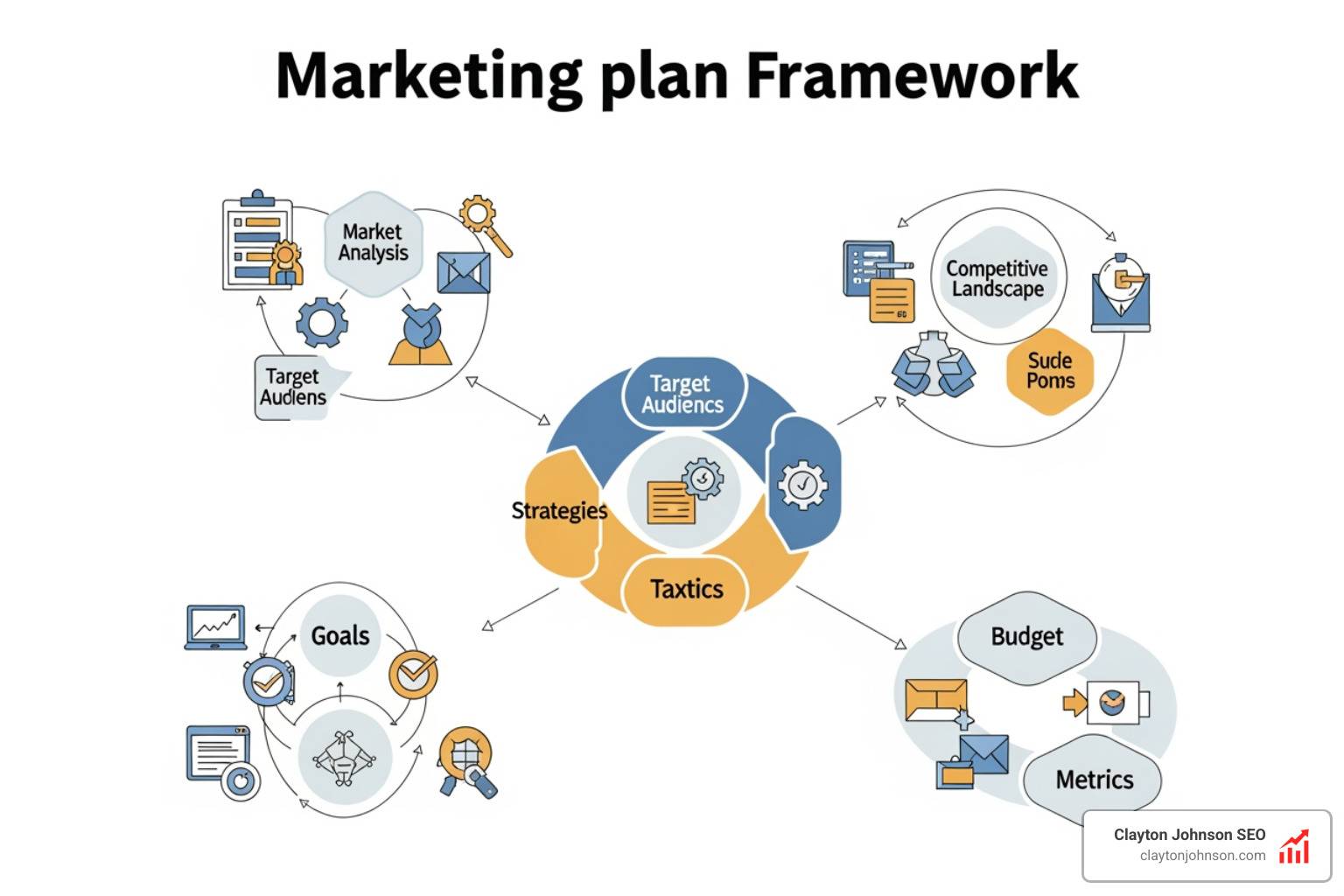
A marketing plan framework is a structured system that guides how a business sets goals, reaches customers, allocates budget, and measures results. If you want the short version, here it is:
What a marketing plan framework includes:
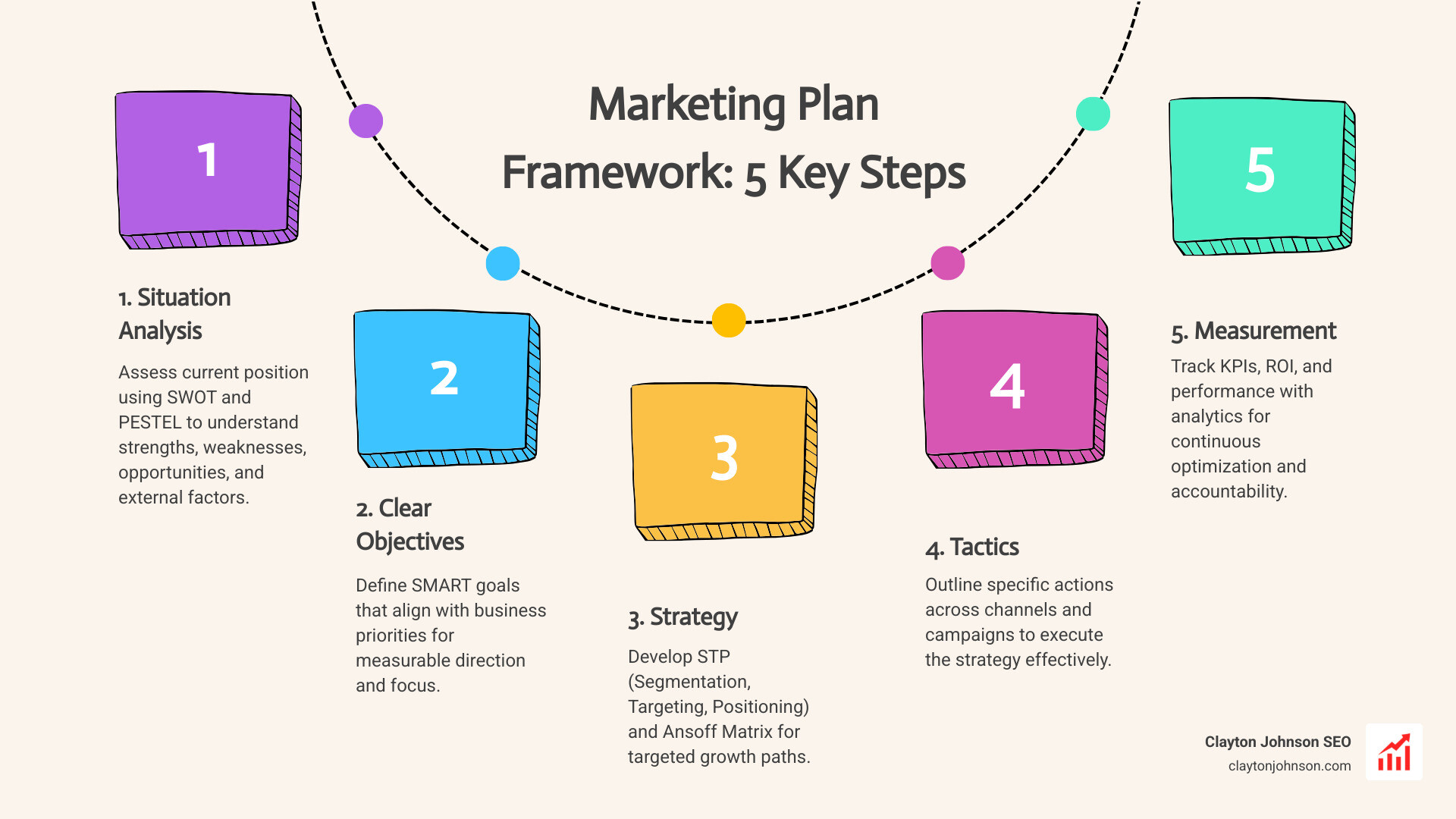
- Situation analysis – Where you are now (SWOT, PESTEL)
- Clear objectives – Where you want to go (SMART goals)
- Strategy – How you’ll get there (STP, Ansoff Matrix)
- Tactics – What specific actions you’ll take (channels, campaigns)
- Budget – What resources you’ll allocate
- Measurement – How you’ll track success (KPIs, reporting)
Without this structure, marketing becomes what one research source aptly describes as “throwing ideas at a wall and hoping something sticks.” Businesses that document their marketing frameworks consistently outperform those that don’t — and the gap in results is significant.
Think of it like building a house. You wouldn’t break ground without blueprints, a budget, and a timeline. A marketing plan framework is that blueprint for your business growth.
Here’s the hard truth: most marketing plans fail not because of bad ideas, but because they lack a repeatable, accountable structure. 98% of marketers agree that having a documented content strategy is critical to success — yet most businesses still operate without one.
I’m Clayton Johnson, an SEO strategist and demand generation expert who has spent nearly two decades building and refining marketing plan frameworks for companies across competitive industries. In this guide, I’ll walk you through the exact frameworks that turn scattered marketing efforts into scalable, measurable growth systems.
The Anatomy of a High-Impact Marketing Plan Framework
To build a high-impact marketing plan framework, we have to move past the idea that marketing is just “making things look pretty” or “posting on social media.” At its core, a marketing plan is an operational document. It is the instruction manual for your growth engine.
While a business plan focuses on the entire organization’s profitability and a marketing strategy defines your long-term “why,” the marketing plan is the “how, when, and where.” According to Investopedia, a marketing strategy outlines the long-term positioning that guides every short-term campaign decision. The framework is what holds these pieces together.
Core Components of the Framework
An effective framework isn’t a 50-page dusty binder; it’s a living document that contains these essential elements:
- Executive Summary: A high-level snapshot of your goals and the “big wins” you’re chasing.
- Mission and Vision: Ensuring your marketing aligns with why the company exists in the first place.
- Situation Analysis: This is the “Where are we now?” phase. We use tools like SWOT (Strengths, Weaknesses, Opportunities, Threats) and PESTEL (Political, Economic, Social, Technological, Environmental, Legal) to get a 360-degree view of the landscape.
- Target Audience & Personas: Deep-diving into who your customers are, what keeps them up at night, and where they hang out.
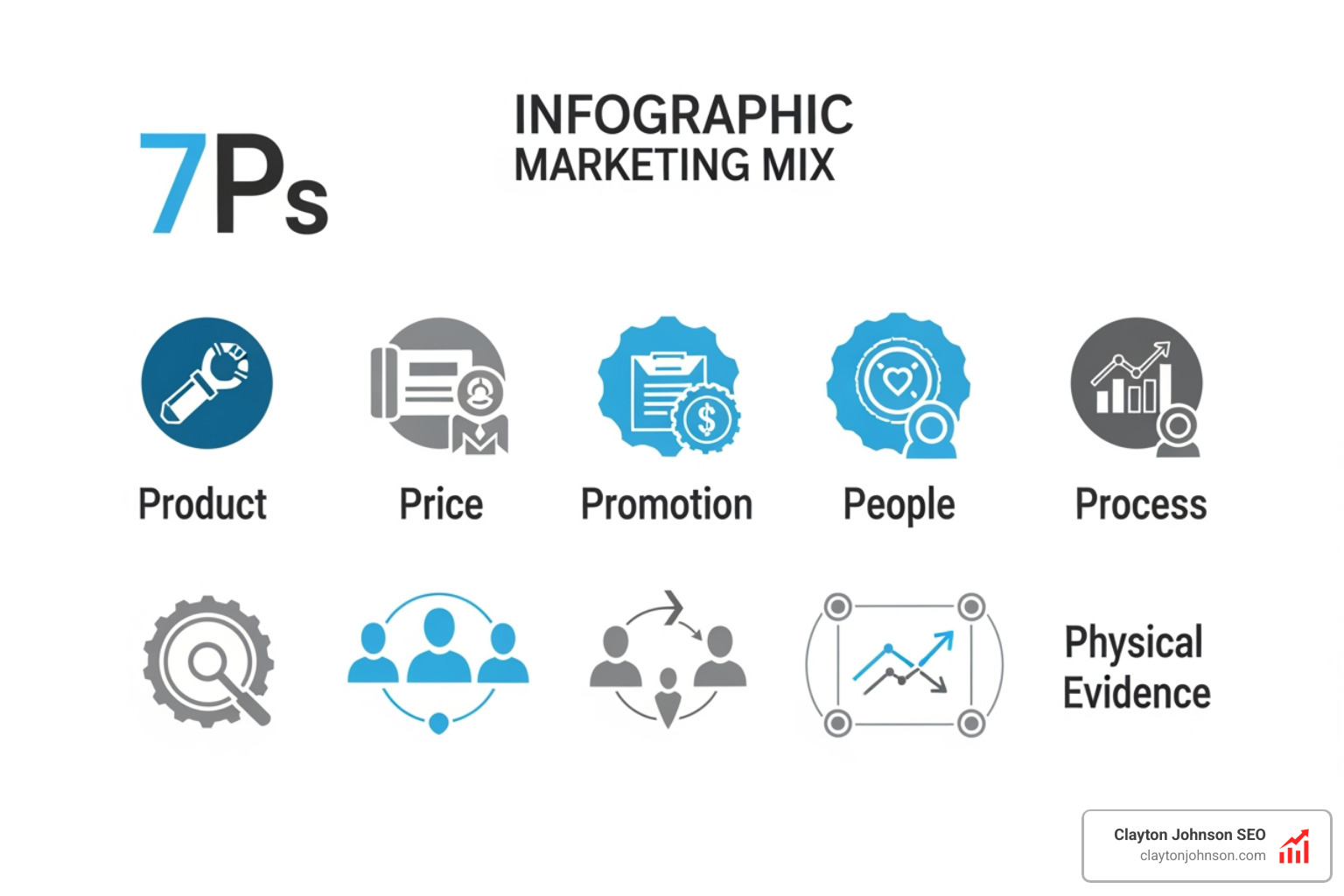
- The Marketing Mix (7Ps): An evolution of the classic 4Ps, this includes Product, Price, Place, Promotion, People, Process, and Physical Evidence.
- Action Plan: The specific “to-do” list with deadlines and owners.
Comparing the “Big Three” Plans
It’s common to confuse these terms, so let’s set the record straight:
| Feature | Business Plan | Marketing Strategy | Marketing Plan |
|---|---|---|---|
| Focus | Overall company operations | High-level market approach | Tactical execution steps |
| Questions | Is this business profitable? | Why are we different? | How do we get the leads? |
| Timeframe | Long-term (3-5 years) | Mid-to-long term (1-3 years) | Short-term (Quarterly/Annual) |
| Outcome | Funding and structure | Brand positioning | Campaigns and revenue |
By understanding how to write a marketing plan, we create a bridge between high-level dreams and daily execution.
Setting SMART Objectives within Your Marketing Plan Framework
If you don’t know where you’re going, any road will get you there—but you’ll probably run out of gas first. In our marketing plan framework, we use the SMART goal framework to ensure every objective is:
- Specific: No “increasing brand awareness.” Use “generate 500 new Marketing Qualified Leads (MQLs).”
- Measurable: If you can’t track it in a dashboard, it doesn’t count.
- Achievable: Be ambitious, but don’t promise $1 billion in 60 days unless you have the infrastructure to back it up.
- Relevant: Does this goal actually help the business grow?
- Time-bound: Give it a deadline.
To go even deeper, we often look at the 5s model:
- Sell: Grow sales and revenue.
- Serve: Add value to the customer experience.
- Speak: Get closer to customers through dialogue.
- Save: Reduce costs through digital efficiency.
- Sizzle: Extend the brand online and build the “wow” factor.
Aligning these goals with your overarching strategic frameworks ensures that your marketing team isn’t just “busy”—they’re making progress.
Integrating STP and the Ansoff Matrix into Your Marketing Plan Framework
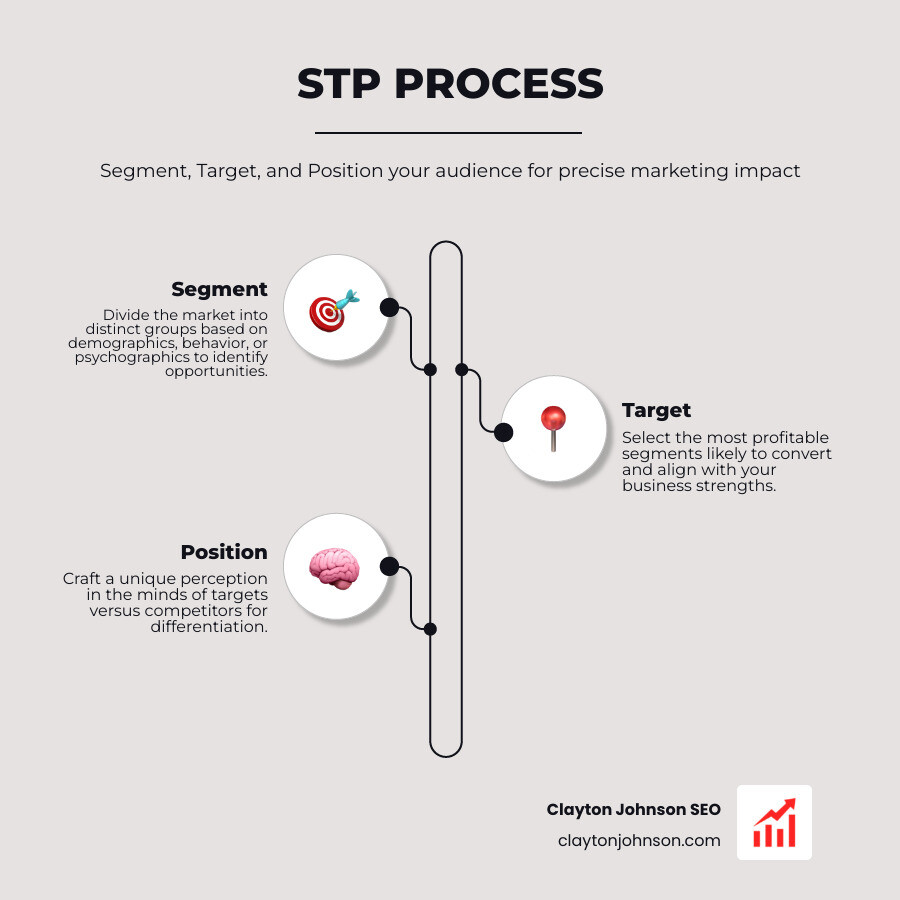
Strategy is about making choices. You can’t be everything to everyone. This is where STP (Segmentation, Targeting, and Positioning) comes in. It is the heart of a niche marketing strategy that targets specific subsets of customers rather than the whole world.
- Segmentation: Breaking the market into groups based on behavior, demographics, or psychographics.
- Targeting: Choosing which of those groups are most likely to buy from you.
- Positioning: How you want those targets to perceive you compared to the competition.
Once you know who you’re talking to, you need to decide how you’ll grow. The Ansoff Matrix provides four clear paths:
- Market Penetration: Selling more of what you have to the people you already know.
- Market Development: Taking your existing product to a brand-new crowd.
- Product Development: Creating something new for your current fans.
- Diversification: The riskiest move—new products for new markets.
Integrating these into the ultimate blueprint for scalable marketing frameworks allows us to move from “guessing” to “calculating.”
Budgeting and Resource Allocation Best Practices
Your marketing plan framework is only as good as the resources you put behind it. Many businesses treat budgeting like a guessing game, but Harvard Business Review stresses that connecting your marketing budget directly to measurable business outcomes is the only way to secure executive buy-in.
Best practices for the “Money” part of the plan:
- Objective-Based Budgeting: Don’t just pick a percentage of revenue. Calculate what it will actually cost to hit your SMART goals.
- The 70-20-10 Rule: Spend 70% on proven “bread and butter” tactics, 20% on emerging opportunities, and 10% on wild experiments.
- Resource Forecasting: Do you have the people to do the work? It’s better to allocate budget to hiring experts or fractional CMOs than to attempt a complex plan with a skeleton crew.
- Execution Discipline: Use tools like Asana to break your budget into milestones and tasks.
A budget isn’t just a limit on spending; it’s a statement of priorities.
Operationalizing Growth with Proven Strategic Frameworks
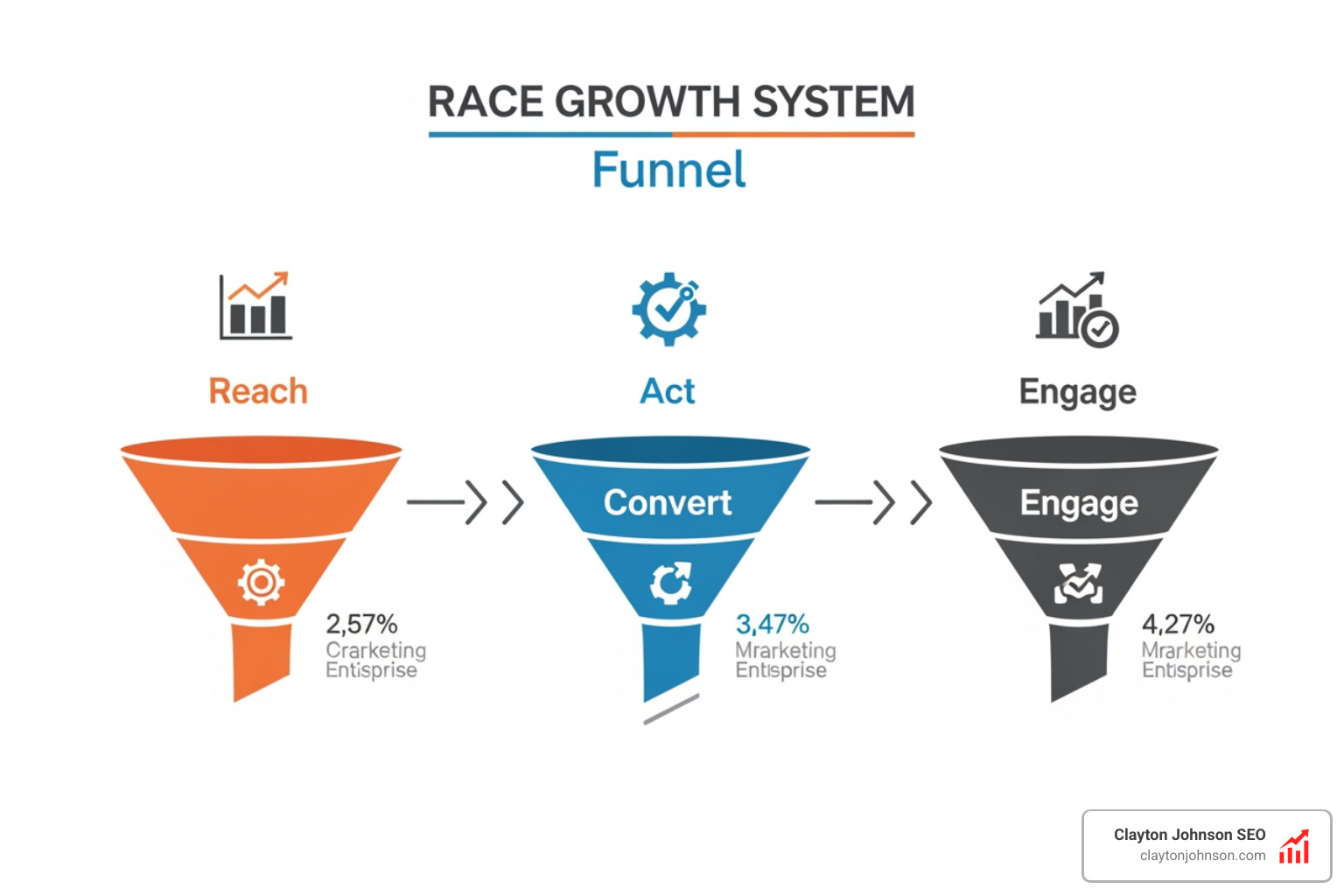
Now that we have the “What” and the “Who,” we need the “How.” This is where we turn the strategy into a living, breathing system. We often utilize the RACE planning system (Reach, Act, Convert, Engage) to structure the customer journey.
- Reach: Building awareness through SEO, social, and PR.
- Act: Encouraging interaction on your website or blog.
- Convert: Turning that interest into a sale or lead.
- Engage: Keeping the customer coming back for more.
For smaller businesses, we might simplify this using the OSA process (Opportunity, Strategy, Action). It’s a faster way to communicate the plan without getting bogged down in corporate jargon.
Types of Marketing Plans You Might Need
Depending on your goals, you might need a specialized framework:
- Product Launch Plan: Often a high-intensity, short-term plan. Some have even generated $1 billion in 60 days by following a strict pre-launch and launch sequence.
- Social Media Plan: Focused on posting schedules, engagement, and community management.
- SEO Marketing Plan: A long-term play focused on organic authority and content strategy.
Leveraging Digital Channels and SEO Systems
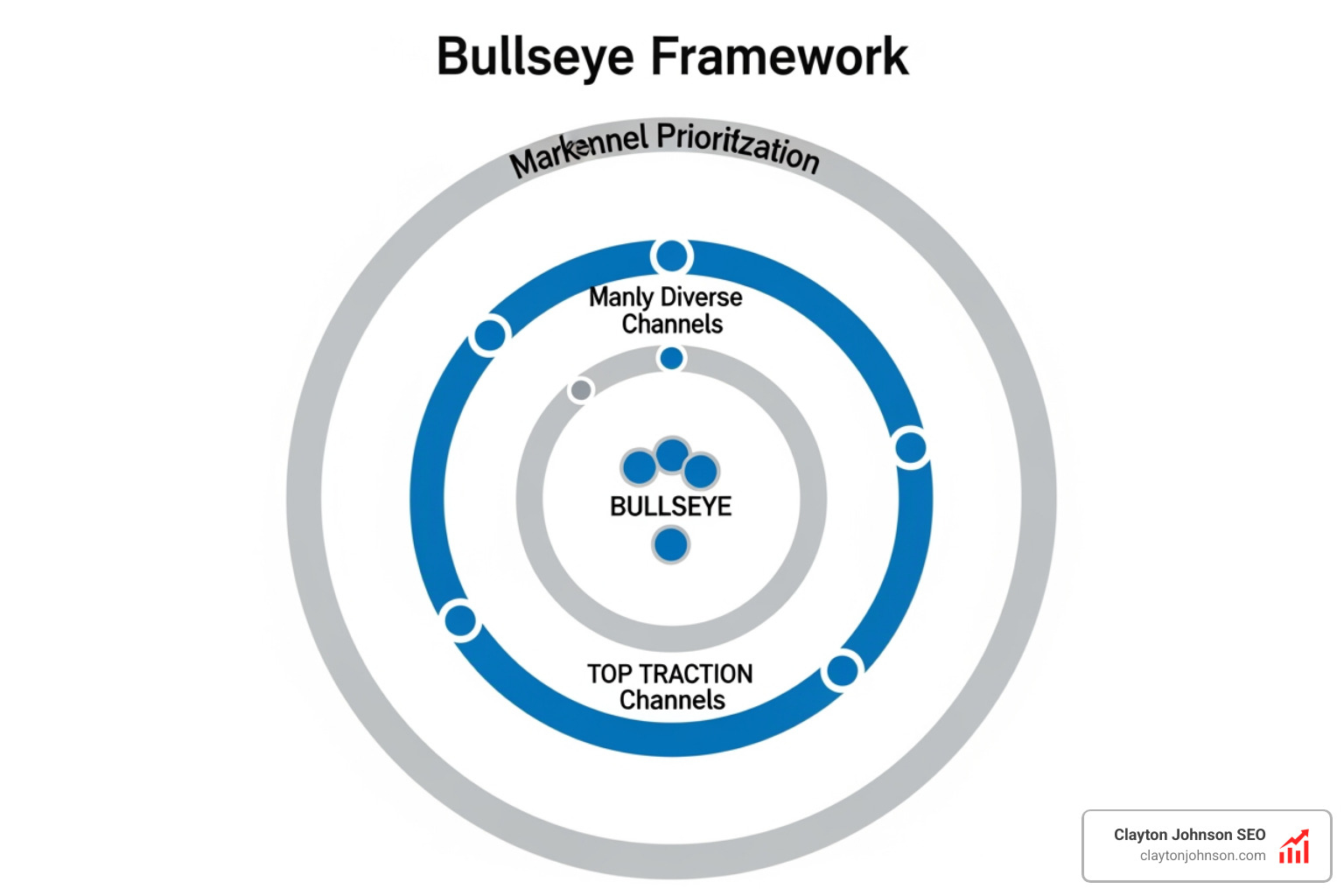
In the modern landscape, your marketing plan framework must be “digital-first.” We use the Bullseye Framework to prioritize channels. Instead of trying to be on 20 different platforms, we find the one or two that deliver the highest traction and double down.
As Four Week MBA explains, the goal is to find the “inner circle” — the tactics that actually move the needle. This often involves:
- Content Architecture: Building a structured content ecosystem rather than random blog posts.
- Media Strategy: Aligning your paid, owned, and earned media to work as one cohesive unit.
- Social Integration: Ensuring your social media marketing plan supports your SEO goals by driving traffic and brand signals.
Measuring Success with KPIs and Optimization Tools
If you can’t measure it, you can’t manage it. A modern marketing plan framework relies on a unified data environment. We don’t just look at “likes” or “shares”; we look at business impact.
The Tools of the Trade:
- Competitor Benchmarking: Use Google Alerts to track what your rivals are doing. If you understand their next move, you won’t be the company saying, “We never saw it coming.”
- SEO Platforms: Tools like Semrush or Ahrefs allow us to see which keywords are actually driving revenue.
- CRM Integration: Aligning sales and marketing is non-negotiable. Your marketing plan should feed directly into your CRM to track the ROI of every lead.
- Attribution Modeling: Figuring out which touchpoints actually led to the sale. Was it the first SEO visit or the final email blast?
Modern marketing allows us to move from annual static planning to “adaptive operating rhythms” — adjusting our tactics in real-time based on live performance data.
Conclusion: Building Durable Systems for Compounding Growth
The difference between a business that struggles and one that scales is structure. A marketing plan framework isn’t just a document you write once and forget; it’s the foundation of a durable system that produces compounding growth.
At Clayton Johnson SEO, we believe in moving away from fragmented tactics and toward strategic roadmap alignment. By combining technical SEO depth with AI-augmented workflows and system-level thinking, we help businesses build “marketing machines” that work even when the team is asleep.
Key Takeaways for Your Framework:
- Start with the Goal: Never pick a tactic before you’ve defined the outcome.
- Know Your Audience: Use buyer personas to stop guessing what people want.
- Be Agile: A plan is a guide, not a prison. If the data says pivot, pivot.
- Focus on ROI: Every dollar spent should be traceable to a business result.
If you’re ready to stop guessing and start building a structured path to authority, it’s time to implement a formal marketing plan framework. Whether you’re launching a new product or refining a decade-old brand, the clarity provided by these frameworks is the only way to ensure long-term success.