How AI is Changing the Face of Corporate Travel Marketing

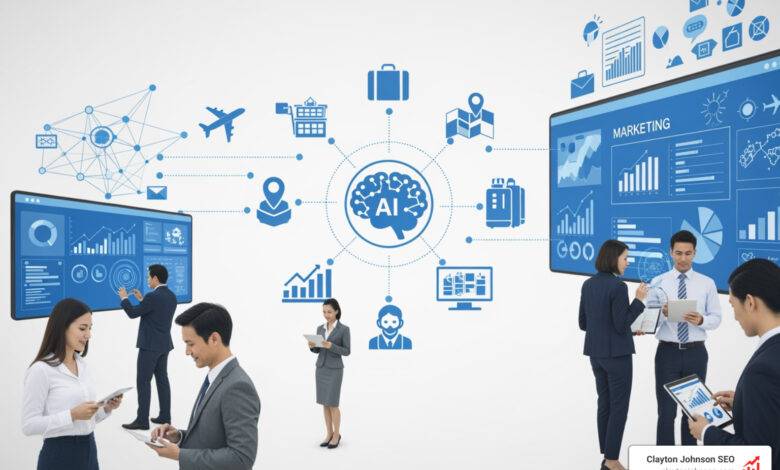
Why AI Marketing for Corporate Travel Managers Companies Is No Longer Optional
AI marketing for corporate travel managers companies is the practice of using artificial intelligence to attract, retain, and serve corporate travel clients — through smarter personalization, predictive analytics, automated communication, and data-driven program optimization.
Here is a quick breakdown of what it covers:
| AI Marketing Strategy | What It Does for Travel Managers |
|---|---|
| Hyper-personalization | Tailors traveler experiences and communications at scale |
| Predictive disruption management | Anticipates delays and rebooking needs before travelers notice |
| Customer churn prediction | Identifies at-risk clients and triggers retention actions |
| Natural language interfaces | Lets managers query travel data in plain English |
| GenAI content creation | Speeds up personalized campaigns and policy communications |
| Agentic AI automation | Handles end-to-end tasks like expense reports and approvals |
The numbers tell a clear story. A significant share of corporate travel managers already believe AI will have a major impact on their programs. Yet most are still stuck in reactive mode — pulling reports manually, chasing off-platform bookings, and struggling to access the data they need.
There is a real gap between knowing AI matters and knowing how to use it.
The challenge is not just technology. It is trust. Many travel managers worry about data security, inaccurate AI outputs, and losing the human touch that clients actually value. As one industry executive put it, when you ask a room of executives what they mean by “AI,” the room often goes quiet.
This guide cuts through the noise and gives you a practical, human-centered path forward.
I’m Clayton Johnson, an SEO strategist and AI marketing specialist who has spent nearly two decades helping companies build data-driven growth systems — including applying ai marketing for corporate travel managers companies to drive visibility, leads, and client retention. The strategies in this guide are grounded in both real research and hands-on implementation experience.

Why AI Marketing for Corporate Travel Managers Companies is the New Standard
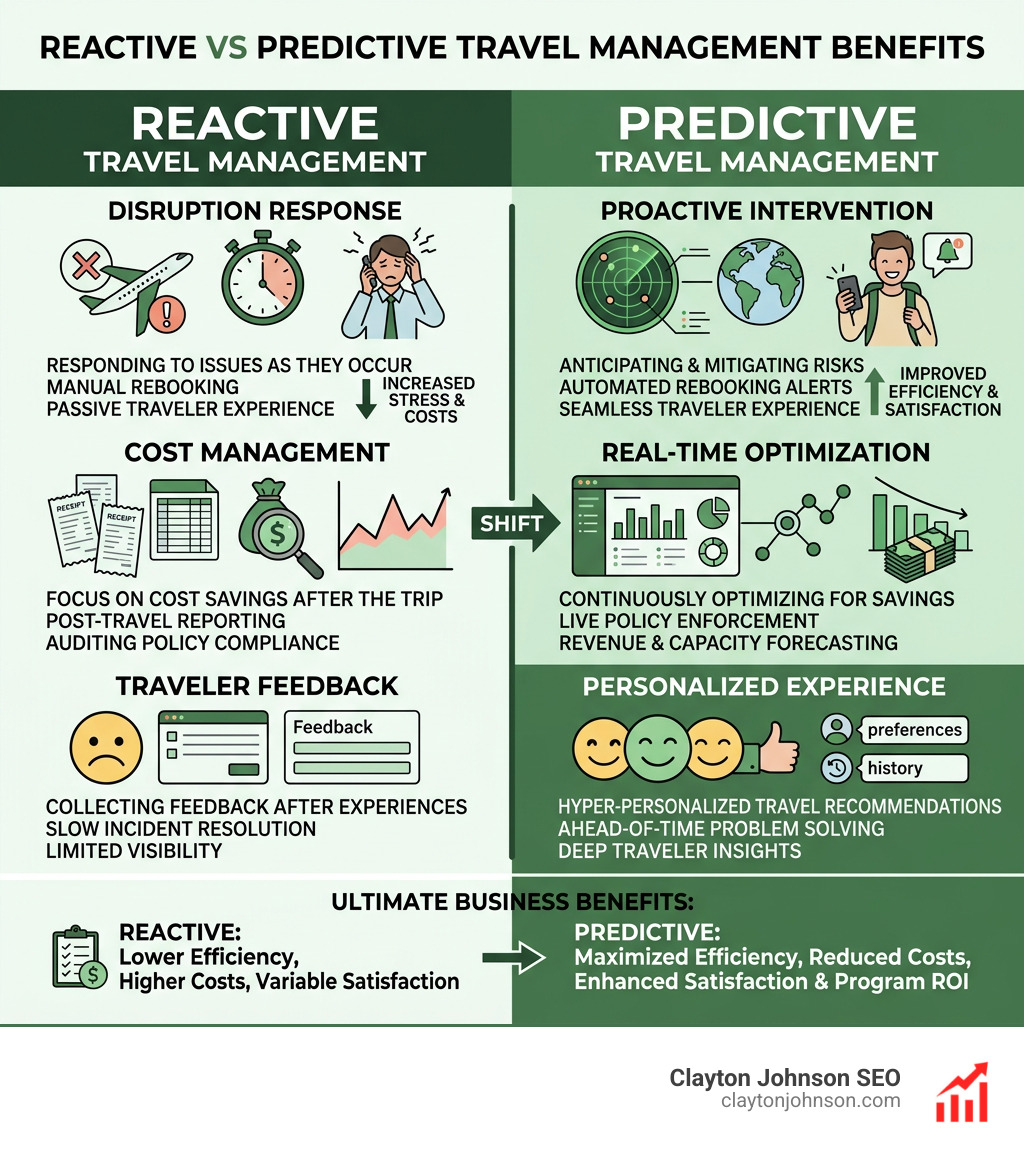
We are currently witnessing a massive shift in how corporate travel is sold and managed. For years, the industry relied on manual reporting and reactive “firefighting.” If a flight was canceled, we reacted. If a traveler booked out-of-policy, we sent a stern email after the fact.
Today, ai marketing for corporate travel managers companies has turned that model on its head. About 44% of corporate travel managers believe AI will have a significant effect on their programs soon, and 22% go as far as saying it will be “transformative,” reshaping the industry at its core.
The reason is simple: data. The travel industry is one of the top 10 sectors working with large-scale data. AI allows us to move from simply storing that data to actually using it to drive cost savings, traveler satisfaction, and program optimization.

Personalization and Predictive AI Marketing for Corporate Travel Managers Companies
The modern traveler doesn’t just want a booking; they want an experience that feels like it was designed specifically for them. Statistics show that over 80% of travelers seek personalization during their interactions with travel companies. Furthermore, 33% of customers already expect individually tailored communication, and delivering it can command up to a 20% price premium.
Leading firms are already leaning into this. For instance, the HRS AI-powered Copilot platform uses advanced language models to allow travel and procurement managers to interrogate their hotel programs in real-time. Instead of digging through spreadsheets, they can ask the AI to optimize for savings or sustainability.
This level of hyper-personalization extends to disruption management. Imagine an AI that rebooks a flight before the traveler even realizes there is a delay. By predicting issues and proactively offering solutions, we move from “help me book” to “everything is handled.” To get started with these types of systems, we recommend learning how to build AI marketing workflows that actually work to ensure your team isn’t just busy, but effective.
Driving ROI Through AI Marketing for Corporate Travel Managers Companies
ROI isn’t just about lower ticket prices; it’s about the total cost of the program and the lifetime value of the corporate client. AI-driven revenue and capacity management can increase revenue by 5% to 20% by optimizing pricing and resource allocation.
On the marketing side, GenAI content creation allows us to create personalized campaigns and emails much faster, lifting revenue by 2% to 6%. More importantly, customer churn prediction can reduce your churn rate by 15% to 25%. By identifying patterns that suggest a corporate client is unhappy—perhaps through poor hotel feedback or a spike in off-platform bookings—we can intervene before they leave.
Platforms like Navan Intelligence are proving that when you unify travel and expense data with AI, you get real-time forecasting that was previously impossible. This is why AI marketing intelligence platforms are the future of growth; they turn “vanity metrics” into actionable business intelligence.
Overcoming the “Robot” Hurdle: Security and Human Expertise
We know the word “AI” can feel cold. Many travel managers are rightfully concerned about data security, “hallucinations” (where AI makes things up), and lengthy IT approval processes. In fact, corporate IT security questionnaires for AI vendors have grown from two pages to a full book in recent years.
The key is a “human-in-the-loop” approach. As seen in the Direct Travel philosophy, AI is meant to augment human expertise, not replace it. Humans are irreplaceable when it comes to empathy during a crisis—like a traveler stranded during a hurricane—or navigating complex enterprise contract negotiations.
To address risks, we must look at regulations like the EU AI Act, which categorizes AI by risk levels. High-quality AI implementations focus on transparency, providing full action logs so travel managers can see why an AI made a specific recommendation. For those feeling hesitant, our non-robotic guide to implementing AI in business offers a soft landing into this high-tech world.
Implementing a Strategic AI Growth Framework
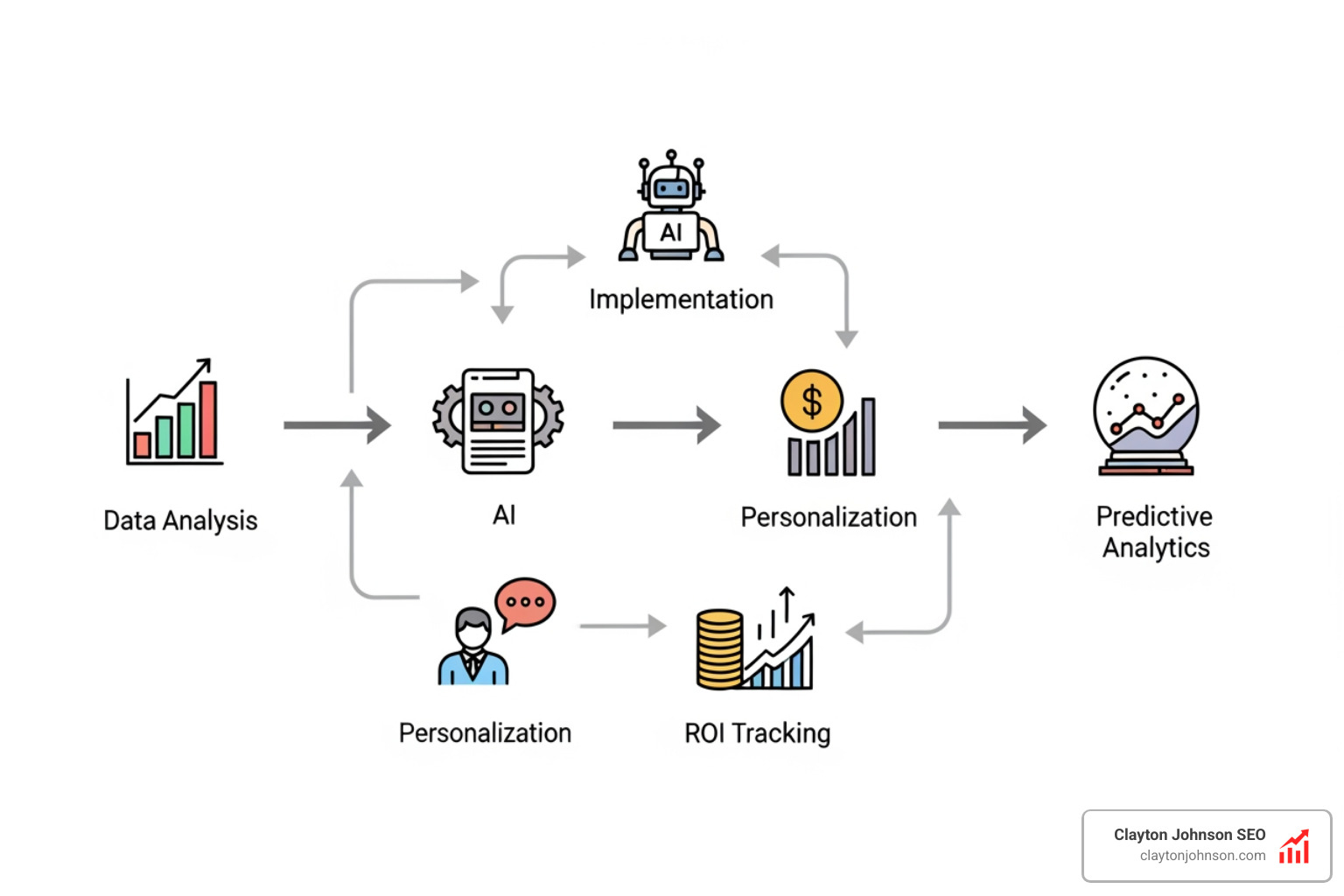
Success in ai marketing for corporate travel managers companies doesn’t come from buying a single tool; it comes from building a system. About 64% of travel managers say they would like to use AI to automate their responsibilities, but only 16% feel they use their current data “extremely well.”
We suggest starting with internal experimentation. Use AI to automate manual tasks like policy compliance checks or expense reconciliation first. This builds internal skills and “AI muscles” before you launch customer-facing features.
Mastering Large Language Model Optimization (LLMO)
You’ve heard of SEO, but have you heard of LLMO? As more travelers use AI search engines (like Perplexity or Gemini) to find guidance, companies must ensure their brand is visible within these models. Roughly 46% of travelers use search engines as their primary resource for travel guidance.
LLMO is about making your web content appealing to AI systems. This means focusing on “topical authority”—becoming the definitive source of truth for corporate travel topics so that when an AI is asked, “Which TMC has the best sustainability reporting?” it cites you.
This is a shift from chasing keywords to chasing intent. As we discuss in AI strategy 101, you shouldn’t just buy the tech; you must plan the content architecture that feeds it. For more on this evolution, see how marketers are adapting to LLM-powered search.
The Future of Agentic AI and Embedded Finance
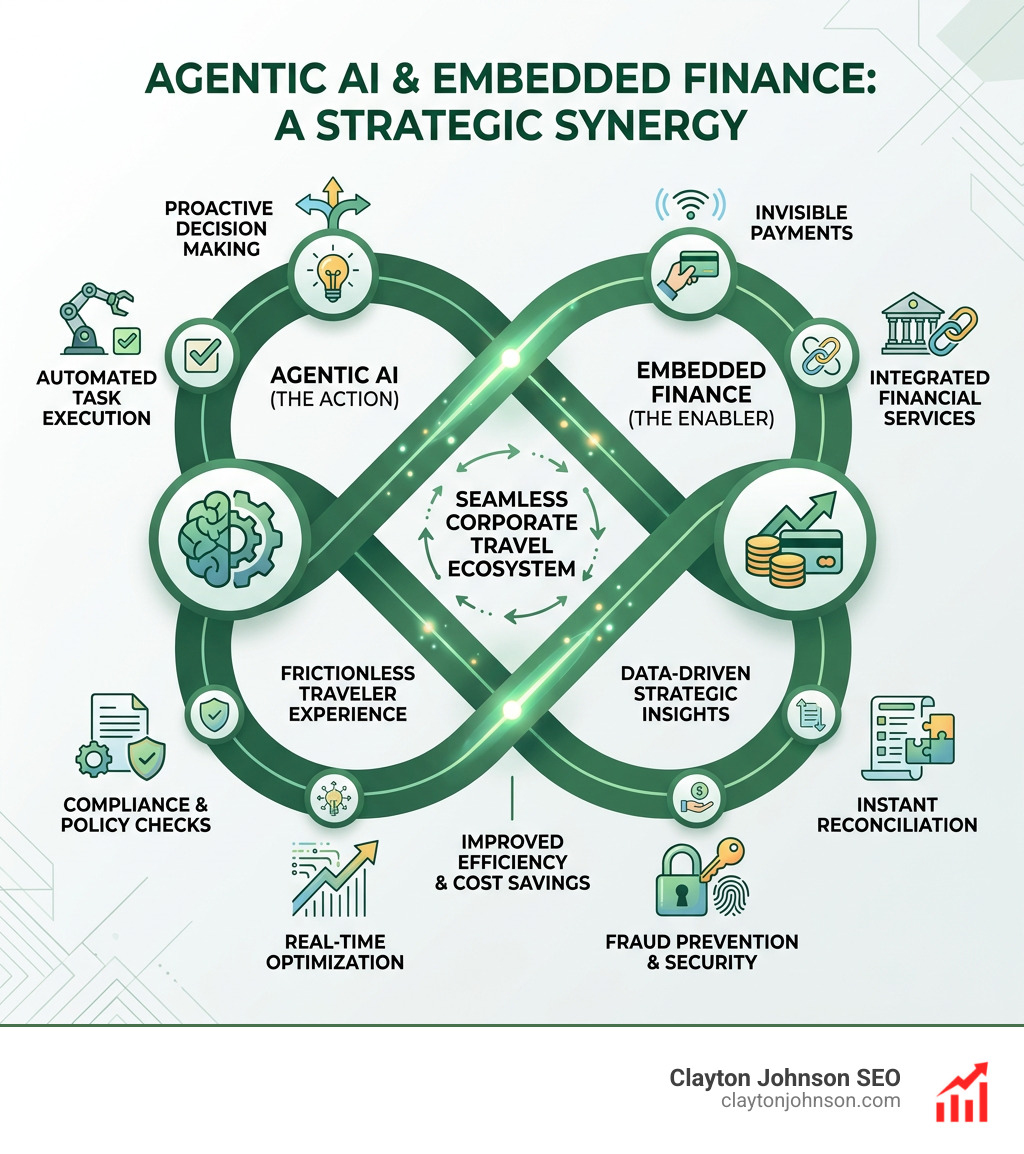
The next frontier is “Agentic AI.” Unlike a standard chatbot that just answers questions, an AI agent can actually do things. It can book the flight, file the expense report, and monitor VAT taxes for B2B compliance simultaneously.
When combined with embedded finance, the travel experience becomes invisible. Payments happen automatically, and loyalty points are optimized by the AI agent to maximize the traveler’s rewards. This level of automation requires scaling AI through a strategic framework to ensure all these moving parts work together without breaking.
Conclusion: Building Your AI-Augmented Travel Program
The pace of change is accelerating. If you’re a corporate travel manager, the goal isn’t to become a computer scientist; it’s to become a strategic advisor who uses AI to handle the “robotic” work.
By embracing ai marketing for corporate travel managers companies, you can move from pulling reports to telling stories with data. You can save your company hundreds of thousands of dollars by identifying policy leaks in real-time and provide a traveler experience that feels like a 24/7 concierge.
At Clayton Johnson SEO, we specialize in building these durable growth systems. We don’t just chase the latest “bot” craze; we focus on technical SEO, content architecture, and AI-augmented workflows that drive measurable business impact.
If you are ready to turn your fragmented marketing efforts into a coherent growth engine, explore more info about our SEO services and let’s build a travel program that’s ready for the future.