Viral Growth: A Guide to AI Marketing for Infectious Disease Specialists


Why AI Marketing for Infectious Disease Specialists Companies Is a Growth Imperative
AI marketing for infectious disease specialists companies is the practice of using artificial intelligence to reach clinicians, researchers, hospitals, and public health organizations with targeted, data-driven campaigns that drive real business growth.
Here is a quick breakdown of what it covers:
| AI Marketing Area | What It Does for ID Companies |
|---|---|
| Search-term surveillance | Tracks how prospects search for outbreak tools and detection solutions |
| Predictive lead scoring | Identifies which hospitals or health orgs are most likely to buy |
| LinkedIn targeting | Reaches ID specialists, KOLs, and public health decision-makers |
| Content marketing | Case studies and ROI proof points that build trust with clinical buyers |
| Compliance-aware campaigns | HIPAA and FDA-aligned messaging that protects your brand |
| AI-powered HCP engagement | Personalized outreach based on specialty, behavior, and channel preference |
The infectious disease sector is moving fast. The AI healthcare market is on track to grow from $21.66 billion to over $110 billion, and 94% of healthcare companies are already using AI or machine learning in some form. Yet most ID-focused companies still rely on outdated marketing playbooks that were built for a slower, less competitive world.
Many infectious disease intelligence platforms now analyze massive volumes of global reporting across languages to track emerging threats. That level of intelligence is not just a clinical tool, it is a marketing story waiting to be told.
The challenge is knowing how to tell it, and to whom.
I’m Clayton Johnson, an award-winning SEO strategist and founder of Clayton Johnson SEO, with nearly two decades of experience helping companies scale visibility and lead generation through AI-powered search and demand generation systems in highly regulated sectors where ai marketing for infectious disease specialists companies demands both technical precision and compliance awareness. Let’s break down exactly how to build a strategy that works.

Strategies for AI Marketing for Infectious Disease Specialists Companies
Marketing an AI-powered solution in the infectious disease (ID) space isn’t like selling a new brand of coffee. We are dealing with high-stakes environments where accuracy is everything and “trust” is the primary currency. The market is expanding rapidly. If we aren’t using AI to market our AI, we are essentially bringing a paper map to a satellite-guided race.
One of the unique challenges infectious disease surveillance companies face is the “signal vs. noise” problem. Just as epidemiologists struggle to find a single outbreak rumor among thousands of news items, marketers struggle to reach a burnt-out ID physician among a sea of generic healthcare ads. Research shows that ID physician burnout approaches 45%, meaning our marketing must be helpful, not intrusive.
To succeed, we need to move beyond basic digital tactics and embrace AI marketing intelligence platforms. These systems allow us to understand the complex buying committees found in hospitals and public health organizations. It is rarely one person making the call; it is a mix of clinicians, IT directors, and financial officers.
Our approach should be built on the same foundations as modern clinical medicine: evidence, precision, and scalability. By leveraging The Ultimate Guide to Digital Marketing AI, we can build workflows that automate the busy work of marketing, allowing our teams to focus on high-level strategy and relationship building.
Optimizing Search-Term Surveillance via AI Marketing for Infectious Disease Specialists Companies
In epidemiology, search-term surveillance involves monitoring what people are googling to predict the next flu spike. In ai marketing for infectious disease specialists companies, we use these same insights to optimize our search presence.
When a researcher at an institution like UC Davis or Boston University starts looking for “real-time pathogen genomic surveillance,” we need to be the first answer they see. This isn’t just about keywords; it’s about understanding the intent behind the search. AI allows us to perform anomaly detection on search trends. If there is a sudden spike in searches for “multi-drug resistant organism tracking” in a specific geographic region, our AI-driven marketing systems can automatically ramp up targeted ad spend in that area.
We recommend using The Ultimate Guide to AI-Driven SEO Strategy and Systems to align your content with these high-intent signals. Instead of passive marketing, we are creating an event-based system that reacts to the market in near real-time.
| Feature | Traditional Passive Marketing | AI-Enhanced Event-Based Marketing |
|---|---|---|
| Response Time | Weeks/Months | Real-time / Hours |
| Data Sources | Historical sales data | Search trends, news, livestock reports, climate data |
| Targeting | Broad personas | Specific intent-based segments |
| Content | Static brochures | Dynamic, AI-generated reports and landing pages |
By mining online content and news reports, much like the Global Public Health Intelligence Network (GPHIN), we can identify which topics are becoming hot in the ID community. If everyone is talking about the VISTA project and its role in pandemic prevention, our content strategy should immediately pivot to address how our tools integrate with such global efforts.
Reaching Key Opinion Leaders through AI Marketing for Infectious Disease Specialists Companies
Key Opinion Leaders (KOLs) in the infectious disease world are not easily swayed by flashy banners. They value peer-reviewed data, institutional affiliations, and clinical utility. To reach them, we must use surgical precision.
LinkedIn is the powerhouse here. We can use AI to identify and target specialists who have recently published research on topics like antibiotic stewardship or malaria parasite classification. AI-powered tools can analyze large datasets to find the exact subject matter experts we need to influence.
Instead of targeting “all doctors,” we target “ID physicians with 20+ years of experience who are members of the Coalition for Epidemic Preparedness Innovations (CEPI).”
This level of AI marketing intelligence ensures that our message lands in front of the people who actually move the needle. We are not just shouting into the void; we are engaging in a high-level conversation with the leaders of the field.

Demonstrating Marketing ROI and Impact in the Infectious Disease Sector
In a field where budgets are often tight and the pressure to perform is immense, demonstrating ROI is non-negotiable. Clinical buyers want to know: “Will this save lives, and will it save my hospital money?”
Content marketing is our strongest tool for answering these questions. Case studies that highlight success stories, such as genomics-enabled outbreak investigation workflows and AI-assisted threat detection programs, provide the social proof necessary to close complex deals.
We should focus on metrics that matter to ID specialists:
- Script lift: Are clinicians using the AI-recommended treatments more accurately?
- Time to detection: How much faster did our AI identify a potential outbreak compared to passive surveillance?
- Operational efficiency: Did our AI-powered campaign orchestration reduce the cost of acquiring a new hospital contract?
By leveraging AI for on-page SEO, we can ensure these case studies are found by decision-makers exactly when they are looking for evidence of AI’s impact on ID surveillance.
Navigating Compliance, HIPAA, and Physician Burnout
We cannot talk about ai marketing for infectious disease specialists companies without talking about the red tape. Healthcare is one of the most regulated industries on the planet. Any AI-driven campaign must be HIPAA compliant and adhere to FDA regulations regarding medical devices and software.
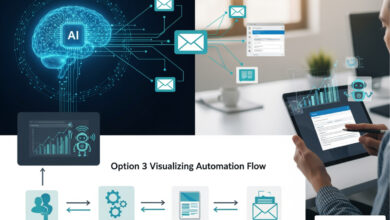
But there is another type of compliance we often forget: the human factor. As mentioned, ID physicians are exhausted. Our marketing should aim to alleviate that burnout, not add to it. AI can help us create agentic workflows, automated systems that handle the administrative burden of engagement and follow-up so clinicians and teams can focus on patient care and critical decisions.
When we market these solutions, we should lead with the why:
- Efficiency: AI handles the data crunching so the physician can focus on the patient.
- Accuracy: Reducing human error in complex diagnostics.
- Support: Tools that offer intelligent stewardship prompts rather than just more alerts.
To get this right, you need an AI strategy for people who hate jargon. Keep the messaging simple, focus on the clinical outcomes, and always ensure that the data privacy of the patient is the top priority.
Conclusion: Building a Scalable Growth Engine
The future of infectious disease medicine is intertwined with artificial intelligence. From academic collaborations to global monitoring initiatives, the tools are already here. The question for your company is: does your marketing match the innovation of your product?
Building a growth engine in this space requires more than just running ads. It requires a structured marketing framework that aligns with search intent, respects clinical boundaries, and leverages the full power of AI to find the right audience at the right time.
At Clayton Johnson SEO, we specialize in turning fragmented efforts into coherent systems. We help you move from chasing tactics to building durable assets, like a content strategy for enterprise success or an AI-augmented SEO workflow that compounds over time.

If you are ready to stop guessing and start scaling, it is time to build a system that works as hard as your AI does.
Ready to transform your reach?
Let’s build the future of infectious disease marketing, together.