Books That Turn Your Marketing into a Relentless Demand Engine


Why the Right Demand Generation Engine Book Changes Everything
The best demand generation engine books on the market right now:
| Book | Best For |
|---|---|
| The Revenue Engine by Kara Smith Brown | B2B pipeline strategy and sales-marketing alignment |
| The Big Book of B2B Demand Generation Success | Tactical ideas, offers, and lead nurturing |
| Demand Generation 101 | Inbound and outbound channel strategy |
| The Definitive Guide to Lead Generation | Foundational lead gen frameworks |
| Owner’s Manual for the Modern Demand Gen Engine | ICP, buyer journey mapping, and KPIs |
| The Demand Generation Engine | Predictable Pipeline Powered by AI |
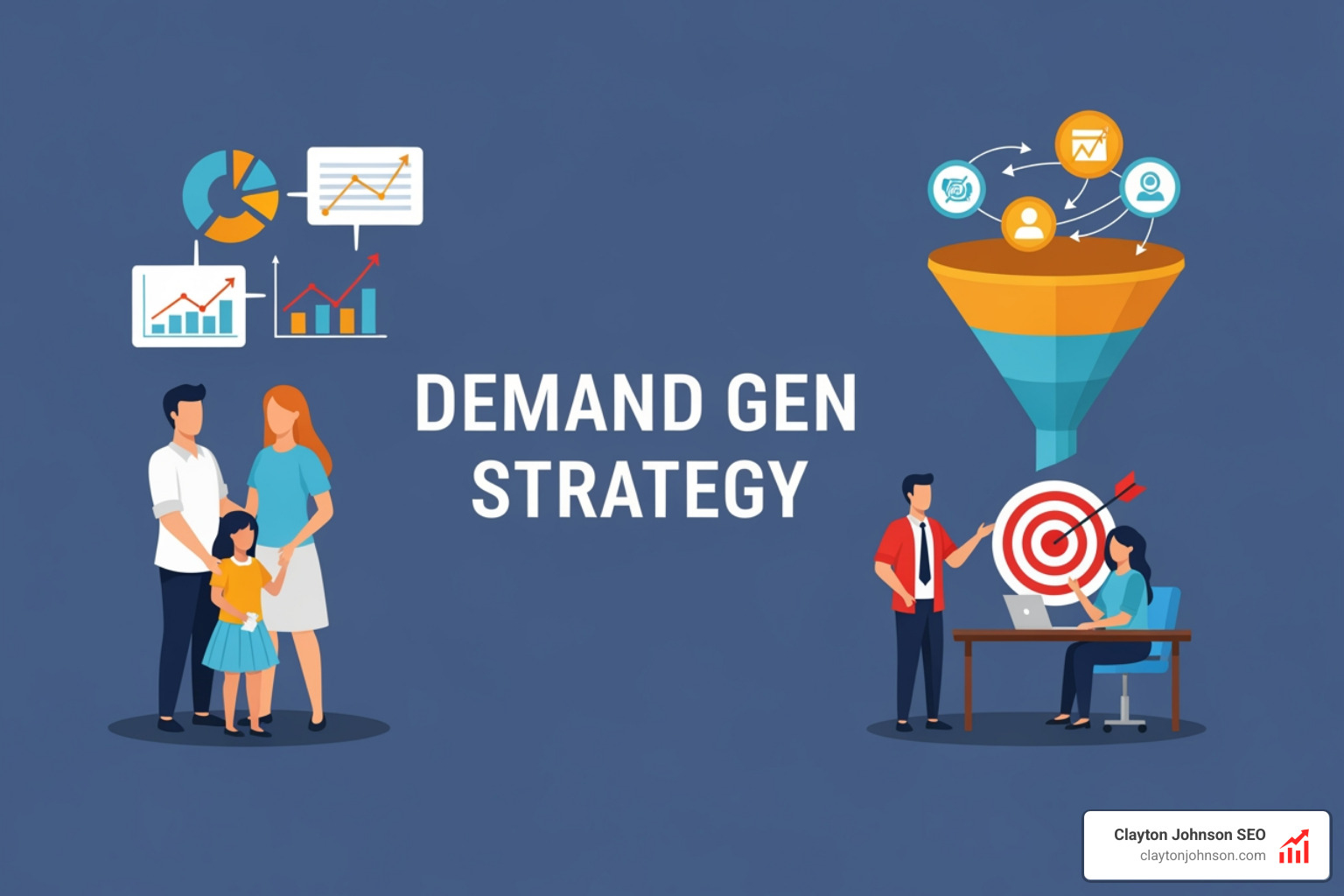
A demand generation engine book is not just another marketing read. It is a blueprint for building a system that turns attention into pipeline and pipeline into revenue.
Most B2B marketing teams are not struggling because they lack effort. They are struggling because they lack structure. Channels shift. Buying committees grow more complex — currently averaging 6.8 people per purchase decision. And tools multiply without producing clarity.
As one demand gen framework puts it: “Everything we know about demand generation is changing — at least, that’s how it feels some days.” The fundamentals, however, stay constant. The right book helps you anchor to those fundamentals while adapting to what’s new.
I’m Clayton Johnson, an SEO strategist and growth operator who has built scalable demand systems across B2B SaaS and founder-led businesses — and every demand generation engine book I recommend in this guide is one I have evaluated through the lens of structured, compounding growth. Let’s break down what the best literature gets right and how to apply it to your pipeline.
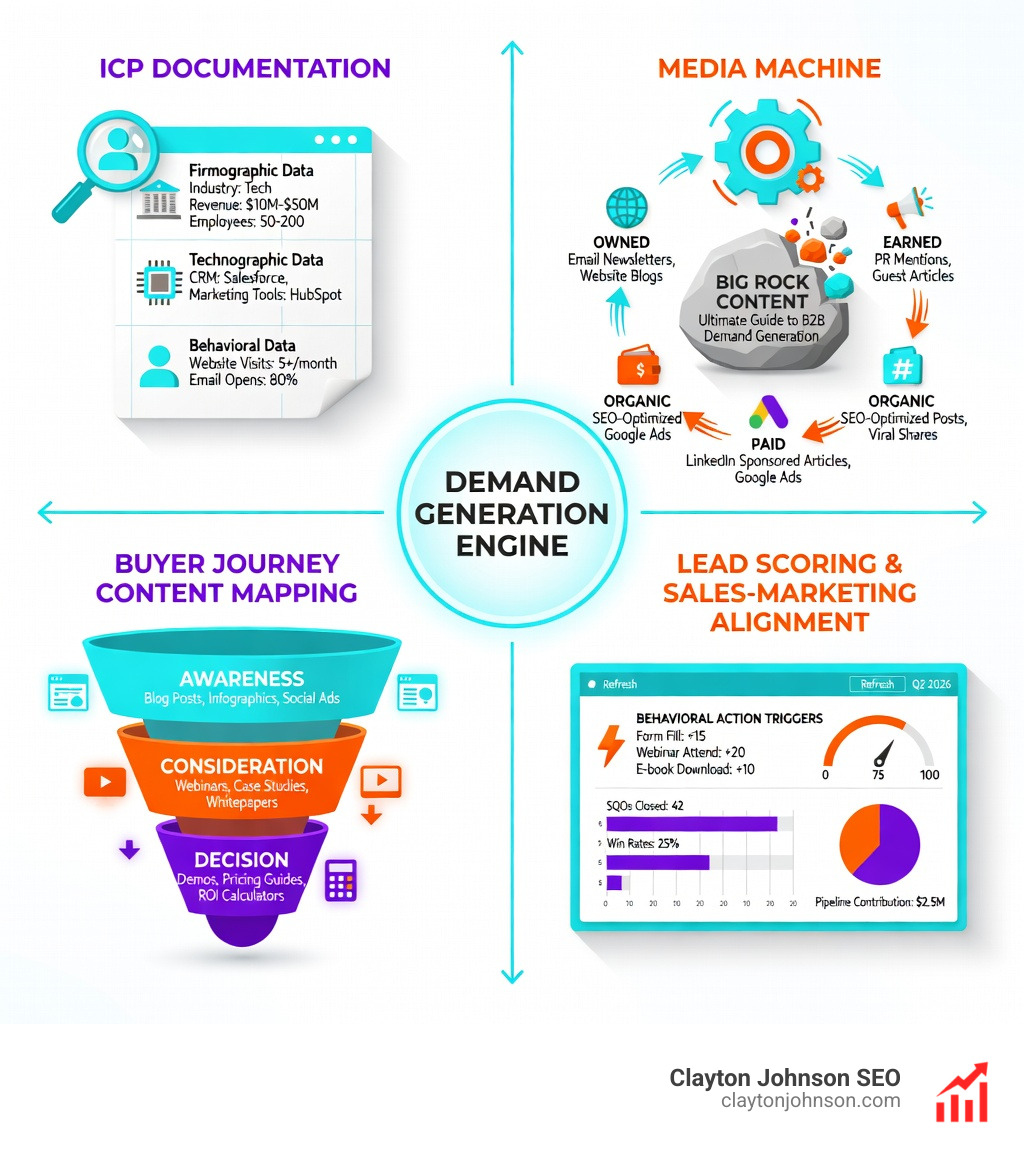
The Core Pillars of a Modern Demand Generation Engine Book
Building a demand engine is like building a skyscraper; if the foundation is off by an inch, the top will be off by a mile. The most effective literature on this topic focuses on the “unsexy” fundamentals that allow for massive scale. We often see companies jumping straight into TikTok ads or AI bots before they even know who they are talking to.
A true demand generation engine book will emphasize a structured growth framework. This isn’t just a collection of tactics; it’s an operating system. According to Insight Partners, the best models find a precise balance between demand creation and demand capture.
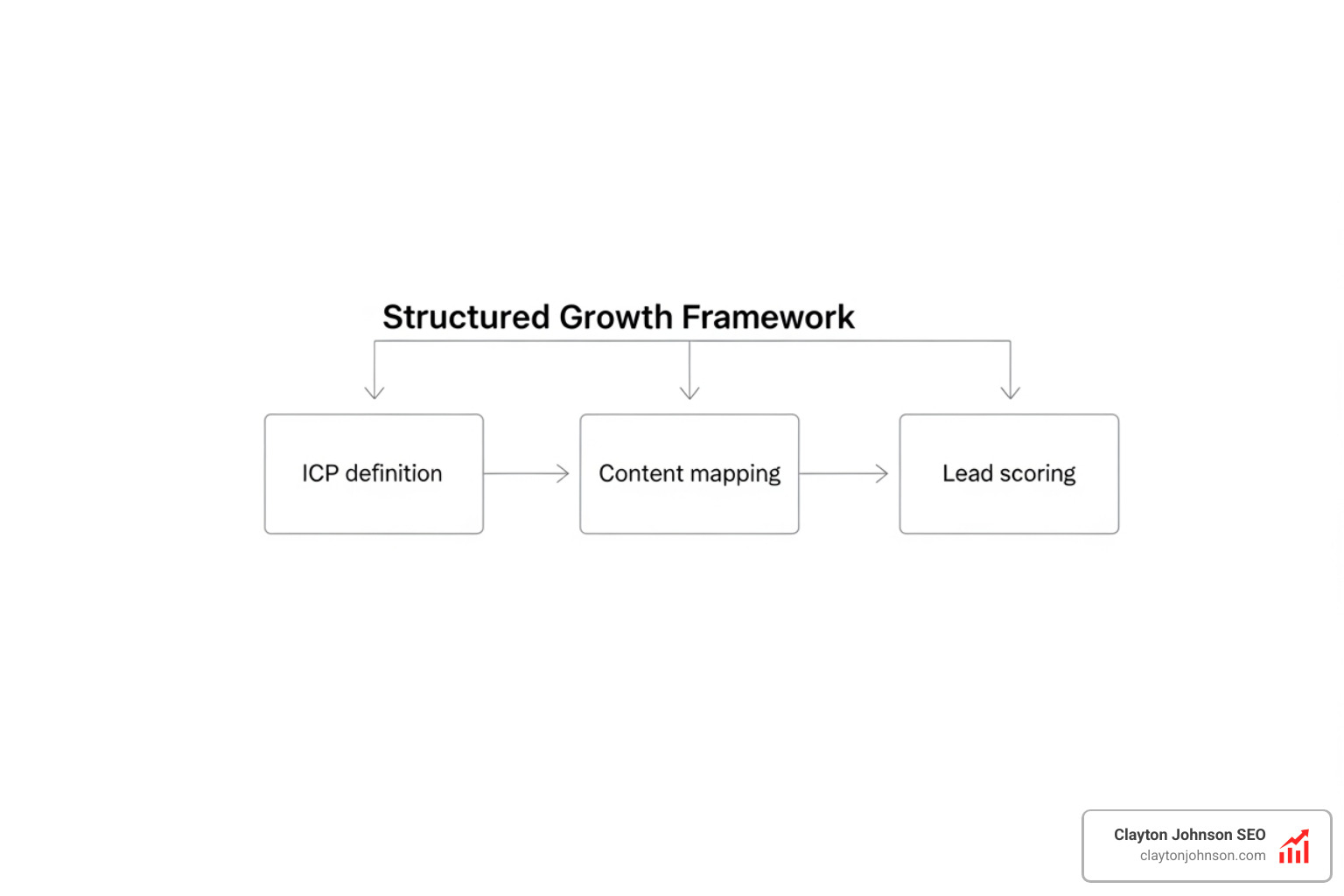
Documenting Your ICP for Maximum Impact
If you try to speak to everyone, you end up resonating with no one. Organizations that develop a strong Ideal Customer Profile (ICP) average a 68% higher account win rate.
Your ICP shouldn’t just be a “vibe.” It needs to be documented using:
- Firmographics: Industry, company size, and revenue.
- Technographics: What tools are they already using? (e.g., Are they a Salesforce shop or HubSpot?)
- Behavioral Data: What actions are they taking that signal a need for your solution?
Modern B2B buying is rarely a solo sport. With 44% of companies utilizing formal buying committees, your ICP must account for the 6.8 people involved in the average purchase. You aren’t just selling to “Marketing Mary”; you’re selling to “IT Ian,” “Finance Frank,” and “Legal Linda” too.
Mapping Content to the Buyer’s Journey in a Demand Generation Engine Book
Most content is “random acts of marketing.” A structured engine maps content to specific information needs. Buyers typically consume between 3 and 5 pieces of content before ever speaking to a salesperson.
Effective mapping identifies:
- Purchase Triggers: What external event (like a budget increase or a new regulation) makes them start looking?
- Problem-Led POV: 88% of buyers want you to focus less on your product and more on the value you provide.
- Mid-Funnel Education: This is where most engines fail. You need content that helps the champion build a business case for the CFO.
Balancing Demand Creation vs. Demand Capture
This is the “Golden Ratio” of demand generation.
- Demand Creation: Building trust with out-of-market buyers through education and social engagement. You are planting seeds.
- Demand Capture: Converting in-market buyers via search engines and third-party reviews. You are harvesting.
If you only focus on capture, you’ll run out of people to sell to. If you only focus on creation, you’ll have a great brand but zero revenue.
Top Literature for Building a Scalable Revenue Machine
When we look for a demand generation engine book, we look for authors who have actually sat in the driver’s seat.
- “The Revenue Engine” by Kara Smith Brown: Useful for learning how to get sales and marketing running like one system. The big value is the operational mindset: process, accountability, and revenue alignment, not just clever campaigns.
- “The Big Book of B2B Demand Generation Success”: A tactical grab bag you can apply quickly. It goes from offer selection to lead nurture ROI, which makes it handy when you need ideas that turn into pipeline without a strategy offsite.
- “Demand Generation 101”: A solid on-ramp that helps teams stop mixing up activity with impact. It frames inbound vs. outbound in a simple way, so you can choose channels intentionally instead of defaulting to whatever’s trendy.
- Cognism’s demand generation framework: Not a physical book, but a practical guide for moving beyond lead capture. The core takeaway: build trust and educate buyers earlier, then convert demand when they’re actually in-market.
- “The Demand Generation Engine” Positioned as a “system reset” for teams stuck with a messy CRM and disconnected tools. The promise is a unified, AI-assisted, multi-layer engine that automates demand generation and helps produce more qualified demand with less manual busywork.
Mastering the Media Machine and Big Rock Content
In a modern engine, not all content is equal. You need “Big Rock” content—in-depth, high-value assets like a proprietary research report or a comprehensive playbook.
The “Media Machine” then takes that Big Rock and breaks it into:
- 10 LinkedIn posts
- 3 Video snippets
- 2 Blog articles
- 1 Webinar
This creates a “value loop” where you consistently show up where your audience spends time, without having to reinvent the wheel every Tuesday morning.
Navigating Complex Buying Committees with a Demand Generation Engine Book
The buying journey is no longer linear. It’s a messy web of stakeholders. High-growth companies are moving toward rep-free paths and product-led experiences because buyers want to “see the goods” before they talk to a human.
To navigate this, your engine needs:
- ROI Calculators: To help Finance justify the cost.
- Security Checklists: To help IT say “yes.”
- Guided Trials: To let the end-user feel the value.
Setting Pipeline Targets and SLAs
Marketing and Sales should not be two separate kingdoms. They need to be in a “lockstep” operating model. This means setting clear Service Level Agreements (SLAs). For example, if Marketing delivers a high-intent lead, Sales must follow up within 5 minutes.
We recommend a Weekly Growth Council where both teams look at the same dashboard. If the pipeline is thin, you don’t point fingers; you adjust the engine together.
Measuring Success: KPIs and Auditing Your Engine
If you can’t measure it, you can’t scale it. But most marketers are measuring the wrong things. They get excited about “likes” and “clicks” while the CEO is asking about “revenue” and “CAC.”
| Metric | Traditional View | Demand Engine View |
|---|---|---|
| MQL | A person who downloaded a PDF | Irrelevant on its own |
| SQL | A lead Sales said they’d talk to | A lead that meets ICP and intent |
| SQO | Not tracked | The primary KPI: Sales Qualified Opportunity |
| Win Rate | “We win some, we lose some” | 68% higher with a strong ICP |
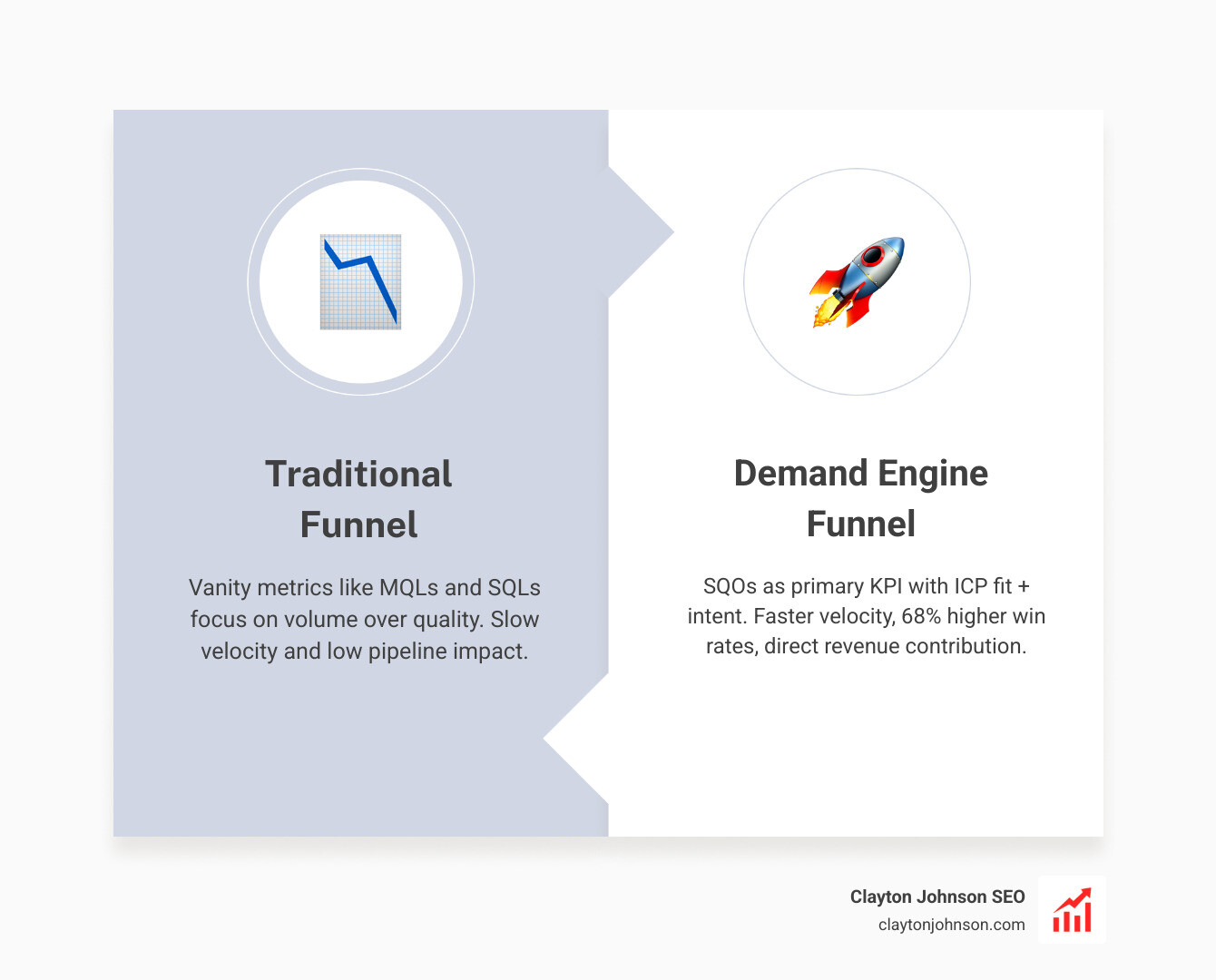
Improving Lead Scoring Accuracy
Stop scoring leads based on whether they opened an email. That’s “noise.” Instead, use action triggers.
- Did they visit the pricing page three times in two days?
- Did they look at a competitor comparison guide?
- Did three different people from the same company visit your site?
These are intent signals. When you combine behavioral data with firmographic fit, your lead scoring becomes a predictive tool rather than a guessing game.
Avoiding Common Demand Gen Pitfalls
- MQL Obsession: Focusing on volume over value. You don’t want 1,000 “leads” from students; you want 10 opportunities from VPs.
- Channel Bloat: Trying to be on every platform at once. It’s better to own one channel (like SEO or LinkedIn) than to be mediocre on five.
- Gated Content: 2025 buyers hate forms. Ungate your best stuff to build trust, then capture intent when they are actually ready.
The Role of AI and Automation in Modern Demand Strategy
AI is the turbocharger for your demand engine. It’s not about replacing humans; it’s about giving them “superpowers.”
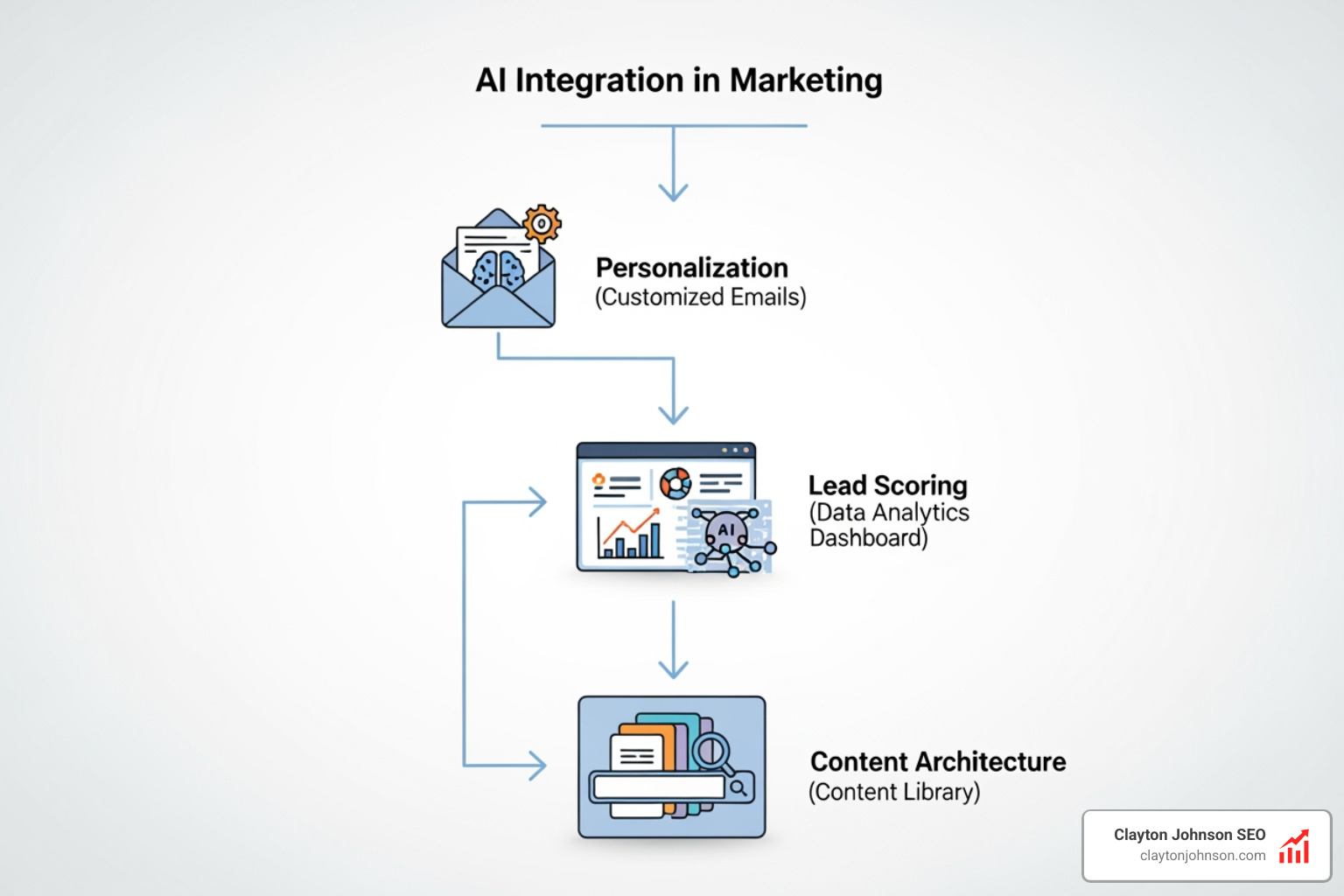
According to HBR research, machine learning can significantly improve lead generation by identifying patterns that humans miss. In a modern engine, AI handles the “GTM Bloat” so your team can focus on “GTM Velocity.”
AI-Augmented Marketing Workflows
We use AI to personalize content at scale. Imagine sending an email that doesn’t just say “Hi [First Name],” but actually references a specific pain point relevant to their industry and recent company news. AI can also optimize your media mix, reallocating budget from low-performing ads to high-performing ones in real-time.
SEO and Paid Search Synergy
In an AI-shifting SERP (Search Engine Results Page), traditional SEO isn’t enough. You need a taxonomy-driven SEO system. This means building an “authority-building ecosystem” where your content architecture signals to search engines (and AI LLMs) that you are the definitive expert in your niche.
When you combine this with paid search, you create a “surround sound” effect. If a buyer searches for a problem, they see your ad. When they click around, they find your authoritative organic content. This synergy is what builds a relentless demand engine.
Frequently Asked Questions about Demand Generation Literature
What is the difference between demand creation and demand capture?
Demand creation is about educating people who don’t know they have a problem yet (or don’t know your solution exists). Demand capture is about being there when someone is actively looking to buy. Think of creation as the “commercial” and capture as the “storefront.”
How do you align sales and marketing teams for revenue growth?
Alignment starts with shared goals. Both teams should be compensated or measured based on Pipeline Contribution and Revenue, not just leads or calls. Regular meetings (like a Growth Council) and shared data dashboards are essential.
What are the most important KPIs for a demand generation engine?
The “North Star” metrics are Sales Qualified Opportunities (SQOs), Pipeline Velocity, and Customer Acquisition Cost (CAC). While SEO rankings and CTR are important for health checks, they aren’t the end goal.
Conclusion
Building a demand engine isn’t a weekend project. It requires a shift from “random acts of marketing” to a structured growth architecture.
The journey from clarity to structure leads to leverage. And leverage is what creates compounding growth. Whether you are reading a demand generation engine book to fix a leaky funnel or to build a new revenue stream from scratch, the goal is the same: a system that works even when you aren’t.
At Demandflow.ai by Clayton Johnson, we help founders and marketing leaders move past the “tactic of the month” and into a world of structured growth. If you’re ready to stop guessing and start building, it’s time to build your demand engine with a system designed for the modern B2B landscape.
Your marketing shouldn’t be a cost center; it should be a relentless engine for growth. Now, go pick up one of these books and start building.