Brand Building Launch Framework: From Ghost Town to Sold Out

Why Most Product Launches Fail (And How an Audience Building Launch Playbook Fixes That)
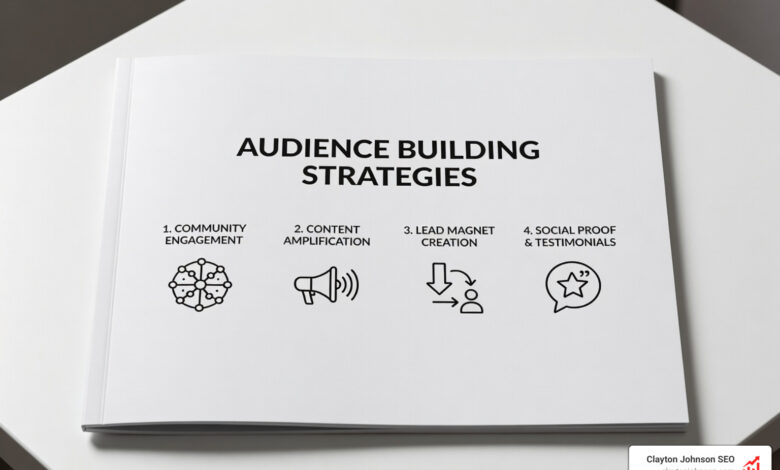
An audience building launch playbook is a step-by-step system for growing a targeted, engaged group of potential buyers before your product goes live — so launch day becomes a revenue event, not a guessing game.
Here’s what a proven audience building launch playbook covers:
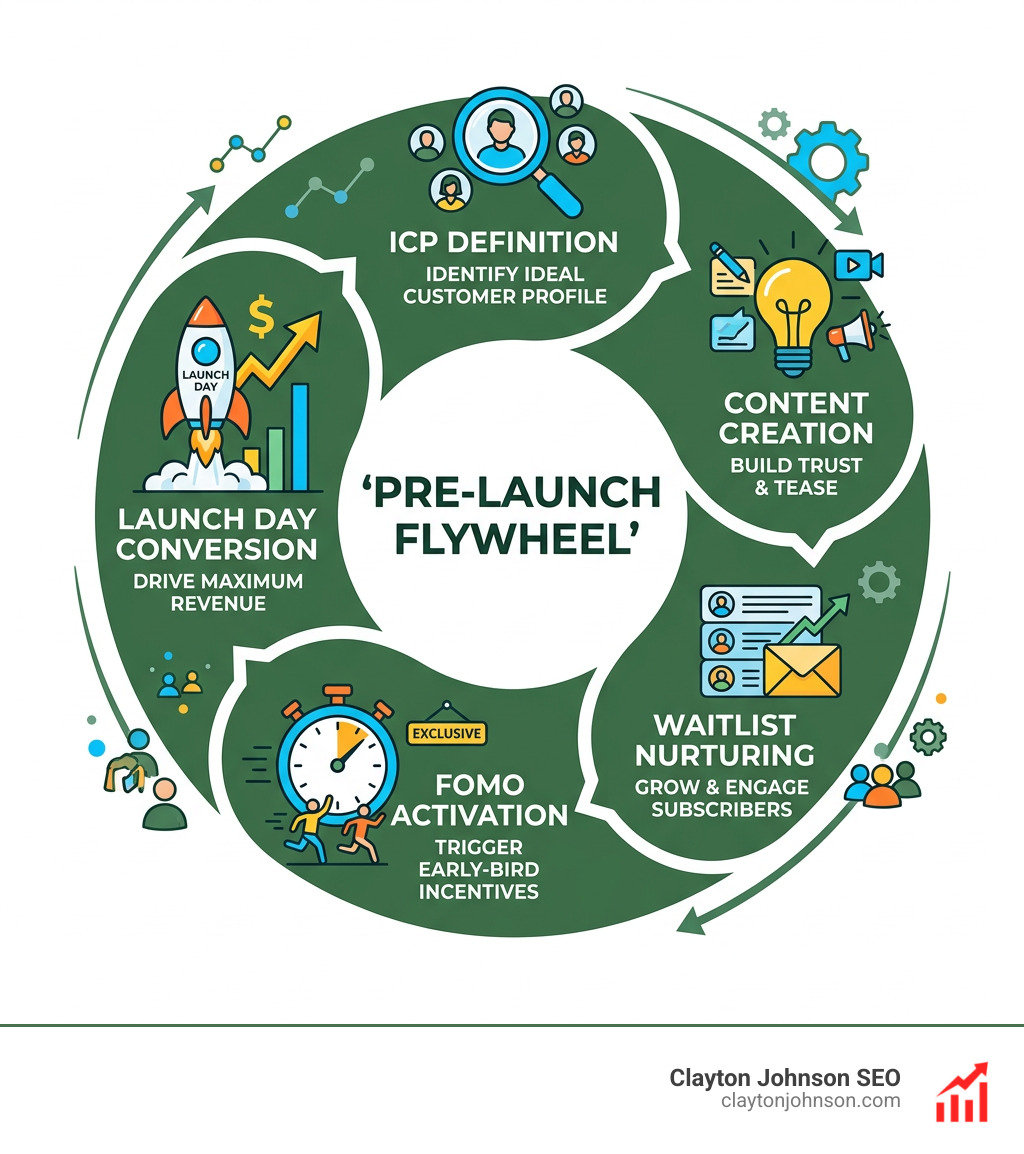
- Define your Ideal Customer Profile (ICP) — go beyond job titles to understand real pain points and buying triggers
- Build a pre-launch landing page — capture emails with a compelling lead magnet and clear call to action
- Create content that builds trust — teasers, behind-the-scenes posts, and visual storytelling
- Grow and nurture your waitlist — segment subscribers and send personalized email sequences
- Activate FOMO and early-bird incentives — convert followers into launch-day buyers
- Coordinate your team — align marketing, product, and PR on a shared launch timeline
- Track the right metrics — monitor activation, retention, and conversion (not just vanity stats)
- Pivot fast if needed — use early data signals to adjust before momentum dies
There’s a reason the phrase “if you build it, they will come” only works in the movies. Research consistently shows that lack of market need is cited in 42% of startup failures — and the root cause is almost always the same: teams treat go-to-market strategy as an afterthought instead of building it in from day one.
Launching without an audience is like throwing a party without sending invitations. Nobody shows up.
The good news? Building that audience is a learnable, repeatable process. Waitlist subscribers convert 5 to 10 times higher than cold traffic on launch day. A single CTA change — from “Subscribe to learn more” to “Get early access & lock in your lifetime deal” — can increase conversions by 42%. Small, deliberate moves compound into serious launch momentum.
I’m Clayton Johnson, an SEO strategist and demand generation expert who has helped companies build scalable audience systems that drive measurable revenue — and an audience building launch playbook is one of the most powerful frameworks I apply to get results before a single dollar is spent on ads. Let’s break down exactly how to build yours.
The Audience Building Launch Playbook: Engineering Pre-Launch Traction
The “ghost town” launch is a nightmare we’ve all seen: a founder posts a link on social media, waits for the flood of users, and is met with deafening silence. To avoid this, we must shift our mindset from “releasing” a product to “launching” a movement. An effective audience building launch playbook acts as the blueprint for this transition.
Success starts with de-risking. We don’t guess if people want the product; we validate it through early conversations and data. This requires a strategic marketing roadmap that prioritizes the audience long before the code is finished or the inventory is stocked.
Defining Your ICP for an Audience Building Launch Playbook
Most teams fail because they cast too wide a net. They target “small business owners” or “marketing managers.” In a world of infinite noise, broad targeting is a budget killer. According to Product Marketing Alliance research, a strong Ideal Customer Profile (ICP) must go beyond basic demographics.
We need to identify “Category Entry Points” (CEPs) — the specific moments when a customer realizes they have a problem. For example, instead of targeting “Fintech companies,” we might target “AI-first fintechs undergoing their first SOC 2 audit.” This level of specificity allows us to speak directly to their “Jobs-to-be-Done.”
When defining your ICP, ask:
- What specific situational factors (tools used, company stage, recent hires) trigger the need for our solution?
- What is the buying committee structure? In B2B, an average of 6.8 stakeholders are involved in a single purchase. We must map the needs of the economic buyer, the technical evaluator, and the daily end-user.
By narrowing our focus, we increase resonance. A travel brand that repositioned from “young adults” to “urban couples with children craving intimacy” saw an 11% revenue lift even in a shrinking market. Specificity is your greatest leverage. For more on how to reach these specific groups, check out our guide on organic social media campaigns.
Visual Storytelling and Content Strategies for Your Audience Building Launch Playbook
In the current digital landscape, text-heavy marketing is losing its edge. HubSpot product launch research shows that mapping visual strategy to specific customer journey stages can increase trial conversions by up to 240%.
We recommend a “Visual-First” approach. This means transforming abstract features into customer transformation stories. Instead of listing “faster load times,” show a side-by-side video of the old way vs. the new way. This is particularly effective when “building in public.” Sharing the raw process — the bugs, the design iterations, and the “aha” moments — builds a level of trust that polished corporate speak can never reach.
Visual vs. Text Engagement Comparison:
| Asset Type | Engagement Rate | Conversion Impact |
|---|---|---|
| Text-only Feature List | Low | Minimal |
| Static Screenshots | Moderate | 10-15% Lift |
| High-Quality Video Demo | High | 20-30% Lift |
| Interactive “Visual Hook” | Very High | 40%+ Lift |
To scale this, we create visual milestones. Every “Feature Drop” should be accompanied by a 15-30 second vertical video (TikTok or Reels style). This format currently offers the highest organic reach. For a deeper dive into crafting these assets, see our social media content strategy guide.
Nurturing the Waitlist: From Lead to Launch-Day Buyer
A waitlist is not a static list of names; it is a living community. Salesforce B2B stakeholder research reminds us that different decision-makers need different proof points. We segment our email list based on behavior — what did they click? What lead magnet did they download?
High-Converting Lead Magnets to Grow Your List:
- The “Checklist”: A simple, actionable PDF that solves a micro-problem.
- The “Template”: An internal tool or SOP you actually use.
- The “Early Access”: The promise of being first, often combined with a lifetime discount.
- The “Mini-Course”: A series of 3-5 emails teaching a specific skill related to your product.
We use email marketing to maintain a “slow burn” of excitement. Personalized emails see 29% higher open rates. We also employ FOMO (Fear Of Missing Out) tactics, such as a countdown timer for early-bird incentives. Treating your pre-launch subscribers like VIPs — giving them exclusive “Maker” updates or invite-only beta access — ensures they are ready to buy the moment you flip the switch. Learn more about winning social media campaigns to see how these tactics integrate across channels.
Executing the Launch and Post-Launch Pivot Strategies
Launch day is not a “set it and forget it” event. It is a high-intensity execution phase that requires a synchronized “command center” approach. We coordinate marketing, product, and PR to hit all channels simultaneously, creating a compounding effect.
A successful launch day follows a strict hour-by-hour playbook. For example, launching on Product Hunt at 12:01 AM PST maximizes your 24-hour window. We then spend the day replying to every single comment and sharing real-time milestones on Twitter/X and LinkedIn. Expert insights from ProductivePMM emphasize that the first hour often sets the trajectory for the entire day. If you need help building the technical foundation for this visibility, our SEO services can help you capture the resulting search demand.
Coordinating Cross-Functional Teams for Synchronized Impact
Alignment is the foundation of a launch that scales. We utilize Jason Oakley’s launch framework to ensure Sales, Marketing, and Product are speaking the same language.
The 6-Week Coordination Timeline:
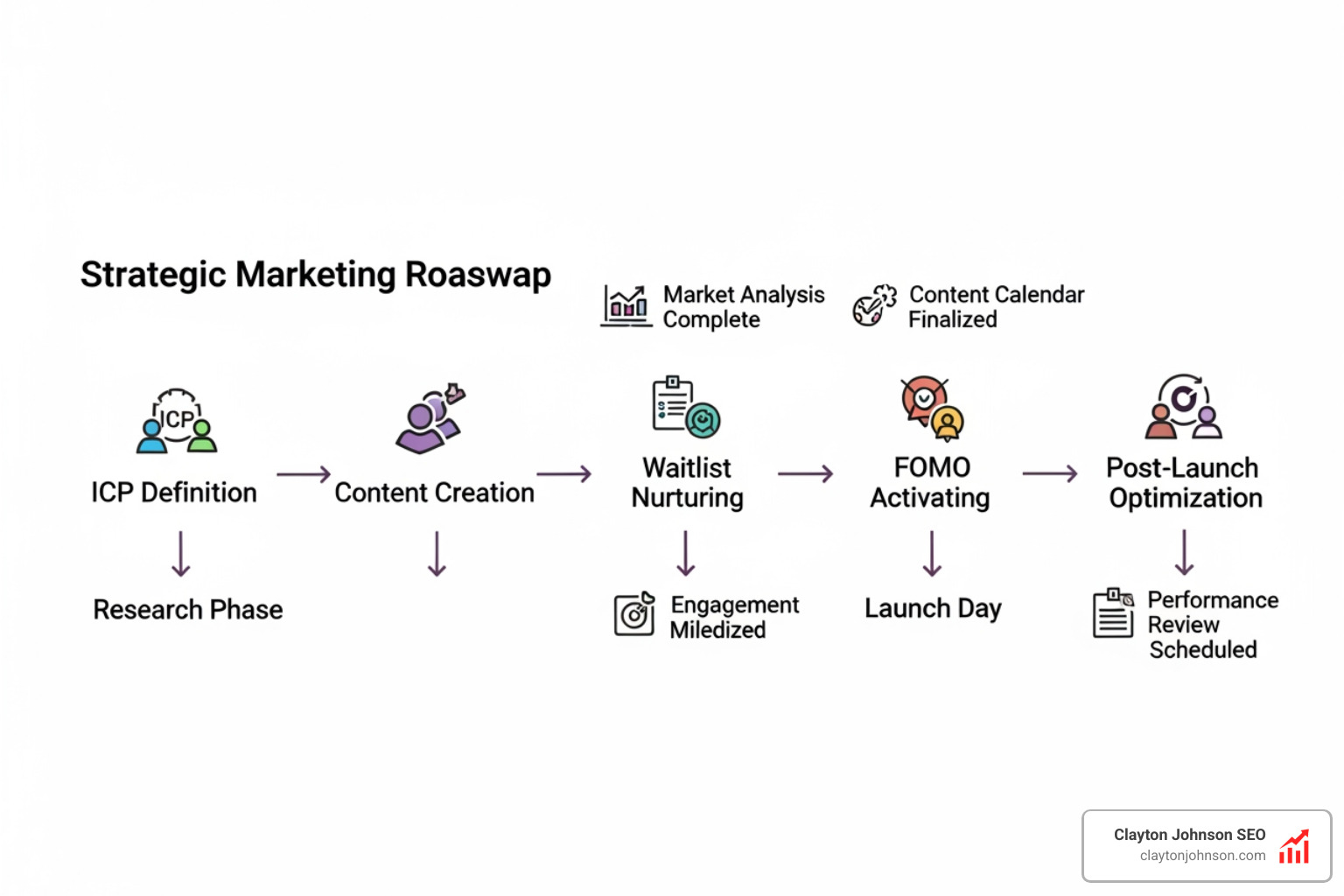
- Weeks 6-4: Finalize ICP and messaging hypotheses. Start “building in public” to seed the market.
- Weeks 4-2: Beta testing with 10-50 “power users.” Gather testimonials and “Wall of Love” assets.
- Week 1: Launch-day asset finalization (demo videos, GIFs, email blasts).
- Launch Day: Hour-by-hour execution and community engagement.
Internal communication is key. We set shared targets — not just “number of signups,” but “activation rate” and “time to value.” If the product team is shipping a new feature but marketing is still talking about the old one, the launch will stumble. Avoid setting the wrong benchmarks by reviewing our guide on social media growth goals.
Data-Driven Optimization and Post-Launch Pivot Frameworks
Once the initial launch dust settles, the real work begins. We follow the LinkedIn B2B Institute 95-5 Rule, which states that 95% of your buyers are not in the market right now. This means our post-launch strategy must focus on building “memory structures” so we are the obvious choice when they are ready to buy.
We track a “North Star Metric” — the one number that proves the product is delivering value. If we see high signups but low retention, we don’t need more marketing; we need to fix the onboarding.
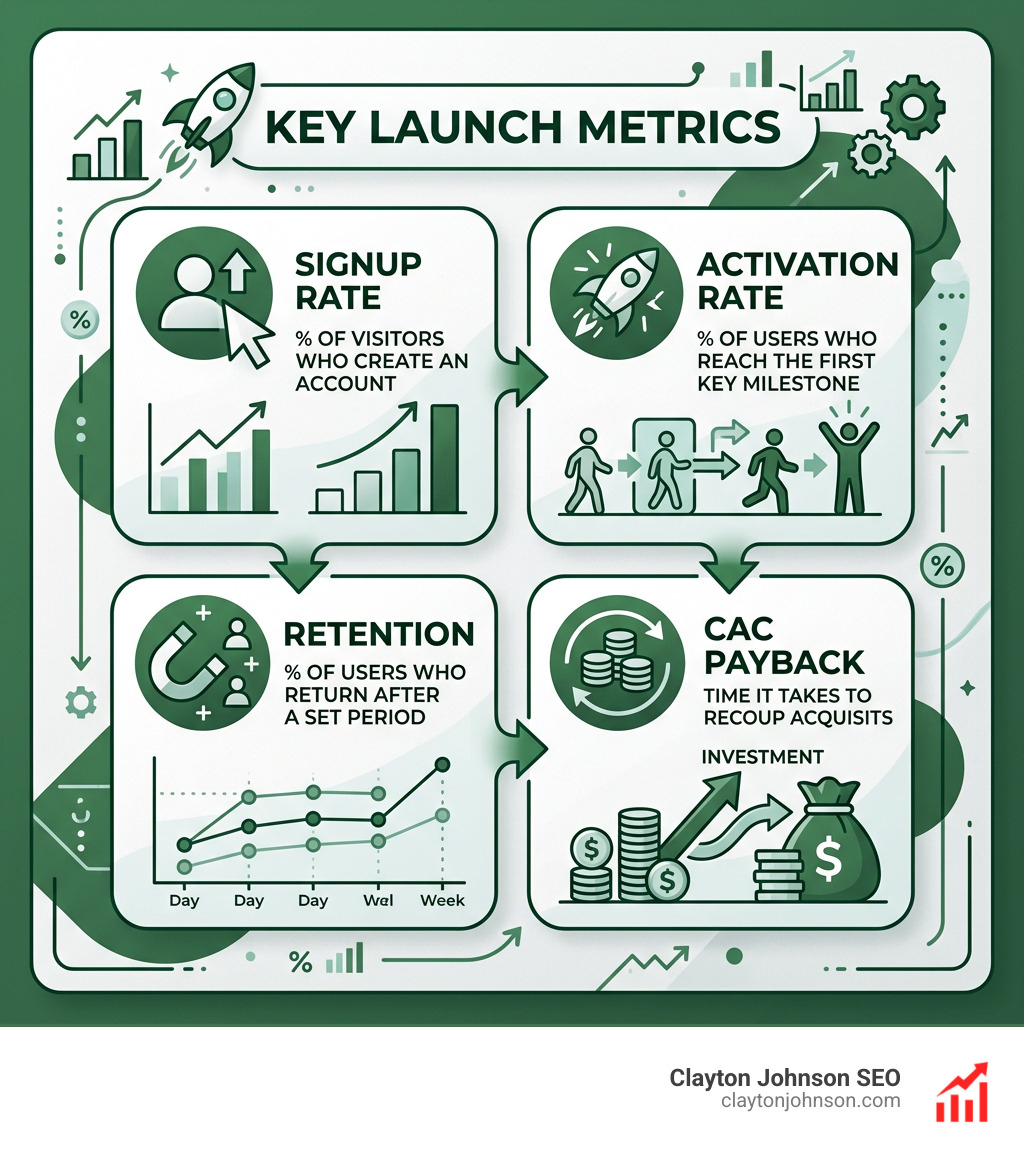
Launch Day Triggers for a Pivot:
- Signup Rate < 10%: Your messaging isn’t resonating, or you’re driving the wrong traffic.
- Activation Rate < 30%: Your onboarding is confusing or broken.
- Retention < 20% (Day 7): The product isn’t solving the core problem effectively.
- CAC > 2x Projection: Your chosen channels are too expensive for your current pricing model.
At Clayton Johnson SEO, we believe in building durable systems rather than chasing fleeting viral moments. A successful launch is a learning system. We use the data from week one to refine our social marketing success frameworks, ensuring that the momentum generated on launch day compounds into long-term growth.
By following this audience building launch playbook, you move from shouting into the void to leading a crowd. You turn a “ghost town” into a “sold out” event by respecting the psychology of your audience and the structure of a proven system. Clarity leads to structure, structure leads to leverage, and leverage leads to the compounding growth every founder dreams of.