Automating Your Funnel with the DemandFlow AI Engine

Why Your Funnel Needs a Demand Generation Engine
Demand Generation Engine & Demandflow.ai is the combination of a structured, AI-powered marketing system and an all-in-one platform built to connect lead capture, automation, and lifecycle workflows into a single, scalable growth operation.
Here is a quick overview of what you need to know:
- What it is: A unified platform that replaces fragmented marketing tools with one connected demand generation system
- Core capabilities: Voice Receptionist AI, Conversation AI, Content AI, automated follow-up, pipeline management, and performance tracking
- Key benefit: Connects acquisition, engagement, and execution so leads do not fall through the cracks
- Who it is for: Founders and marketing leaders frustrated with disconnected tools and inconsistent pipeline results
- Bottom line: DemandFlow.ai consolidates demand capture, lead management, and reporting into a single operating layer — reducing manual work and improving conversion outcomes
Most marketing teams are not losing leads because of bad strategy. They are losing leads because their tools do not talk to each other. One platform for email, another for CRM, a third for content — and nobody can see the full picture. The result is manual work, missed follow-ups, and a pipeline that is impossible to predict.
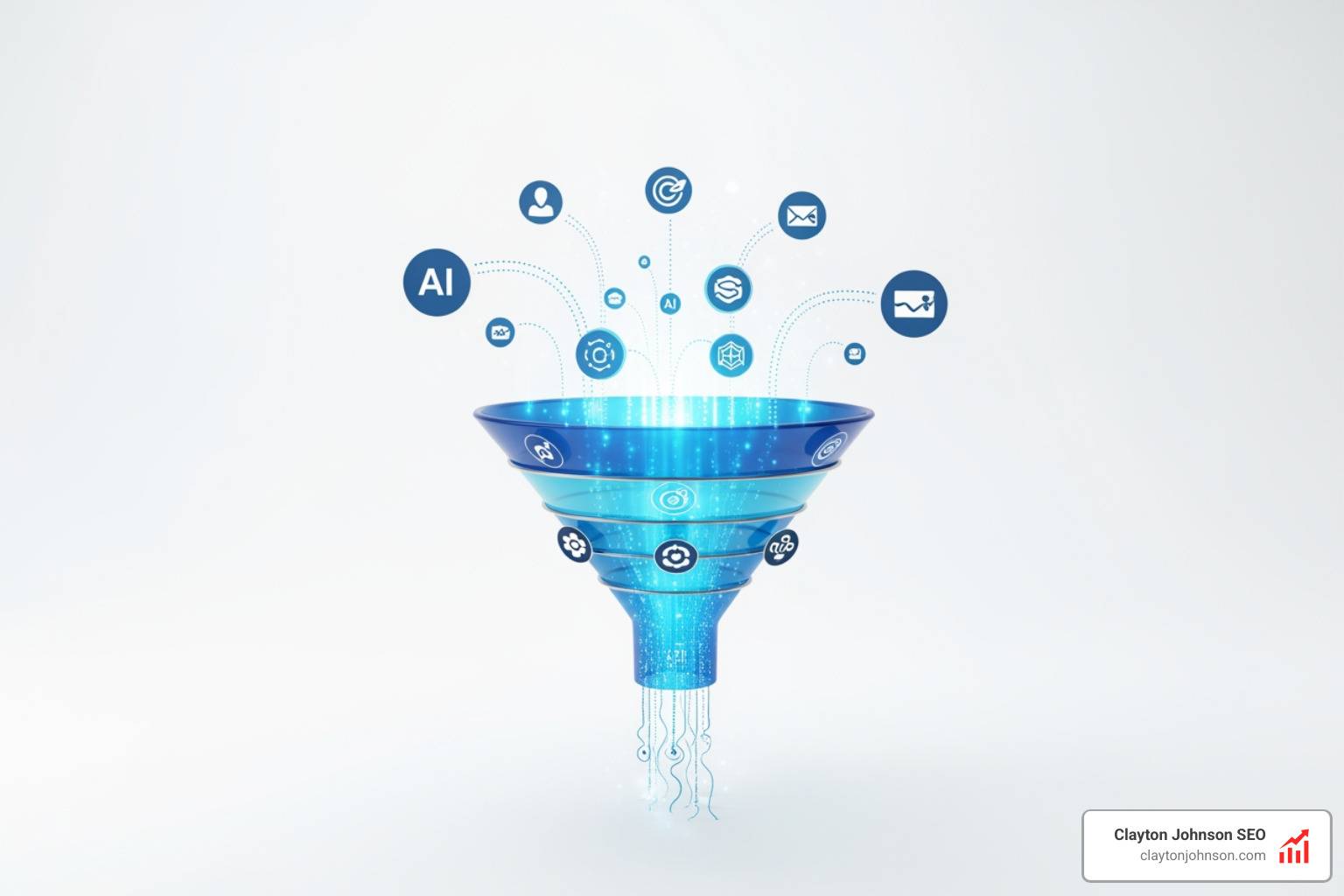
This is the problem a modern demand generation engine is designed to solve. Instead of patching together point solutions, a unified engine connects every stage of the customer journey — from first touch to closed deal — inside one operating system.
DemandFlow.ai, built by DemandFlow, Inc., is one of the more notable platforms in this space. The company has reported 97% customer satisfaction in demand generation solutions and has built a platform specifically designed to address the fragmented marketing and sales systems that slow growth teams down.
I am Clayton Johnson — an SEO strategist and growth operator who specializes in building scalable demand systems, AI-augmented marketing workflows, and structured growth architecture for founders and marketing leaders. My work on the Demand Generation Engine & Demandflow.ai framework comes from hands-on experience engineering traffic systems and lifecycle workflows that compound over time. In this review, I will walk you through exactly how DemandFlow.ai works and whether it delivers on its promise.
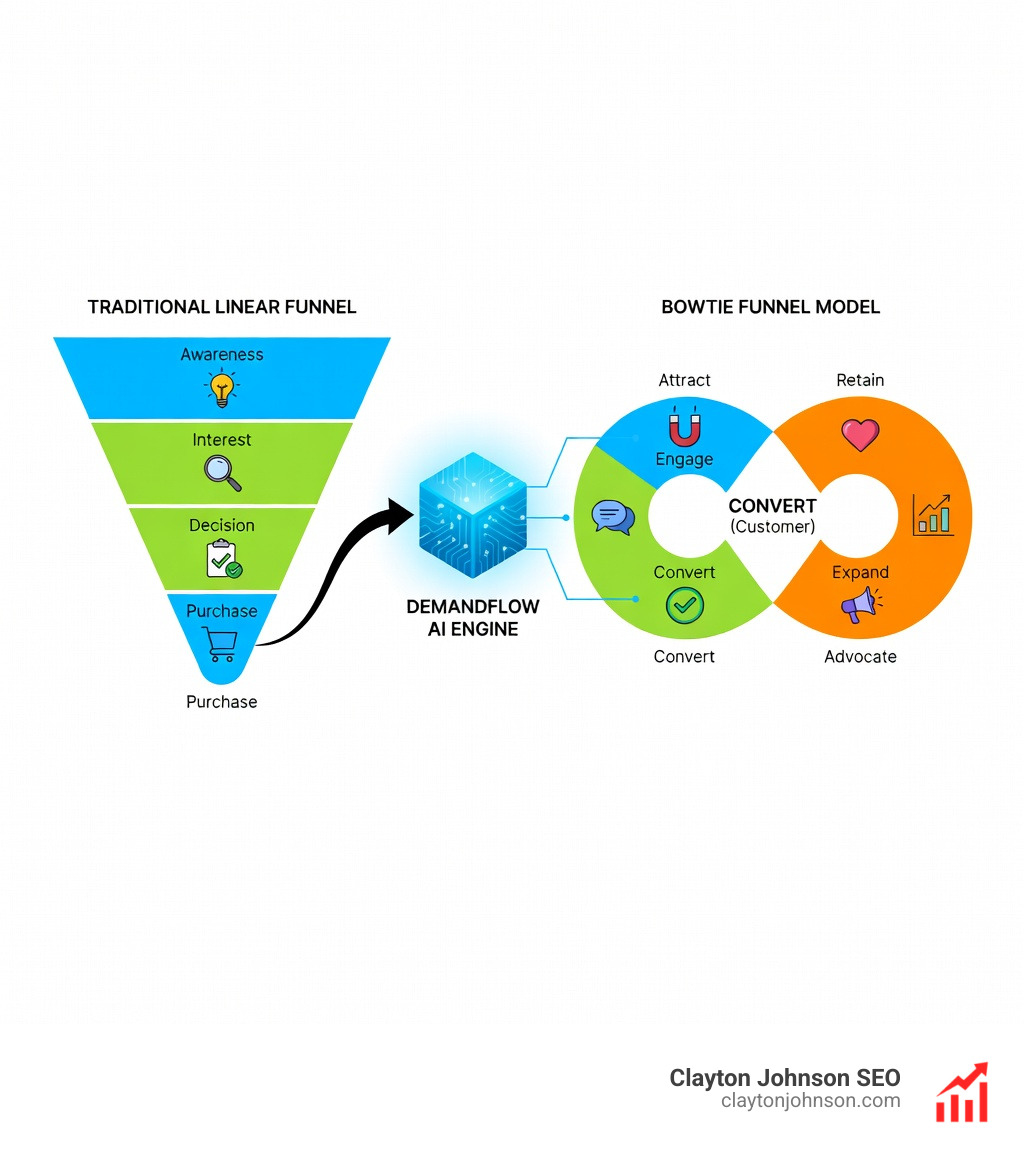
The Evolution of the Modern Demand Generation Engine
The way businesses find and keep customers has changed. In the past, demand generation was often just a series of disconnected tactics–a random SEO blog post here, a cold email blast there. Today, we view it as a Demand Generation Engine, a continuous, automated system that lives within a unified platform.
DemandFlow, Inc. has positioned itself as a leader in this evolution by offering an all-in-one platform that connects lead capture, automation, and lifecycle workflows. By reaching its 100th client milestone, the company has demonstrated that businesses are hungry for a more integrated approach to growth operations.
Why a Modern Demand Generation Engine Crucial
The modern B2B buyer doesn’t follow a straight line. They research independently, engage across multiple touchpoints, and often involve large buying committees before ever speaking to a salesperson. If your demand generation is fragmented, you lose visibility into this non-linear journey.
Building a modern engine is essential because:
- Buyers Expect Seamlessness: If a prospect interacts with your content on social media but your email automation doesn’t know about it, the experience feels broken.
- Data-Driven Insights: Without a central engine, you cannot accurately track attribution or know which channels are actually driving revenue.
- Scalable Acquisition: Manual follow-up doesn’t scale. An automated engine ensures every lead is handled with the same level of precision, regardless of volume.
As noted by industry experts, demand generation must evolve beyond tactics to become a structured, data-driven infrastructure.
Transforming Tactics into Structured Growth Architecture
At DemandFlow, we believe that most companies don’t lack tactics; they lack structured growth architecture. You can have the best SEO keywords in the world, but if they aren’t part of a taxonomy-driven SEO system, they won’t build authority.
The DemandFlow – All-in-one Demand Generation platform is built on the thesis of Clarity -> Structure -> Leverage -> Compounding Growth. By using actionable strategic frameworks and competitive positioning models, we help businesses move away from “random acts of marketing” and toward a measurable growth model. This isn’t just content marketing–it’s building the infrastructure that allows your marketing to work while you sleep.
Unifying Sales and Marketing through AI-Powered Workflows
One of the biggest hurdles in any organization is the “gap” between marketing and sales. Marketing generates the lead, but sales doesn’t get the notification, or the lead isn’t nurtured properly. DemandFlow.ai solves this by creating a unified operating layer.
Through a strategic partnership with LeadConnector, DemandFlow has incorporated robust backend infrastructure that extends integration and automation functionality across its entire ecosystem. This means your lead capture, automated follow-up, and appointment workflows all live in the same place.
Key Features of Demandflow
What actually happens inside the engine? DemandFlow.ai integrates several specific AI capabilities to handle the heavy lifting of growth operations:
- Voice Receptionist AI: Automatically handles inbound and outbound calls, answers common inquiries, and schedules appointments.
- Conversation AI: Manages text-based interactions across multiple channels to keep prospects engaged 24/7.
- Content AI: Assists in creating marketing copy, landing page content, and structured outlines that align with your brand’s voice.
- WordPress Duplicator: Allows for high-speed website foundation building by importing and duplicating pages with AI assistance.
- Automated Follow-up: Ensures that no lead is left behind by triggering personalized sequences based on user behavior.
Overcoming Fragmented Marketing Systems
Fragmented systems are the “silent killer” of ROI. When your data is siloed, your execution becomes inconsistent. DemandFlow.ai addresses this by consolidating demand capture, lead management, automation, and reporting into a single operating layer.
By utilizing a centralized knowledge base, the AI components maintain contextual relevance. This means the Voice Receptionist AI knows what the Content AI wrote, and the Conversation AI knows which whitepaper the prospect just downloaded. This level of operational follow-through is what separates a high-performing growth engine from a standard marketing stack.
Strategic Benefits of AI-Augmented Growth Operations
Implementing an AI-powered demand generation engine isn’t just about saving time; it’s about increasing the effectiveness of every dollar spent. The data shows that personalization—when done at scale through AI—drives massive results.
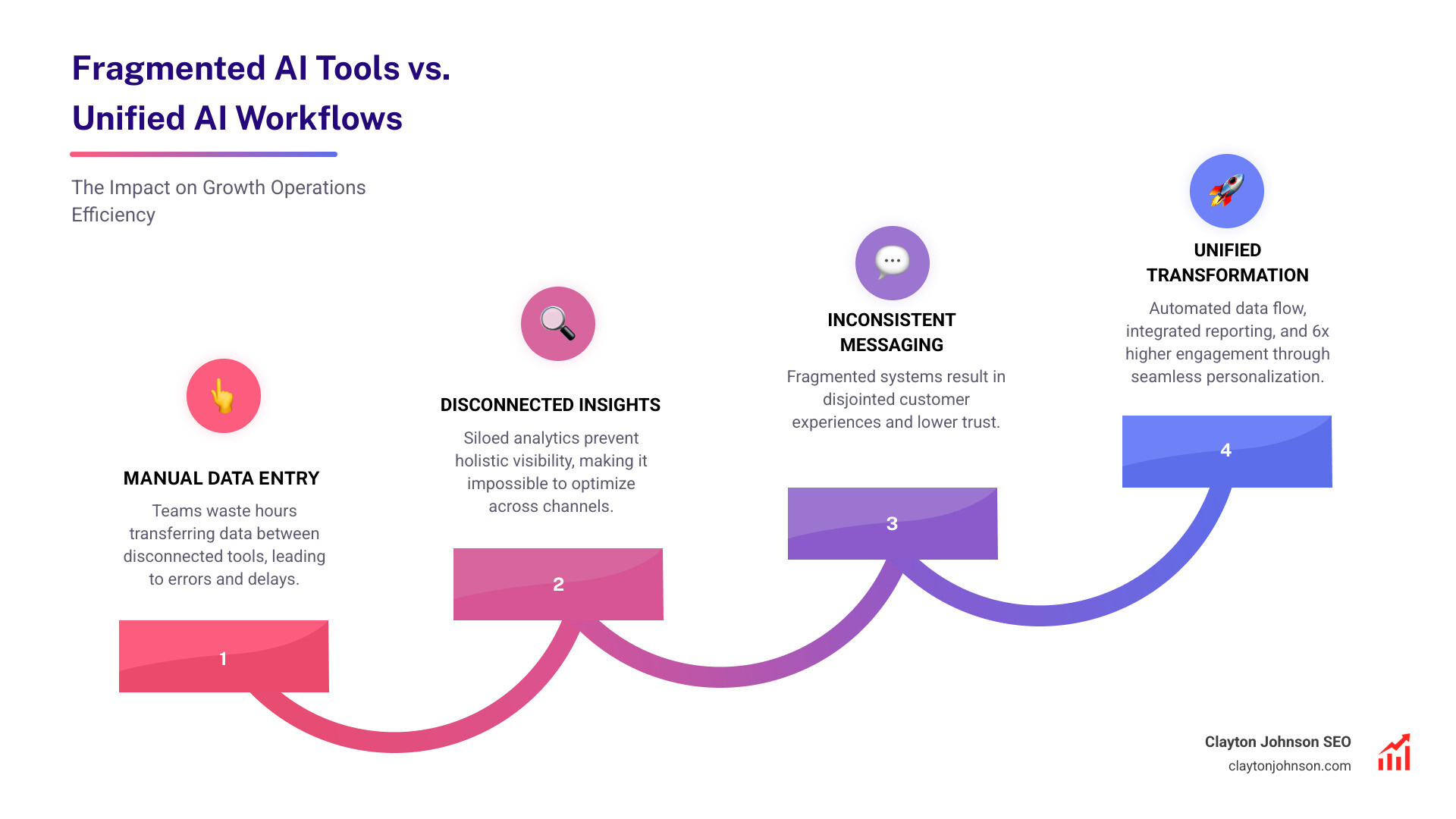
Research indicates that personalized content can increase engagement rates by up to 6 times and drive up to 20% higher conversion rates. By moving from isolated tools to integrated workflows, businesses can achieve these numbers without increasing their headcount.
Enhancing SEO and Content Architecture
In our view, SEO is not just about ranking for a single keyword; it is about building an authority-building ecosystem. DemandFlow.ai facilitates this by aligning content production with search intent and contextual relevance.
Instead of just churning out blog posts, the platform helps you build a content architecture that maps to the buyer’s journey. This ensures that every piece of content serves a purpose—either attracting new visitors, engaging interested prospects, or converting high-intent buyers.
Driving Efficiency with GTM Velocity
Go-To-Market (GTM) Velocity is the speed at which you can turn a lead into revenue. Fragmented systems create “GTM Bloat,” where teams spend more time managing tools than building pipeline.
By using the DemandFlow, Inc. Launches Next-Gen Demand Generation platform, teams can:
- Automate Lead Enrichment: Instantly pull firmographic data to qualify leads.
- Use Predictive Analytics: Identify which accounts are most likely to convert.
- Maintain Human-in-the-Loop: Use AI for the repetitive tasks while keeping human strategy at the center of the operation.
Practical Steps to Implement a DemandFlow AI Engine
Building a Demand Generation Engine & demand flow doesn’t happen overnight. It requires a structured approach to ensure the technology is serving the strategy, not the other way around.
Mapping the Competitive Landscape
Before you turn on the automation, you need to know where you stand. We recommend starting with strategy workshops that include:
- Competitor Analysis: Understanding how your rivals are positioning themselves.
- Positioning Models: Defining your unique value proposition so the AI knows how to “sell” your brand.
- Growth Diagnostics: Identifying where your current funnel is leaking leads.
By mapping the landscape first, you ensure that your automated workflows are pushing the right message to the right people.
Optimizing the Lead Capture Environment
Once the strategy is set, you need a high-performance environment to capture demand. This is where the technical foundation comes in. DemandFlow.io (the website builder arm of the platform) offers a high-speed WordPress foundation with Elementor-based editing.
A fast, well-structured site is crucial for both SEO and user experience. When a lead arrives, the engine should immediately trigger:
- Inbound Capture: Seamlessly moving the lead from a form to the CRM.
- Appointment Workflows: Offering the prospect a chance to book a call immediately.
- Performance Tracking: Tagging the lead with the correct UTM parameters so you know exactly which campaign drove the click.
Frequently Asked Questions about DemandFlow
How does DemandFlow AI differ from fragmented AI tools?
Most AI tools are “point solutions”—they do one thing, like write an email or generate an image. DemandFlow AI is an orchestration platform. It connects these tasks into end-to-end workflows. Instead of having five different AI subscriptions that don’t talk to each other, you have one unified system where data flows seamlessly from lead capture to final sale.
What role does the LeadConnector partnership play?
The partnership with LeadConnector provides the robust backend infrastructure that powers DemandFlow’s automation. It allows us to offer enterprise-grade lead management, pipeline tracking, and multi-channel communication (SMS, Email, Voice) within a single user interface. This partnership is what enables the “unified operating layer” that makes the platform so effective.
Can AI workflows scale personalization without losing quality?
Yes, because the AI is not working in a vacuum. It pulls from a centralized knowledge base and uses firmographic and behavioral data to tailor its outreach. For example, if a prospect from a specific industry visits your pricing page, the AI can trigger a message that references their industry-specific pain points. This “human-in-the-loop” strategy ensures that the automation remains high-quality and contextually relevant.
Conclusion
At the end of the day, growth is about more than just getting more traffic. It is about building a system that can handle that traffic, nurture those leads, and convert them into long-term customers. This is what we call structured growth.
By moving away from a patchwork of disconnected apps and toward a unified demand generation engine, you create the leverage necessary for compounding growth. Whether you are a founder looking to scale or a marketing leader trying to prove ROI, the goal is the same: clarity in your strategy, structure in your systems, and leverage in your technology.
If you are ready to stop losing potential sales and start building a growth operating system that actually works, it is time to look at your architecture.