How to Rank Like the Industry Leaders in SEO

What the Industry Leaders in SEO Can Teach You About Ranking
The industry leaders in SEO have figured out what most businesses are still guessing at — and the gap between them and everyone else keeps growing.
Here are the key figures shaping search today:
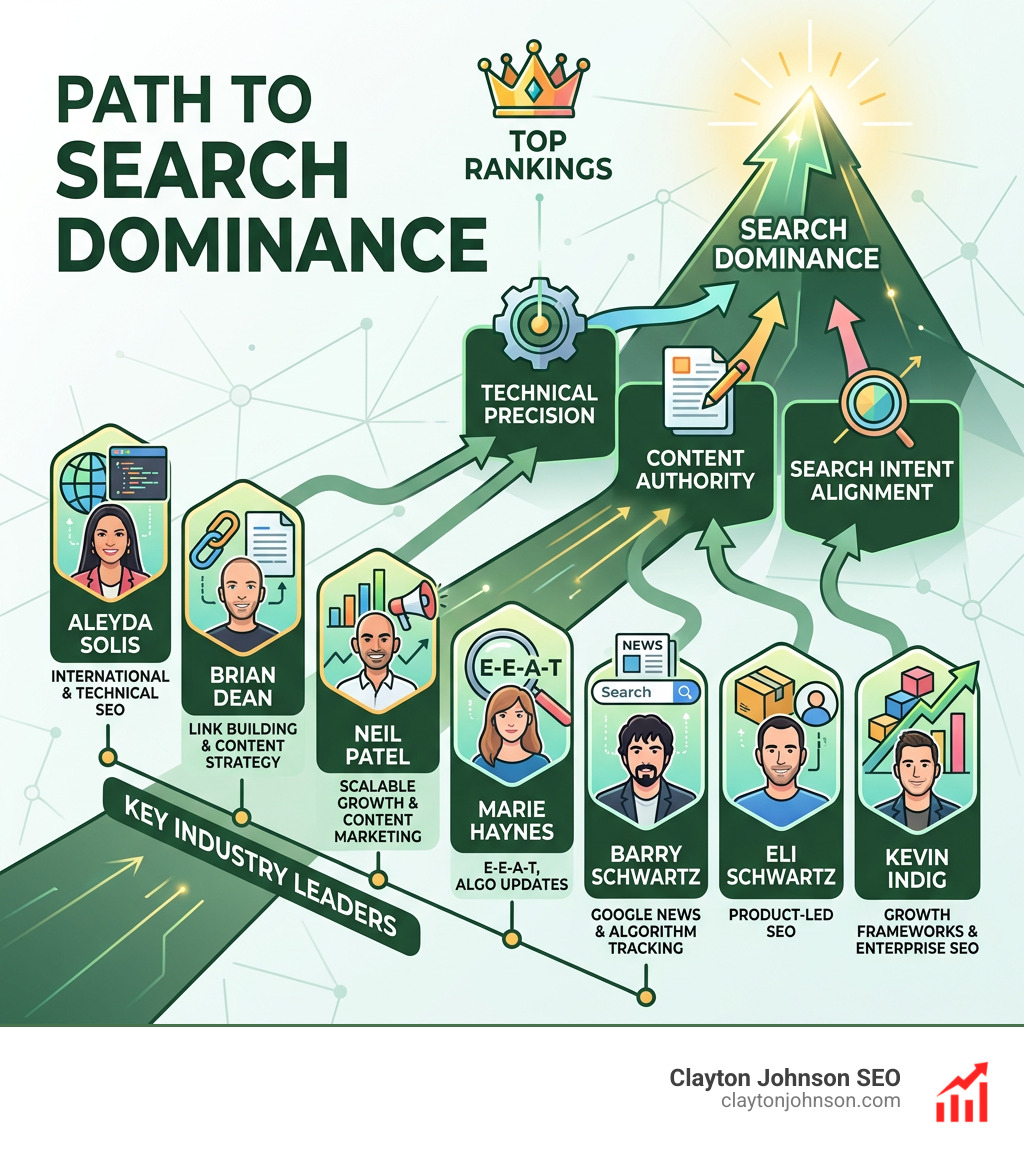
| Expert | Known For |
|---|---|
| Aleyda Solis | International & technical SEO |
| Brian Dean | Link building & content strategy |
| Neil Patel | Scalable growth & content marketing |
| Marie Haynes | Algorithm updates & E-E-A-T |
| Barry Schwartz | Google news & algorithm tracking |
| Eli Schwartz | Product-led SEO |
| Kevin Indig | Growth frameworks & enterprise SEO |
These experts don’t just talk about SEO. They run experiments, publish findings, and move the industry forward — often before Google even makes an announcement.
The difference between businesses that rank and those that don’t usually comes down to strategy, not effort. Most companies are working hard on the wrong things. Top SEO leaders consistently focus on three areas: technical precision, content authority, and search intent alignment.
If you’re struggling to generate leads from organic search, the frameworks these experts use aren’t out of reach — they’re just not widely explained in plain language.
I’m Clayton Johnson, founder of Clayton Johnson SEO and creator of DemandFlow.ai, with nearly two decades of experience building scalable SEO systems that mirror what the industry leaders in SEO apply at the highest level. In the sections below, I’ll break down exactly how these experts think — and how you can apply the same principles to grow your visibility and attract better clients.
Core Frameworks of Industry Leaders in SEO
To rank like the best, we have to stop thinking of SEO as a series of “hacks” and start seeing it as a compounding growth engine. When we look at the industry leaders in SEO, they all share a common trait: they build systems that align with how search engines actually work.
Expanding your business globally or even locally requires strategic expertise. Considering that 68% of all online experiences begin with a search engine, the stakes couldn’t be higher. If your site isn’t visible at the moment of search, you’re essentially invisible to the vast majority of your potential market.
The core framework used by top specialists isn’t just about keywords; it’s about intent modeling. This means understanding exactly what a user wants when they type a query. Are they looking to buy, to learn, or to find a specific brand? Leaders in the field use data-driven decision processes to ensure every piece of content serves a specific stage of the customer journey.
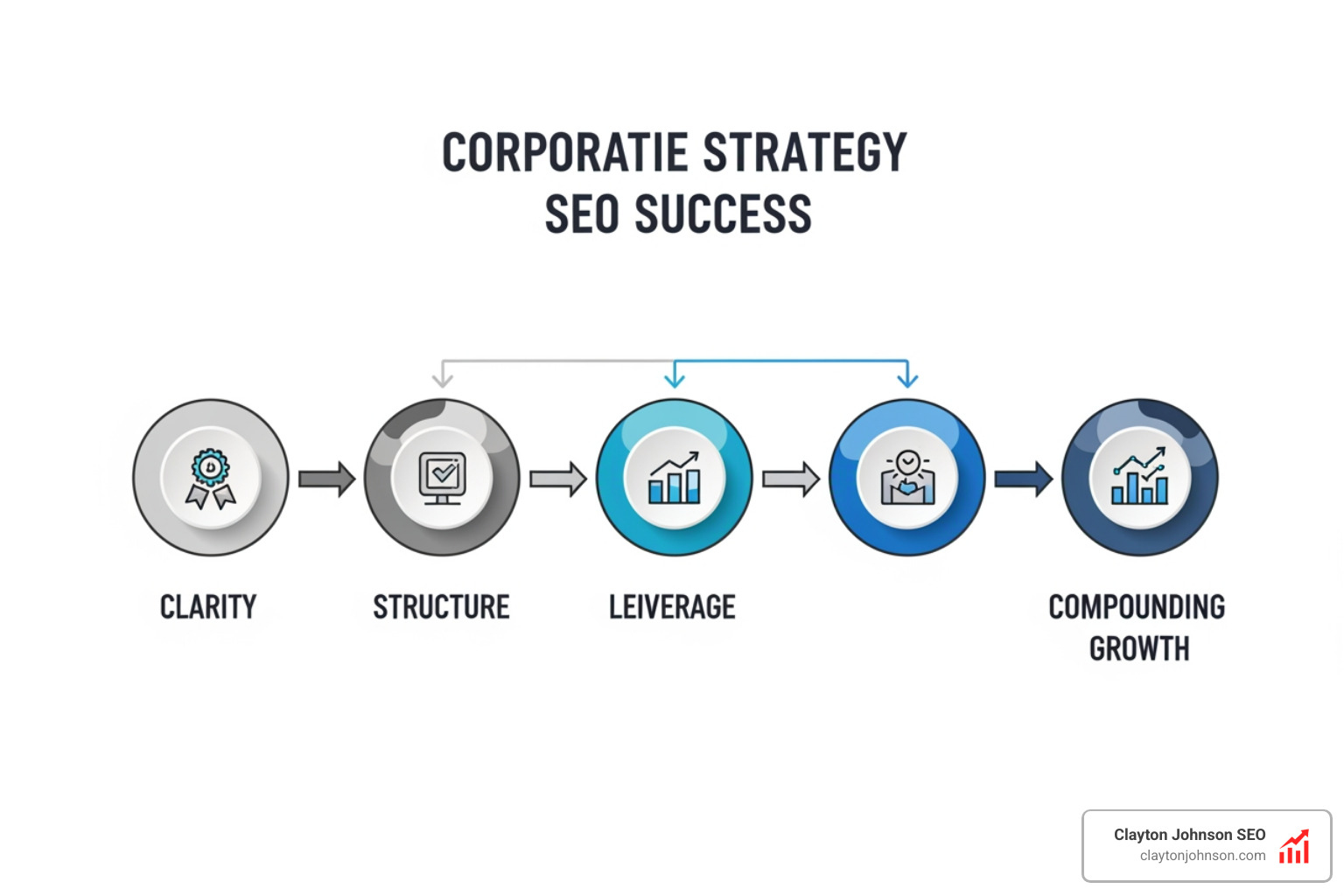
At Clayton Johnson SEO, our philosophy follows a similar path: Clarity → Structure → Leverage → Compounding Growth. We focus on turning fragmented marketing efforts into coherent growth engines. This involves moving beyond vanity metrics and focusing on comprehensive SEO services that deliver measurable business impact.
How Industry Leaders in SEO Master Technical Precision
Technical SEO is the foundation upon which everything else is built. If search engines can’t crawl or index your site efficiently, your world-class content will never see the light of day.
Aleyda Solis is widely regarded as a powerhouse in this arena. She is the global expert you need when things get technical, particularly regarding international and eCommerce SEO. Her platform, LearningSEO.io, has trained thousands, proving that she isn’t just a consultant — she’s a primary educator in the field. When we look at winning at technical SEO the Aleyda Solis way, we see a heavy emphasis on technical audits, mobile-first optimization, and complex site architectures.
Another leader making waves is Raf, who operates from a dual base in the UK and Polish markets. Raf brings a unique perspective to international SEO shaped by over fifteen years in senior marketing roles. He specializes in crafting growth strategies that bridge the gap between different digital landscapes, which is essential for businesses expanding across borders.
Key technical skills these leaders possess include:
- Hreflang Implementation: Ensuring the right version of a site appears for the right language and region.
- Crawl Budget Optimization: Making sure Googlebot spends its time on your most important pages.
- Site Architecture: Using taxonomy-driven ecosystems to help search engines understand the relationship between pages.
Content Architecture and Link Building Authority
Once the technical foundation is solid, the focus shifts to authority. In search, authority is largely built through high-quality content and a strong backlink profile.
Brian Dean, the founder of Backlinko (which was later acquired by SEMrush), is the go-to resource for millions who want practical link-building strategies. Brian Dean views SEO as a golden ticket to organic traffic, but he’s quick to point out that it’s no longer just about keywords. Today, it’s about user intent and AI signals.
The industry leaders in SEO don’t just write “blog posts.” They build content architecture. This involves creating “pillar pages” and “topic clusters” that demonstrate deep topical authority. The Brian Dean guide to next-level link building teaches us that link building isn’t about spamming; it’s about creating “link bait” — content so good, data-driven, or unique that other sites want to reference it.
Content freshness is another critical factor. Search engines favor content that is regularly updated and remains relevant. Leaders like Dean emphasize the “Content Audit,” where you prune or update old content to maintain a high-quality site-wide standard.
Scaling Growth with Industry Leaders in SEO and AI
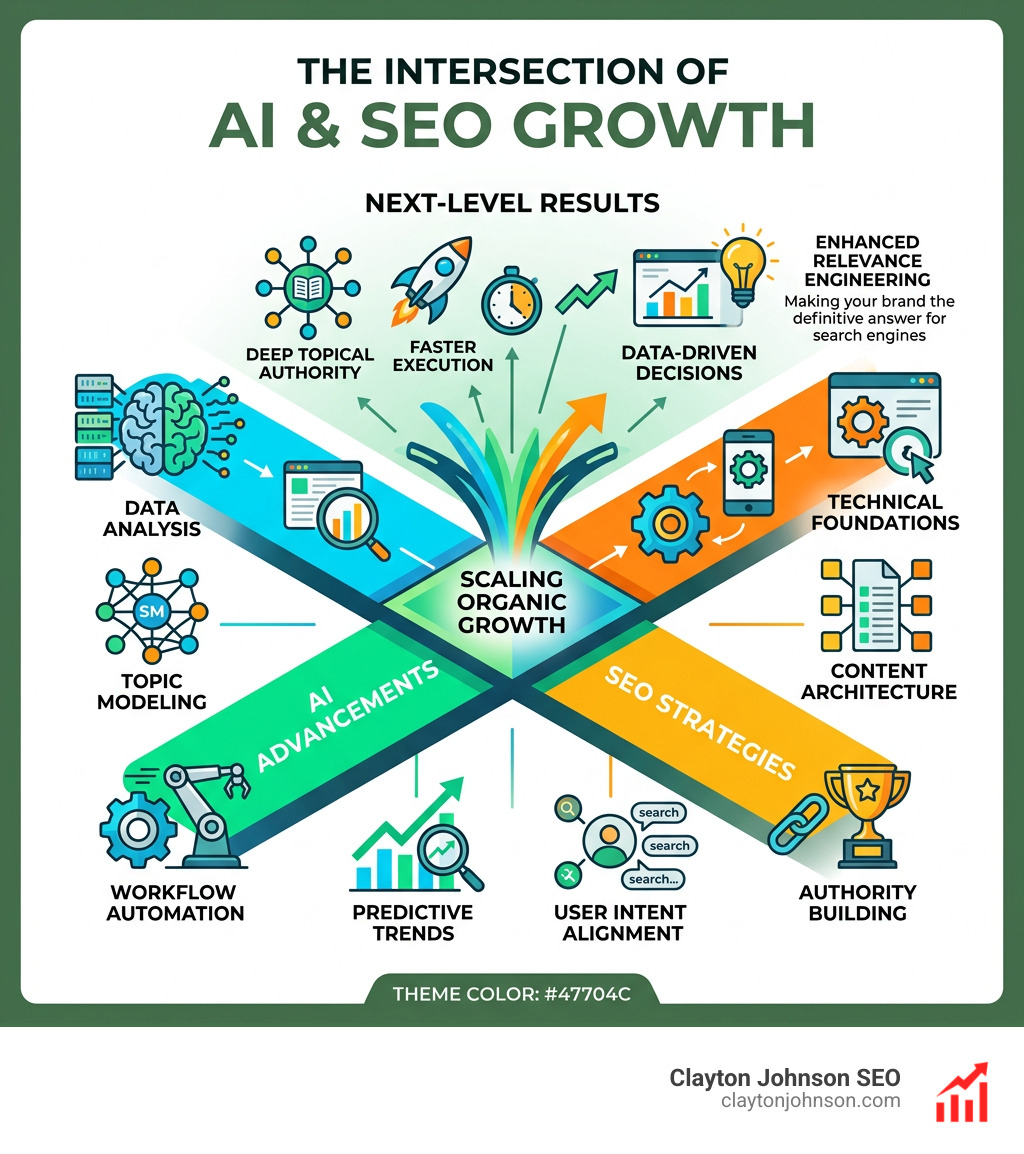
As we move into a new era of search, AI is changing the rules. We are seeing a shift from traditional “blue links” to “Relevance Engineering,” where the goal is to make your brand the definitive answer for AI-driven search engines and “answer engines.”
Neil Patel is perhaps the most visible face in this category. With over 4.4 million followers across platforms, his reach is unmatched. Neil Patel is recognized as an SEO expert with a capital E, having helped giants like Amazon and Google scale their organic presence. The Neil Patel strategy for SEO dominance often involves aggressive content marketing and the use of proprietary tools to identify gaps in the market.
In the modern landscape, scaling growth requires AI-augmented marketing workflows. This doesn’t mean letting a bot write your entire site. Instead, it means using AI for:
- Data Analysis: Identifying patterns in massive datasets that humans might miss.
- Topic Modeling: Understanding the semantic relationships between different search terms.
- Workflow Automation: Speeding up the execution of technical tasks and content distribution.
Navigating Algorithm Updates and E-E-A-T
Google updates its algorithm thousands of times a year. For most business owners, this is a source of anxiety. For industry leaders in SEO, it’s just another day at the office.
Barry Schwartz is the editor of Search Engine Roundtable and is often the first to report on unconfirmed updates. Barry is the expert who always knows what Google’s doing — sometimes even before the official announcements are made. Following his updates is essential for anyone who wants to stay ahead of the curve.
When an update hits, the conversation usually turns to E-E-A-T (Experience, Expertise, Authoritativeness, and Trustworthiness). Marie Haynes is a leading authority on this topic. She has spent years researching how Google uses AI to evaluate the quality and helpfulness of content. Her work focuses on helping brands recover from penalties by aligning their sites with “helpful content” guidelines.
To maintain high E-E-A-T, we focus on:
- Trust Signals: Clear authorship, cited sources, and transparent business information.
- Helpful Content: Moving away from “SEO-first” writing and focusing on providing genuine value to the reader.
- Brand Authority: Building a reputation that extends beyond the website itself.
Product-Led SEO and Scalable Growth
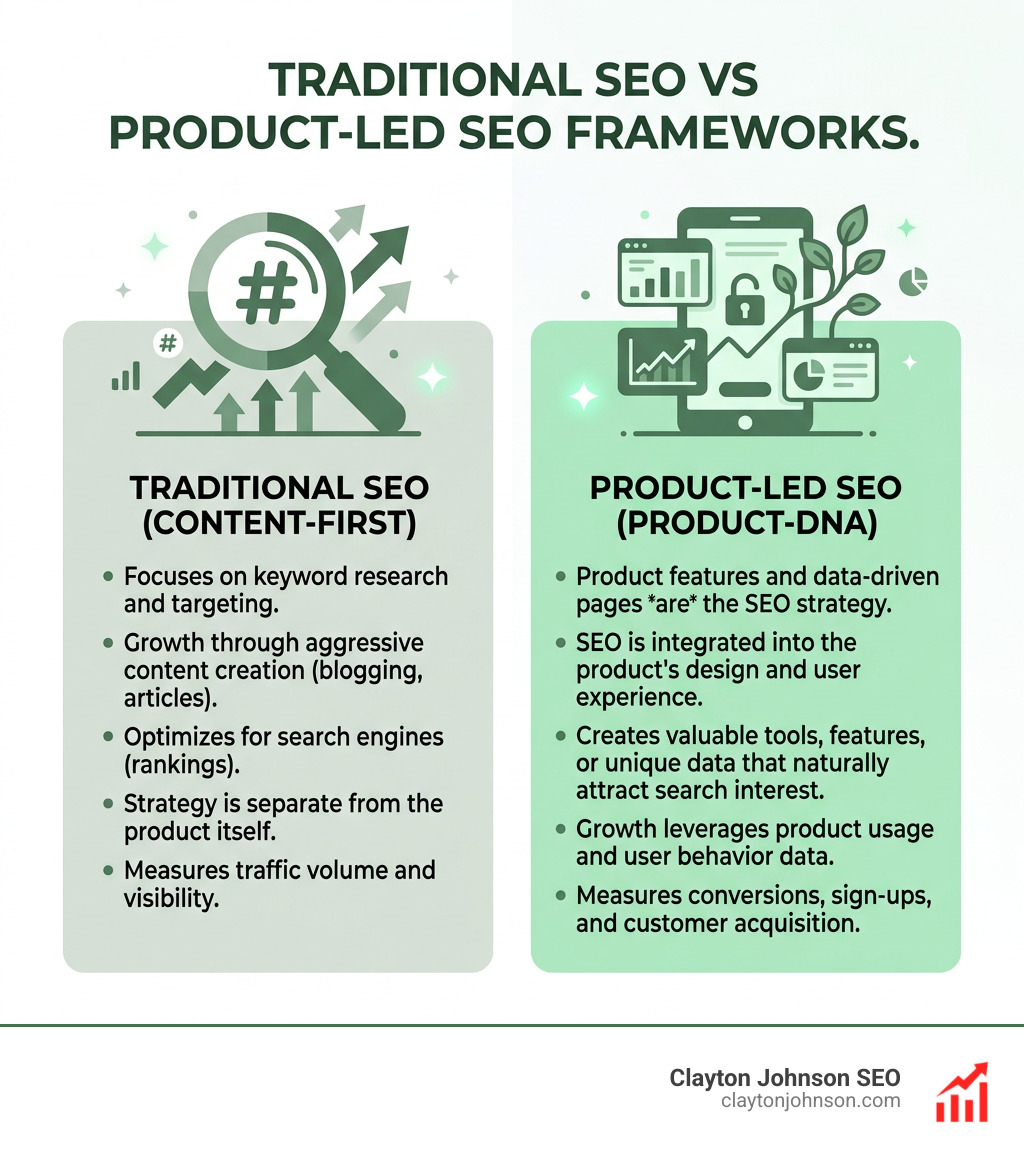
For startups and SaaS companies, SEO shouldn’t just be a marketing tactic; it should be part of the product’s DNA. This is known as Product-Led SEO.
Eli Schwartz, author of Product-Led SEO, has guided growth at some of the internet’s biggest names. His approach focuses on using SEO to shape product strategy and user experience, rather than just chasing rankings. Similarly, Kevin Indig is an SEO expert with deep experience at companies like Shopify, Atlassian, and G2. He advises giants on using SEO as a strategic growth lever.
These leaders use growth frameworks to turn websites into “traffic magnets” by creating features or data-driven pages that naturally attract search interest. This is a far cry from the old way of doing things. If you’re looking for the best AI SEO services, you’ll find that the top providers are those who integrate search strategy directly into the business model.
Conclusion: Scaling Your Search Strategy
The industry leaders in SEO we’ve discussed today — from Aleyda Solis to Kevin Indig — all prove that search dominance isn’t about luck. It’s about building durable systems that can withstand algorithm shifts and market changes.
At Clayton Johnson SEO, we don’t just advise on these strategies; we build the systems that operationalize them. Whether it’s internal linking structures, taxonomy-driven content ecosystems, or AI-enhanced workflows, our goal is to help you achieve strategic clarity. Why Clayton Johnson is the SEO expert your website deserves comes down to our focus on measurable business impact over vanity metrics.
Search is becoming more unpredictable, but by following the frameworks used by the world’s top experts, you can future-proof your traffic. It’s about moving from fragmented efforts to a coherent growth engine.
Identifying the Right Expert for Your Needs
Choosing an SEO partner is a high-stakes decision. The industry can be shady, with many “experts” pushing clickbait or spammy techniques that can lead to long-term penalties.
When seeking advice, be wary of the “bad apples.” Community discussions on platforms like Reddit often highlight that 90% of self-proclaimed experts lack real-world results. To stay safe, always verify an expert’s track record and ask for specific case studies.
Here are a few tips for identifying the right fit:
- Define Your Specialization: Do you need technical help, international expansion, or local visibility? Choose a specialist whose skills align with your specific goals.
- Budget Appropriately: Top-tier SEO expertise isn’t cheap. Hourly rates often range from $100 to $500, with monthly retainers typically falling between $2,500 and $10,000+.
- Check for Transparency: A good expert will be open about their methods and provide clear, data-backed reporting.
- Look for Systems, Not Just Tasks: You want a partner who builds a compounding growth engine, not just someone who checks off a list of “SEO tasks.”
If you’re a smaller business, you might start by looking at the 8 best SEO companies for small businesses that actually deliver results. The key is to find someone who treats your organic growth as a strategic priority, not an afterthought.
By aligning yourself with the principles used by industry leaders in SEO, you can stop chasing the algorithm and start dominating your market. Focus on clarity, build with structure, and let your growth compound.