How to Win with a Pillar Page Linking Strategy

Why Your Content Keeps Getting Ignored (And How a Topic Cluster Linking Strategy Fixes It)
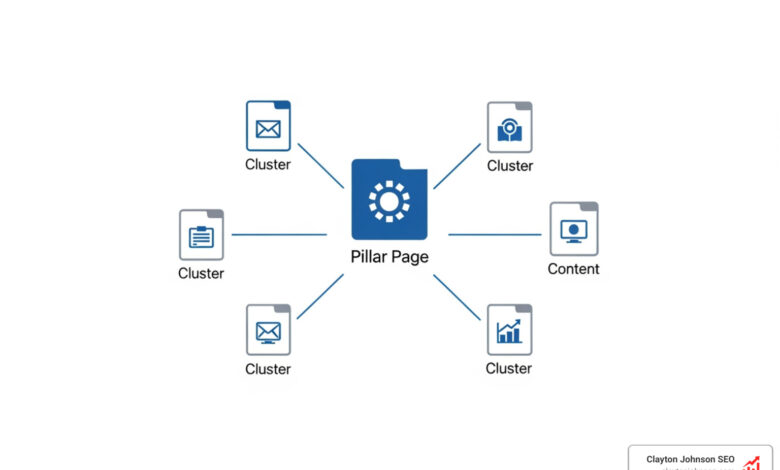
A topic cluster linking strategy is a structured way to organize your website content around a central “pillar” page, supported by related “cluster” pages, all connected through strategic internal links. Here’s the core approach:
- Choose a broad pillar topic with strong search demand
- Create cluster pages covering specific subtopics related to that pillar
- Link the pillar to every cluster page using descriptive, keyword-rich anchor text
- Link every cluster page back to the pillar to pass authority both ways
- Interlink cluster pages with each other where topics overlap naturally
- Monitor performance and fill content gaps over time
This structure signals to search engines that your site has deep, organized expertise on a subject — not just a collection of random posts.
Most websites publish content in isolation. A blog post here, a guide there. No logical connection between them. Search engines see scattered signals instead of a clear picture of authority.
That’s why pages disappear in search results.
The fix isn’t publishing more content. It’s connecting the content you already have — and filling the gaps — so Google recognizes your site as a comprehensive, trustworthy source on a topic.
Properly structured topic clusters generate roughly 30% more organic traffic and hold rankings nearly 2.5 times longer than standalone posts. That’s not a small edge. That’s a compounding advantage that grows over time.
I’m Clayton Johnson, an SEO strategist with nearly two decades of experience building scalable content frameworks, and implementing a topic cluster linking strategy is one of the highest-leverage moves I recommend to business owners who want sustainable search visibility. In my own work, I’ve seen simple internal linking adjustments push page-two content into the top five results — without publishing a single new piece.
Mastering the topic cluster linking strategy for Maximum Authority
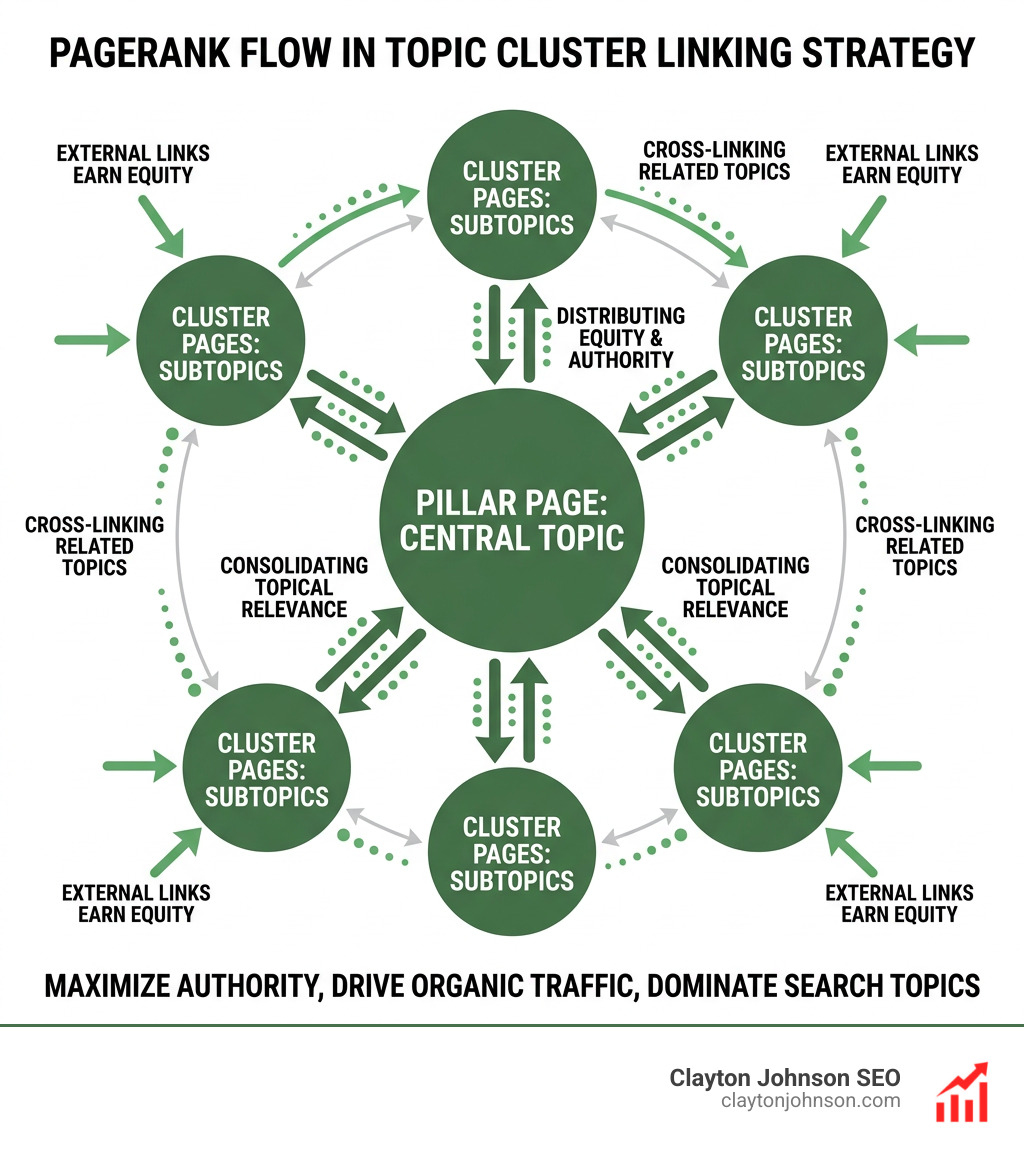
To win in modern search, we have to stop thinking about keywords and start thinking about topics. Google’s algorithms have evolved from simple word-matching to understanding semantic relationships. When we implement a topic cluster linking strategy, we are essentially building a map for Google’s crawlers. We are saying, “This page is the definitive overview, and these ten pages prove we know every single detail about the subtopics.”
This architecture does more than just help with crawling; it distributes “link juice” or PageRank across your entire ecosystem. If one cluster page earns a high-quality backlink from an external site, that authority flows back to the pillar and then out to the other cluster pages. It’s a rising tide that lifts all boats.
Furthermore, this structure is a direct signal of E-E-A-T (Experience, Expertise, Authoritativeness, and Trustworthiness). Research shows that AI Overviews prioritize websites demonstrating topical breadth and depth. By interconnecting 5+ pages on a single subject, you increase the probability of being cited by AI search engines by 2.7x. To find even deeper angles for your content, you can boost your topic clusters with LLM‑guided insights by analyzing comparative questions on forums like Reddit.
The Pillar vs. Cluster Comparison
| Feature | Pillar Page | Cluster (Satellite) Page |
|---|---|---|
| Scope | Broad overview of a core topic | Deep dive into a specific subtopic |
| Word Count | 3,000 – 5,000+ words | 1,500 – 2,500 words |
| Target Keyword | High volume, high competition | Long-tail, specific intent |
| Linking Goal | Distribute equity to clusters | Pass authority back to the hub |
| User Intent | Informational / Educational | Specific Answer / Transactional |
Architecting the Hub-and-Spoke Model
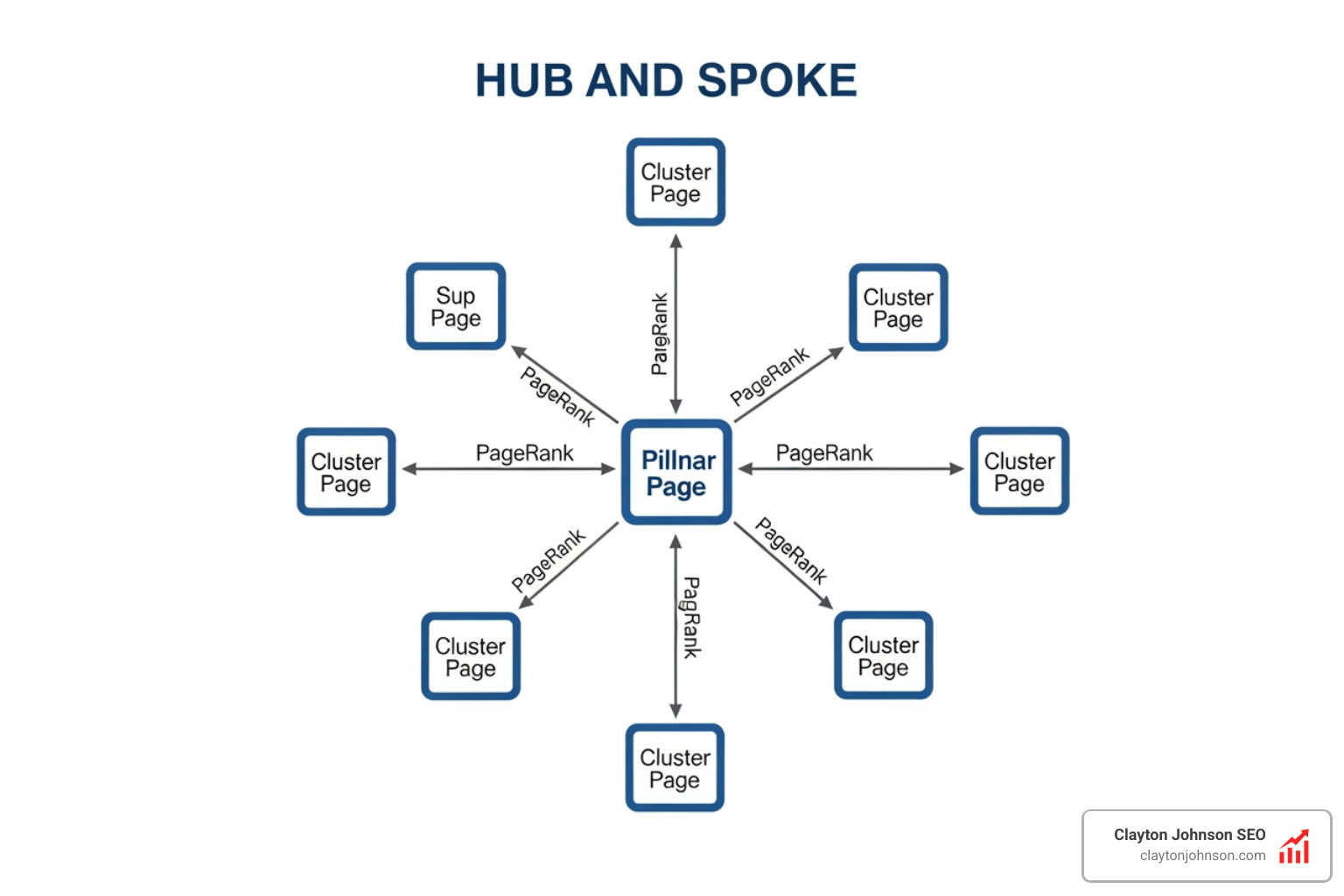
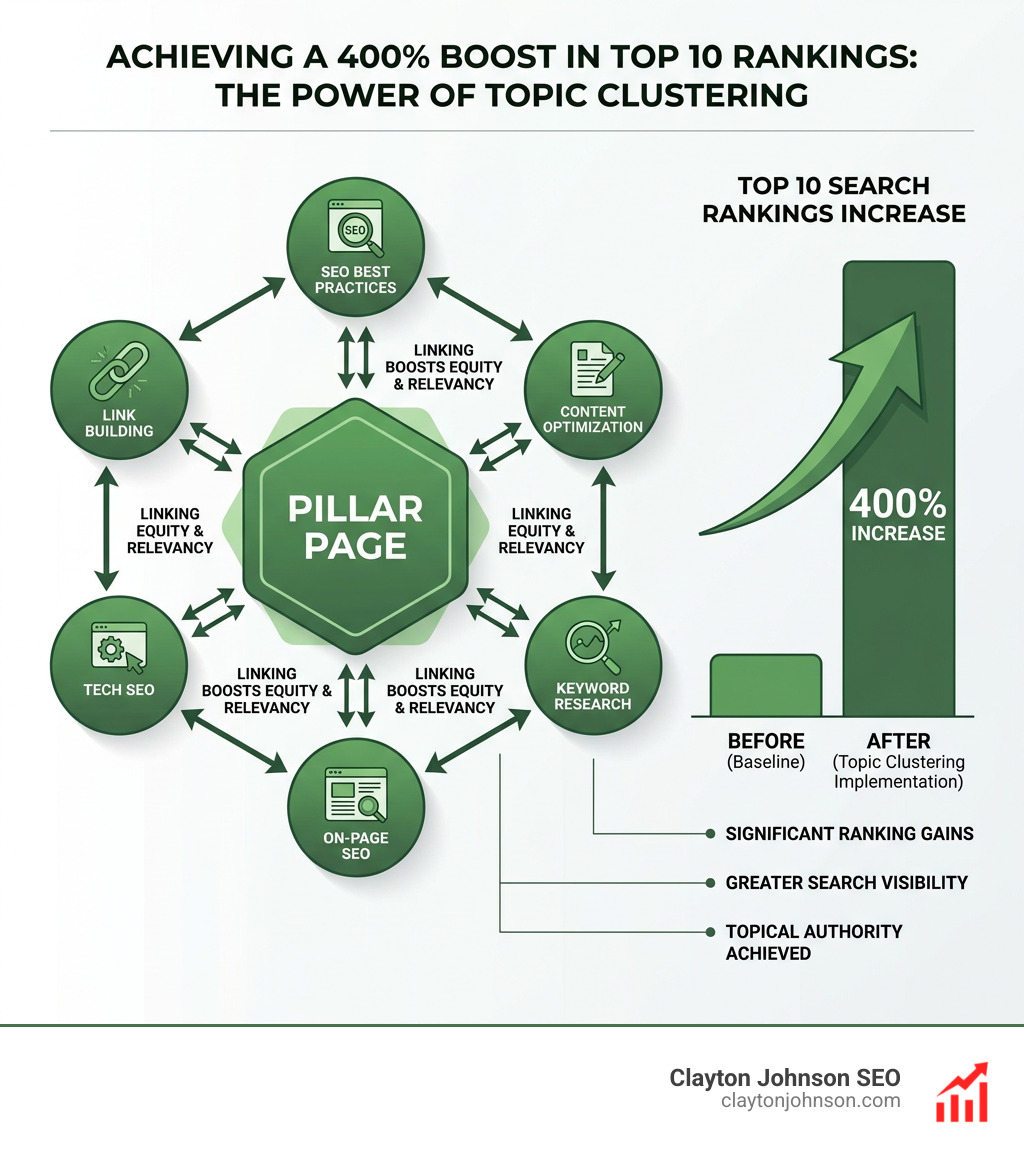
The hub-and-spoke model is the gold standard for a topic cluster linking strategy. Think of the pillar page as the hub of a wheel and the cluster pages as the spokes. For this to work, the linking must be bidirectional.
We don’t just link from the pillar to the cluster; we ensure every cluster page links back to the pillar. This creates a closed loop of relevancy. For example, a sports retailer might have a massive hub for “Golf Tips.” The pillar page provides a high-level overview of the game, while cluster pages dive into “how to grip a baseball bat” or specific driver swing mechanics. You can see a great execution of this at the Dick’s Pro Tips Hub.
When we design these journeys, we must prioritize the user. A link shouldn’t just be there for SEO; it should be the logical next step for someone wanting to learn more. If you’re feeling overwhelmed by the technical setup, working with specialized SEO consultants can help you map out this taxonomy before you write a single word.
Best Practices for a topic cluster linking strategy
The “glue” that holds your cluster together is the contextual link. These are links placed naturally within the body of your text—not hidden in a footer or a generic “related links” sidebar.
- Context is King: The sentences surrounding your link provide “topical scent” to search engines.
- Keep it Shallow: Ensure your pillar pages are reachable within 1-2 clicks from the homepage. Cluster pages should be no more than 3 clicks deep.
- Quality Over Quantity: Don’t create “thin” cluster pages just to have more links. Each page must provide unique value.
- The Wikipedia Effect: Aim to create a “wormhole” where users stay on your site for twenty minutes because every link leads to another fascinating, relevant subtopic.
A world-class example of this is the Wolters Kluwers’ Tax Resource Center. They revamped their entire SEO strategy by tying high-performing clusters to specific audience pain points, which boosted their top-10 search results by 400%.
Optimizing Anchor Text within your topic cluster linking strategy
Anchor text—the clickable text of a link—is a massive relevancy signal. In a topic cluster linking strategy, we avoid generic phrases like “click here” or “read more.” Instead, we use descriptive, keyword-rich text that tells the user (and Google) exactly what is on the other side of that link.
However, we must be careful with keyword cannibalization. If every cluster page uses the exact same anchor text to link back to the pillar, it can look manipulative.
Pro-Tip: The Anchor Text Mix
- Exact Match (15%): Use the primary keyword of the target page.
- Partial Match (30%): Use a variation (e.g., “how to verify your store with Google Search Console” linking to a Shopify verification guide).
- Semantic/Synonym (20%): Use related terms. For instance, link to Okta’s What is Cached Data? using text like “temporary storage files” or “web browser cache.”
- Branded/Natural (35%): Use your brand name or natural phrases like “this comprehensive buying guide.”
Check out Ahrefs’ guide on anchor text for a deeper dive into these ratios.
Implementing and Measuring Your Internal Linking System
You can’t manage what you don’t measure. Once your topic cluster linking strategy is live, you need to audit it regularly. We use tools to visualize the link graph and ensure no “orphaned pages” (pages with zero internal links) are dragging down our authority.
The first step in implementation is often a content audit. We look at what we already have and group it into “buckets.” If we have five articles about “AI in Marketing,” we select the best one to become the pillar (or write a new one) and link the others to it. We also perform a “gap analysis” to see what subtopics our competitors are covering that we’ve missed. Brands that fill these content gaps see an average 38% higher engagement.
To get a technical view of your site, run a crawl using Screaming Frog. This will show you exactly how PageRank is flowing and if you have any broken links (404s) that are leaking authority. Then, use Google Search Console to track how your “primary topic” keyword rankings improve over the next 90 days.
Advanced Linking Opportunities: Navigation and Related Content
While in-body contextual links are the most powerful, they aren’t your only tools. To truly dominate a niche, we use every part of the page real estate.
- Sticky Navigation: For long pillar pages, a sticky table of contents helps users jump to sub-sections (which often link to cluster pages). Freshworks implements this well on their CMDB overview page.
- Breadcrumbs: These are a low-effort, high-impact way to reinforce hierarchy. They tell Google: Home > AI Strategy > Prompt Engineering.
- Related Content Sections: At the bottom of every cluster page, include a “Further Reading” section that links to 2-3 other pages within the same cluster.
By making it easy for users to navigate, you reduce bounce rates and increase “dwell time”—both of which are positive signals to search engines. If you’re looking to integrate these systems with cutting-edge AI strategies, the focus remains the same: structure and clarity.
Avoiding Common Internal Linking Mistakes
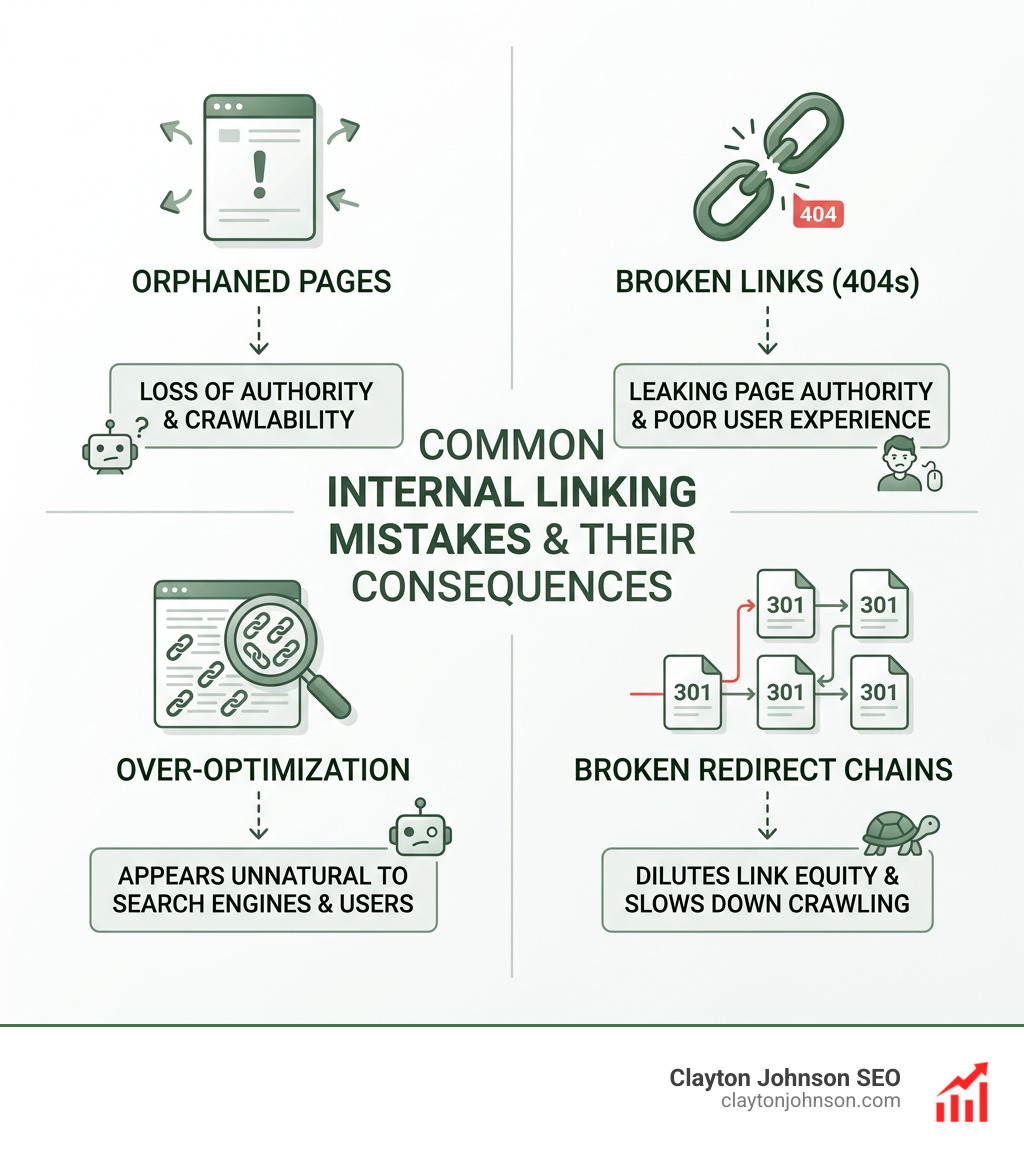
Even the best-laid plans can go wrong. Here are the “cluster killers” we see most often:
- The “Link to Nowhere”: Linking to unrelated clusters. While it’s okay to link to a different topic if it’s truly helpful, overdoing it dilutes the topical focus of your current cluster.
- Orphaned Pages: Creating a great cluster article but forgetting to link to it from the pillar. If Google can’t find it through a link, it might as well not exist.
- Over-Optimization: Stuffing too many links into a small paragraph. Aim for 3-8 meaningful links per 1,000 words.
- Broken Redirect Chains: If you move a page, update your internal links. Don’t rely on 301 redirects to pass authority forever; Google’s own guidance suggests that direct links are always preferred for crawling efficiency.
A great example of a clean, helpful structure is MattressFirm’s Mattress Buying Guide. It stays focused on the user’s intent without cluttering the page with irrelevant links.
Conclusion: Building Durable Growth Systems
Winning with a topic cluster linking strategy isn’t about “tricking” an algorithm. It’s about building a durable system that prioritizes clarity and leverage. When you organize your site into logical hubs, you aren’t just chasing a temporary ranking; you are building an authoritative asset that compounds in value over time.
At Clayton Johnson SEO, we believe that SEO shouldn’t be a series of fragmented tactics. It should be a coherent growth engine. By implementing these hub-and-spoke structures, you move away from the “publish and pray” model and toward a scalable traffic system that delivers measurable business outcomes.
Start by auditing your top-performing pages. Identify your natural pillars. Connect them to your supporting content. Over the next few months, watch as your topical authority grows and your rankings settle into those top spots. It takes work, but the compounding returns are worth every link.