I Replaced a $10,000 SEO Audit With an AI Prompt

The $3,200 SEO Audit Problem — and the AI Fix That Changes Everything
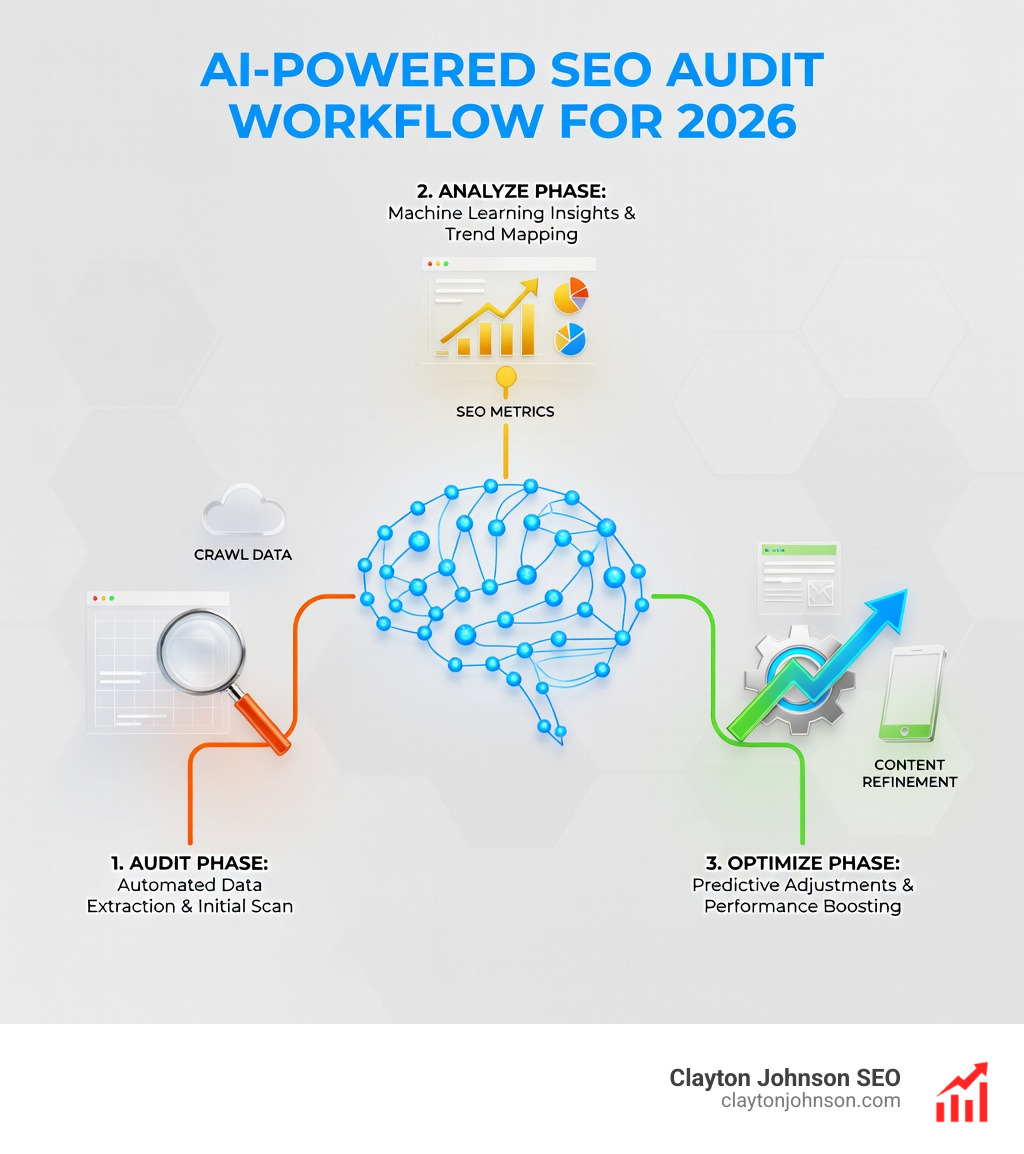
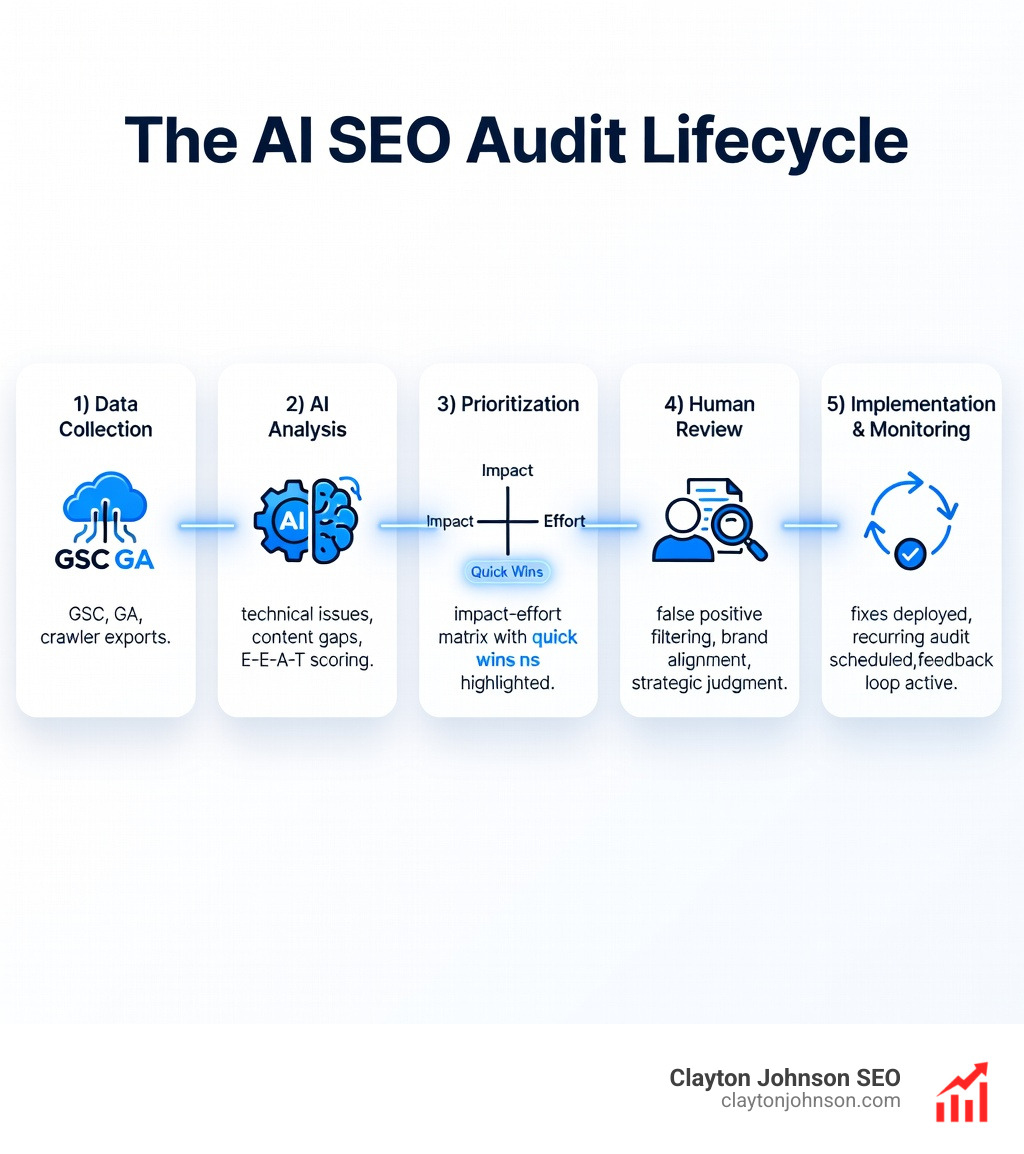
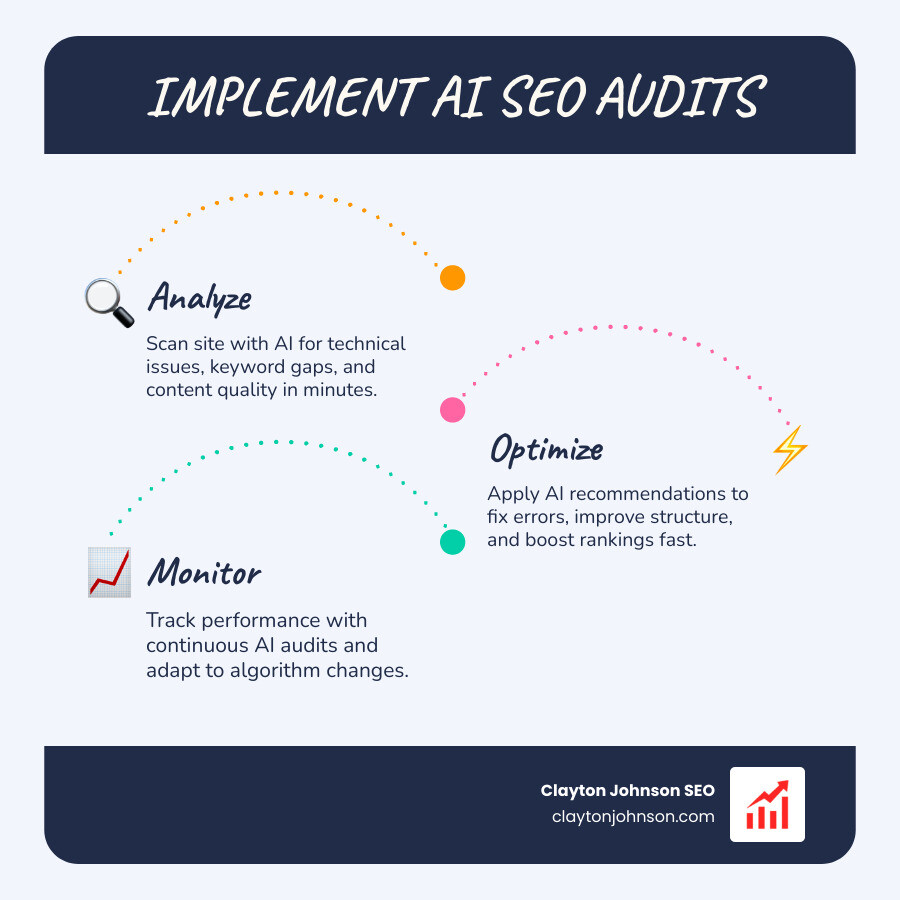
Implement AI SEO audits by following these core steps:
- Connect your data sources — Google Search Console, Google Analytics, and a site crawler like Screaming Frog
- Export your crawl and performance data — pages, errors, traffic trends, Core Web Vitals
- Feed structured prompts to an AI model — covering technical SEO, content quality, E-E-A-T, and internal linking
- Review the prioritized output — impact/effort matrix, quick wins, and a ranked fix list
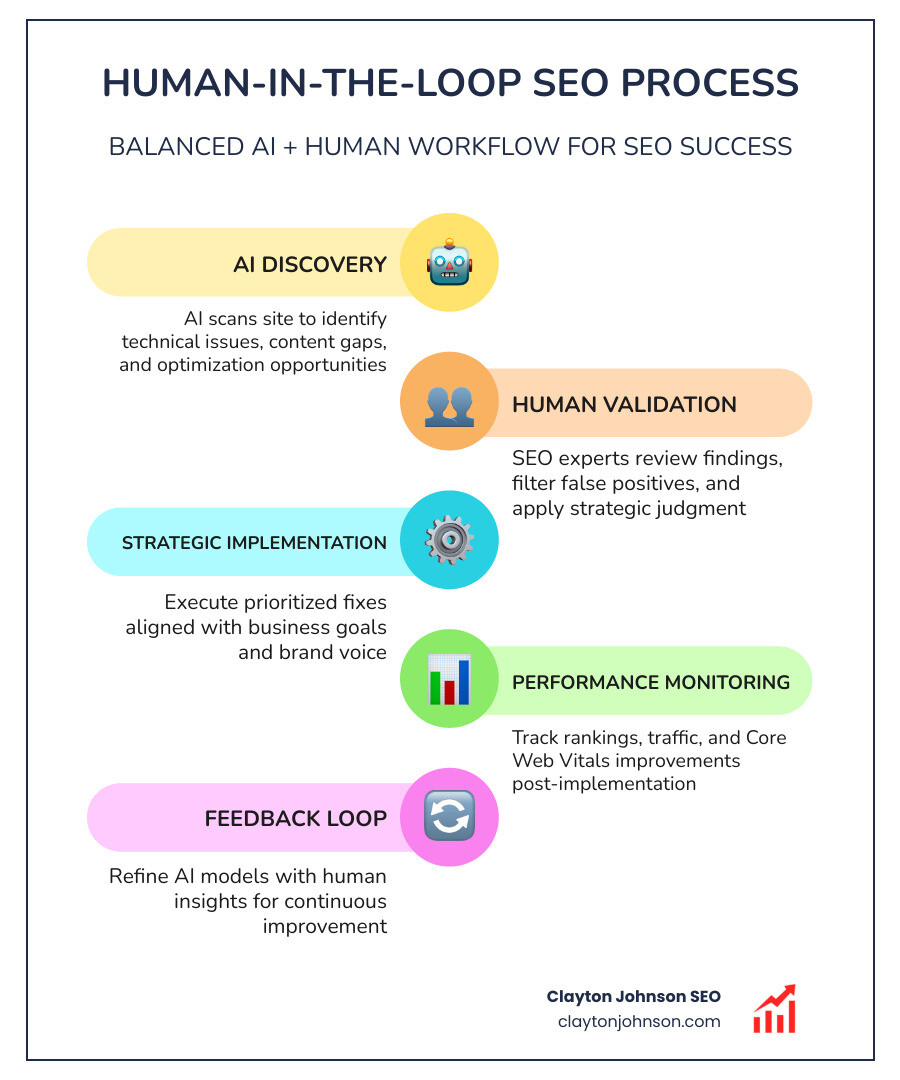
- Apply human judgment — validate flags, filter false positives, align fixes with business goals
- Schedule recurring audits — monthly or bi-weekly to catch regressions early
A friend paid $2,000 for a 47-page PDF of generic SEO recommendations after losing 80% of their affiliate earnings to a Google algorithm update. The report listed 127 separate issues. Nothing was prioritized. Nothing was contextualized. It sat in a folder, unread.
That story is more common than it should be.
Traditional SEO audits are slow, expensive, and often disconnected from what actually needs fixing. Running a manual audit site-by-site can require 40 hours of work per month — and by the time the report lands, the data is already stale.
AI changes the equation entirely.
Modern AI SEO tools can process thousands of pages, flag anomalies, identify content gaps, and generate prioritized fix lists — in hours, not weeks. Early adopters are already seeing 15–25% improvements in organic performance. One retailer’s faceted navigation created 2.3 million near-duplicate URLs. AI identified the pattern in hours and helped recover 12% of their crawl budget.
The barrier to entry is lower than most founders think. You don’t need an enterprise contract or a six-person SEO team. You need the right setup, the right prompts, and a clear workflow.
I’m Clayton Johnson — an SEO strategist and growth operator who builds AI-augmented SEO systems for founders and marketing leaders, and I’ve used these exact methods to help clients implement AI SEO audits that replace fragmented, expensive diagnostics with scalable, repeatable infrastructure. This guide walks you through the full process, from environment setup to advanced SGE readiness, so you can do the same.
Implement AI SEO Audits terms you need:
Why You Should Implement AI SEO Audits Now
Traditional SEO audits are snapshots in time. They are static, reactive, and often outdated by the time they reach the developer’s desk. When we implement AI SEO audits, we move from “snapshots” to “systems.”
According to recent organizational data, 78% of organizations now use AI in their marketing operations. This isn’t just a trend; it’s a survival mechanism for an era where Google releases over 500 algorithm updates annually.
Manual vs. AI SEO Audits: The Efficiency Gap
| Feature | Traditional Manual Audit | AI-Powered Audit |
|---|---|---|
| Speed | 2–4 weeks | Minutes to hours |
| Accuracy | Prone to human fatigue | Machine-level precision |
| Scalability | Limited by headcount | Millions of URLs |
| Predictive Insights | None (Historical only) | Pattern recognition & forecasting |
| Cost | High ($2k–$10k+) | Low (Tooling + Prompting) |
One of the most powerful reasons to implement AI SEO audits is anomaly detection. AI models learn the “normal” behavior of your site. If a weekend JavaScript update breaks 200 product pages or causes a 40% traffic drop, AI flags it instantly, whereas a human might not notice until the next monthly reporting cycle.
Furthermore, AI-optimized crawling ensures your most important pages are found first. One e-commerce client saw their high-value pages crawled 3x more frequently after implementing machine-learning-optimized crawling, leading to significantly faster indexation of new products.
How to Implement AI SEO Audits: A Step-by-Step Roadmap
To implement AI SEO audits successfully, you need to stop thinking of AI as a magic button and start seeing it as a data processor. It needs high-quality inputs to give you high-quality strategy.
Setting Up Your Environment to Implement AI SEO Audits
Before you write a single prompt, you must build your data foundation. AI is only as good as the context you provide.
- Verify Data Sources: Ensure your website is correctly connected to Google Search Console (GSC) and Google Analytics (GA4). These provide the “truth” about how users and search engines interact with your site.
- Configure Your Crawler: Use a tool like ScreamingFrog to perform a full-site crawl. Ensure you enable the API connections for GSC and GA4 within the crawler settings. This merges technical data (status codes, response times) with performance data (clicks, impressions, bounce rates).
- Extract Embeddings (Optional but Recommended): For advanced users, extracting OpenAI embeddings during the crawl allows the AI to understand semantic similarity between pages. This is crucial for identifying keyword cannibalization and content consolidation opportunities.
- Export the “Master” CSV: Export your crawl data into a clean CSV or Google Sheet. You’ll also want a separate export of your top-performing pages and any pages that have seen a significant traffic loss over the last 90 days.
Executing the Audit with Agentic Prompts
Once your data is ready, it’s time to put the AI to work. We don’t just ask, “How is my SEO?” We use structured, agentic prompts that act like a senior consultant.
You can get the full prompt here, but the core logic should cover these four pillars:
- Technical SEO: “Analyze this crawl data for broken links, redirect loops, and non-indexed pages. Group them by site section and prioritize by traffic impact.”
- Content Quality & NLP: “Using the page titles and descriptions, identify content gaps where we are missing ‘how-to’ or ‘comparison’ intent that our competitors are ranking for.”
- E-E-A-T (Experience, Expertise, Authoritativeness, Trust): “Review our author bios and trust signals. Does the content signal first-hand experience? Flag any pages that feel like ‘ghost ships’ (outdated content with no recent updates).”
- Internal Linking: “Identify high-authority pages that are not linking to our ‘Focus Pages.’ Suggest five internal link placements to boost the ranking of [Target URL].”
By providing the AI with your specific audience info, market, and language, it moves beyond generic checklists to provide contextual, actionable advice.
Advanced Technical Analysis and SGE Readiness
The search landscape is shifting toward AI-first search engines like Google SGE (Search Generative Experience) and Perplexity. To stay visible, your technical foundation must be flawless.
Optimizing for Core Web Vitals
Google has confirmed that Core Web Vitals are direct ranking factors. AI audits can analyze RUM (Real User Monitoring) trends to predict performance degradation before it impacts your rankings.
- LCP (Largest Contentful Paint): Aim for under 2.5 seconds.
- INP (Interaction to Next Paint): Aim for under 200 milliseconds.
- CLS (Cumulative Layout Shift): Aim for less than 0.1.
AI Search Readiness (GEO)
PwC’s Pulse Survey reports that 49% of tech leaders have AI fully integrated into their strategy. For SEO, this means ensuring your site is readable by LLM crawlers.
- Crawler Access: Check your robots.txt to ensure you aren’t accidentally blocking bots like
OAI-SearchBotorGPTBot. - llms.txt: Implement an
llms.txtfile (a new standard) to provide a clean, markdown-based summary of your site specifically for AI models to digest. - Structured Data: Over 70% of businesses have missing or incomplete schema markup. AI uses schema to understand entity relationships (e.g., that “Clayton Johnson” is an “Author” of “Demandflow”).
Building a Balanced Human-AI Workflow
Despite the power of automation, McKinsey research shows that only 6% of organizations are “AI high performers.” The difference lies in the human-in-the-loop process.
AI is excellent at finding patterns, but it lacks strategic judgment. It might flag a page as “thin content” because it only has 200 words, but a human knows that page is a high-converting “Contact Us” form that shouldn’t be deleted.
When you implement AI SEO audits, your team’s role shifts from finding problems to validating and shipping fixes.
- Strategic Alignment: Does this fix align with our SEO content marketing goals?
- Brand Voice: AI might suggest a meta description that is SEO-friendly but sounds robotic. A human editor ensures it matches the brand’s tone.
- False Positives: AI can sometimes misinterpret complex redirect chains. Always have a technical SEO lead review high-risk changes.
Best Practices to Implement AI SEO Audits at Scale
To turn an audit from a “to-do list” into a “growth engine,” use these frameworks:
- Impact-Effort Matrix: Plot every AI-suggested fix on a 2×2 grid. Prioritize “Quick Wins” (High Impact, Low Effort) like fixing broken internal links or updating title tags for search intent.
- RICE Framework: Score tasks based on Reach, Impact, Confidence, and Effort to remove emotion from prioritization.
- Regular Scheduling: Don’t wait for a traffic drop. Implement AI SEO audits on a monthly or bi-weekly basis. This allows for “continuous compliance” where small errors are caught before they compound.
- Competitor Benchmarking: Use AI to crawl competitor sitemaps. Identify their top-performing clusters and use Keyword Gap analysis to find where your brand is missing from the conversation.
Frequently Asked Questions about AI SEO Audits
Can AI replace human SEO auditors?
No. AI is a supercharged assistant. It handles the 80% of work that is repetitive data analysis (scanning for 404s, checking meta tags, clustering keywords), freeing up human experts to focus on the 20% that actually moves the needle: strategy, creative direction, and complex problem-solving.
What is the best AI tool for SEO audits?
There is no single “best” tool, but a stack approach works best. Use Screaming Frog or Sitebulb for crawling, enterprise SEO platforms for competitive intelligence and AI visibility tracking, and Claude or ChatGPT (with Deep Research enabled) for the strategic analysis of that data.
How often should I run an AI SEO audit?
For most sites, a comprehensive audit should be run monthly. However, for high-traffic e-commerce or enterprise sites, we recommend setting up automated weekly “mini-audits” that focus specifically on crawl errors and indexation changes.
Conclusion: Structured Growth Over Random Tactics
The reason most SEO audits fail is not a lack of data; it’s a lack of structure.
At Demandflow.ai, we believe that clarity leads to structure, and structure leads to leverage. When you implement AI SEO audits, you aren’t just “checking boxes.” You are building a growth operating system that identifies revenue-driving opportunities with machine speed and human precision.
Stop paying for static PDFs that collect digital dust. Start building a structured growth architecture that compounds over time.
If you are ready to stop guessing and start growing, work with us to architect an AI-enhanced SEO strategy that puts your brand exactly where decisions are being made.