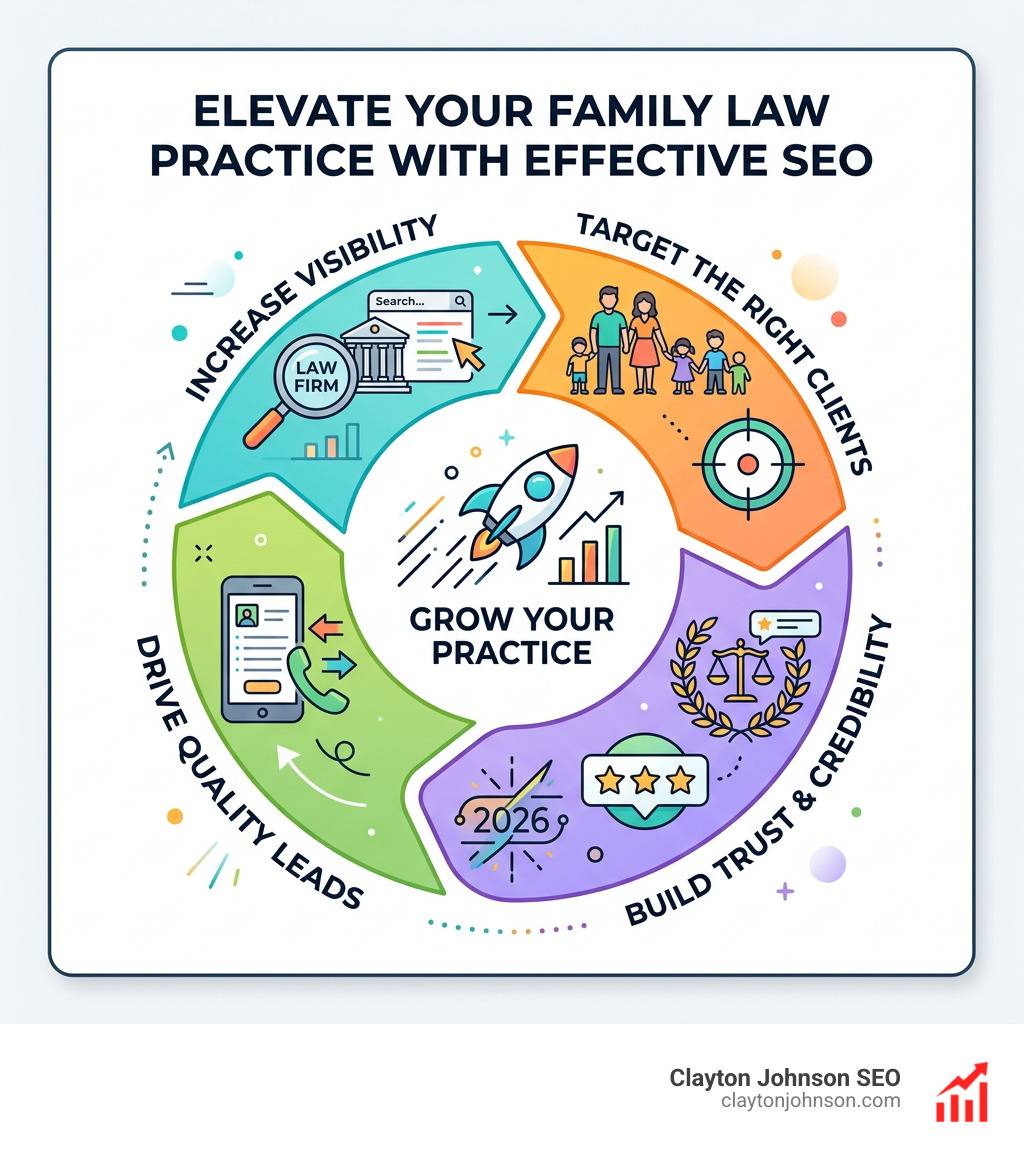
SEO services family law firms rely on can be broken down into a few core components:
- Local SEO – Ranking in Google Maps and local search results for queries like “divorce lawyer near me”
- Keyword targeting – Creating pages around high-intent searches like “child custody attorney in your city”
- Content strategy – Publishing helpful, empathetic content that builds trust with potential clients
- Technical SEO – Ensuring your site is fast, mobile-friendly, and easy for Google to crawl
- Link building – Earning backlinks from legal directories, bar associations, and authoritative sources
- Reputation management – Generating and managing client reviews that boost local rankings
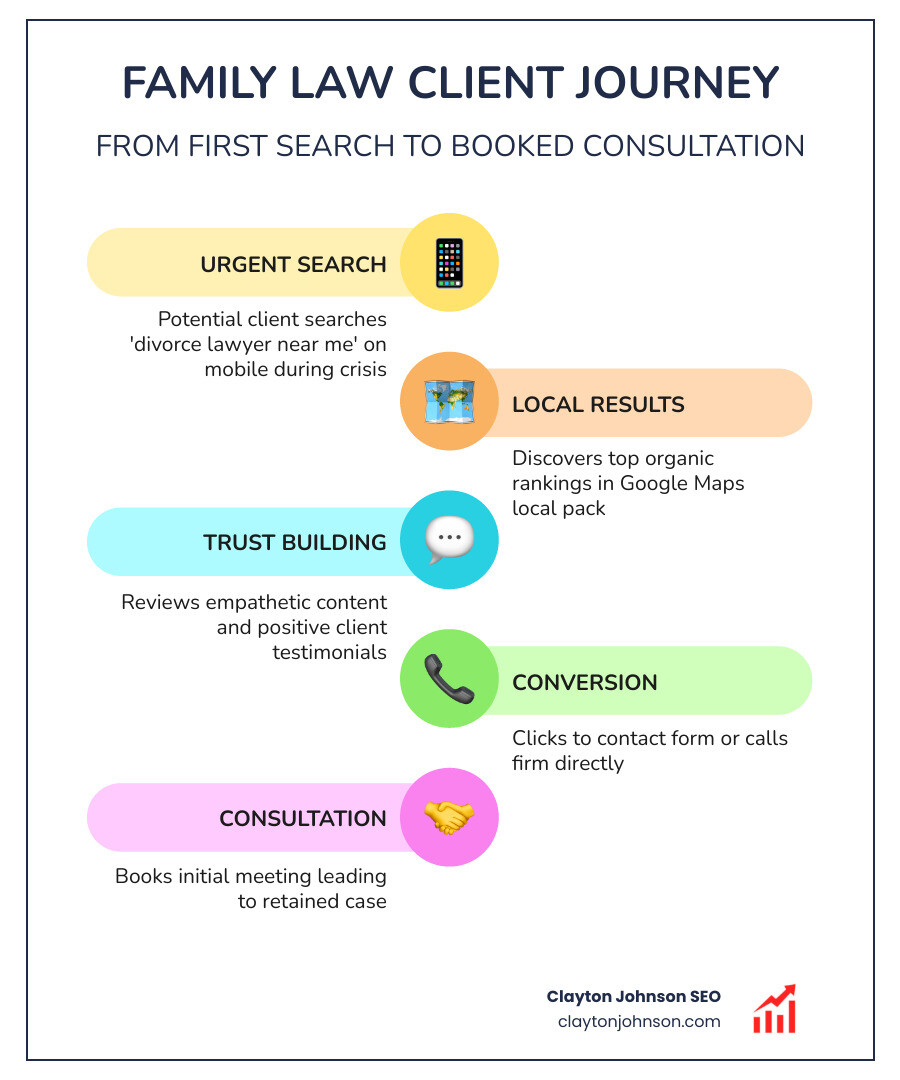
When someone’s marriage falls apart or a custody dispute turns urgent, they don’t ask around. They grab their phone and search. And if your firm isn’t showing up in those results, a competitor is getting that call instead.
Family law is one of the most competitive legal verticals online. Potential clients are emotionally vulnerable and making fast decisions. Over 60% of divorce-related searches happen on mobile devices. Organic results earn click-through rates as high as 40%, compared to roughly 5% for paid ads. And a single won case can be worth $10,000 to $30,000 or more.
That math makes SEO one of the highest-ROI investments a family law firm can make. But it only works when it’s done right — with the right keywords, the right content tone, and the right local strategy.
I’m Clayton Johnson, an SEO strategist with nearly two decades of experience helping businesses dominate competitive search results — including building specialized frameworks around SEO services family law firms need to generate consistent, qualified leads. In the sections below, I’ll walk you through exactly how to build that system for your practice.
Dominating the Market with SEO Services Family Law
In legal marketing, market saturation is a very real hurdle. In any given metropolitan area, hundreds of attorneys are vying for the same “divorce lawyer” queries. This is where a structured approach to SEO services family law becomes your firm’s greatest asset. Unlike paid advertising, which stops delivering leads the moment you stop paying for clicks, SEO creates a compounding ROI.
Think of SEO as buying the building rather than renting a billboard. When you rank organically, you own that digital real estate. Over time, the authority of your website grows, making it easier to rank for new, high-value terms. This long-term authority is what separates the “overlooked” firms from the “overbooked” ones. To understand the foundational mechanics of this process, it helps to revisit Yoast’s definition of what SEO is — essentially, the practice of optimizing your website so it’s easy for search engines to find, crawl, and rank.
In family law, search intent is everything. A user searching for “how to file for divorce” is in a different stage of the funnel than someone searching for “best child custody lawyer in Houston.” Our goal is to capture both: providing information to the researcher and providing a solution to the person ready to hire.
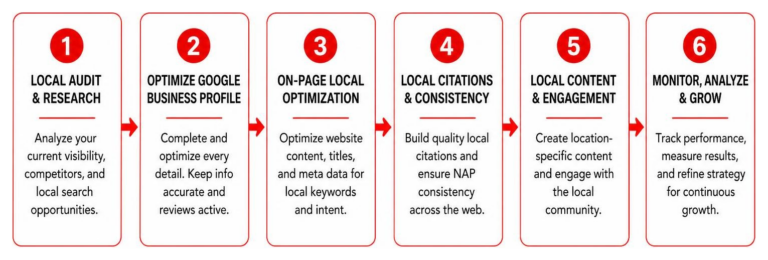
Local Dominance and Google Business Profile Optimization
For a family law firm, your geographic backyard is your primary revenue source. Most clients want an attorney they can visit in person, which makes local SEO the “bread and butter” of your strategy. The centerpiece of this effort is the Google Business Profile.
When someone searches for a local attorney, Google displays the “Local Pack” — the map showing three prominent local businesses. Getting into this top three is transformative. Google research indicates that customers are 70% more likely to visit businesses with a complete and optimized profile.
To achieve local dominance, we focus on:
- NAP Consistency: Your Name, Address, and Phone number must be identical across every corner of the web. Even a small discrepancy (like “Street” vs. “St.”) can confuse search engines.
- Client Reviews: Reviews are a primary ranking signal. Since 79% of consumers trust online reviews as much as personal recommendations, a steady stream of 5-star feedback is non-negotiable.
- Mobile-First Optimization: Since the majority of these searches happen on the go, your profile and website must be flawlessly responsive.
High-Intent Keyword Research for SEO Services Family Law
Effective keyword research isn’t just about finding words with high search volume; it’s about finding words with high intent. In family law, broad terms like “divorce” are too vague. We want “long-tail” queries like “high-asset divorce attorney for business owners” or “emergency child custody filing procedures.”
We use professional tools like Google Keyword Planner and Semrush to identify these opportunities. These tools allow us to see exactly what potential clients are typing into the search bar, how many people are searching for it, and how difficult it will be to outrank the competition.
By targeting low-difficulty, high-intent keywords, we can often see faster results for smaller firms. For example, ranking for “military divorce lawyer in San Diego” is often more profitable and less competitive than trying to rank for the generic “divorce lawyer” in the same city.
Empathetic Content Strategy and Technical Foundations
Family law is unique because the content must be both legally accurate and emotionally sensitive. A “cold” or overly aggressive tone can alienate someone who is currently going through one of the most stressful periods of their life. We build trust by creating content that answers their questions with empathy and authority.
This ties directly into Google’s E-E-A-T guidelines (Experience, Expertise, Authoritativeness, and Trustworthiness). For “Your Money or Your Life” (YMYL) topics like legal advice, Google sets the bar extremely high.
On the technical side, the foundation must be rock-solid. This includes:
- Site Speed: If your page takes more than three seconds to load, you’ve lost the client.
- Schema Markup: This is a “behind-the-scenes” code that helps Google understand that your site belongs to a legal professional, which can lead to rich snippets in search results.
- Crawlability: Ensuring that Google’s “spiders” can easily navigate your site to index your content.
- User Experience (UX): A clean, professional design that makes it easy for a stressed user to find your phone number or contact form.
Building a Compounding Growth Engine for Your Firm
At Clayton Johnson SEO, we don’t just “do SEO.” We build durable systems. My approach is rooted in the philosophy that clarity and structure lead to leverage and compounding growth. We move away from fragmented marketing tactics and toward a coherent growth engine.
For family law firms, this means creating a structured strategy that aligns your content architecture with the specific cases you want to win. Whether you are a solo practitioner or a multi-state firm, the goal is to turn search intent into measurable business impact. We use AI-augmented workflows to ensure that your content is not only high-quality but also produced at a scale that allows you to outpace the competition.
Ethical Link Building and State Bar Compliance
Link building—the process of getting other reputable websites to link to yours—is one of the most powerful ranking factors. However, for lawyers, this must be done with extreme care. You must remain compliant with state bar advertising rules, which often prohibit “guarantees” of success or misleading claims.
We focus on earning “white-hat” backlinks from authoritative legal sources. This includes:
- Legal Directories: Ensuring you have high-quality profiles on FindLaw, Avvo, and Justia.
- Bar Associations: Links from local or state bar associations carry immense weight with Google.
- Guest Blogging: Writing authoritative articles for legal publications or local news outlets.
- Niche Citations: Links from local chambers of commerce or family-oriented non-profits.
These links act as “votes of confidence,” telling Google that your firm is a trusted authority in the family law space.
Measuring ROI and Success in SEO Services Family Law
One of the biggest mistakes firms make is focusing on “vanity metrics” like total traffic. Traffic is great, but you can’t pay your staff with “clicks.” We focus on conversion tracking—specifically, how many of those clicks turned into inbound phone calls, contact form submissions, or booked consultations.
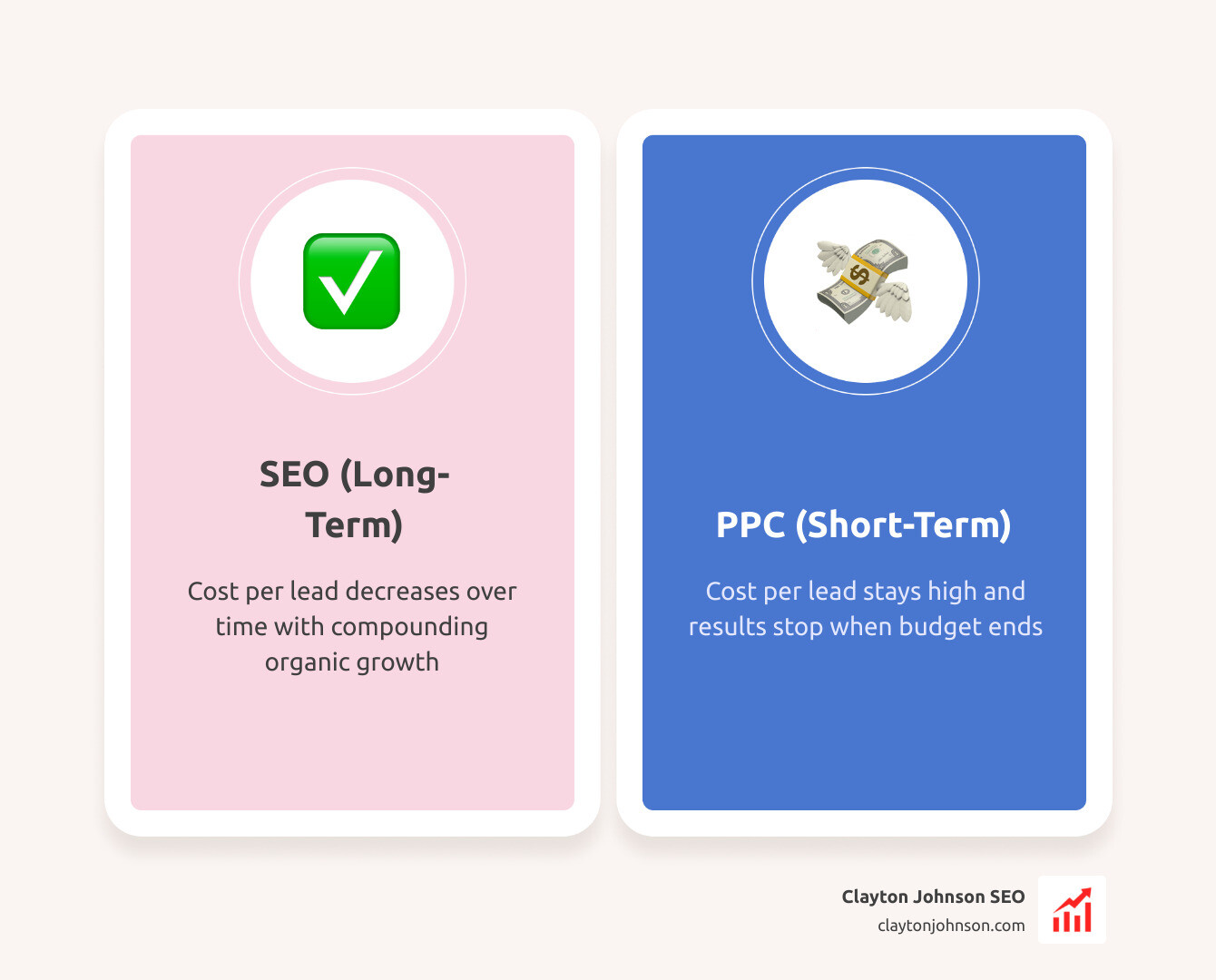
A typical SEO campaign for family law takes about 3 to 6 months to show meaningful movement, with full results often appearing in the 6 to 12-month range. However, once that engine is running, the cost per lead is significantly lower than paid advertising.
| Metric | SEO (Long-Term) | PPC (Short-Term) |
|---|---|---|
| Cost Per Lead | Decreases over time | Remains high/static |
| Trust Factor | High (Organic Authority) | Moderate (Paid Ad) |
| Sustainability | Compounding results | Stops when budget ends |
| Time to Results | 3-6 Months | Immediate |
To track this effectively, we use Google Analytics and Google Search Console to monitor exactly which pages are driving the most valuable leads.
Choosing Your SEO Partner and Avoiding Common Pitfalls
Not all SEO services family law providers are created equal. Many agencies use “cookie-cutter” strategies that might work for a plumber but fail miserably for a divorce attorney. When evaluating a partner, look for a “blended” approach that addresses technical, local, and content-driven SEO simultaneously.
Common pitfalls to avoid include:
- Guaranteed Rankings: No one can guarantee the #1 spot on Google. If they do, run.
- Cheap, Low-Quality Content: AI-generated “fluff” without attorney oversight will hurt your E-E-A-T and your brand.
- Ignoring Local SEO: If an agency doesn’t mention your Google Business Profile, they are missing the most important piece of the puzzle.
- Lack of Transparency: You should always know exactly what work is being done and what the results are.
According to research from BrightLocal, 98% of consumers read online reviews for local businesses. This applies to your SEO agency too. Look for proven results and a deep understanding of the legal niche.
Final Thoughts: The Path to Digital Authority
The legal landscape is shifting. The firms that will thrive in the coming years are those that view their digital presence as a core business asset, not just a line-item expense. By implementing a systematic approach to SEO services family law, you can ensure that when a potential client is at their most vulnerable and turns to Google for help, your firm is the one they find.
Ready to stop chasing tactics and start building a durable growth system? Whether you’re looking to dominate your local map pack or build a nationwide content powerhouse, the framework remains the same: Clarity, Structure, Leverage, and Compounding Growth.
Contact us today to see how we can turn your firm’s website into its most powerful lead-generation tool.