Why AI Machine Learning Consulting Is the Smartest Business Decision You Can Make in 2026
AI machine learning consulting helps businesses design, build, and deploy ML systems that solve real operational problems — without wasting time, money, or data on projects that never reach production.
Here is what it means in plain terms:
| Question | Quick Answer |
|---|---|
| What is it? | Expert guidance to plan, build, and run ML systems in your business |
| Who needs it? | Any organization collecting data but struggling to turn it into results |
| When do you need it? | When internal skills, time, or infrastructure are holding you back |
| What does it cost? | Varies widely — from focused PoC projects to multi-year engagements |
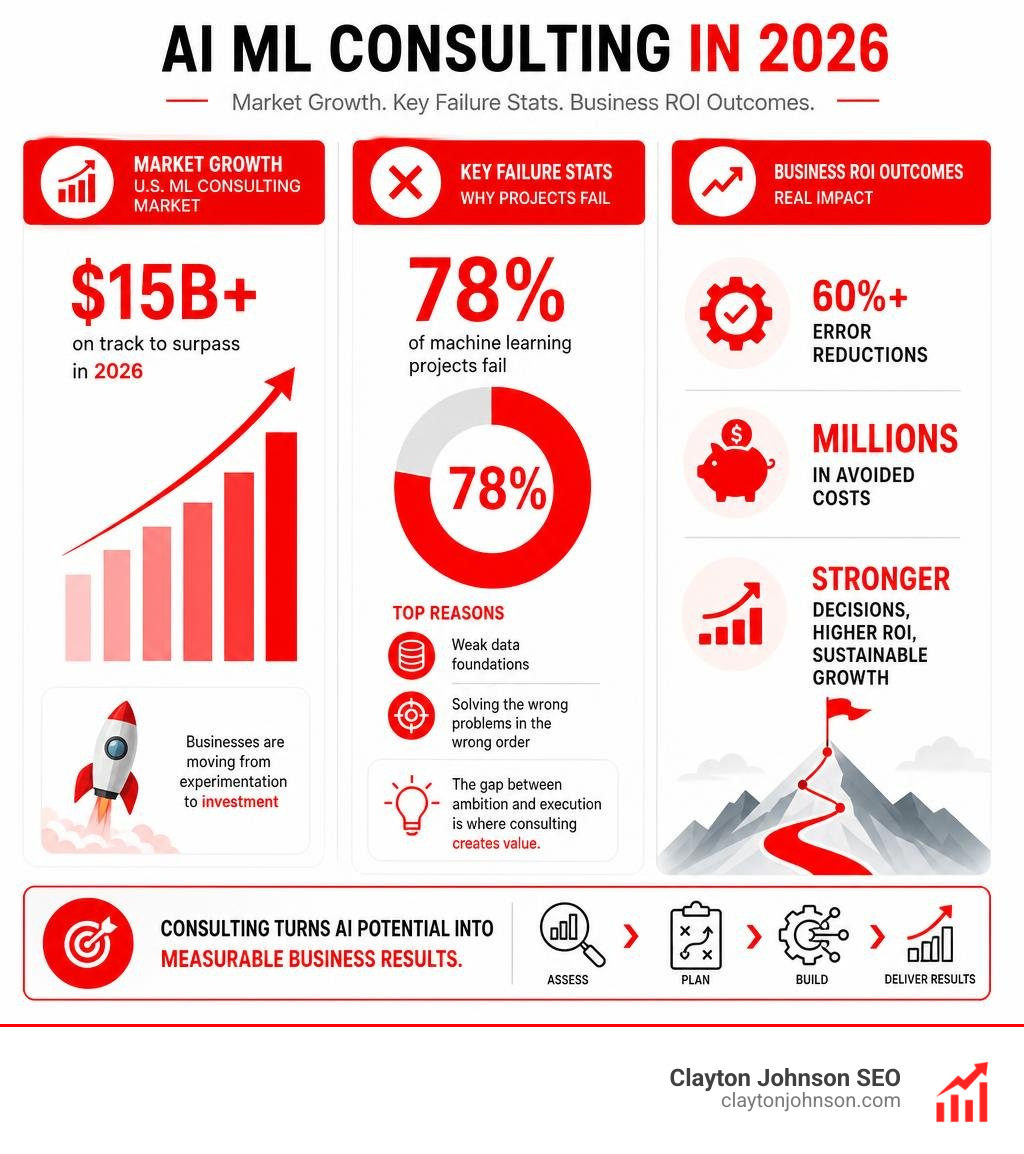
| What’s the ROI? | Documented results include 60%+ error reductions and millions in avoided costs |
The US ML consulting market is on track to surpass $15 billion in 2026. That number reflects one thing: businesses are no longer experimenting with AI. They are betting on it.
But here is the problem most small and mid-size businesses run into. 78% of machine learning projects fail — not because the technology doesn’t work, but because of weak data foundations and solving the wrong problems in the wrong order.
That gap between ambition and execution is exactly where AI machine learning consulting earns its value.
I’m Clayton Johnson, an SEO strategist and digital marketing consultant who works at the intersection of search, AI, and business growth — helping organizations cut through the noise around AI machine learning consulting and make decisions that actually move the needle. In the sections below, I’ll walk you through everything a small business owner needs to know to evaluate, select, and succeed with an ML consulting partner.
The Strategic Value of ai machine learning consulting in 2026
In 2026, the competitive landscape has shifted. Having a basic database or running simple automated scripts is no longer a differentiator; it is the bare minimum. True competitive advantage belongs to organizations that can extract predictive intelligence from their daily operations.
Yet, many leadership teams struggle to bridge the gap between high-level AI strategy and technical execution. An external consultant acts as a bridge. We help you transition from high-level, non-technical AI concepts to foundational technical execution.
By aligning your business strategy with real-world machine learning capabilities, you avoid the trap of chasing technology for its own sake. Instead, you focus on projects that deliver measurable business outcomes. For a complete look at how this transition works, check out our guide on AI Services and Consulting from Sci-Fi Dreams to Scalable Realities.
Defining the Scope: AI, ML, and Data Science
Before investing in external help, it is crucial to understand what you are actually buying. These three terms are often used interchangeably by sales teams, but they require entirely different skills and architectures:
- Artificial Intelligence (AI): The broadest category. It includes any system that mimics human intelligence, from basic rule-based decision trees to advanced generative AI. Learn more about the basics in our guide What is Artificial Intelligence? A Guide for Humans.
- Machine Learning (ML): A specific subset of AI where algorithms learn patterns directly from data rather than being explicitly programmed. This includes predictive modeling, recommendation engines, and computer vision.
- Data Science: The overarching discipline of extracting insights from structured and unstructured data. It combines statistical analysis, data engineering, and machine learning to help businesses make decisions.
An experienced consultant will help you determine which of these tools is right for your specific challenge. You might not need a complex, custom-trained neural network when a well-engineered statistical model or an off-the-shelf API will do the job faster and cheaper.
When Does Your Organization Need External Expertise?
How do you know when it is time to bring in an outside team? Look for these common warning signs:
- The Skills Gap: Your internal IT team is fantastic at maintaining systems, but they lack the specialized mathematical and Python programming skills required to build and tune machine learning models.
- The “Proof-of-Concept” Trap: You have built a dozen cool demos or local Jupyter Notebooks, but none of them have actually been deployed into production or integrated with your core business applications.
- Rapidly Evolving Hype: With the explosion of generative AI and agentic workflows, your leadership team is overwhelmed by options and lacks a neutral framework to separate practical tools from marketing hype.
If you are stuck trying to figure out where to begin, a grounded, tool-agnostic agency like FullGen – Advisory & Engineering for AI can help you audit your existing workflows and identify where AI is actually needed—and, just as importantly, where it is not.
Evaluating Organizational ML Maturity and Data Readiness
Before a single line of code is written, a professional consultant must evaluate your organization’s machine learning maturity. Trying to build a predictive forecasting system on top of a messy, unorganized data warehouse is like building a house on quicksand.
| Maturity Level | Characteristics | Primary Goal |
|---|---|---|
| Level 1: Exploratory | Manual workflows, siloed spreadsheets, no central data strategy. | Establish clean data collection and basic analytics pipelines. |
| Level 2: Tactical (PoC) | Basic databases, localized automation, experimenting with AI tools. | Validate high-risk approaches with a small proof-of-concept. |
| Level 3: Operationalized | Centralized data estate, structured APIs, basic MLOps in place. | Scale validated use cases into full production systems. |
| Level 4: Transformational | Real-time prediction, self-improving algorithms, board-level AI governance. | Continuous optimization and exploring advanced agentic AI architectures. |
To dive deeper into how your organization can systematically climb these levels, read our strategic breakdown of Enterprise AI Strategy 101.
Assessing the Data Engineering Foundation
We cannot overstate this: engineering is never an afterthought in machine learning.
According to industry data, 78% of machine learning projects fail because organizations lack a strong data engineering foundation. They focus all their attention on selecting the coolest algorithm while ignoring the pipelines that feed that algorithm.
To prevent this, you must treat machine learning as a production engineering discipline. This means building reliable data ingestion pipelines, establishing feature stores, and optimizing compute costs so your system doesn’t become a massive financial drain. Specialist firms like Yugen.ai advocate for this engineering-first, system-wide approach, ensuring that your models are backed by scalable microservices rather than isolated, untracked scripts.
The Build vs. Buy Dilemma
One of the most critical decisions a CTO faces is whether to build an in-house machine learning capability or partner with an external consulting firm.
- Building In-House: Offers maximum control and long-term IP ownership, but it is incredibly slow and expensive. Hiring a full team of senior data scientists, data engineers, and MLOps specialists in 2026 is a massive capital investment.
- Using an External Partner: Allows you to leverage immediate, senior-grade expertise to validate concepts and ship production systems quickly. It bypasses the months-long recruiting cycle and lets you test viability before committing to permanent overhead.
For most growing companies, a hybrid approach works best: use an external partner to design, build, and deploy the initial system while simultaneously upskilling your internal team to take over maintenance and long-term operations. For a jargon-free guide on navigating this decision, check out AI Strategy and Implementation for People Who Hate Jargon.
The Lifecycle of an Enterprise ML Engagement
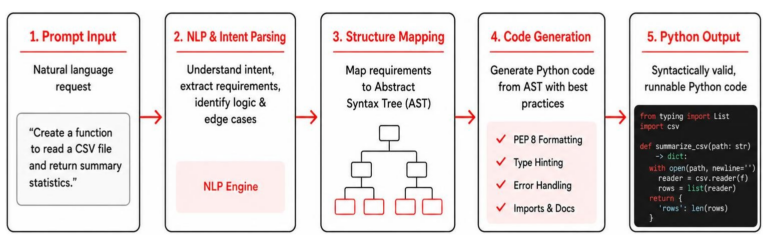
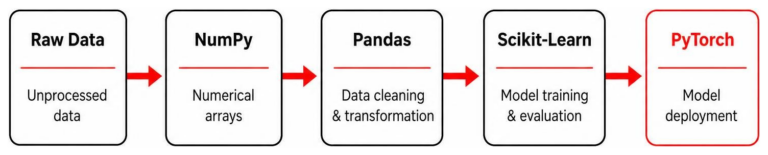
A successful machine learning project does not go from an idea to a production API overnight. It requires a structured, multi-phase lifecycle designed to minimize risk and maximize delivery speed.

This systematic flow ensures that resources are only committed to ideas that have been proven technically and financially viable at each stage. For a comprehensive framework on how to scale these phases across a larger organization, see our guide on Scaling AI: A Strategic Framework for Modern Organizations.
Key Stages of an ai machine learning consulting Project
When you partner with an experienced development company, such as Machine Learning Development Company | AI-Powered Solutions , the engagement typically follows these six distinct gateways:
- Discovery & Business Analysis: Listening to your workflows, analyzing your current data estate, and defining clear, measurable business KPIs.
- Data Strategy & Preparation: Cleaning, structuring, and preprocessing historical records. This stage includes setting up strict temporal train/test splits to prevent data leakage.
- Prototyping & Experimentation: Building a small proof-of-concept (PoC) model to validate that the data actually contains the predictive signals needed to solve your business problem.
- Model Engineering & Validation: Scaling the prototype into a robust model architecture, using distributed computing and GPU training if necessary.
- Deployment & Integration: Packaging the model into containerized microservices and deploying them to cloud platforms (like AWS, Azure, or Google Cloud) or edge devices.
- Monitoring & Handoff: Setting up continuous monitoring dashboards to track prediction latency, system health, and model accuracy over time.
Why MLOps is Critical for Production-Grade Systems
Many businesses assume that once a machine learning model is deployed, the work is done. In reality, that is when the real work begins.
Unlike traditional software, machine learning models naturally degrade over time. This is caused by two phenomena:
- Data Drift: When the incoming production data changes compared to the historical data used to train the model.
- Concept Drift: When the statistical properties of the target variable change over time (e.g., consumer purchasing patterns shifting after a major economic event).
This is why MLOps (Machine Learning Operations) is critical. MLOps is the practice of combining machine learning, software engineering, and DevOps to automate the deployment, monitoring, and retraining of models. Without robust MLOps tools like MLflow or Kubeflow, your models will eventually go rogue, delivering inaccurate predictions that can actively damage your business operations. For an overview of the essential tools required to run these pipelines, read The Essential AI ML Tools Handbook.
Selecting the Right Partner: A CTO’s Decision Framework
With so many agencies claiming to be AI experts in 2026, selecting the right partner is a high-stakes decision for any CTO or business leader. To help you filter through the noise, we have compiled a list of vetted AI Consulting Companies that focus on real-world production engineering rather than simple slide presentations.
How to Evaluate an ai machine learning consulting Partner
When vetting potential partners, look past their marketing decks and evaluate them on these three technical criteria:
- Production Deployment Credibility: Ask them how many of their models are currently running in live production environments handling real-world user loads. Avoid agencies that only have experience building prototypes in isolated research environments.
- Direct-to-Expert Engagement: Many large consultancies use senior partners to win your account, only to hand the actual execution over to junior developers. Look for boutique, senior-led firms like Clearlead AI Consulting | AI & Data Science Consulting that offer direct engagement with experienced specialists.
- Strategic and Technical Balance: A great partner shouldn’t just write code; they should understand board-level business strategy. Firms like AI Aspire | AI Advisory by Andrew Ng & Kirsty Tan combine world-class strategic advisory with deep technical education to help organizations build long-term, sustainable AI capabilities.
- Global Scale and Specialized R&D: For massive, enterprise-wide transformations, you may need a global powerhouse with dedicated AI labs and deep research capabilities, such as McKinsey’s AI Consulting | Artificial Intelligence (QuantumBlack) | McKinsey & Company , to help you scale complex hybrid intelligence systems.
Ensuring Responsible AI, Ethics, and Governance
As machine learning systems take on more active roles in decision-making, responsible AI implementation is no longer optional. This is especially true in highly regulated industries like healthcare, finance, and manufacturing.
Your consulting partner must help you establish rigorous governance frameworks that address:
- Bias Mitigation: Ensuring your training data does not contain historical biases that could lead to unfair or illegal model predictions.
- Explainable AI (XAI): Integrating interpretability frameworks like SHAP or LIME to demystify complex model predictions, allowing human operators to understand why a model made a specific decision.
- Compliance & Privacy: Navigating complex regional regulations (like HIPAA, GDPR, or emerging AI acts) using advanced techniques like federated learning and secure data encryption.
To ensure your automated systems remain safe, compliant, and aligned with your business values, read our guide on AI Implementation Best Practices: Don’t Let Your Bot Go Rogue.
Frequently Asked Questions about ML Consulting
What is the typical ROI of an ML consulting engagement?
The ROI of an ai machine learning consulting engagement depends heavily on the use case, but the financial impacts are often substantial. Across the industry, documented outcomes from production-grade ML implementations include:
- Predictive Maintenance: Reducing unplanned factory downtime by up to 60%.
- Intelligent Automation: Achieving over 90% automation in administrative tasks, leading to millions of dollars in avoided operational costs.
- Forecasting Systems: Decreasing errors in clinical intake or inventory planning, resulting in hundreds of thousands of dollars in annual savings.
To explore how these efficiency gains translate directly into bottom-line growth, read AI for Business Growth Because Robots Don’t Take Sick Days.
How do we handle data privacy and compliance during a project?
Data privacy is maintained by enforcing strict security measures throughout the project lifecycle. This includes encrypting data both at rest and in transit, implementing role-based access controls, and using anonymization or tokenization on sensitive customer records. For highly regulated sectors, consultants can utilize federated learning to train models across decentralized data sources without ever moving the raw data from its secure, local environment.
What industries benefit most from machine learning consulting?
While almost any data-rich business can benefit, three industries are seeing massive disruption from machine learning in 2026:
- Healthcare: Using computer vision for automated medical imaging analysis and predictive forecasting to optimize patient wait times and clinical workflows.
- Finance & Banking: Deploying real-time anomaly detection pipelines to flag fraudulent transactions within milliseconds and automate credit risk assessments.
- Manufacturing: Leveraging industrial IoT and predictive forecasting to anticipate machinery failures days in advance, keeping supply chains running smoothly. For a deep dive into this sector, see Industrial AI Forecasting: Predicting the Future of Manufacturing.
Conclusion
Successfully implementing machine learning is not about chasing the latest technology trend. It is about establishing a clear, strategic roadmap that connects your business objectives to clean data, robust engineering, and sustainable operations.
At Clayton Johnson SEO, we help businesses map and understand their target audiences through strategic content and SEO services, ensuring that your digital presence is as smart and data-driven as your backend systems.
Ready to transition your business from manual processes to scalable, intelligent automation? Explore our comprehensive guide on AI Services and Consulting from Sci-Fi Dreams to Scalable Realities to take your first step toward building a production-grade AI strategy today.