Scaling Precision: A Guide to Enterprise AI Diagnostic Environments


The Architecture of Enterprise AI Diagnostic Tools
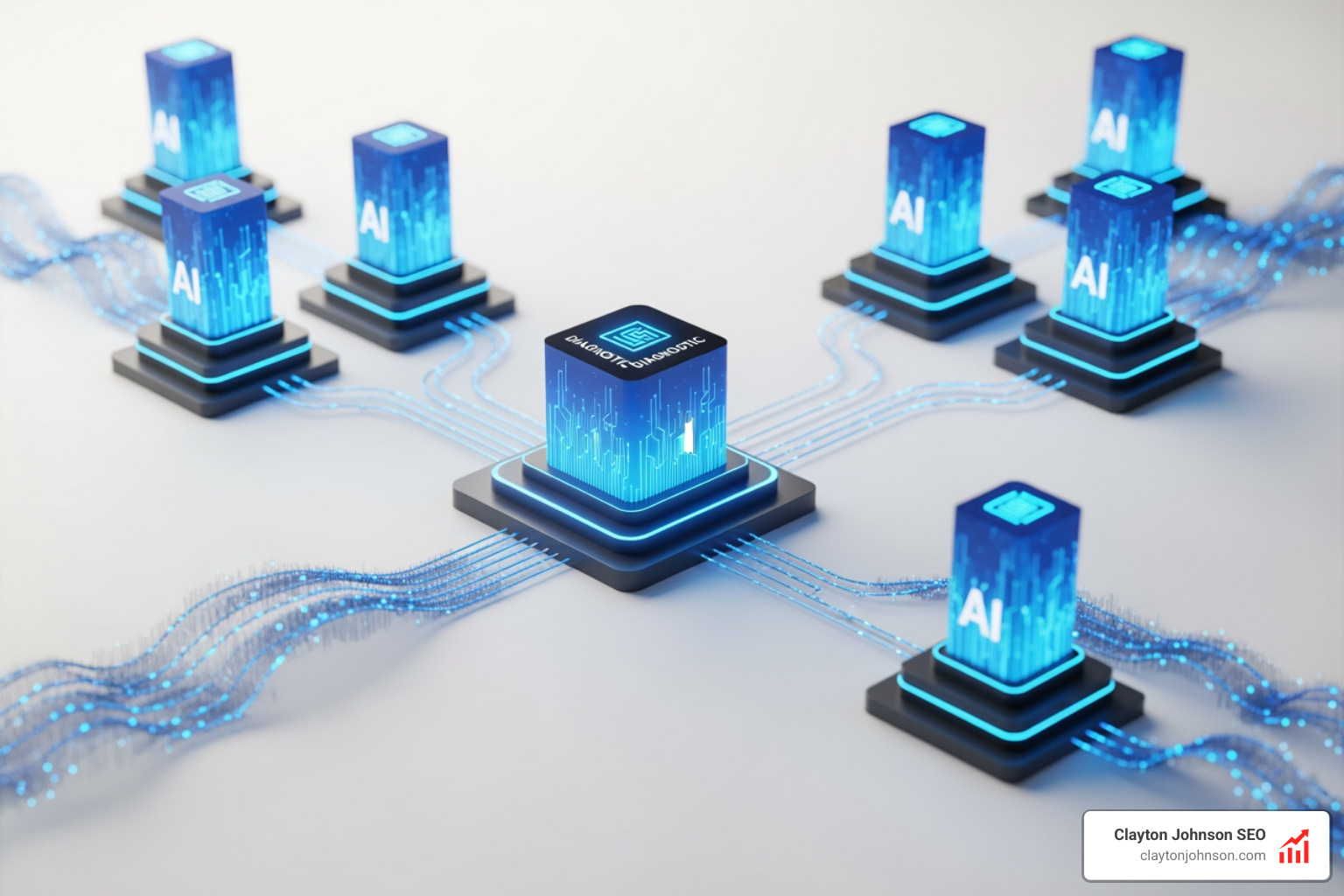
When we move beyond simple chatbots and into high-stakes operations, the architecture of our enterprise AI diagnostic tools must be built for heavy lifting. It isn’t just about catching a bug; it’s about maintaining a “digital health” ecosystem that spans thousands of concurrent processes.
Scalability and Performance
In an enterprise environment, scalability isn’t a luxury—it’s the baseline. If your diagnostic tool can’t handle ten thousand nightly regression tests across various global regions, it’s a bottleneck, not a solution. We look for tools that feature distributed execution capabilities. This allows the system to spread the computational load across multiple nodes, ensuring that a massive spike in data doesn’t crash your monitoring dashboard.
Agentic AI and Root Cause Analysis
We are seeing a massive shift toward “agentic” systems. Unlike traditional software that follows a rigid script, agentic AI can reason, plan, and execute tasks autonomously. In a diagnostic context, this means the tool doesn’t just send you an alert saying “System Down.” Instead, it acts as a digital investigator, performing automated root cause analysis to pinpoint exactly which microservice or data drift caused the failure.
By understanding the enterprise AI strategy behind these deployments, organizations can move from reactive firefighting to proactive prevention.
Integrating Enterprise AI Diagnostic Tools into CI/CD Pipelines
For a diagnostic tool to be effective, it must live where the code lives. Integration with CI/CD (Continuous Integration/Continuous Deployment) pipelines like Jenkins, Azure DevOps, GitHub, and GitLab is critical.
When a developer pushes a new model update, the diagnostic environment should automatically trigger:
- Automated Regression: Ensuring new updates don’t break existing features.
- Model Validation: Checking for bias or accuracy drops.
- Infrastructure Health: Confirming the environment can support the new load.
Without these integrations, organizations often face the root causes of failure for AI projects, where disconnected tools lead to “silent failures” that aren’t caught until they hit production.
Functional vs. Non-Functional Testing Frameworks
We categorize enterprise diagnostics into two main buckets:
- Functional Testing: This focuses on the “what.” Does the AI provide the correct answer? Does the locator support work for web and mobile elements? This includes test authoring and managing complex datasets to ensure the AI logic holds up.
- Non-Functional Testing: This focuses on the “how.” How fast is the response (performance)? Does it look right on a mobile screen (visual)? Is it usable by everyone (accessibility)?
Modern enterprise ai diagnostic tools must also bridge the gap between API testing and IoT integration, especially for organizations managing hardware-software hybrid systems.
Governance, Compliance, and Security Protocols
In regulated industries like healthcare and finance, “oops” is not an acceptable technical response. Governance is the fence that keeps innovation from wandering into a legal minefield.
Security Features That Matter
- RBAC (Role-Based Access Control): Ensuring that only authorized personnel can see sensitive diagnostic data.
- Data Masking: Automatically blurring or replacing PII (Personally Identifiable Information) so developers can debug systems without seeing actual patient or client data.
- Audit Logs: A permanent, unchangeable record of who did what and when—essential for passing SOC2 or GDPR audits.
Explainability and Human-in-the-Loop
One of the biggest hurdles in AI adoption is the “black box” problem. If an AI diagnostic tool flags a medical image as high-risk, a doctor needs to know why. This is where explainability comes in. By mastering enterprise AI governance and regulatory standards, companies ensure their AI provides a clear trail of logic. Furthermore, “human-in-the-loop” features allow experts to override or validate AI findings, building a layer of trust that fully autonomous systems lack.
Multi-Tenancy and Deployment Flexibility
Large enterprises aren’t monolithic; they are collections of teams. A marketing team in Minneapolis might need different diagnostic parameters than a DevOps team in London. Multi-tenancy allows these teams to operate in isolated workspaces within the same platform. This prevents data leakage while allowing leadership to see a “roll-up” view of the entire organization’s AI health.
Whether you choose SaaS, on-prem, or hybrid (including air-gapped systems for maximum security), the deployment model must match your risk profile.
Top Enterprise AI Diagnostic Tools for Scalable Operations
Choosing the right tool is about matching the platform to your specific industry needs. Here is how some of the heavy hitters stack up:
Clinical Precision with Aidoc
In the medical field, diagnostics save lives. Aidoc’s platform is a prime example of how AI can be embedded into radiology and healthcare workflows. Their scientific research on clinical AI impact shows staggering results: a 31% faster time-to-notification for pulmonary embolism patients and a 34% reduction in door-to-puncture time for stroke victims. This isn’t just “tech”—it’s a 38-minute head start on saving a life.
Observability with Dynatrace Davis AI
For IT and DevOps teams, Dynatrace Davis AI offers a “causation engine” rather than just a correlation engine. While other tools might guess that two events are related, Davis AI uses the Smartscape dependency graph and the Grail data lakehouse to prove it. This Davis AI causation engine allows for deterministic anomaly detection, meaning it finds the “why” behind system failures with mathematical certainty.
Data-Centric Diagnostics in Snowflake Cortex
Snowflake Cortex brings diagnostics directly to the data layer. By using the LLM-as-a-judge technique, it can evaluate generative AI applications (like RAG systems) for accuracy and groundedness. Using TruLens, it manages metadata and traces every step of an AI’s thought process, ensuring that the answers provided to users are backed by the organization’s actual data.
Other Notable Platforms
- IBM watsonx: A massive portfolio focusing on governed, transparent AI that helps enterprises save up to 90% of their time on complex code explanation.
- Databricks Mosaic AI: A unified platform for building agentic systems that has helped companies like Block achieve $10M in productivity gains.
- TestGrid: A leader in unified testing that supports cross-platform execution (web, mobile, API) with a focus on ease of use for QA teams.
Strategic Evaluation and ROI
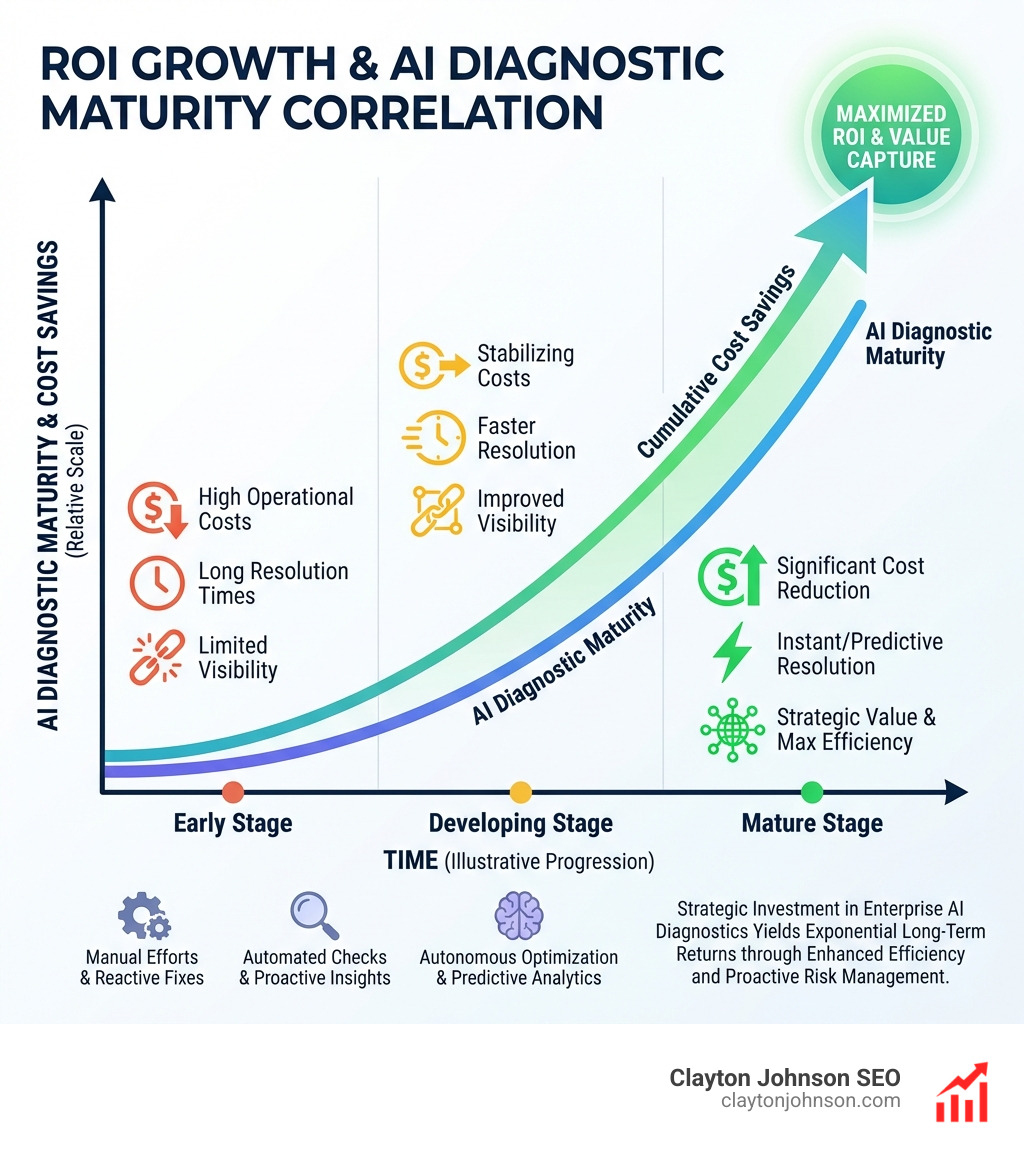
Investing in enterprise ai diagnostic tools isn’t just a technical expense; it’s a strategic move to protect your bottom line.
Evaluating Total Cost of Ownership (TCO)
When calculating ROI, we have to look past the initial subscription fee. We must consider:
- Maintenance: How much manual effort is required to keep the diagnostic tool running?
- Skill Gaps: Does your team need six months of training to use the tool?
- Productivity Gains: Are your developers spending 40% less time on manual debugging? (A feat achieved by IBM using watsonx for Ansible playbooks).
| Metric | Industry Benchmark | Top Performer Outcome |
|---|---|---|
| Code Explanation Time | Baseline | 90% Time Savings |
| Operational Costs | Baseline | 10x Reduction |
| Turnaround Time | Baseline | 99% Improvement (Vodafone) |
| Response Accuracy | ~80% | 96% (Intercontinental Exchange) |
By scaling AI for modern organizations with a structured approach, companies can ensure that their diagnostic environment grows alongside their business goals.
Emerging Trends in Agentic AI and Multimodal Diagnostics
The future of diagnostics is multimodal. We aren’t just looking at text logs anymore; we are looking at images, voice data, and sensor inputs from IoT devices. Agentic workflows will soon allow these tools to not only detect a problem but also initiate “autonomous remediation”—fixing the server or patching the code before a human even wakes up for their morning coffee.
Frequently Asked Questions about Enterprise AI Diagnostics
What are the requirements for effective enterprise test automation?
Effective automation requires a platform that can handle high-volume, parallel execution across different environments (web, mobile, API). It must offer “explainable” AI so that when a test fails, you aren’t left guessing why. Crucially, it must integrate with your existing CI/CD tools and support strong governance features like audit logs.
How do enterprise AI diagnostic tools handle multi-tenancy?
They create logically isolated “silos” or workspaces for different departments. This ensures that the Finance team’s data is never visible to the Marketing team, even though they are using the same underlying platform. It allows for centralized billing and administration while maintaining strict data privacy.
Why is explainability critical for compliance-heavy industries?
In industries like healthcare or finance, regulators require you to prove how a decision was made. If an AI denies a loan or flags a medical condition, a “black box” answer isn’t legally sufficient. Explainability tools break down the model’s logic into human-readable steps, making it possible to pass audits and maintain public trust.
Conclusion
At the end of the day, enterprise ai diagnostic tools are about more than just finding bugs—they are about building leverage. In our work at Demandflow.ai, we believe that clarity leads to structure, and structure leads to compounding growth.
Most organizations don’t lack the “tactics” to build AI; they lack the structured growth architecture to keep those systems healthy, compliant, and scalable. By implementing a robust diagnostic environment, you aren’t just protecting your current operations—you’re building the infrastructure for the future of your enterprise.
If you are ready to move beyond isolated experiments and into a world of high-precision, scalable AI, it’s time to explore enterprise AI solutions that align with your long-term business architecture. Precision isn’t just a goal; in the enterprise world, it’s the only way to grow.