Why Brand Authority Is the Difference Between Being Chosen and Being Ignored
How to build brand authority is the question every founder faces when they realize traffic doesn’t equal trust, and visibility doesn’t guarantee sales. You can rank on page one, flood LinkedIn with posts, and still lose deals to competitors who feel more credible—even if they’re not.
Here’s the short answer:
- Define your niche and stop trying to be everything to everyone
- Create original, expert-driven content that provides information gain, not recycled ideas
- Leverage thought leadership by showcasing real expertise, data, and contrarian insights
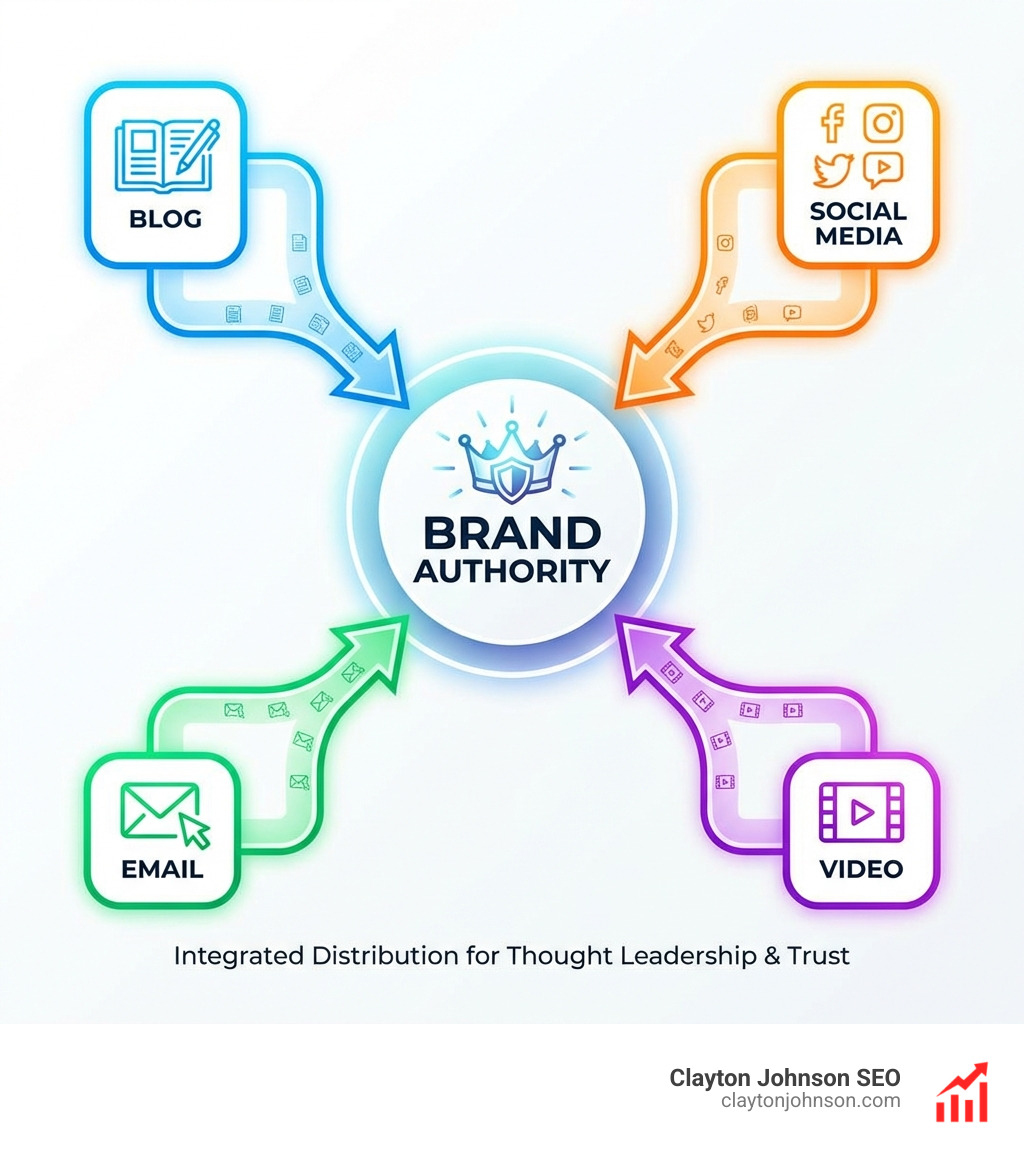
- Distribute consistently across multiple channels (blog, LinkedIn, podcasts, email)
- Build strategic partnerships and earn third-party validation through media, case studies, and co-branding
- Engage transparently with your audience and respond to feedback in real time
- Measure authority signals like backlinks, brand mentions, share of voice, and lead quality—not just traffic
Authority isn’t about being the loudest. It’s about being the most trusted when someone is ready to make a decision.
The stakes are high. According to research by Hendricks & Singhal, corporate award winners—a proxy for recognized authority—had 37% more sales growth and 44% higher stock price returns compared to peers. Meanwhile, 48% of companies awarded business to an organization after engaging with their thought leadership content, and 54% made a purchase for a new product or service they hadn’t even considered before.
Yet most brands treat authority building like a vanity project. They publish blog posts that repeat what’s already been said. They chase rankings without building trust. They confuse brand awareness (people have heard of you) with brand authority (people believe you).
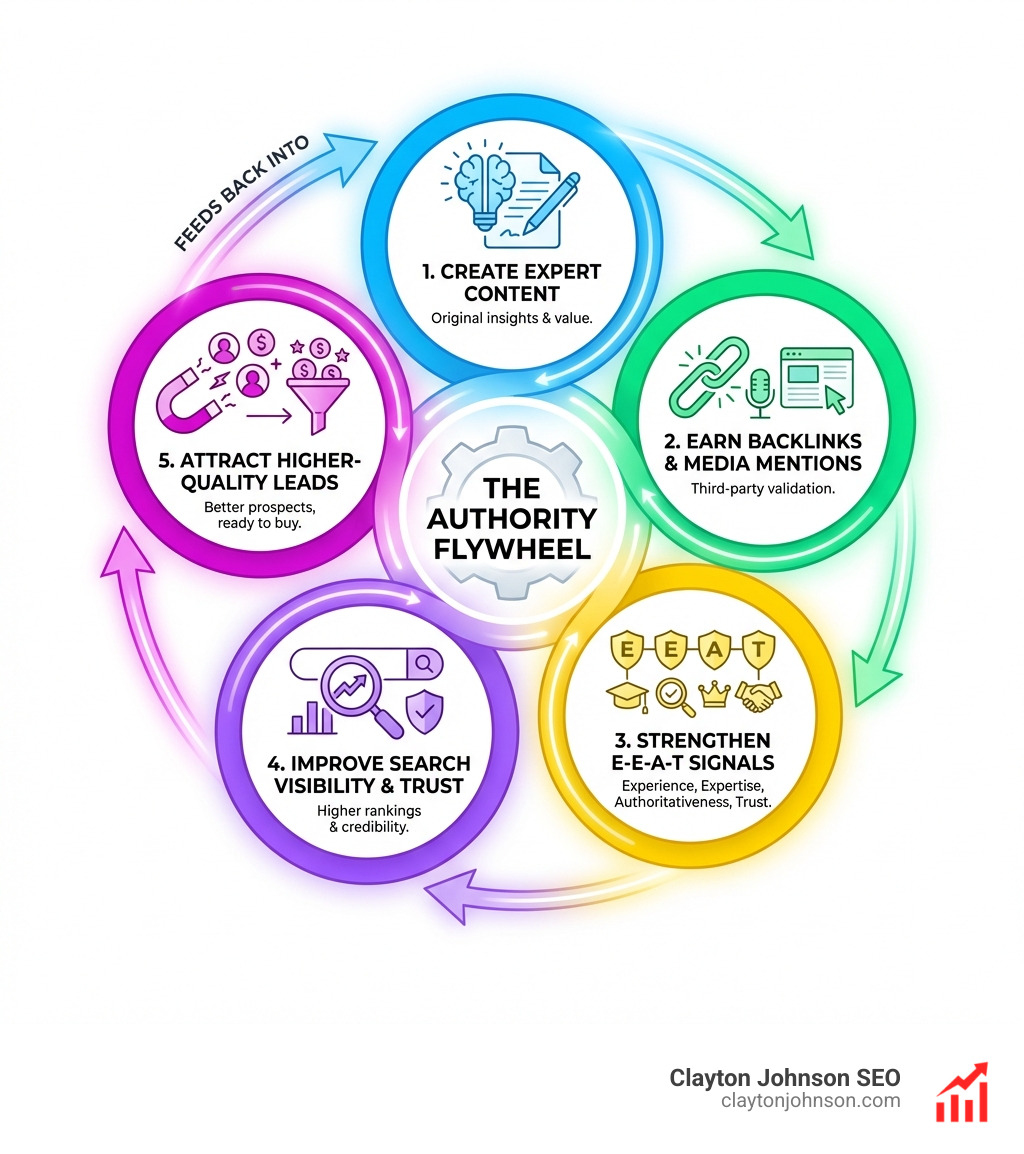
Google knows the difference. Its Search Quality Rater Guidelines emphasize E-E-A-T—Experience, Expertise, Authoritativeness, and Trustworthiness—as the foundation of page quality. Trust is the most important factor. If your content doesn’t signal credibility, it won’t rank, won’t convert, and won’t compound.
This guide is built for founders and marketing leaders who are done with tactics that don’t stick. I’m Clayton Johnson, and I’ve spent over a decade engineering scalable SEO systems, structured content architectures, and AI-augmented workflows that help brands build compounding authority and turn visibility into revenue—and I’ll show you exactly how to build brand authority using the same frameworks I deploy for enterprise clients.
Glossary for How to build brand authority:
- consumer insights examples
- digital marketing insights
Defining Brand Authority: More Than Just a Famous Name
We often see businesses confuse being “known” with being an “authority.” Brand awareness means people recognize your logo. Brand authority means they trust your advice. If you’re a local business in Minneapolis, you don’t need the whole world to know your name; you need your target market to view you as the definitive expert in your space.
Google’s Search Quality Rater Guidelines give us a roadmap for this through E-E-A-T. While “Experience” and “Expertise” are about what you know, “Authoritativeness” is about how others perceive you. Are other experts linking to you? Is the media citing your data?
| Feature | Brand Awareness | Domain Authority (DA) | Brand Authority |
|---|---|---|---|
| Primary Goal | Recognition & Recall | Search Engine Ranking Potential | Earned Trust & Industry Influence |
| Metric | Impressions, Social Following | Backlink Profile Strength | Sentiment, Mentions, Lead Quality |
| Focus | Being Seen | Being Ranked | Being Believed |
| Impact | Top of Funnel | Technical Visibility | Full Funnel Conversion |
Why You Must Learn How to build brand authority
Building authority isn’t just a “nice-to-have” marketing goal; it’s a survival mechanism in a saturated market. When you establish yourself as an expert, you stop competing on price and start competing on value.
The Hendricks & Singhal research on award winners proves that third-party validation translates directly to the bottom line. Beyond stock prices, authority drives:
- Customer Loyalty: Trust creates a self-reinforcing cycle. When customers view you as a leader, they are more likely to return and recommend you.
- Lead Quality: Authoritative content attracts decision-makers. Instead of tire-kickers, you get prospects who have already been “sold” by your expertise before the first sales call.
- Sales Growth: 54% of companies made a purchase after engaging with thought leadership, proving that authority accelerates the buyer’s journey.
Core Pillars of Authoritative Content Marketing
If you want to know how to build brand authority, you have to look at your content through the lens of “Information Gain.” This is a concept we lean on heavily at Demandflow. It asks: Does this piece of content add anything new to the internet, or is it just a rewrite of the top three results on Google?
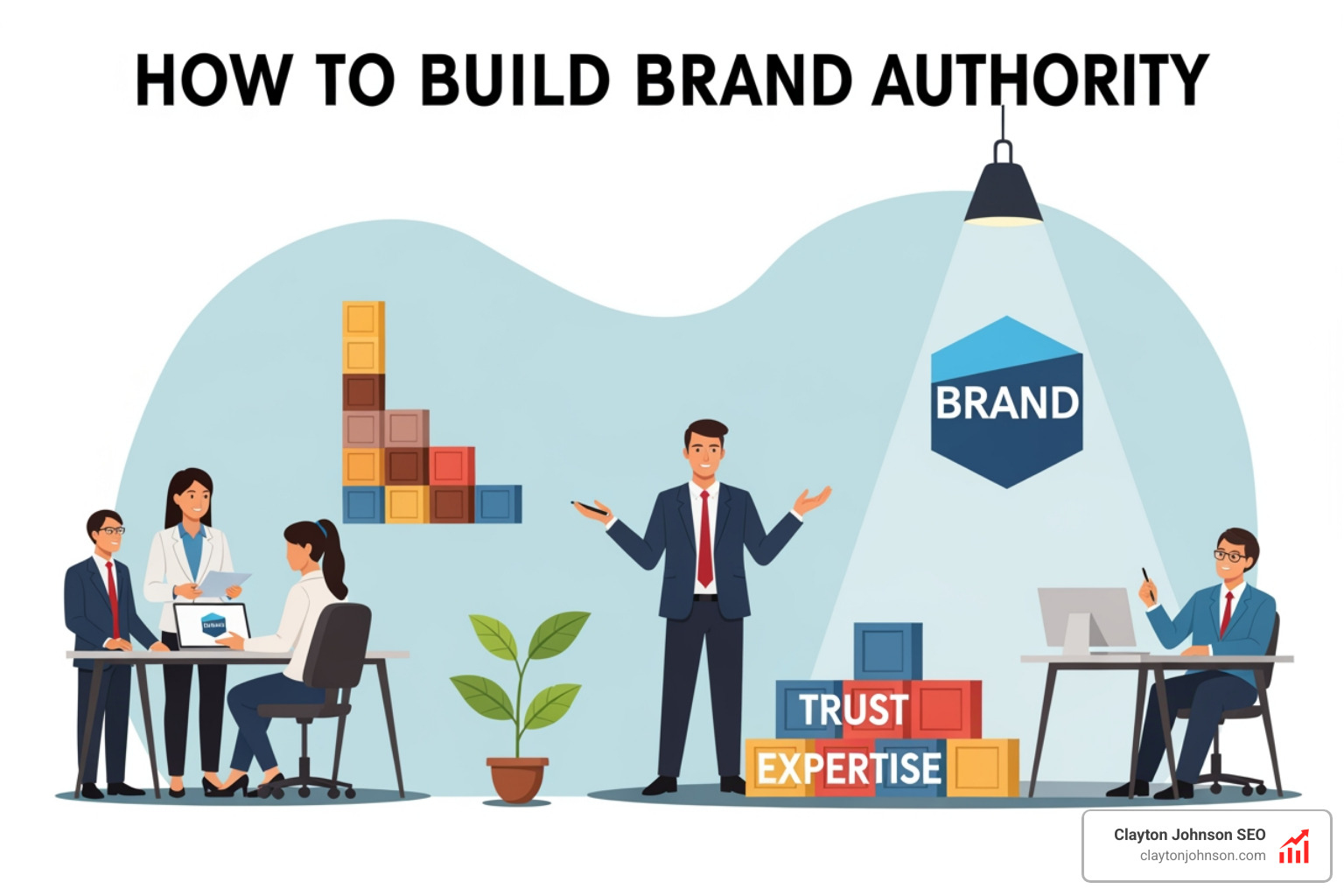
Original Research and Data Journalism
One of the fastest ways to build authority is to become the source of the data everyone else cites. By conducting surveys or analyzing public datasets—like the Occupational Requirements Survey—you can create “newsworthy” reports.
Data journalism isn’t just for big media companies. We use SEO content marketing services to help brands turn their internal data or niche surveys into link-magnets. When a major publication like CNBC or MarketWatch cites your study, you aren’t just getting a backlink; you’re getting a massive transfer of credibility.
Leveraging Thought Leadership and How to build brand authority
Thought leadership is the “big” content that positions your brand as an authoritative voice. It requires:
- Subject Matter Experts (SMEs): Don’t just hire a generalist writer. Use your internal experts. If you’re a SaaS founder, your unique perspective on the industry is your greatest asset.
- Contrarian Takes: Don’t be afraid to go against the grain. If everyone in your industry is saying “X,” but your data shows “Y,” speak up. Contrarian takes, when backed by evidence, generate high engagement and respect.
- Actionable Advice: Authority is proven through utility. If your readers can apply your tips immediately to solve a problem, they will view you as a mentor, not just a vendor. For a deeper dive, check out this Thought Leadership Content Guide.
Multichannel Distribution and Consistency
Authority is built through repetition across multiple touchpoints. You cannot be a “one-hit wonder” on a single blog post.
- Podcasts: Guesting on industry podcasts or hosting your own allows for a natural, human connection that text can’t always capture.
- LinkedIn: This is the “town square” for B2B authority. Share insights, engage in comments, and show up daily.
- YouTube: Video allows you to show your face and voice. For example, my YouTube channel has been a cornerstone for building long-term trust through weekly consistency.
- Evergreen Content: Focus on topics that remain relevant for years. While “newsjacking” is great for quick wins, evergreen content provides the foundation for your authority ecosystem.
Actionable Steps on How to build brand authority
Building authority isn’t a mystery; it’s a process. It starts with narrowing your focus. You cannot be an authority on “Marketing.” You can, however, be the authority on “SEO for Minneapolis-based medical practices.”
1. Define Your Niche
The more specific your niche, the easier it is to dominate. As we say at Demandflow, clarity leads to structure, which leads to leverage. Identify a specific problem your audience has and become the undisputed expert at solving it.
2. Showcase Social Proof and Authority Signals
People are wired to follow perceived authorities. You need to make your expertise visible.
- Case Studies: Show, don’t just tell. A single case study showing a $2 million sales lift from a specific strategy is worth more than a thousand generic blog posts.
- Awards and Accreditations: If you’ve won an industry award, put it on your homepage. It’s a shorthand for trust.
- Testimonials: Use customer feedback tools to gather and display reviews that speak to your expertise, not just your politeness.
3. Strategic Partnerships and Licensing
Sometimes, the fastest way to build authority is to borrow it.
- Co-branding: Partner with other authoritative brands. A great example is the Auntie Anne’s and Samuel Adams kit, which allowed both brands to tap into each other’s loyal audiences.
- Content Licensing: Licensing content from reputable publications can provide “instant” credibility. If you feature insights from a world-renowned source on your blog, that authority rubs off on you.
- Guest Contributions: Writing for high-authority industry sites puts your name in front of an established audience and earns you a powerful backlink.
4. Transparency and Audience Engagement
In the age of AI, “human” authority is more valuable than ever.
- User-Generated Content (UGC): Encourage your customers to share their stories. UGC acts as a modern-day referral system.
- Responsiveness: If someone asks a question on your blog or social media, answer it. Authority is a two-way street. Being responsive shows you actually care about the industry, not just the sale.
- Authentic Brand Voice: Stop using “corporate speak.” Be real. Show the behind-the-scenes of your business. Transparency builds a bridge of trust that polished marketing often burns.
Measuring and Scaling Your Industry Influence
You can’t manage what you don’t measure. While traffic is a “vanity metric,” authority can be tracked through more substantive data points.
- Organic Visibility: Use Google Search Console to see which informational keywords you rank for. Are you showing up for “How to” queries in your niche?
- Backlink Acquisition: Are other sites linking to your research? High-quality backlinks are a vote of confidence from the internet.
- Brand Sentiment: Use brand monitoring tools to see if people are talking about you positively, negatively, or at all.
- Share of Voice: How often is your brand mentioned compared to your competitors in industry discussions?

Avoiding Common Pitfalls in Authority Building
Many brands fail because they treat authority as a campaign rather than a lifestyle.
- Over-promotion: If every piece of content ends with a hard sales pitch, you aren’t an authority; you’re a telemarketer.
- Inconsistency: Publishing ten posts in one week and then disappearing for a month kills trust.
- Shallow Insights: Regurgitating the same tips everyone else is sharing. If you don’t have something new to say, don’t say it.
- Lack of Originality: Understand why thought leadership strategies fail—usually, it’s because they lack a unique point of view.
Frequently Asked Questions about Brand Authority
How long does it take to build brand authority?
There is no “overnight” authority. It’s a long game. While you can see quick wins through newsjacking or high-profile partnerships, true industry-leading authority usually takes 12 to 24 months of consistent, high-quality output to solidify.
Can small businesses compete with established brands?
Absolutely. In fact, small businesses often have an advantage because they can be more “niche” and “human.” A large corporation has to please everyone; a small business in Minneapolis can focus on being the absolute best for a very specific group of people.
What is the best metric for tracking authority?
While there isn’t one “Authority Score,” the best indicators are earned media mentions and unsolicited backlinks. When people talk about you or link to you without being asked, you’ve achieved authority.
Conclusion
Building brand authority isn’t about luck; it’s about architecture. Most companies don’t lack tactics—they lack a structured growth architecture that turns content into a compounding asset.
At Clayton Johnson SEO and Demandflow.ai, we help founders move past “random acts of content” and into a system of leverage. We combine taxonomy-driven SEO with competitive positioning models to ensure your brand isn’t just seen, but believed.
If you’re ready to stop being a “brand nobody” and start building an authority ecosystem that drives revenue, let’s talk. Whether you need a SEO Consultant Services to audit your current strategy or a full-scale growth engine, we have the frameworks to get you there.
Related posts:
 Building a Responsible AI Framework: 5 Key Principles for Success
 Claude AI Code Generation and Review Guide
 Welcome to the Dark Side of the Moonshot AI
 Replicate 101
 The 4 Core Digital Marketing Pillars (Traffic & Brand Growth)
 How to Enhance Your Coding Skills in the Age of AI
 How to Navigate Disruption Using the McKinsey Grid
 Finding Keywords with AI is Easier Than You Think
 Steal These Business Models (Legally)
 CX Roadmap Template: Your GPS for Customer Success
 How to Use Traffic Generation AI to Boost Your Visibility
 Digital Innovation via the Business Model Canvas