The Best SEO Systems for Social Media Success

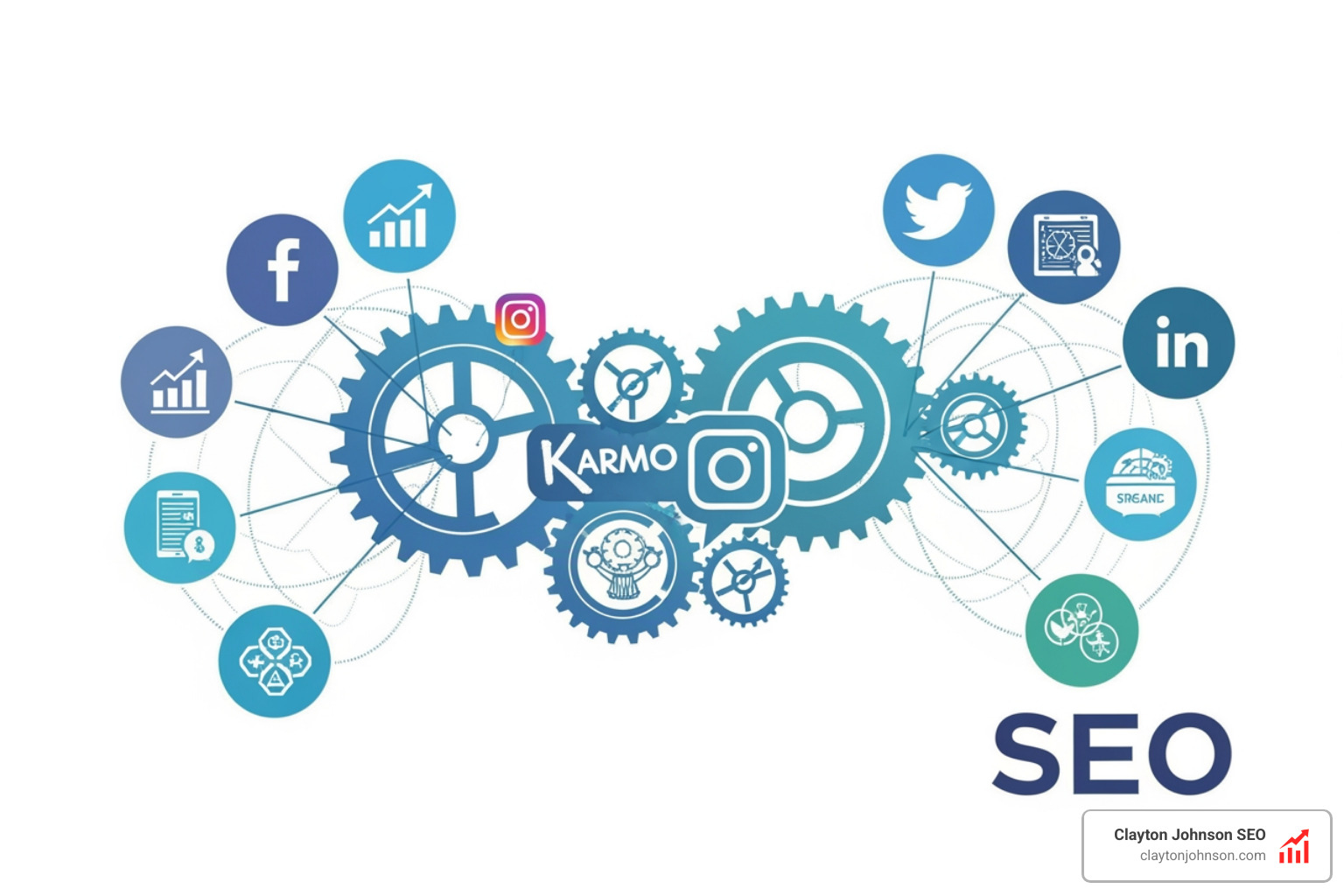
Why SEO Systems for Social Are Now a Business Necessity
SEO systems for social are structured frameworks that optimize your social media profiles, content, and workflows to drive discovery — both inside social platforms and on traditional search engines like Google.
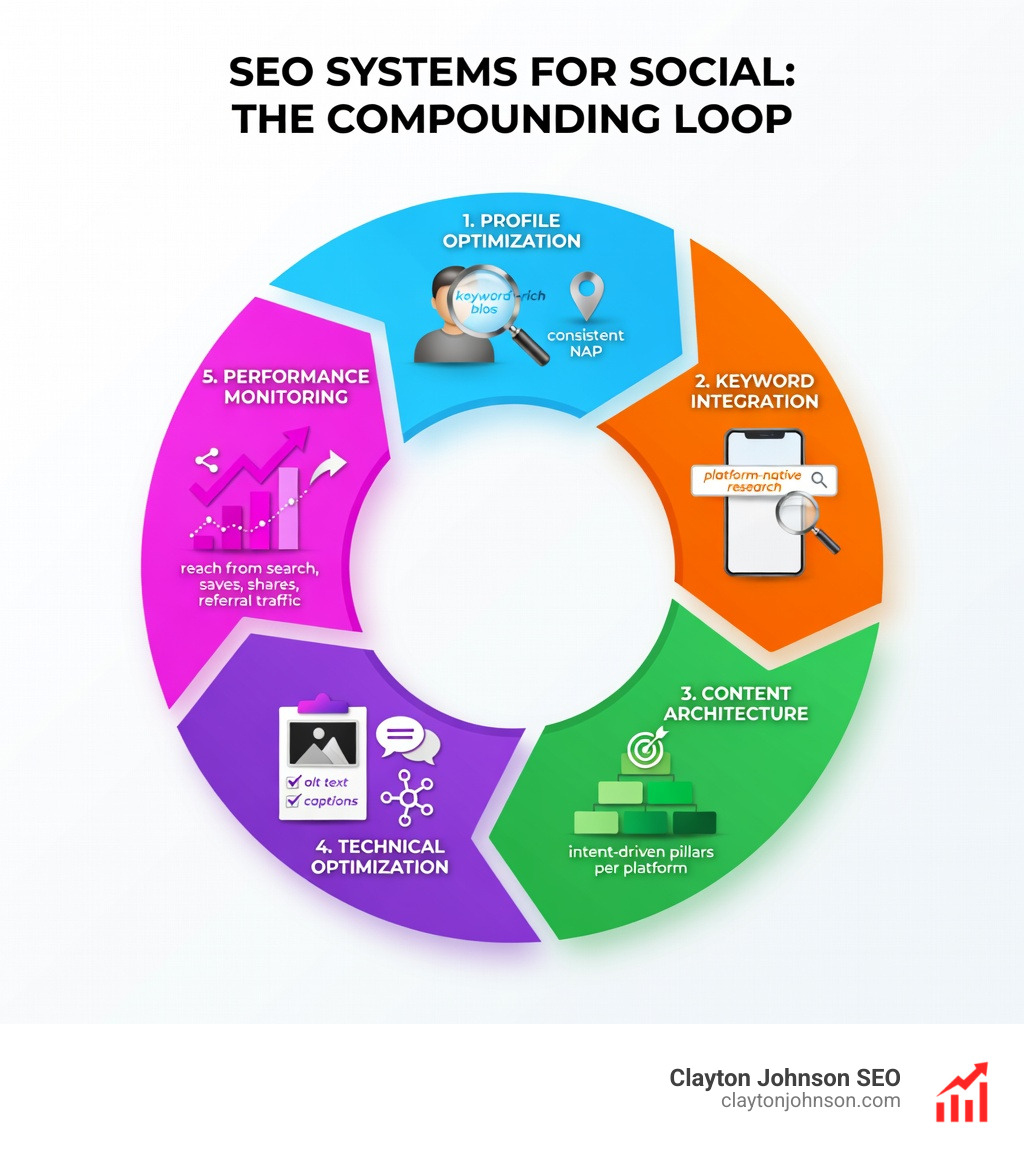
Here is a quick overview of what an effective system includes:
- Profile optimization — keyword-rich bios, consistent branding, complete business info
- Keyword integration — platform-native keyword research built into every post
- Content architecture — content pillars aligned to search intent on each platform
- Technical optimization — alt text, captions, descriptive filenames, and link management
- Performance monitoring — tracking reach from search, saves, shares, and referral traffic
Here is why this matters right now.
46% of Gen Z now skips Google entirely when looking for answers. They go straight to TikTok, Instagram, and YouTube. And it is not just Gen Z — 43% of consumers across all demographics now discover products through social search.
Social platforms are no longer just distribution channels. They are search engines.
TikTok ranks “how to” queries. Instagram’s Explore tab surfaces intent-driven content. YouTube has always been a search engine — Shorts just gave it a format upgrade. Pinterest is built entirely around visual discovery. Even LinkedIn now matches searchable post previews to keyword queries.
The brands showing up in those searches are not necessarily the biggest ones. A single well-optimized Reel or TikTok can outperform a legacy brand with a massive following — because social SEO levels the playing field. It does not require a decade-old domain or hundreds of backlinks. It requires a system.
That is exactly what this guide is about.
I’m Clayton Johnson — an SEO strategist who builds scalable, taxonomy-driven SEO systems for social and traditional search, helping founders and marketing leaders turn fragmented content efforts into compounding growth engines. This guide draws directly from the frameworks I use with clients operating in competitive, high-intent markets.
Basic seo systems for social terms:
How to Build Scalable SEO Systems for Social
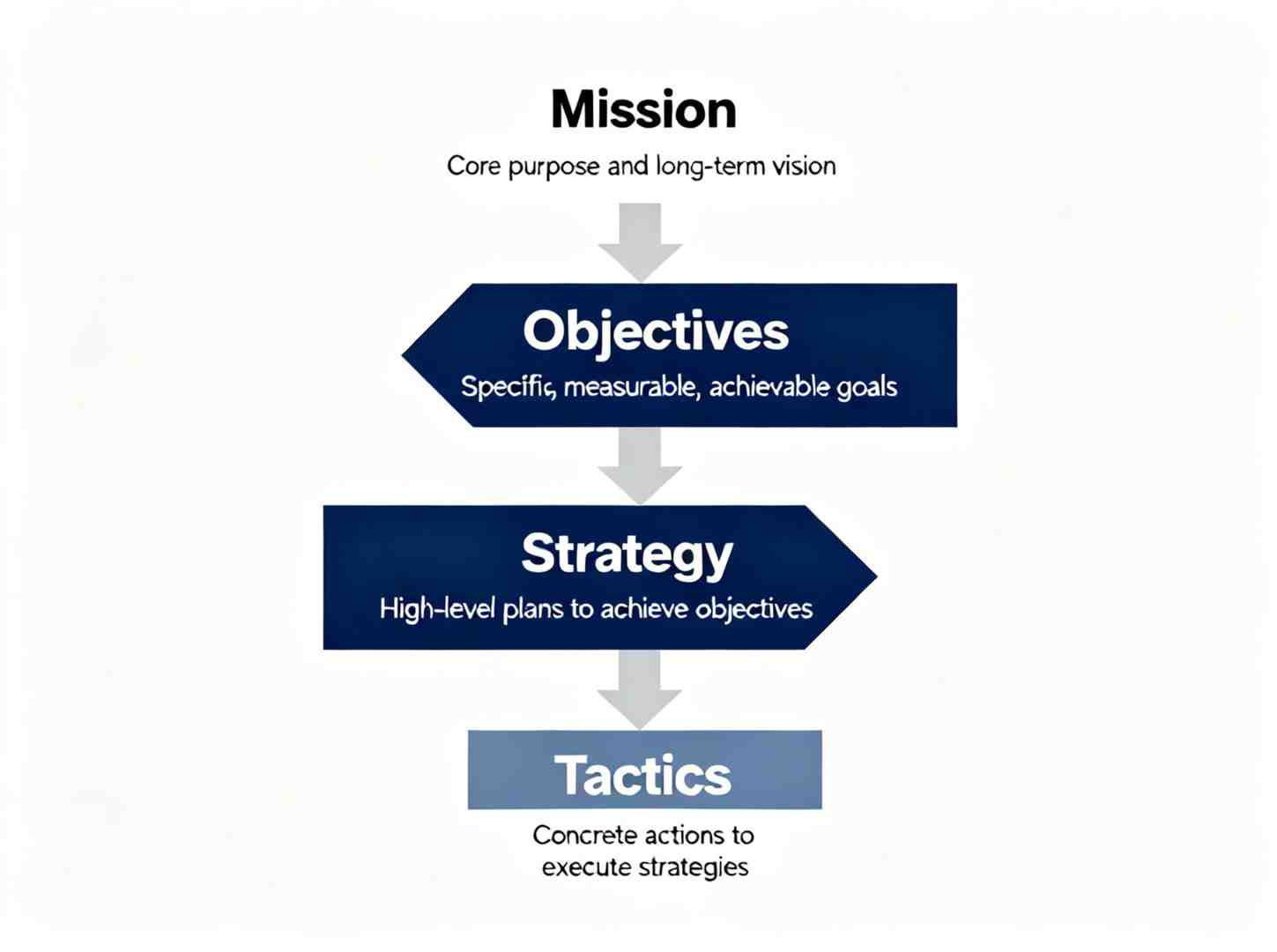
Building a scalable system means moving away from “random acts of content.” Most businesses fail at social because they treat it as a diary rather than a discovery engine. To win, we must treat every post as a searchable asset.
The data is clear: 43% of consumers now discover products through searches on social media. This isn’t passive scrolling; it is intent-driven discovery. If you aren’t visible when someone searches for a solution in your niche, you are handing market share to your competitors.
While traditional SEO focuses on backlinks and long-form articles, seo systems for social prioritize engagement signals, visual relevance, and platform-specific keywords. However, these two worlds are merging. Google now indexes TikToks, Instagram Reels, and Reddit threads directly in the search results.
| Feature | Traditional SEO | Social SEO |
|---|---|---|
| Primary Driver | Backlinks & Domain Authority | Engagement (Saves/Shares) & Watch Time |
| Content Format | Long-form Text/Blogs | Short-form Video/Visuals |
| Search Intent | Information/Transactional | Inspiration/How-to/Reviews |
| Indexing Speed | Days to Weeks | Minutes to Hours |
| Longevity | Years (Evergreen) | Days to Months (High Volatility) |
To bridge the gap, many brands leverage professional SEO services to ensure their social footprint supports their broader domain authority.
Building Taxonomy-Driven SEO Systems for Social
A “taxonomy” is simply a way of classifying information. In social media, this means creating a map of “entities”—the people, places, and things your brand is associated with.
Instead of guessing what to post, we build keyword clusters. If you are a fitness brand in Minneapolis, your clusters might include “Home Workouts,” “High-Protein Recipes,” and “Minnesota Outdoor Fitness.” By sticking to these pillars, you signal to the platform’s algorithm exactly what your account is about.
Modern tools have made finding keywords with AI significantly faster, allowing us to identify high-volume “how-to” queries that our competitors are ignoring.
Strategic Link Management for Discovery
Your social profiles should act as a gateway to your owned ecosystem. We don’t just want views; we want traffic that converts. Using tools like Linktree or Hootbio allows you to maintain a centralized entry point for your audience.
Always use UTM parameters to track which specific posts are driving the most valuable referral traffic. This data is essential when learning how to build SEO-driven B2B funnels that turn a TikTok viewer into a high-ticket lead.
Platform-Specific Optimization Workflows
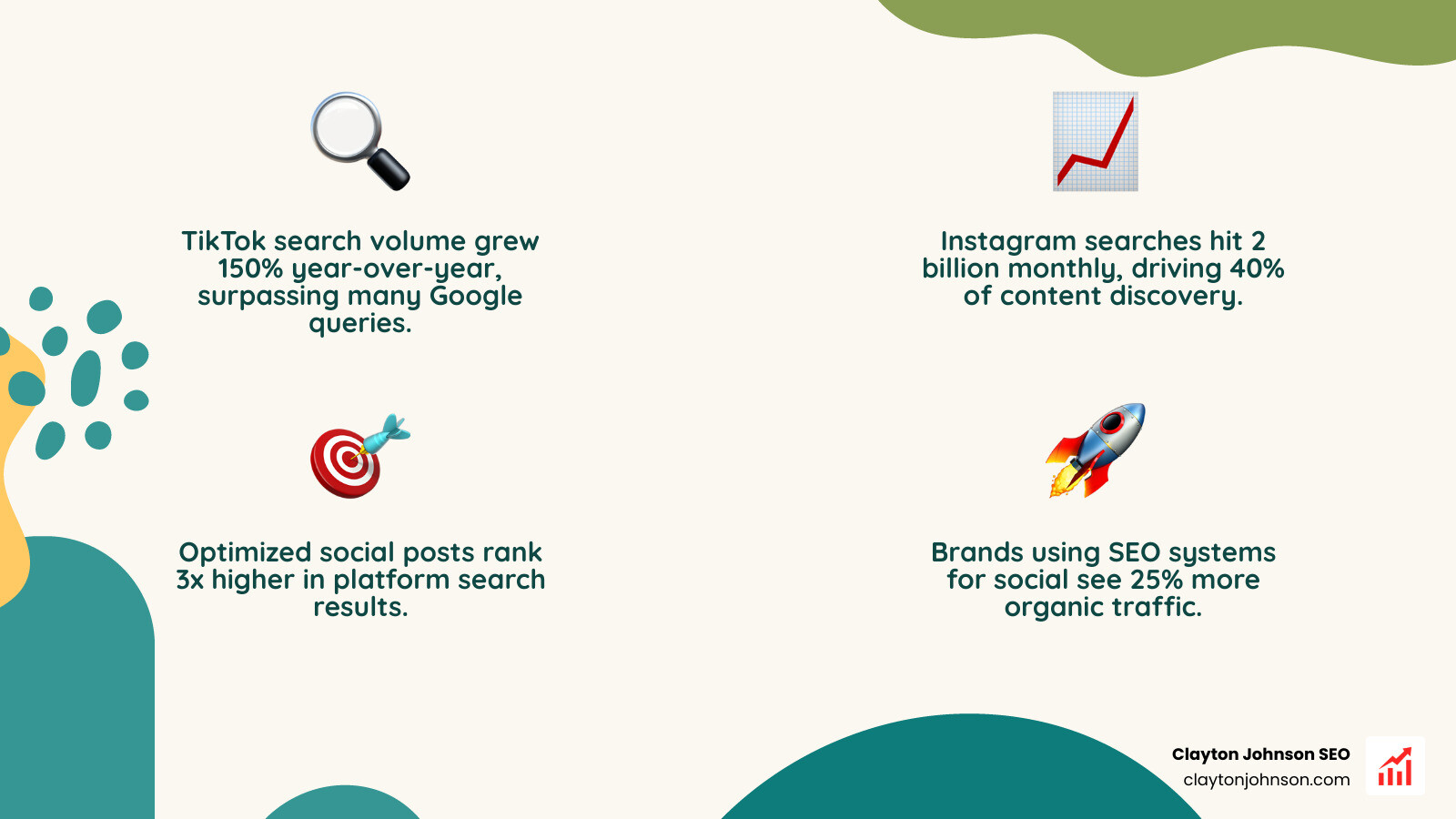
Every platform has its own “language” of search. On TikTok, the search bar is the new front page. Research shows TikTok dominates “how to” queries in lifestyle, beauty, and food. Meanwhile, Instagram is a top source for local discovery, making it crucial for businesses in cities like Minneapolis to optimize for local search.
Implementing SEO Systems for Social on TikTok and Instagram
The “secret sauce” for these platforms is multi-modal optimization. The algorithm isn’t just reading your caption; it is “listening” to your audio and “reading” the text on your screen.
- Captions: Use your primary keywords in the first sentence. TikTok now allows up to 2,200 characters—use that space to provide context.
- Text Overlays: Include keywords in your on-screen “hooks.”
- Spoken Keywords: Say your target keywords out loud in the first 3 seconds of the video.
- Hashtags: Use 3-5 highly relevant hashtags. Avoid “shadowban” tags or overly broad ones like #FYP.
This is critical because 21% of Gen Z starts brand research on social media, not Google. If your content doesn’t answer their specific questions, you don’t exist to them.
YouTube and Pinterest: The Visual Search Giants
YouTube is the second largest search engine in the world, and its integration with Google is unmatched. To rank here:
- Transcripts: Always upload a clean transcript; don’t rely solely on auto-captions.
- Filenames: Rename your video file to
target-keyword.mp4before uploading. - Thumbnails: Use high-contrast visuals that signal the answer to a search query.
Pinterest is often overlooked, but it is a powerhouse for visual intent. Use Pinterest Trends to find seasonal keywords and ensure every Pin includes a descriptive title and a direct link to your site.
Advanced Tools and AI-Augmented Workflows
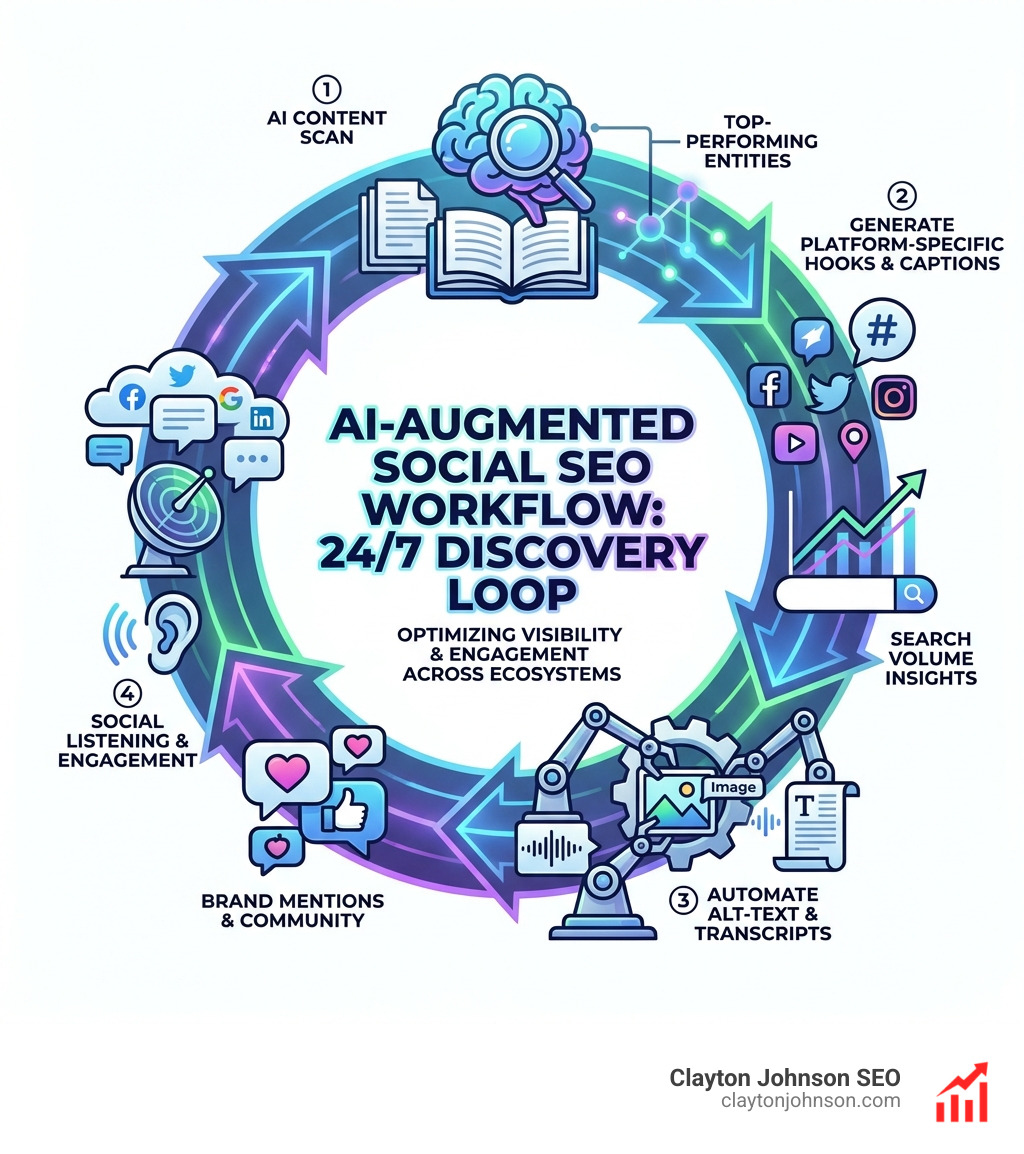
To manage seo systems for social at scale, you need the right tech stack. We recommend:
- Semrush: For identifying keywords that trigger video carousels in Google.
- InLinks: For entity-informed content planning that builds topical authority.
- Brand24 or Mention: For social listening to see how your brand is being discussed.
- Hootsuite or Buffer: For scheduling and basic SEO caption generation.
For those managing complex sites, AI-driven SEO audits can help identify where your social links might be broken or where your NAP (Name, Address, Phone) info is inconsistent.
Automating Your SEO Systems for Social with AI
AI shouldn’t replace your creativity, but it should handle your “admin” work. We use AI to:
- Repurpose content: Turn one blog post into 5 TikTok scripts, 3 LinkedIn carousels, and 10 Tweets.
- Generate Alt Text: Ensure every image is searchable for visually impaired users and search bots.
- Social Listening: Flag when your brand is mentioned in a high-intent conversation so you can jump in and provide value.
Check out our list of the best AI SEO services to see how automation is changing the game for growth-stage companies.
Measuring Success and Discovery Metrics

You cannot manage what you do not measure. In seo systems for social, “Reach from Search” is your most important metric.
- Engagement as the new CTR: On social, a “save” or a “share” is like a backlink. It tells the platform that your content is high-quality and worth showing to more people.
- Voice Search: Over 31% of users rely on voice assistants weekly. This means your social content should answer conversational, natural-language questions (e.g., “What is the best SEO agency in Minneapolis?”).
- Referral Traffic: Use analytics and data services to see how many people are actually clicking through from your bio to your website and what they do once they get there.
Frequently Asked Questions about Social SEO
What is the difference between social SEO and traditional SEO?
Traditional SEO focuses on optimizing websites for engines like Google using backlinks and technical site structure. Social SEO focuses on optimizing social media content to rank within platform search bars (like TikTok or Instagram) and appearing in Google’s “Short Videos” or “Discussions” carousels.
Does social media activity directly impact Google rankings?
Google has stated that social signals (likes/shares) are not a direct ranking factor. However, social media drives brand awareness, which increases “branded search” volume. It also helps your content get discovered by bloggers and journalists who may eventually give you a high-authority backlink.
Which social platform is best for SEO discovery?
YouTube is the strongest because it is owned by Google and its videos rank directly in the SERPs. However, for younger audiences, TikTok is becoming the primary search engine for “how-to” and “review” queries.
Make Social SEO a System, Not a One-Off
At Clayton Johnson, we believe most teams don’t lack tactics, they lack a repeatable growth architecture that turns social discovery into consistent demand.
Building SEO systems for social isn’t about posting more often; it’s about creating an authority-building ecosystem that keeps working after you hit publish. When you combine taxonomy-driven structure with AI-augmented workflows, you shift from hoping to go viral to planning to be found.
Whether you are looking for a Minneapolis SEO company to dominate local search or a global SEO consultant to build your growth infrastructure, the goal remains the same: clarity, structure, and leverage.
Ready to turn your social channels into a search-powered growth engine? Transform your strategy with our social media marketing services and start building your compounding asset today.