The Essential Guide to BMC Customer Discovery

Why Customer Findy Transforms Your Business Model Canvas
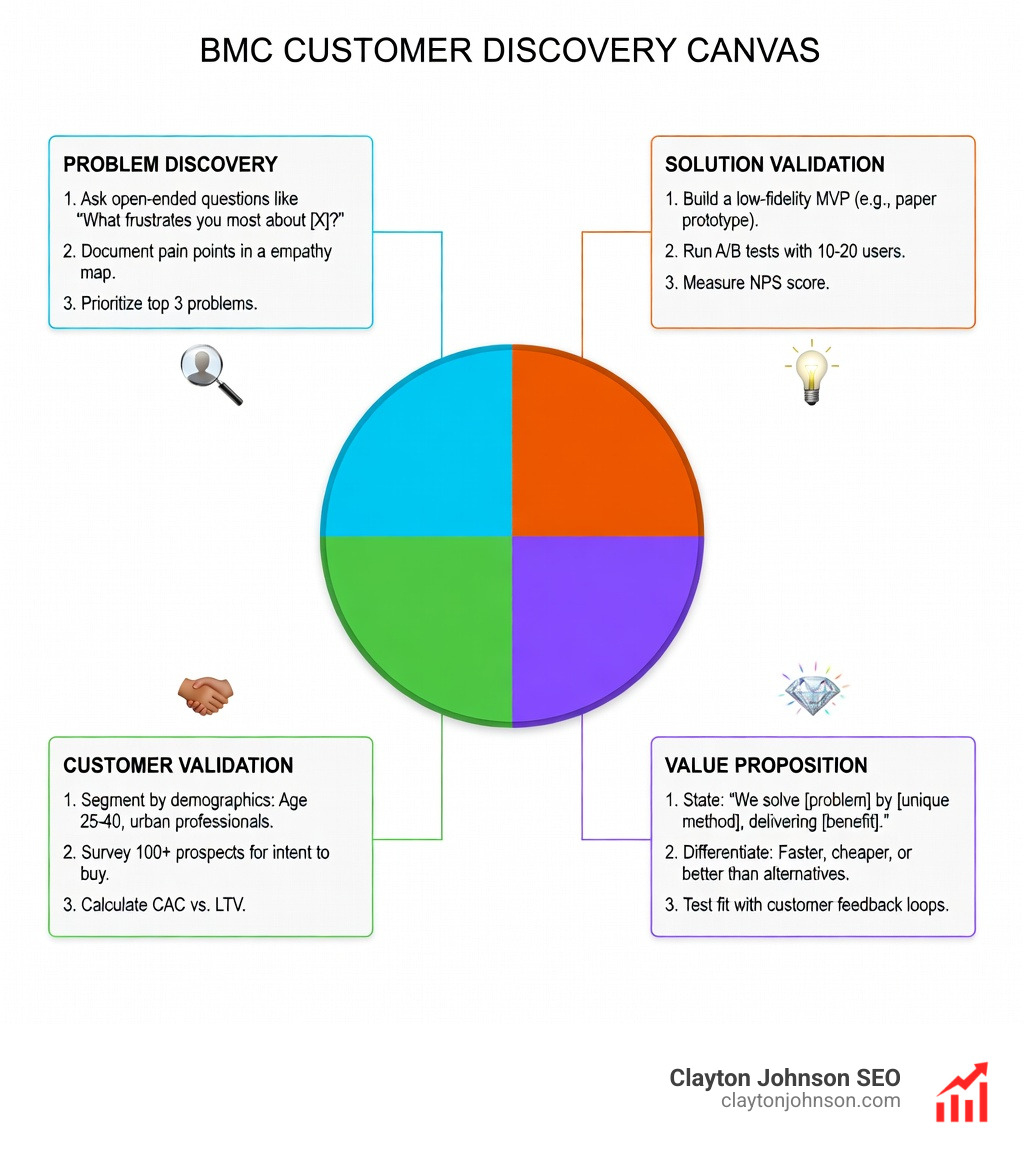
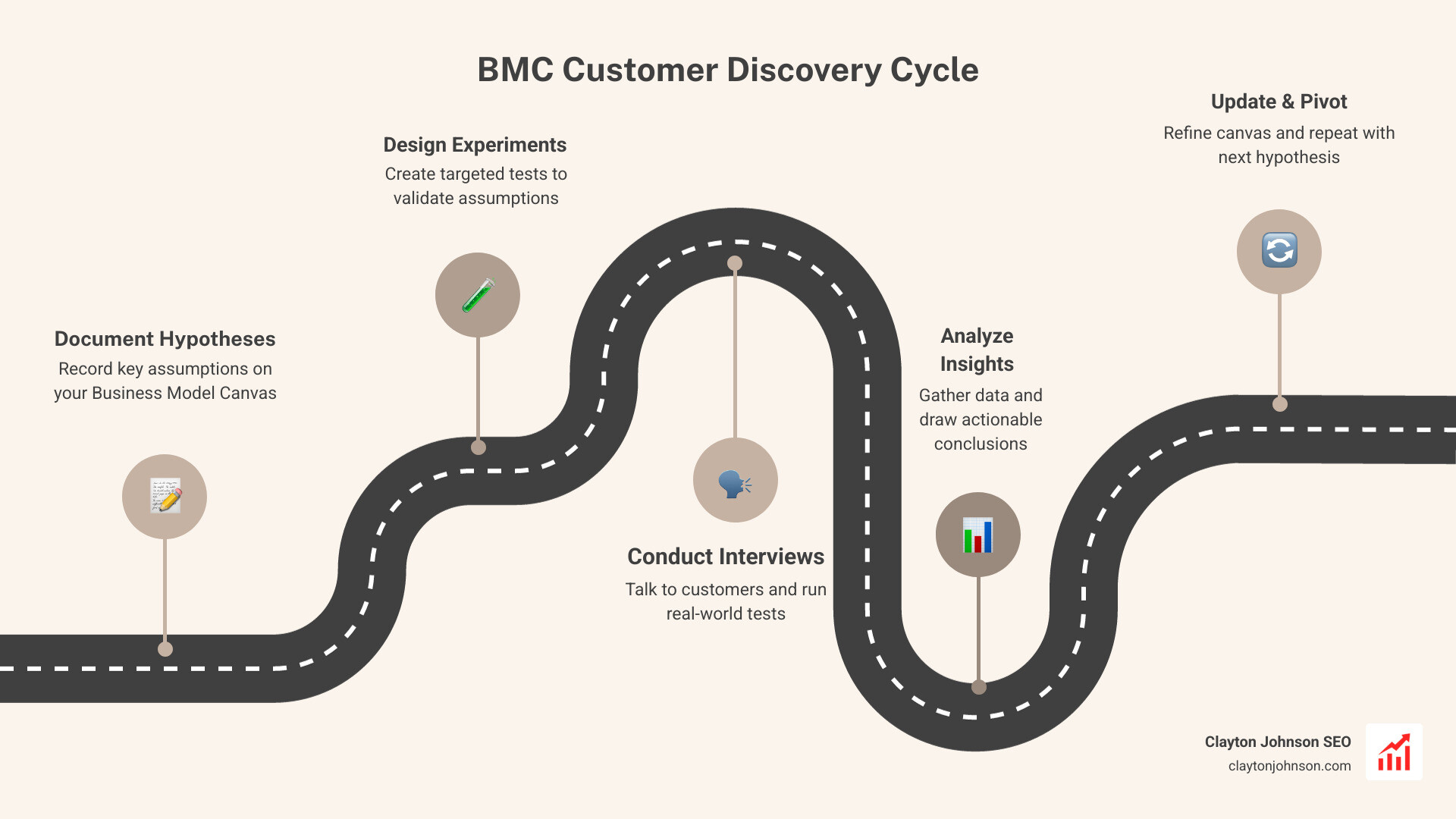
The BMC customer findy canvas integrates customer validation directly into your business model planning, turning static assumptions into evidence-based decisions. Instead of filling out a traditional Business Model Canvas with guesses, customer findy adds a systematic process for testing each hypothesis through interviews, experiments, and feedback loops.
What makes BMC customer findy different:
- Hypothesis-driven approach – Each canvas block becomes a testable assumption rather than a final answer
- Iterative validation – Update your canvas after each customer conversation or experiment
- Evidence collection – Link customer insights directly to specific business model elements
- Risk reduction – Identify which assumptions are most critical to test first
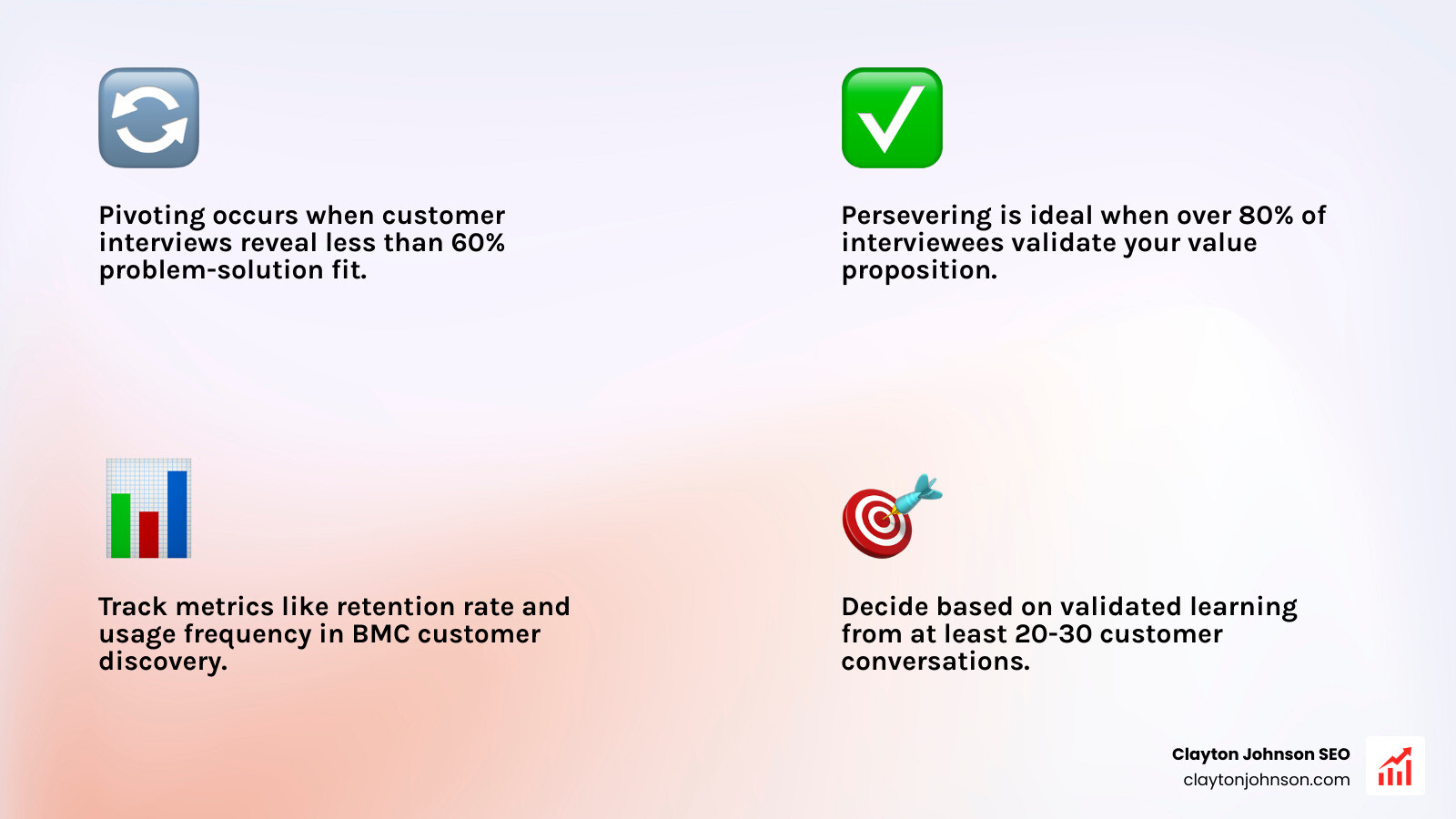
- Pivot indicators – Know when to persevere or change direction based on real data
The Business Model Canvas was created by Alexander Osterwalder and popularized in his bestselling book Business Model Generation. While the original nine-block framework helps you visualize your business model on a single page, it doesn’t tell you how to validate whether your model will actually work. That’s where customer findy comes in—a methodology championed by Steve Blank and Eric Ries in the Lean Startup movement that emphasizes getting out of the building to test assumptions with real customers.
As Clayton Johnson, I’ve built SEO and growth systems across multiple companies by combining structured frameworks with customer-driven validation, and the BMC customer findy canvas remains one of the most practical tools for aligning strategy with market reality. My work focuses on turning fragmented marketing efforts into coherent systems that generate measurable outcomes through evidence-based decision-making.
Understanding the BMC Customer Findy Canvas
At its heart, the BMC customer findy canvas is a strategic framework designed to bridge the gap between “having an idea” and “building a viable business.” While the standard canvas gives you a snapshot of a company, the findy version acts as a laboratory. It is an entrepreneurial tool used to describe, design, challenge, and pivot your business model based on real-world data.
We often see teams treat their business plan as a static document—something they write once and file away. This is a recipe for failure. Instead, we advocate for Strategic Design, where the canvas becomes a living document. By focusing on the intersection of Value Propositions and Customer Segments, you can determine if you are solving a problem that people actually care about. This is the foundation of business viability.
According to research from Strategyzer and A how-to guide for the business model canvas, the canvas enables you to visualize and communicate a simple story of your business model. However, the “findy” layer forces you to treat every sticky note as a hypothesis that must be tested.
How it Extends the Standard 9-Block BMC
The standard Business Model Canvas consists of nine building blocks: Key Partners, Key Activities, Key Resources, Value Propositions, Customer Relationships, Channels, Customer Segments, Cost Structure, and Revenue Streams. You can Download the Business Model Canvas PDF to see the original layout.
The BMC customer findy canvas extends this by adding a layer of “evidence-based entrepreneurship.”
- Static vs. Dynamic: The traditional BMC is a snapshot; the findy canvas is a movie. It tracks changes over time as you learn.
- Iterative Loops: It introduces the concept of the “Pivot.” If your customer interviews show that your “Value Proposition” doesn’t resonate, you don’t delete the project—you pivot to a new hypothesis.
- Validation States: In a findy canvas, blocks are often color-coded. For example, green might mean “validated with 10+ interviews,” while red means “invalidated,” and yellow means “untested hypothesis.”
Key Components of the BMC Customer Findy Canvas
To use the BMC customer findy canvas effectively, we must look deeper into the components that drive “Problem-Solution Fit.”
- Customer Jobs-to-be-Done: What is the customer actually trying to achieve? (e.g., A person doesn’t want a 1/4 inch drill bit; they want a 1/4 inch hole).
- Pain Points: What keeps your customer up at night? What are the risks or obstacles they face?
- Gain Creators: How does your product make their life better or more efficient?
- Experiment Design: For every block on the canvas, you should have a corresponding experiment. If your hypothesis is “Customers prefer a subscription model,” your experiment might be a landing page test.
- Validation Metrics: We need hard numbers. “Most people liked the idea” is not a metric. “8 out of 10 interviewees agreed to a follow-up demo” is a validation metric.
For a deeper dive into how to categorize these individuals, check out our guide on Customer Segmentation & Product Insight.
Step-by-Step Guide to Filling Out the Canvas
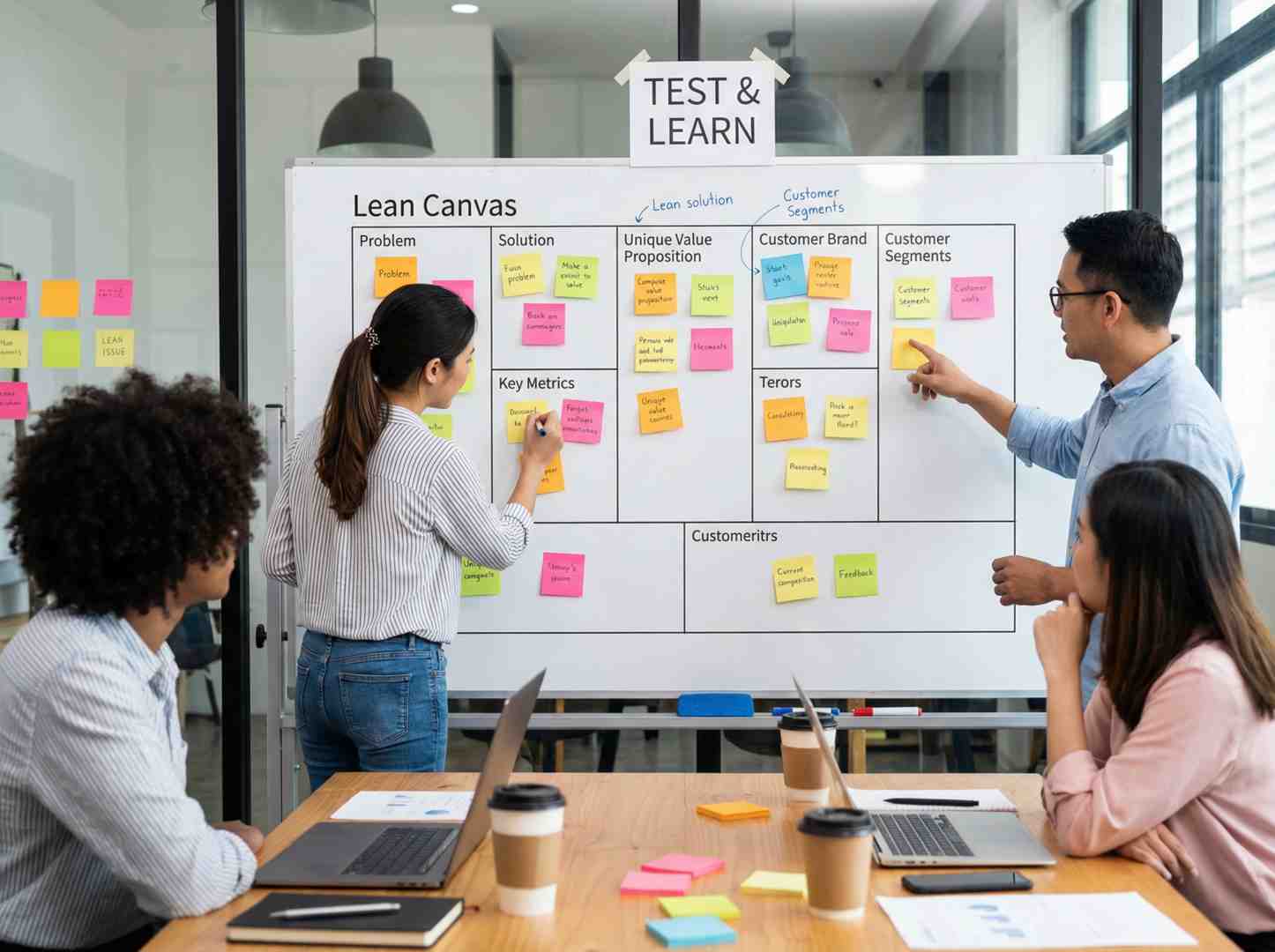
Filling out the BMC customer findy canvas is a team sport. We recommend using a large physical board with sticky notes or a digital equivalent like Confluence or Strategyzer.

Step 1: Brainstorming and Initial Hypotheses
Start with the “Value Proposition” and “Customer Segments.” Who are you helping, and what are you offering them? Don’t worry about being “right” yet. At this stage, you are simply documenting your best guesses. Use sticky notes so you can easily move or remove ideas as you Map your strategy.
Step 2: Infrastructure and Offering
Once the core is defined, look at the left side of the canvas: Key Activities, Resources, and Partners. What do you need to build the value? Then look at the bottom: Finances. How will you make money (Revenue) and what will it cost (Cost Structure)?
Step 3: Prioritizing Assumptions
Not all hypotheses are created equal. We use a risk-assessment approach: identify the “leap-of-faith” assumptions. If these are wrong, the whole business collapses. Usually, the biggest risks are related to whether customers actually want the product.
Identifying and Testing Hypotheses
Once the canvas is filled with sticky notes, the real work begins. You must move from internal brainstorming to Market Analysis.
- Customer Interviews: This is the gold standard of findy. We recommend talking to at least 20-30 potential customers. Avoid leading questions. Instead of asking, “Would you use this?” ask, “Tell me about the last time you faced this problem.”
- Buyer Personas: Create detailed profiles of your target users. Use our Buyer Personas framework to ensure you understand their motivations beyond just demographics.
- Primary vs. Secondary Research: While secondary research (industry reports) is helpful for sizing the market, primary research (talking to humans) is the only way to validate a BMC customer findy canvas.
Validating Insights on the BMC Customer Findy Canvas
As you gather data, you must update the canvas. This is the “feedback loop.”
- Validation: If data supports your sticky note, keep it.
- Invalidation: If the data shows you were wrong, celebrate! You just saved yourself months of building the wrong thing. Pull the sticky note off and replace it with what you learned.
- Pivot vs. Persevere: This is the core of the Lean Startup Process and Reprints taught by Steve Blank. A pivot is a structured course correction designed to test a new fundamental hypothesis about the product or business model.
When you Analyze your data, look for patterns. If multiple customers mention the same pain point that wasn’t on your original canvas, add it!
Tools and Resources for Effective Findy
You don’t have to do this with just a pen and paper. Several digital platforms can improve the BMC customer findy canvas experience.
| Tool | Best For | Key Feature |
|---|---|---|
| Strategyzer | Enterprise Teams | Official templates and “Mastering Business Models” courses. |
| StartupWind | Startups & Students | AI-assisted findy and mentoring platform. |
| Canva | Visual Brainstorming | Beautiful, easy-to-edit templates for presentations. |
| Confluence | Internal Collaboration | Integrates with Jira; great for tech-heavy teams. |
For those looking for a quick start, the Business Model Canvas – Free Interactive Tool offers a no-signup way to build and export your model. If you are working in a corporate environment, you can Create a BMC in Confluence Whiteboards to keep your strategy aligned with your project management. You can also access the Strategyzer Platform Login for high-level portfolio management.
Real-World Examples and Competitions
How does this look in practice? Let’s look at some heavy hitters:
- Nespresso: Nestlé used the BMC to pivot from a B2B office coffee play to a high-margin B2C household brand. They identified that their “Key Resource” (patented pod technology) could drive a “Lock-in” revenue model.
- Google: Google’s value proposition isn’t just “search”—it’s helping people find things. Their BMC clearly separates their “Users” (who get the service for free) from their “Customers” (advertisers who pay for the data).
- The National Science Foundation (NSF) I-Corps: This program is perhaps the most famous use of the BMC customer findy canvas. As detailed in The National Science Foundation I-Corps Teaching Handbook, scientists are required to conduct 100+ customer interviews to turn their lab research into commercial products.
Frequently Asked Questions about BMC Customer Findy
What is the difference between a BMC and a Lean Canvas?
While they look similar, the focus is different. The BMC is better for existing businesses or complex models with many partners. The Lean Canvas, created by Ash Maurya, is “problem-focused.” It replaces “Key Partners” and “Key Activities” with “Problem” and “Solution.” If you are in the very early stages of a startup, the Lean Canvas might be your starting point, but the BMC is better for scaling and understanding the full business ecosystem.
How often should you update your findy canvas?
We recommend weekly updates. In a “weekly sprint” model, you set a goal for how many interviews to conduct, and on Friday, you update the canvas based on what you heard. It should be a living document, not a “one and done” exercise.
Can AI help with the customer findy process?
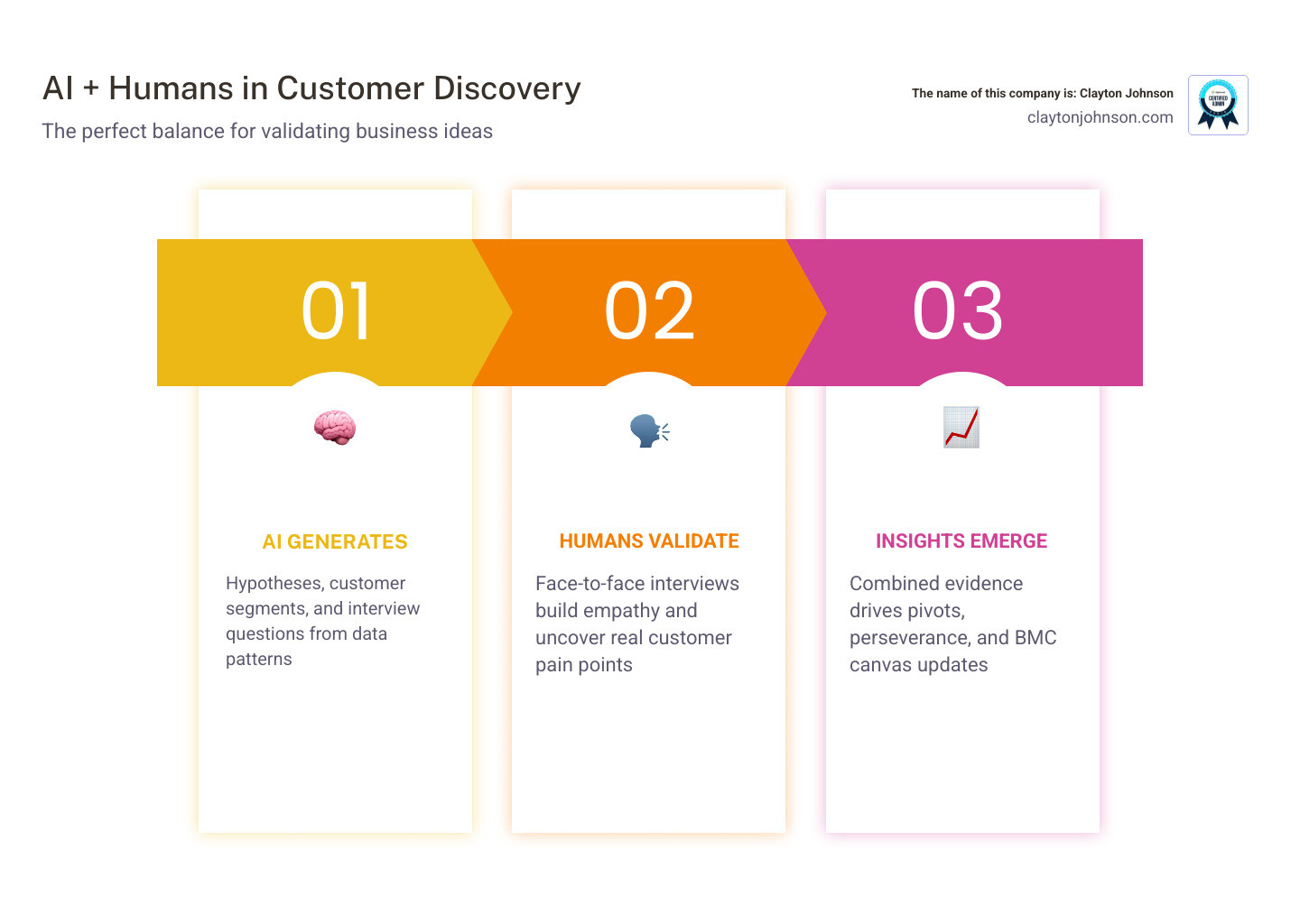
Absolutely. Modern platforms like StartupWind use AI for hypothesis generation and sentiment analysis. AI can help you transcribe interviews, identify recurring themes (pattern recognition), and even suggest potential customer segments you haven’t thought of. However, AI cannot replace the “gut feeling” and empathy gained from a face-to-face customer interview.
Conclusion
The BMC customer findy canvas is more than just a template; it’s a mindset. It forces us to be humble, to admit what we don’t know, and to let the market guide our growth strategy. By treating your business model as a series of experiments, you drastically increase your chances of finding a model that is not only scalable but also truly valuable to your customers.
At Clayton Johnson, we specialize in helping founders and marketing leaders steer this process. Whether you need to diagnose a growth problem or execute a new Social Media Marketing Services plan, our focus is always on actionable frameworks and measurable results.
Ready to take your strategy to the next level? Start by pulling those “guesses” off your canvas and replacing them with “evidence.” The market is waiting to tell you what it needs—you just have to listen.