The Neil Patel Strategy for SEO Dominance

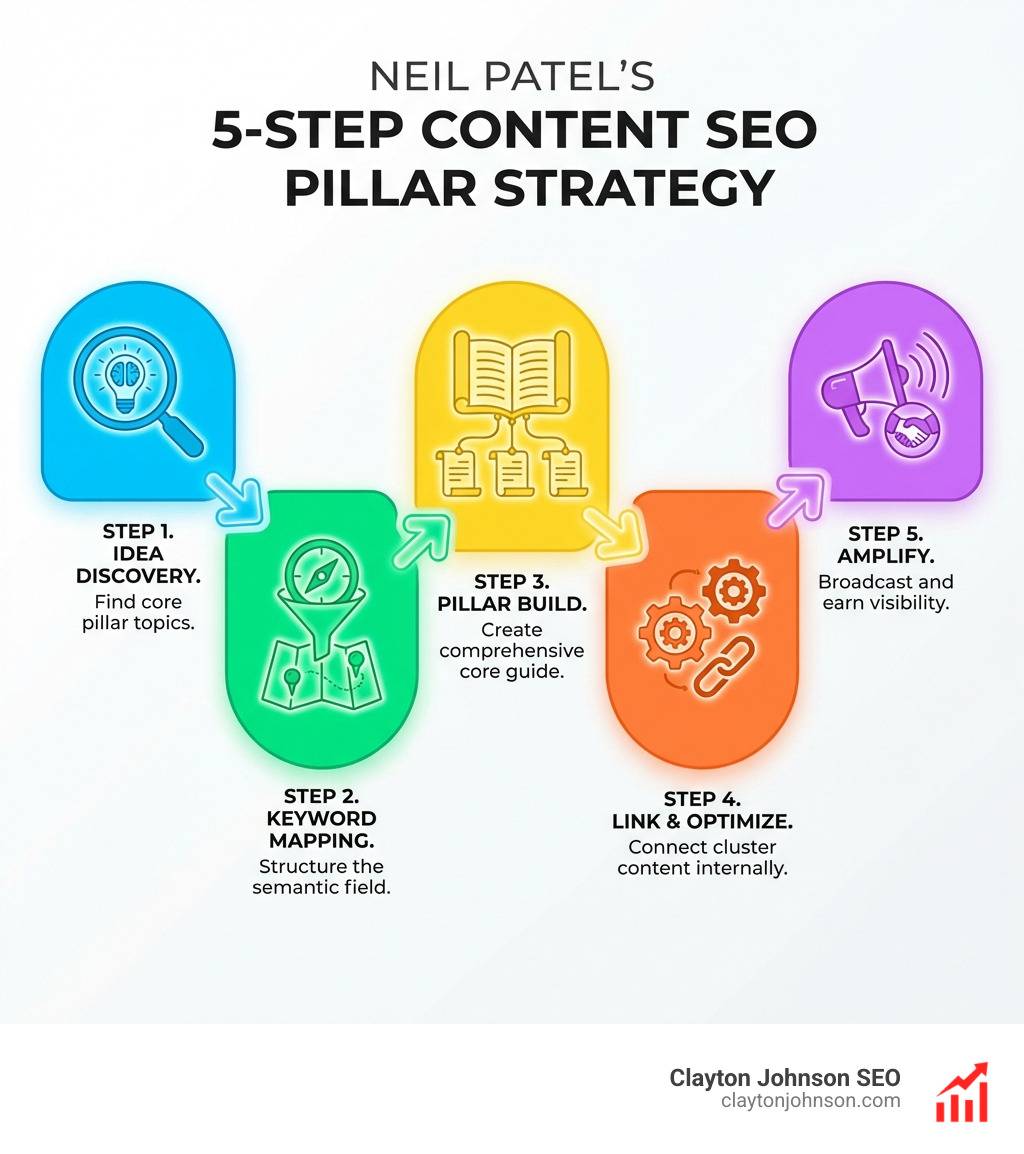
Authority-driven Content SEO is a proven framework for ranking high-quality, intent-matched content that attracts organic traffic and converts readers into leads. Here is how the strategy works at a glance:
- Create people-first content that answers real audience questions
- Target keywords by intent – not just search volume
- Build E-E-A-T signals through expertise, credible sourcing, and author authority
- Use topic clusters to organize content around pillar pages and internal links
- Refresh content regularly to prevent ranking drops from outdated information
- Promote deliberately through social, email, and influencer outreach
Most content fails not because it is badly written, but because it is built without a system. Search now accounts for a large share of visits to a typical site, yet only a minority of marketers say their content efforts are extremely successful. That gap is not a content quality problem – it is a strategy problem.
Top-performing SEO practitioners have documented what separates content that compounds in search from content that disappears. The approach is practical, data-backed, and built for the way search engines work today. Many of these principles – popularized by leading voices in the SEO industry – form the backbone of how we build content systems at Demandflow.
I’m Clayton Johnson, an SEO strategist who builds scalable content architectures and authority systems for founders and marketing leaders – and this approach to Content SEO has been a foundational reference point in how I design those systems. The principles covered in this guide map directly to the growth infrastructure I implement for high-growth businesses.
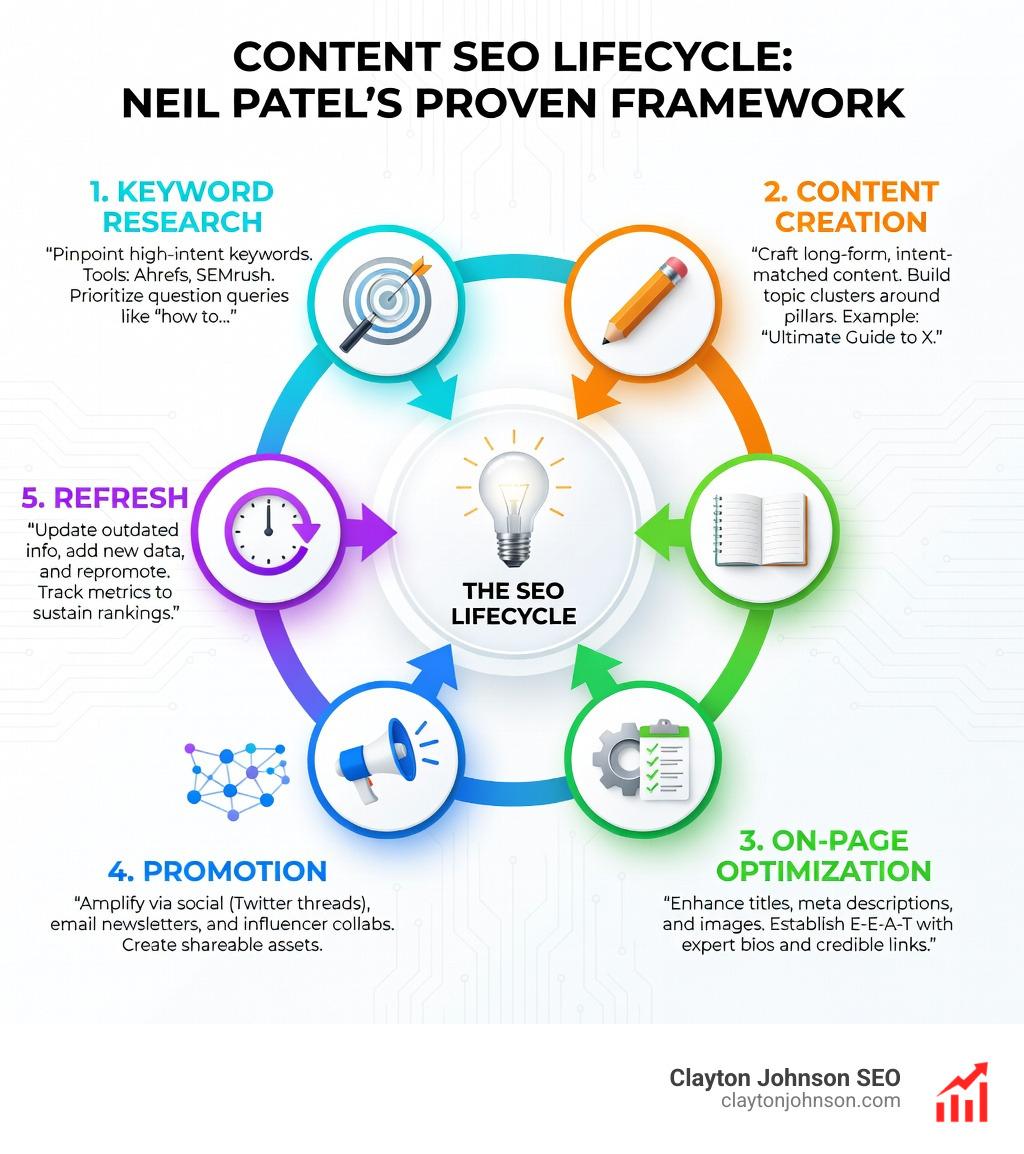
Essential Content SEO terms:
Core Principles of Strategic Content SEO
At the heart of strategic Content SEO is a simple but profound shift: writing for people first and search engines second. While that might sound like a marketing cliche, it is the fundamental requirement for surviving modern algorithm updates. Google processes billions of searches per day, and its primary objective is to deliver the most relevant and reliable information available.
To align with this, we focus on three core pillars:
- Actionable Information Quickly: Most people spend only a short time on an article. If you don’t provide value immediately, they bounce. We recommend sprinkling actionable tips throughout the piece, using lists or step-by-step guides, rather than hiding the “good stuff” at the end.
- Readability and Structure: High-quality content must be scannable. This means using short sentences, varied paragraph lengths, and clear heading tags (H1-H6). Tools like SEO Services help ensure that technical structures support this readability.
- Consistent Brand Voice: Whether your tone is ironic and friendly or professional and authoritative, consistency builds trust. A documented style guide ensures that every piece of content feels like it belongs to the same ecosystem.
Mastering User Intent in Content SEO
One of the most common mistakes we see is chasing search volume without considering search intent. If someone searches for “best running shoes,” they are looking for a commercial comparison (commercial intent). If they search for “how to fix a flat tire,” they want a guide (informational intent).
Advanced Content SEO categorizes keywords to ensure content matches what the user actually wants to do.
- Informational Keywords: These account for the vast majority of searches. They are top-of-funnel and build brand awareness.
- Commercial Keywords: These are for users ready to buy or compare. Aligning your conversion elements with these keywords is critical for ROI.
When we align content with intent, we reduce bounce rates and increase the “last longest click”-a signal Google uses to determine if a page truly satisfied the user’s query.
The Role of E-E-A-T in Content Strategy
Google’s search rater guidelines emphasize E-E-A-T: Experience, Expertise, Authoritativeness, and Trustworthiness. In authority-driven Content SEO, this isn’t just about what you say, but who is saying it.
We implement E-E-A-T by:
- Showcasing Experience: Including personal anecdotes, case studies, and original research.
- Building Author Profiles: Ensuring every article is attributed to a real person with a verifiable background in the industry.
- Credible Sourcing: Linking out to authoritative external sources. This tells Google you are “connected and sociable,” which helps establish your page’s relevance.
Keyword Research and Topic Cluster Architecture
Keyword research is the foundation of any successful campaign, but it has evolved. We no longer just look for single terms; we look for topical landscapes.
| Feature | Head Terms | Long-Tail Keywords |
|---|---|---|
| Search Volume | High | Low to Medium |
| Competition | Very High | Low |
| Conversion Rate | Lower | Higher |
| Intent Clarity | Vague | Specific |
| Example | “SEO” | “Advanced Content SEO strategy” |
Using The Ultimate Guide to Keyword Strategy, we identify “keyword gaps” where competitors are underperforming. The goal is to find long-tail keywords that top brands might be ignoring. These terms are often easier to rank for and drive more qualified leads.
Building Topic Clusters for Authority-Driven Content SEO
Topic clusters are the “secret weapon” for building topical authority. Instead of writing random blog posts, we organize content into a hub-and-spoke model.
- Pillar Pages: A comprehensive resource (often 1,500 to 10,000 words) that covers a broad topic in depth.
- Cluster Pages: Shorter, specific articles (4–8 per pillar) that dive into subtopics.
- Internal Linking: Every cluster page links back to the pillar page using descriptive anchor text, and the pillar links out to each cluster page.
This structure helps search engines understand the semantic relationship between your pages. It signals that you aren’t just writing about a topic—you are an authority on it.
Optimizing and Refreshing Content for Conversions
Creating content is only half the battle; the other half is ensuring it performs technically and drives action.
Technical performance is now a direct ranking factor. Google prioritizes page speed and usability through Core Web Vitals. We use PageSpeed Insights to ensure sites load in under two seconds. Research shows that 40% of people will abandon a page if it takes more than three seconds to load.
Furthermore, with mobile-first indexing, Google prioritizes the mobile version of your site. If your content isn’t responsive, your rankings will suffer. We also pay close attention to on-page elements:
- Headlines: Five times as many people read the headline as the body copy. We recommend using numbers and keeping them under 72 characters.
- Meta Descriptions: While not a direct ranking factor, a well-crafted 150-160 character description improves click-through rates.
- Content Auditing: We regularly perform Content Auditing for Humans Who Use Robots to identify which pages need a refresh.
Leveraging AI and Promotion Strategies
AI is a powerful tool, but it shouldn’t be the sole author of your content. In modern Content SEO, AI is best used for idea generation, outlining, and editing. Overusing AI-generated content without human oversight can lead to penalties for “thin content.”
Instead, we use The No-Nonsense Guide to AI SEO to augment our workflows. Once the content is live, promotion is essential. SEO does not happen in a vacuum. We recommend:
- Social Signals: Sharing content on platforms like Twitter and Facebook to generate initial buzz.
- Influencer Outreach: Finding people who have shared similar content and sending personalized requests for a retweet or link.
- Backlink Acquisition: Focus on quality over quantity. One link from a high-authority site is worth more than dozens of low-quality directory links.
Frequently Asked Questions about Content SEO Strategy
What is considered thin content?
Thin content refers to pages that provide little to no value to the user. This includes shallow articles that only state the obvious, duplicate content copied from other sites, or AI-generated text that hasn’t been edited for quality. Google’s algorithms, specifically updates like Panda, are designed to penalize this type of content to ensure users find helpful information.
How long does it take for SEO content to rank?
SEO is a long-term play. While high-authority sites can rank new content within days, newer or lower-authority sites typically see results within one to six months. Success depends on domain authority, the competitiveness of the keyword, and the consistency of your publishing schedule. Established sites see an average ROI of 22.1% in the first year, but that number compounds over time.
How does AI affect content SEO rankings?
AI affects rankings by raising the bar for quality. Google doesn’t penalize AI content just because it’s AI; it penalizes content that is unhelpful or “meant to game the system.” If you use AI to create better, more comprehensive content faster, it can help your rankings. However, if you use it to churn out thousands of low-quality pages, you will likely see a drop in traffic.
Conclusion
Mastering Authority-driven Content SEO requires moving beyond simple tactics and embracing a structured growth architecture. It’s about building an authority-building ecosystem where every piece of content serves a purpose—whether that’s answering a user’s question, building trust through E-E-A-T, or driving a specific conversion.
I believe that most companies don’t lack tactics—they lack the infrastructure to make those tactics compound. By implementing these structured frameworks, you move from random acts of marketing to a system of compounding growth.
Clarity leads to structure, structure leads to leverage, and leverage leads to growth. Let’s build your growth infrastructure together.