What Fusion Hair Extensions Actually Cost (And Why the Price Varies So Much)
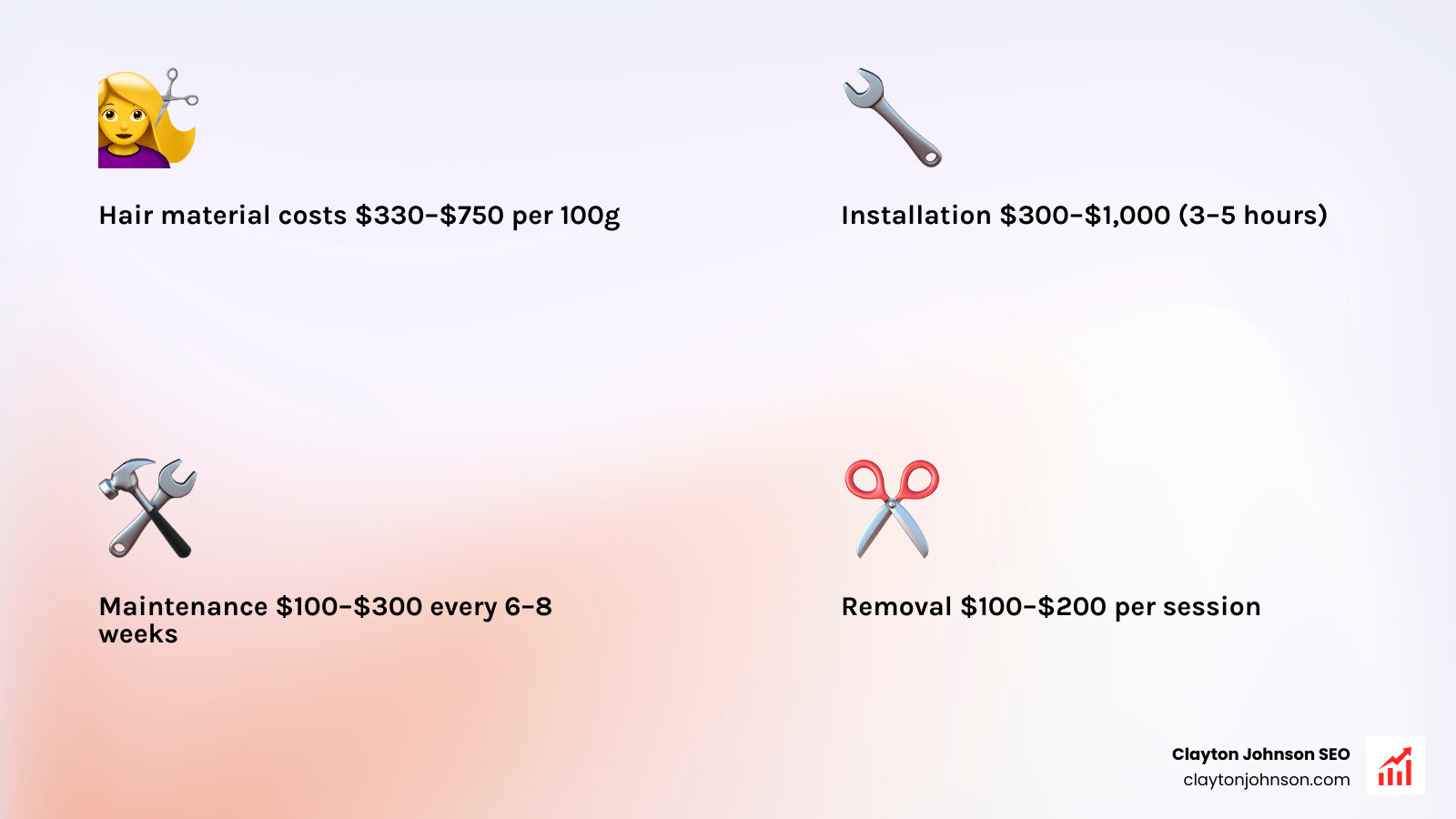
Fusion hair extensions price typically ranges from $600 to $3,000 total, depending on hair quality, strand count, stylist expertise, and your location. Here is a quick breakdown:
| Cost Component | Typical Range |
|---|---|
| Hair material (per 100g) | $330 – $750 |
| Professional installation | $300 – $1,000 |
| Maintenance (every 6–8 weeks) | $100 – $300 |
| Removal | $100 – $200 |
| Total (full set) | $600 – $3,000+ |
Most people investing in a full head of quality fusion extensions spend around $2,500 when you factor in hair, installation, and the first maintenance appointment.
That number surprises a lot of people — especially those who expected pricing similar to clip-ins or tape-ins. But fusion extensions are a strand-by-strand method using keratin bonds fused directly to your natural hair. The process takes 3 to 5 hours, requires professional installation, and uses premium human hair. The cost reflects the craftsmanship, not a markup.
There are also costs most people do not see upfront: removal fees, reapplication every few months, sulfate-free aftercare products, and occasional professional detangling. These add up fast if you are not budgeting for them.
This guide breaks down every layer of the total cost — so you can make a confident, informed decision before booking your appointment.
I’m Clayton Johnson, an SEO strategist who applies the same structured, data-driven frameworks I use to analyze search and growth systems to help readers decode complex pricing landscapes — including fusion hair extensions price — with clarity and confidence. Let’s break it all down so you know exactly what you’re paying for and why.
Understanding the Technology: Hot vs. Cold Fusion
When we talk about the fusion hair extensions price, we first have to distinguish between the two primary application technologies. While both involve attaching small strands of hair to your natural locks, the “glue” and the “tool” change the price point and the chair time.
Hot Fusion (Keratin Bond/K-Tips)
Hot fusion is the classic method. It uses a specialized heating tool to melt a keratin polymer bond—often referred to as a K-tip or U-tip—around a small section of your natural hair. Because keratin is a protein already found in your hair, these bonds are designed to be discreet and move naturally. High-quality bonds, like those made with Italian keratin, ensure the extension stays secure without shedding.
Cold Fusion (I-Tips and Ultrasonic)
Cold fusion is often marketed as a gentler alternative because it doesn’t use direct heat to melt the bond. Instead, it uses ultrasonic waves or small copper/beaded cylinders (I-tips) to secure the extension.
- Ultrasonic Bonding: This uses vibration to soften the keratin bond. It’s a premium service that often costs more due to the advanced equipment required.
- I-Tips: These are attached using a micro-bead that is clamped shut.
While the hair itself might cost a similar amount—for example, Hair Fusion Bar | Best Hair Extension Salon offers various tips and supplies—the labor for cold fusion can sometimes be higher because the process is even more meticulous.

Total Breakdown of Fusion Hair Extensions Price
To understand why you might see a quote for $800 at one salon and $2,800 at another, we have to look at the math. The total fusion hair extensions price is a combination of the “raw materials” (the hair) and the “service fee” (the stylist’s time and expertise).
In a metropolitan area like Minneapolis, you can expect to pay a premium for experienced stylists who specialize in strand-by-strand methods. According to data from How Much Do Hair Extensions Cost?, the average installation fee alone hovers around $550, but can easily scale to $1,000 for complex, high-density applications.
How Hair Quality Impacts Fusion Hair Extensions Price
The origin of the hair is the biggest variable in your bill. Not all “100% human hair” is created equal.
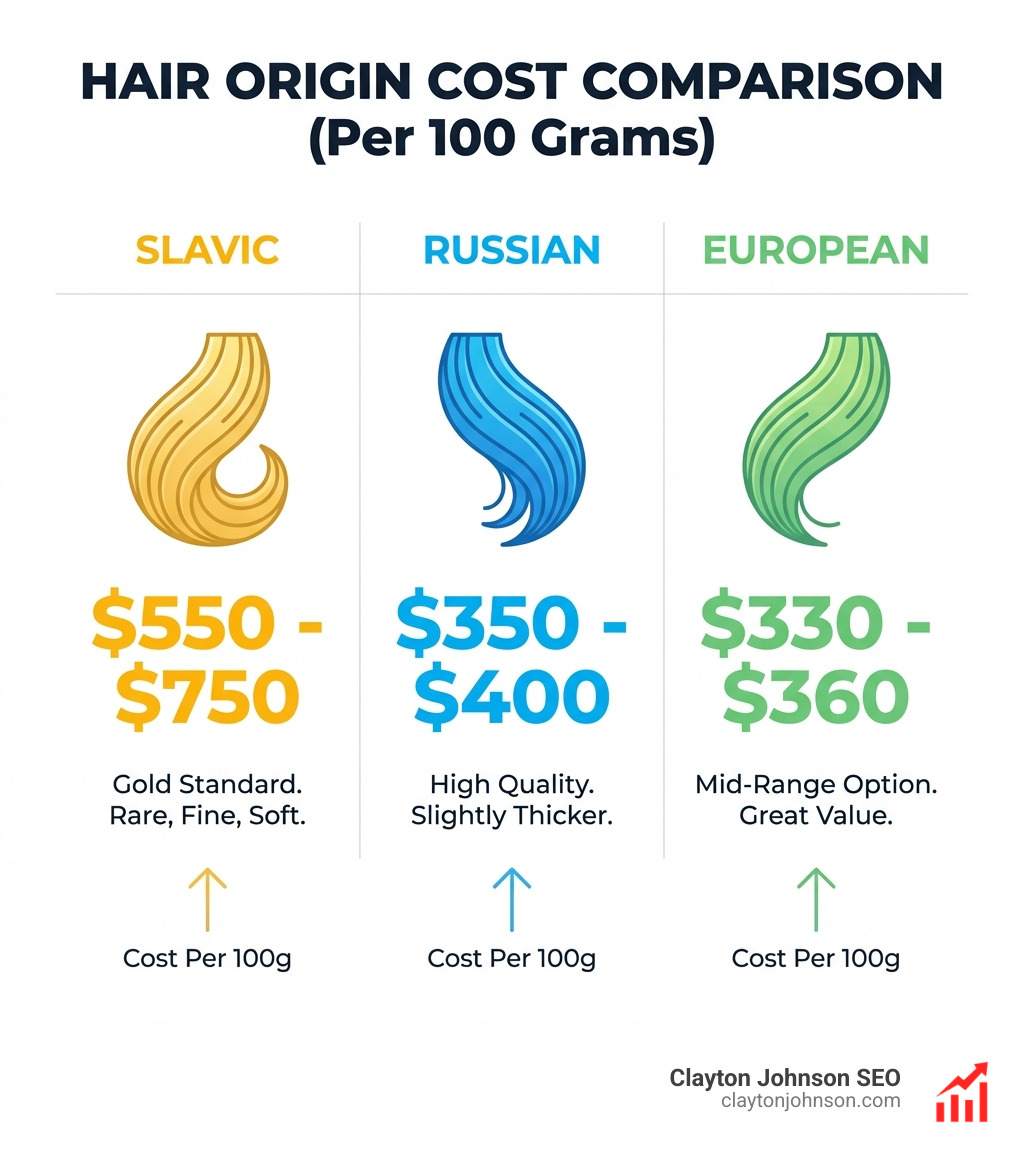
- Slavic Hair: This is the “gold standard” of extensions. It is thin, soft, and usually comes in lighter natural shades. Because it is rare, 100 grams can cost between $550 and $750.
- Russian Hair: Slightly thicker than Slavic hair but still very high quality, costing roughly $350 to $400 per 100 grams.
- European Hair: A great mid-range option, usually priced between $330 and $360 per 100 grams.
- Virgin vs. Remy: Virgin hair has never been chemically treated, making it the most durable (and expensive). Remy hair means the cuticles are all facing the same direction, which prevents tangling. If you see a very low fusion hair extensions price, it is likely non-Remy hair that has been coated in silicone—it will look great for two washes and then become a matted mess.
For those looking for high-quality professional hair, you can Visit the Canadian website Save on Shipping & Duties!It looks like you’re in Canada! For the best experience—including local pricing, shipping, and promotions—visit our Canadian store.Visit the Canadian website to see how premium sourcing affects the bottom line.
Hidden Maintenance Fees in Fusion Hair Extensions Price
One of the biggest mistakes we see is clients budgeting only for the initial appointment. Fusion extensions are not a “one and done” service.
- Removal Fees: Professional removal is mandatory. It involves a special alcohol-based solution to break down the keratin. This usually costs $100 to $300. Never try this at home, or you’ll lose your natural hair along with the extensions!
- Reapplication: Every 3 to 5 months, your extensions will have grown out. A stylist must remove them, “re-tip” them with new keratin, and move them back up to the root.
- Aftercare Products: You must use sulfate-free shampoos and conditioners. Sulfates can break down the keratin bonds, causing them to slip.
- Professional Detangling: If you don’t brush properly, matting can occur at the root. Some salons charge upwards of $50 per hour for “extreme detangling.”
Factors Influencing the Cost of Professional Installation
The physical act of putting in fusion extensions is an art form. Your stylist is essentially performing 100 to 180 mini-procedures on your head.
Strand Count and Density
A “full head” isn’t a universal number.
- Fine Hair: May only need 75–100 strands for length.
- Average Hair: Usually requires 125–150 strands.
- Thick Hair or Blunt Cuts: May require 180+ strands to ensure the transition between your natural hair and the extensions is invisible.
The more strands you need, the higher the fusion hair extensions price. Most stylists charge by the hour or by the bundle. For example, Custom Hair Extension Prices Toronto – Fusion & Nano‑Ring | Berenice’s Hair provides a tiered pricing model based on the “Light,” “Classic,” or “Mega” set counts.
Length Requirements
Length also dictates price. A 14-inch set is significantly more affordable than a 26-inch set. As the hair gets longer, it becomes harder for suppliers to source, which pushes the cost of the raw bundles up by hundreds of dollars.

Long-Term Value and Maintenance Requirements
Is the high fusion hair extensions price worth it? When compared to tape-ins (which need moving every 6 weeks) or clip-ins (which you have to put in every morning), fusion offers a “set it and forget it” lifestyle for months at a time.
Lifespan and Reusability
Fusion bonds typically stay secure for 3 to 6 months. While the initial investment is high, the durability is unmatched. Some high-quality Remy hair can even be reused for up to a year if the hair is kept in good condition. You can find more details on longevity at How Much Are Fusion Hair Extensions in 2025 .
Lifestyle Compatibility
If you are an active person who hits the gym daily or enjoys swimming, fusion is often the best choice. Unlike tape-ins, which can peel when exposed to heavy sweat or oils, keratin bonds are incredibly resilient. However, you must rinse your hair immediately after swimming in chlorine or salt water to prevent the bonds from drying out and becoming brittle.

Frequently Asked Questions about Fusion Extensions
Can fusion extensions damage natural hair?
This is the most common concern. The short answer is: only if they are installed or removed incorrectly. Because the weight of the extension is distributed across a matching amount of natural hair, there is very little tension on the scalp. However, if the strands are too heavy for your natural hair to support, it can cause “traction alopecia.” This is why a professional consultation is vital to assess your hair’s health.
How many strands are needed for a full head?
For most clients in the Minneapolis area, 125 to 150 strands is the “sweet spot.” This provides enough volume to mask the “shelf” of your natural hair while keeping the bonds hidden. If you have very thick hair, you might need to go up to 200 strands to get a seamless blend.
How often do they need to be adjusted?
You should visit your stylist every 6 to 8 weeks for a “maintenance check.” During this time, they will check for any matting or bond slippage. A full “move-up” (removal and re-installation) usually happens at the 3 to 4-month mark, depending on how fast your natural hair grows.
Conclusion
Navigating the fusion hair extensions price can feel like a full-time job, but it’s all about understanding the architecture of the service. You aren’t just buying hair; you’re buying a custom-engineered look that moves, breathes, and lasts longer than almost any other method on the market.
At Demandflow, we believe in the power of structure. Whether you are a founder looking for a growth operating system or a consumer looking for the best hair extensions, the principle is the same: Clarity leads to better leverage and compounding results.
If you’re ready to stop guessing and start building a strategy that scales, Build your SEO authority with Demandflow. Just like a perfect set of fusion extensions, a great SEO strategy requires the right “bonds”—high-quality content, structured architecture, and expert execution. Let us help you find the structure your business needs to grow.