Stop the Silos and Align OKRs Organization Wide Today

Why Organizational Alignment Starts with OKRs
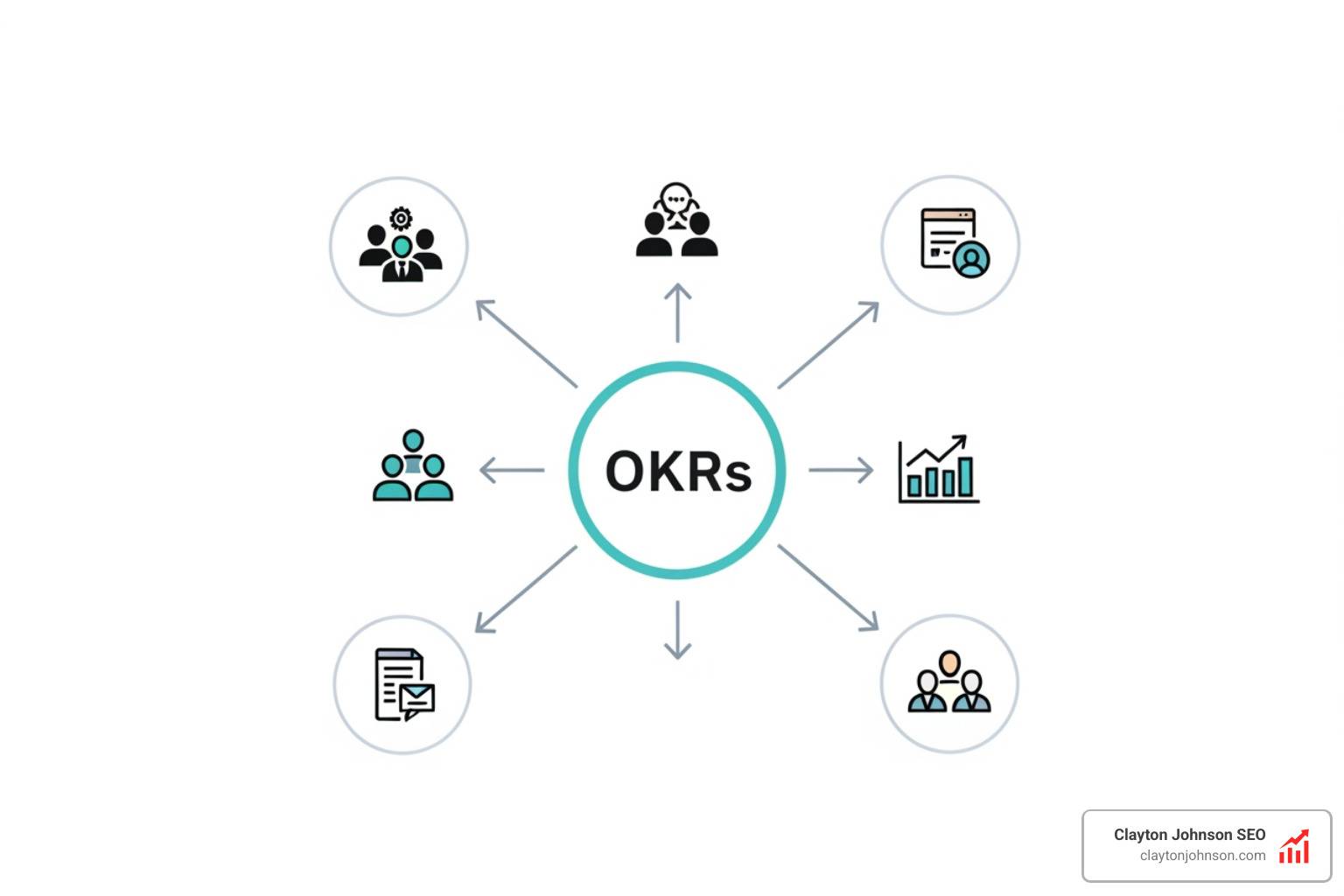
Align OKRs organization wide and you’ll solve one of the most persistent problems in growing companies: everyone works hard, but no one can explain how it all fits together.
Quick Answer: How to Align OKRs Organization Wide
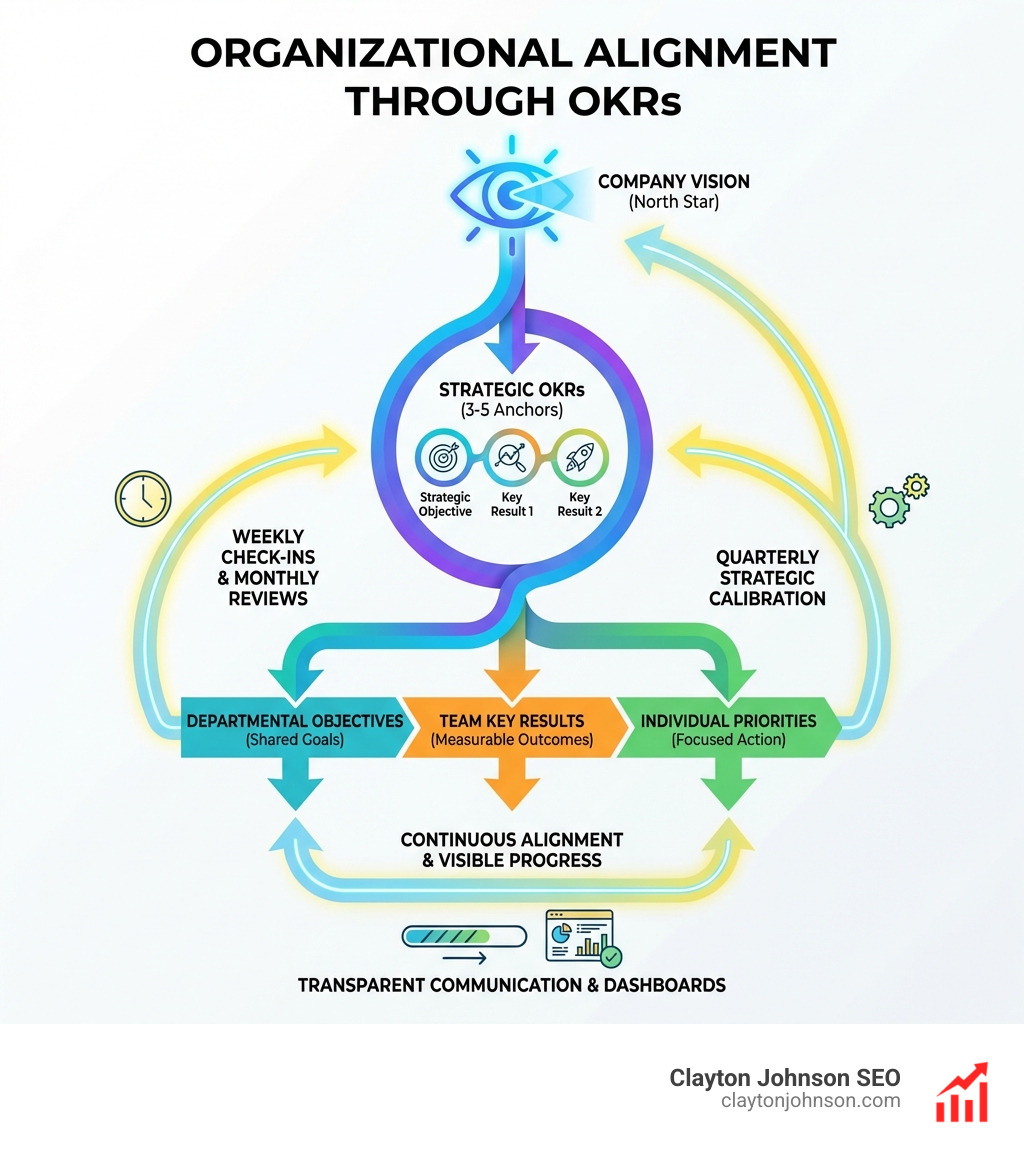
- Establish company-level OKRs as your strategic anchor (3-5 maximum)
- Enable vertical alignment by cascading objectives down while allowing teams to define their own key results
- Build horizontal alignment through shared objectives across departments and explicit dependency mapping
- Maintain continuous alignment via weekly check-ins, monthly reviews, and quarterly strategic calibration
- Make progress visible using dashboards and transparent communication systems
The stakes are high. Research shows that 90% of organizations fail to execute their strategies successfully due to lack of strategic alignment. Even more striking: only one-third of senior executives and managers can list their company’s top three priorities. When leadership doesn’t know where they’re going, teams certainly don’t either.
This creates a painful reality. Marketing chases visibility metrics. Sales optimizes for volume. Operations firefights daily emergencies. Each group works within its own gravity well, disconnected from the broader mission. The result isn’t just inefficiency—it’s strategic drift.
OKRs provide the structural solution. They transform abstract company vision into measurable outcomes. They create transparency so everyone understands what matters most. They establish accountability by connecting individual work to organizational priorities. Most importantly, they serve as your “North Star”—a shared reference point that pulls every team in the same direction.
But implementation fails more often than it succeeds. Organizations struggle with fragmented understanding, isolated pilots that never scale, and excessive training overhead that consumes resources without producing clarity. The difference between OKRs that work and OKRs that sit in forgotten spreadsheets comes down to how you align them across the organization.
I’m Clayton Johnson, and I’ve helped multiple organizations build structured growth architectures that align OKRs organization wide through clear frameworks and measurable systems. The approach I’ll share eliminates the common failure patterns and creates sustainable alignment that compounds over time.
Why You Must Align OKRs Organization Wide for Success
Think of your company as a relay race. You can have the fastest runners in the world, but if the baton pass is fumbled, you lose. In the business world, that “baton pass” is strategic alignment. When we fail to align OKRs organization wide, we aren’t just missing targets; we are losing strategic momentum.
The statistics are sobering. Beyond the 90% failure rate in strategy execution mentioned earlier, consider that 65% of teams say their OKRs are not clearly linked to company goals. Even worse, 1 in 3 teams don’t link their OKRs to company goals at all. This lack of connection breeds silos where departments optimize for their own metrics at the expense of the company’s mission.
When we achieve alignment, we unlock several “superpowers”:
- Focus and Commitment: We stop trying to do everything and start doing what matters. By limiting ourselves to 3-5 high-level objectives, we ensure the organization’s energy isn’t diluted.
- Transparency: When everyone can see everyone else’s OKRs, trust increases. It becomes clear why the engineering team is prioritizing a backend migration instead of the new feature marketing wants.
- Accountability: Every key result has an owner. There’s no more “I thought they were doing that.”
- Employee Engagement: People want to know their work matters. improves the customer experience Another way to create alignment is through storytelling. Use your regular meetings to explain how the work the team is doingimproves the customer experience, for example.
Without this structure, organizations fall into the “Urgency Trap,” where immediate fires override long-term strategic priorities. Leaders must spend less time firefighting and more time assessing the state of the organization—a step 60% of executives admit they neglect before jumping into a redesign.
The Three Dimensions of Effective OKR Alignment
To align OKRs organization wide, we have to look at alignment through three distinct lenses. It isn’t just a top-down command; it’s a 360-degree synchronization.
- Vertical Alignment: Connecting the CEO’s vision to the front-line employee’s daily tasks.
- Horizontal Alignment: Ensuring the Product and Marketing teams aren’t accidentally sabotaging each other.
- Continuous Alignment: Making sure that a plan made at the start of a cycle still makes sense as the market evolves.
| Feature | Strategic Cycle | Tactical Cycle |
|---|---|---|
| Duration | Annual / Multi-year | Quarterly / Monthly |
| Focus | Vision, Mission, Market Positioning | Execution, Metrics, Initiatives |
| Primary Owner | Senior Leadership | Department & Team Leads |
| Review Cadence | Annual / Semi-annual | Weekly / Monthly |
Vertical Alignment: Cascading OKRs Organization Wide
Vertical alignment is often misunderstood as a game of “telephone” where the CEO’s goal is simply photocopied down the hierarchy. We call this the Photocopy Problem. If the CEO’s objective is “Increase Revenue by 20%,” and every manager below them simply sets the same objective, you haven’t created alignment—you’ve created a repetitive list that offers no guidance on how to achieve the goal.
Effective vertical alignment requires meaningful translation.
- The 60-40 Rule: A healthy balance for team OKRs is having roughly 60% of goals cascaded from the level above (top-down) and 40% defined by the team itself (bottom-up). This ensures that those closest to the work have a say in how they contribute to the Align the Vision MISSION .
- Line of Sight: Every individual should be able to look at their specific Key Result and draw a straight line to a company-level Objective. If they can’t, that work is likely a distraction.
- Top-Down Vision: Senior leaders must define the “North Star” first. a survey Even those at the top aren’t immune to misalignment. Only one-third of 11,000 senior executives and managers could list their company’s top three priorities, revealed a survey conducted by the MIT Sloan School of Management and the London Business School. That’s a huge problem. A company can be t…
Horizontal Alignment: Breaking Down Departmental Silos
Horizontal alignment is where most organizations break. This happens when the Sales team sets a goal to “Close 500 New Accounts” while the Customer Success team has a goal to “Reduce Churn.” If Sales closes 500 accounts that aren’t a good fit, they hit their goal, but Customer Success fails.
To fix this, we implement:
- Shared Objectives: Create OKRs that require two or more departments to succeed together. For example, “Launch Product X to Market” should be a shared objective for Product, Marketing, and Sales.
- Interdependency Mapping: Before finalizing OKRs, hold a cross-functional planning session. Use an Alignment Map: How Teams Keep Their OKRs Connected to spot where one team’s progress depends on another’s output.
- Liaison Roles: In large enterprises, appointing a “bridge” person between critical departments (like Engineering and Product) can prevent invisible gaps in execution.
Step-by-Step Guide to Implementing Aligned OKRs
We don’t just wake up one day with a perfectly aligned organization. It requires a A Guide for Creating Organizational Alignment & Accountability .
- Conduct a SWOT Analysis: Before setting goals, understand your Strengths, Weaknesses, Opportunities, and Threats. This ensures your Objectives are grounded in reality.
- Perform a Skills Gap Analysis: skills gap analysis Next, it’s time to figure out what knowledge and capabilities are needed to achieve the team goals set by your leaders. More importantly, are there certain skills you’re missing? (You might hear this called askills gap analysis.) You can use this framework to better categorize your team’s expertise,…
- Define Qualitative Objectives: Objectives should be inspirational and concise—like a haiku. For example: “Become the most loved customer service team in the Midwest.”
- Set Quantitative Key Results: Key Results are the “how.” They must be measurable. Instead of “Improve Support,” use “Achieve a Net Promoter Score of 42 or better.”
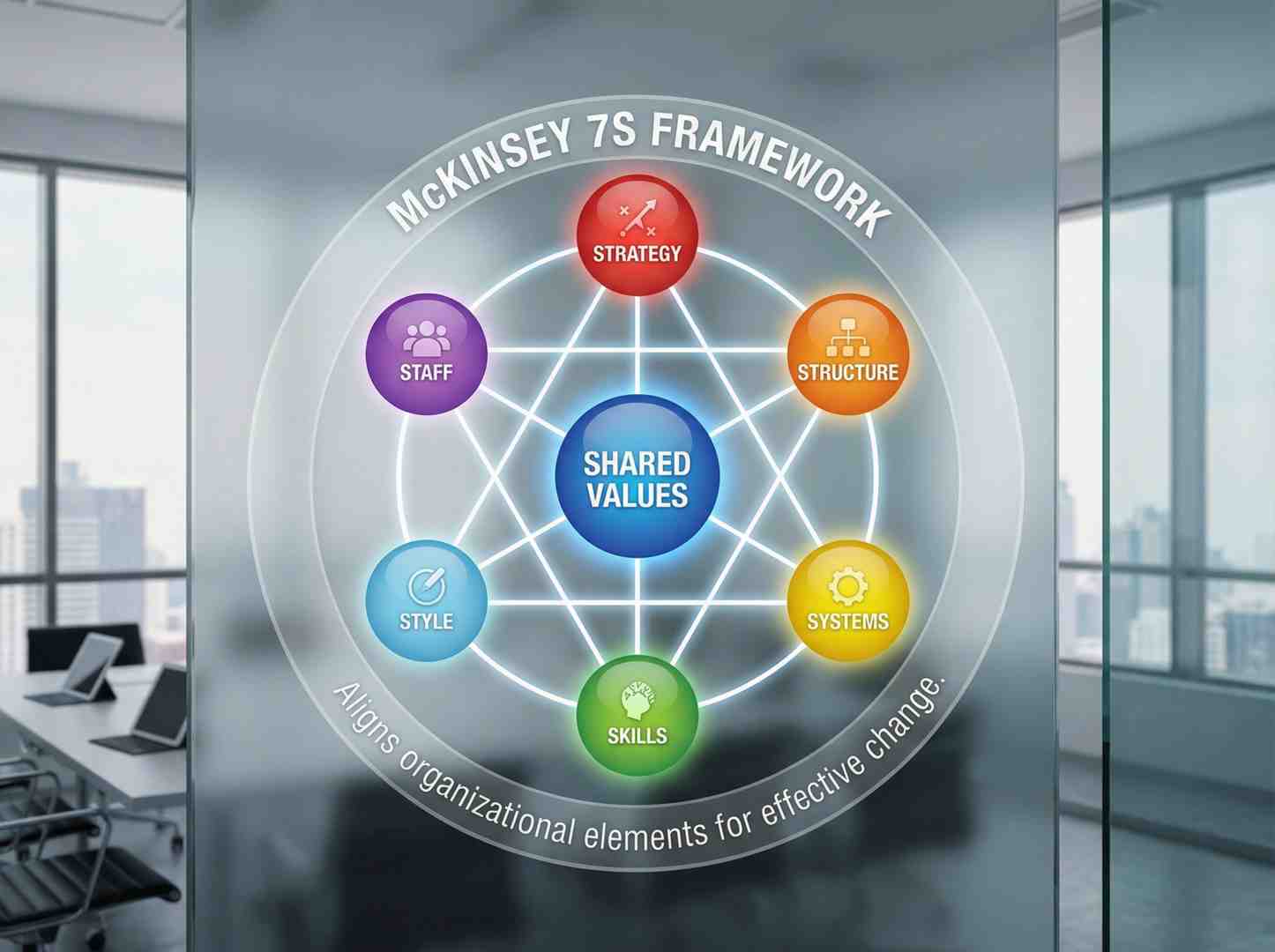
- Build a Fluid Org Chart: Your structure should support your strategy. If your strategy shifts toward a new market, your McKinsey survey It’s a common problem, with 60% of executives in aMcKinsey surveyadmitting that they didn’t spend sufficient time assessing the state of the organization before they jumped into a redesign. That’s why this step is focused on evaluating your current organizational structure before you start doing any… might need to become more cross-functional.
Maintaining Continuous Alignment: How to Align OKRs Organization Wide
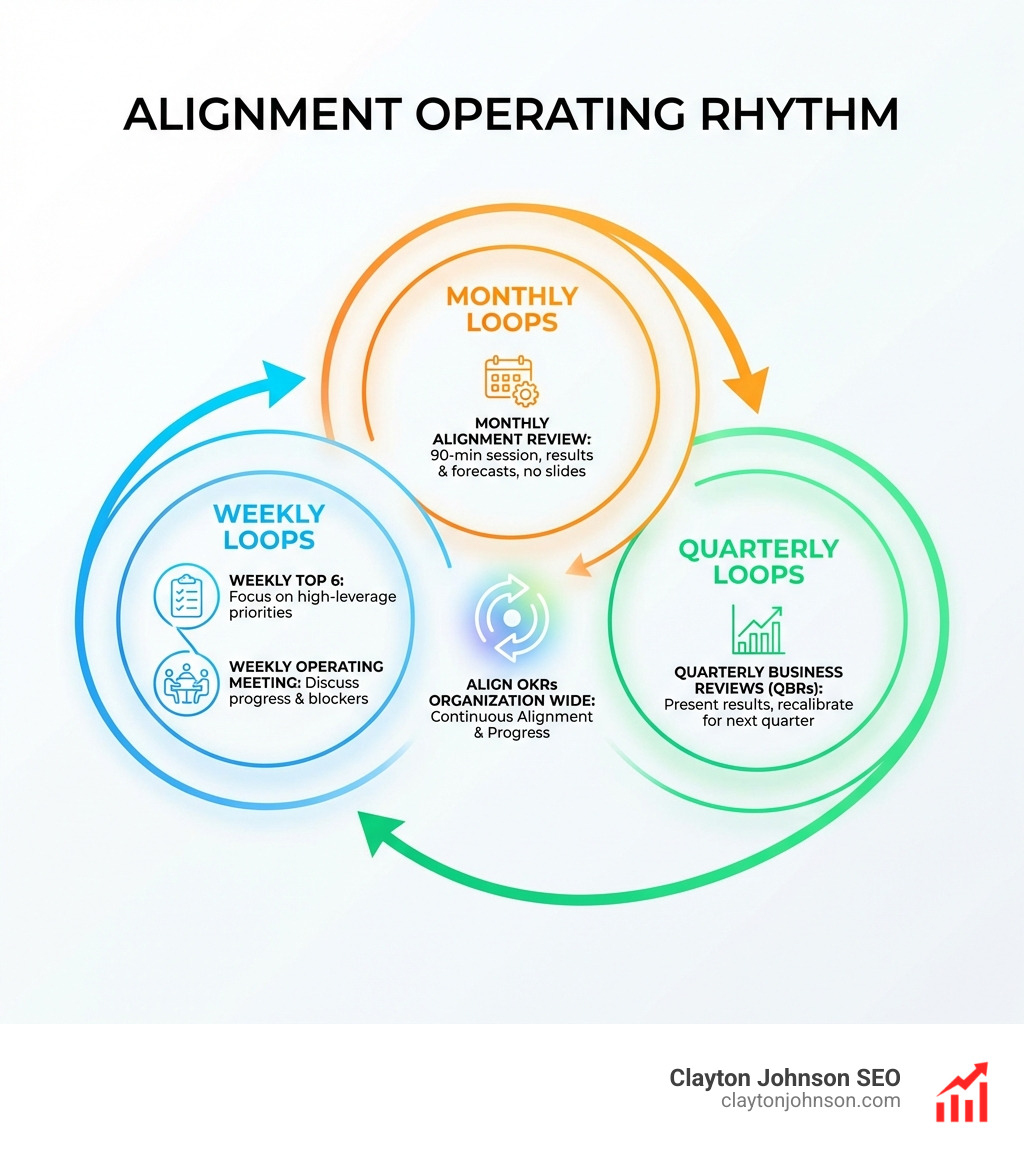
Alignment is not a “set it and forget it” activity. It is a living, breathing rhythm. We recommend an Alignment Operating Rhythm:
- Weekly Top 6: Create TOP 6 WEEKLYTEAMTOP 6Each week discuss each team members Top 6 most important priorities for the week, as mapped to the high level strategic plan objectives.Create TOP 6 This keeps the team focused on the highest-leverage tasks.
- Weekly Operating Meeting: Leadership meets to discuss progress and blockers. Operating Deck WEEKLYOPERATINGMEETINGEach week meet as a leadership operating team to discuss progress, blockers, and perform group deep dives on key related topics.Operating Deck
- Monthly Alignment Review: A 90-minute session focused solely on the alignment plan—no slides, just results and forecasts. Alignment OKR Plan MONTHLYALIGNMENTREVIEWFirst week of each month we have a 90 minutes review of just the alignment plan, no slides. Results and color forecasts are all up to date.Alignment OKR Plan
- Quarterly Business Reviews (QBRs): Teams present their results to leadership and recalibrate for the next quarter. Alignment QBR Deck QUARTERLYBUSINESSREVIEWTwo weeks after quarter start each team holds a QBR [quarterly business review] with their leadership team and extended leaders.Alignment QBR Deck
Common Pitfalls in Organizational OKR Alignment
Even with the best intentions, we often see organizations stumble. Here is what to watch out for:
- The Urgency Trap: Letting “fires” dictate the schedule. If you spend 100% of your time on urgent tasks, you’ll never achieve your strategic OKRs.
- Abstract Objectives: “Be the best” means nothing. “Be the #1 rated CRM for small businesses in Minneapolis” means everything.
- Overloading Teams: Each team should have no more than 3-5 objectives. Any more, and you lose focus.
- Confusing Actions with Outcomes: A Key Result is not a to-do list. “Install new software” is an action. “Reduce data errors by 20% using new software” is a Key Result.
- Rigid Cascading: If you don’t allow for bottom-up input, you’ll miss the insights of the people actually doing the work. This leads to goals that are unrealistic or mathematically impossible.
- Lack of Tracking: spike in dopamine Setting goals is exciting (it triggers aspike in dopamine, the “feel good” neurotransmitter in your brain). But don’t get so swept up in where you’re going that you neglect to figure out where you currently are.

Frequently Asked Questions about OKR Alignment
How often should we review OKR alignment?
We suggest a multi-layered approach. You should have weekly check-ins within teams to track progress and blockers. Monthly reviews are essential for cross-functional coordination. Finally, quarterly strategic reviews allow you to assess if the goals themselves still align with the market reality. This “real-time pulse” prevents you from chasing outdated objectives.
Who is responsible to Align OKRs organization wide?
Alignment is a shared responsibility.
- Leadership provides the vision and strategic anchors.
- Managers are responsible for the “translation” of those anchors into team goals.
- Individuals ensure their daily efforts support the Key Results.
In many successful organizations, OKR coaches or “Ambassadors” are used to help facilitate the process and maintain methodological standards.
What is the difference between cascading and aligning?
Cascading is a one-way flow from top to bottom. It often leads to the “photocopy problem.” Aligning is bi-directional and 360-degree. It includes top-down direction, bottom-up innovation, and horizontal synchronization. Alignment ensures that the goals aren’t just passed down, but are meaningfully translated into the context of each specific team.
Conclusion
At Clayton Johnson SEO and through our work at Demandflow, we believe that clarity is the foundation of growth. Most companies don’t lack tactics—they lack structured growth architecture.
When you align OKRs organization wide, you move from a collection of individuals to a unified force. You create a system where clarity leads to structure, structure provides leverage, and leverage results in compounding growth. Whether you are in Minneapolis or scaling a global enterprise, the principles of alignment remain the same: simplify, visualize, and calibrate.
Ready to build your growth infrastructure? Work with me to turn your strategy into a measurable engine for success.