Why Ethnic Cuisine Restaurants are Taking Over the American Palate

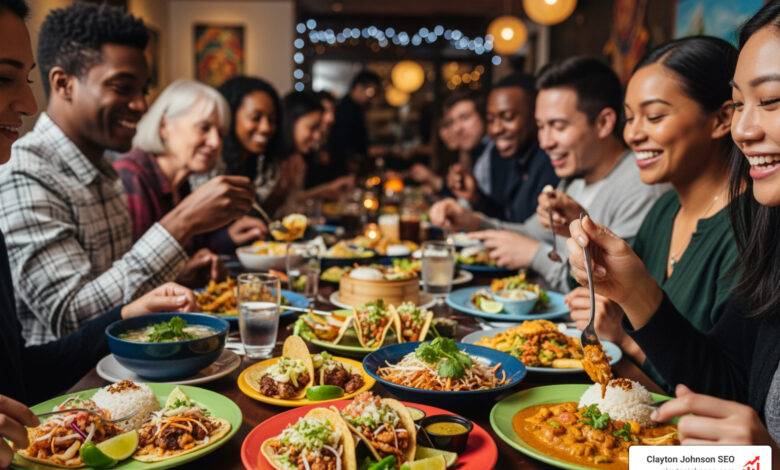
Why Ethnic Cuisine Restaurants Are Reshaping How Americans Eat
Ethnic cuisine restaurants are small, often family-run spots serving authentic dishes rooted in immigrant traditions — and they’re winning over American diners one bold bite at a time.
Quick answer — what makes ethnic cuisine restaurants worth seeking out:
- Authenticity: Recipes passed down through generations, often unchanged
- Affordability: Generous portions at prices that undercut mainstream dining
- Variety: From Burmese tea leaf salad to Ethiopian injera to Uyghur hand-pulled noodles
- Cultural connection: Food prepared by people with a direct tie to the cuisine
- Hidden gems: Often tucked into neighborhoods like Oakland’s East Bay, SF’s Tenderloin, or Downtown Stockton
The American palate is changing. Diners are moving away from safe, familiar chain restaurants and chasing something more real — the kind of food you find in a dimly lit spot where the regulars all know each other and the menu hasn’t changed in decades.
Oakland alone is considered one of the best places in the entire country to eat Burmese and Laotian food. That’s not a fluke. It’s the result of immigrant communities building something lasting, dish by dish.
I’m Clayton Johnson, an SEO strategist who has spent nearly two decades analyzing how businesses — including ethnic cuisine restaurants — grow their visibility and attract loyal audiences online. I’ll walk you through what makes these spots so compelling and how to find them.
Defining the Authentic Experience at Ethnic Cuisine Restaurants
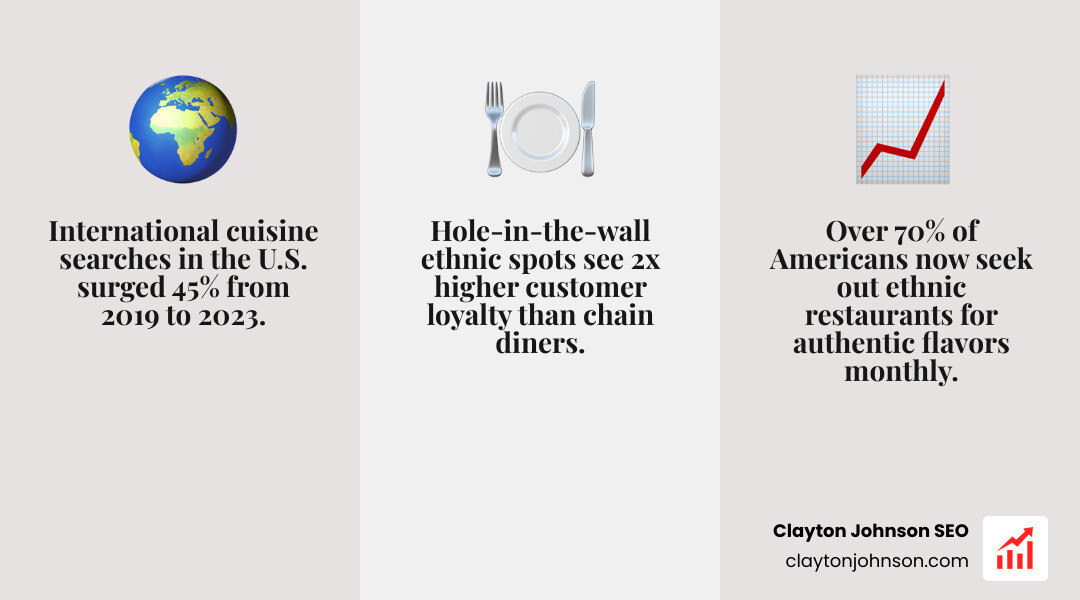
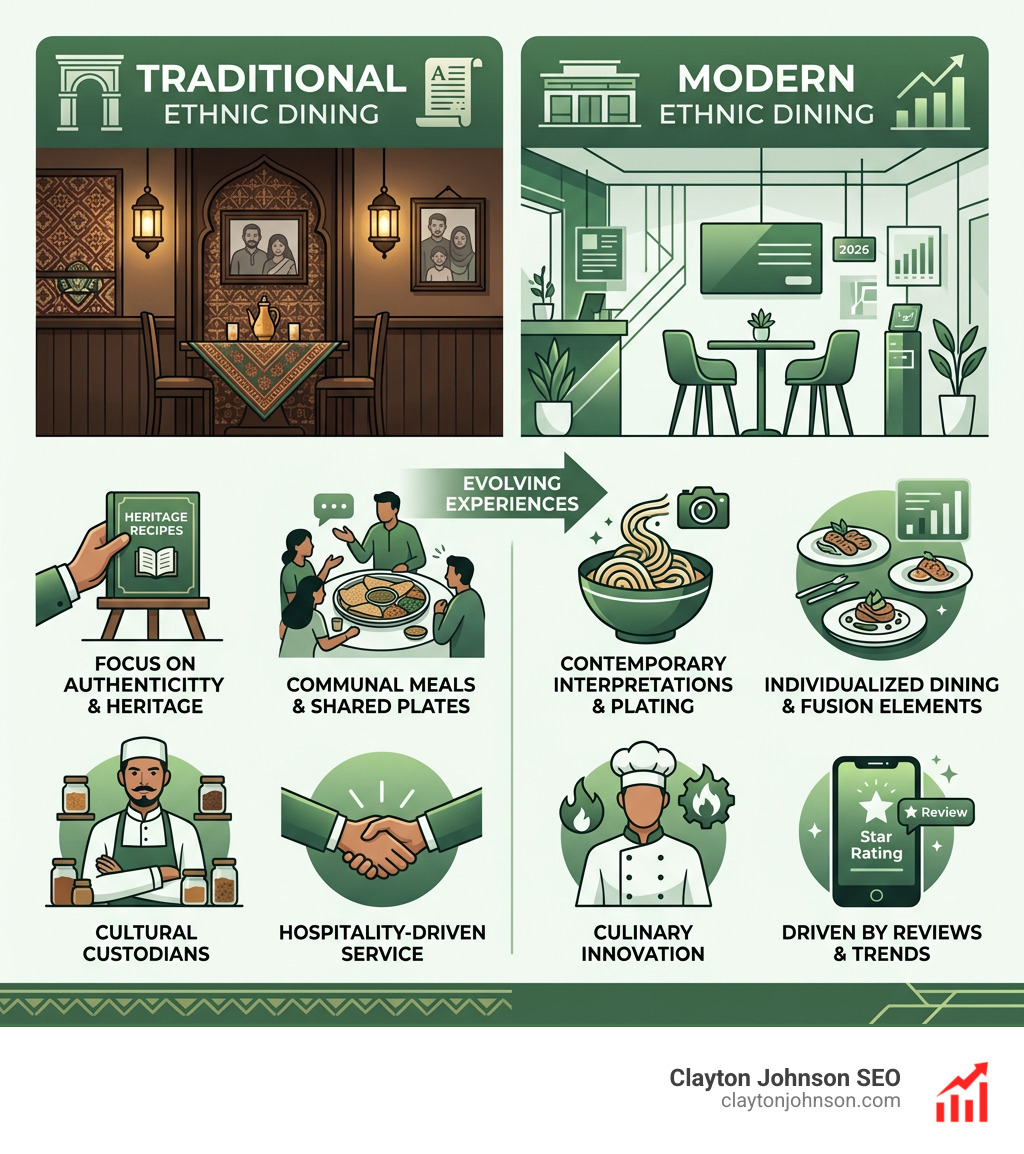
When we talk about an “authentic” experience, we aren’t just talking about the spices in the pot. We are talking about the soul of the establishment. Many of the most beloved ethnic cuisine restaurants fall into the “hole-in-the-wall” category. These aren’t the places with million-dollar interior design budgets or valet parking. Instead, they are the spots where the focus is entirely on the plate.
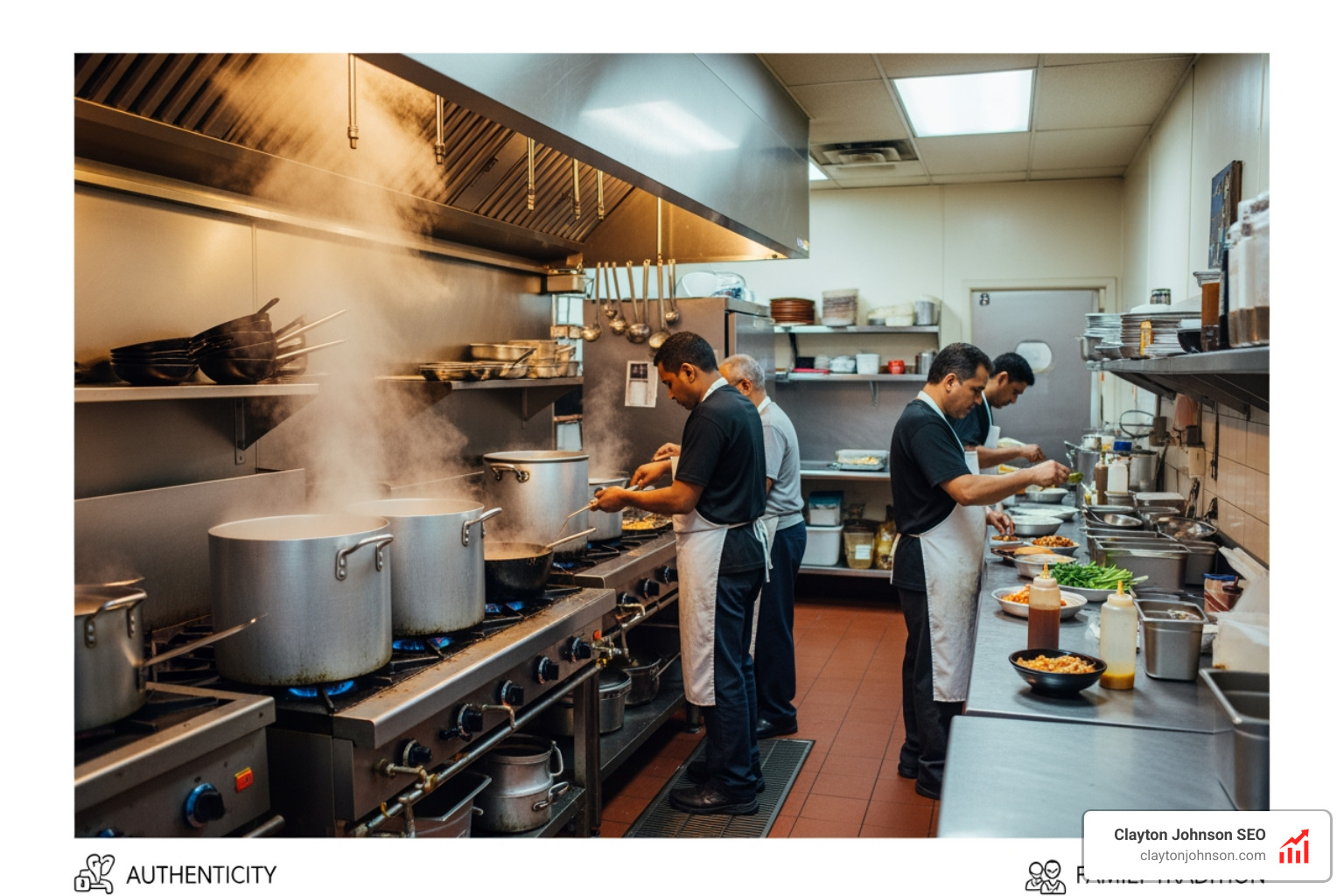
A true hole-in-the-wall is defined by its no-frills atmosphere. You might see mismatched chairs, handwritten menus, or a television in the corner playing news from a country thousands of miles away. But don’t let the humble appearance fool you. These establishments are often the primary vehicles for cultural preservation. For many immigrant families, opening a restaurant is a way to maintain a connection to their heritage while providing a vital service to their community.
The appeal lies in the honesty of the food. These restaurants often offer:
- Affordable Pricing: Because they aren’t paying for prime real estate or massive marketing campaigns, the savings are passed on to us.
- Family-Run Operations: It’s common to see multiple generations working together—grandparents in the kitchen, children helping with the front of house.
- Hidden Culinary Gems: These spots aren’t always on the main drag. They might be tucked inside a grocery store, a liquor store, or a basement.
Hidden Gems and Hole-in-the-Wall Characteristics
Finding these spots requires a bit of detective work. Common characteristics include limited hours—some might only be open for lunch or a few days a week—and locations that aren’t exactly “Instagram-friendly.” However, this lack of polish is exactly why they are so appealing.
In food media, there is often a lot of “hype” surrounding non-native chefs who take traditional flavors and give them a modern, expensive twist. While innovation is great, we believe it’s crucial to seek out restaurants run by people of color with direct cultural connections. This helps create a more equitable media landscape where native chefs get the visibility they deserve.
If you are a restaurant owner yourself looking to bridge that gap between authentic food and digital visibility, check out our insights on restaurant-marketing-making-your-feed-as-tasty-as-your-food/. Understanding how to showcase your “no-frills” charm can actually be a massive competitive advantage.
Must-Try Signature Dishes at Ethnic Cuisine Restaurants
If you’re ready to expand your horizons, there are certain dishes that act as “gateways” to their respective cultures. These items are often praised because they represent a perfect balance of traditional techniques and bold flavors.
- Tea Leaf Salad (Burmese): A fermented, savory, and crunchy masterpiece. It’s often the benchmark for a great Burmese spot.
- Injera (Ethiopian): This sour, fermented flatbread is more than just a side—it’s your utensil. It’s used to scoop up spicy stews (wats) and vegetables.
- Beef Rolls (Chinese/Islamic): Think of a flaky pancake wrapped around savory beef and fresh cilantro. It’s the ultimate comfort food.
- Lumpia (Filipino): These crispy spring rolls are addictive and represent the beautiful “twist” Filipino cuisine brings to Southeast Asian flavors.
For those looking for specific regional specialties, we recommend exploring the traditional hand-pulled noodles and kebabs at Dolan Uyghur Restaurant . Their menu is a testament to the preservation of the Uyghur way of life through food. Similarly, if you want to experience the unique fusion of Malay and Chinese cultures, the guarded recipes at – NYONYA offer a delicate blend of spices like galangal and ginger flower that you won’t find anywhere else.
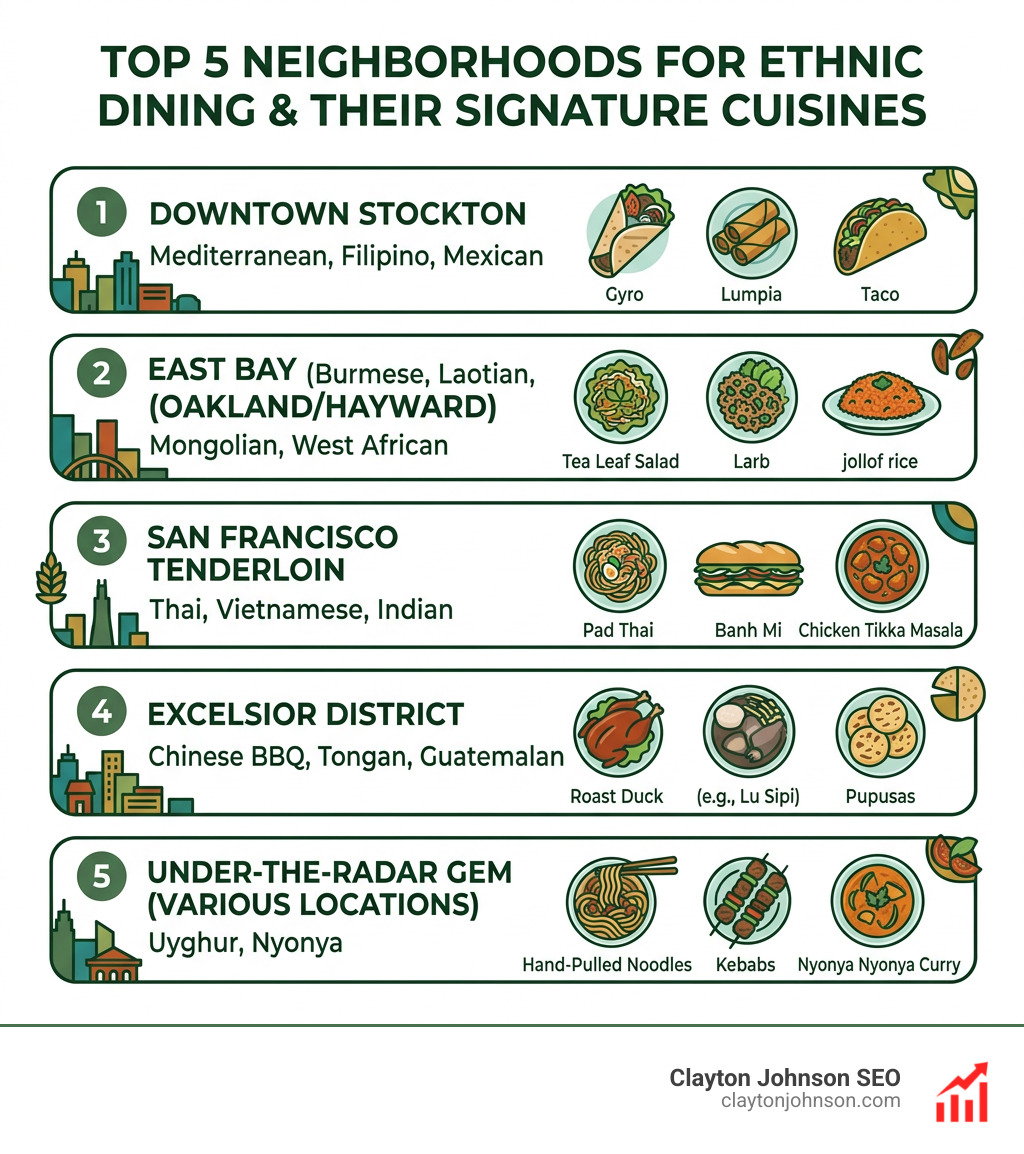
Top Neighborhoods for Authentic Global Flavors
Where you eat is often just as important as what you eat. Certain neighborhoods have become “international food corridors” due to the high concentration of immigrant-run businesses.
- Downtown Stockton: This area is a goldmine for those who don’t want to travel far for a taste of the world. You’ll find everything from Mediterranean gyro houses to Filipino grills and historic Mexican cafes.
- East Bay (Oakland/Hayward): As mentioned, this is the place to be for Burmese and Laotian food. It’s also home to rare Mongolian outposts and West African gems.
- San Francisco Tenderloin: Don’t let the grit fool you; some of the best Thai, Vietnamese, and Indian food in the city is hidden here.
- Excelsior District: A fantastic spot to find Chinese BBQ that rivals anything in Chinatown, alongside Tongan and Guatemalan eateries.
How to Find and Support Under-the-Radar Ethnic Eateries
In a world of “top 10” lists and viral TikTok trends, the best ethnic cuisine restaurants often go unnoticed. To find them, you have to look past the “hype.” Mainstream media often focuses on the most “accessible” (read: westernized) versions of global food. To find the real deal, we recommend a more community-sourced approach.
Start by looking at Yelp or Reddit, but don’t just look at the star rating. Read the reviews. Are people talking about the “chef’s specials”? Are they mentioning dishes that aren’t even on the English menu? That’s a good sign. Also, look for a diverse clientele. If you see families from that specific culture dining there, you’ve likely found a winner.
Supporting native chefs is about more than just a good meal; it’s about ensuring these cultural hubs can survive. Many of these spots operate on thin margins with limited staffing. Being a “good” customer means being patient with long lines or varying hours and understanding that the “no-frills” service is part of the authentic charm.
Standout Japanese and Indian Hole-in-the-Wall Spots
While sushi and curry are everywhere, finding a true “hole-in-the-wall” version of these cuisines is a different story.
For Japanese cuisine, we often look for spots located in unexpected places—like next to a movie theater or in a quiet residential Avenues neighborhood. Look for “Hos Bee Wings” or spicy garlic edamame to start. The best spots often have a small, curated menu of handmade rolls rather than a hundred different options.
In the Indian and Pakistani category, the Tenderloin district in San Francisco holds some legendary status. We’re talking about places where the “health inspector’s name is taboo” but the lamb dishes and quabili pallow are life-changing. These spots are often characterized by their shared-table seating and incredibly low prices.
If you are a local business owner trying to figure out who your “adventurous eater” customer actually is, our customer-strategy/%f0%9f%91%a4-buyer-persona-example-local-business-owner-laura/ guide can help you map out the intent behind why people choose these hidden gems over mainstream chains.
Preserving Heritage through Ethnic Cuisine Restaurants
At the heart of every great ethnic eatery is a story of heritage. For many, these recipes are more than just instructions; they are family heirlooms. Nyonya cuisine, for example, is a delicate blend of Chinese and Malay cultures that has been passed down with very little variance for generations.
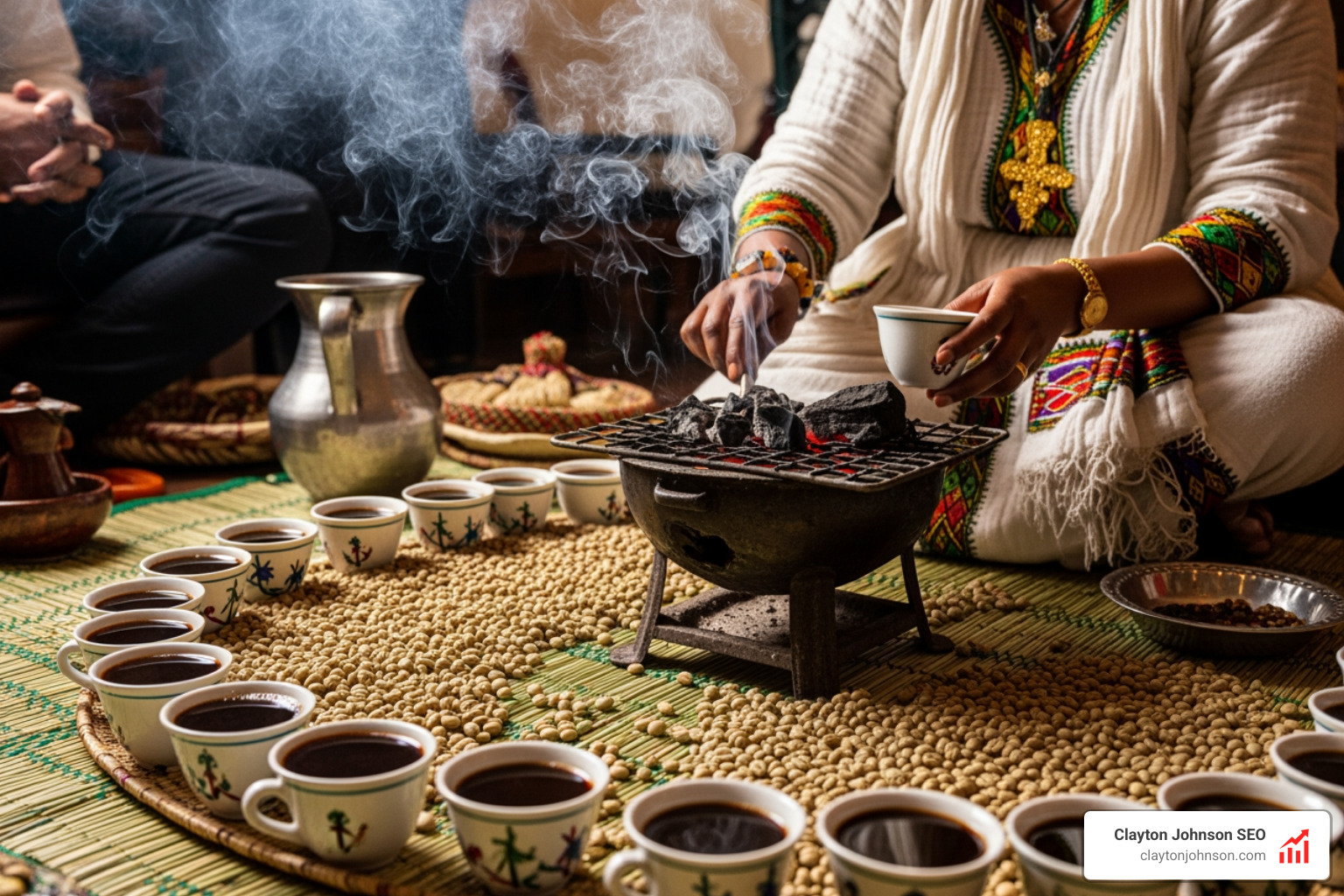
Ethiopian and Eritrean restaurants also place a huge emphasis on tradition. From the slow-simmered stews to the ritual of the coffee ceremony, these restaurants act as cultural hubs.
- Cafe Selam | Experience Seattle’s Most Delicious Ethiopian Cuisine has been a staple for over two decades, proving that authenticity has staying power.
- Gursha Restaurant | Authentic Ethiopian Cuisine | Dining in Toronto uses its name—meaning “a bite shared with love”—to emphasize the communal nature of the meal.
- Senait Restaurant and Home (Dukem) continue this legacy by using time-honored techniques and authentic spices like berbere and mitmita.
These establishments don’t just feed the body; they feed the soul of the neighborhood. By choosing to eat here, you are participating in a global tradition of hospitality and storytelling.
Conclusion: Building a Sustainable Strategy for Culinary Growth
The rise of ethnic cuisine restaurants isn’t just a trend; it’s a shift in how we value culture and authenticity. For the adventurous diner, these spots offer a world of flavor that mainstream chains simply cannot replicate. For the restaurant owners, these businesses represent a path to preservation and prosperity.
At Clayton Johnson SEO, we believe in the power of clarity and structure. Whether you are a diner looking for the best meal of your life or an operator trying to build a durable system for your business, the principles remain the same: focus on what is real, build for the long term, and leverage the tools available to you.
If you’re interested in how we use systems to drive growth and visibility for businesses of all sizes, explore our ai-search/keyword-strategy/ frameworks. Just like a great recipe, a great SEO strategy requires the right ingredients, a bit of patience, and a deep understanding of the “intent” behind the search.
Seek out the under-the-radar spots. Order the dish you can’t pronounce. Support the native chefs who are keeping their traditions alive. Your palate — and your community — will be better for it.