10 Free Sales Customer Segmentation Templates for Every Industry

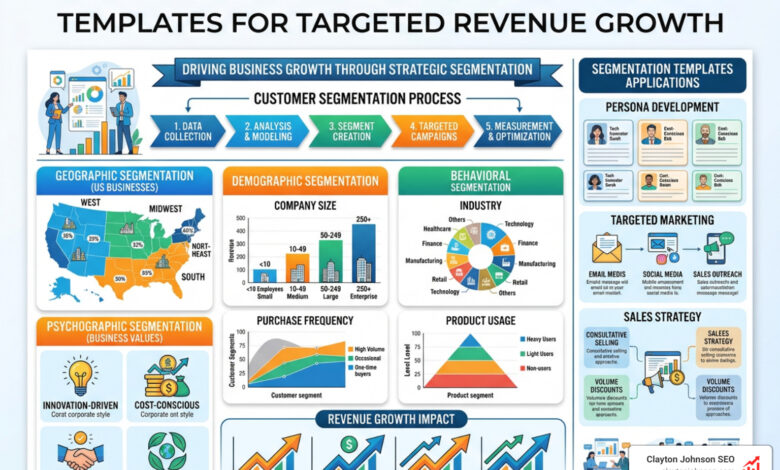
Why Sales Customer Segmentation Templates Are the Fastest Path to Higher Revenue
Sales customer segmentation templates give your team a ready-made system to divide customers into groups — so you can focus your outreach where it actually converts.
Here are the top free templates to get started right now:
| Template | Format | Best For |
|---|---|---|
| Formaloo Matrix | Online tool | Visual value/engagement scoring |
| HubSpot Spreadsheet | Google Sheets | Multi-variable customer profiling |
| Lucidspark Visual Board | Digital whiteboard | Team-based persona prioritization |
| Product Marketing Alliance | Google Docs | Product-led segmentation |
| Lark Segmentation Grid | Database grid | Behavioral + demographic filtering |
| Template.net Strategy Doc | Word/PDF | Sales client management planning |
| PMM Profile Framework | Excel/Google Docs | 25-variable scoring system |
| Lark Analysis Template | Database | Demographics + spending behavior |
| SlideTeam PPT Bundle | PowerPoint | STP and RFM presentation decks |
| Formplus Survey Templates | Online forms | Data collection and segment building |
Knowing who your customers are sounds simple. But most sales teams skip this step — and pay for it with wasted outreach, diluted messaging, and stalled revenue growth.
Research from Econsultancy shows that companies applying personalized marketing see average revenue growth of 20%. The difference between those companies and the ones still guessing? A structured way to segment customers before crafting a single pitch.
That’s exactly what the right template gives you.
I’m Clayton Johnson, an SEO strategist and demand generation expert who has helped businesses build scalable growth systems — including using sales customer segmentation templates to sharpen targeting and improve conversion rates across industries. Let me walk you through the 10 best options available today.
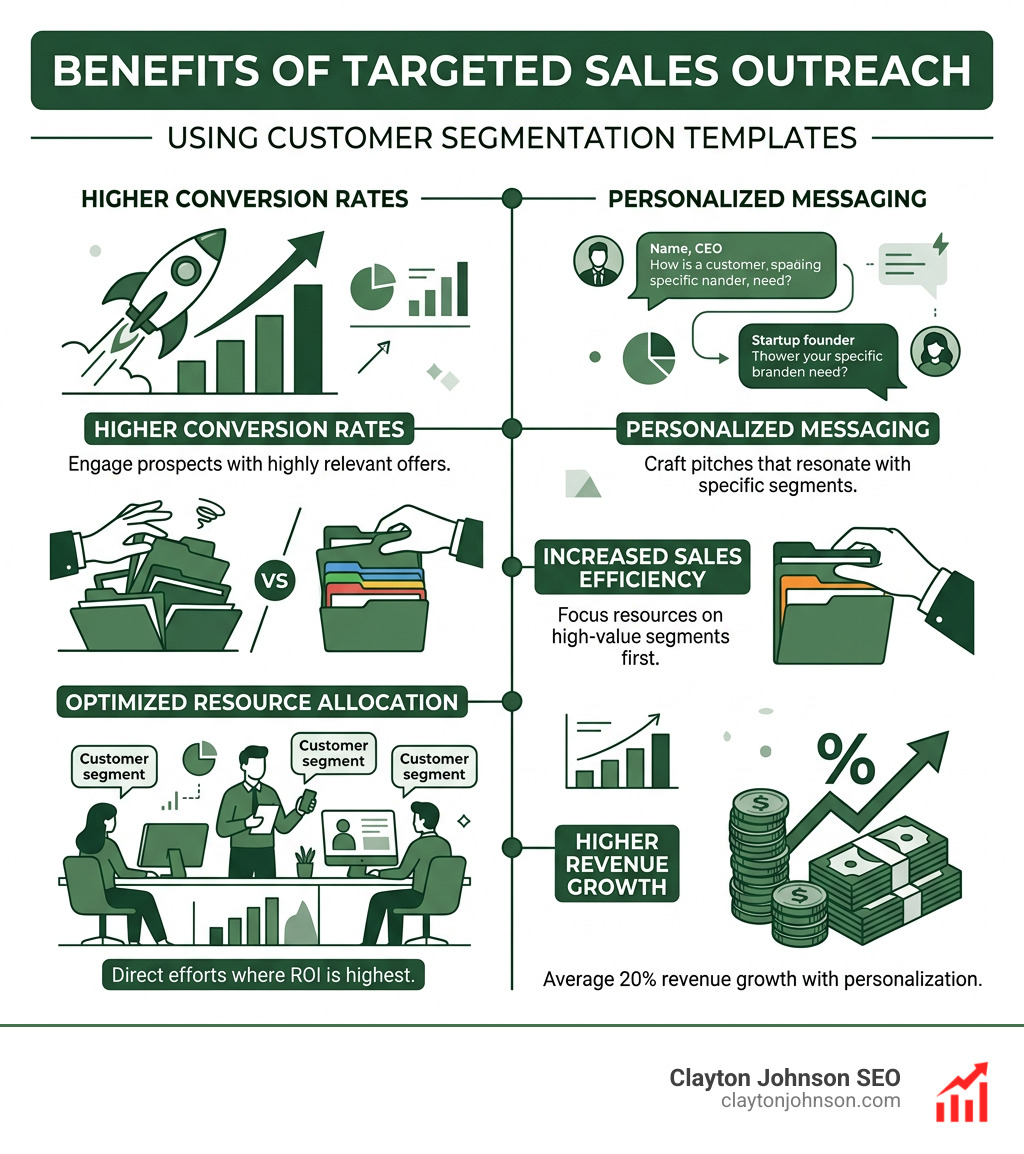
Top 10 Sales Customer Segmentation Templates for Growth
At its core, customer segmentation is the process of dividing a broad prospect base into smaller, manageable groups based on shared characteristics. For sales teams, this isn’t just an organizational task; it’s a survival tactic. Without it, your reps are “spraying and praying”—sending generic emails to high-value CEOs and small-business owners alike.
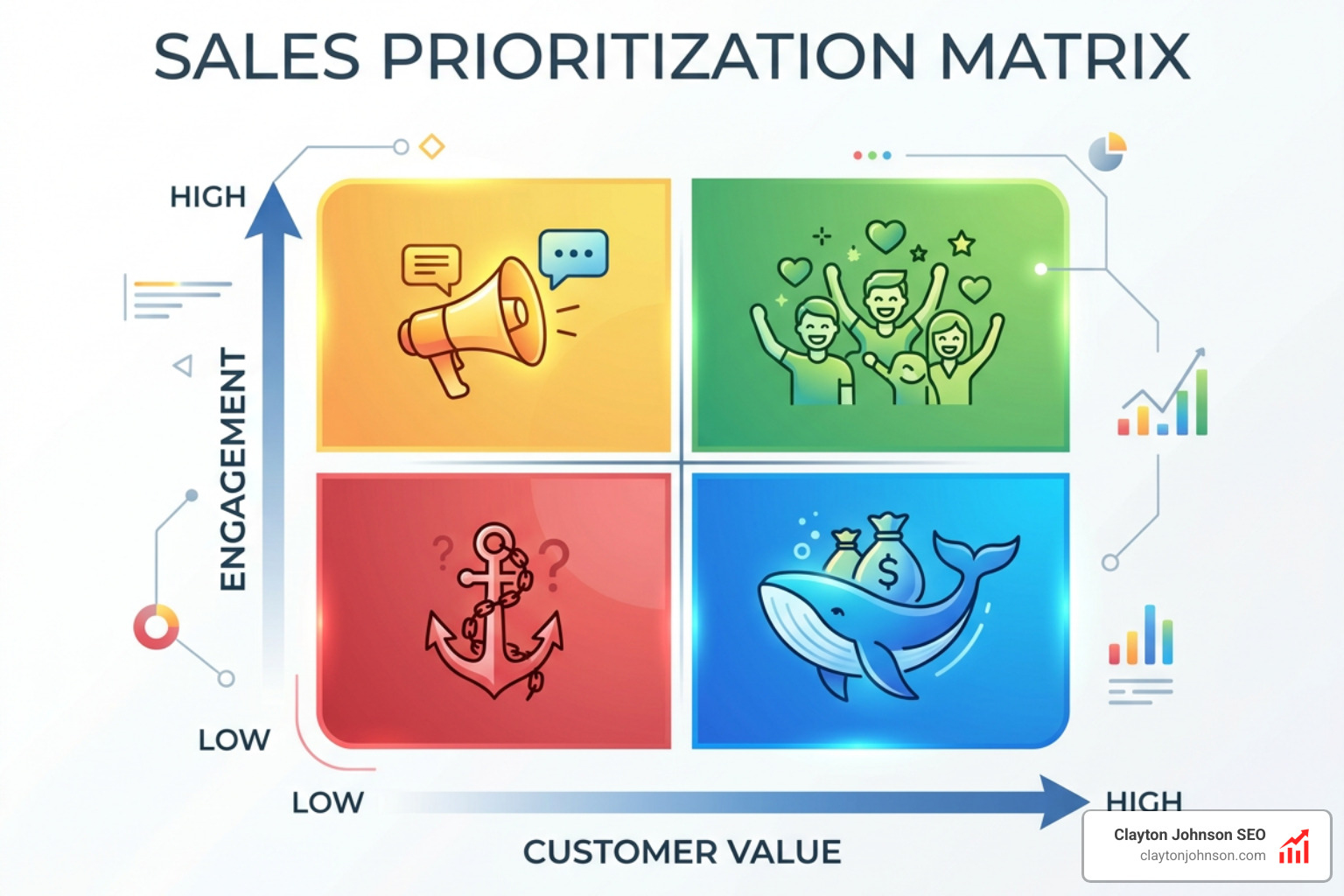
The primary goal of using a sales customer segmentation matrix is to prioritize outreach. By categorizing leads, you can identify your “whales” (high-value) and your “fans” (high-engagement), ensuring your most expensive sales resources are spent where the ROI is highest.
When choosing between these tools, consider whether your team thrives on visual mapping or data-heavy spreadsheets.
| Feature | Visual Matrix Tools | Spreadsheet/Grid Tools |
|---|---|---|
| Best For | Strategy sessions & brainstorming | Detailed tracking & CRM imports |
| Data Depth | High-level (Value vs. Engagement) | Granular (25+ variables) |
| Ease of Use | Very High | Moderate |
| Automation | Limited | High (Filtering/Sorting) |
According to the Revenue Alliance, identifying high-value customers early in the funnel is the most effective way to shorten sales cycles.
Visual and Matrix-Based Sales Customer Segmentation Templates
If you need to see your market at a glance, visual templates are your best friend. These are perfect for strategic design and product insight sessions where the goal is to align the team on who to target next.
1. Formaloo Sales Customer Segmentation Matrix This template uses a classic 2×2 matrix model to plot customers based on two axes: Value and Engagement.
- High-Value/High-Engagement: Your “Champions.” Prioritize these for upsells.
- High-Value/Low-Engagement: Your “At-Risk Giants.” These need immediate relationship-building.
- Low-Value/High-Engagement: Your “Brand Advocates.” Great for referrals, but don’t overspend sales time here.
- Low-Value/Low-Engagement: “Minimum Effort.” Automate these with low-touch marketing. You can access the Formaloo Template here.
2. Lucidspark Customer Segmentation Board The Lucidspark Template is a digital whiteboard designed for collaborative sessions. It goes beyond simple categories to help you name specific personas, identify their “Pain Levels” (High/Medium/Low), and assess their “Willingness to Change.” This last part is crucial—if a prospect has high pain but zero willingness to change their current system, they are a low-priority lead regardless of their budget.
Spreadsheet and CRM-Ready Sales Customer Segmentation Templates
For teams that need to “crunch the numbers,” spreadsheets allow for deeper analysis of sales strategy and enablement data.
3. HubSpot Customer Segmentation Spreadsheet HubSpot offers a comprehensive Google Sheets-based tool that centralizes all your data. It includes tabs for demographics, geographics, and even technographics (what software they already use). This is excellent for building buyer personas that actually live where your data does. You can download the HubSpot Templates here.
4. Lark Customer Segmentation Grid The Lark Grid is more of a lightweight database than a simple spreadsheet. It allows for advanced variable tracking, such as “Spending Scores” and “Preferred Communication Channels.” If you’ve ever wondered if your “Accounting Firm” segment prefers LinkedIn over Email, this template helps you track that.
5. Sales Enablement Collective Profile Framework This is a “Pro” level framework that allows you to track up to 25 different customer variables. It includes a customizable scoring system out of 10 for each attribute, helping you mathematically determine which segments are your most profitable.
Industry-Specific and B2B Tiering Models
B2B sales require a different lens than B2C. You aren’t just looking at a person; you’re looking at a firm (Firmographics).
6. Product Marketing Alliance Segmentation Template This PMA Template focuses on the four pillars of product-led growth: geographic, demographic, psychographic, and behavioral characteristics. It’s a simple Google Doc that prompts you to think deeply about why a customer buys, not just what they buy.
7. B2B Tier-Based Segmentation (SlideTeam) In B2B, we often talk about “Tiers.”
- Tier 1: High revenue (>$10M), large employee count (>5,000). These require Account-Based Marketing (ABM).
- Tier 2: Mid-market. Standard sales cycle.
- Tier 3: Small business. Self-service or automated sales. This approach is backed by B2B segmentation research showing that firmographic-only models often miss the “propensity to buy” signal.
8. Template.net Sales Client Management Strategy This is a more formal Word/PDF document for those who need to present their segmentation strategy to stakeholders. It’s less about data entry and more about the “Management Strategy” behind the segments.
9. Lark Segmentation Analysis File Specifically designed for startups, this template helps you analyze “Last Purchase Category” and “Membership Length” to find patterns in your most loyal users.
10. Formplus Survey-to-Segment Template Before you can segment, you need data. Formplus provides survey templates that feed directly into your segmentation models. It’s the “Top of the Funnel” for your segmentation engine.
Implementing Segmentation Systems for Scalable Revenue
Downloading a template is step one. Step two is turning that template into a living system. McKinsey personalization research highlights that 71% of consumers expect businesses to deliver personalized interactions—and they get frustrated when they don’t.
To meet this expectation at scale, we use advanced frameworks like STP (Segmentation, Targeting, Positioning) and RFM (Recency, Frequency, Monetary) Analysis.
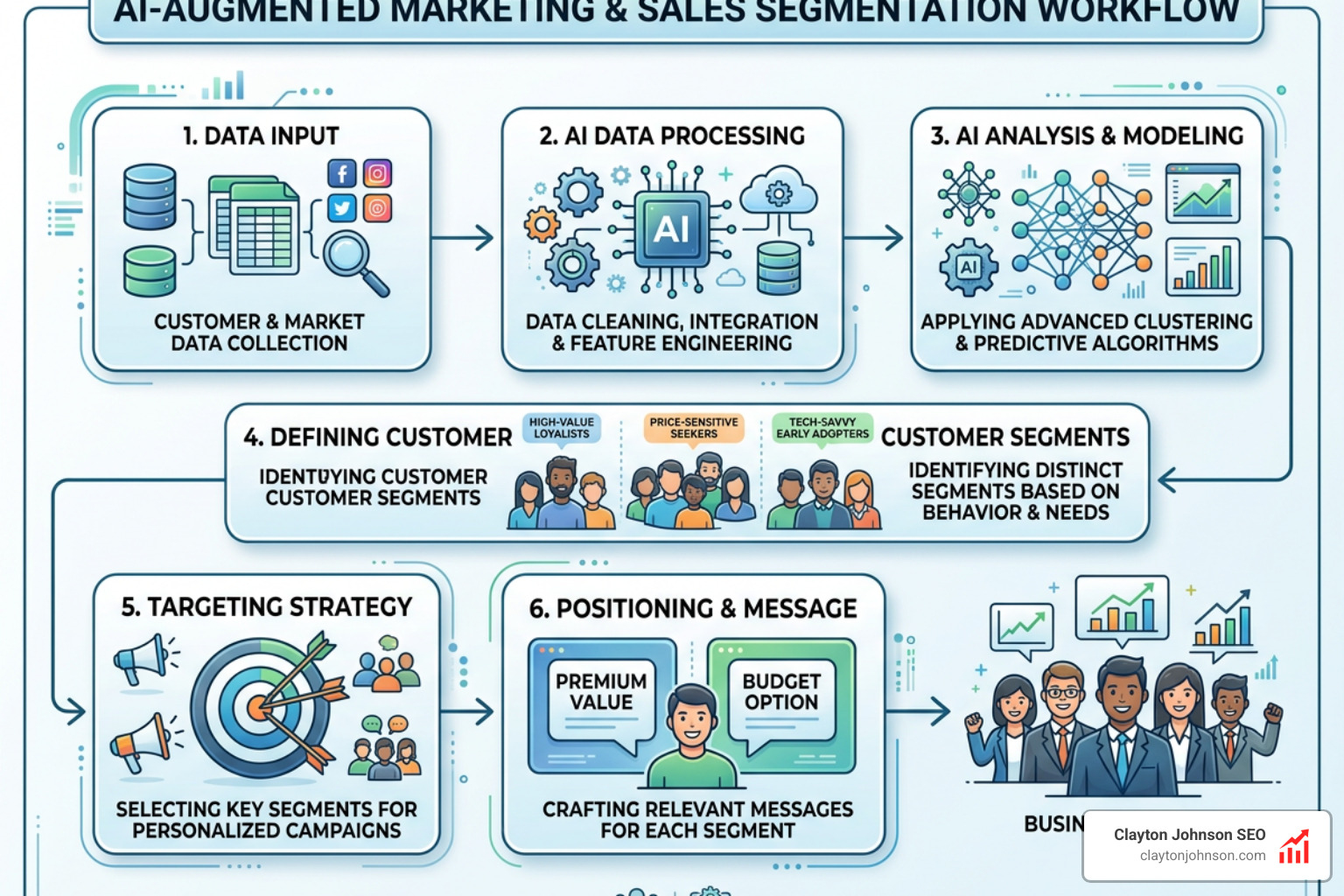
- RFM Analysis: This looks at how recently a customer purchased, how often they do so, and how much they spend. It’s the gold standard for value-based segmentation.
- STP Marketing: First, you segment the market; then, you target the most lucrative segments; finally, you position your product specifically for those groups.
For those looking to move faster, AI tools like PMM-GPT can assist in analyzing raw customer data to suggest segments you might have missed. For example, an AI might notice that your highest-retaining customers all use the same obscure CRM, leading you to create a new “Technographic” segment.
Choosing the Right Framework for Your Business Size
One size does not fit all. A startup with 50 customers doesn’t need the same complexity as an enterprise with 50,000.
- Small Businesses/Startups: Focus on 1-2 attributes. Use the Lark Grid or HubSpot Spreadsheet. Your goal is customer strategy and product insight—finding out who loves you and why.
- Mid-Market: Start using scoring systems. The PMM Profile Framework is perfect here. You need organizational alignment between sales and marketing so everyone agrees on what a “High-Value” lead looks like.
- Enterprise: You need automated matrices and AI-driven insights. At this level, segmentation is about resource allocation—ensuring your expensive field sales reps aren’t chasing low-margin Tier 3 accounts.
Measuring Success and Avoiding Common Pitfalls in Sales Customer Segmentation Templates
How do you know if your sales customer segmentation templates are actually working? Look at the KPIs.
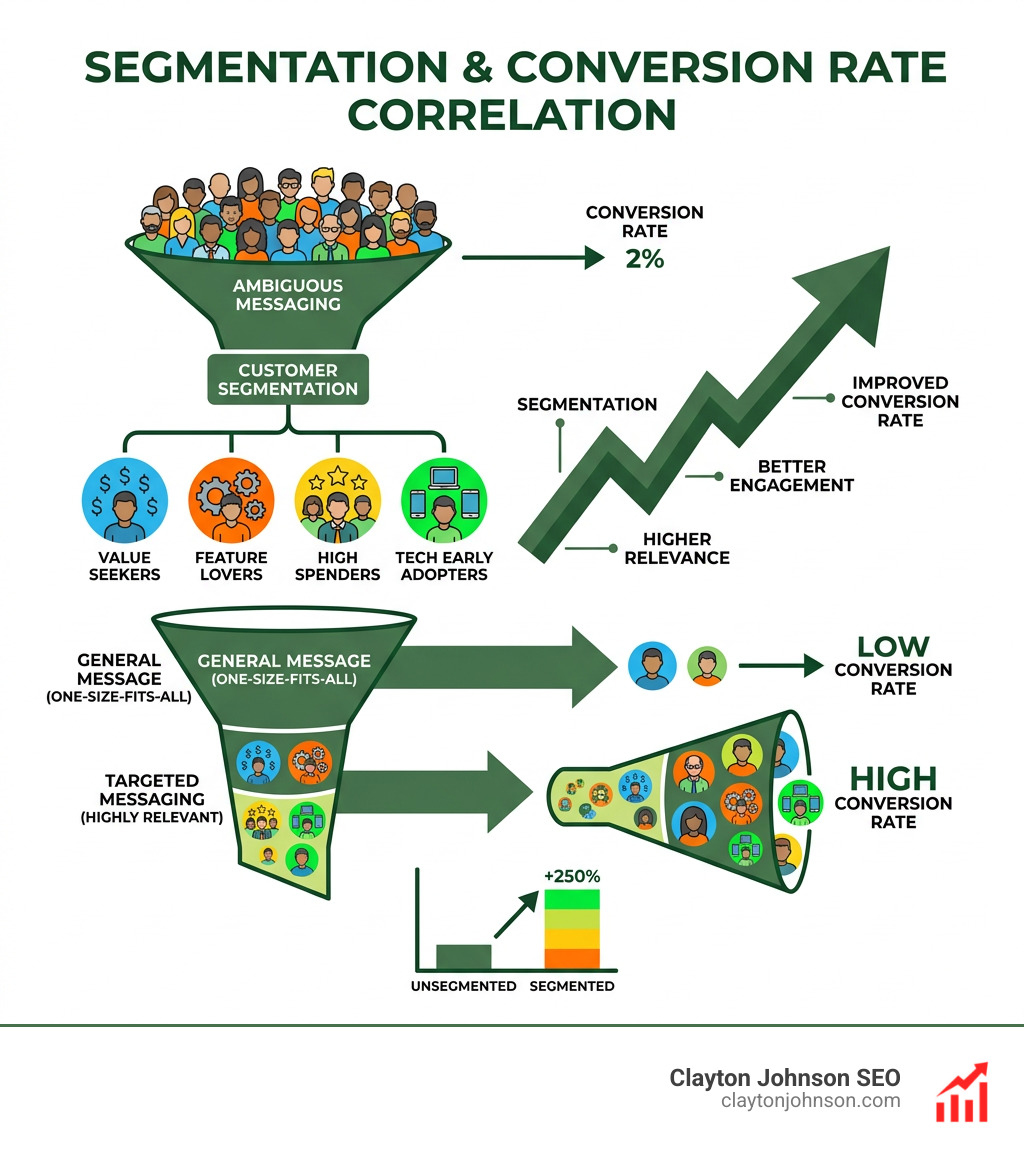
Campaign Monitor data shows that marketers who use segmented campaigns see as much as a 760% increase in revenue. Beyond the bottom line, watch these metrics:
- Conversion Rates: Are your targeted emails getting more clicks?
- Sales Cycle Length: Is it taking less time to close Tier 1 deals?
- Retention Rates: Are you keeping the “High-Value” customers you worked so hard to get?
However, be wary of Over-Segmentation. If you create 50 different segments, your team will be spread too thin to create meaningful content for any of them. Start broad and narrow down only when the data supports it.
Also, avoid “Data Silos.” If your sales team uses one segmentation model and marketing uses another, you’ll end up with a disjointed sales strategy that confuses the customer.
Building Durable Growth Systems with Clayton Johnson
At the end of the day, a template is just a tool. The real magic happens when you integrate these templates into a durable, scalable system.
We don’t just believe in chasing the latest sales tactics. We believe in Clarity → Structure → Leverage → Compounding Growth.
By using sales customer segmentation templates, you provide the Clarity of who your customer is. By putting that data into a CRM, you create Structure. By targeting those segments with personalized messaging, you gain Leverage. And as you refine those segments over time, you achieve Compounding Growth.
Our approach at Clayton Johnson SEO involves:
- Technical Content Architecture: Ensuring your website speaks the language of your specific segments.
- AI-Enhanced Workflows: Using tools to automate the “busy work” of data entry so your sales team can focus on closing.
- Strategic Roadmap Alignment: Making sure your segmentation strategy matches your long-term business goals.
Whether you are a founder looking for your first growth framework or a marketing operator trying to fix a leaky funnel, the Marketing Alliance and our own internal systems are here to help you turn fragmented efforts into a coherent growth engine.
Ready to stop guessing and start growing? Download one of the templates above and start segmenting today. Your revenue will thank you.


