Why AI Marketing Workflows Matter Now
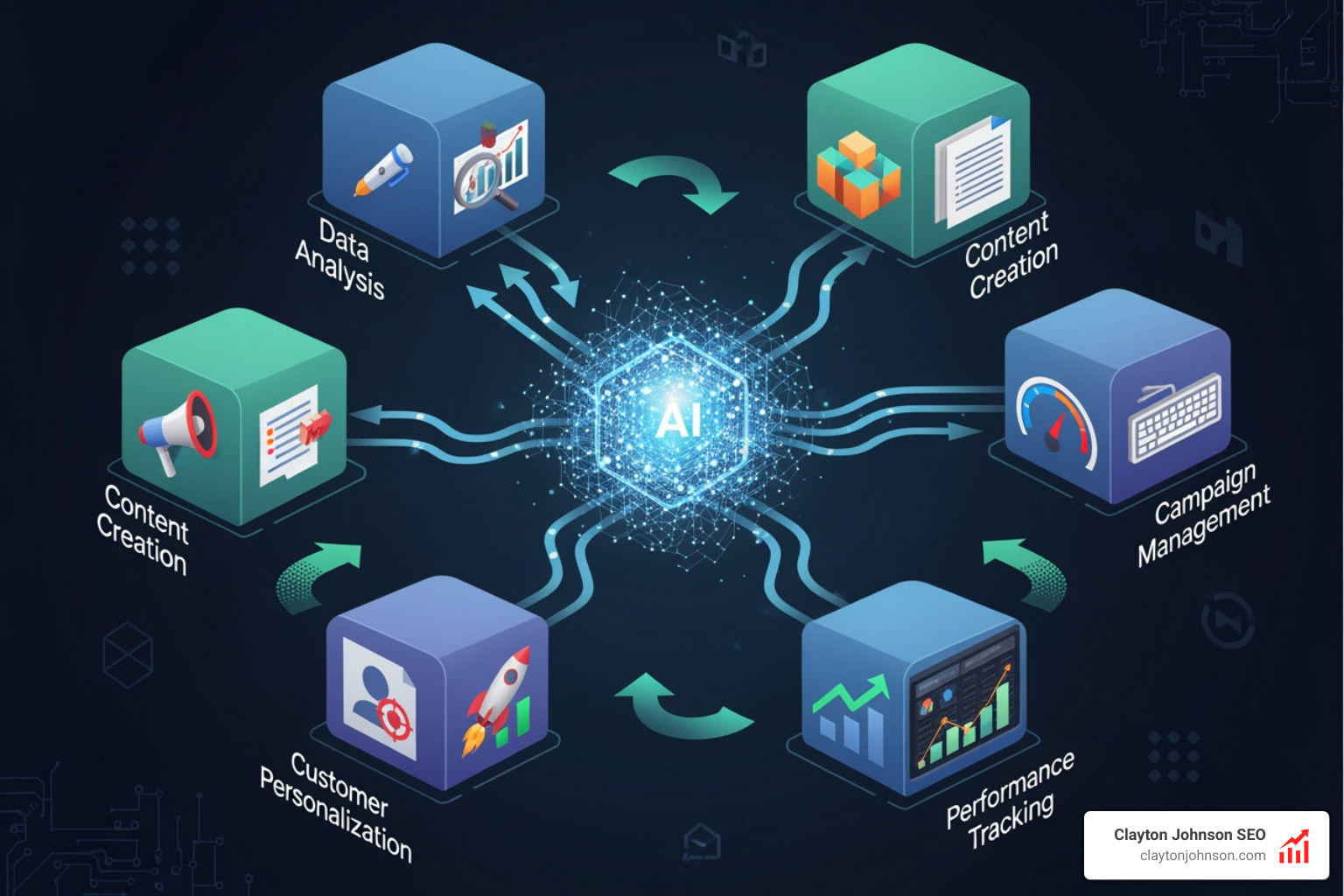
AI marketing workflows are adaptive, intelligent systems that use machine learning, natural language processing, and predictive modeling to automate complex marketing tasks—from lead scoring and audience segmentation to content personalization and campaign orchestration. Unlike traditional automation that follows rigid “if-this-then-that” rules, AI workflows learn from behavior, adapt in real-time, and make decisions based on context and intent.
Quick Answer: What Are AI Marketing Workflows?
- Autonomous systems that analyze customer signals and execute marketing actions without manual intervention
- Predictive engines that forecast pipeline risk, buyer behavior, and conversion likelihood before it shows in your CRM
- Adaptive processes that continuously test, learn, and refine decisions across channels
- Integrated platforms that connect MarTech stacks, unify data, and orchestrate multi-touch journeys at scale
Most GTM teams are stuck in the same trap: too many tools, too much manual work, and not enough clarity on what’s actually driving results.
Traditional marketing automation was built for simpler times. It executes pre-set sequences. It sends emails on schedules. It moves leads through static funnels. But it doesn’t understand context. It can’t detect when a buying committee is forming. It can’t predict when a deal is about to slip. And it definitely can’t personalize at the speed or scale that modern B2B buyers expect.
AI changes that.
AI marketing workflows operationalize the data most teams ignore—call transcripts, email sentiment, website behavior, hiring signals, third-party intent. They detect patterns humans can’t track. They make real-time decisions based on hundreds of variables simultaneously. They turn scattered signals into coordinated action.
The result? Faster pipeline velocity. Higher conversion rates. Better alignment between marketing, sales, and revenue operations.
According to research from BCG and Google, only 20% of marketers have deeply integrated AI into their workflows—but those leaders report 60% greater revenue growth and adapt to market shifts twice as fast as their peers. The gap between AI leaders and laggards is widening rapidly, and may soon become unbridgeable.
This isn’t about replacing your team. It’s about amplifying human judgment with intelligent execution. AI handles repetitive production work—scoring leads, personalizing content, routing accounts, syncing audiences—so your team can focus on strategy, positioning, and creative differentiation.
I’m Clayton Johnson, and I’ve spent years engineering AI-augmented marketing workflows that turn fragmented execution into scalable, predictable growth engines. In this guide, I’ll walk you through what AI marketing workflows actually are, why they matter for revenue teams, and how to build systems that deliver compounding results—not just isolated efficiency gains.
What are AI Marketing Workflows?
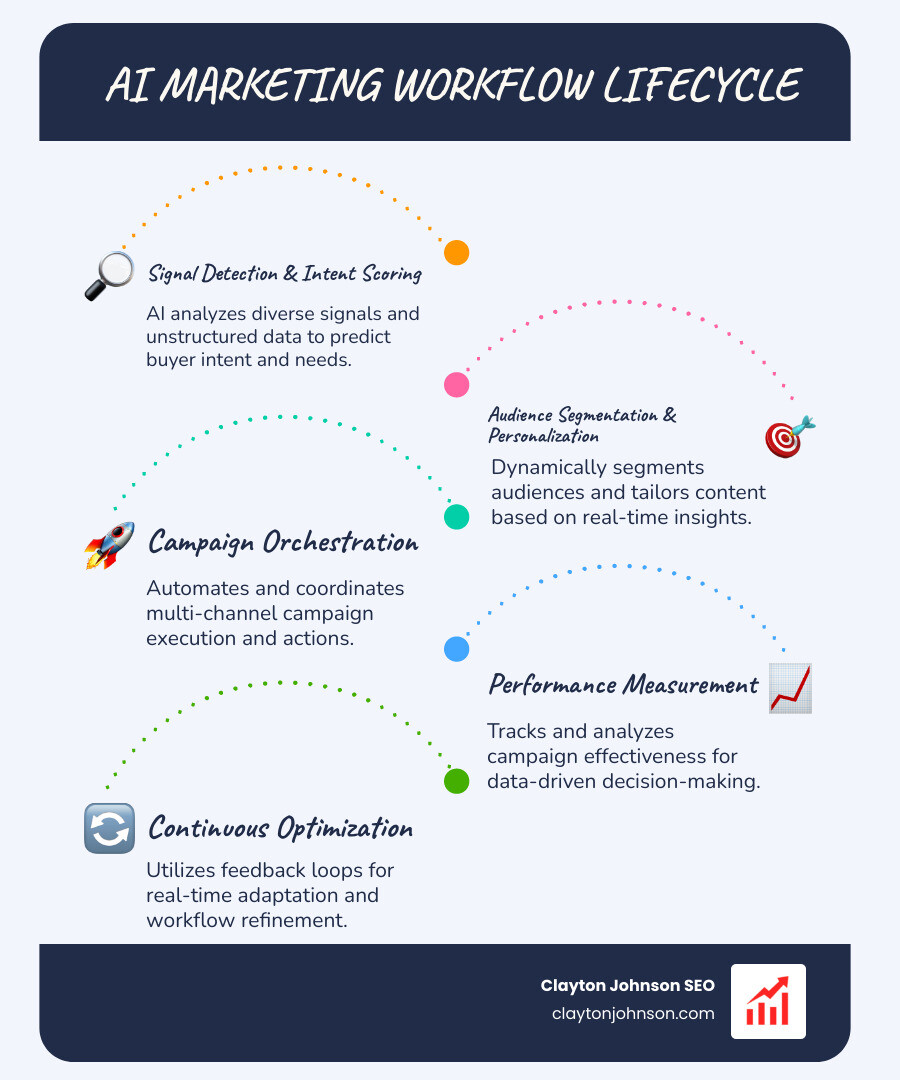
At their core, ai marketing workflows are “agentic” systems. This means they don’t just follow a script; they possess a level of agency to make decisions based on the data they ingest. They utilize Natural Language Processing (NLP) to “read” unstructured data—like a prospect mentioning a “budget freeze” in a Zoom transcript—and machine learning to predict what that prospect needs next.
Traditional tools often struggle with the “dark funnel”—the anonymous touches that happen before a lead ever fills out a form. AI workflows bridge this gap. Users of platforms like HockeyStack note that they can track the full depth of a buyer’s journey, from the first anonymous visit to post-demo product engagement, without relying on manual stitching.
By leveraging predictive modeling, these workflows can identify “multi-threaded” buying patterns. For instance, if a Marketing Manager downloads an ebook and a VP of Finance clicks a LinkedIn ad from the same company, the AI recognizes this as a high-intent account signal and triggers a coordinated play across both sales and marketing.
The Difference Between Traditional and AI-Driven Automation
The shift from traditional to AI-driven automation is like moving from a train to a self-driving car.
- Rule-Based Logic (Traditional): Follows a static path. “If lead downloads PDF, wait 2 days, then send Email A.” It is rigid and breaks when buyer behavior deviates from the plan.
- Adaptive Learning (AI-Driven): Uses a feedback loop. It looks at the outcome of every interaction. If “Email A” didn’t work for similar personas in the last 48 hours, the AI might swap it for a personalized video or a direct mail trigger.
- Real-Time Optimization: Traditional systems require a human to pull a report, analyze it, and manually adjust the workflow. AI-driven systems perform real-time optimization, shifting budgets and messaging based on live performance data.
Why Revenue Teams Need AI Marketing Workflows
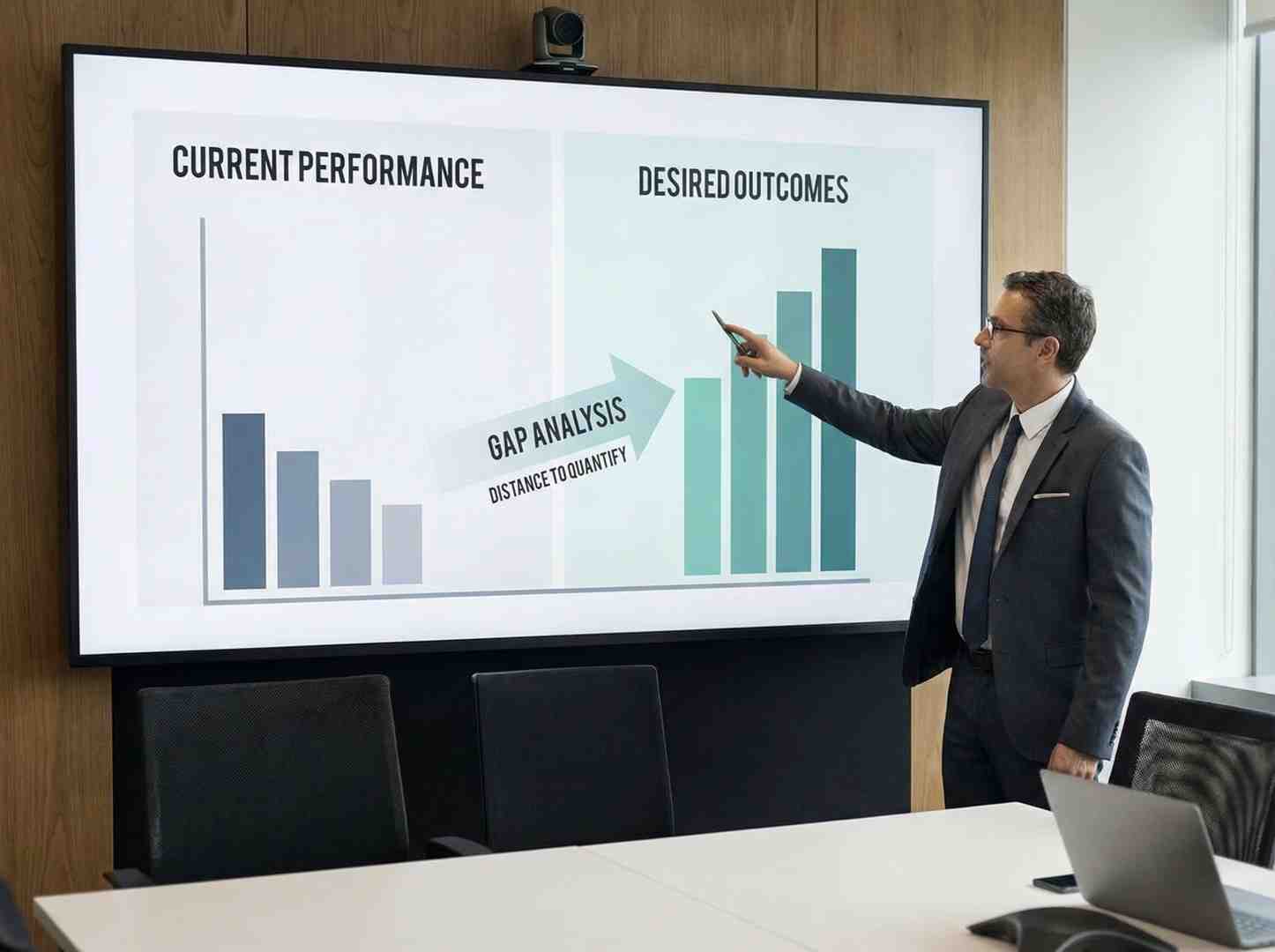
Revenue teams—Marketing, Sales, and RevOps—often operate in silos. Marketing generates “leads,” Sales complains about “quality,” and RevOps tries to fix the plumbing. ai marketing workflows act as the connective tissue that creates true GTM alignment.
One of the biggest benefits is the ability to spot pipeline risk early. A CRM might show a deal at “80% probability,” but an AI workflow sees that the key decision-maker hasn’t opened an email in 14 days and website activity from the account has stalled. The workflow can automatically alert the AE and trigger a “re-engagement” ad campaign specifically for that account’s executive team.
Reviewers of tools like 6sense highlight that sales reps can prioritize high-potential leads with AI-driven insights, rather than digging through outdated lead lists. This level of scalability allows a lean team to manage thousands of accounts with the same level of personalization usually reserved for a handful of enterprise targets.
Upgrading Traditional GTM with AI Marketing Workflows
We aren’t just adding a “chatbot” to your site; we are upgrading the entire engine.
- NLP Analysis: Instead of just tracking clicks, AI “listens” to the sentiment in emails and call recordings. It can flag a “competitor mention” and automatically send a battlecard to the sales rep’s Slack.
- Sophisticated Intent Signals: AI combines first-party data (your website) with third-party data (intent across the web). Platforms help you get a deep understanding of how each channel contributes to revenue, connecting every touchpoint—paid, organic, outbound—to closed-won deals.
- Hiring Signals: One of the most underrated triggers is hiring activity. If a target account starts hiring for a role that typically uses your software, an AI workflow can detect this on LinkedIn or Job Boards and launch an “educational” sequence to the new hiring manager.
- Dynamic Segmentation: Forget static lists. AI workflows move people in and out of segments in real-time. If a prospect’s behavior suggests they’ve moved from “Awareness” to “Decision,” the workflow immediately changes the ads they see and the emails they receive.
Must-Have Features for AI Workflow Platforms
Not all platforms are created equal. If you’re building an AI-first marketing operations model, your stack needs specific capabilities to move beyond simple task automation.
- Deep MarTech Integration: Your AI needs to “talk” to your CRM, MAP, ad platforms, and sales engagement tools. Without this, you just have another data silo.
- Sophisticated Intent Data Handling: The platform should ingest both first-party (your site) and third-party intent signals to create a 360-degree view of the account.
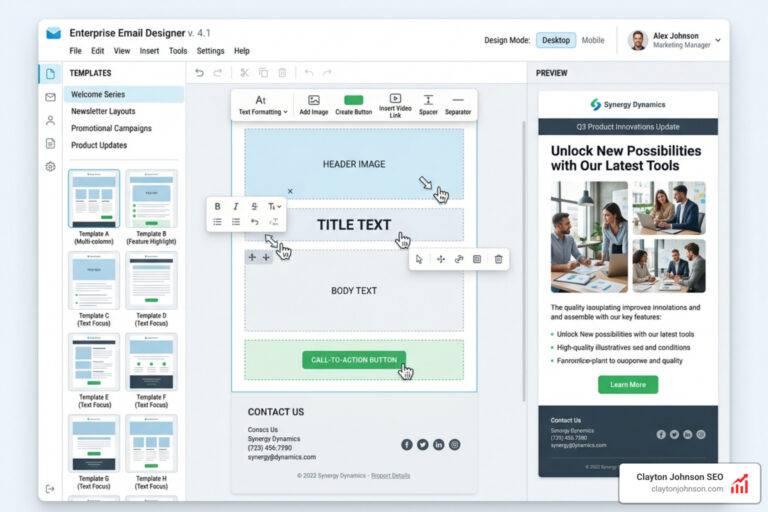
- Visual Journey Builders: You shouldn’t need to be a coder to build a workflow. A drag-and-drop interface allows your team to visualize complex, multi-touch journeys.
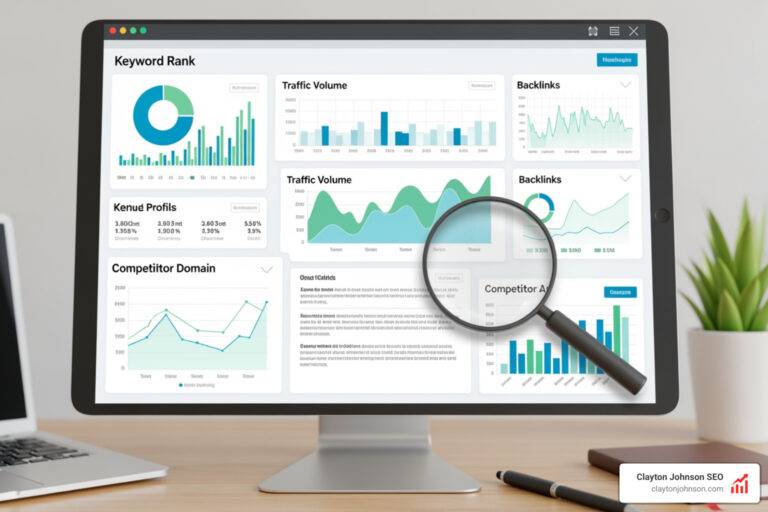
- Multi-Touch Attribution: To optimize, you need to know what’s working. Reporting that used to take weeks can now be done in less than an hour when attribution is baked directly into the workflow engine.
- AI-Powered Search & Filtering: ZoomInfo’s AI-powered search functionality saves countless hours of manual research, eliminating the need for manual LinkedIn scraping.
Top Tools for Executing AI Marketing Workflows
| Tool | Core Strength | Best For |
|---|---|---|
| HubSpot | All-in-one CRM & Automation | SMB & Mid-Market teams needing a unified dashboard. |
| ZoomInfo | Data Depth & Prospecting | Teams focused on outbound sales and identifying decision-makers. |
| 6sense | Intent & Predictive Analytics | Enterprise ABM teams looking for “in-market” signals. |
| Demandbase | Account-Based Orchestration | Complex B2B organizations managing multiple audience types. |
| Apollo.io | Sales Intelligence & Execution | High-velocity outbound teams needing accurate contact data. |
| Zapier | No-Code Connectivity | Connecting niche tools and automating simple multi-step tasks. |
HubSpot’s content assistant is a great example of an “embedded” AI feature, helping marketers speed up email and blog creation without leaving the platform. However, for deeper revenue analytics and “explainable intent,” specialized platforms often provide more granular insights.
5 High-Impact AI Workflow Examples
To get started, don’t try to automate everything. Start with these high-impact ai marketing workflows that solve common bottlenecks.
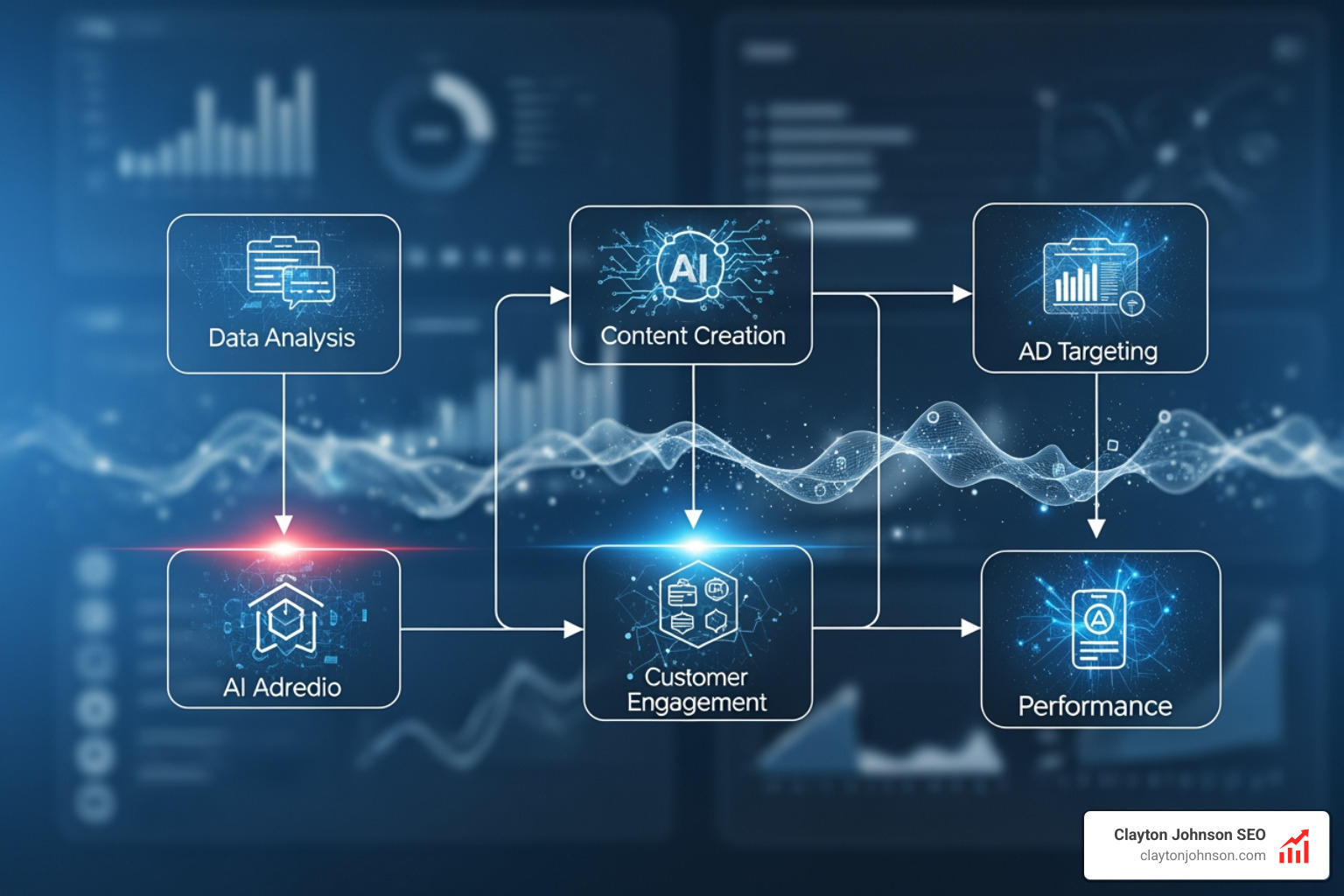
- Content Repurposing (The Knowledge Stacker): Take one “Strategic Narrative” or a long-form blog post and use AI to transform it into 10 LinkedIn posts, 5 X threads, an email newsletter, and a video script. This ensures your message stays consistent across every channel while saving 10+ hours of production time.
- The High-Intent Visitor Outreach: When a visitor from an ICP (Ideal Customer Profile) account visits your pricing page three times in 24 hours, the AI automatically identifies the best contact at that company, adds them to a “Hot” outbound sequence, and alerts the assigned AE.
- Ad Audience Syncing: Automatically sync your “High Intent” website visitors to a LinkedIn Matched Audience. As soon as a prospect shows intent, they start seeing your “Social Proof” or “Case Study” ads, creating a surround-sound effect.
- Predictive Lead Scoring: Instead of a human guessing that “clicking a link = 10 points,” the AI analyzes historical data to see which behaviors actually lead to closed-won deals. It then scores leads dynamically, ensuring Sales only talks to the most “ready” prospects.
- The “Hiring” Trigger: Monitor target accounts for new job postings. If a company hires a new “Head of Growth,” trigger a personalized welcome email that references their new role and offers a relevant resource.
Automating Outreach to High-Intent Visitors
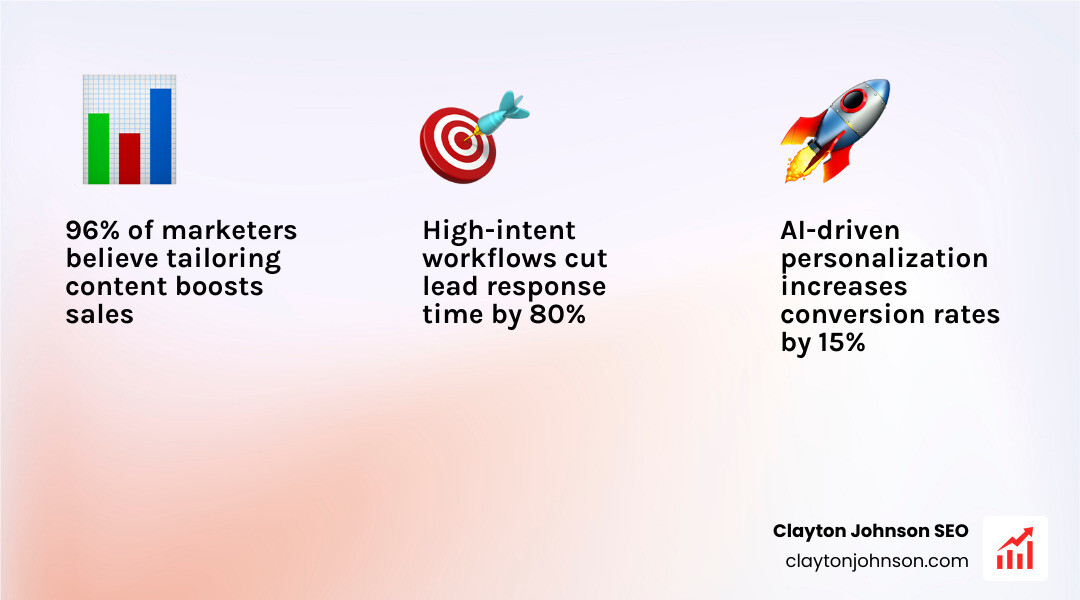
This is the “Holy Grail” of modern GTM. By combining first-party data with ICP matching, you can stop waiting for people to fill out forms.
- Step 1: Use a deanonymization tool to identify the companies visiting your site.
- Step 2: Filter for accounts that match your ICP (Industry, Revenue, Tech Stack).
- Step 3: Use AI to find the “Buying Committee” (e.g., VP of Marketing, Director of Ops).
- Step 4: Trigger a personalized sequencing play. The AI can draft the first email based on the specific pages the company visited (e.g., “I saw your team was looking at our API documentation…”).
Overcoming Implementation Challenges
Building ai marketing workflows isn’t without hurdles. The most common “fail point” isn’t the technology—it’s the data and the people.
Data Silos: If your marketing data lives in one place and your sales data in another, the AI will make decisions based on incomplete information. You must unify your data foundation first.
Change Management: Teams often fear AI will replace them. The key is to frame AI as an “Always-on Assistant.” ZoomInfo users often praise the structured onboarding process as a way to get teams up to speed quickly and reduce friction.
Human-in-the-loop: Never let AI run 100% autonomous on brand-sensitive tasks. Use AI to generate the “First Draft,” but keep a human “Director” in place to review for tone, accuracy, and cultural relevancy. This prevents “Quality Drift” where automated messages start feeling robotic or repetitive.
For more on how to structure your content for these systems, check out our guide on SEO content marketing.
Best Practices for Scaling AI Workflows
- Start with a Strategic Narrative: AI is a multiplier. If your strategy is weak, AI will just help you fail faster. Define your “Big Change” and “Promised Land” before you start automating.
- Use “Knowledge Stacking”: Train your AI models on your own proprietary data—your past successful emails, your brand guidelines, and your customer case studies. This ensures the output sounds like you, not a generic bot.
- Build Audit Trails: Ensure you can see why an AI made a decision. “Explainable AI” is crucial for building trust with your Sales team.
- Create Feedback Loops: Regularly review the performance of your workflows. If an automated “Friction Alert” isn’t leading to saved accounts, adjust the trigger criteria.
Frequently Asked Questions about AI Marketing Workflows
What is the ROI of AI marketing workflows?
The ROI manifests in two ways: Efficiency (saving 10-20 hours per week per marketer) and Effectiveness (higher conversion rates and faster pipeline velocity). Leaders in AI adoption report 60% higher revenue growth because they can act on intent signals while they are still fresh.
How do AI agents differ from standard automation?
Standard automation is “if-this-then-that.” It is linear and rigid. AI agents are “goal-oriented.” You give them a goal (e.g., “Find and engage high-intent accounts in the Fintech space”), and they use reasoning to determine the best sequence of steps to achieve that goal, adapting as new data comes in.
Can AI workflows replace my marketing team?
No. AI replaces tasks, not jobs. It erodes the “middle layer” of repetitive execution (data entry, basic drafting, manual list building). This forces marketers to move “upstream” into higher-value work like strategy, positioning, and complex problem-solving.
Conclusion
The future of marketing isn’t about who has the biggest budget or the largest team—it’s about who has the best structured growth architecture.
At Clayton Johnson, we build Demandflow.ai, a growth operating system designed to solve the core problem most companies face: they don’t lack tactics; they lack the infrastructure to scale them. By combining actionable strategic frameworks with ai marketing workflows, we help founders and marketing leaders move from fragmented execution to compounding growth.
If you’re ready to stop “doing marketing” and start building a revenue engine that works while you sleep, let’s talk.
Work with me to audit your current systems and build an AI-augmented GTM motion that actually works.