AI Content Optimization Guide: From Zero to Hero

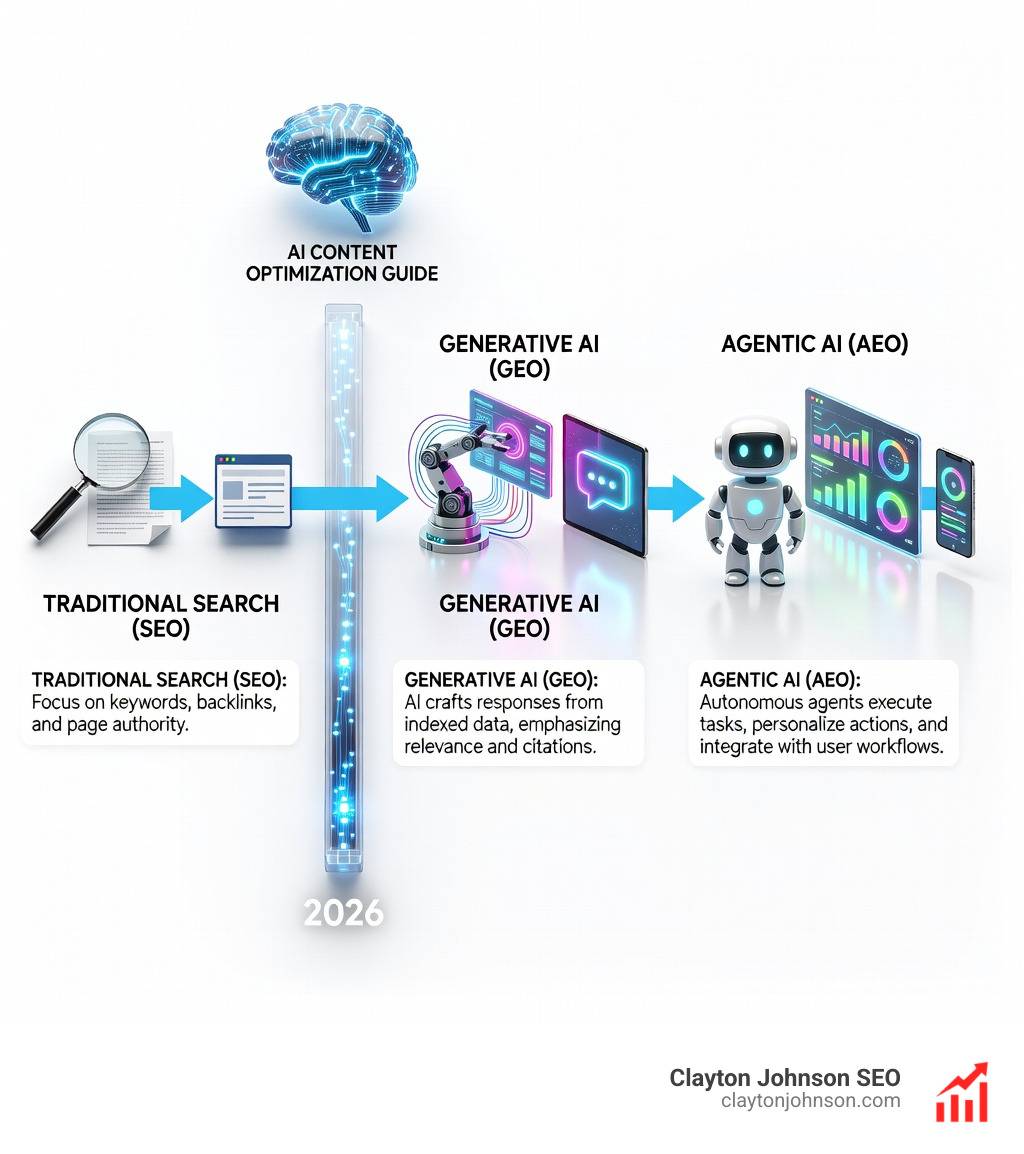
To master an AI content optimization guide, we first have to understand the three-headed dragon of modern search: SEO, GEO, and AEO. While they share common DNA, their goals differ significantly.
- SEO (Search Engine Optimization): The traditional practice of ranking a specific URL at the top of a list of links.
- GEO (Generative Engine Optimization): The process of making content more likely to be included in AI-synthesized responses (like Google AI Overviews or ChatGPT).
- AEO (Answer Engine Optimization): A strategy focused specifically on providing the single, definitive answer to a user’s question, often for voice search or smart assistants.
The rise of “zero-click searches” is the main driver here. According to Pew’s research on AI summaries, users are significantly less likely to click on traditional links when an AI summary is present. If the AI gives them the answer, they stay on the search page. This means your new goal isn’t just a “click”—it’s a citation.
| Feature | Traditional SEO | GEO (Generative) | AEO (Answer) |
|---|---|---|---|
| Primary Goal | Rank #1 in blue links | Be cited in AI summaries | Be the single voice answer |
| Metric | CTR (Click-Through Rate) | Citation Rate / Share of Voice | Accuracy / Directness |
| Content Type | Long-form articles | Modular, data-rich blocks | Concise Q&A fragments |
| Algorithm | PageRank, Backlinks | LLM context, Semantic flow | Structured data, Directness |
Why AI Visibility Matters Now
AI search engines are the new gatekeepers. Research shows that AI referrals to top websites spiked 357% year-over-year recently. Furthermore, an authoritative tone makes your content up to 30% more likely to appear in AI-generated answers. As highlighted in the Harvard Business Review article Forget What You Know About SEO, AI now decides what gets seen online. If your pages don’t deliver clear, complete answers, you won’t show up when buyers research.
Core Principles of an AI Content Optimization Guide
Large Language Models (LLMs) don’t “read” like humans. They process information in “slices” or “tokens.” To be effective, your AI content optimization guide must prioritize information density over word count. A 2,000-word article with high density will outperform a 5,000-word article filled with fluff every single time.
Peer-reviewed studies on clarity show that clarity wins. We recommend sticking to short sentences (15–20 words) and writing in simple, natural language. AI systems prioritize self-contained, “snippable” content that can be lifted directly into a response without needing the surrounding context to make sense.
Structuring Content for an AI Content Optimization Guide
We use a “modular” approach to content structure. Instead of a linear narrative, think of your page as a collection of independent modules.
- Question-Based Headers: Use H2s and H3s that mirror the exact questions users ask.
- Answer-First (BLUF): Use the “Bottom Line Up Front” method. Put the answer in the very first sentence of the section.
- Semantic Reinforcement: Use synonyms and related terms naturally to help the AI understand the topical neighborhood.
By Using AI Competitive Insights to Outsmart Your Rivals, we can identify exactly what questions the AI is currently struggling to answer and fill those gaps with structured modules.
Writing Citation-Ready Paragraphs
To get cited, you must be “quote-worthy.” Content with specific data points is 30-40% more likely to appear in LLM responses.
- Weak: “Our software helps teams work much faster.”
- Strong (Citation-Ready): “Our workflow automation reduced project turnaround time by 43% for a 50-person marketing agency in 2024.”
AI engines love specific numerical data, verifiable facts, and expert quotes. When you provide a specific statistic, you provide a “hook” that the AI can grab and attribute to your brand.
Technical Optimization: Schema, FAQs, and Crawlability
While the writing must be human-friendly, the “under the hood” elements must be machine-readable. Semantic HTML and structured data are your direct line to AI systems.
Technical Steps in an AI Content Optimization Guide
The most impactful technical change you can make is implementing Schema.org markup. Articles with comprehensive structured data are cited 340% more frequently than those without it.
- JSON-LD: This is the preferred format for AI crawlers.
- FAQ Schema: Directly maps your questions and answers into a format the AI can parse instantly.
- Article Markup: Tells the AI who the author is, when it was published, and what the main entity of the page is.
According to structured data documentation, this markup helps AI engines understand your content’s format and key sections—making it easier for them to extract and credit your information.
Handling Non-Text Formats
AI is getting better at “seeing” and “hearing,” but it still needs help.
- PDFs: These are notoriously difficult for LLMs to parse accurately. We recommend converting core PDF info into HTML blocks.
- Video: Use detailed metadata and transcripts. AI often relies on the text transcript to “understand” a video’s content.
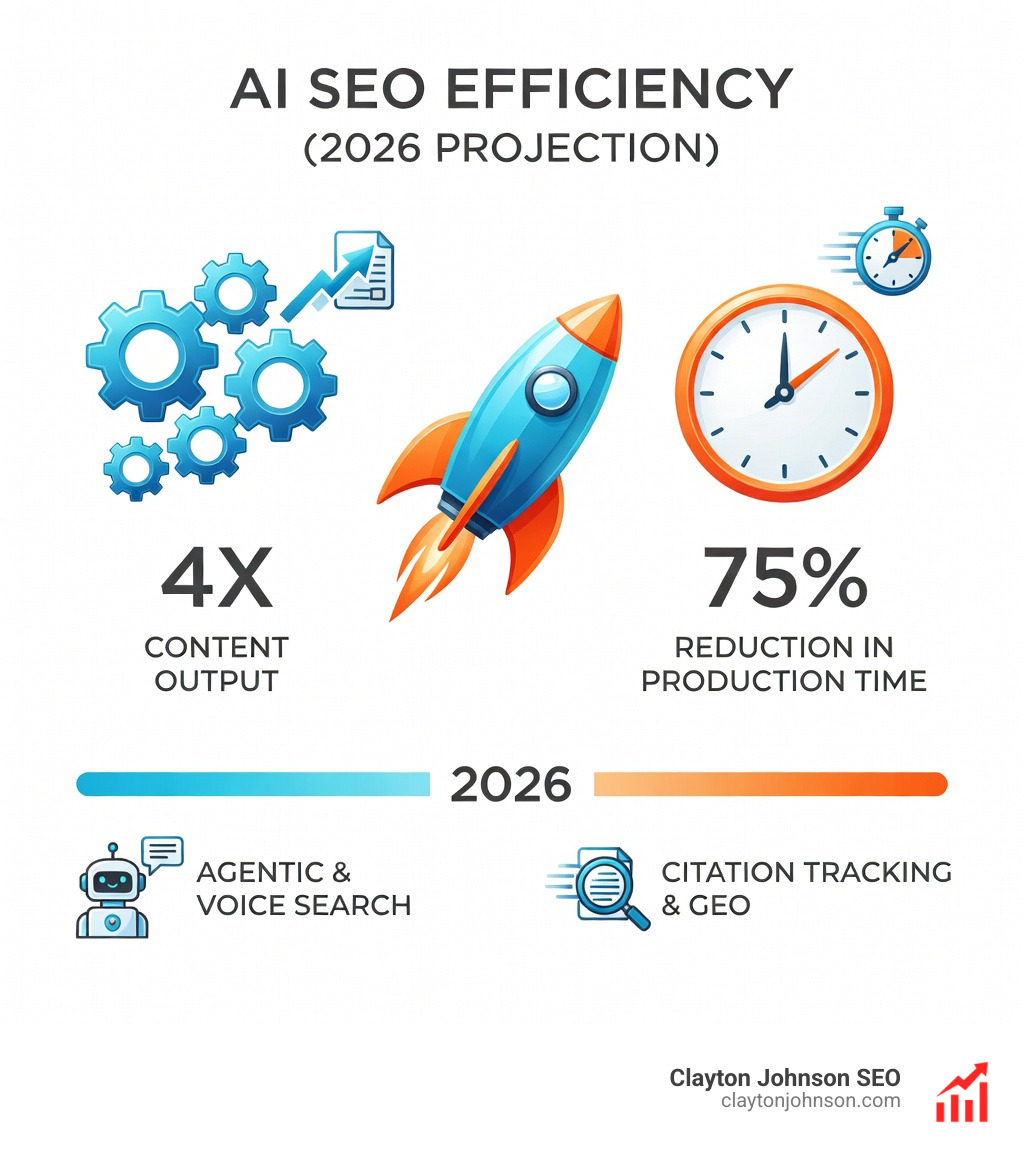
- Images: Don’t just use “image1.jpg.” Use descriptive filenames and alt-text like “Infographic showing 75% reduction in content production time using AI.”
- Backgrounds: If you are creating video content, tools like a video background remover can help create cleaner visual signals for AI analysis.
Authority, Topic Clusters, and the Future of Search
AI systems use E-E-A-T (Experience, Expertise, Authoritativeness, and Trustworthiness) as a filter. They won’t cite a source they don’t trust. Building this trust requires a “cluster” approach.
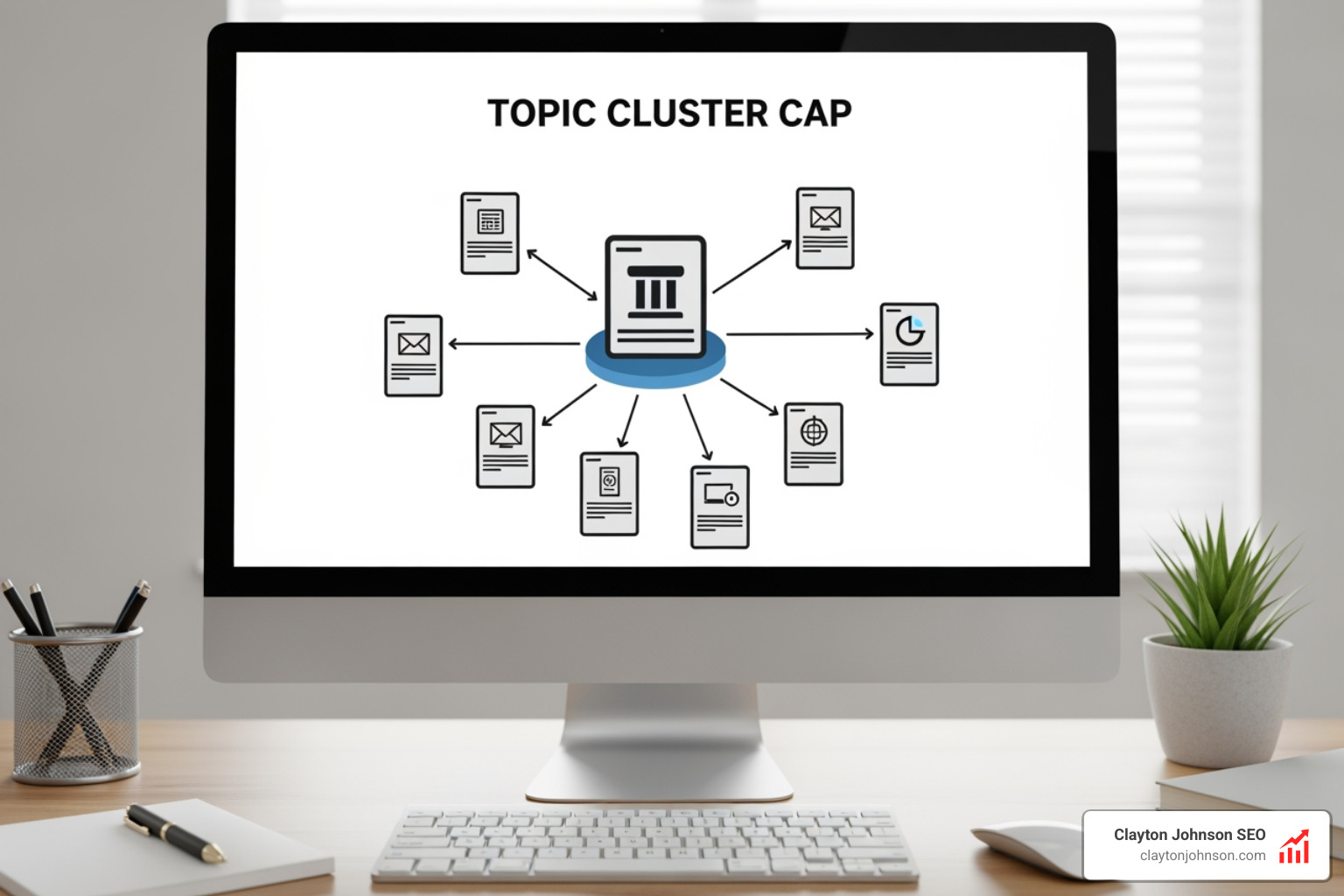
A topic cluster consists of a “pillar” page (like this AI content optimization guide) and several “sub-pages” that dive deep into specific niches. Internal linking between these pages signals to the AI that you have exhaustive knowledge of the subject. One client of ours saw a 23% increase in pageviews per session simply by implementing AI-driven internal linking.
Why Your Brand Needs an AI Growth Strategy Right Now is clear: without a strategy that reinforces your authority, you risk being categorized as “low-value AI spam” by the very models you’re trying to reach.
Preparing for Agentic and Voice Search
We are moving toward “agentic search,” where AI agents (like those powered by OpenAI’s Operator or Google’s Jarvis) perform tasks for users.
- MCP.json: A proposed standard to give AI agents specific instructions on how to interact with your site.
- LLMs.txt: An emerging file standard (similar to robots.txt) that tells AI crawlers which parts of your site are “clean” for training.
- Voice Search: 80% of voice searches happen on mobile. To win here, your content must be conversational.
You can learn more about AI crawlers to see how these bots are evolving to prioritize sites that offer “machine-friendly” pathways.
Implementation Roadmap and Measurement
You can’t manage what you don’t measure. Traditional SEO tools track keyword rankings, but GEO requires tracking citations.
Practical AI Content Optimization Roadmap
- Audit: Use a tool like Clayton Johnson SEO’s free GEO Content Checker to see how “parsable” your current pages are.
- Restructure: Convert walls of text into modular blocks with H2/H3 questions.
- Data Injection: Add at least 3-5 specific data points or statistics to every high-value page.
- Schema Deployment: Add FAQ and Article schema via JSON-LD.
- Test: Manually check your visibility in ChatGPT and Google AI Overviews monthly.
Top Tools for AI Optimization
- ChatGPT: Excellent for identifying content gaps and simplifying complex jargon.
- Semrush: Useful for validating search volume and identifying “Question” keywords.
- Clayton Johnson SEO’s recommended AI tools: We’ve curated a list of AI SEO tools that focus on workflow automation and intent clustering.
Frequently Asked Questions about AI Content Optimization
What is the difference between SEO and GEO?
SEO focuses on ranking links in a traditional list. GEO focuses on being the source that an AI engine uses to build its answer. SEO is about the “click”; GEO is about the “citation.”
Can AI read content inside collapsed accordions?
Yes, as long as the content is in the HTML and not hidden behind an “on-click” JavaScript event that requires a human interaction to load the text. If the text is there but just visually hidden, AI crawlers can usually see it.
How many FAQs should I include on a page?
For a standard 1,000-2,000 word article, we recommend 5-7 on-page FAQs. In your schema markup, you can include more (8-12) to provide a broader range of “answer fragments” for the AI to choose from.
Conclusion
The era of “set it and forget it” SEO is over. To stay visible in Minneapolis or anywhere else, your brand must adapt to the AI-first reality. At Clayton Johnson SEO, we don’t just guess what works; we build content systems that are engineered for both humans and LLMs.
Whether you’re looking for SEO Services in Minneapolis or a global growth strategy, the roadmap is the same: structure for clarity, write for authority, and optimize for the machines that now decide what the world sees.
Ready to turn your content into a citation powerhouse? Let’s build your AI-ready growth engine today.