An Absolute Beginner’s Guide to SEO


What Core SEO Really Means (And Why It Matters for Growth)
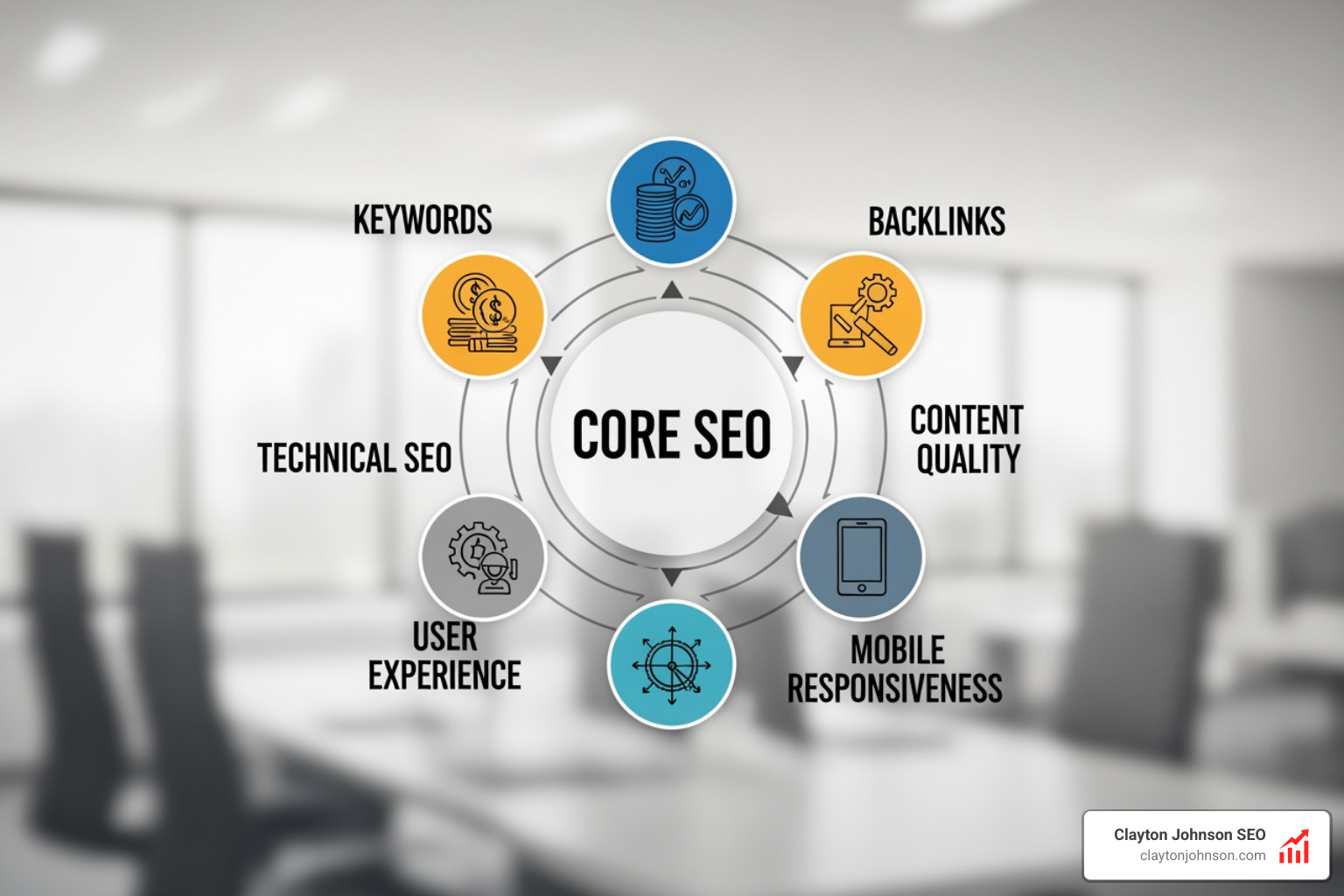
Core SEO is the foundation of how search engines find, understand, and rank your website — covering technical infrastructure, content quality, and authority signals that drive sustainable organic traffic.
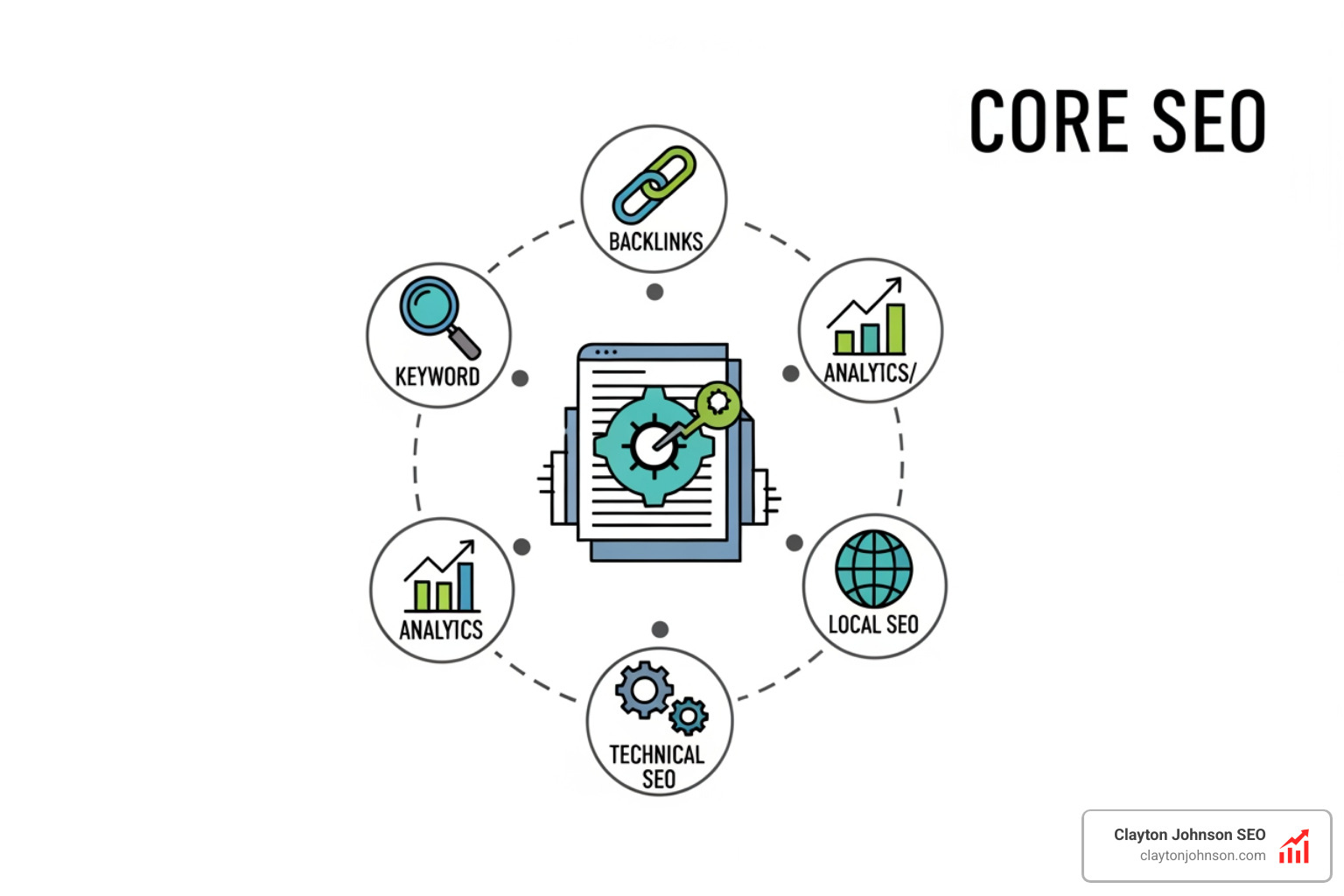
What Core SEO includes at a glance:
- Technical SEO — crawlability, indexability, site speed, mobile optimization, and structured data
- On-page SEO — content quality, keyword relevance, E-E-A-T signals, and metadata
- Off-site SEO — backlinks, brand authority, and external trust signals
- Algorithm alignment — understanding how Google Core Updates shift ranking priorities
Most sites struggle with organic growth not because they lack content — but because their SEO foundation is fractured. Traffic exists but doesn’t convert. Rankings shift after every Core Update. Content feels disconnected from strategy.
Google makes significant broad algorithm changes several times a year. Each one reshuffles rankings based on quality, relevance, and trust. Sites without a solid Core SEO foundation are the most exposed.
Here’s the hard truth: none of your content or link-building efforts matter if search engines can’t properly access, interpret, and trust your site.
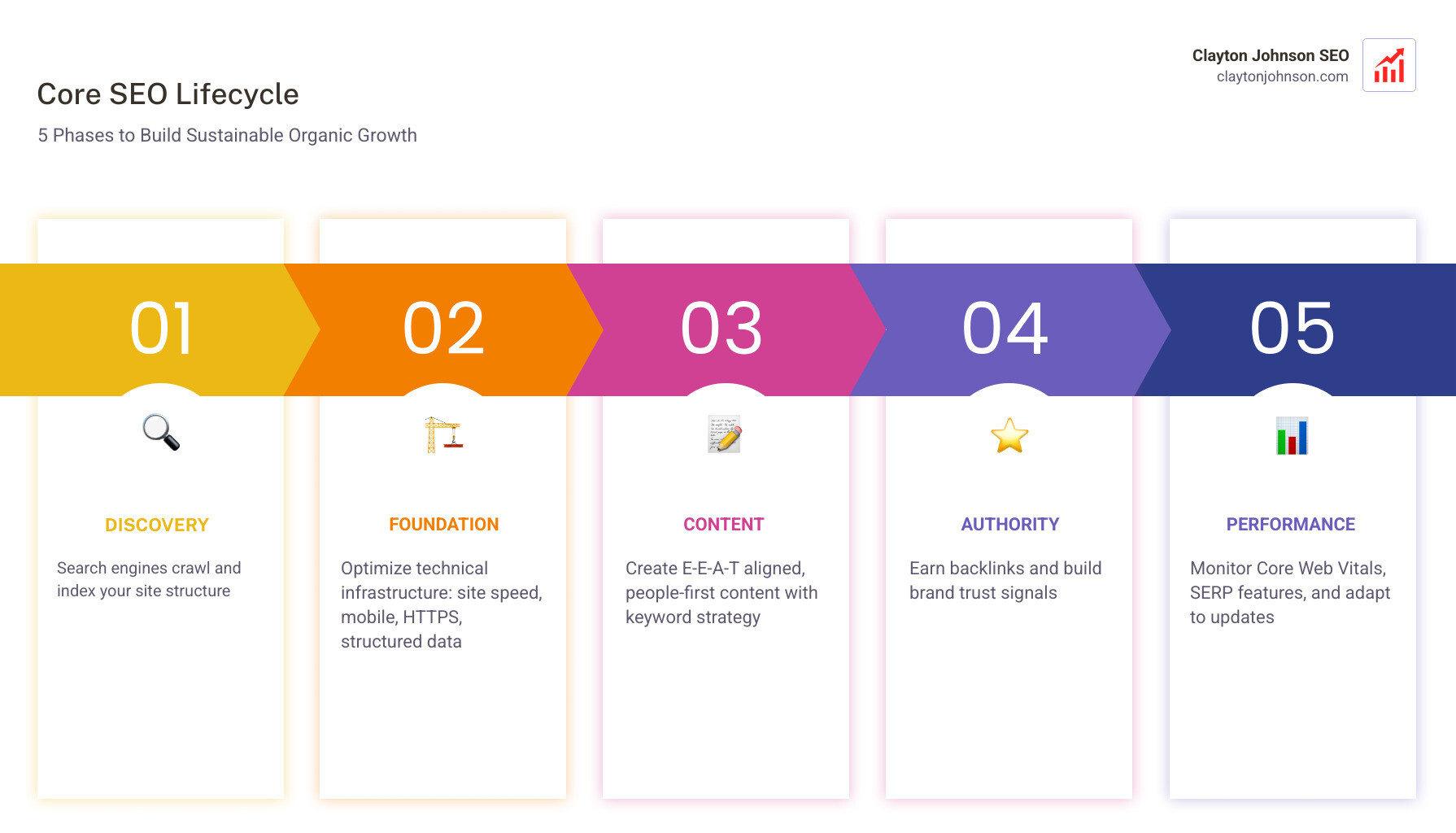
This guide walks you through every layer of Core SEO — from technical fundamentals to content strategy to recovery after algorithm shifts — so you can build organic growth that compounds instead of collapses.
I’m Clayton Johnson, an SEO strategist who specializes in building scalable traffic systems and structured Core SEO frameworks for founders and marketing leaders. My work focuses on turning fragmented SEO efforts into cohesive growth engines that deliver measurable, durable results.
Understanding Google Core Updates and Search Volatility
If you have ever noticed your website traffic suddenly take a nosedive or an unexpected leap, you have likely experienced the effects of a Google Core Update. These are significant, broad changes Google makes to its ranking algorithms and systems. Unlike minor updates that happen almost daily and affect a tiny fraction of searches, Core Updates are designed to ensure that searchers receive the most helpful and reliable results possible.
When a Core Update rolls out, Google is essentially “re-evaluating” the entire web. Think of it like a library updating its “Top 100 Books” list. A book that was #5 last year might drop to #25 not because it got “worse,” but because newer, better, or more relevant books were published.
Core SEO vs. Minor Updates
The scale of these updates is the biggest differentiator. While minor updates might affect less than 1% of searches, a Core SEO update can impact 5% to 10% of all search queries. Because they have such a wide reach, Google typically announces them in advance on Google’s Webmaster Central Blog or via their search liaison social media accounts.
These updates don’t just shuffle blue links; they restructure the entire Search Engine Results Page (SERP). You might see changes in:
- Featured Snippets: The “Position Zero” boxes that answer questions directly.
- People Also Ask (PAA): The accordion-style related questions.
- Knowledge Graph: The information panels on the right side of the screen.
- AI Overviews: The newer generative AI summaries appearing at the top of results.
Identifying Impact via Core SEO Tools
How do we know if we have been hit? We don’t guess; we look at the data. The most critical tool in our arsenal is Google Search Console (GSC). By comparing your performance data from the week after an update to the week before, you can see exactly which pages and keywords lost ground.
We also keep an eye on “weather reports” from tools like MozCast, which track daily turbulence in Google’s rankings. If the “temperature” is high, it means big shifts are happening across the board. If your site drops significantly (for example, moving from position 4 to position 29), it’s a signal that your Core SEO fundamentals—specifically your content’s helpfulness or your site’s technical health—need a deep audit.
The Three Pillars of a Mastering Core SEO Strategy
To win at SEO, we have to move beyond simple “keyword stuffing.” We view Core SEO as a three-legged stool. If one leg is weak, the whole thing falls over.
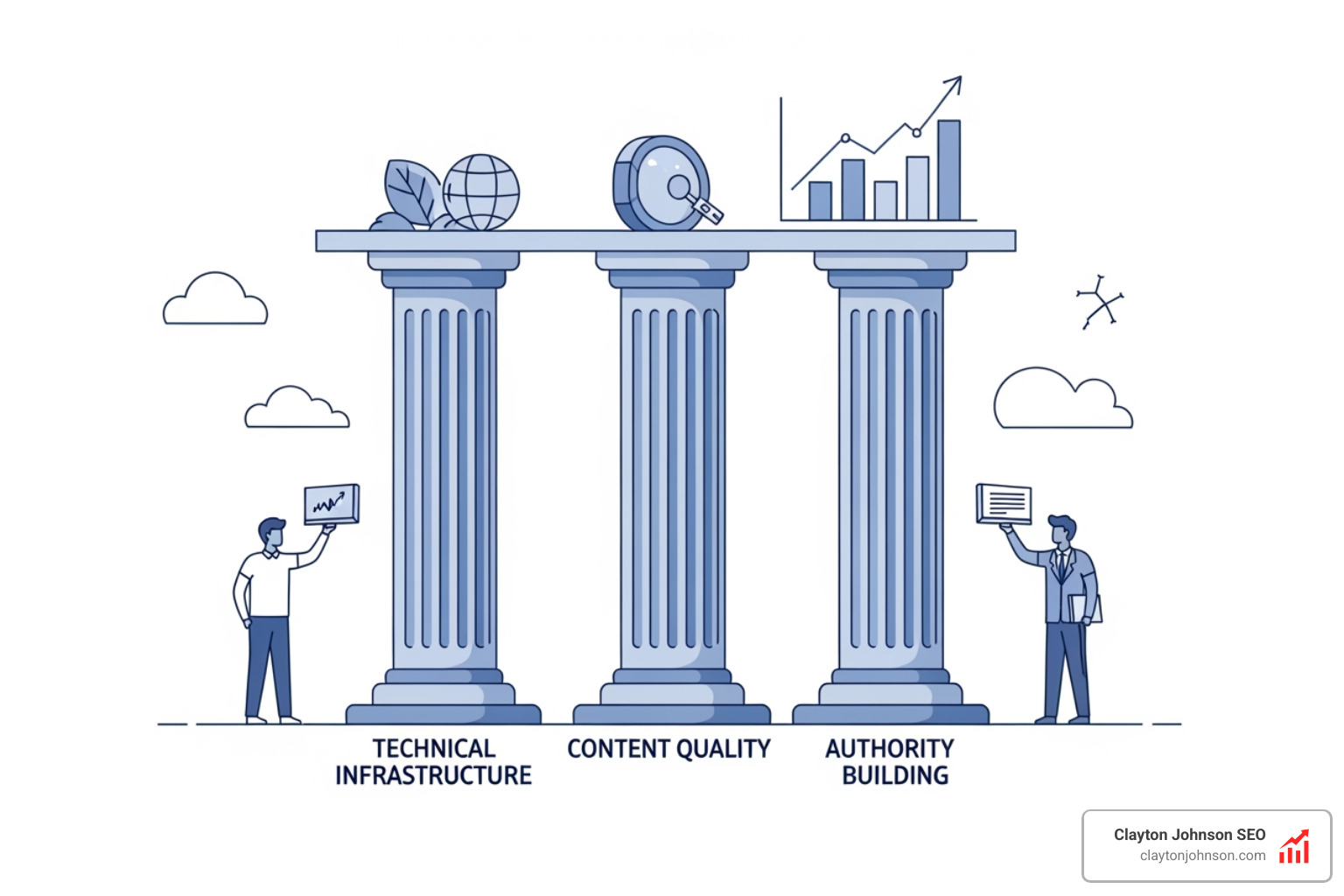
- Technical SEO (The Foundation): If Googlebot can’t crawl your site, you don’t exist.
- On-Page SEO (The Substance): This is your content, your expertise, and how well you answer the user’s question.
- Off-Site SEO (The Reputation): These are the external signals, like backlinks, that tell Google you are a trusted authority in your field.
Technical Infrastructure and Core SEO
Technical SEO is often treated as an afterthought, but it is actually the operating system of your growth. As Gary Illyes stating the importance of crawl budget, wasting server resources on unnecessary pages can prevent Google from finding your best new content.
Key technical elements we prioritize include:
- Crawlability & Indexability: Ensuring your robots.txt file isn’t accidentally blocking important sections and that your XML sitemap is up to date.
- Site Architecture: Keeping your most important pages within three clicks of the homepage.
- HTTPS & Security: Site security is more than just a ranking signal; it’s a trust signal for your users.
- Canonical Tags: Using canonical tags to tell Google which version of a page is the “master” copy, preventing duplicate content issues.
Content Quality and E-E-A-T
In recent updates, Google has shifted heavily toward “people-first content.” This is measured through a framework called E-E-A-T: Experience, Expertise, Authoritativeness, and Trustworthiness.
- Experience: Does the author have first-hand, real-world experience with the topic? (e.g., a travel guide written by someone who actually visited the city).
- Expertise: Does the content demonstrate a high level of knowledge?
- Authoritativeness: Is the site a go-to source for this information?
- Trustworthiness: Is the information accurate, cited, and safe?
According to the Search quality evaluator guidelines, Google uses human raters to verify these signals. To align with Core SEO, we focus on creating content that provides genuine value rather than just summarizing what everyone else has already said.
Technical Fundamentals and Performance Metrics
Speed isn’t just a luxury; it’s a confirmed ranking factor. Google uses a set of metrics called Core Web Vitals to measure the user experience of a page.
| Metric | What it Measures | Goal (Good) |
|---|---|---|
| Largest Contentful Paint (LCP) | Loading Speed | Under 2.5 seconds |
| Interaction to Next Paint (INP) | Responsiveness | Under 200 milliseconds |
| Cumulative Layout Shift (CLS) | Visual Stability | Under 0.1 |
You can test your site’s performance using PageSpeed Insights. Improving these metrics doesn’t just help rankings; it has been shown to increase organic revenue and traffic significantly. For instance, some sites have seen over a 200% increase in traffic just by fixing their Core Web Vitals.
Internal Linking and Core SEO
Internal links are the “roads” that connect your content. They help Google discover new pages and distribute “link equity” (ranking power) throughout your site.
Following the General Webmaster Guidelines, we recommend:
- Descriptive Anchor Text: Use keywords in your link text (e.g., “how to garden”) rather than generic phrases like “click here.”
- Reasonable Link Volume: Don’t overwhelm a page with thousands of links; it dilutes the power of each link and confuses users.
- Clean Redirects: When you move a page, use a 301 redirect. Avoid “redirect chains” where one URL points to another, which points to another. Keep it to 3 or fewer hops.
AI and Modern Search Dynamics
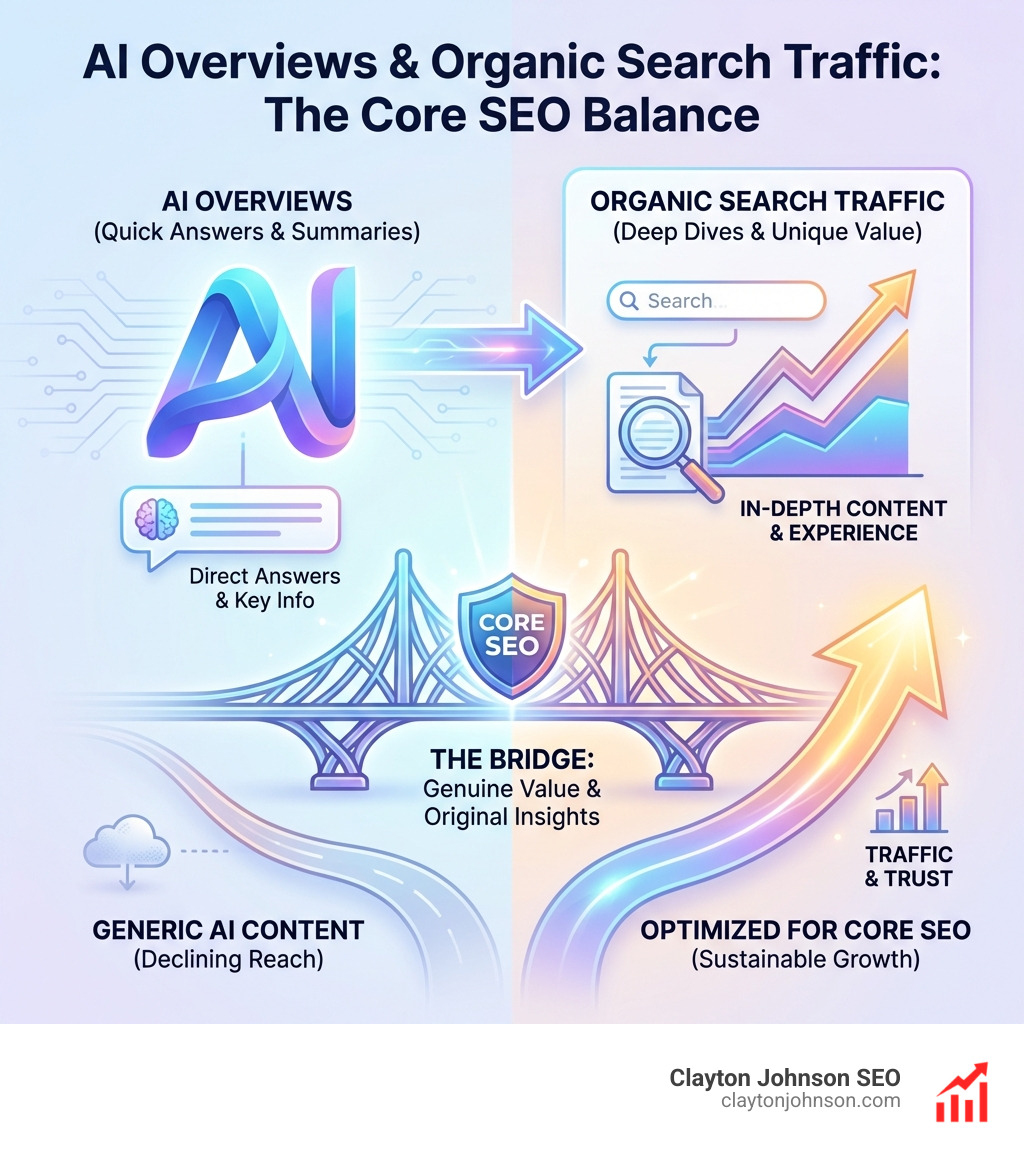
The rise of AI-generated content has changed the Core SEO landscape. While Google doesn’t penalize AI content simply for being AI, it does penalize “low-value” or “unhelpful” content. Many sites that relied on mass-produced, generic AI text saw traffic declines of 40% to 70% during recent updates.
To thrive in an AI-driven world, we focus on Search Experience Optimization. This means using AI as a tool for research or drafting, but ensuring the final output is injected with original data, unique insights, and human experience—things AI cannot replicate.
Frequently Asked Questions about Core SEO
How long does it take to see results after an update?
It varies. Some changes might be reflected in a few hours, while others can take several months. If you’ve made significant improvements to your site after a traffic drop, you may sometimes need to wait for the next Core Update for Google’s systems to fully recognize and reward those changes.
Can AI-generated content rank during Core Updates?
Yes, but only if it is high-quality and helpful. Google’s March update specifically targeted “scaled content abuse”—the practice of using automation to generate large volumes of unoriginal content to manipulate rankings. If your AI content provides genuine value and meets E-E-A-T standards, it can rank.
What is the difference between a penalty and a ranking shift?
A “manual action” (penalty) is when a human at Google determines your site violated spam policies. You will see a notification in Search Console for this. A “ranking shift” during a Core Update is algorithmic. It’s not necessarily that you did something “wrong,” but rather that Google’s “Top 100” list has been updated and other sites are now considered more relevant.
Conclusion
Mastering Core SEO is not about chasing the latest “hack” or tricking an algorithm. It is about building a structured growth architecture that prioritizes the user experience and provides genuine value. At Clayton Johnson SEO, we believe that clarity leads to structure, and structure leads to compounding growth.
Whether you are a small business in Minneapolis or a growing enterprise, your success depends on how well you align with these core principles. By focusing on technical health, authoritative content, and a “people-first” approach, you can build a website that doesn’t just survive algorithm updates—it thrives because of them.
If you are ready to stop guessing and start growing, explore our Mastering Core SEO strategies and see how we use the Demandflow.ai framework to build durable search visibility.