Digital Innovation via the Business Model Canvas


Why Digital Product Strategy Needs a Visual Framework
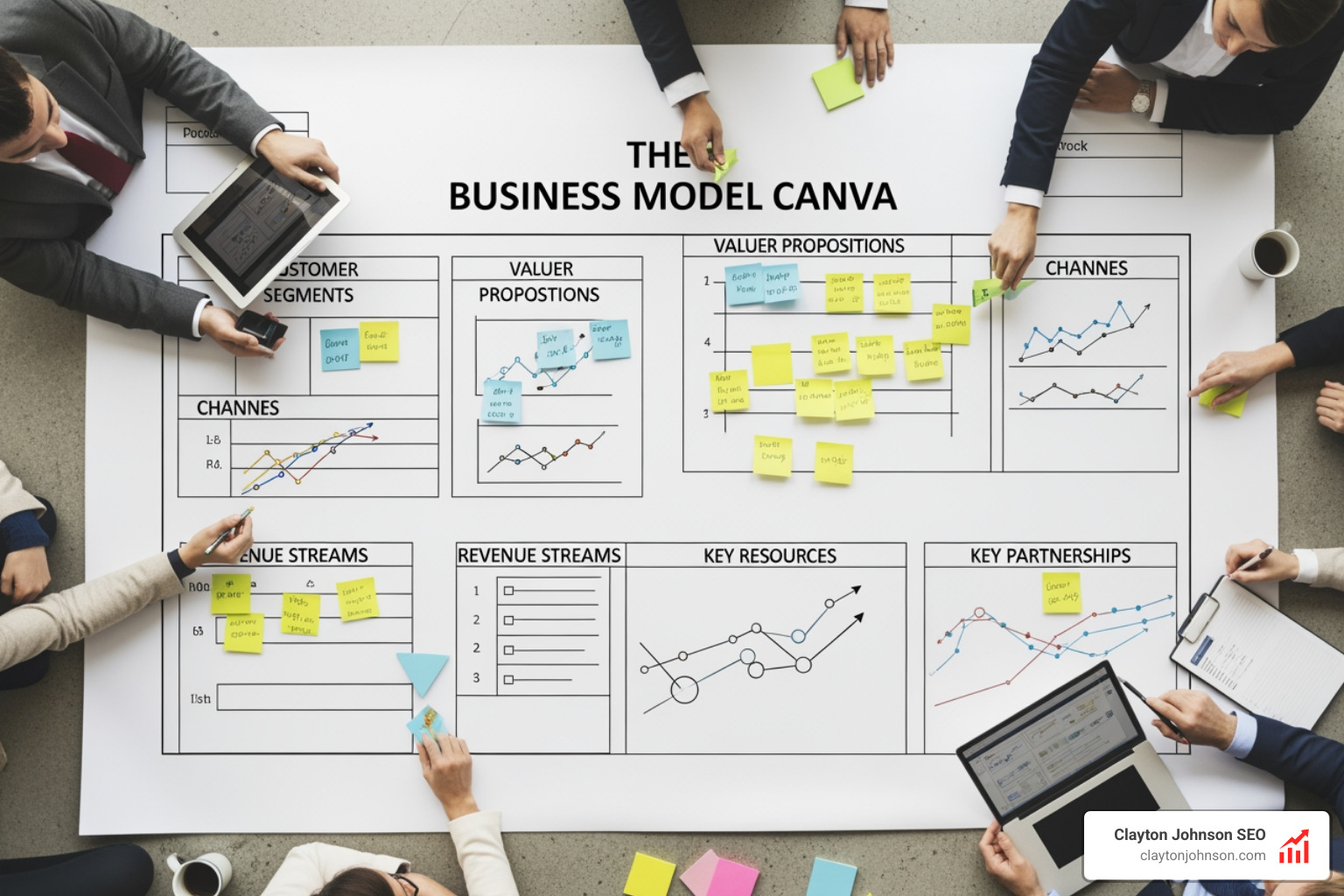
The BMC digital product canvas is a strategic planning tool that adapts Alexander Osterwalder’s Business Model Canvas framework specifically for digital products and services. It helps teams visualize, design, and iterate on digital business models by mapping nine essential components across a single page.
Quick Overview: The Nine Building Blocks of the BMC Digital Product Canvas
- Customer Segments – Who you’re building for in the digital space
- Value Propositions – What unique value your digital product delivers
- Channels – How customers find and access your digital offering
- Customer Relationships – How you engage users (automated, personal, community-driven)
- Revenue Streams – How your digital product generates income (subscriptions, freemium, ads)
- Key Resources – Digital assets like platforms, data, APIs, and talent
- Key Activities – Core actions like software development, UX design, and infrastructure management
- Key Partnerships – Strategic relationships with tech providers, platforms, and integrations
- Cost Structure – Digital-specific costs including hosting, development, and user acquisition
Why this matters: Digital products move faster than traditional businesses. A pizza chain like Domino’s saw a 46% surge in app users by using Business Model Canvas principles to transform from brick-and-mortar to digital-first. The BMC provides a shared language for product teams, executives, and stakeholders to align on strategy without drowning in lengthy business plans.
The original Business Model Canvas was developed in 2004 by Alexander Osterwalder and published in the bestselling book Business Model Generation. It’s been adopted by Microsoft, SAP, General Electric, and countless startups because it turns complex strategy into a visual, one-page reference that anyone can understand.
For digital products specifically, the BMC becomes even more powerful. You’re not just mapping a business – you’re designing how software, platforms, and digital experiences create and create value in real time. Whether you’re building a SaaS product, mobile app, e-commerce platform, or digital marketplace, the canvas helps you identify gaps, test assumptions, and pivot quickly based on customer feedback and market data.
I’m Clayton Johnson, and I’ve spent years building SEO and growth systems that connect strategy with execution. The BMC digital product canvas is one of the most practical frameworks I use to help teams move from fragmented ideas to coherent, measurable digital strategies.
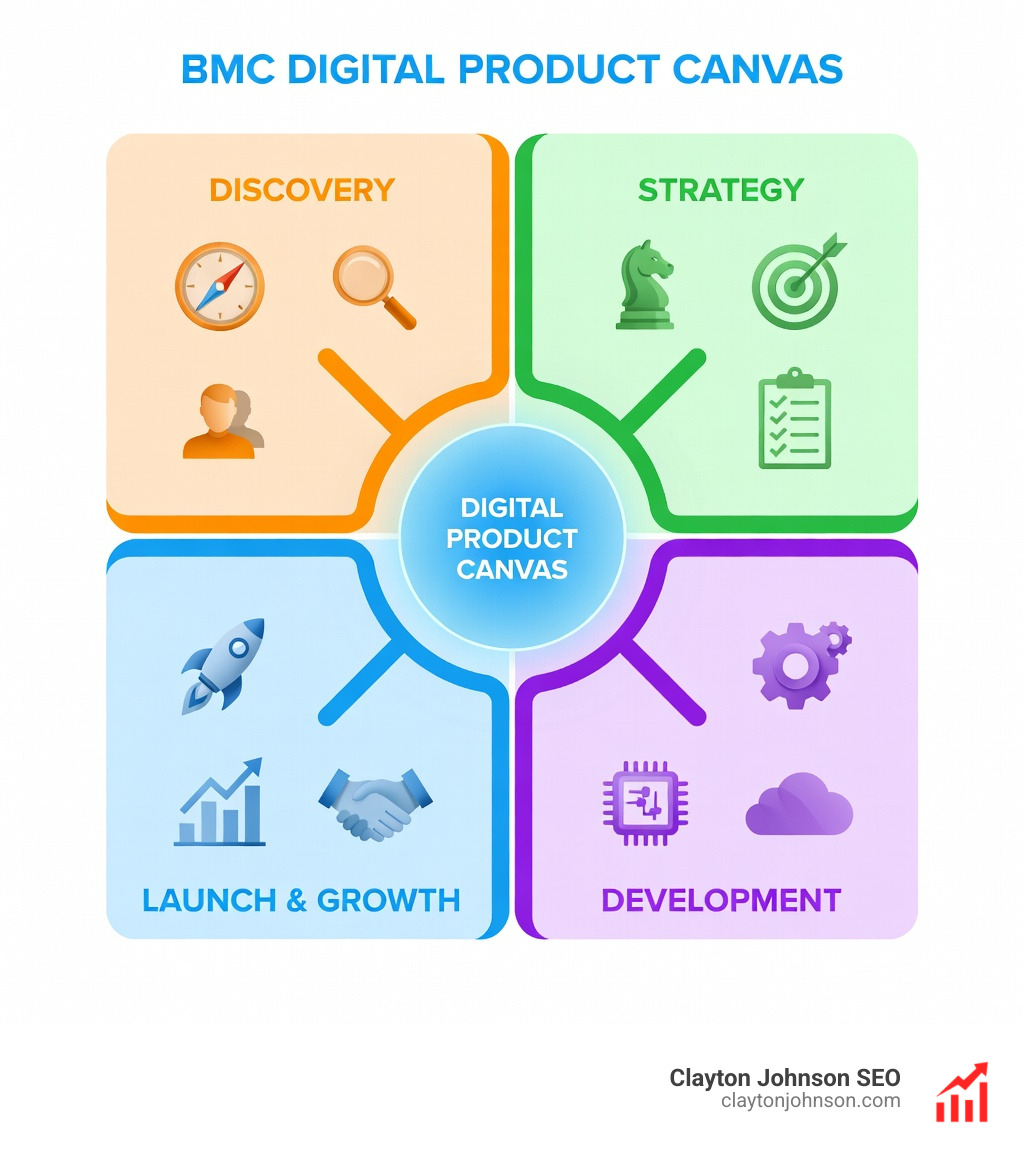
The Role of the BMC Digital Product Canvas in Modern Strategy
In the digital economy, the traditional 50-page business plan is essentially a paperweight. By the time you finish writing it, the market has moved, a new competitor has emerged, or your technology stack is already outdated. This is where the BMC digital product canvas steps in as a “magic whiteboard” for your strategy.
At Strategyzer, the originators of this framework, the focus has always been on making strategy visual and actionable. In a digital context, this means moving from “Explore” to “Exploit” modes with agility. When we look at digital change, we aren’t just looking at adding a website to an existing business; we are looking at how digital tools fundamentally change how value is created.
Traditional models often focus on physical supply chains and geographic constraints. Digital models, however, thrive on network effects, low marginal costs, and global scalability. Using a Market Analysis alongside your canvas allows us to see how these digital forces are shifting in your specific industry.
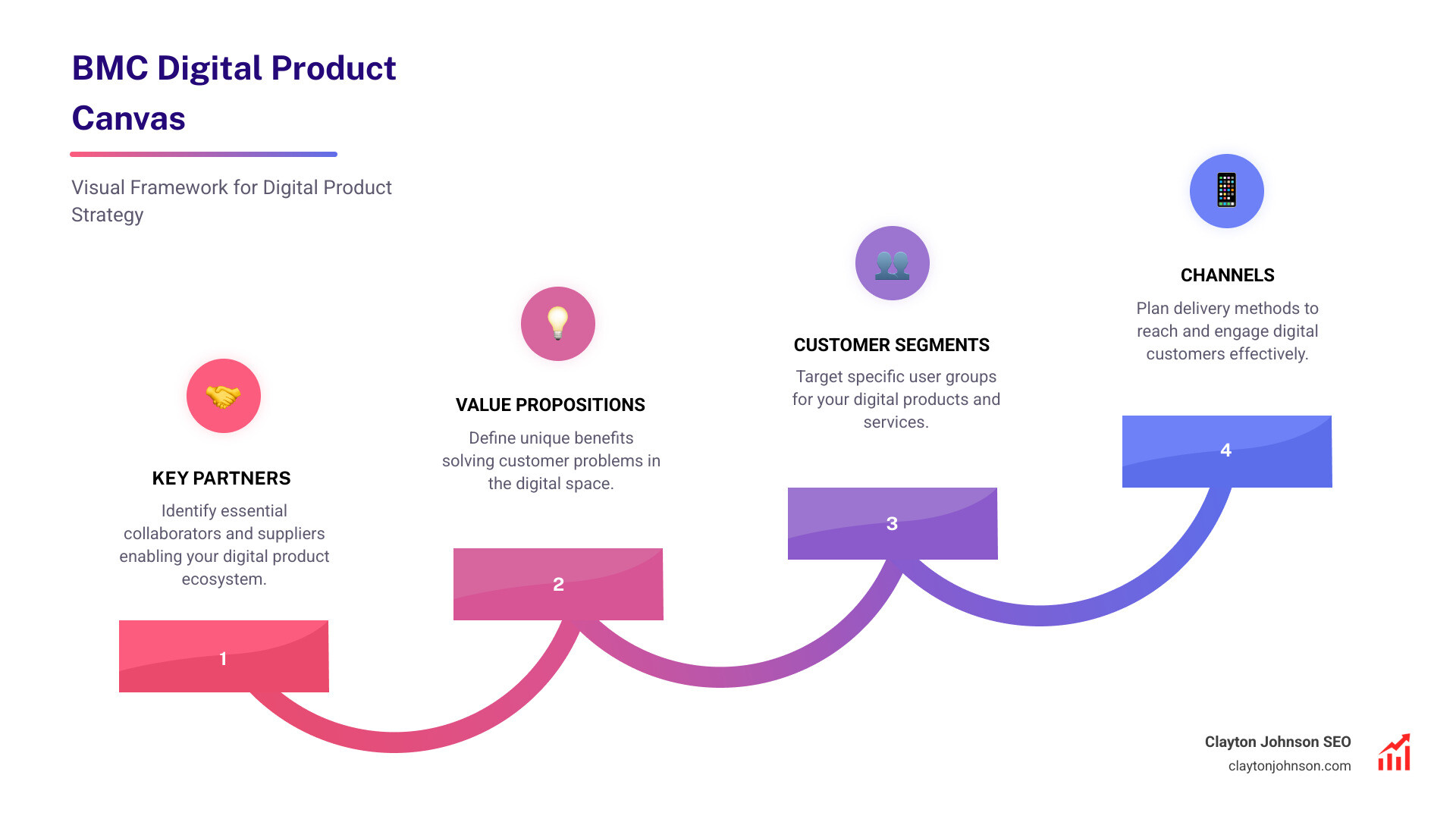
The canvas acts as a living document. It’s not something you do once and file away. It’s a tool for the “pivot”–that famous Silicon Valley term for changing direction without losing your footing. If your initial revenue stream (say, paid downloads) isn’t working, you can quickly sketch out a subscription model or an ad-supported model on the same canvas to see how it affects your resources and partnerships.
To get started, we always recommend having the official template handy. You can Download the Business Model Canvas to follow along as we dive into the specific digital adaptations of each block.
Applying Infrastructure and Offering to the BMC Digital Product Canvas
The left side of the canvas is often referred to as the “Engine Room.” It’s where the “how” of your business happens. For a digital product, the infrastructure looks very different from a manufacturing plant or a retail store.
- Value Propositions: In the digital world, your value proposition isn’t just “software.” It’s the specific problem you solve. For Google, it’s organizing the world’s information. For Netflix, it’s frictionless entertainment. When filling out your BMC digital product canvas, ask: Does our digital product save time, reduce cost, or provide access that was previously impossible?
- Key Activities: Forget managing a factory. Your key activities are likely software development, maintenance, UX/UI design, and data security. If you are an e-commerce player, your key activities might include digital marketing and SEO to ensure your “storefront” is actually visible to the world.
- Key Resources: Your most valuable assets are likely your code, your user data, your brand, and your “A-Team” of developers and strategists. In Minneapolis, we see many companies leveraging local tech talent as a primary key resource. Cloud infrastructure (AWS, Azure) is also a critical resource that allows digital products to scale without massive upfront hardware costs.
- Key Partnerships: Digital products rarely exist in a vacuum. You might partner with payment processors like Stripe, cloud providers, or even third-party APIs that provide weather data or mapping services.
This “back-stage” work is the foundation of Strategic Design. If your infrastructure doesn’t support your offering, the digital product will feel clunky and fail to deliver on its promise.
Optimizing Customer Segments and Finances for Digital Growth
The right side of the canvas is the “Theater” — it’s what the customer sees. This is where digital growth is won or lost.
- Customer Segments: Digital products allow for hyper-segmentation. You aren’t just targeting “people who like pizza”; you’re targeting “late-night mobile users who prefer contactless delivery and have a high lifetime value.” We use Customer Segmentation Product Insight to drill down into these behaviors. Creating detailed Buyer Personas helps us visualize exactly who is clicking the buttons on the screen.
- Channels: How do users find you? In the digital space, this is usually via SEO, social media, app stores, or email marketing. For an e-commerce site, search engines like Google and Bing are often the primary channels.
- Customer Relationships: This is a big one for digital. Relationships can range from “Personal Assistance” (high-touch) to “Automated Services” (low-touch). Think about how Amazon uses automated suggestions based on your history. That’s a digital relationship built on data.
- Revenue Streams: Digital products have pioneered diverse ways to make money. Subscription fees (SaaS), freemium models (Spotify), licensing, and advertising are all on the table.
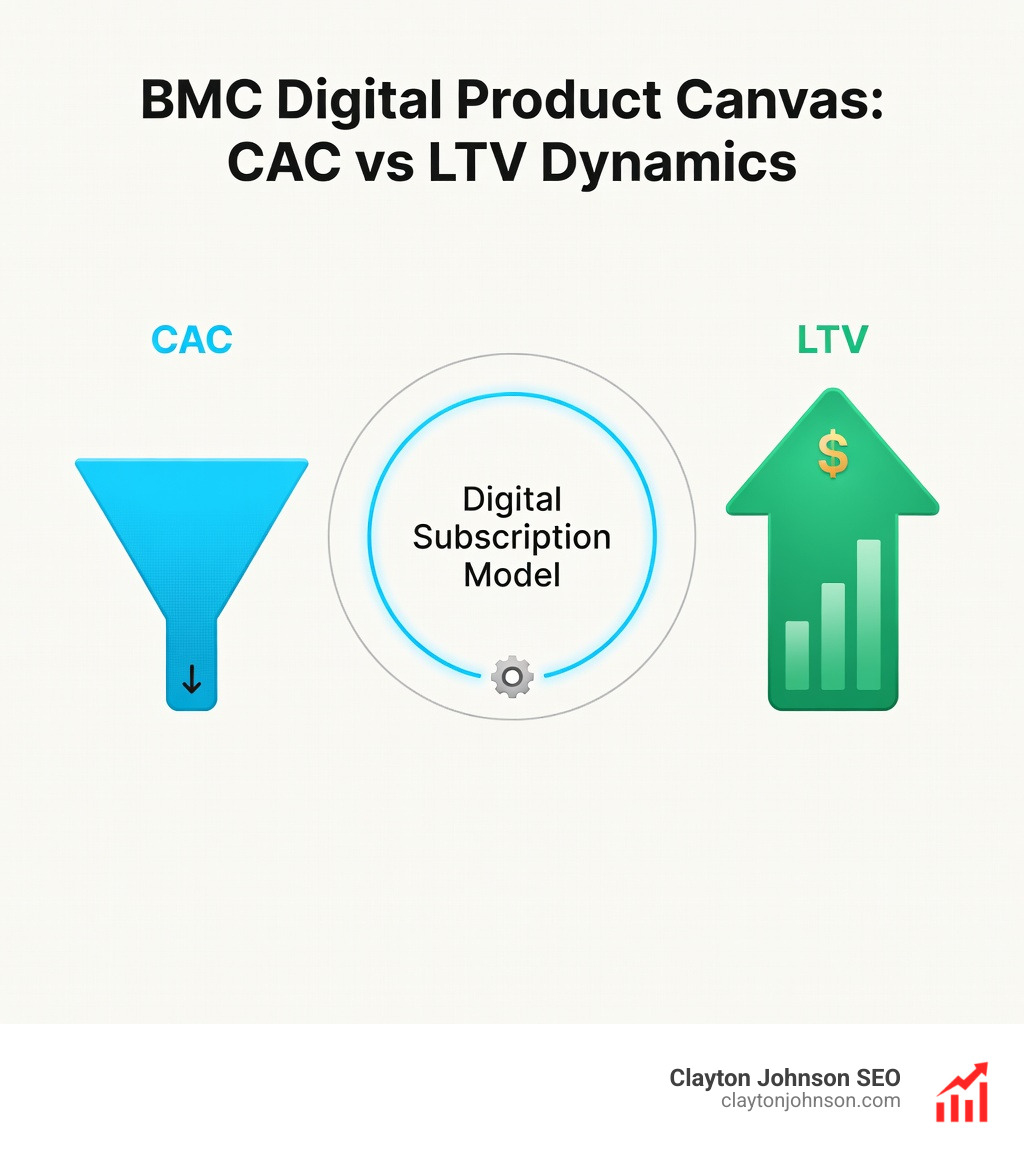
- Cost Structure: While you save on physical rent, you trade it for hosting fees, software licenses, and user acquisition costs (CAC). Understanding the balance between CAC and Lifetime Value (LTV) is essential for any digital business model.
Strategic Benefits of Using the BMC for Digital Change
Why bother with all this sketching and mapping? Because it works. The benefits of using a BMC digital product canvas go far beyond just “having a plan.”
1. Fostering Innovation
The canvas encourages “What If?” thinking. What if we changed our revenue stream from a one-time purchase to a subscription? What if we targeted a completely different customer segment? Because the canvas is so easy to change, it lowers the “cost of failure” for brainstorming. You can kill a bad idea with an eraser rather than a bankruptcy filing.
2. Improved Communication
Ever tried to explain a complex software architecture to a marketing manager? Or a marketing strategy to a lead developer? It’s tough. The BMC provides a “shared language.” When everyone is looking at the same nine blocks, the silos start to break down. We find this especially helpful in our Minneapolis-based workshops where cross-functional alignment is the goal.
3. Accelerated Decision-Making
When a new opportunity arises, you can map it onto your current canvas to see if it actually fits. If a new feature doesn’t serve your Value Proposition or reach your Customer Segments, it’s probably a distraction. This clarity is How BMC Turbocharges Digital Transformation.
The Domino’s Example
Consider Domino’s Pizza. They didn’t just “make an app.” They used digital change principles to rethink their entire model. They identified that their “Channel” was moving from phone calls to mobile. Their “Key Activity” became developing a world-class tracking platform. This strategic shift led to a 46% surge in app users, proving that even a traditional “brick-and-mortar” business can dominate through digital innovation.
This kind of success requires Operational Alignment. Your tech team and your business team must be reading from the same playbook.
Step-by-Step Guide to Creating Your BMC Digital Product Canvas
Ready to build your own? Follow this process to ensure you don’t miss the forest for the trees.
Step 1: Map the Current State
If you have an existing product, start by honestly mapping what you are doing right now. Don’t write what you wish you were doing. Use sticky notes (digital or physical) so you can move things around.
Step 2: Brainstorm Digital Improvements
Look at each block and ask: “How can digital technology make this better?”
- Channels: Can we use AI-driven SEO?
- Relationships: Can we implement a chatbot for 24/7 support?
- Revenue: Can we offer a “pro” tier for our most active users?
Step 3: Compare Frameworks
Sometimes, the standard BMC is too broad for a brand-new startup. You might consider the Lean Canvas, which replaces things like “Key Partners” with “Problem” and “Solution.”
| Feature | Business Model Canvas (BMC) | Lean Canvas |
|---|---|---|
| Focus | Holistic Business Strategy | Product-Market Fit |
| Best For | Existing Businesses / Scale-ups | Early-stage Startups |
| Key Blocks | Partners, Activities, Resources | Problem, Solution, Key Metrics |
| Goal | Strategic Alignment | Reducing Risk & Waste |
Step 4: Prototype and Test
Don’t launch the whole thing at once. Choose one “risky assumption” on your canvas — for example, that customers will pay $20/month for your service — and test it with a small group. Use your findings to iterate on the canvas.
Step 5: Treat it as a Living Document
The digital landscape changes every week. Your canvas should too. We recommend reviewing your BMC digital product canvas at least once a quarter. If you’re using digital tools, you can even Create a BMC in Confluence to keep it accessible to the whole team.
Once the strategy is clear, you can move into creating Execution Roadmaps that turn those sticky notes into real code and marketing campaigns.
Common Pitfalls and Collaborative Tools for Digital Teams
Even the best tools can be misused. Here are the “traps” we see most often:
- Over-Complexity: The beauty of the canvas is its simplicity. If you’re writing paragraphs in each block, you’re doing it wrong. Use bullet points. Keep it punchy.
- Lack of Validation: A canvas is just a collection of guesses until you talk to a customer. Don’t fall in love with your first draft.
- Siloed Development: If the CEO fills out the canvas in a dark room and then hands it to the team, it will fail. Strategy is a team sport. Gather your “A-Team” from marketing, tech, and sales for a collaborative session.
Tools to Help You Collaborate
You don’t need to do this on a physical whiteboard anymore (though that is still fun).
- Strategyzer: The gold standard for official templates and Strategyzer Innovation Playbooks.
- Canva: Great for making a “presentation-ready” version of your canvas for investors.
- Confluence Whiteboards: Perfect for Atlassian-heavy teams who want their strategy right next to their Jira tasks.
- Miro/Mural: Excellent for real-time, remote brainstorming sessions.
When using these tools, it helps to perform a SWOT Analysis periodically to see how external threats (like a new competitor) might impact your canvas blocks.
Real-World Inspiration: Netflix vs. Amazon
Netflix used the BMC to transition from mailing DVDs (Physical Channel/Resource) to streaming (Digital Channel/Resource). They realized their “Key Activity” wasn’t logistics; it was content curation and tech infrastructure. Amazon, on the other hand, uses its “Key Resources” (massive server farms) to power a completely different revenue stream: AWS. Both used the principles of the BMC digital product canvas to redefine their industries.
Frequently Asked Questions about Digital Business Models
What is the difference between a standard BMC and a digital product canvas?
A standard BMC is designed to be universal — it works for a lemonade stand or a coal mine. A BMC digital product canvas focuses specifically on digital elements. For example, “Key Resources” shifts from “Trucks and Warehouses” to “Data and APIs.” “Channels” focus on the digital user journey rather than physical storefronts.
How often should a digital product BMC be updated?
In the digital world, once a year is not enough. We recommend a “Strategy Pulse” check every quarter. However, if you see a major shift in your metrics (like a spike in churn or a drop in acquisition), you should revisit the canvas immediately to diagnose which block is failing.
Can the BMC be used for e-commerce startups?
Absolutely. In fact, it’s one of the best ways to plan an e-commerce launch. It helps you map out the relationship between your website (Channel), your shipping partners (Key Partners), and your digital marketing spend (Cost Structure). It ensures you aren’t just “selling stuff online” but building a sustainable business.
Conclusion
The BMC digital product canvas isn’t just a template; it’s a mindset. It forces us to stop thinking in features and start thinking in value. In a digital economy where the only constant is change, having a visual, adaptable map of your strategy is the difference between leading the market and being left behind.
At Clayton Johnson, we specialize in helping founders and marketing leaders bridge the gap between high-level strategy and measurable growth. Whether you are refining your SEO strategy or building out complex content systems, the principles of the Business Model Canvas guide everything we do. We believe in actionable frameworks that produce results, not just reports.
If you’re ready to turn your digital product vision into a coherent strategy that scales, we’re here to help. From competitive analysis to Social Media Marketing Services, we provide the tools and expertise to help you execute with confidence.
Let’s build something meaningful together. Reach out to our team in Minneapolis, and let’s get your strategy on the canvas.