Hack Your Way to the Top with These Digital Marketing Tips


Why Digital Marketing Growth Hacks Matter for Founders and Marketing Leaders
Digital marketing growth hacks are resource-light, cost-effective strategies designed to drive rapid user acquisition, retention, and revenue growth—often without the budget or timelines of traditional marketing campaigns.
Quick Answer: Top Digital Marketing Growth Hacks
- Referral Programs – Incentivize existing users to bring new customers (Dropbox grew 3,900% this way)
- Content Upgrades – Convert readers into subscribers with targeted lead magnets (70%+ conversion rates)
- Exit-Intent Popups – Recover abandoning visitors before they leave (1.76% average conversion)
- Scarcity Timers – Create urgency with countdown offers (226% sales boost)
- Freemium Models – Hook users on free value, convert 25% more than free trials
- Social Proof – Display testimonials and trust signals (89% trust peer recommendations)
- A/B Testing – Continuously optimize messaging and design
- User-Generated Content – Leverage customer content for authenticity
- Automated Workflows – Reduce manual effort with AI and no-code tools
- Guest Post Tracking – Create targeted popups for referral traffic
If you’ve felt like your marketing efforts aren’t converting despite doing “everything right,” you’re not alone. Most businesses struggle not because they lack tactics, but because they lack structured growth architecture—the systems that turn disconnected experiments into compounding momentum.
Growth hacking isn’t about shortcuts or tricks. It’s about identifying high-leverage experiments, testing them rapidly, and scaling what works. The best growth hacks combine marketing creativity, product optimization, and data-driven iteration to achieve exponential results without exponential budgets.
I’m Clayton Johnson, and I’ve spent years building structured SEO and growth frameworks that turn fragmented tactics into scalable systems—including implementing digital marketing growth hacks that drive measurable pipeline growth for founders and marketing leaders. In this guide, I’ll walk you through proven strategies that balance speed with sustainability.
Defining the Growth Hacking Mindset
The term “growth hacker” was coined in 2010 by startup advisor Sean Ellis, who defined a growth hacker as “a person whose true north is growth.” Unlike traditional marketers who might focus on broad brand awareness or complex corporate communications, a growth hacker is obsessed with scalable, repeatable, and cost-effective methods to move the needle.
In our experience, the growth hacking mindset is less about “tricks” and more about a disciplined, agile methodology. It requires a relentless focus on data-driven iteration and a deep understanding of the product-market fit. If the product doesn’t solve a real problem, no amount of “hacking” will save it.
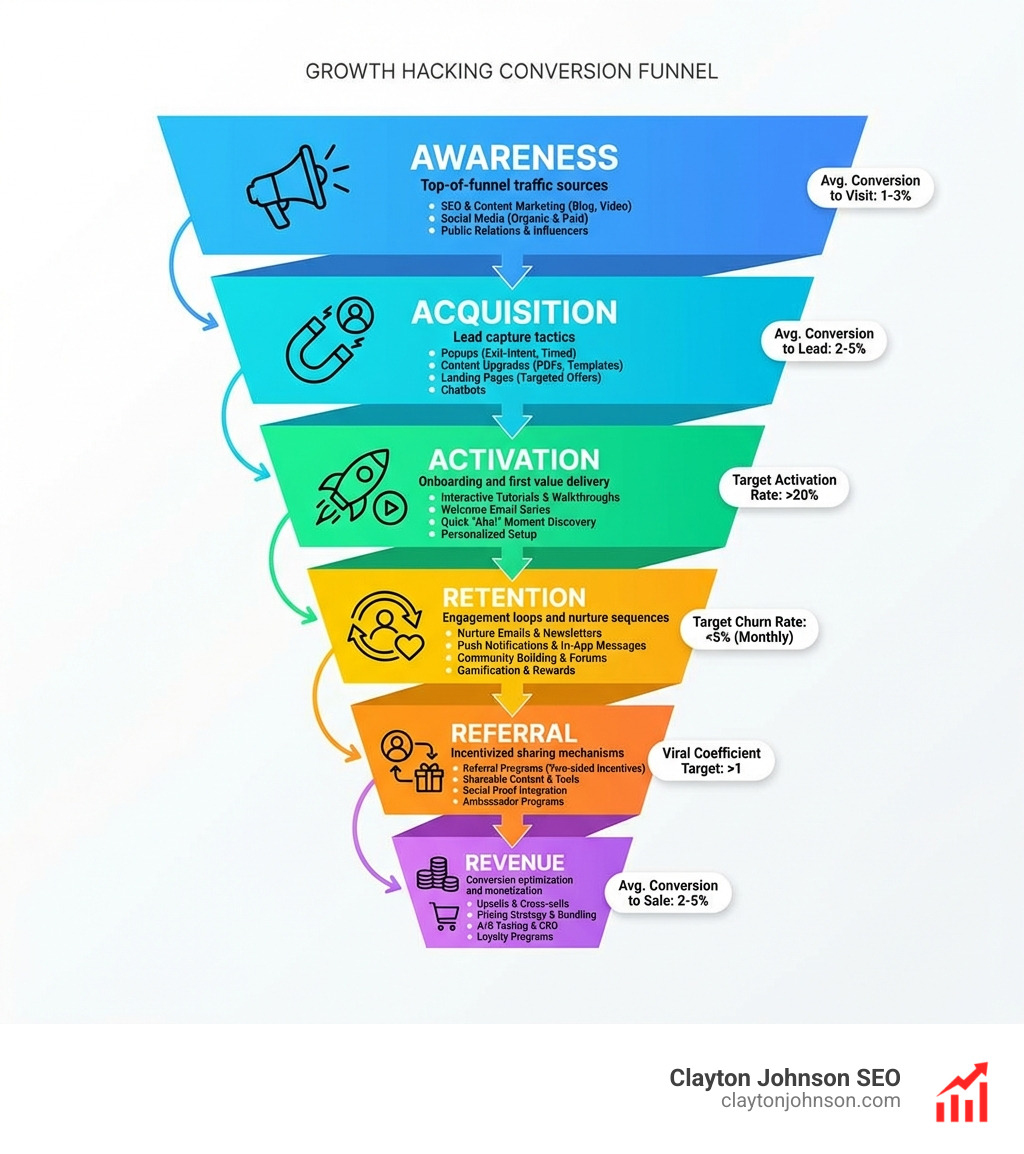
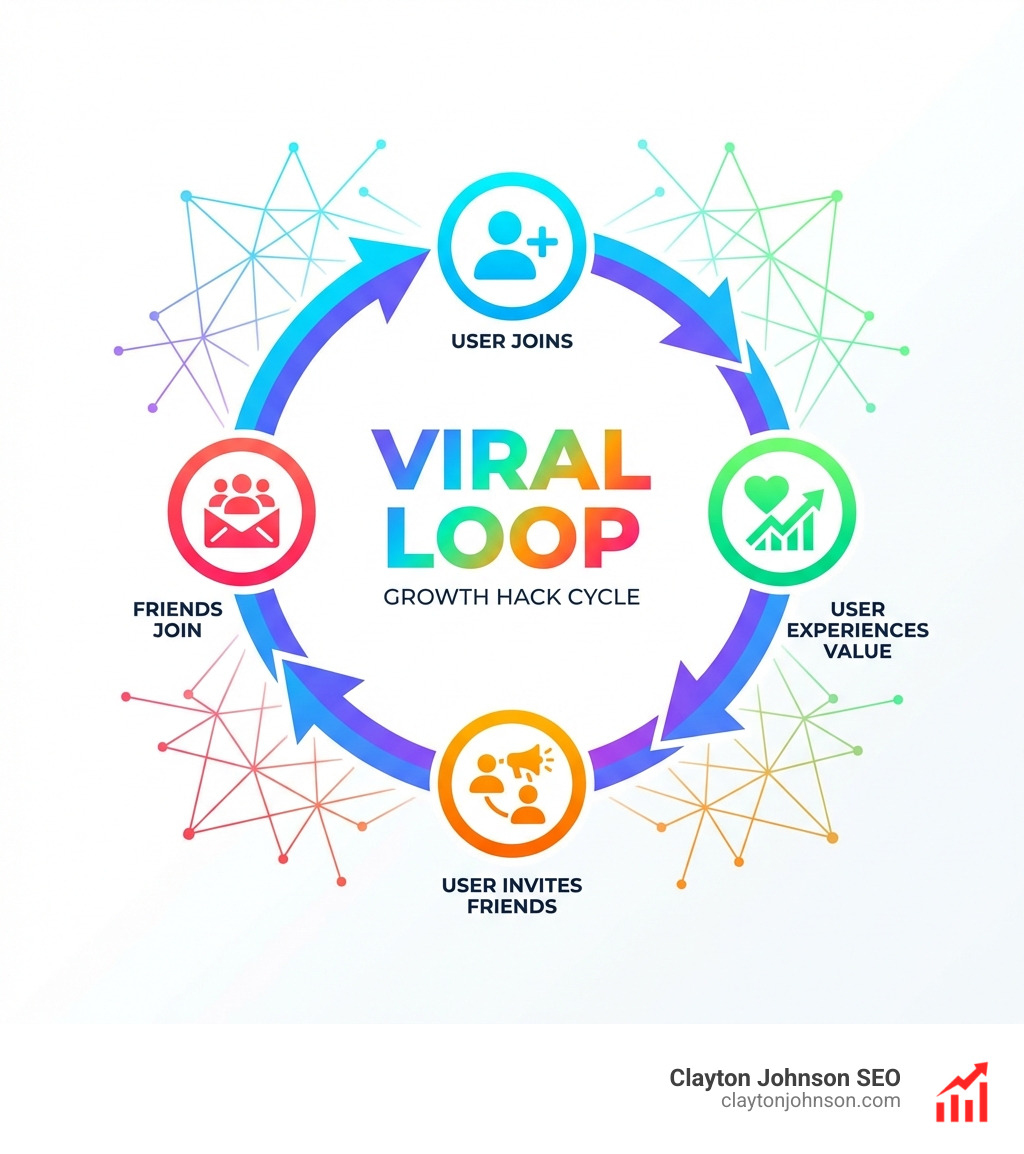
Growth hackers look at the entire funnel—from the moment a stranger hears about you to the moment they become a brand evangelist. We don’t just want traffic; we want a “viral loop” where every new user brings in more users. This is where the “hacking” part comes in—it’s about finding those “life hacks” for business that bypass expensive, traditional hurdles.
| Feature | Traditional Marketing | Growth Hacking |
|---|---|---|
| Primary Goal | Brand Awareness & Reputation | Rapid, Scalable Growth |
| Budget | Often Large / Fixed | Lean / Resource-Light |
| Focus | Top of Funnel (Awareness) | Full Funnel (Acquisition to Referral) |
| Methodology | Long-term Campaigns | Rapid Experimentation & A/B Testing |
| Tools | Media Buying, PR, TV | Automation, Coding, Data Analytics |
| Speed | Slow / Monthly Cycles | Fast / Daily or Weekly Iterations |
10 Actionable Digital Marketing Growth Hacks for Rapid Scaling
If you want to move fast, you need tactics that have been proven in the trenches. Here are ten digital marketing growth hacks we recommend for businesses looking to scale without breaking the bank.
1. The Referral Engine
Word-of-mouth is the holy grail of marketing. According to a study from Nielsen, 89% of people consider recommendations from people they know as the most trusted form of advertising. You can automate this by creating a referral program. Look at the Dropbox 3,900% growth study—they went from 100,000 to 4 million users in 15 months simply by giving away free storage to both the referrer and the referee.
2. Scarcity and Urgency Timers
Human psychology is wired to fear missing out (FOMO). SaleCycle research on countdown timers showed that adding timers to emails and on-site messages increased CTRs by 231% and conversions by 200%. Whether it’s a “limited time offer” or “only 3 spots left,” urgency drives action. One study found that an offer triggering scarcity boosted sales by 226%.
3. Exit-Intent Popups
Don’t let your hard-earned traffic walk out the door. Exit-intent popups detect when a user is about to close the tab and present a final offer—like a discount code or a free resource. While the average conversion rate is around 1.76%, some highly optimized campaigns have seen improvements of up to 600%.
4. High-Value Content Upgrades
Instead of a generic “join our newsletter” sidebar, use content upgrades. This is a specific lead magnet (like a PDF checklist or a “5-minute eBook”) that is directly related to the blog post the user is currently reading. We’ve seen these achieve 70%+ conversion rates. To learn more about how we handle these transitions, check out our conversion optimization services.
5. Social Proof and Trust Signals
People follow the crowd. If you show that 5,000 other people have signed up, new visitors are much more likely to join. However, avoid “anti-social proof”—if you only have 3 shares on a post, it’s better to hide the share count until it hits a respectable number like 50 or 100.
6. The Freemium “Hook”
Freemium products convert customers without sales 25% more often than a free trial model. By giving away a core part of your value for free (like HubSpot’s CRM), you lower the barrier to entry and allow the product to sell itself.
7. Power Word Headlines
Your headline is 80% of your result. Using power words can increase your CTR by 21%.
- Urgency: Instant, Now, Fast.
- Exclusivity: Secret, Rare, Members-only.
- Curiosity: Ridiculous, Shocking, Little-known.
- Ease: Simple, Step-by-step, Easy.
8. Isolate Your Call to Action (CTA)
Decision fatigue is real. A famous “jam study” showed that shoppers presented with 26 flavors bought 1/10th the amount of those shown only 6 flavors. On your landing pages, give the user one clear path. Don’t ask them to follow you on Twitter, sign up for a newsletter, and buy a product all at once.
9. Two-Step Opt-ins
Instead of showing a form immediately, use a link or button that triggers a popup. This uses the “foot-in-the-door” technique; once someone clicks the button, they are psychologically committed to finishing the process. This can result in conversion rates as high as 19%.
10. Guest Post Referrer Targeting
If you write a guest post for a major site, don’t just send traffic to your homepage. Use a tool like OptinMonster to show a “Welcome Mat” specifically to visitors coming from that specific URL. You can say, “Hey [Site Name] readers! Here is the special resource I mentioned in my article.”
Real-World Success Stories: From Startups to Giants
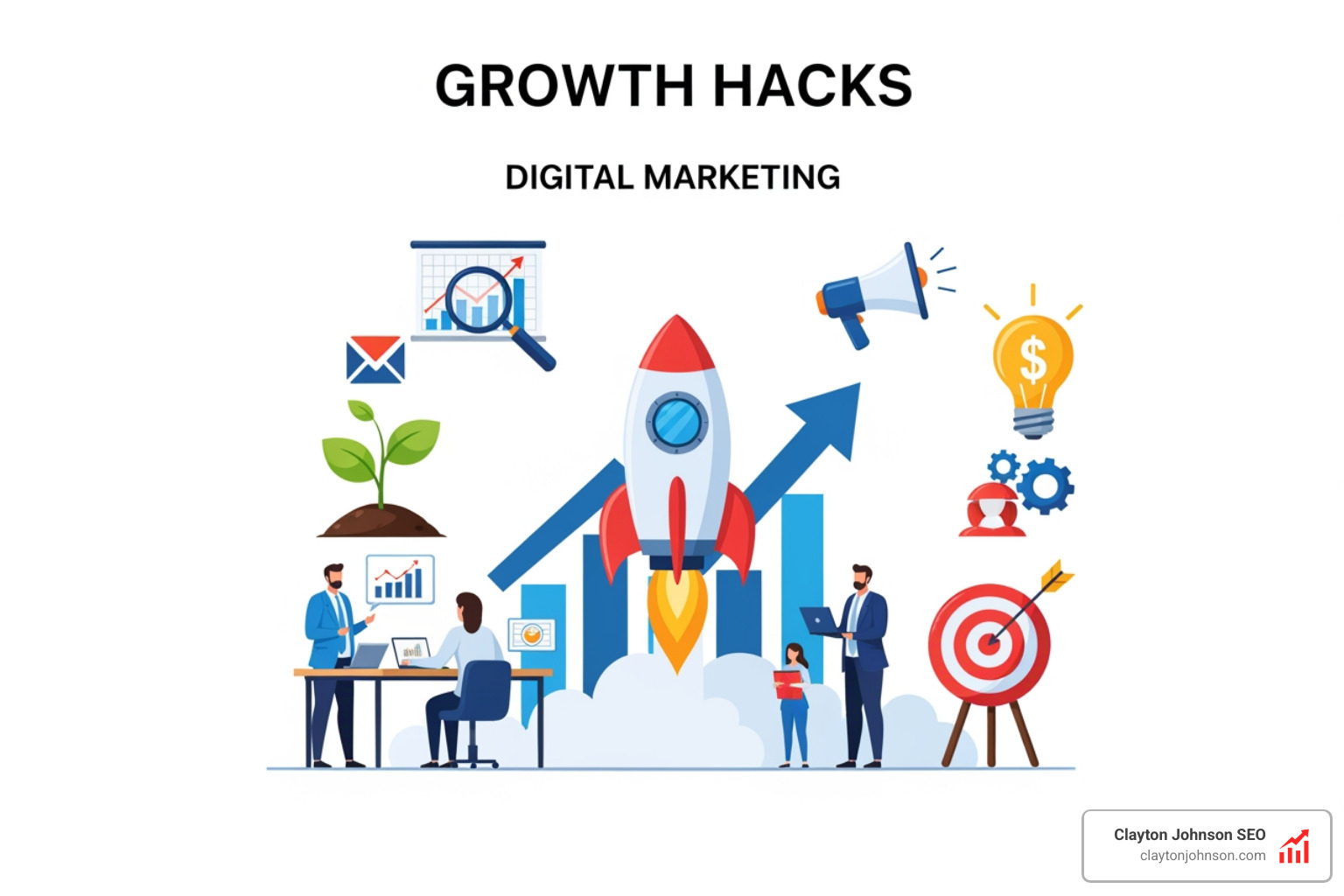
Growth hacking isn’t just for tiny startups; the world’s biggest companies used these exact digital marketing growth hacks to reach the top.
- Hotmail’s Viral Signature: In the early days, Hotmail added a simple line to the bottom of every outgoing email: “PS: I love you. Get your free email at Hotmail.” This turned every user into a brand ambassador, acquiring millions of users in months with zero ad spend.
- Airbnb’s Craigslist Integration: Airbnb realized their target audience was already looking for rooms on Craigslist. They built a technical integration that allowed hosts to cross-post their Airbnb listings to Craigslist with one click. This “hacked” Craigslist’s massive user base to fuel Airbnb’s early growth.
- PayPal’s Referral Bounty: PayPal literally paid people to join. They offered $10 to new users and $10 for every friend they referred. This achieved a daily growth rate of 7% to 10%, creating a user base so large that it became the industry standard for online payments.
- OnePlus and the Power of Exclusivity: When OnePlus launched the OnePlus One, they used an invite-only system. You couldn’t just buy the phone; you had to be invited by someone who already had one. This created massive buzz and demand while allowing them to manage their limited supply perfectly.
The Growth Hacker’s Toolkit: Data, Agile, and Automation
To implement these hacks effectively, you need more than just a good idea; you need the right tools and a structured process.
The Power of A/B Testing
You should never guess what works. Harvard research on A/B testing effectiveness shows that startups using A/B testing scale more quickly and attract more venture capital. Whether it’s testing the color of a button or the wording of a headline, every element of your funnel should be subject to experimentation. For help setting up these systems, see our analytics and data services.
No-Code and Automation
You don’t need a team of developers to be a growth hacker anymore. Tools like Webflow allow for rapid prototyping, while Zapier can connect your apps to create automated workflows.
- Hotjar: Use heatmaps to see where users are clicking (and where they are getting frustrated).
- Thinkstack: Implement AI-powered chatbots for 24/7 engagement.
- Tableau: Use data visualization to spot growth trends before your competitors do.
AI Personalization
The future of growth hacking is AI. By using predictive analytics, we can now personalize the user experience in real-time. This means showing different content to a first-time visitor in Minneapolis than we would to a returning customer.

Frequently Asked Questions about Digital Marketing Growth Hacks
What are the most effective digital marketing growth hacks for small businesses?
For small businesses with limited budgets, we recommend focusing on referral incentives and content recycling. Don’t just post a blog once; turn it into a video, a series of social media posts, and an email newsletter. Leveraging micro-influencers in your niche can also provide a high ROI compared to traditional ads. If you’re looking to build your presence, explore our social media marketing services.
How do digital marketing growth hacks differ from traditional SEO?
Traditional SEO is often a long-term play focused on organic rankings. While we love SEO, growth hacking is about the speed of execution and the experimental nature of the tactics. Growth hacking often involves technical automation and a heavy focus on conversion-centricity—it’s not just about getting the click; it’s about what happens after the click. For a deeper dive into our approach, see our SEO content marketing services.
Can B2B companies use growth hacking?
Absolutely. B2B growth hacking often involves LinkedIn automation, expert roundups, and account-based marketing (ABM). By creating gated resources (like whitepapers or proprietary data reports), B2B companies can capture high-quality leads. Additionally, targeted paid advertising can be used to “hack” your way into the feeds of specific decision-makers at your target companies.
Conclusion
At the end of the day, digital marketing growth hacks are just tools. To see real, compounding results, you need a structured growth architecture. Most companies don’t fail because they have bad ideas; they fail because they have a pile of disconnected tactics instead of a cohesive system.
At Clayton Johnson, we’re building Demandflow.ai to solve this exact problem. We provide founders and marketing leaders with a growth operating system that combines:
- Taxonomy-driven SEO systems that build authority ecosystems.
- Competitive positioning models to help you stand out in a noisy market.
- AI-augmented marketing workflows for maximum efficiency.
Stop guessing and start growing. If you’re ready to move beyond “hacks” and build a scalable marketing machine, work with me today. We’ll help you find the clarity and structure you need to achieve the leverage required for exponential growth.