How to Map Your Startup Audience Without Losing Your Mind


Why Most Startups Skip the Step That Matters Most
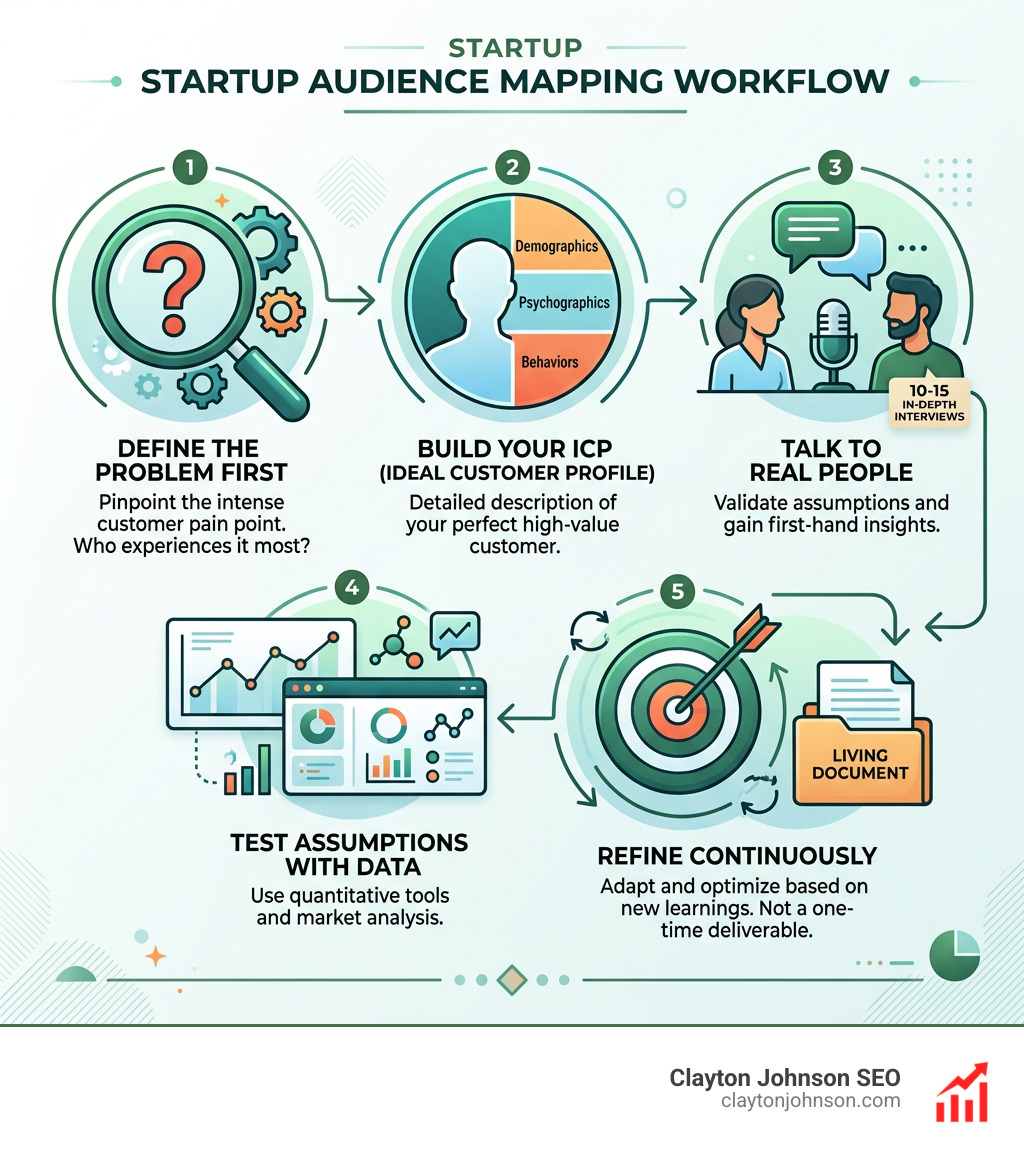
Audience mapping startup guide essentials — here’s what you need to know fast:
- Define the problem first — your audience is whoever experiences that problem most intensely
- Build an Ideal Customer Profile (ICP) — include demographics, psychographics, and behaviors
- Go talk to real people — aim for 10–15 in-depth interviews before drawing conclusions
- Test your assumptions with data — use tools like Google Analytics and social listening
- Refine continuously — audience maps are living documents, not one-time deliverables
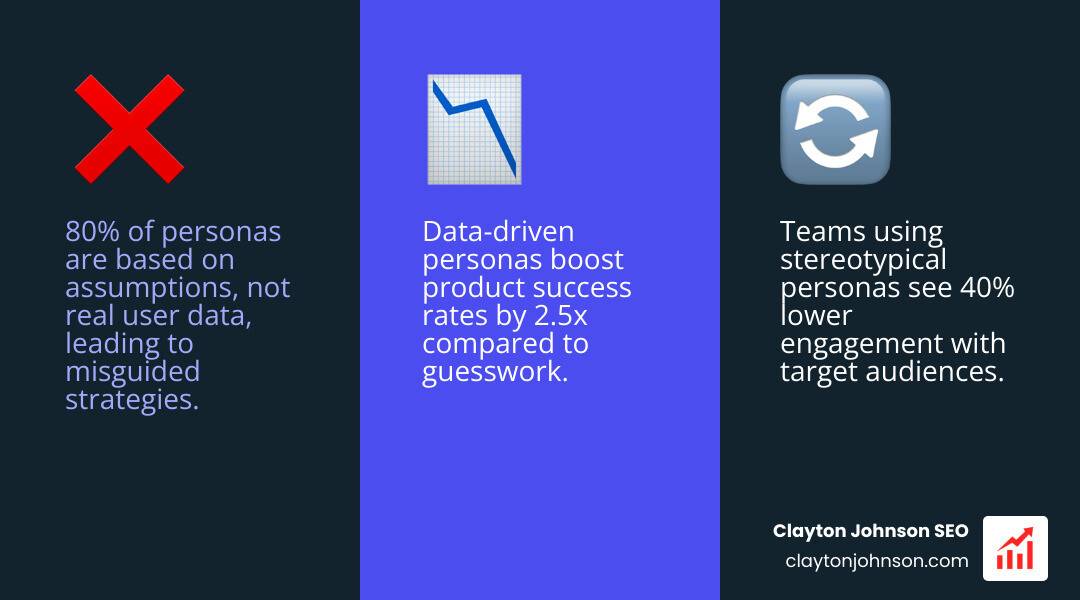
Over 90% of startups fail — and the most common reason isn’t a bad product. It’s building the right product for the wrong people.
Most founders leap straight to solutions. They build, launch, run ads, and then wonder why nobody buys. The missing step happens before any of that: knowing exactly who you’re solving a problem for.
That’s what audience mapping is. It’s the process of turning vague assumptions about your customers into a sharp, data-backed picture of a real human being — one with specific frustrations, habits, and goals.
Without it, your marketing is guesswork. Your product roadmap drifts. Your messaging lands flat.
With it, everything gets easier — from writing a homepage headline to deciding which features to build next.
I’m Clayton Johnson, founder of Clayton Johnson SEO and creator of DemandFlow.ai, with nearly two decades of experience helping businesses identify and reach their ideal customers — including building audience mapping frameworks that feed directly into scalable SEO and demand generation strategies. This audience mapping startup guide walks you through the exact process I use and recommend.
The Core Framework of an Audience Mapping Startup Guide
To map an audience effectively, we have to move beyond “everyone could use this.” If you build for everyone, you build for no one. The foundation of any successful startup lies in identifying a specific group of people who have a problem so painful they are willing to pay for a solution.
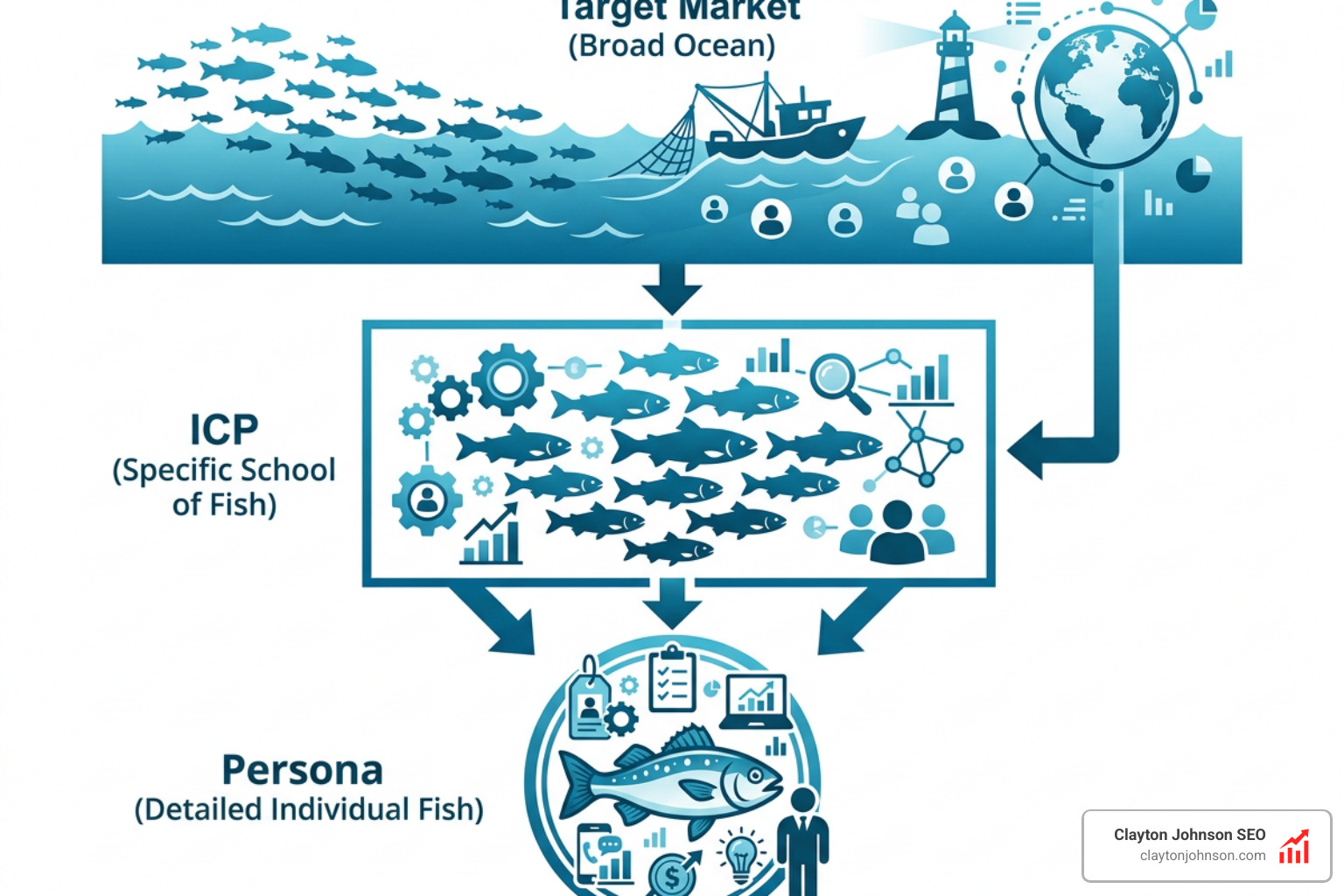
This framework relies on three distinct layers: the Target Market, the Ideal Customer Profile (ICP), and the Persona.
The Difference Between Target Market and ICP
Think of your Target Market as the broad ocean. If you sell project management software, your target market is “businesses that manage projects.” That’s too big to be useful.
Your Ideal Customer Profile (ICP) is the specific school of fish within that ocean. It focuses on firmographics:
- Company Size: Are they 10-person agencies or 500-person enterprises?
- Industry: Are they in tech, construction, or healthcare?
- Geography: Are they remote-first global teams or local North American firms?
- Budget: Do they have $500 or $50,000 to spend on this problem?
Segmentation: The Secret Sauce
Once we have the ICP, we use customer segmentation to divide the audience into manageable groups. We look at three primary data types:
| Data Type | What it Covers | Examples |
|---|---|---|
| Demographics | The “Who” | Age, gender, job title, income, location. |
| Psychographics | The “Why” | Values, interests, lifestyle, personality traits. |
| Behavioral | The “How” | Purchase history, browsing habits, tool usage. |
Defining Your Initial Target Audience and ICP
The first step in our audience mapping startup guide is to look at the problem. According to Harvard Business School’s startup guide, developing a profitable business requires determining the size of the problem before the size of the market.
Ask yourself:
- What specific pain point am I solving?
- Who experiences this most intensely?
- What are they currently doing to try and fix it?
From here, we build buyer personas. These are semi-fictional representations of your ideal customers. Instead of a spreadsheet of data, we create a “real” person. For example, check out this buyer persona example of startup founder Sam to see how granular you should get. Humanizing the data helps your team empathize with the user’s daily struggles.
Using Data to Power Your Audience Mapping Startup Guide
While intuition is great for a first draft, data is what keeps you from losing your mind (and your budget). Startups often make the mistake of “spraying and praying” with their marketing. Instead, we use a customer strategy backed by hard numbers.
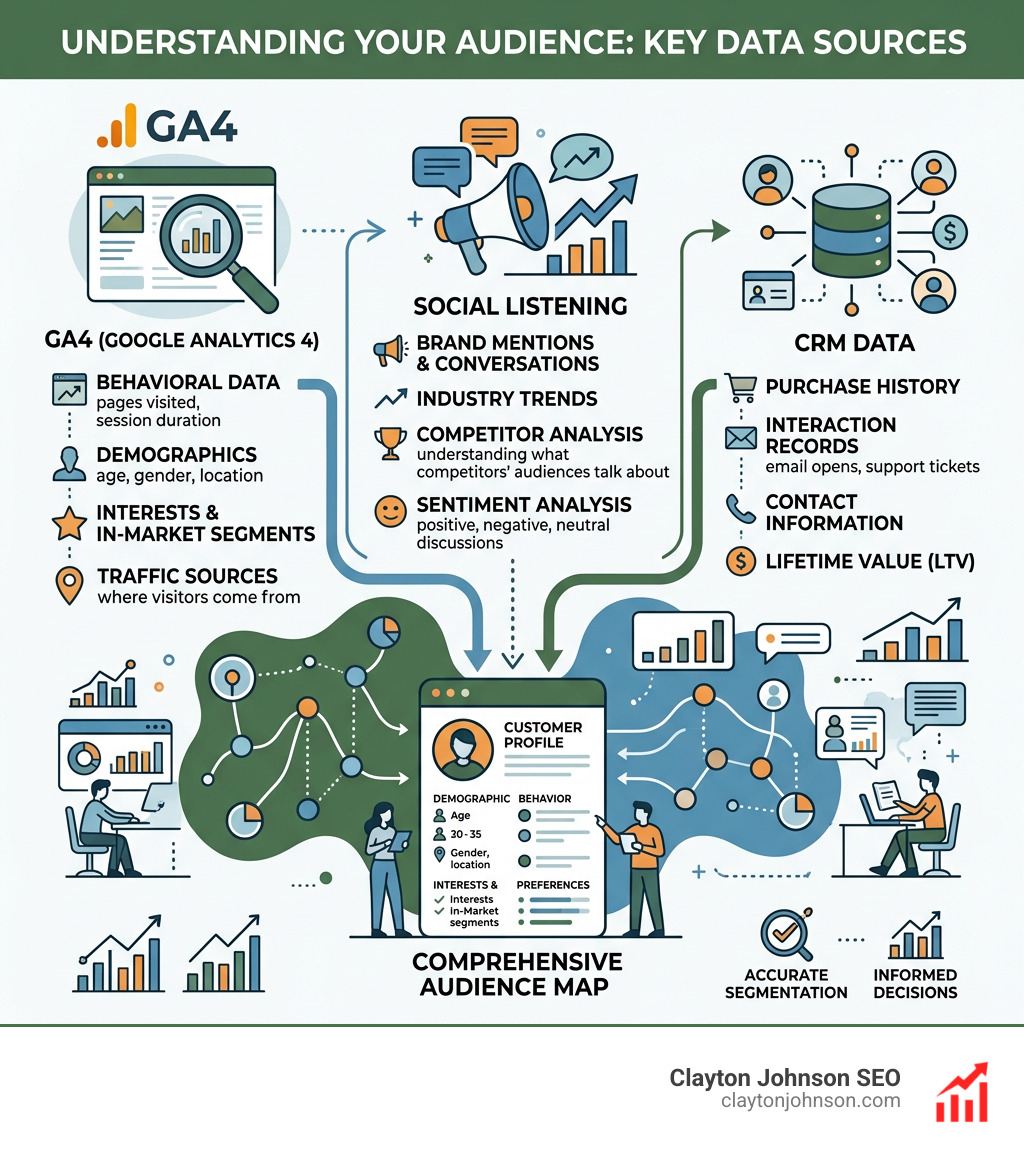
Leverage Your Own Analytics
If you have a website or a prototype, your analytics platform is a goldmine.
- Google Analytics 4: Move beyond vanity metrics like page views. Look at “Audience” reports to see “In-Market Segments.” This tells you what else your visitors are actively looking to buy.
- Hotjar: Use heat maps and session recordings. Watching a user struggle to find a button is more informative than any survey.
- Brandwatch or Brand24: These social listening tools allow you to tune into conversations happening around your industry. What language are they using? What are they complaining about?
Researching Where Your Audience “Hangs Out”
You need to find your audience’s “watering holes.” As Wikipedia notes on target audiences, knowing where they spend time is crucial for effective strategy.
- B2B: Over 50% of LinkedIn’s global users are between 25-34 years old. If you’re targeting young decision-makers, LinkedIn is your home base.
- Niche Communities: Look at Reddit, Quora, or industry-specific blogs like Asana or Trello.
- Search Trends: Use Google Trends and AnswerThePublic to see the exact questions people are typing into search engines.
Validating Assumptions Through Direct Customer Discovery
This is where the rubber meets the road. You have a hypothesis; now you need to prove it wrong. We follow the customer development methodology, which famously requires founders to “get out of the building.”
The 10-15 Interview Rule
Research from user requirement analysis experts suggests aiming for at least 10 to 15 in-depth conversations. These aren’t sales pitches; they are listening sessions.
How to conduct a discovery interview:
- Ask open-ended questions: Instead of “Would you use this?”, ask “Can you walk me through how you handled this problem yesterday?”
- Focus on the past, not the future: People are bad at predicting their future behavior but great at describing past frustrations.
- Listen for the “Jobs to be Done”: Use our beginner’s guide to JTBD to understand the underlying emotional and functional “job” the customer is trying to hire a product to do.
Direct Engagement
Don’t just lurk in forums—engage. Run polls in Facebook groups or Instagram Stories. Create a quick survey with Google Forms. The goal is to see if the value proposition you’ve crafted actually resonates. According to product-market fit theory, you need a product that people desperately want. If your 15 interviewees aren’t excited, your audience map is likely off.
Refining and Scaling Your Audience Strategy
Audience mapping is not a “set it and forget it” task. As your startup grows, your audience will evolve. You might start by solving a problem for “freelance designers” and realize your real power users are “agency creative directors.”
The Iterative Feedback Loop
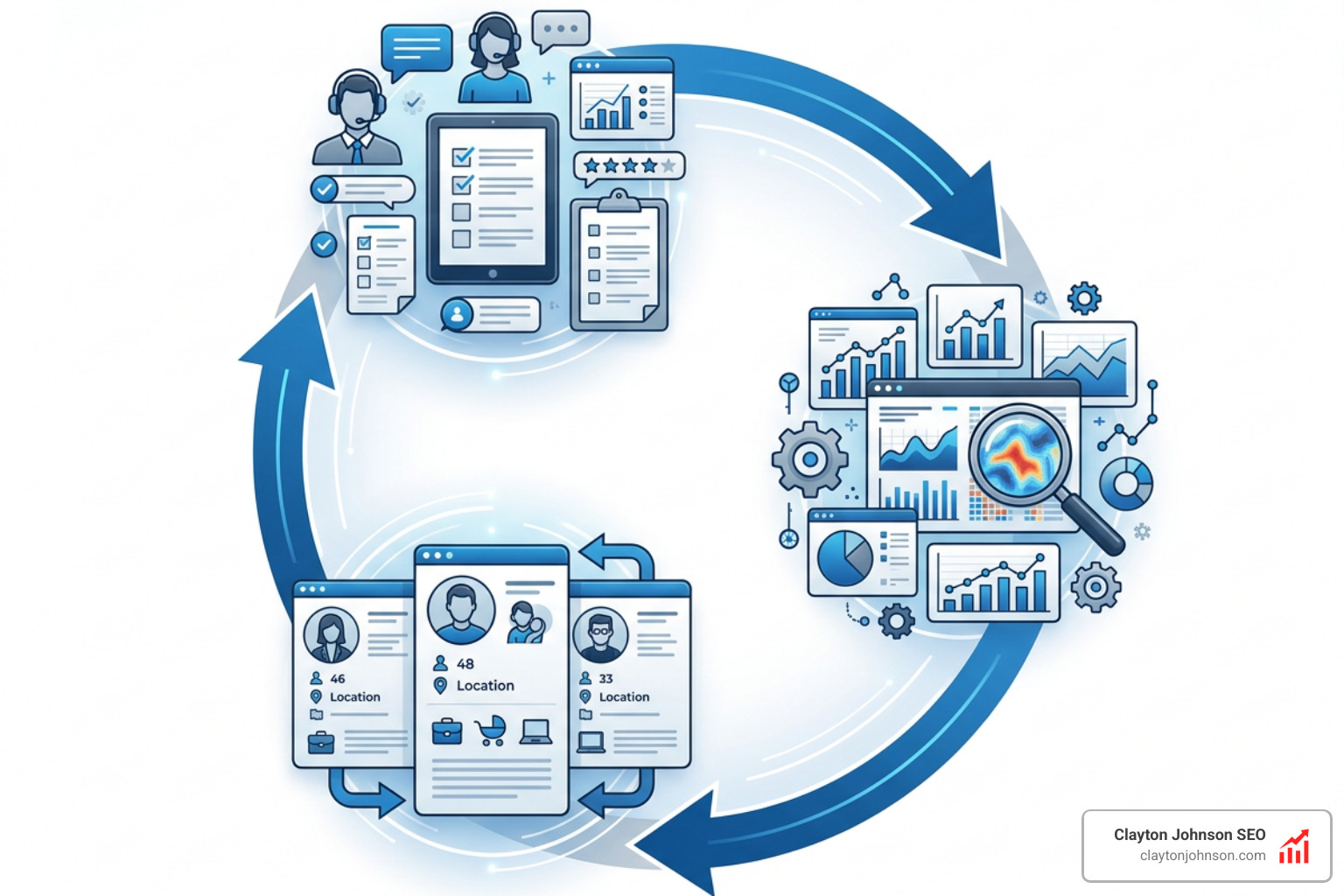
We use an iterative process to keep our maps fresh:
- Gather Feedback: Use Qualtrics or HubSpot to collect ongoing user sentiment.
- Analyze Patterns: Look for commonalities in your best customers (those with the highest LTV).
- Refine the Persona: Update your marketing manager Mike or local business owner Laura personas with new insights.
- Test Again: Use A/B testing on your landing pages to see which messaging converts better.
Scaling with AI and Advanced Tools
As you scale, manual mapping becomes impossible. This is where we integrate AI-augmented workflows. Tools like Segment or mParticle can help unify customer data into a single profile.
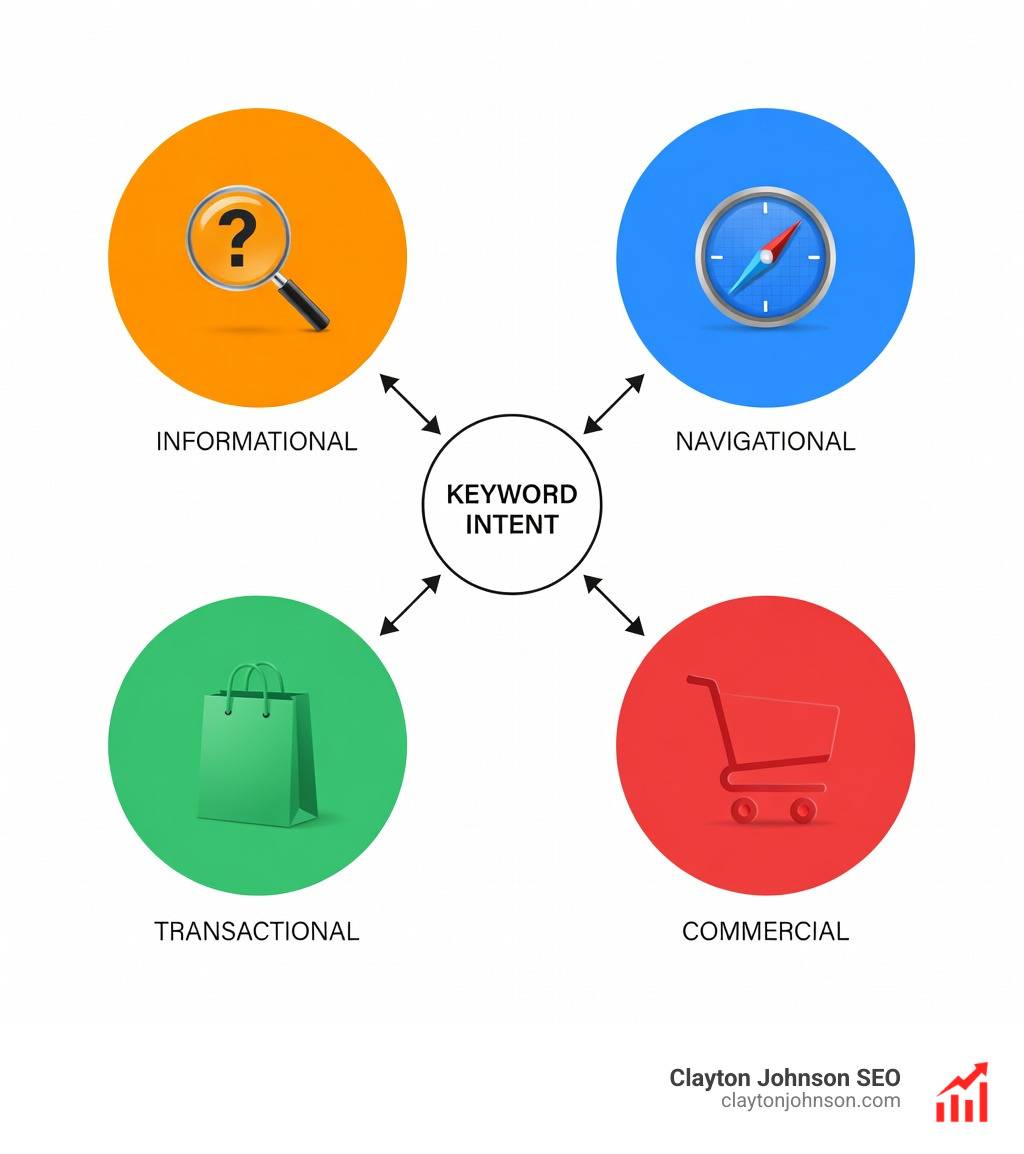
If you’re struggling to move from fragmented data to a coherent growth engine, our SEO services at Clayton Johnson SEO focus on building systems that align your content architecture with the actual intent of your mapped audience.
Creating Detailed Personas for Long-Term Growth
A great persona map should feel like a biography. It should include the “watering holes” they visit, the influencers they follow, and even the podcasts they listen to on their commute.
Humanizing Data with Empathy Maps
An empathy map goes beyond demographics to explore:
- What do they think and feel? (Their preoccupations and aspirations)
- What do they see? (Their environment and what the market offers them)
- What do they say and do? (Their public appearance and behavior)
- What do they hear? (What friends, bosses, and influencers say)
By filling these out, you can create better personas that actually drive product development. If “Founder Sam” is worried about cash flow, your messaging shouldn’t focus on “cool UI”—it should focus on “ROI and efficiency.”
Avoiding Common Mistakes in Your Audience Mapping Startup Guide
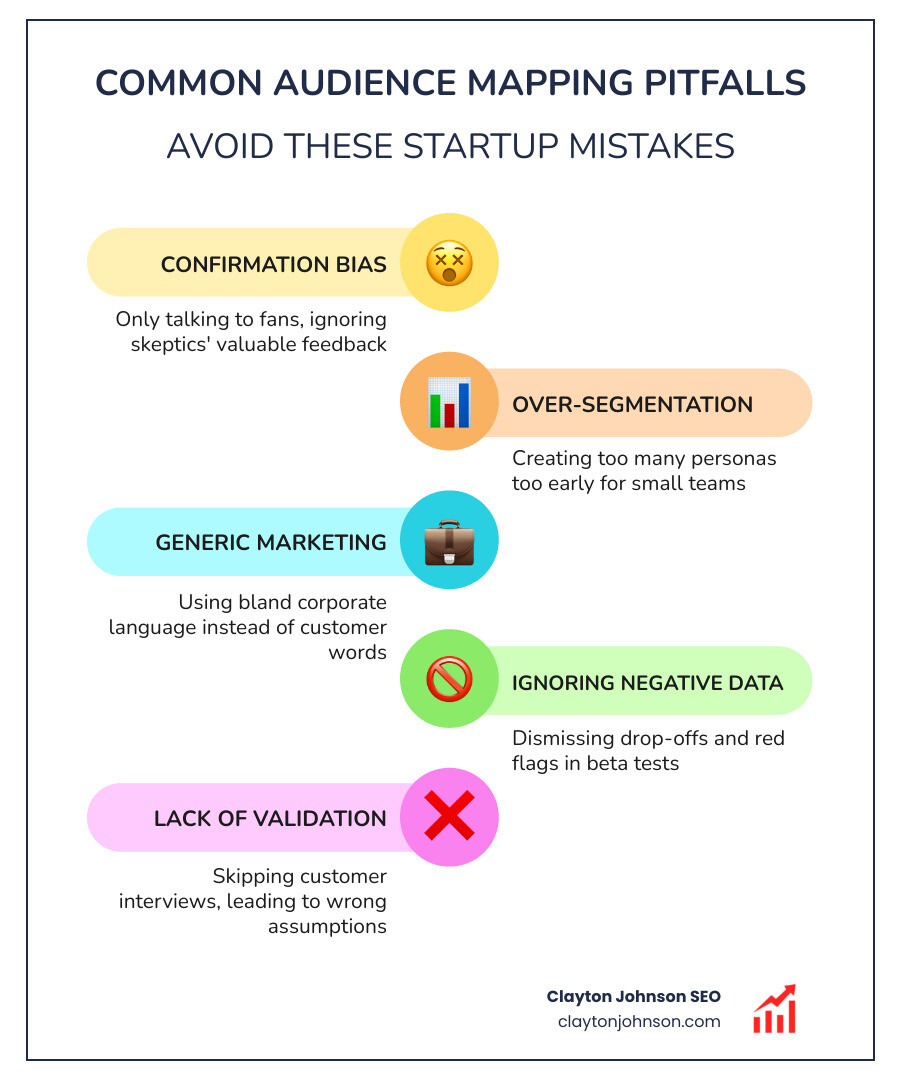
Even the best founders trip up. Here are the most common pitfalls we see when startups try to map their audience:
- Confirmation Bias: Only talking to people who you know will like your idea. Seek out the skeptics; they have the most valuable feedback.
- Over-Segmentation: Creating 15 different personas for a 3-person startup. Start with one or two. You can expand later.
- Generic Marketing: Using “corporate speak” that appeals to no one. Use the exact language your customers used in your interviews.
- Ignoring Negative Data: If 90% of your beta testers drop off after day three, your audience map (or your product) is wrong. Don’t ignore the “red” in your product insights.
Measuring Success with Key Metrics and KPIs
How do you know if your audience mapping startup guide is actually working? You track the numbers that matter.
- Conversion Rate: Are the people landing on your site actually the ones you mapped? If traffic is high but conversions are low, there’s a mismatch.
- Customer Lifetime Value (CLTV): Are you attracting “high-value” users or “one-and-done” browsers?
- Retention Rate: Does your mapped audience stick around? High churn usually means you’ve targeted people who don’t actually have the problem you’re solving.
- Engagement Metrics: Are they opening your emails? Are they clicking your LinkedIn posts?
At Clayton Johnson SEO, we believe in measurable outcomes. We don’t just chase traffic; we build systems that attract the right traffic. By aligning your SEO strategy with a deep audience map, you create a compounding growth engine that works while you sleep.
Final Thoughts: The Map is Not the Territory
An audience map is a guide, not a prison. Use it to focus your efforts, but be humble enough to change it when the data tells you you’re wrong.
The most successful startups are those that listen more than they talk. They treat every customer interaction as a data point and every failed ad campaign as a lesson in who not to target.
Ready to stop shouting into the void and start building a predictable inbound pipeline? Let’s build a system that turns your audience insights into revenue. Explore our SEO frameworks and let’s get to work.