How to Master Ecommerce Email Marketing Without Losing Your Mind


Why Email Is Still the Highest-ROI Channel for Ecommerce Stores
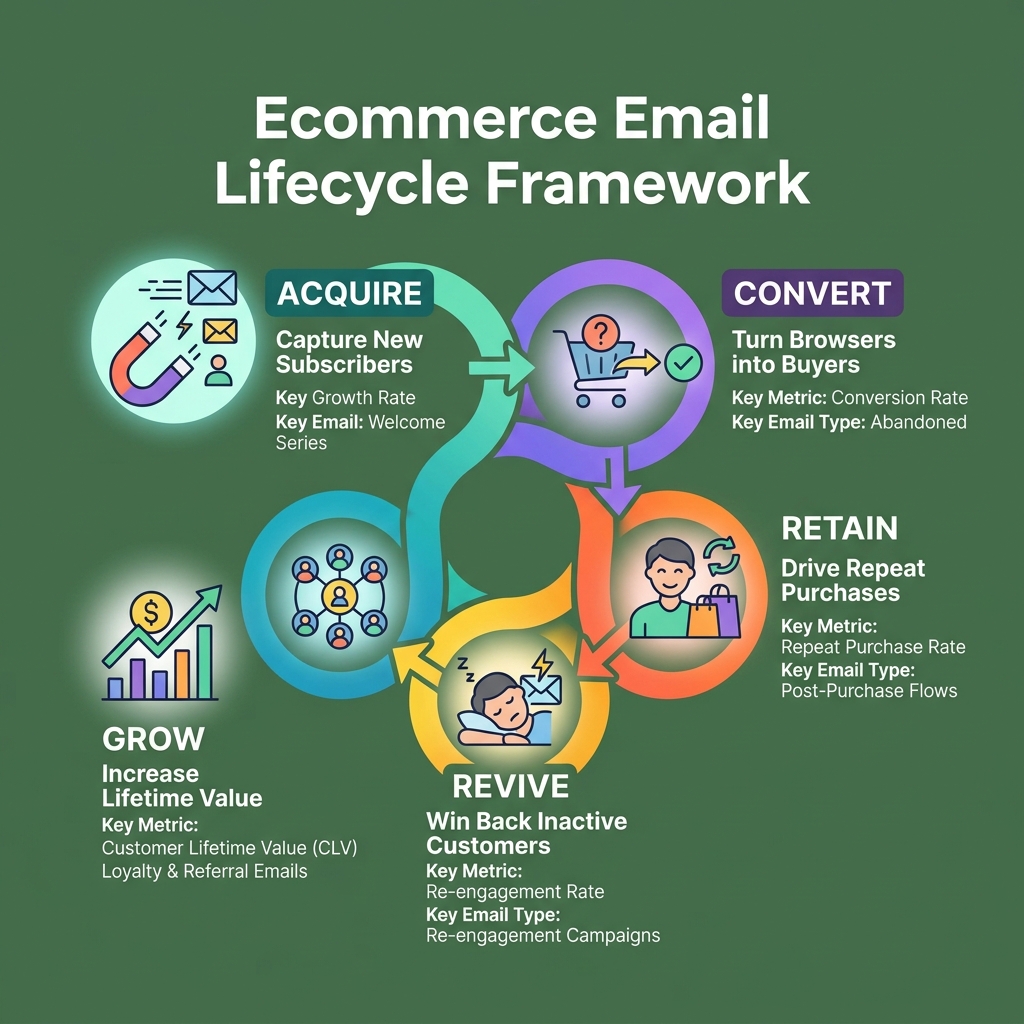
An ecommerce email marketing guide is a complete playbook for using email to grow an online store — from building your list and automating sequences to measuring ROI and retaining customers long-term.
Here’s what a complete ecommerce email marketing system covers:
| Stage | Goal | Key Email Type |
|---|---|---|
| Acquire | Capture new subscribers | Welcome series |
| Convert | Turn browsers into buyers | Abandoned cart emails |
| Retain | Drive repeat purchases | Post-purchase flows |
| Revive | Win back inactive customers | Re-engagement campaigns |
| Grow | Increase lifetime value | Loyalty and referral emails |
Social media is noisy. Paid ads are expensive. Algorithm changes can wipe out your reach overnight.
Email is different.
You own your list. Nobody can take it from you. And the numbers back it up — email marketing delivers up to $42 back for every $1 spent, making it the single most cost-effective channel available to ecommerce brands.
But here’s the thing most store owners miss: sending emails and having an email system are not the same thing. Most stores blast promotions and wonder why revenue barely moves. The stores quietly printing money from email? They’ve built automated sequences tied to customer behavior — welcome flows, cart recovery, post-purchase nurture — all running in the background, around the clock.
Consider this: the average cart abandonment rate hovers around 70%. That’s the majority of your potential buyers walking away. A well-timed, three-email cart recovery sequence can recover a significant portion of that lost revenue. One email won’t do it — but a structured sequence changes the outcome entirely.
Email also gives you something paid channels never will: direct, permission-based access to people who already care about your brand. No middleman. No algorithm tax.
I’m Clayton Johnson, an SEO strategist and demand generation expert who has spent a long time building data-driven marketing systems — including the email frameworks in this ecommerce email marketing guide — that help brands turn their subscriber lists into predictable revenue engines. This guide covers everything you need to go from scattered campaigns to a fully automated, high-converting email program.
Ecommerce email marketing guide definitions:
The Strategic Ecommerce Email Marketing Guide to High-ROI Systems
To build a truly effective email program, we have to stop thinking about “newsletters” and start thinking about growth engines. In high-growth ecommerce, email isn’t just a communication tool; it is a system of automated revenue machines that work while you sleep.
The foundation of this system is first-party data. Unlike third-party cookies, which are crumbling, the data you collect through email—purchase history, browsing behavior, and preference center choices—is yours to keep. We use this data to build scalable traffic systems that don’t rely on the whims of an ad platform’s bidding war. When you align your email strategy with search intent and customer behavior, you create a compounding growth loop.
Essential Sequences in Your Ecommerce Email Marketing Guide
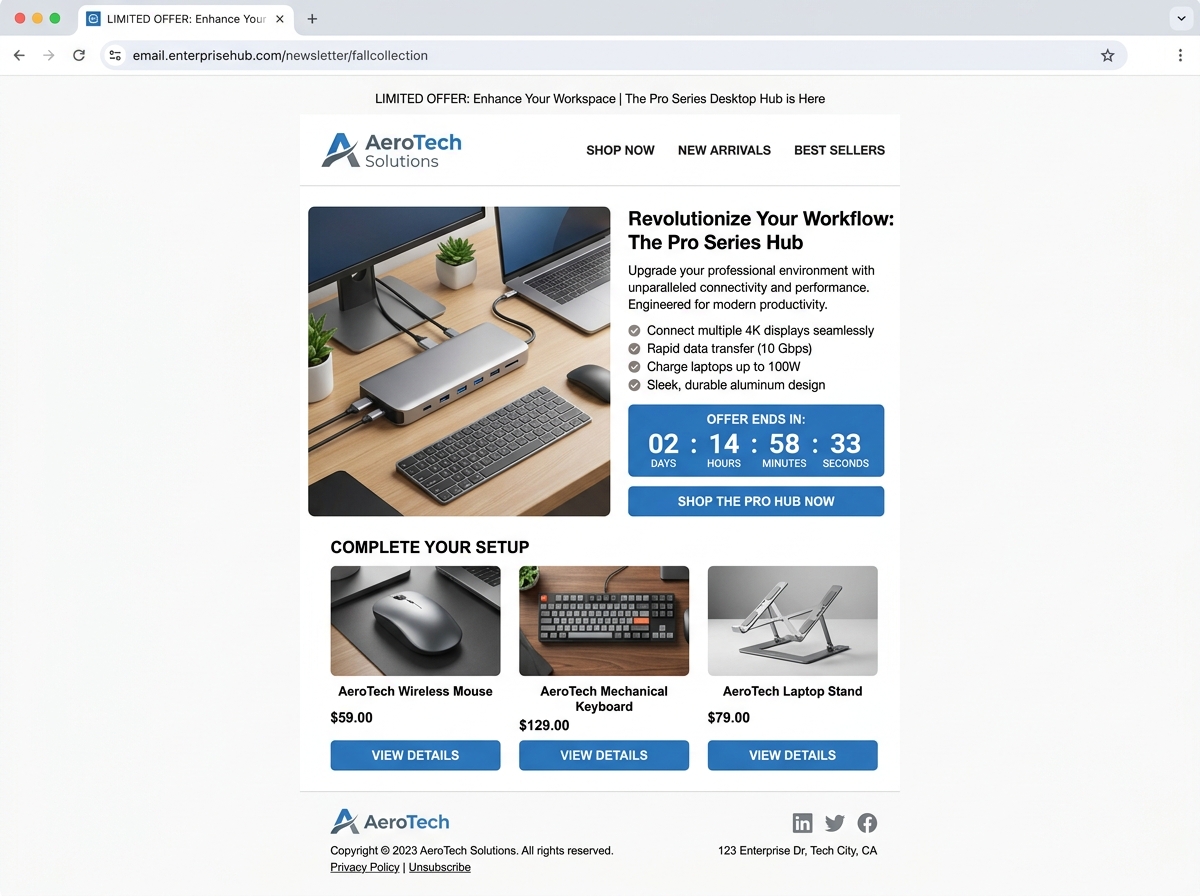
If you want to move the needle, you need to master “trigger-based” emails. These are messages sent automatically based on a specific action a customer takes. Research shows that these relevant emails can drive 18x more revenue than standard broadcast blasts.
Here are the heavy hitters every store needs:
- The Welcome Series: This is your digital handshake. Since welcome emails have open rates as high as 91.43% (that’s 4x higher than standard promos!), you cannot afford to waste this moment. We recommend a 3-4 email sequence that introduces your brand story, sets expectations, and provides a “first purchase” incentive.
- Abandoned Cart Recovery: With a 70% average cart abandonment rate, your checkout page is a leaky bucket. Don’t just send one “You forgot something” email. Data shows that sending three abandoned cart emails can generate significantly more revenue—upward of $24.9 million in sampled data compared to just $3.8 million for a single reminder.
- Transactional Emails: These include order confirmations and shipping updates. Because customers expect these, they have open rates 4-8x higher than promotional mail. This is prime real estate to include a “You might also like” section or a referral prompt.
- Post-Purchase Flows: The goal here is to turn a one-time buyer into a repeat customer. Send a thank-you note, ask for a review 7-21 days after delivery, and suggest complementary products.
| Sequence | Primary Goal | Timing Strategy |
|---|---|---|
| Welcome | Brand affinity & first sale | Immediate, Day 2, Day 4 |
| Abandoned Cart | Recover lost revenue | 1 hour, 24 hours, 72 hours |
| Post-Purchase | Retention & UGC | 1 day (Thank you), 14 days (Review) |
| Win-Back | Revive dormant users | 30, 60, and 90 days of inactivity |
Building and Segmenting a High-Quality List
A massive list of unengaged subscribers is a liability, not an asset. To build a high-quality list, we focus on SEO-driven email campaigns that capture users who are already searching for your solutions.
- Strategic Opt-ins: Use exit-intent popups and scroll-triggered forms. Offer a lead magnet that provides real value, like a “Buying Guide” or a meaningful discount.
- Double Opt-in: This simple step ensures that the person actually wants your emails, which protects your deliverability and prevents fake signups from tanking your sender reputation.
- RFM Segmentation: This stands for Recency, Frequency, and Monetary value. We segment customers based on how recently they bought, how often they buy, and how much they spend. A “VIP” who buys every month should receive different content than a “Lapsed” customer who hasn’t visited in a long time.
- List Hygiene: Email lists naturally degrade by about 22.5% over time. We must proactively remove invalid addresses and “sunset” subscribers who haven’t opened an email in over six months.
Personalization and Mobile Optimization Tactics
Generic emails are the fastest way to get marked as spam. Modern personalization goes far beyond just using a first name in the subject line. It’s about dynamic content—showing specific products based on what a user actually looked at on your site.
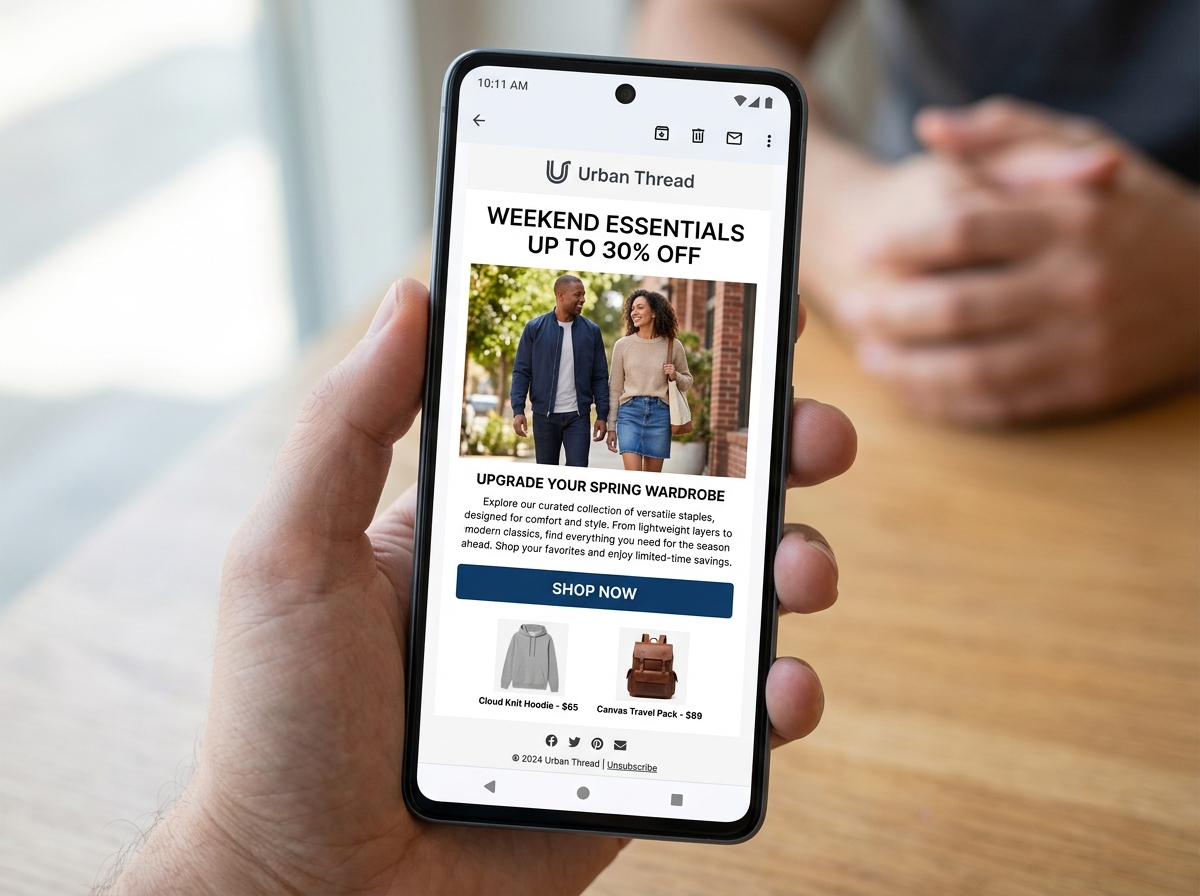
Furthermore, with over 60% of emails now opened on mobile devices, your design must be “thumb-friendly.” If your email looks great on a desktop but is unreadable on a phone, you are losing half your audience.
- Responsive Design: Use single-column layouts that stack content vertically.
- Typography: Use at least 16px font for body text to ensure readability.
- Tap Targets: Ensure your Call-to-Action (CTA) buttons are at least 44×44 pixels with plenty of white space around them.
- Dark Mode Testing: Many users view emails in dark mode. Ensure your logos have transparent backgrounds and your colors don’t “break” when inverted.
Scaling Growth with Advanced Automation and Analytics
Once the basics are in place, we move into the advanced ecommerce email marketing services that separate the amateurs from the pros. This involves a rigorous “test and learn” philosophy.
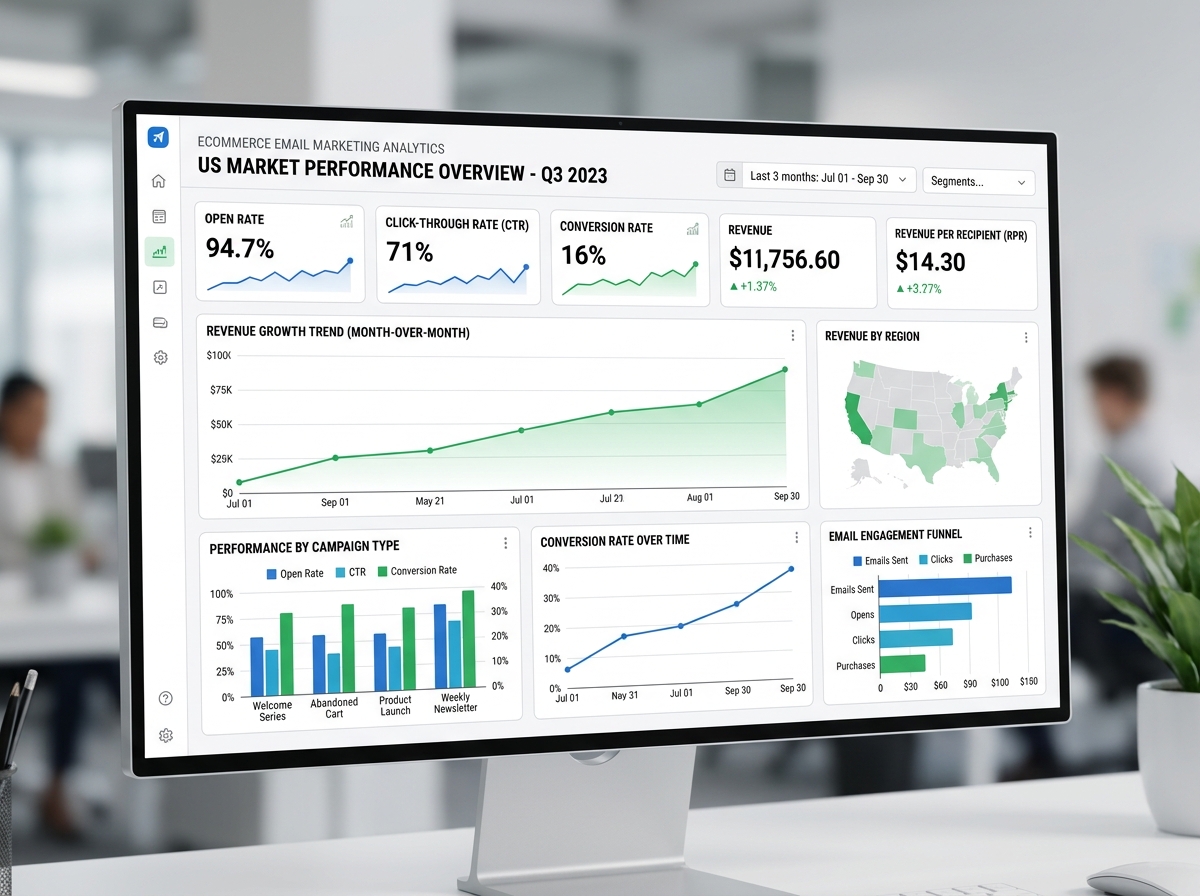
We don’t guess what works; we use A/B testing to find out. Test your subject lines, your hero images, and even your “From” name. Small tweaks can lead to massive lifts in Revenue Per Recipient (RPR). For example, changing a CTA from “Shop Now” to “Get 10% Off My Order” might seem minor, but it can drastically improve click-through rates.
Reviving Dormant Subscribers with Win-Back Campaigns
It costs 5x more to acquire a new customer than it does to retain an existing one. This is why win-back campaigns are critical. If a subscriber has gone dark, we send a series of 2-3 emails designed to “re-ignite” the relationship.
- The “We Miss You” Offer: Provide a high-value discount or an exclusive “insider” update.
- The Preference Update: Ask them if they want to hear from you less often. Sometimes, “once a month” is the sweet spot that prevents an unsubscribe.
- Referral Programs: Leverage the fact that referred customers have a 16% higher lifetime value. Encourage your loyal fans to do the heavy lifting of acquisition for you by offering them rewards for every friend they bring into the fold.
Measuring Success in Your Ecommerce Email Marketing Guide
To know if your system is working, you have to look past vanity metrics like “opens.” While open rates are a good health indicator, they are increasingly unreliable due to privacy changes. Instead, focus on the metrics that impact your bottom line.
When deciding which email automation tool lives up to the hype, look for platforms that provide deep revenue attribution. You should be able to see exactly how many dollars each specific email generated.
- Click-Through Rate (CTR): Are people actually interested in your content? A healthy ecommerce CTR is typically between 2-5%.
- Conversion Rate: The percentage of people who clicked and then made a purchase.
- Revenue Per Email (RPE): Total revenue generated by a campaign divided by the number of emails sent. This is the ultimate “truth” metric.
- Bounce and Unsubscribe Rates: If these are high, your list hygiene or content relevance is failing. Keep your bounce rate below 2%.
Integrating Email with SMS and Social Media
The modern shopper doesn’t live in a single channel. We build multi-channel marketing automation that meets the customer where they are.
For example, if a customer abandons a cart, you might send an email one hour later. If they still haven’t purchased after 24 hours, you could trigger an SMS via an app like TxtCart. SMS has open rates near 98%, making it the perfect “nudge” for high-urgency moments.
At Clayton Johnson SEO, we specialize in building these types of system-level frameworks. We don’t just “do marketing”; we build durable content ecosystems and AI-augmented workflows that operationalize your growth. Our philosophy is simple: Clarity → Structure → Leverage → Compounding Growth.
Common Mistakes to Avoid (and How to Fix Them)
Even the best-laid plans can go sideways. Here are the most frequent pitfalls we see in ecommerce email:
- Over-discounting: If you always offer a 20% discount in your abandoned cart emails, you “train” your customers to wait for the coupon. Try using social proof or a “low stock” alert first.
- Ignoring Deliverability: If your emails land in the spam folder, your ROI is zero. Ensure you have your SPF, DKIM, and DMARC records set up correctly.
- No Clear CTA: Every email should have one primary goal. Don’t distract the user with five different links. Give them one clear path to take.
- Frequency Fatigue: Sending too many emails is the #1 reason people unsubscribe. Monitor your engagement data to find the “Goldilocks zone” for your specific audience.
Mastering ecommerce email marketing isn’t about being “flashy.” It’s about building a structured, data-driven system that treats every subscriber like an individual. By following this ecommerce email marketing guide, you aren’t just sending mail—you’re building a relationship that compounds in value over time.
Ready to turn your email list into a high-performance revenue engine? Let’s build a system that lasts.