How to use competitive research to crush your search rivals

Why Most Businesses Are Losing the Search Game (And How to Fix It)
competitive analysis SEO tools are platforms that help you reverse-engineer what your search rivals are doing — so you can outrank them. Here are the top options at a glance:
| Tool | Best For | Starting Price |
|---|---|---|
| Semrush | All-in-one SEO + competitor research | $139.95/mo |
| Ahrefs | Backlink analysis + keyword research | $99/mo |
| Similarweb | Traffic intelligence + audience data | $125/mo |
| SpyFu | PPC + historical competitor data | $39/mo |
| Ubersuggest | Beginners + budget-conscious teams | $29/mo |
| SE Ranking | Agencies + AI-powered tracking | Custom |
| Screaming Frog | Technical SEO + site crawling | $259/yr |
| Surfer SEO | Content optimization | $89/mo (annual) |
If your competitors consistently rank above you, it means they’ve made smarter optimization choices — not necessarily that they have a better product or service. The good news? Those choices are visible if you know where to look.
SEO competitive intelligence is the process of studying how rivals rank, what content they publish, which keywords they target, and where their backlinks come from. It turns guesswork into a clear action plan.
The difference between SEO competitor research and traditional business research is important. Traditional research asks “how is their business doing?” SEO research asks “what optimization decisions helped them win search visibility?” Those are very different questions — and they require different tools.
I’m Clayton Johnson, an award-winning SEO strategist with nearly two decades of experience building scalable search frameworks, and competitive analysis SEO tools have been central to every high-impact campaign I’ve run. Let’s break down exactly which tools deliver the most leverage — and how to use them to dominate your market.
Why competitive analysis SEO tools are essential for strategy
In search, we aren’t just fighting an algorithm; we are competing against other humans who are also trying to win. If we want to move the needle, we have to stop taking “educated guesses” and start making data-driven decisions. Competitive intelligence allows us to see exactly where our rivals are investing their time and money so we can find a more efficient path to the top.
When we use competitive analysis SEO tools, we gain insights into search intent that we might otherwise miss. We can see which pages are driving the most traffic for our rivals and, more importantly, why. Is it because of their backlink profile? Their content architecture? Or perhaps a specific keyword gap they’ve exploited?
By understanding these strengths and weaknesses, we can refine our own content strategy. Instead of wasting resources on keywords that are too difficult to rank for, we can pivot toward high-ROI opportunities. This is the essence of competitive-analysis-101-keeping-your-friends-close-and-your-competitors-closer.
Major platforms like Ahrefs and Similarweb provide the massive datasets required to make these calls. For instance, Similarweb offers data on over 100 million websites across 190 countries, giving us a “single source of truth” for market shifts. Without this kind of intel, we are essentially flying blind.
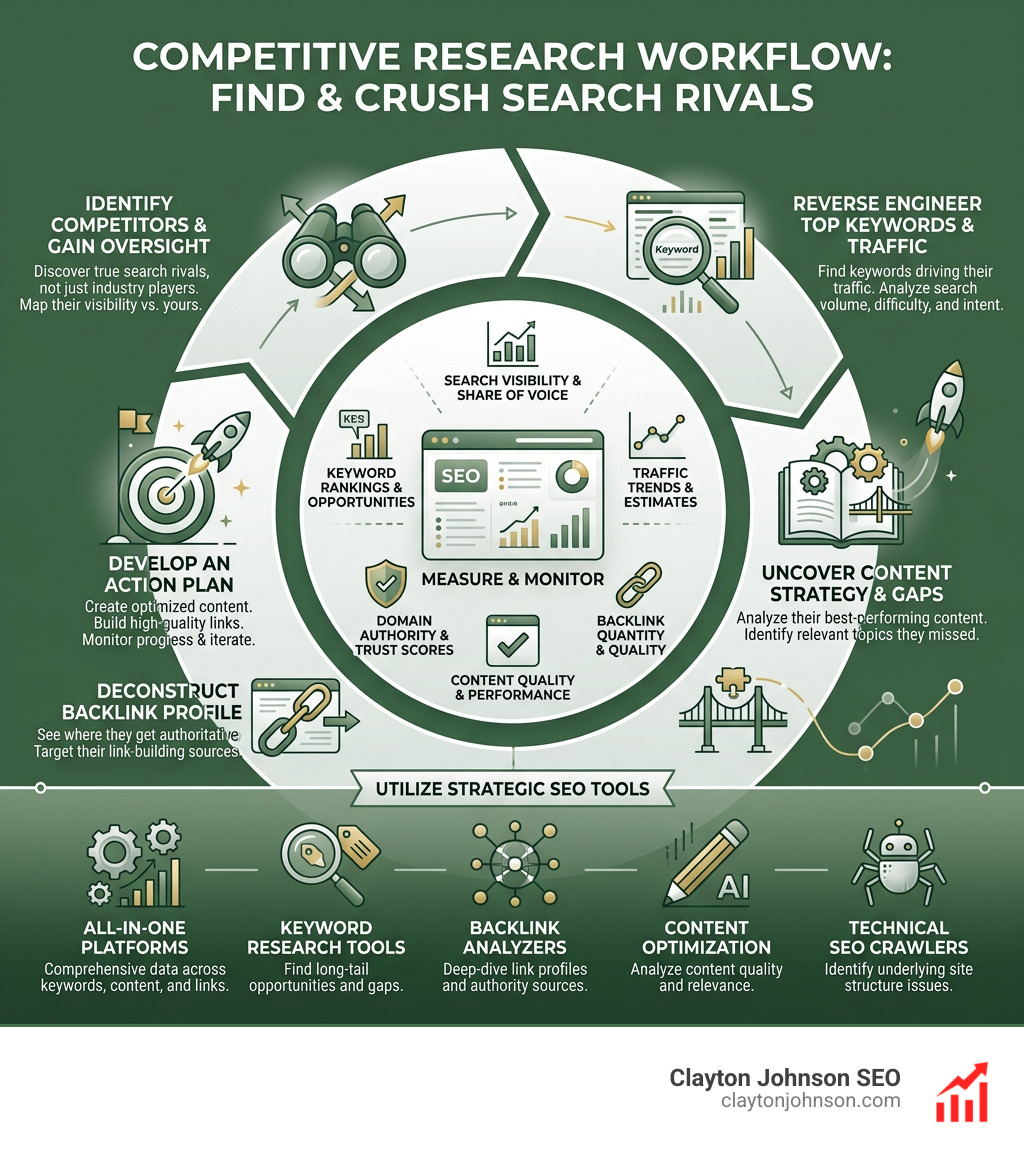
Identifying true search rivals vs. business competitors
One of the biggest mistakes we see businesses make is assuming their SEO competitors are the same as their traditional business rivals. In the digital world, your “true” search rivals are any websites that occupy the real estate you want on the Search Engine Results Pages (SERPs).
- Direct Competitors: These are the folks who sell the same product or service as you. If you sell organic coffee, another organic coffee brand is a direct rival.
- Indirect Competitors: These are sites that don’t sell what you sell but do capture your audience’s attention. For our coffee brand, an indirect rival might be a recipe blog ranking for “how to brew the perfect pour-over” or a health site discussing the “benefits of caffeine.”
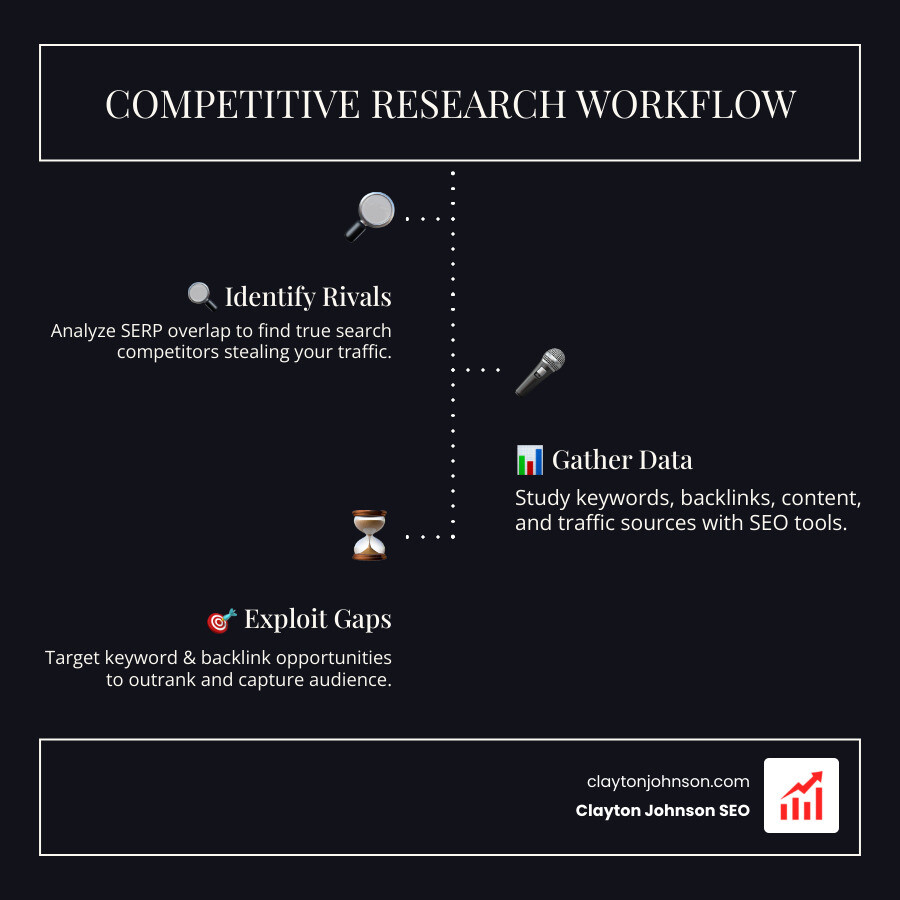
If a recipe blog is taking the top spot for your core keywords, they are your SEO competitor. Search engines prioritize content relevance over business categories. This means we have to analyze SERP overlap to see who is actually winning the clicks. If we don’t, we risk building a strategy for a market that doesn’t exist online. To build a resilient growth system, we must stop-guessing-and-start-positioning-with-competitive-intelligence.
Top competitive analysis SEO tools for market dominance
To dominate a niche, we need a toolset that covers everything from keyword research to technical audits. Below, we’ve analyzed the heavy hitters that help us build durable systems.
Comparing the giants: Semrush, Ahrefs, and Similarweb
When we talk about competitive analysis SEO tools, three names usually dominate the conversation. Each has unique strengths depending on your specific needs.
Semrush Semrush is arguably the most comprehensive all-in-one suite. With a database of over 25 billion keywords and 43 trillion backlinks crawled daily, it’s built for scale. We particularly love their Competitor Website Analysis Tools, which allow us to benchmark traffic and analyze competitor ads in a single dashboard.
Ahrefs If your strategy is heavily focused on link building, Ahrefs is often the go-to choice. While their pricing model has shifted toward a credit-based system, their backlink index is legendary. It helps us understand the “authority gap” between us and our rivals. If they have 500 referring domains and we have 50, we know exactly how much outreach work is ahead of us.
Similarweb Similarweb excels at traffic intelligence. It doesn’t just show you keywords; it shows you the source of the traffic. Are your rivals winning because of search, social, or direct referrals? It also helps us “protect the brand” in the age of AI by tracking visibility in AI-generated search experiences.
For those on a tighter budget, Ubersuggest offers a fantastic entry point with its competitor analysis report, while BuzzSumo is indispensable for content managers who need to see which topics are actually getting shared and engaged with in their niche.
Specialized competitive analysis SEO tools for niche insights
Sometimes, the “big three” aren’t enough. We often turn to specialized tools to get a granular look at competitor moves.
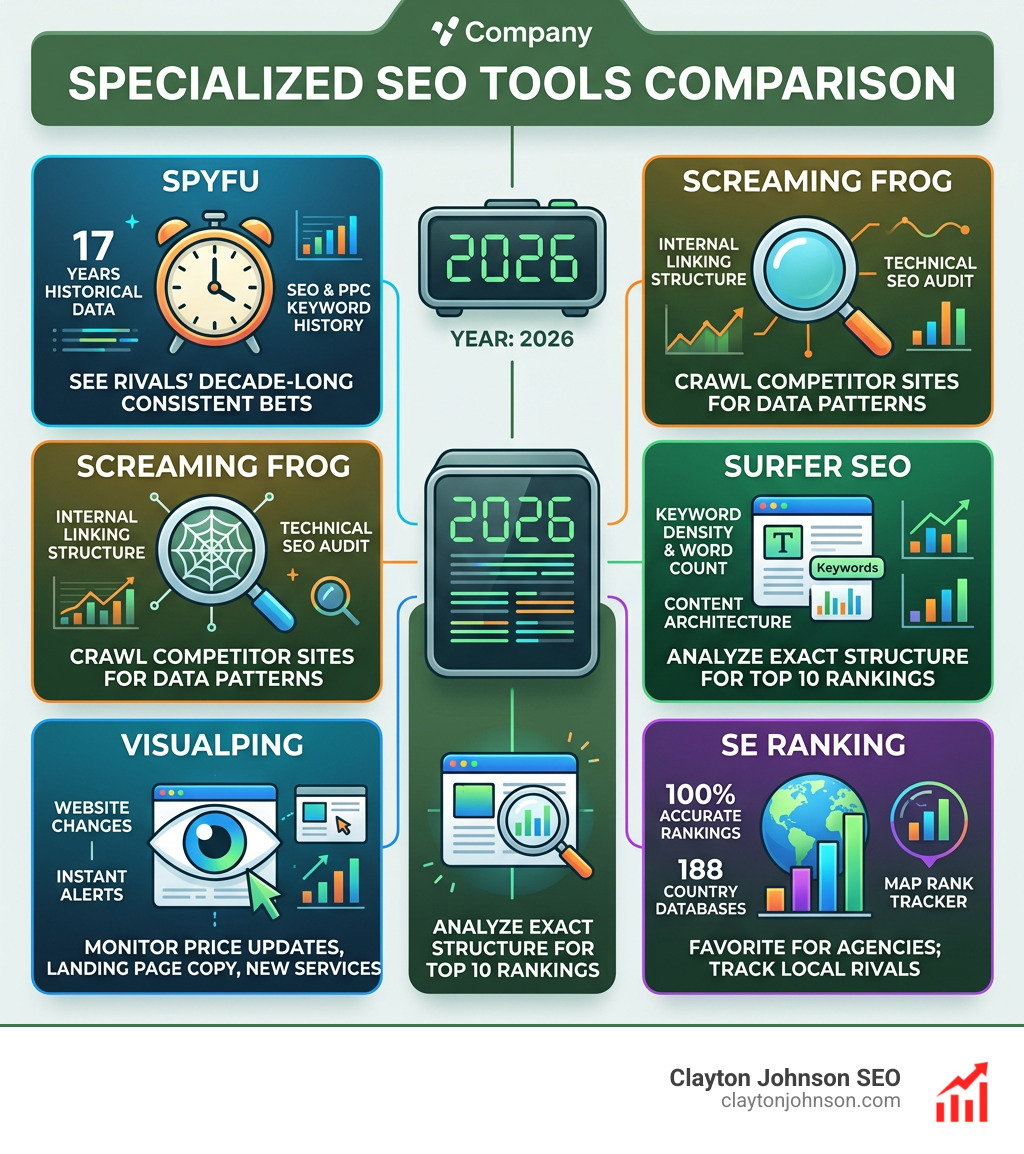
- Visualping: This is an essential tool for monitoring website changes. If a competitor changes their pricing, updates their landing page copy, or adds a new service, Visualping alerts us immediately. It’s perfect for staying agile.
- SpyFu: With over 17 years of historical data, SpyFu is a time machine for SEO and PPC. We use it to see which keywords our rivals have consistently bet on for over a decade.
- Screaming Frog: This is the gold standard for technical SEO. We use it to crawl a competitor’s site to see their internal linking structure, page speed issues, and meta-data patterns.
- Surfer SEO: When it comes to content architecture, Surfer helps us see the exact keyword density and word count our rivals are using to rank in the top 10.
- SE Ranking: This platform is a favorite for agencies. It offers 100% accurate keyword rankings across 188 country databases and features a “Map Rank Tracker” to monitor local SEO rivals.
- Adthena: If your SEO strategy is tied to a heavy PPC spend, Adthena provides deep intelligence into competitors’ paid search campaigns.
Finding and exploiting keyword and backlink gaps
The real “magic” happens when we find the gaps. A gap is an opportunity that your competitor has either missed or hasn’t fully optimized for.
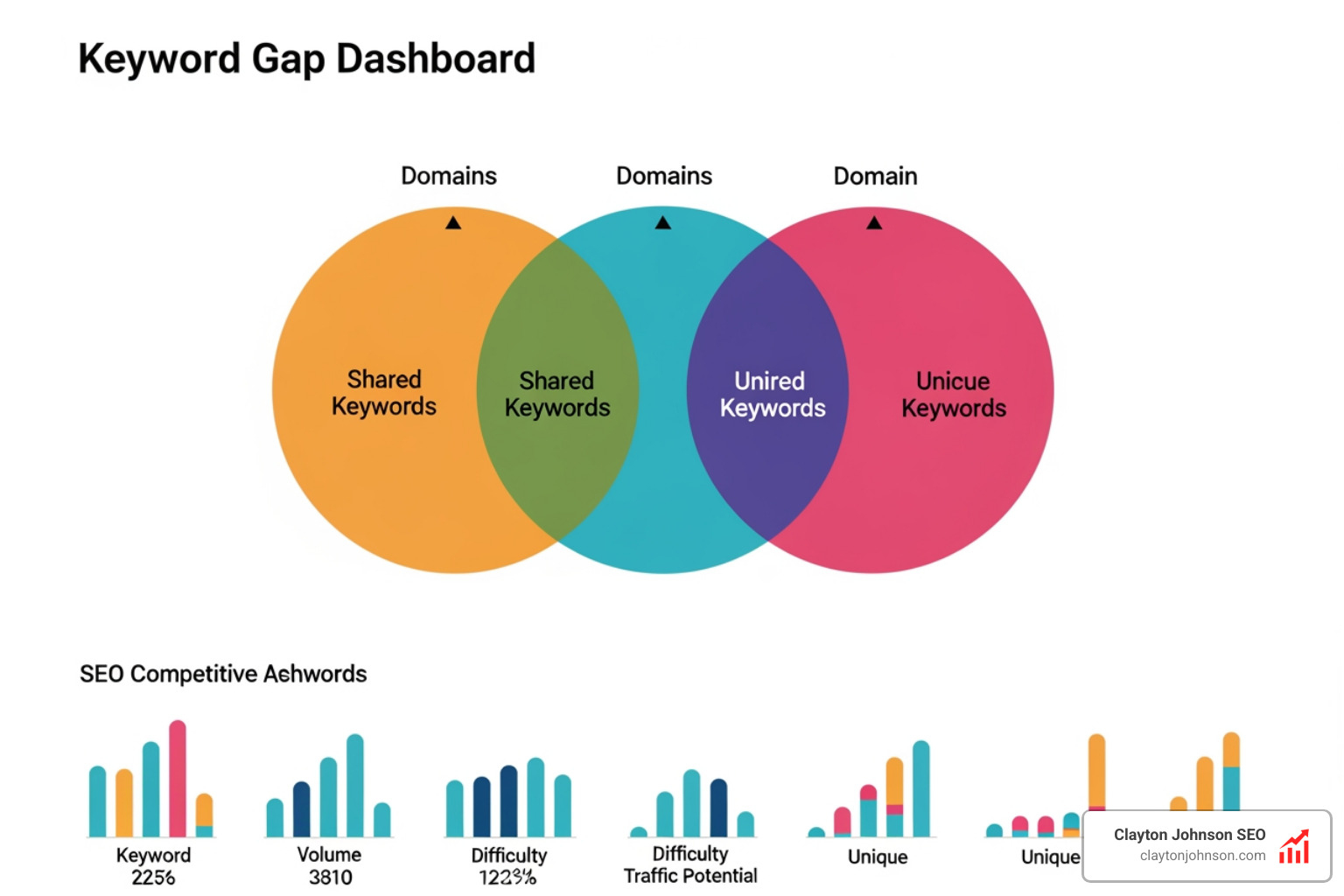
Using the Keyword Gap Analysis tool, we can compare up to five competitors side-by-side. This reveals keywords they rank for that we don’t. Often, we find “niche audiences” that our rivals have overlooked. For example, a competitor might rank for “best running shoes,” but they’ve completely ignored “wide-toe box running shoes for marathons.” That’s our opening.
Similarly, the Backlink Gap tool shows us which high-authority sites are linking to multiple competitors but not to us. If a major industry publication links to three of your rivals, they are highly likely to link to you too—if your content is better. This is how we stop-letting-your-rivals-win-with-a-competitive-content-gap-finder.
Implementing a durable strategy after your analysis
Data is useless without a framework to implement it. At Clayton Johnson SEO, we focus on turning these insights into “compounding growth engines.” We don’t just want a quick traffic spike; we want a system that gets stronger over time.
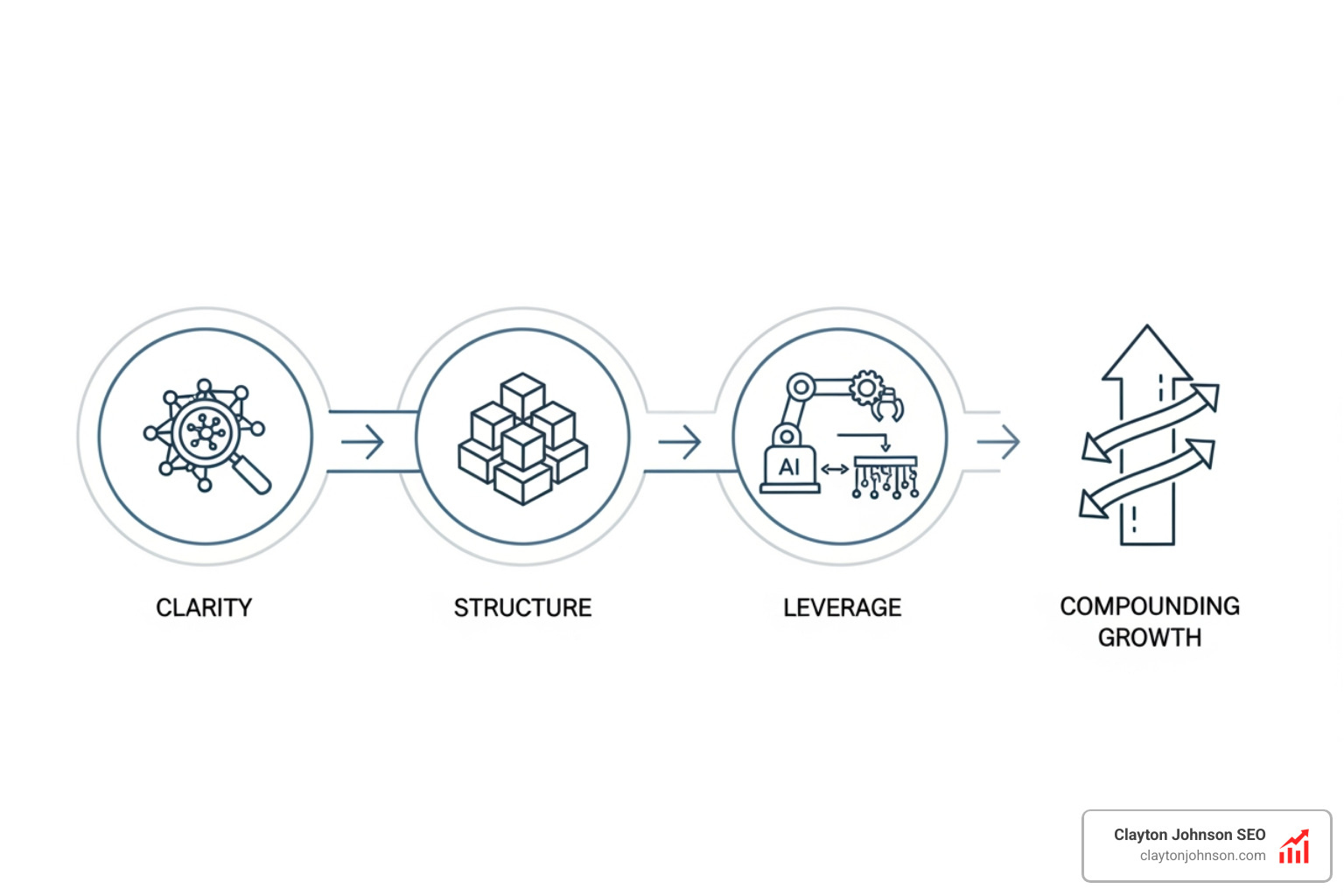
Our philosophy is simple: Clarity → Structure → Leverage → Compounding Growth.
- Clarity: Use tools to identify exactly who your rivals are and what they are doing.
- Structure: Build a content architecture that fills the keyword gaps you discovered.
- Leverage: Use AI-augmented workflows to produce high-quality content faster than your competitors.
- Compounding Growth: Monitor your progress and adjust your strategy based on real-world ROI, not vanity metrics.
This structured approach is what separates the winners from the losers in the SERPs. You can explore more of our strategic-frameworks/competitive-analysis to see how we apply this to different business models.
From data to compounding growth
Once you’ve completed your analysis, the next step is execution. We use the Keyword Strategy Builder to turn our findings into a roadmap. This tool helps us identify pillar pages that are missing from our site and plan the sub-pages needed to build topical authority.
To ensure our strategy is working, we use the Position Tracking tool. This gives us daily updates on how we are performing against our rivals for both organic and paid keywords. If a competitor suddenly jumps in the rankings, we know about it within minutes and can investigate their move.
Building durable systems means focusing on technical SEO and content architecture in tandem. We don’t just chase tactics; we build ecosystems. This is why we developed the-best-b2b-seo-audit-framework. It’s about aligning your strategic roadmap with tool-backed decision processes to ensure every action you take has a measurable business impact.
In a search landscape that is constantly shifting due to AI and algorithm updates, competitive intelligence is your most valuable asset. By using the right competitive analysis SEO tools and a structured strategy, you can stop reacting to your rivals and start outmaneuvering them.
Ready to build your own growth engine? Start by mapping your landscape, finding your gaps, and leveraging the data to win.