Mastering AI Driven SEO Tactics Without Breaking a Sweat

Why AI Driven SEO Tactics Are Now a Business Necessity
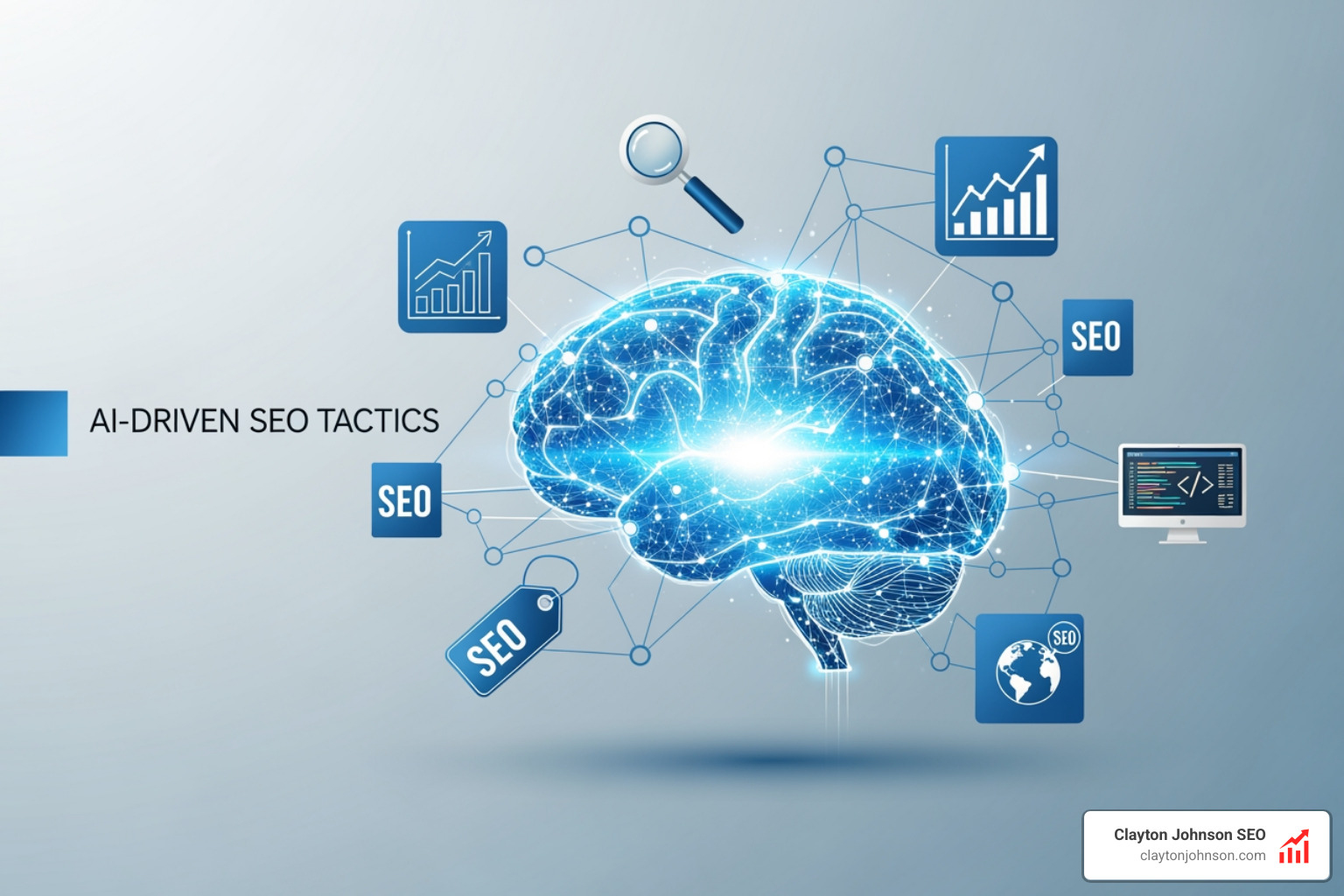
AI driven SEO tactics are the strategies marketers and founders use to earn visibility in both traditional search rankings and AI-generated answers from platforms like Google AI Overviews, ChatGPT, and Perplexity.
Quick answer — the core AI driven SEO tactics that work:
- Structure content for AI extraction — use clear headings, direct answer blocks, and FAQ sections
- Implement schema markup — help AI crawlers understand your entities and content relationships
- Target long-tail, conversational queries — 92% of all search queries are long-tail
- Build topical authority clusters — depth signals trust to both Google and AI models
- Optimize for citations, not just clicks — visibility in AI answers is now as important as ranking
- Configure llms.txt — guide AI crawlers to your most valuable content
- Monitor brand mentions in AI answers — track where and how AI systems reference you
Search has fundamentally changed. Over 60% of online queries are now answered by AI-powered engines. The top AI chatbots alone received more than 55 billion visits in a single year — up more than 80% year over year.
That means your audience isn’t just Googling anymore.
They’re asking ChatGPT. They’re using Perplexity. They’re getting AI-generated answers before they ever see a single blue link.
If your brand isn’t visible in those answers, you’re invisible where decisions are being made.
The old SEO playbook — stuff keywords, earn backlinks, wait for rankings — still matters. But it’s no longer enough on its own.
Modern SEO requires a layered strategy:
- Rank in traditional organic results
- Appear in Google AI Overviews
- Get cited in generative AI engines like ChatGPT and Gemini
- Build entity authority that AI systems recognize and trust
The businesses winning in search right now aren’t chasing tactics. They’re building systems — structured content architectures, technical foundations, and AI-readable signals that compound over time.
That’s exactly what this guide covers.
I’m Clayton Johnson, an SEO strategist specializing in scalable content systems, technical SEO architecture, and AI-augmented marketing workflows — the exact intersection where AI driven SEO tactics live. I’ve helped founders and marketing leaders turn fragmented SEO efforts into structured growth engines that perform across both traditional and generative search environments.
Ai driven seo tactics word list:
- AI SEO strategy framework
- AI driven SEO audits
- AI powered keyword research
The Evolution of Search: Why AI Driven SEO Tactics Matter
The history of search is a transition from simple word matching to deep contextual understanding. In the early days, SEO was about how many times you could fit a keyword onto a page. Today, Google and other engines use sophisticated AI systems like RankBrain to interpret the intent behind a query, even if they’ve never seen that specific phrase before.
Following RankBrain, we saw the introduction of BERT and MUM. BERT helped Google understand the nuances of language by looking at the context of words in a sentence, while MUM (Multitask Unified Model) is 1,000 times more powerful, capable of understanding information across 75 languages and multiple formats simultaneously.
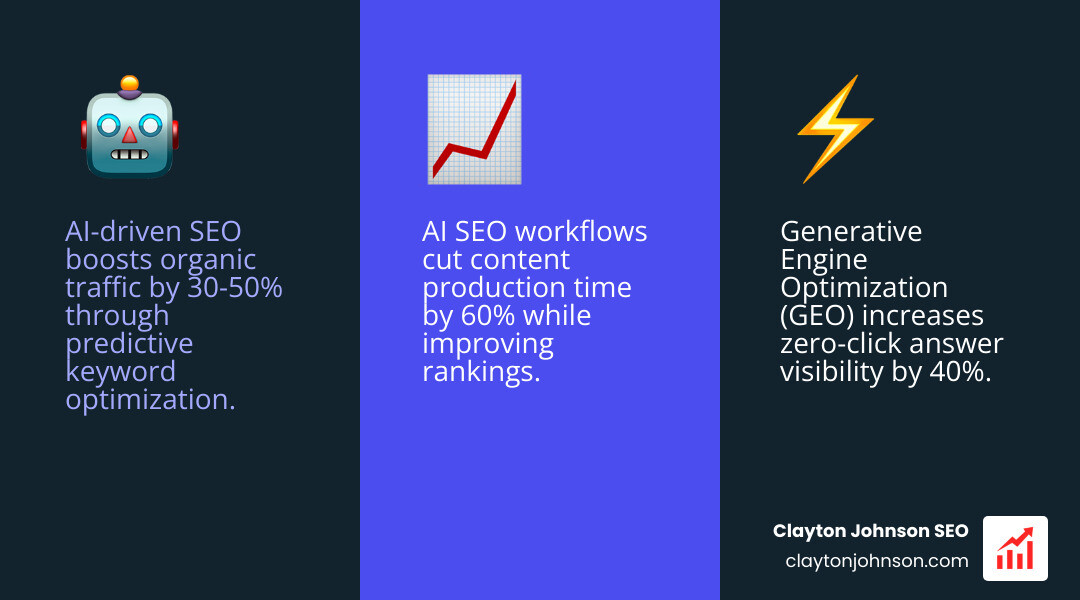
The most significant shift for businesses in Minneapolis, Minnesota, and beyond is Google’s Search Generative Experience (SGE). SGE doesn’t just provide a list of links; it synthesizes an answer directly on the results page. This “zero-click” environment means that if your content isn’t structured to be extracted by these models, you lose the chance to be seen at all.
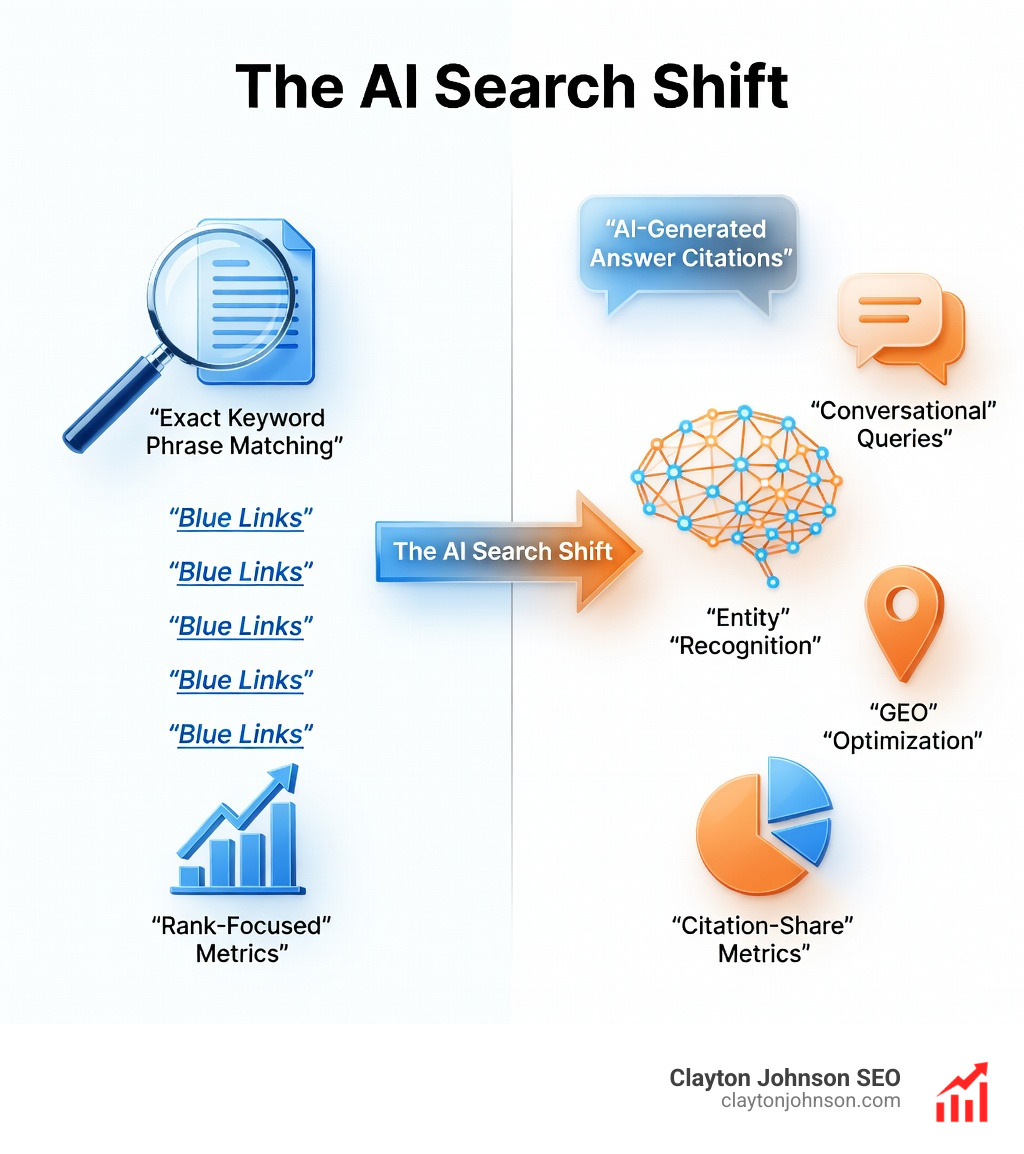
Traditional SEO focuses on ranking. AI driven SEO tactics focus on relevance, extraction, and citation.
Mastering Generative Engine Optimization (GEO) and Answer Engines
As search evolves into “answering,” a new discipline has emerged: Generative Engine Optimization (GEO). While traditional SEO targets crawlers, GEO targets Large Language Models (LLMs) like those powering ChatGPT, Gemini, and Perplexity.
The goal of Generative Engine Optimization is to ensure your brand is the one the AI chooses to cite. This is a shift from click-based visibility to citation-based visibility. If an AI engine provides a detailed answer to a user’s question and credits your website as the source, you earn massive authority and trust—even if the user never clicks through.
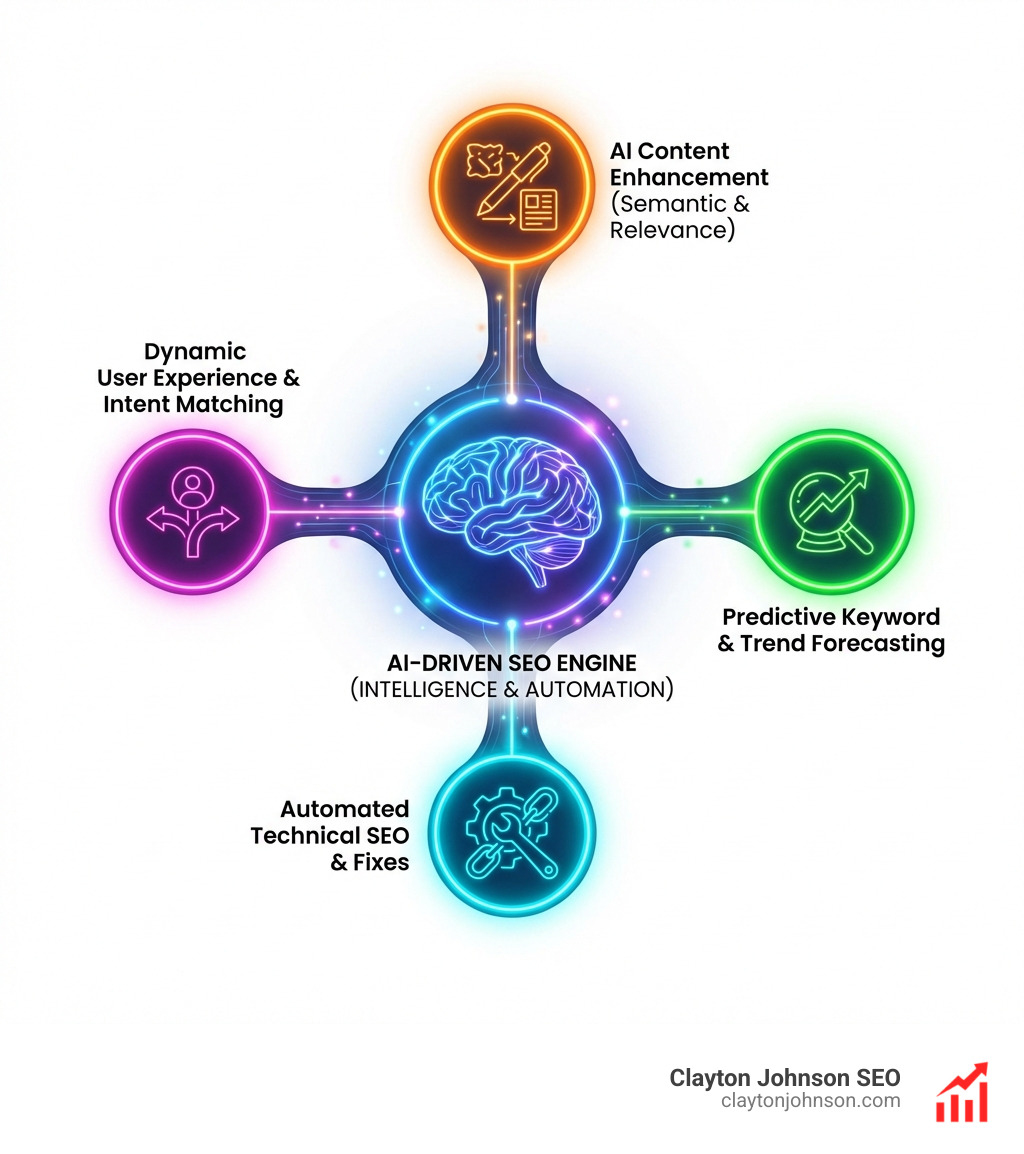
For founders looking for more specialized help, exploring AI SEO services can provide the structured architecture needed to win in this new landscape.
Optimizing for AI Overviews and SGE
To show up in Google’s AI Overviews, your content must be “extractable.” AI models look for clear entities and “information gain”—providing new, unique value that isn’t just a carbon copy of every other article on the web.
We focus on these core pillars:
- Entity Recognition: Clearly define your brand, products, and experts.
- Direct Answers: Place 40-60 word summaries under your H2 headers to give the AI a “ready-to-use” snippet.
- Factual Precision: AI models prioritize accuracy. Use specific statistics and cite reputable sources to increase your “citation confidence.”
Scaling Content with AI Driven SEO Tactics
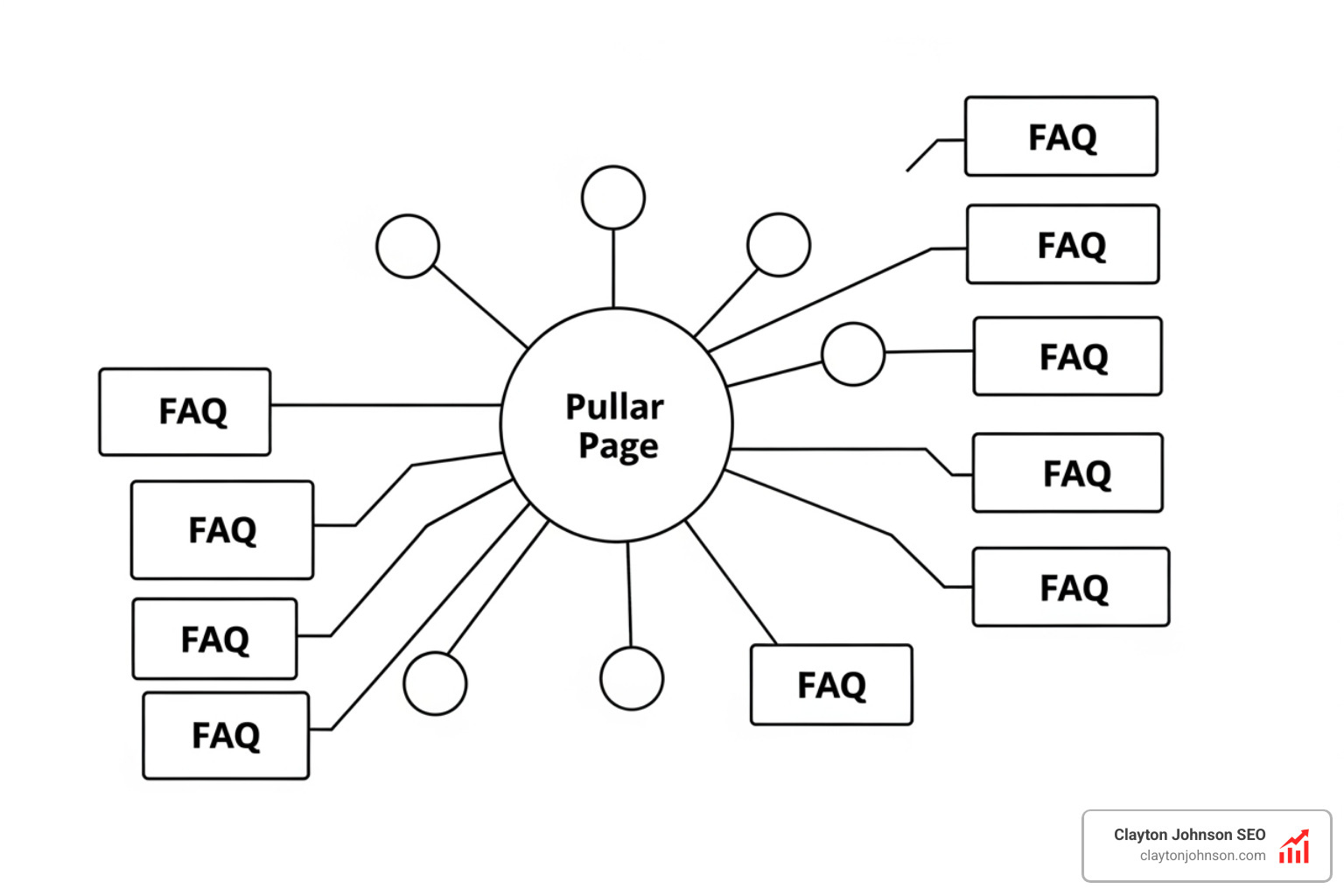
Scaling doesn’t mean publishing 100 low-quality AI drafts. It means using AI driven SEO tactics to build comprehensive topic clusters. By using AI to identify semantic gaps in your content, you can ensure you cover every aspect of a subject.
Research shows that moving from narrow, keyword-focused pages to in-depth topic clusters can result in ranking for 68% more long-tail keywords. This depth tells search engines—and AI models—that you are a true authority on the topic.
Practical AI Driven SEO Tactics for Modern Content
Content architecture is the skeleton that supports your SEO success. In an AI-first world, your content needs to mirror how people actually talk.
Long-Tail Keywords and Natural Language
Long-tail keywords make up 92% of all search queries. People are no longer typing “best shoes”; they are asking, “What are the best waterproof running shoes for hiking in Minneapolis?”
To capture this traffic, we use natural language that anticipates these conversational queries. Use tools like AnswerThePublic or “People Also Ask” blocks to find the exact questions your customers are asking.
AI-Friendly Content Structures
- TL;DR Summaries: A quick bulleted list at the top of long articles.
- Jump Links: Help both humans and bots navigate your content instantly.
- Definition Blocks: Clear, concise definitions of industry terms.
- Comparison Tables: AI models love structured data for comparing products or services.
Implementing AI Driven SEO Tactics for Local Discovery
For businesses in Minneapolis, Minnesota, local SEO is being transformed by AI. Users are increasingly using Google Lens to search visually or asking AI assistants for local recommendations.
Hyperlocal Personalization:
AI can help you scale content that references local landmarks, neighborhood-specific news, and cultural elements. This makes your business more relevant to local search intent.
Review Management:
88% of consumers trust a business that responds to all reviews. AI tools can analyze the sentiment of your reviews and help draft personalized responses, ensuring you maintain a high trust signal for both users and search algorithms.
Personalization and Predictive SEO
AI allows us to move from reactive SEO to predictive SEO. By analyzing user behavior and segmentation in Google Analytics (GA4), we can anticipate what content a user will need next.
If a user spends five minutes on a “How to Start a Business” guide, predictive AI can suggest the “Best Legal Structures for Startups” article before they even search for it. This keeps users on your site longer, sending strong engagement signals to search engines.
Technical Foundations and AI Agent SEO Workflows
Technical SEO is the “infrastructure” of your growth. Without a fast, crawlable site, even the best AI driven SEO tactics will fail.
llms.txt and Schema Markup
llms.txt is an emerging standard—similar to robots.txt—that provides a roadmap specifically for AI crawlers. It tells them which parts of your site are most important for training and citation.
Additionally, implementing robust schema markup (JSON-LD) is non-negotiable. Schema acts as a translator, telling search engines exactly what a piece of data represents (e.g., a price, a review, an author, or a local address).
Core Web Vitals
Google’s Core Web Vitals focus on three things: loading speed (LCP), interactivity (FID/INP), and visual stability (CLS). AI can help identify the code bottlenecks slowing you down, but the execution requires a structured technical approach.
Automating SEO with Autonomous Agents
The future of SEO isn’t just tools; it’s agents. AI agents can be configured to perform continuous optimization workflows:
- Detection: An agent notices a drop in impressions for a key page.
- Diagnosis: It crawls the page and compares it to new competitors.
- Action: It generates a content refresh brief and alerts the team.
- Validation: It checks the updated page for technical errors and schema validity.
This turns SEO from a monthly project into an always-on operating system.
Measuring Success in an AI-First Landscape
As clicks become harder to track in a zero-click world, we have to redefine what success looks like.
| Metric | Traditional SEO Focus | AI-Driven SEO Focus |
|---|---|---|
| Primary Goal | Rank #1 for keywords | Be the cited source in AI answers |
| Traffic | Organic Sessions / Clicks | Brand Mentions / Citation Share |
| Visibility | SERP Impressions | AI Overview Appearances |
| Engagement | Bounce Rate | Information Gain / Dwell Time |
| Conversion | Direct Click Conversions | Assisted Conversions / Brand Search |
Tracking Citations and Brand Mentions
You need to know how often AI models are mentioning your brand. We look at “mention share”—the percentage of time an AI engine includes your brand in its response for a specific category.
Tools like Google Search Console are still vital for tracking impressions, but we also use sentiment analysis to ensure that when AI mentions you, it’s doing so in a positive, authoritative context.
Unlinked mentions are also a massive signal. Even if a site doesn’t link to you, if an AI sees your brand name associated with a specific topic across the web, it builds your “entity authority.”
Frequently Asked Questions about AI SEO
What is the difference between traditional SEO and AI SEO?
Traditional SEO focuses on optimizing for search engine crawlers to rank in a list of links. AI SEO (and GEO) focuses on optimizing for Large Language Models to be cited within synthesized, conversational answers.
How do I make my content more AI-ready?
Focus on clarity and structure. Use H2 and H3 tags as questions, provide direct answers immediately following those headers, and use schema markup to define your data clearly.
Will AI replace traditional SEO strategies?
No. AI is an evolution, not a replacement. You still need technical health, high-quality content, and authoritative backlinks. However, you must now layer AI driven SEO tactics on top of those fundamentals to remain visible.
Conclusion
The search landscape is shifting under our feet, but the core mission remains the same: helping people find the best possible answer to their questions.
At Clayton Johnson SEO, we believe that most companies don’t lack tactics—they lack structured growth architecture. By combining taxonomy-driven SEO with AI-augmented workflows, you can build an authority-building ecosystem that doesn’t just survive algorithm updates but thrives because of them.
Don’t let your brand become invisible. Master your AI SEO strategy today and start building the infrastructure for compounding growth.