Put AI Agents to Work for Your Marketing Team


Why AI Tools for Marketers Are Now a Competitive Necessity
AI tools for marketers are software platforms that use artificial intelligence to automate, scale, and improve marketing tasks — from content creation and SEO to social media, email, and campaign analytics.
The top AI tools for marketers right now:
| Tool | Best For |
|---|---|
| Jasper | Brand-consistent content at scale |
| Claude | Conversational planning and long-form writing |
| Gumloop | No-code AI workflow automation |
| Surfer SEO | Content optimization and SEO |
| Canva | AI-powered visual design |
| ChatGPT | General copywriting and ideation |
| Kling AI | AI video generation |
| Zapier | Connecting and automating marketing tools |
| Mailchimp | AI-driven email marketing |
| Albert.ai | Autonomous digital advertising |
Most marketing teams are not struggling to find AI tools. The real challenge is knowing which ones are worth your time — and how to build them into a workflow that actually moves the needle.
The difference between companies winning with AI and those just experimenting is execution. Brands like Adidas are generating thousands of product descriptions overnight. Teams are cutting tens of thousands of hours of manual work. The results are real, and the gap between early adopters and everyone else is widening fast.
I’m Clayton Johnson, an SEO strategist and demand generation expert who has spent nearly two decades helping companies grow through search, content, and now AI-powered marketing systems — and evaluating AI tools for marketers is something I do hands-on, not just in theory. In the sections below, I’ll break down the tools that are actually delivering results, so you can cut through the noise and start building a smarter marketing operation.
Essential AI tools for marketers to scale growth
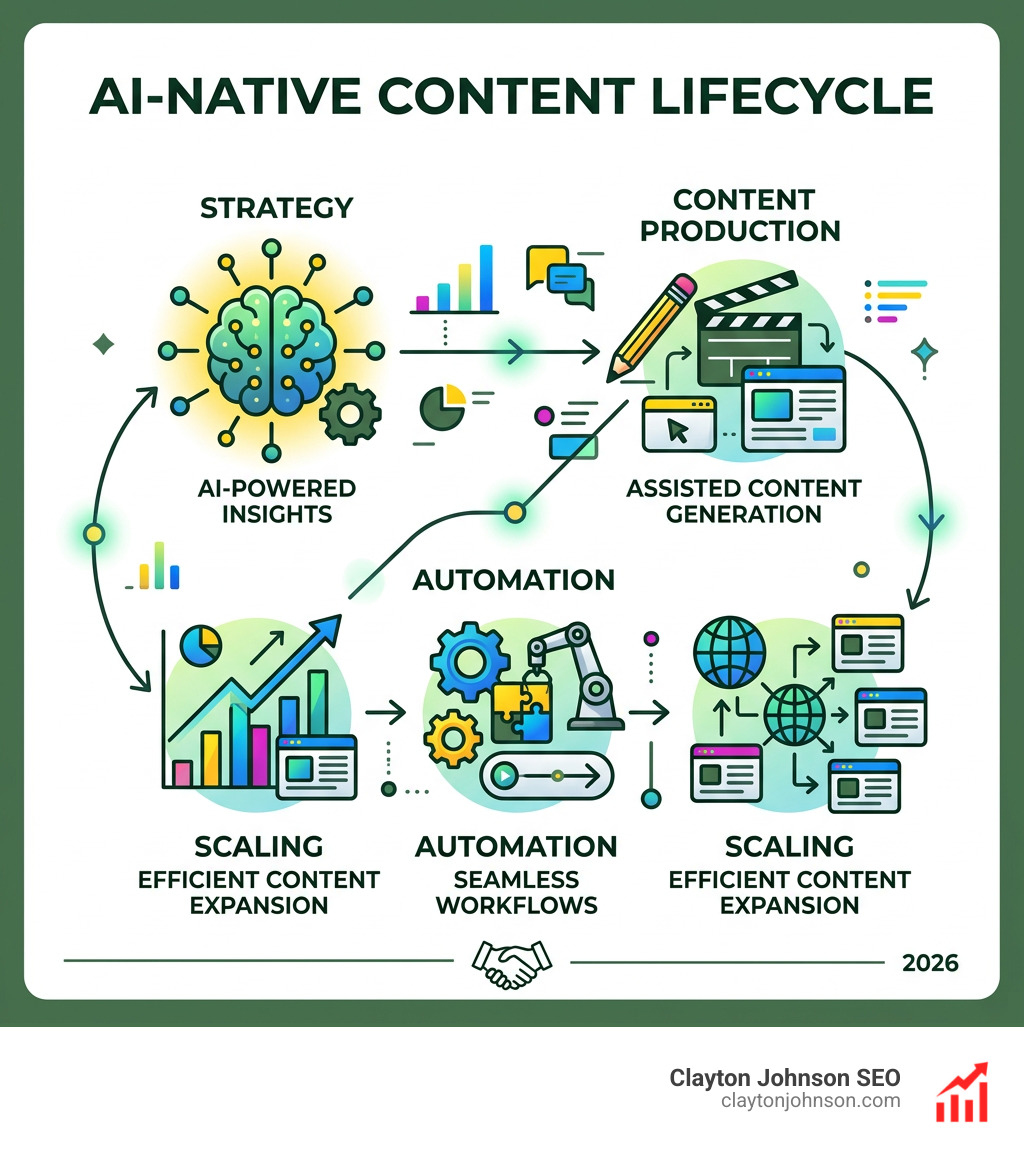
When we look at the current landscape, the most successful marketing teams aren’t just using AI to “write faster.” They are using it to create a “context layer” that understands their brand’s DNA. This is where a tool like Jasper excels. Unlike a general-purpose chatbot, Jasper is purpose-built for enterprise marketing. Its proprietary Jasper IQ acts as a context hub, absorbing your style guides, product facts, and audience insights to ensure every output sounds like your brand, not a generic robot.
Other heavy hitters in this space include Typeface Arc, which has been recognized as a top invention for its ability to close the loop on the content lifecycle. It functions as an AI-powered content strategist, helping teams surface existing assets through semantic search and personalize them for multi-channel campaigns instantly.
For those of us who love automation but hate coding, Gumloop is gaining massive traction. Think of it as the “Zapier of AI”—it allows you to build complex workflows that scrape websites, process data with LLMs, and output finished marketing materials without ever touching a line of code. Meanwhile, Claude by Anthropic remains a favorite for its superior reasoning and conversational planning capabilities, often outperforming other models in “creative thinking” and long-form document analysis.
If you are trying to figure out which platform fits your specific needs, check out our deep dive into AI marketing software that actually sells.
Comparison: Content Creation Powerhouses
| Feature | Jasper | ChatGPT (GPT-4o) | Claude (3.5 Sonnet) |
|---|---|---|---|
| Brand Voice | Built-in Brand IQ & Style Guides | Requires extensive prompting | Projects feature for context |
| Workflow | Campaign-centric (Canvas, Studio) | Chat-based | Chat-based / Artifacts |
| SEO Integration | Direct integration with Surfer SEO | Manual | Manual |
| Best Use Case | Scaling enterprise content teams | Quick ideation and snippets | Complex reasoning & long-form |
Top AI tools for marketers in content and SEO
SEO is no longer just about keywords; it’s about intent modeling and authority. To win here, we need tools that can handle massive data sets. Surfer SEO remains a gold standard, analyzing top-ranking pages to give you a real-time “SEO score” and content structure. When paired with Semrush, which has increasingly embedded AI features for keyword research and competitor tracking, you have a formidable tech stack.
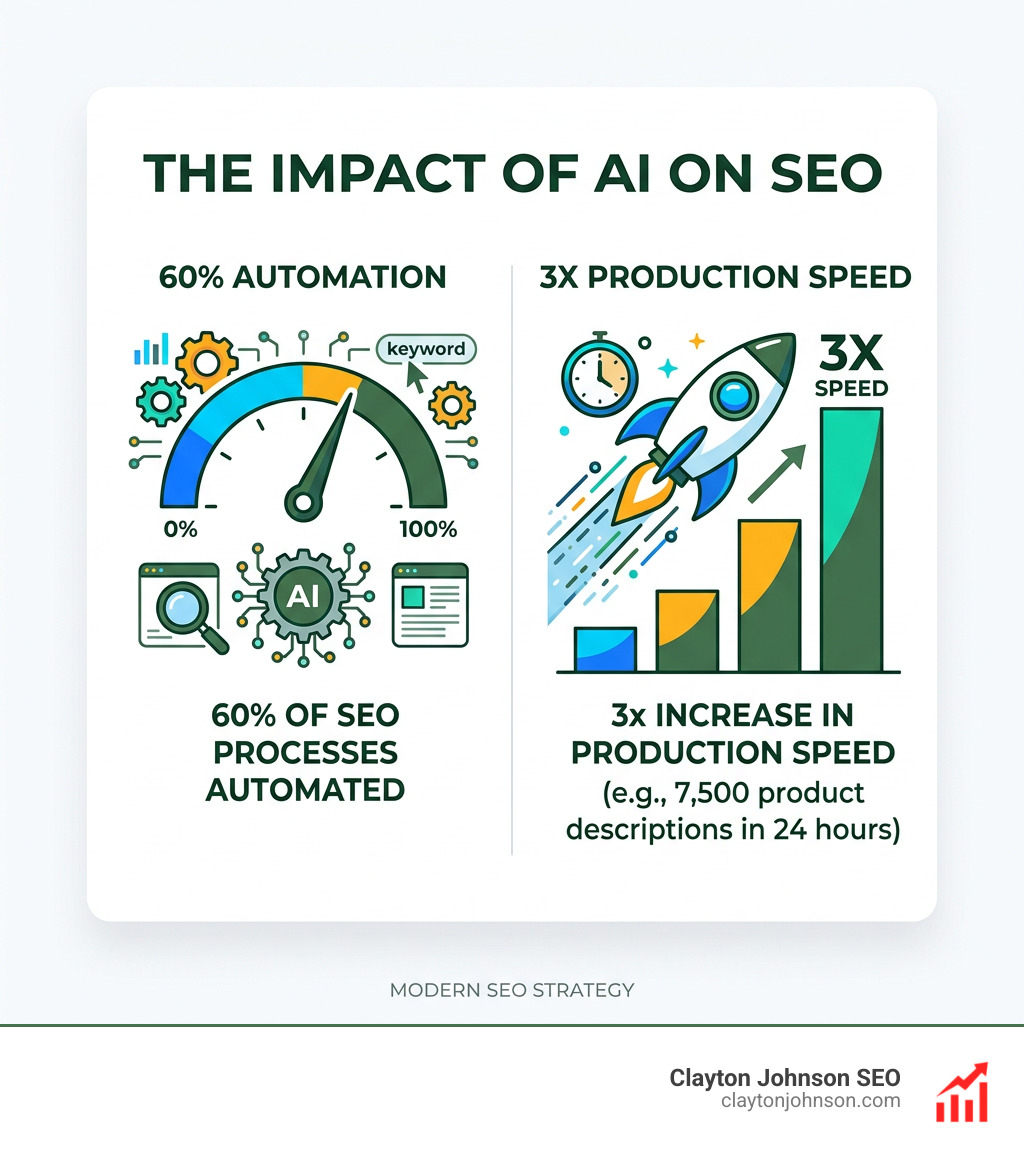
We’ve seen real-world impact from these integrations. For instance, Adidas has successfully automated 60% of its SEO processes using Jasper. By leveraging these systems, they generated 7,500 product descriptions in just 24 hours—achieving a 3x increase in production speed while maintaining high quality. This isn’t just a “nice to have”; it’s a fundamental shift in how global brands operate.
For more specialized SEO workflows, ContentShake AI and Brandwell (formerly Content at Scale) are excellent for generating long-form blog posts that are designed to bypass AI detectors and rank quickly. You can explore more options in our ultimate AI-driven SEO tools guide.
Specialized AI tools for marketers in social and video
Visual storytelling is often the biggest bottleneck for marketing teams. Canva has revolutionized this with its “Magic Studio,” offering AI-powered design tools that allow even non-designers to create branded visuals in seconds. One company, Conversational, reported a staggering 1,100% increase in social media engagement after adopting Canva’s AI templates.
In video, Kling AI and Crayo are making waves by allowing marketers to generate high-quality short-form video content from text prompts. This is a game-changer for platforms like TikTok and Instagram Reels. To further polish these visuals, PhotoRoom is an essential tool for removing backgrounds and creating professional product shots with zero manual effort.
If you’re looking to refine your copy for these social platforms, Stella is a specialized tool that analyzes your past posts and competitors to draft content that sticks to your unique tone. You can find more tips on this in our guide to leveling up your writing with the best AI content tools.
Automating workflows with agents and intelligence
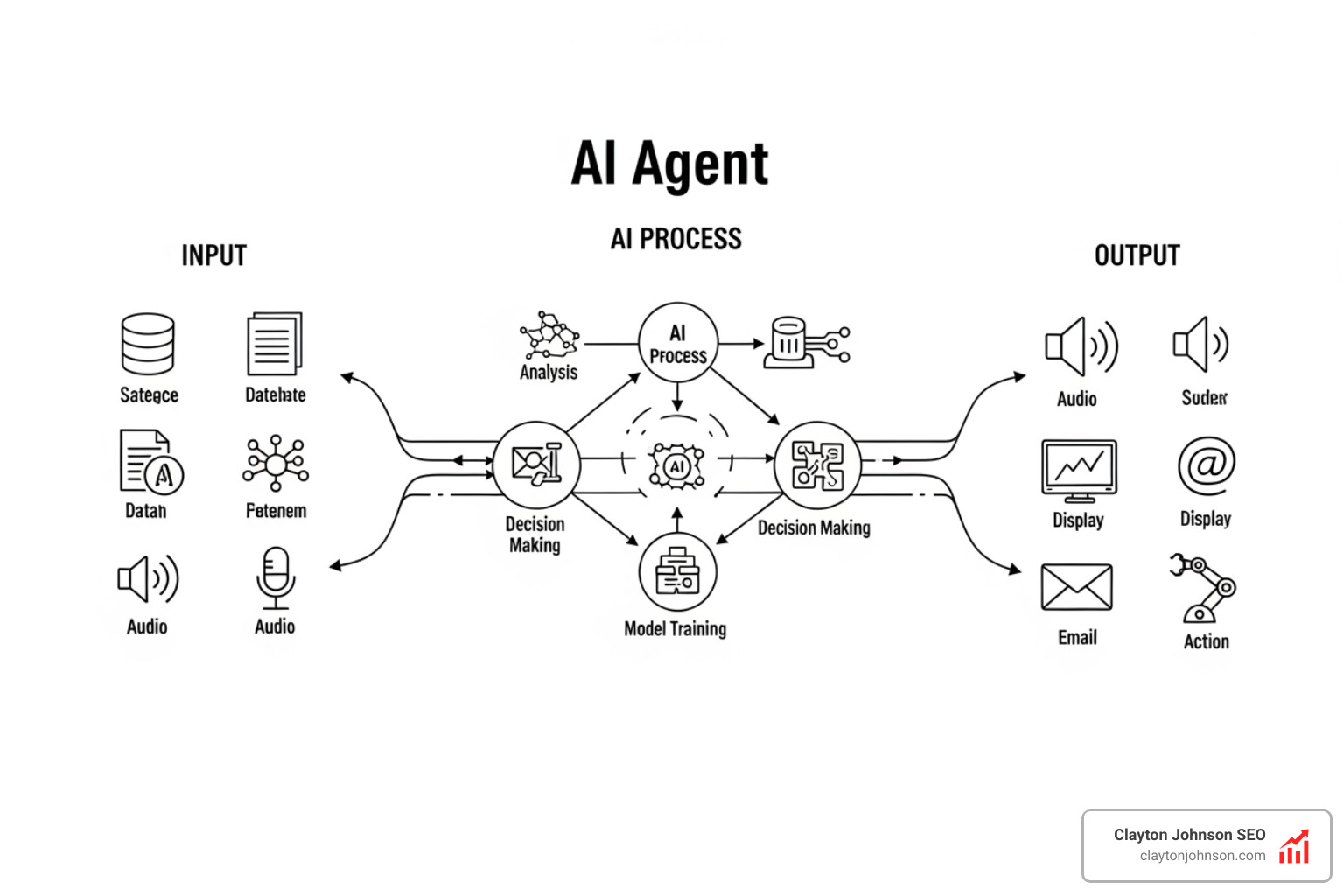
The real magic happens when you stop using AI as a “search engine” and start using it as an “agent.” Zapier is the veteran here, featuring over 3,000 integrations that allow you to build automated marketing machines. For example, you can set up a workflow where a new lead in your CRM triggers an AI-written personalized email, which is then logged back into your system.
Hyper is another emerging platform where users can deploy AI agents for specific tasks, like monitoring SEO rankings or tracking brand mentions across AI search engines, in under five minutes. Within the Jasper ecosystem, “Agents” can now handle end-to-end tasks like research and campaign personalization, saving enterprise teams like Cushman & Wakefield over 10,000 hours annually.
These systems rely on the MCP (Model Context Protocol), which allows different AI tools to “talk” to each other and share data securely. Building these connections is the key to creating a truly automated AI content system.
Implementing AI systems for long-term success
Adopting AI tools for marketers isn’t just about the software; it’s about the systems and governance behind them. As we integrate these tools, security and data privacy must be at the forefront. Enterprise-grade tools like Cohere and Writer prioritize compliance, ensuring that your proprietary data isn’t used to train public models.
When implementing these systems, we always recommend:
- Human Oversight: AI should be the “pilot,” but a human should always be the “navigator.”
- Data Privacy: Ensure tools are GDPR and CCPA compliant.
- Brand Guardrails: Use tools like Jasper’s Brand IQ to prevent the AI from hallucinating or going off-brand.
For a deeper look at why these platforms are essential for your future, read our piece on why AI marketing intelligence platforms are the future of growth.
Free AI solutions for small businesses and SMBs
You don’t need a massive enterprise budget to start winning with AI. Many of the best AI tools for marketers offer generous free tiers. Google Labs is a treasure trove of experimental tools like Pomelli, which can “slurp up” your website’s design to help you create on-brand ads for free.
Mailchimp has also introduced powerful AI features for small businesses. One apparel company, TeesAndTankYou, used Mailchimp’s AI-driven order notifications to achieve a 61.6% open rate and 28.1% click rate, generating an average of $31.95 in extra revenue per order. Other essential free tools include Grammarly for editing and Hootsuite for basic social media scheduling.
If you find yourself overwhelmed by the options, check out our list of AI productivity tools for the modern procrastinator.
Strategic planning and competitive analysis
AI is surprisingly good at helping us think. Perplexity is a “proactive search engine” that combines LLM reasoning with real-time web search, making it perfect for competitive research and market analysis. Instead of just giving you a list of links, it synthesizes the data and provides citations.
For paid media, Albert.ai uses autonomous AI to manage and optimize digital advertising across platforms like Facebook and Google. Harley Davidson famously used Albert to see a 2,930% increase in leads per month. While AI is great for speed, it still requires human intervention for high-level SWOT analysis and strategic prioritization.
To learn how to outmaneuver your rivals, see our guide on AI competitive analysis tools that make you look like a genius.
Building scalable marketing systems with Clayton Johnson
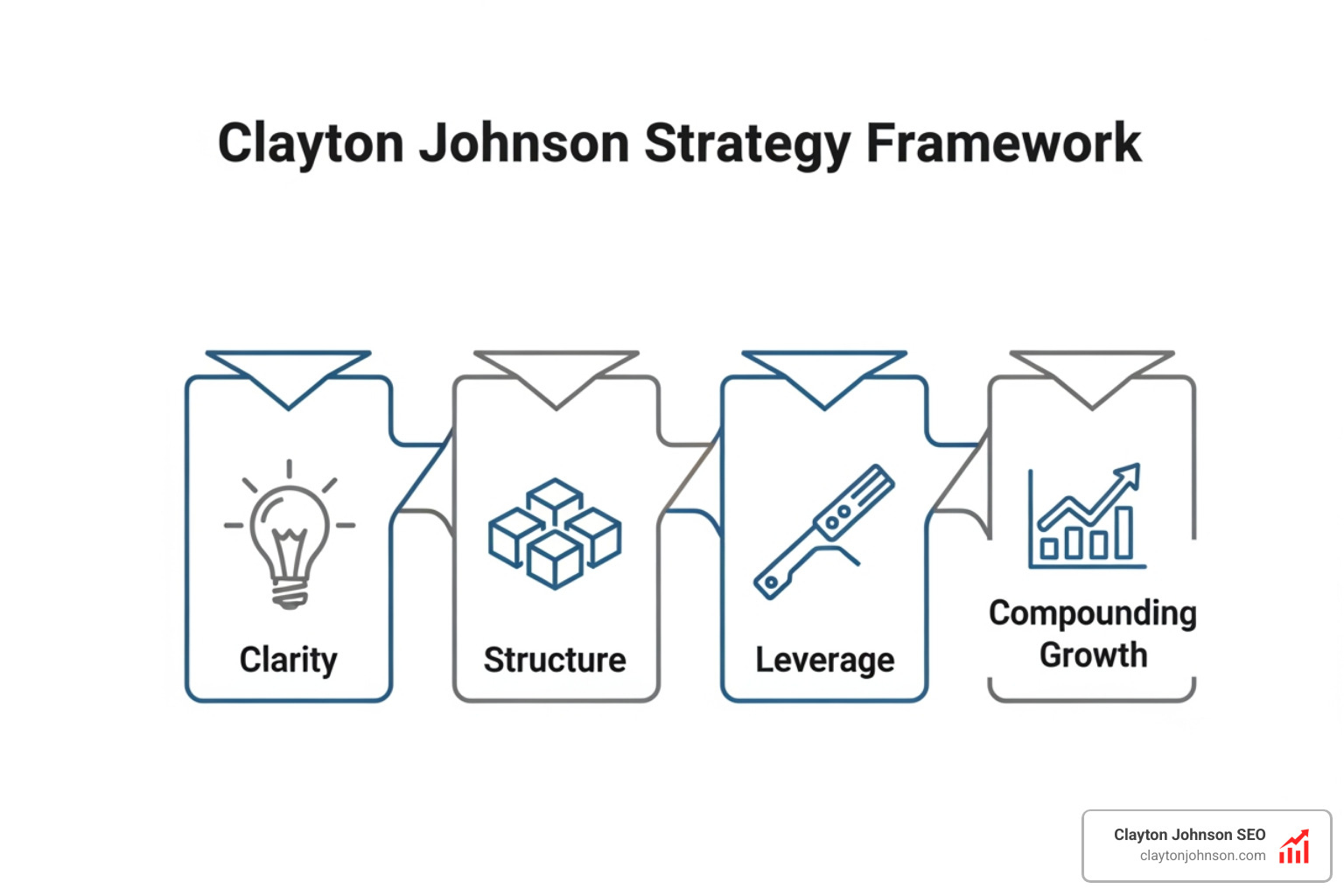
At the end of the day, a tool is only as good as the system it powers. We believe in building durable growth engines that combine technical SEO, structured content architecture, and AI-augmented workflows.
Clayton Johnson specializes in helping founders and marketing operators turn fragmented efforts into coherent systems. Whether it’s through intent modeling or building custom AI workflow integrations, our goal is to help you achieve compounding growth. To stay ahead of the curve, you need to master the 8 essential AI skills every marketer needs.
Ready to stop chasing tactics and start building a system that scales?