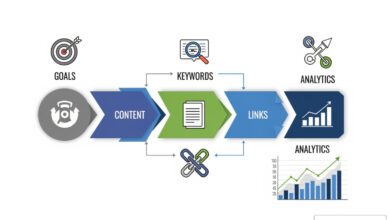
AI Model SEO: Teaching Robots to Love Your Content


SEO for AI Models Is Changing How Brands Get Found Online
AI model SEO is the practice of optimizing your content so AI-powered search engines — like Google’s AI Overviews, ChatGPT, and Perplexity — understand, trust, and cite your website in their answers.
Quick answer: How to optimize for AI model SEO
- Write clear, structured content with logical headings and self-contained answer blocks
- Use schema markup so AI crawlers can extract and interpret your content easily
- Build topical authority by covering subjects in depth, not just targeting keywords
- Keep content fresh with regular updates so AI systems pull your latest information
- Focus on entity clarity — make sure your brand, products, and expertise are consistently defined across your site
Search has changed faster in the last two years than in the previous decade. Google now processes 354 million searches every hour — and a growing share of those searches never result in a click. Users get their answer directly on the results page, from an AI.
That’s the new reality. If your content isn’t built to be cited by AI, you’re invisible to a growing slice of your audience.
The old game was: rank on page one, get clicks. The new game is: become the source AI systems quote. Same goal — more visibility, more leads — but a very different strategy to get there.
This isn’t about abandoning what works. Keywords still matter. Backlinks still matter. But how you structure your content, how you signal expertise, and how you help AI systems extract your best answers — that’s what separates brands that thrive from those that disappear.
This guide breaks down exactly how AI model SEO works, what the top tools are, and the practical steps you can take right now to get your content cited, recommended, and trusted by AI search.

The Evolution of Search: Why AI Model SEO is the New Standard

For decades, we played a game of “match the word.” If a user typed “best wealth management strategies,” we made sure those exact words appeared in our H1, our meta description, and three times in the body text. But search engines have graduated from being simple librarians to becoming sophisticated assistants.
The term “Googling” is now a verb recognized by dictionaries, but the act of “Googling” is transforming. Every minute, 5.9 million searches are processed on Google, adding up to a staggering 8.5 billion searches per day. However, the way Google handles these queries has evolved through several massive AI milestones:
- RankBrain (2015): The first major step into machine learning, helping Google interpret queries it had never seen before by connecting them to similar concepts.
- BERT (2019): This allowed Google to understand the context of words in a sentence. It stopped looking at words in isolation and started looking at how they related to each other.
- MUM (2021): A model 1,000 times more powerful than BERT, capable of understanding information across 75 languages and multiple formats (like images and text) simultaneously.
Today, we are in the era of Google Search Generative Experience (SGE) and AI Overviews. As of March 2025, AI Overviews are triggered in approximately 13.14% of all Google search queries—nearly doubling in frequency in just two months.
Understanding the truth about AI SEO and why it matters is essential for any business that wants to survive this shift. We aren’t just optimizing for a list of blue links anymore; we are optimizing for a generative brain.
Traditional SEO vs. AI Model SEO
| Feature | Traditional SEO | AI Model SEO |
|---|---|---|
| Primary Goal | Rank #1 for specific keywords | Become the cited source in AI answers |
| Content Focus | Keyword density and backlinks | Entity clarity and topical depth |
| Search Intent | Matching words to queries | Understanding the “why” behind the query |
| User Experience | Clicks to website | Information gain and direct answers |
| Technical Requirement | Sitemaps and robots.txt | Structured data and passage extractability |
Core Components of Generative Engine Optimization (GEO)
If you’ve heard the term “SEO is dead,” don’t believe the hype. It’s just evolving into Generative Engine Optimization (GEO). GEO is the art of making your content “consumable” for Large Language Models (LLMs).
Within this new discipline, we also see Answer Engine Optimization (AEO)—focusing on being the direct answer to a question—and Large Language Model Optimization (LLMO)—ensuring models like ChatGPT or Claude “know” about your brand during their training or retrieval phases.
To win at GEO, we focus on three pillars:
- Entity Clarity: An “entity” is a person, place, or thing that is well-defined. If you are a wealth management firm, AI needs to know exactly who you are, what services you provide, and which geographic markets you serve without any ambiguity.
- Topical Authority: You can’t just write one blog post and expect to be an expert. You need to build comprehensive topic clusters. Research shows that shifting to in-depth topic clusters can result in ranking for 68% more long-tail keywords.
- Information Gain: AI models reward content that adds something new to the conversation. If you’re just paraphrasing what’s already on page one, an AI has no reason to cite you.
For a deeper dive, check out the ultimate guide to generative engine optimization and search techniques to see how these layers work together.
Optimizing for AI Model SEO through Semantic Structure
AI models are incredibly smart, but they are also very busy. They prefer content that is served on a silver platter. This is where semantic structure comes in.
Using Schema.org and JSON-LD markup is no longer optional. This code tells the AI, “This part of the page is a Review,” or “This is a FAQ,” or “This is the Author’s credentials.” By reinforcing meaning through code, you make it easier for the AI to “extract” your content for an AI Overview.
We also focus on:
- Heading Hierarchy: Use H1, H2, and H3 tags logically. Don’t skip levels. This acts as a map for the AI crawler.
- Extractable Snippets: Include 2-3 sentence summaries at the start of sections. These are “low-hanging fruit” for AI models looking for a quick definition to quote.
- Entity Distinctness: In the age of AI, being “vague” is a death sentence. We use mastering AI SEO taxonomy systems for better entity distinctness to ensure models don’t confuse our clients with competitors.
Practical Steps to Start Your AI Model SEO Journey Today
You don’t need a PhD in computer science to start optimizing for AI. Here is what we recommend to our clients right now:
- Refresh Your Content: AI models prioritize freshness. A study by Vercel noted that setting a refresh cadence (reviewing content every 30, 90, or 180 days) is vital for staying relevant in RAG (Retrieval-Augmented Generation) systems.
- Target Long-Tail and Conversational Queries: People talk to AI differently than they type into Google. They ask full questions. Instead of “wealth management,” they ask “How do I allocate my 401k in my 40s for maximum growth?”
- Use a Natural Language Tone: Content written in a conversational tone improves comprehension for both humans and machines. It mirrors how people actually communicate, which is exactly what LLMs are trained to emulate.
Follow your step-by-step AI SEO implementation guide to begin auditing your existing pages for AI readiness.
How LLMs Process and Reward Content
To master ai model seo, you have to understand the “brain” on the other side. Most modern AI search tools use a process called Retrieval-Augmented Generation (RAG).
When a user asks a question, the AI doesn’t just rely on what it learned in “school” (its initial training). It actually goes out to the live web, “retrieves” a few relevant pages, and then “generates” an answer based on those pages.
How does it decide which pages to retrieve? It uses Embeddings. This is a mathematical way of representing the “meaning” of your content. If your content has high “semantic relevance” to the user’s intent, you get picked.
AI models specifically reward:
- Frontier Concepts: Being the first to write authoritatively about a new trend or a “frontier concept” makes you the default source.
- Evidence-Based Sources: Models love data, code snippets, and verifiable facts.
- Citations: If other reputable sites or communities (like Reddit or GitHub) mention your content, it signals to the LLM that you are a trusted entity.
To stay ahead, we recommend the multi-model guide to winning at AI search, which explains how to optimize for different models like GPT-4, Gemini, and Claude simultaneously.
Top Tools and Technologies for AI-Powered Search
The days of just checking a single ranking number are over. You need a tech stack that understands the “visibility” of your brand across AI platforms.
- Semrush One: This is a powerhouse for AI visibility. It consolidates traditional SEO data with AI-driven insights, helping you track “mention share” and how your brand appears in AI-generated summaries.
- Ahrefs: Still the gold standard for backlink analysis and identifying the “authority” signals that AI models use to verify your credibility.
- ChatGPT & Perplexity: Use these as your own “lab rats.” Ask them questions about your industry and see if your brand is mentioned. If not, analyze the sources they do cite.
- Screaming Frog: Essential for technical SEO audits. It helps ensure that your site is crawlable. Many AI crawlers struggle with JavaScript-heavy sites, so you need to ensure your site is “readable” in its simplest form.
- Next.js: For the developers out there, using frameworks like Next.js allows for Server-Side Rendering (SSR). This ensures that AI crawlers see a fully rendered page of content immediately, rather than a blank screen while JavaScript loads.
If you’re looking for budget-friendly options, we’ve curated a list to boost your rankings with these free SEO AI tools.
Measuring Success and Avoiding Common Pitfalls
The biggest mistake you can make is measuring AI success with 2015 metrics. According to a 2024 study by Rand Fishkin of SparkToro, 58.5% of Google searches in the U.S. now end without a single click.
If you only look at “clicks” in Google Search Console, you might think you’re failing, even if 10 million people saw your brand name cited in an AI Overview.
New Key Performance Indicators (KPIs) for AI SEO:
- Mention Share: How often does an AI model name your brand when asked about your industry?
- Citation Tracking: Are AI models linking to your “definitive source” pages?
- Passage Extractability: Is your content structured so that AI can easily pull out a “Step 1, Step 2, Step 3” list?
- Brand Sentiment in AI: When an AI describes your business, is the tone positive and accurate?
We call this winning the no-click game with better content strategy. It’s about being the answer, not just the destination.
Frequently Asked Questions about AI Model SEO
Will AI completely replace traditional SEO in 10 years?
No. SEO isn’t going away; it’s just becoming more technical and intent-focused. People will still need to find websites for transactions, deep research, and personal connections. However, the “low-level” SEO of keyword stuffing and thin content will be completely obsolete. Traditional SEO fundamentals like site speed, mobile-friendliness, and high-quality backlinks will remain the foundation upon which AI SEO is built.
How do I make my content more “AI-ready” for LLMs?
Focus on clarity and structure. Use clear, declarative sentences. Avoid flowery language that doesn’t add value. Implement robust “Person” or “Organization” schema so AI knows exactly who wrote the content. Most importantly, provide “Information Gain”—original insights, proprietary data, or unique case studies that the AI can’t find anywhere else.
What is the difference between GEO and LLMO?
Generative Engine Optimization (GEO) is a broad term for optimizing for any search engine that uses generative AI (like Google or Perplexity). Large Language Model Optimization (LLMO) is more specific to the models themselves (like GPT-4 or Claude). LLMO focuses on getting your brand into the model’s “memory” or training data so it recommends you even when it’s not searching the live web.
Conclusion
At Clayton Johnson SEO, we’ve seen the landscape shift firsthand. For our clients—especially those in high-stakes industries like wealth management—the move toward ai model seo isn’t just a trend; it’s a survival mechanism.
In an industry where trust and authority are everything, being the source that an AI assistant recommends to a high-net-worth individual is the ultimate competitive advantage. Whether you are looking for investment attraction or trying to scale a local firm, the rules have changed.
The future belongs to the brands that are clear, structured, and authoritative. Don’t let your brand become a ghost in the machine. Start optimizing for the generative era today.
For more deep dives into the technical side of things, explore more info about AI models and SEO strategy on our blog. We’re here to help you navigate the transition from “ranking” to “owning the answer.”