Stop Guessing and Start Seeing with These Marketing Insight Examples

Why Consumer Insights Examples Matter for Modern Marketing
Consumer insights examples show how leading brands turn raw data into breakthrough strategies. Here are the standout examples you’ll learn from in this article:
- Snickers – Reframed hunger as personality change (“You’re not you when you’re hungry”)
- Hallmark – Shifted from selling cards to nurturing relationships
- Whirlpool – Linked clean clothes to school attendance (90% attendance increase)
- Lego – Used fan-submitted designs to drive product innovation
- Coca-Cola – Personalized packaging based on social media feedback
- The AA – Moved from functional recovery to emotional motoring joy (£2.23 profit per £1 invested)
- LinkedIn – Highlighted relatable female role models (76% wanted more visibility)
- Dyson – Solved the “vacuums lose suction” frustration
- Pedigree – Positioned around “dogs make us better people”
- Little Moons – Discovered affluent 30+ buyers, not just TikTok followers
Most marketing decisions rely on guesswork. Brands launch campaigns based on assumptions, adjust pricing without understanding buyer motivations, and wonder why competitors keep winning.
The difference between struggling brands and those that consistently outperform? They’ve mastered the art of translating consumer data into actionable insights.
Organizations that leverage customer behavioral insights outperform their peers by 85% in sales growth. Brands actively monitoring social media conversations see a 24% increase in customer satisfaction and 20% boost in retention rates. Companies using AI-driven consumer analytics outperform competitors by 25% in product innovation metrics.
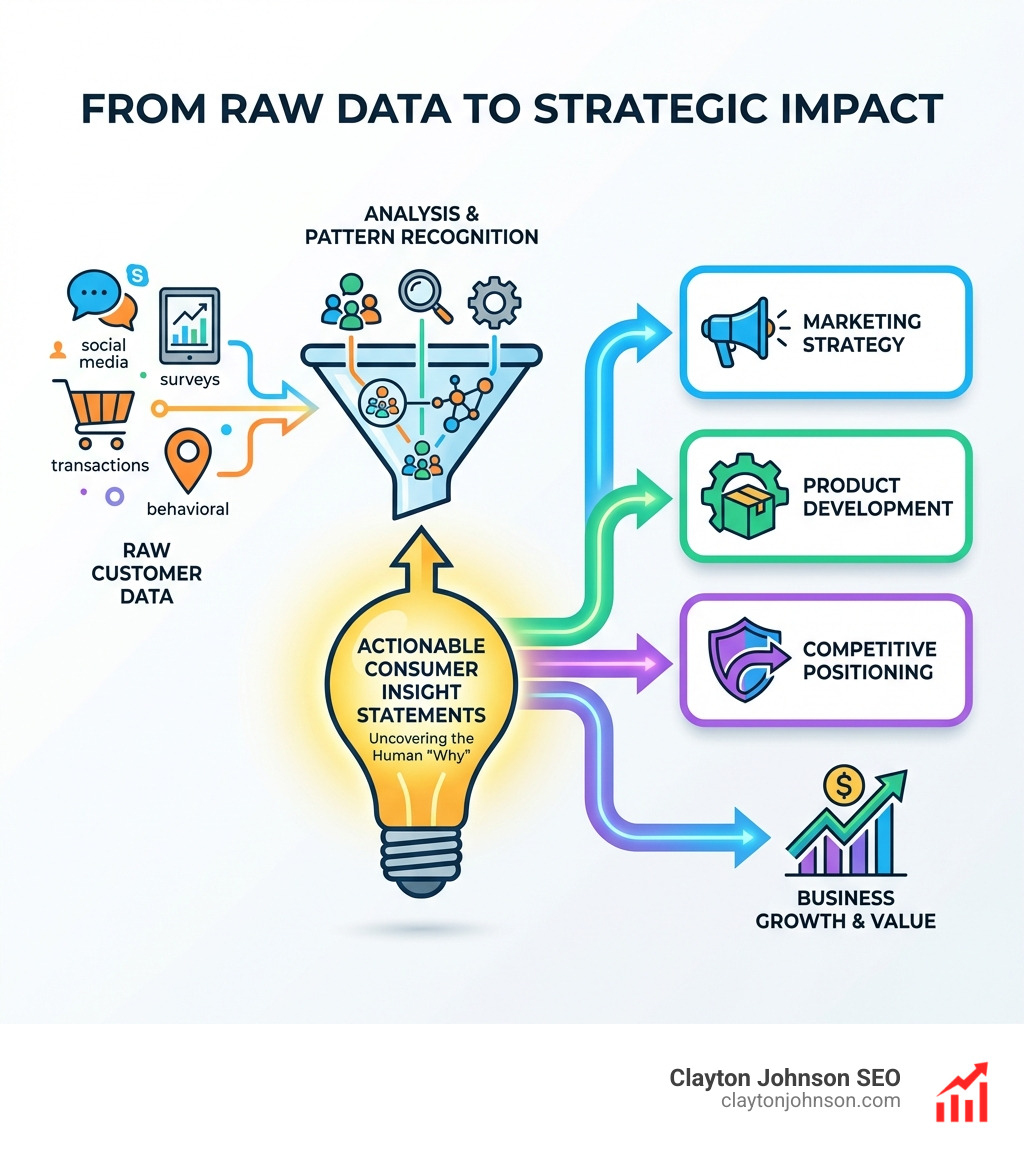
But raw data alone won’t save you. The real breakthrough happens when you spot the why behind the what — when you uncover the human truth that explains consumer behavior and unlocks new strategic opportunities.
Consumer insights aren’t about collecting more survey responses or tracking more metrics. They’re about discovering perspective-shifting “Aha! Moments” that make you see your category, your customers, and your brand positioning in an entirely new light.
Think about how Snickers refreshed a 20-year-old hunger positioning by recognizing that hunger changes your personality. Or how Hallmark became a multi-billion-dollar business by reframing their category from greeting cards to relationship management. These weren’t incremental improvements — they were fundamental shifts in thinking driven by powerful consumer insights.
I’m Clayton Johnson, and I’ve spent years helping brands build growth systems anchored in search intent, consumer behavior patterns, and actionable strategic frameworks. Throughout this guide, I’ll walk you through consumer insights examples that transformed entire categories and show you how to generate similar breakthroughs for your own business.
What Are Consumer Insights? (Defining the “Aha!” Moment)
At its core, a consumer insight is a “moment of enlightenment.” As advertising legend Paul Feldwick famously noted, it’s when we see something with a new understanding that unlocks a fresh opportunity. While data tells you what is happening, an insight tells you why it is happening.
The market research industry as a whole is worth an estimated $73.4 billion, but much of that investment is wasted if it doesn’t move past surface-level observations. True insights provide qualitative depth. They help us understand the underlying human truths—the fears, desires, and frustrations—that drive a purchase.
When we develop Buyer Personas, we aren’t just looking for age and zip codes. We are looking for the behavioral motivations that make a customer choose one brand over another.
Consumer Insights vs. Market Research
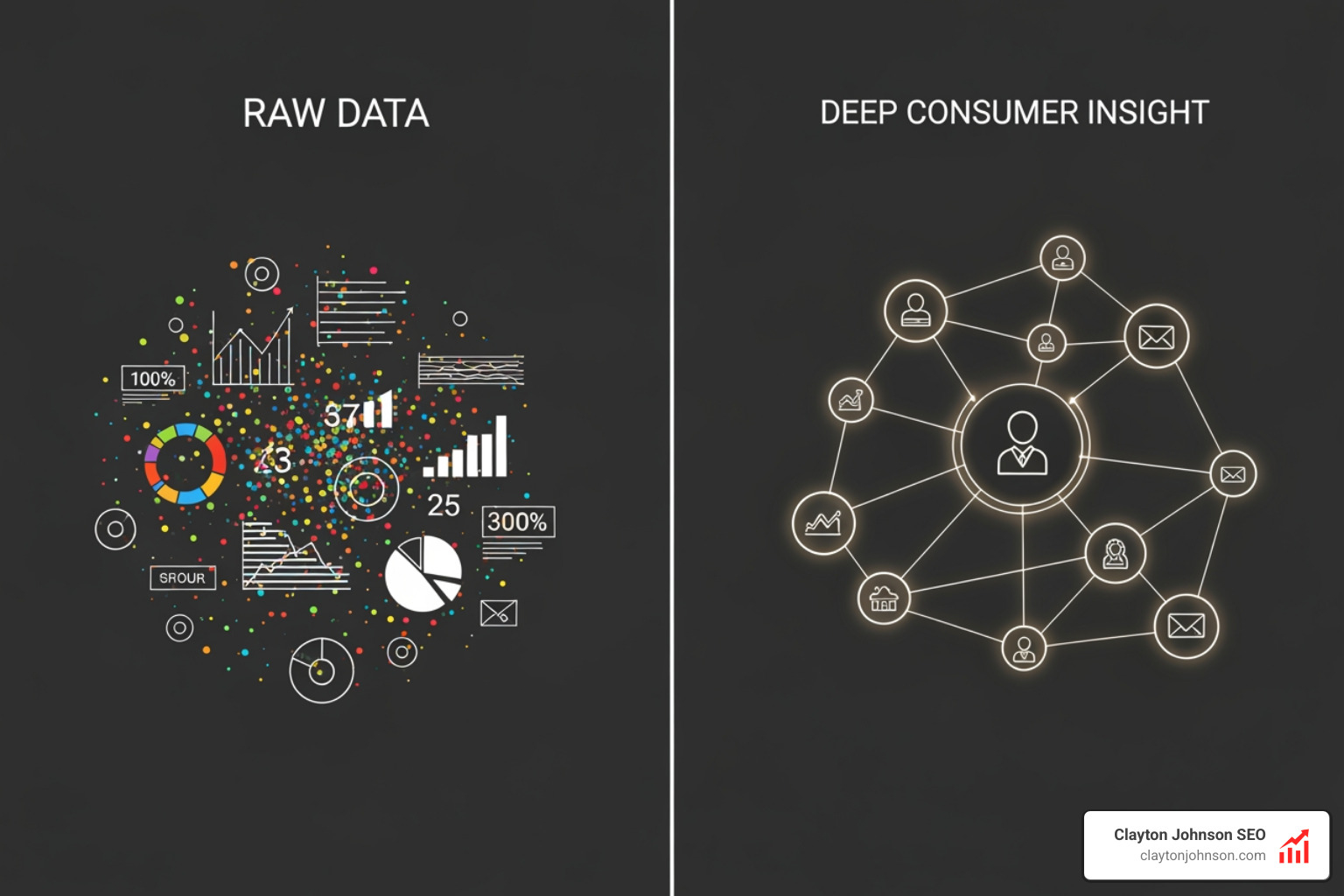
It is easy to confuse these two, but they serve different roles in your Customer Strategy. Market research is the broad net; it captures the size of the market, competitor pricing, and demographic trends. Consumer insights are the micro-view—the deep dive into the consumer’s psyche.
| Feature | Market Research | Consumer Insights |
|---|---|---|
| Focus | The “What” (Market size, trends) | The “Why” (Motivations, emotions) |
| Data Type | Quantitative (Stats, Percentages) | Qualitative (Narratives, Truths) |
| Goal | Description and Benchmarking | Action and Innovation |
| Result | Data Points | Strategic Breakthroughs |
The 3-Sentence Insight Statement Structure
To turn data into a “rallying cry” for your team, we often use a specific 3-sentence structure. This framework ensures you aren’t just stating a fact, but identifying a tension that needs solving.
- The Situation: Describe the current behavior or context objectively.
- The Frustration: Articulate the barrier or pain point from a first-person perspective.
- The Future Desire: State the ideal outcome the consumer wishes for.
For example: “We enjoy using our outdoor pool but are often bothered by mosquitoes. I am hesitant about using personal repellents on my children because I am unsure how safe they are. I wish there was an area repellent that could provide protection so I didn’t have to put chemicals on my kids’ skin.”
10 Powerful Consumer Insights Examples from World-Class Brands
When we look at consumer insights examples from the world’s most successful companies, a pattern emerges: they stop talking about their product features and start talking about the consumer’s life. Whether it’s the Whirlpool Care Counts program or the AA emotional rebranding, these brands found a way to create a competitive advantage by solving a human problem rather than just a technical one.
1. Snickers: “You’re Not You When You’re Hungry”
For decades, Snickers focused on “hunger satisfaction.” It was a functional message. But the brand reached a new level of global resonance when they uncovered a universal truth: hunger doesn’t just make your stomach growl; it changes your personality. You become “hangry,” irritable, or “off.” By reframing the bar as a way to return to your normal self, Snickers created a campaign that worked across every culture and language.
2. Hallmark: From Cards to Relationships
Hallmark faced a declining market as digital communication grew. By digging into their 👤 Buyer Persona Example: Local Business Owner Laura and other segments, they realized people weren’t buying “paper and ink.” They were buying a way to nurture relationships. This reframing allowed them to expand into ornaments, gifts, and media, transforming from a card company into a multi-billion-dollar “relationship management” business.
3. Whirlpool: The “Care Counts” Initiative
Whirlpool discovered a heartbreaking barrier to education: 1 in 5 American children struggle with access to clean clothes, leading to school absenteeism. By installing washers and dryers in schools, they didn’t just sell machines; they provided care. The Whirlpool’s impact statistics are staggering: 90% of participating students increased their attendance, and 89% improved classroom participation. This is empathy-led innovation at its finest.
4. Lego: The Power of Co-Creation
Lego understands that their most passionate fans are often their best designers. Through their Lego Ideas platform, they leverage Customer Segmentation Product Insight by allowing users to submit and vote on designs. This co-creation model ensures that when a product hits the shelves, there is already a verified market of fans ready to buy it.
5. Coca-Cola: “Share a Coke” Personalization
The “Share a Coke” campaign was born from the insight that people love seeing their names on things—it creates an immediate, personal connection. After seeing social media feedback about fans wanting specific names, Coke expanded the program to include thousands of names and even custom orders. This turned a mass-produced beverage into a personalized gift.
6. The AA: Motoring Joy vs. Functional Recovery
The AA (Automobile Association) was stuck in a “functional” trap, talking about how fast they could fix a car. Insights revealed that they were becoming irrelevant and price-sensitive. They shifted to emotional branding, focusing on the “joy of motoring.” This AA profit ROI was massive: for every £1 invested, they saw a £2.23 profit, proving that emotional connection drives revenue growth.
7. LinkedIn: Relatable Role Models
During major sporting events, LinkedIn noticed a visibility gap. Research showed that 76% of women wanted more relatable role models in the professional world. By spotlighting female footballers and their career journeys, LinkedIn positioned itself as a supportive network for professional growth, not just a job board.
8. Dyson: Solving the Suction Problem
James Dyson didn’t set out to make a “cool” vacuum. He focused on a category-wide frustration: vacuums lose suction as the bag fills up. This product-led insight—that consumers were tired of machines that didn’t do their primary job—led to the cyclonic technology that disrupted the entire industry.
9. Pedigree: Dogs Make Us Better People
While competitors were fighting over “kibble science” and ingredients, Pedigree tapped into an emotional truth: we don’t just love our dogs; we believe they make us better, more compassionate people. This brand purpose allowed them to move beyond a commodity product and build a community of pet parents who shared those values.
10. Little Moons: Identifying the Real Buyer
Little Moons went viral on TikTok, but their consumer insights examples showed a surprising twist. While the buzz was among Gen Z, the actual volume of high-spending, repeat buyers was coming from affluent 30+ year olds. By profiling their customers accurately, they were able to tailor their retail distribution and messaging to the people actually driving their bottom line.
How to Uncover and Generate Your Own Consumer Insights
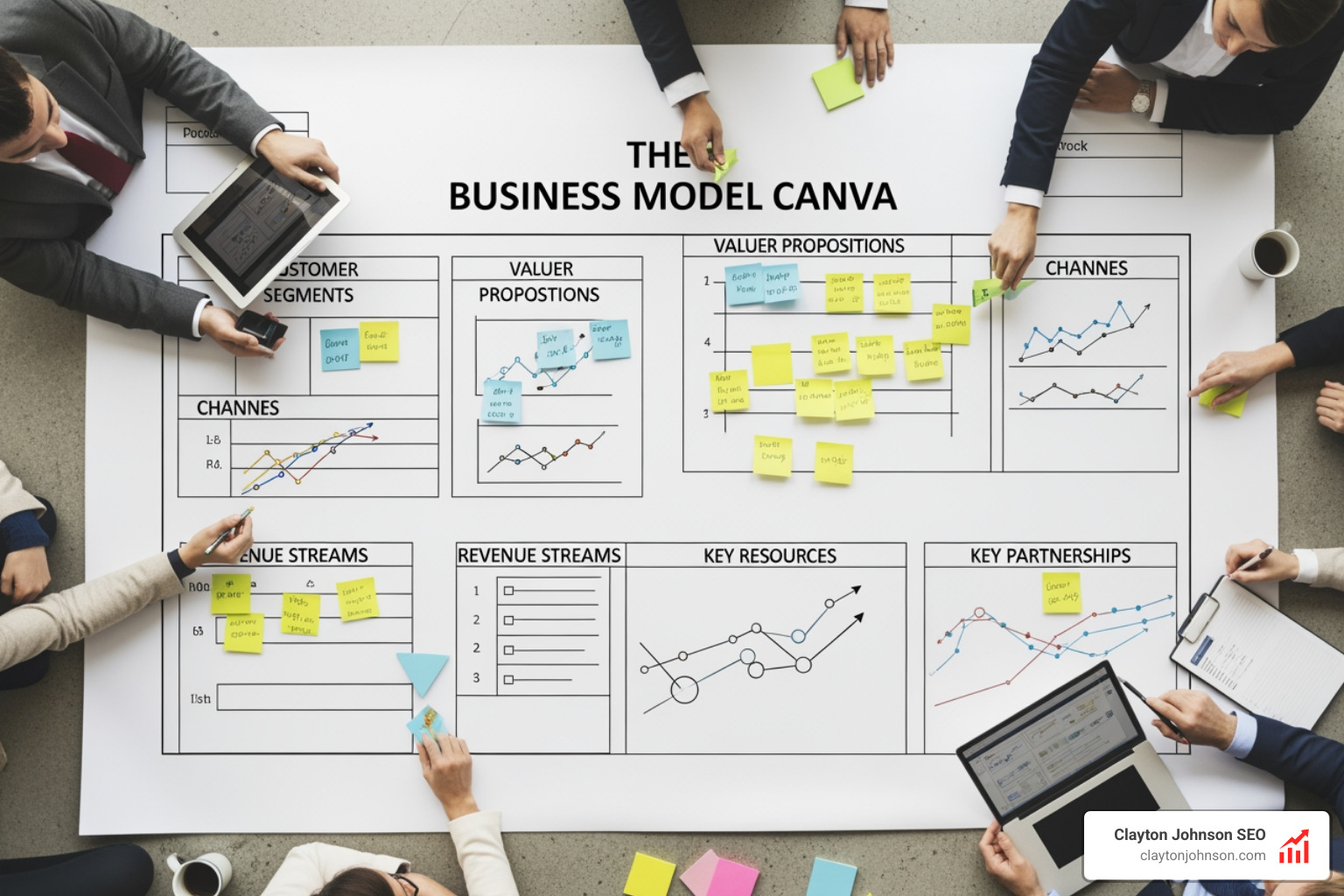
Generating insights isn’t “rocket science,” but it does require a system. You can’t just wait for a lightning bolt of inspiration. We use a mix of social listening, ethnographic research (observing people in their natural environment), and The Essential Guide to BMC Customer Discovery to dig beneath the surface.

Turning consumer insights examples into actionable statements
When you find a pattern, use the consumer’s own verbatim language. Don’t sanitize it with corporate jargon. We recommend using tools like the Aha! Insight Toolkit or conducting workshop collaborations where different departments (sales, support, marketing) share what they’ve heard. This cross-functional approach helps build a 360-degree view of the customer journey.
Why consumer insights examples matter for subscription models
For subscription businesses, insights are the key to survival. TeacherVision achieved a 1% involuntary churn rate by using insights to offer “pauses” instead of cancellations and personalizing promotions based on usage data.
By understanding the “leaky bucket,” you can apply Strategic Design Customer Segmentation Product Insight to keep users engaged and reduce fatigue.
The Strategic Benefits of Leveraging Consumer Data
The bottom line is clear: companies that use data to understand behavior see 85% higher sales growth. But the benefits go beyond just sales:
- Product Development: Stop building features nobody wants.
- Marketing Optimization: Spend your budget where it resonates.
- Innovation: Brands using AI analytics see 25% better innovation metrics.
- Resource Efficiency: Focus on the “High-Value” segments rather than chasing everyone.
Common Mistakes to Avoid
The biggest danger in the “data-driven” world is trusting bad data. For instance, about 31% of reviews on sites like Amazon and Walmart are suspected fakes. If you build your strategy on fake feedback, you’ll get fake results. Avoid single-source data; always triangulate your findings with social listening, sales data, and direct customer interviews.
Frequently Asked Questions about Consumer Insights
What is the best way to collect consumer insights?
We recommend a multi-channel approach. Use HubSpot campaign data to see what content drives traffic, monitor social conversations for sentiment, and analyze logs from inbound call center software to hear exactly what questions customers are asking.
How do consumer insights drive product innovation?
Insights reveal “unmet needs”—the things customers wish for but haven’t found yet. By using AI-driven analytics, you can spot patterns in pain points that your competitors are ignoring, allowing you to build the solution before they even realize there’s a problem.
Why do brands fail when using consumer insights?
Most failures come from confirmation bias (only looking for data that proves you’re right) or a lack of action. An insight is useless if it stays in a PowerPoint deck. You need data storytelling to convince stakeholders to make the necessary changes in strategy or product design.
Conclusion
At Clayton Johnson SEO, we believe that growth isn’t a mystery—it’s a result of understanding your audience better than anyone else. By studying these consumer insights examples, you can see that the most successful brands are those that listen, empathize, and act on human truths.
Whether you are a startup in Minneapolis or an established global brand, our actionable frameworks and growth strategies are designed to help you stop guessing.
Stop guessing and start growing with our SEO Content Marketing services today.