The Complete Guide to Navigating Authority Audit Requirements

Why a Content Authority Audit Guide Is the Foundation of Sustainable SEO
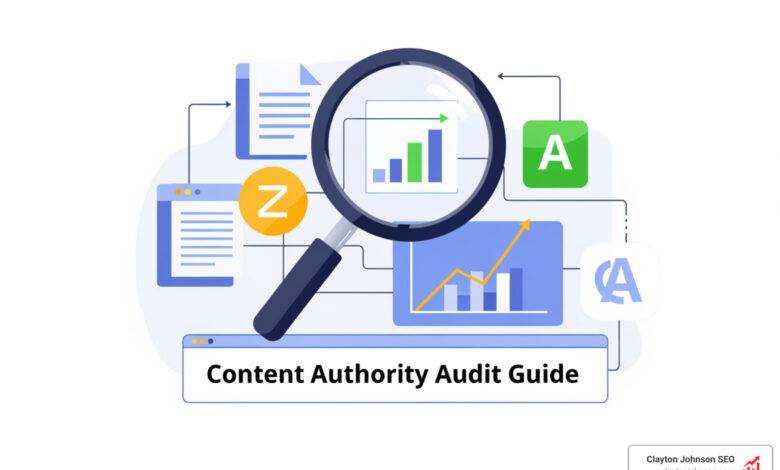
A content authority audit guide gives you a structured way to evaluate whether your content actually earns trust, ranks well, and drives real business results.
Here is what a content authority audit covers:
- Inventory – Catalog every URL on your site
- E-E-A-T signals – Assess expertise, experience, authoritativeness, and trustworthiness
- Performance data – Review traffic, rankings, backlinks, and engagement
- Technical health – Check crawlability, indexation, and internal linking
- AI visibility – Evaluate how your content performs in AI Overviews and featured snippets
- Action plan – Decide what to keep, update, consolidate, or remove
This is different from a standard content audit. A standard audit asks “Is this content performing?” A content authority audit asks “Does this content deserve to rank, and does it signal trust to both users and search engines?”
The difference matters more than ever. AI-generated answers now appear in roughly 30% of searches, and some estimates suggest sites could lose up to 25% of organic traffic to AI features alone. Thin, generic content is the first casualty.
Meanwhile, sites that demonstrate genuine expertise and topical depth are the ones being cited inside those AI answers.
Most businesses do not have a content problem. They have an authority gap – lots of content, but not enough signals that tell Google (or AI systems) to trust it.
I’m Clayton Johnson, an SEO strategist with nearly two decades of experience building authority-driven search frameworks, and this content authority audit guide reflects the exact process I use to help ambitious businesses close that gap and capture qualified organic demand at scale.

Executing a Strategic Content Authority Audit Guide
When we talk about a content authority audit guide, we aren’t just looking for broken links. We are performing a deep-tissue massage on your website’s digital reputation. A standard audit might tell you a page has low traffic; an authority audit tells you why search engines don’t trust that page enough to send traffic there in the first place.
The Inventory: Gathering Your Assets
The first step is creating a comprehensive content inventory. You cannot manage what you haven’t measured. We recommend using a combination of tools to ensure no URL is left behind. Screaming Frog is the industry standard for crawling, while Ahrefs and Semrush provide the external “view” of how the world sees your pages.
For larger enterprises, manual spreadsheets can become a nightmare. Specialized tools like ContentWRX Audit or Siteimprove can automate data collection and provide visualization that a standard row-and-column approach lacks.
Quantitative vs. Qualitative: The Authority Matrix
In this content authority audit guide, we weigh data differently than a simple SEO sweep.
| Feature | Standard Content Audit | Content Authority Audit |
|---|---|---|
| Primary Goal | Identify low-traffic pages | Identify trust and expertise gaps |
| Metric Focus | Page views, bounce rate | E-E-A-T, backlinks, information gain |
| AI Focus | Minimal | High (Optimization for AI Overviews) |
| Outcome | Delete or update | Consolidate, Authorize, or Pivot |
To truly understand your standing, you must audit your content by blending quantitative metrics (like those from Google Analytics) with qualitative assessments of whether the content actually provides “information gain”—that is, something new and valuable that isn’t just a rehash of the top 10 results.

Establishing E-E-A-T through a Content Authority Audit Guide
Google’s search quality evaluator guidelines place massive emphasis on E-E-A-T: Experience, Expertise, Authoritativeness, and Trustworthiness. If your content lacks these, no amount of keyword stuffing will save you.
Experience and Expertise Does the person writing the article actually know what they are talking about? Google advises creators to disclose who authored the content and why it exists. During your audit, check for author bylines and detailed bios. If your “About Us” page is thin and your blog posts are written by “Admin,” you are bleeding authority.
Authoritativeness and Trustworthiness Trust is the hardest signal to build and the easiest to lose. We look for transparency. Are you citing credible sources? Is your data current? According to Google’s guidelines, adding disclosures about AI usage or automation helps readers (and algorithms) understand how the content was produced.
We can now leverage AI audits to navigate algorithms, using LLMs to scan our own content for “hallucinations” or factual errors that could undermine our trustworthiness.
Technical Signals and Backlink Integrity
Authority isn’t just about what you say; it’s about who vouches for you and how your site is built.
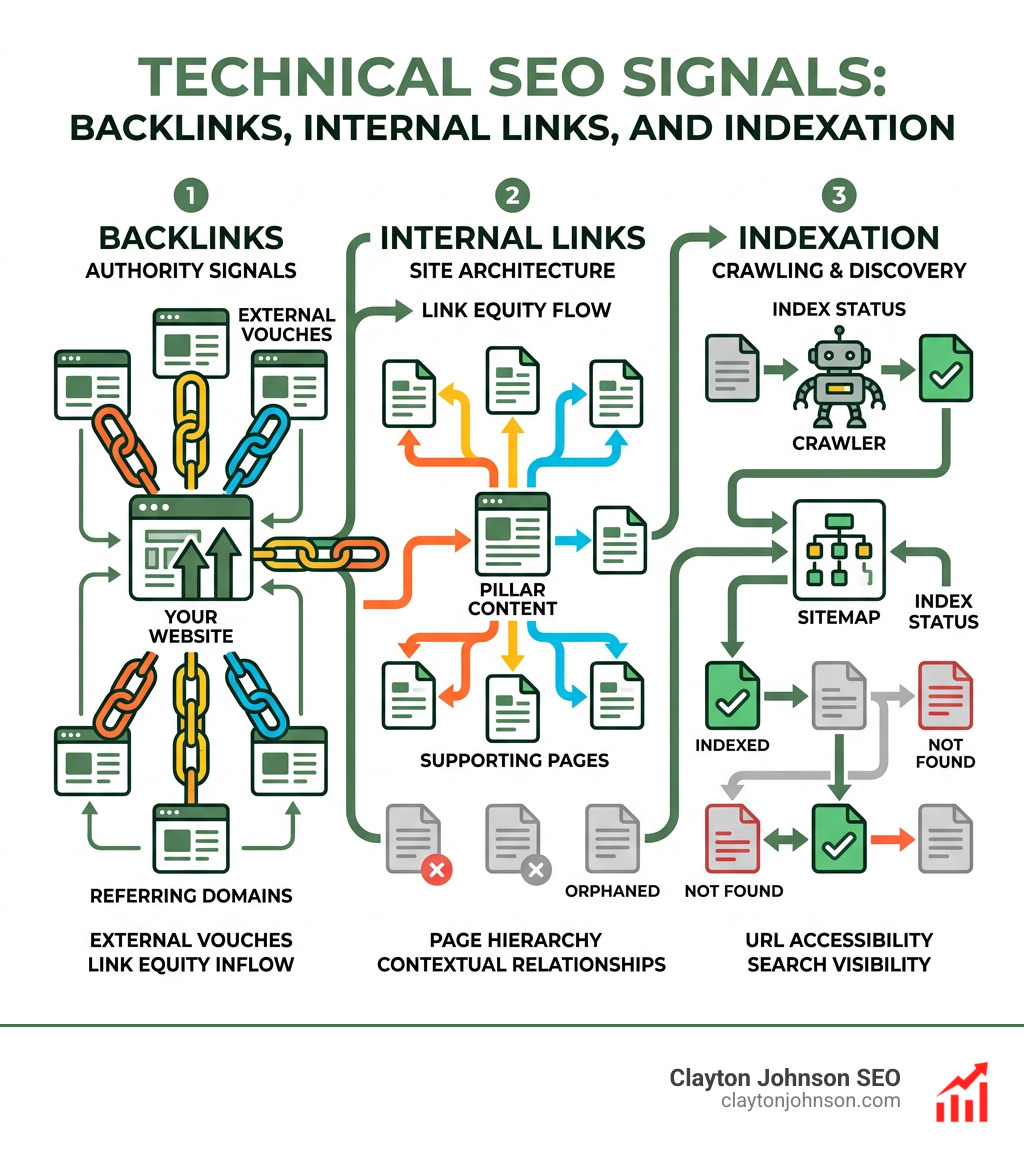
The Power of Backlinks Strong backlinks signal authority and remain one of the top 3 ranking factors in Google’s algorithm. During the audit, we use Ahrefs to see which pages are “link magnets.” If a page has high authority but low traffic, it might be a candidate for a strategic refresh to capture more search intent.
Internal Linking and Crawlability Your internal linking structure is the nervous system of your authority. It tells Google which pages are your most important “pillars.” We use Screaming Frog to identify “orphaned” pages—content that has no internal links pointing to it. These pages are effectively invisible to search engines.
By conducting strategic AI-driven SEO audits, we can map out these internal connections more efficiently, ensuring that equity flows from your high-authority pages to your high-conversion pages.
Optimizing for AI Overviews and Search Intent
The search landscape has shifted. We are no longer just competing for a blue link; we are competing for a spot in the AI Snapshot.
Semantic Relevance and AI Snapshots AI models synthesize answers from multiple sources. To be included, your content must be semantically rich. This means answering the “People Also Ask” questions directly and clearly. According to SEO.com, AI overviews appear in about 30% of searches. If your audit reveals that your content is too “fluffy,” you likely won’t make the cut.
Zero-Click Search Many informational queries are now “zero-click,” meaning the user gets the answer on the SERP and never visits your site. While this sounds scary, being the source of that answer builds massive brand authority. We use AI audits to spot invisible gaps in our content coverage, ensuring we provide the “information gain” that AI models crave.
Scaling Growth with Ongoing Governance
A content authority audit guide is not a “one and done” project. It is a cycle of continuous improvement. Organizations that succeed treat audits like regular maintenance.
The ROT Analysis
One of the most effective frameworks we use is the ROT analysis:
- Redundant: Is this content duplicated elsewhere on the site?
- Outdated: Is the information still accurate?
- Trivial: Does this content actually serve a business goal or user need?
If a page falls into these categories, we must decide: improve or remove? Often, merging three thin articles into one “Ultimate Guide” is the best way to reclaim authority.
Stakeholder Buy-In and ROI
Getting the green light for a massive audit requires showing the business value. Case studies, like the one from Backlinko’s content audit guide, show that updating old content can result in a 33.88% surge in traffic. Another renowned digital marketing blog saw a 76.54% uptick in organic traffic simply by cleaning up their library.
At Clayton Johnson SEO, we focus on professional SEO services that turn these findings into a scalable growth engine.
Prioritizing Actions in Your Content Authority Audit Guide
You’ve finished the audit. You have a spreadsheet with 2,000 rows. Now what? You prioritize based on Impact vs. Effort.
- Quick Wins (High Impact, Low Effort): Fixing broken internal links, updating meta titles for pages on page 2 of Google, and adding author bios.
- Strategic Projects (High Impact, High Effort): Consolidating thin content into pillar pages or rewriting core service pages to better align with E-E-A-T.
- Maintenance (Low Impact, Low Effort): Fixing minor typos or updating image alt text.
- De-prioritize (Low Impact, High Effort): Deep technical fixes for pages that drive zero business value.
For large-scale sites, we recommend automating audits with bots to handle the heavy lifting of data collection, allowing your team to focus on strategic decision-making.
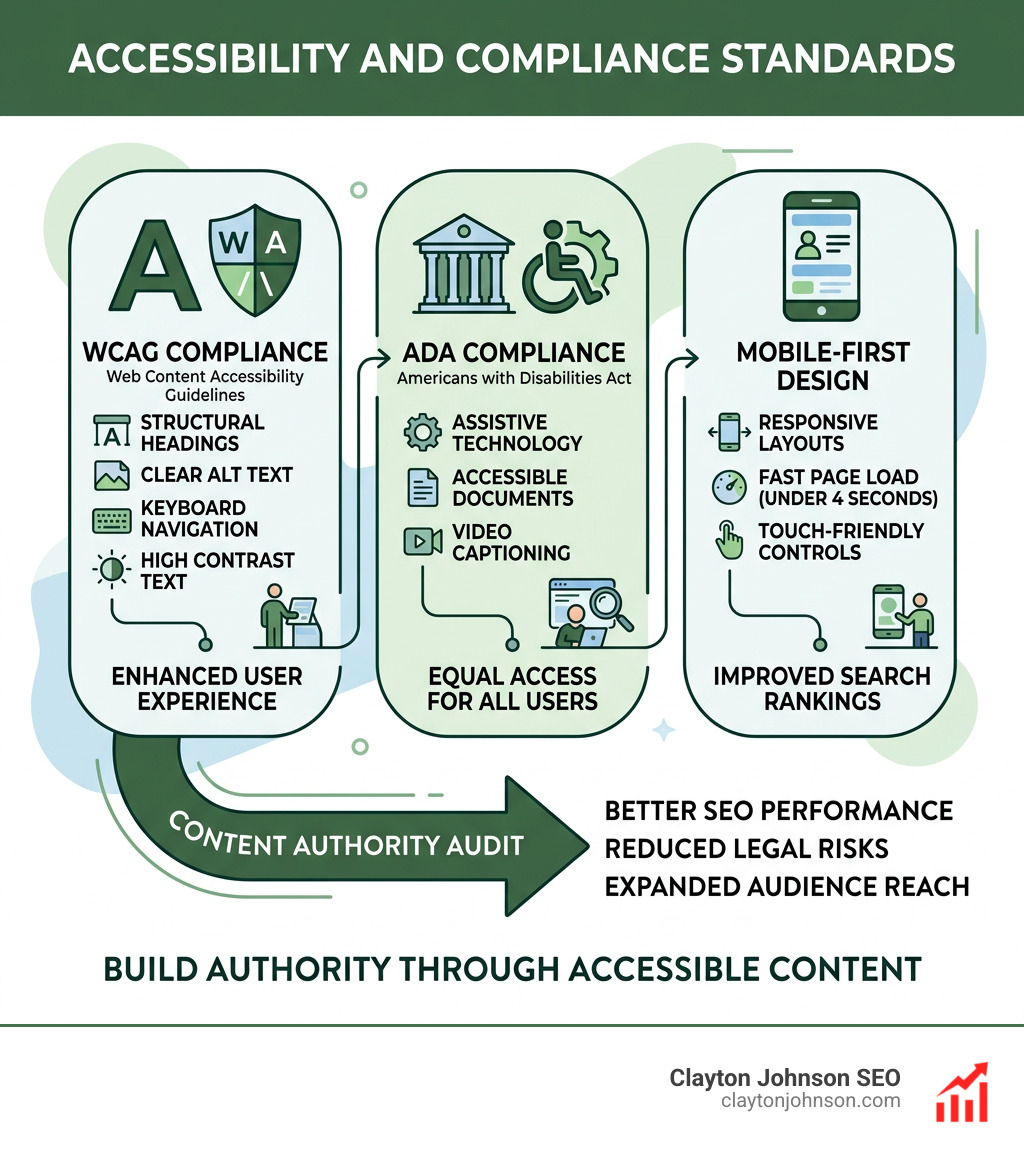
Accessibility and Compliance Standards
Authority is also built on accessibility. If a significant portion of the population cannot use your site, you aren’t an authority; you’re an obstacle.
WCAG and ADA Compliance Ensuring your content is accessible to the one billion people with disabilities is not just a legal requirement—it’s good for SEO. Search engines love well-structured content with clear headings and alt text. Use tools like WAVE to check for errors.
Mobile-First Indexing Google now uses mobile-first indexing. If your content looks great on a desktop but is a jumbled mess on a phone, your rankings will suffer. Part of your audit should include checking page load times—ideally under four seconds—to ensure you aren’t losing traffic before the page even loads.
Measuring ROI and Long-Term Authority
How do you know if the audit worked? You track the metrics that actually matter to the bottom line, not just vanity numbers.
- Organic Traffic & Rankings: Are your “pillar” pages moving up for high-value keywords?
- Conversion Rates: Are visitors taking the desired action?
- Brand Mentions: Is your brand being cited as a source by other authorities?
- Revenue Attribution: Can you link search traffic to closed deals?
We use Google Analytics to track user interaction post-audit. If bounce rates drop and time-on-page increases, it’s a clear sign that your “authorized” content is resonating with your audience.
Making Audits a Habit
Finally, don’t wait for a traffic drop to start an audit. Experts suggest that you should perform website audits two to four times yearly. By making the content authority audit guide a part of your regular governance, you ensure that your site remains a “coherent growth engine” rather than a collection of fragmented marketing efforts.
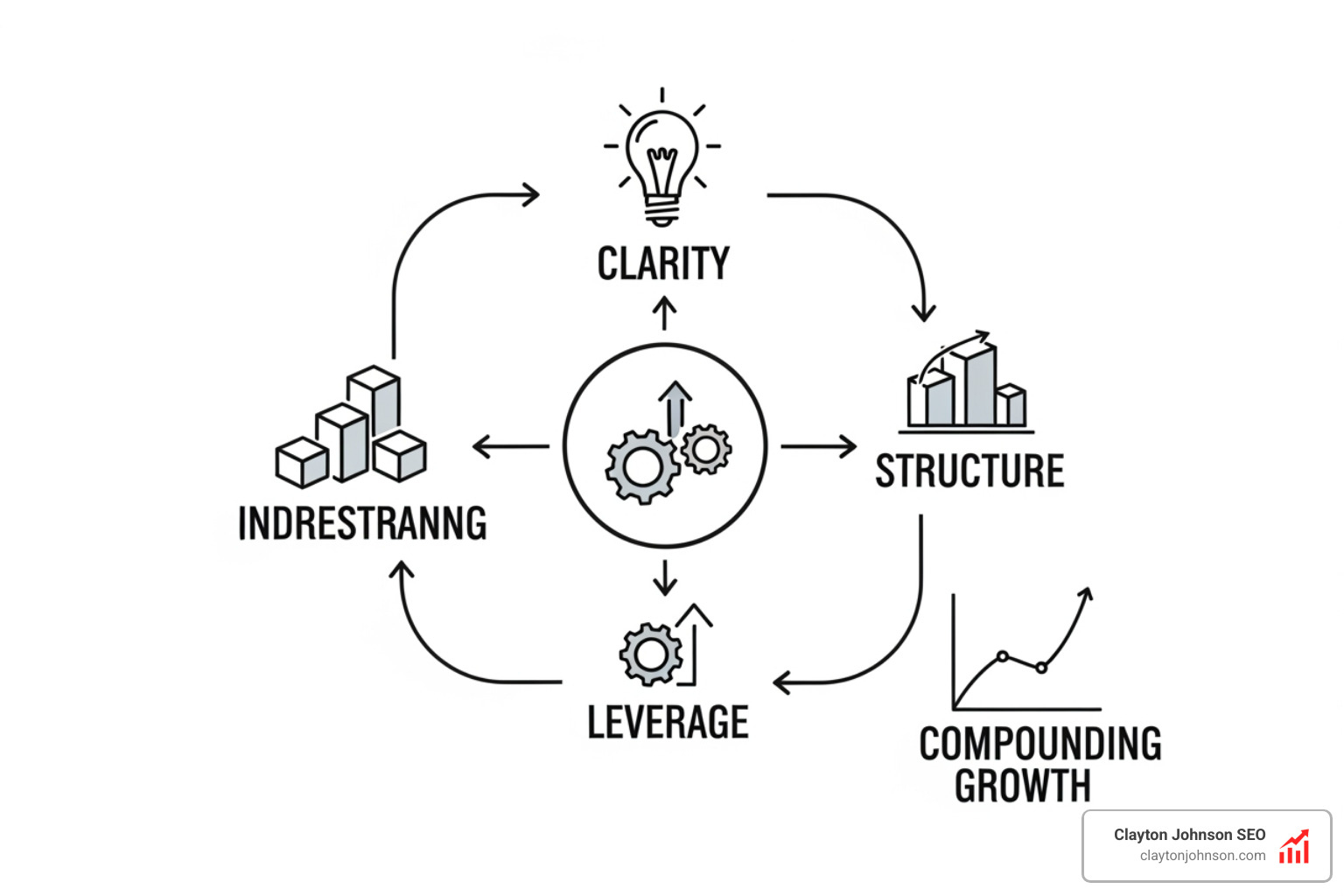
At Clayton Johnson SEO, we don’t just give you a list of problems; we build the systems that operationalize the solutions. Whether it’s through AI-driven SEO audits or structured content architecture, our goal is to turn your website into a compounding asset that builds authority every single day.
Ready to stop chasing tactics and start building a durable system? Download the free content audit template and take the first step toward true content authority.